
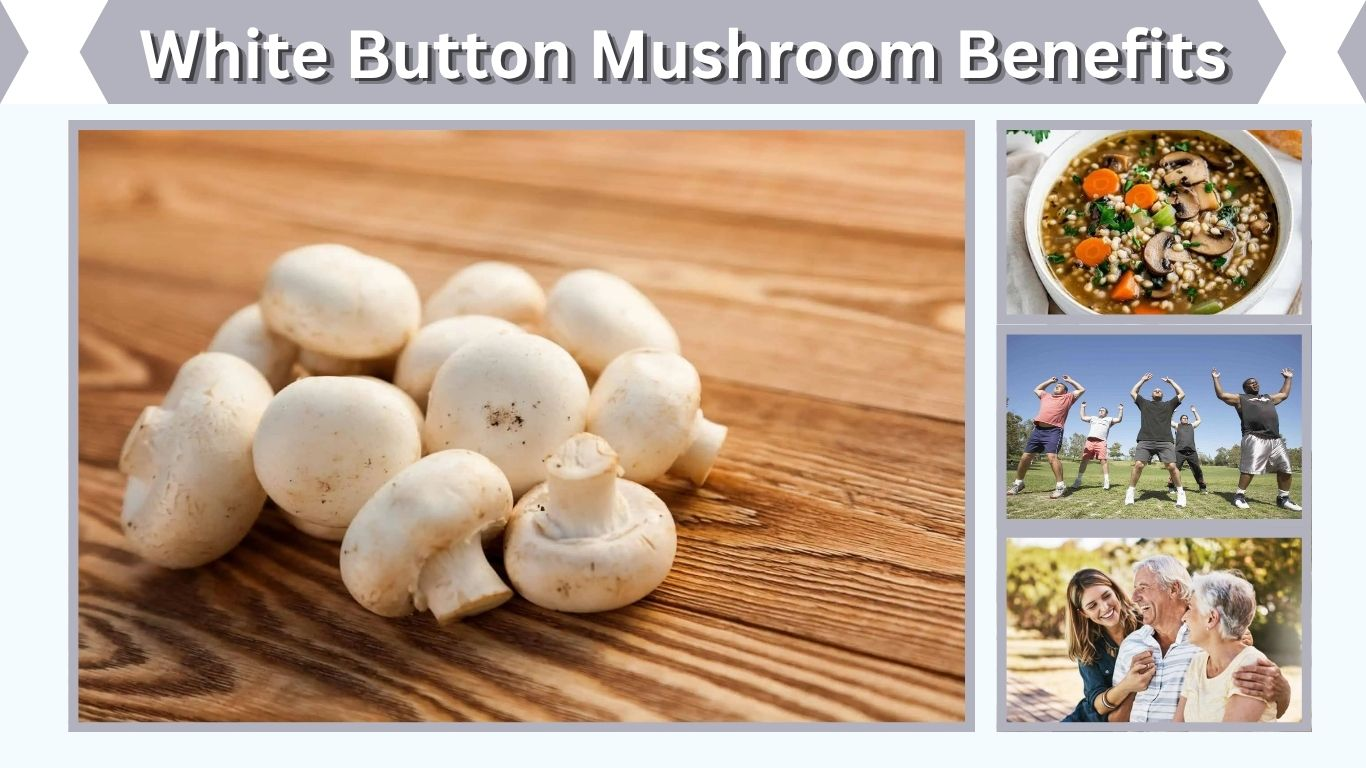
White button mushrooms are one of the most popular mushrooms in home cooking. They are mild, affordable, easy to find, and simple to add to many meals. Although they look small and plain, these mushrooms offer useful nutrients and several health benefits. They are low in calories, naturally low in fat, and provide B vitamins, minerals, antioxidants, and potential vitamin D when exposed to UV light.
What Are White Button Mushrooms?
White button mushrooms are the young form of Agaricus bisporus, the same mushroom species that later grows into cremini and portobello mushrooms. They are harvested early, while the cap is still small, pale, and closed.
Their mild flavor makes them very versatile. You can eat them raw in salads, cook them in soups, add them to pasta, use them in omelets, or mix them into stir-fries. They absorb flavors well, which makes them useful in both simple and rich dishes.
White button mushrooms are not vegetables in the botanical sense. They are fungi. However, they are often grouped with vegetables in cooking because they add fiber, minerals, and volume to meals.
White Button Mushroom Nutrition at a Glance
White button mushrooms are nutrient-dense because they provide useful nutrients with very few calories. According to USDA FoodData Central, raw white mushrooms are low in calories and contain small amounts of protein, carbohydrates, fiber, potassium, copper, selenium, and several B vitamins.
| Benefit Area | Why White Button Mushrooms Help |
|---|---|
| Weight management | Low in calories and high in water |
| Energy support | Provide B vitamins involved in metabolism |
| Immune support | Contain selenium, copper, and antioxidants |
| Bone support | Can provide vitamin D if UV-exposed |
| Heart-friendly eating | Naturally low in fat, sodium, and cholesterol |
| Meal satisfaction | Add savory flavor and texture |
A typical serving of raw white button mushrooms is light but filling. They are mostly water, which helps increase meal volume without adding many calories.
Supports Weight-Friendly Eating
One of the biggest benefits of white button mushrooms is that they can make meals feel larger without making them heavy. Since they are low in calories, they are helpful for people trying to manage weight or reduce calorie intake.
They work especially well in dishes that usually rely on higher-calorie ingredients. For example, chopped mushrooms can be mixed into ground meat for burgers, meatballs, tacos, or pasta sauce. This adds moisture and texture while reducing the amount of meat needed.
Easy Weight-Friendly Uses
White button mushrooms can be used in many light meals, such as:
- Mushroom omelets with vegetables
- Stir-fried mushrooms with tofu or chicken
- Mushroom soup without heavy cream
- Grilled mushrooms in wraps
- Mushrooms added to brown rice or quinoa
- Mushroom and spinach salad
The key is how you cook them. Mushrooms are naturally low in calories, but they can become calorie-heavy if cooked with too much butter, cream, cheese, or oil.
Provides B Vitamins for Energy
White button mushrooms contain several B vitamins, including riboflavin, niacin, and pantothenic acid. These vitamins help the body use energy from food. They also support normal cell function and nervous system health.
B vitamins do not give energy like caffeine, but they help the body process carbohydrates, fats, and proteins. That makes mushrooms a useful part of a balanced diet, especially when eaten with whole grains, eggs, legumes, fish, or lean meats.
Why B Vitamins Matter
B vitamins support:
- Energy metabolism
- Brain and nerve function
- Healthy skin
- Red blood cell production
- Normal growth and repair
White button mushrooms should not be your only source of B vitamins, but they can contribute to your daily intake in a simple and low-calorie way.
May Support Immune Health
White button mushrooms contain nutrients that are connected with normal immune function. Selenium, copper, and B vitamins all play roles in helping the body maintain healthy immune responses.
Mushrooms also contain natural compounds that may have antioxidant and anti-inflammatory effects. Harvard’s Nutrition Source notes that mushrooms contain plant chemicals and components that may show antioxidant, anti-inflammatory, and anticancer effects, although the exact mechanisms are still being studied.
This does not mean white button mushrooms can prevent or cure illness. Instead, they may support overall health when included as part of a varied diet with vegetables, fruits, whole grains, protein foods, and healthy fats.
Offers Antioxidant Compounds
Antioxidants help protect cells from oxidative stress. Oxidative stress is a normal process in the body, but too much of it may contribute to cell damage over time. White button mushrooms provide antioxidant-related nutrients, including selenium, as well as other natural compounds found in fungi.
These antioxidants are one reason mushrooms are often recommended as part of a nutrient-rich eating pattern. They are especially useful because they add nutrition without adding much fat, sugar, or sodium.
Best Ways to Preserve Benefits
To get the most value from mushrooms:
- Use fresh mushrooms before they become slimy
- Cook them lightly instead of overcooking
- Avoid deep-frying
- Pair them with herbs, garlic, onions, or leafy greens
- Store them properly in the refrigerator
- Use them within a few days of purchase
Freshness matters. Mushrooms that smell sour, feel sticky, or have dark wet patches should be discarded.
Can Provide Vitamin D When UV-Exposed
White button mushrooms are interesting because they can provide vitamin D if they are exposed to ultraviolet light. Mushrooms contain ergosterol, a natural compound that can convert into vitamin D2 after UV exposure.
The Mushroom Council explains that mushrooms are unique in the produce aisle because they can increase their vitamin D levels through exposure to UV light or sunlight. A review published in Nutrients also notes that commonly eaten mushrooms can generate nutritionally relevant amounts of vitamin D when exposed to UV radiation.
Regular white button mushrooms grown in the dark may contain little vitamin D. If vitamin D is your goal, look for labels such as “UV-exposed,” “vitamin D mushrooms,” or “high in vitamin D.”
Why Vitamin D Matters
Vitamin D helps the body absorb calcium and supports bone health. It also plays a role in immune function and muscle health. People who get little sunlight, follow strict plant-based diets, or have low vitamin D levels may benefit from vitamin D-rich foods.
However, mushrooms should not be your only source of vitamin D. Sunlight exposure, fortified foods, eggs, fatty fish, and supplements may also be relevant depending on your diet and health needs.
Supports Heart-Friendly Meals
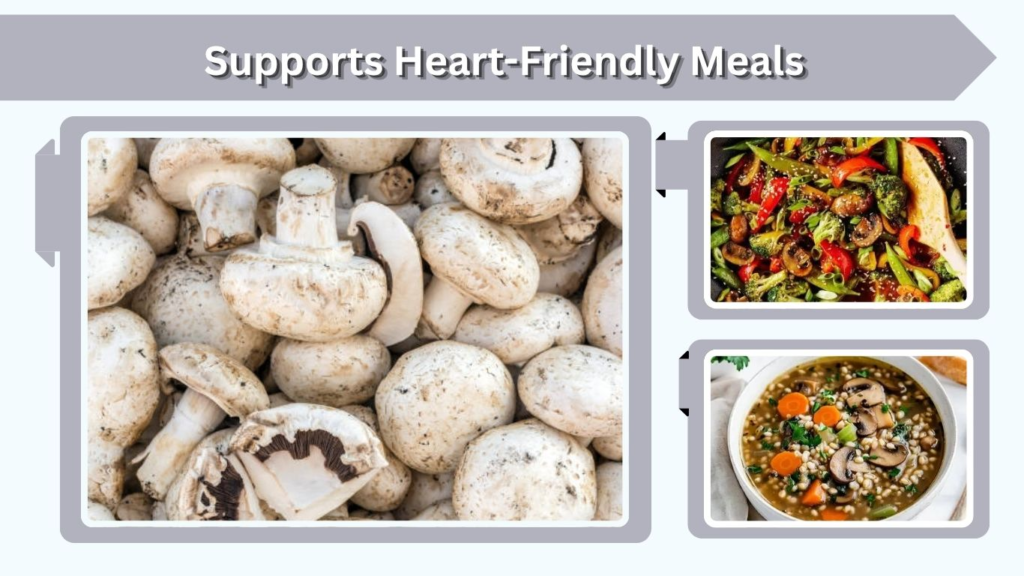
White button mushrooms are naturally free from cholesterol and very low in fat and sodium. This makes them suitable for heart-friendly meals, especially when they replace processed meats or heavy ingredients.
Their savory flavor helps make meals satisfying without relying heavily on salt or rich sauces. Mushrooms contain umami, the same deep savory taste found in foods like tomatoes, soy sauce, aged cheese, and meat. This flavor can make simple dishes taste fuller.
Heart-Smart Cooking Ideas
Try white button mushrooms in:
- Vegetable stir-fries with olive oil
- Lentil and mushroom stew
- Mushroom and barley soup
- Whole-grain pasta with mushrooms and herbs
- Grilled mushroom sandwiches
- Baked fish or chicken with mushrooms
For heart-friendly preparation, avoid cooking mushrooms in large amounts of butter, cream, or salty sauces. Use garlic, pepper, lemon juice, herbs, or a small amount of olive oil for flavor.
Good for Plant-Forward Diets
White button mushrooms are popular in vegetarian, vegan, and flexitarian meals because they add a meaty texture without meat. They are not as high in protein as beans, tofu, lentils, or eggs, but they make plant-based meals more satisfying.
Their texture works well in pasta sauces, tacos, veggie burgers, soups, and casseroles. Finely chopped mushrooms can also be mixed with lentils or beans for a richer filling.
How to Use Them in Meatless Meals
You can add mushrooms to:
- Lentil Bolognese
- Chickpea and mushroom curry
- Mushroom fried rice
- Tofu and mushroom stir-fry
- Mushroom fajitas
- Bean and mushroom chili
They help create depth of flavor, especially when browned properly in a hot pan.
May Help Improve Meal Quality
A simple benefit of white button mushrooms is that they encourage people to eat more whole foods. Adding mushrooms to meals often means adding more vegetables, herbs, and lean proteins too.
For example, a mushroom omelet may include spinach, onions, tomatoes, and eggs. A mushroom soup may include carrots, celery, beans, or barley. A mushroom stir-fry may include broccoli, peppers, tofu, or chicken.
In this way, mushrooms can improve the overall quality of meals, not just because of their own nutrients, but because they fit naturally into balanced recipes.
Raw vs Cooked White Button Mushrooms
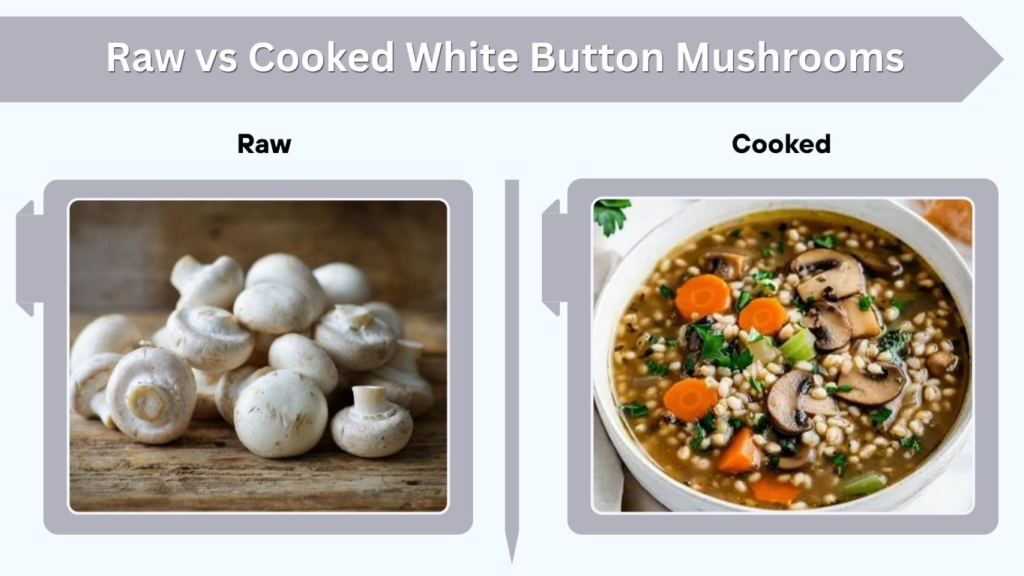
White button mushrooms can be eaten raw or cooked. Raw mushrooms are often sliced into salads or sandwiches. Cooked mushrooms have a deeper flavor and softer texture.
Cooking also reduces their water content, making their savory flavor stronger. Sautéing, roasting, grilling, and simmering are all common methods.
Healthy Cooking Tips
For better flavor and nutrition:
- Wipe mushrooms clean or rinse quickly and dry well
- Slice evenly for even cooking
- Cook over medium-high heat to reduce water
- Use garlic, onions, herbs, or black pepper
- Add salt near the end of cooking
- Avoid overcrowding the pan
If the pan is overcrowded, mushrooms release water and steam instead of browning.
Who Should Be Careful with White Button Mushrooms?
White button mushrooms are safe for most people when bought from a reliable store and prepared properly. Still, some people should be careful.
People with mushroom allergies should avoid them. Anyone who experiences bloating, stomach discomfort, or digestive sensitivity may need smaller portions. People with specific medical conditions or dietary restrictions should follow professional advice.
It is also important not to eat wild mushrooms unless they have been identified by a qualified expert. Some poisonous mushrooms can look similar to edible types, and mistakes can be dangerous.
FAQs
Are white button mushrooms good for you?
Yes, white button mushrooms are good for most people. They are low in calories, low in fat, and provide B vitamins, selenium, copper, potassium, and antioxidants. They can support healthy meals, especially when used with vegetables, whole grains, legumes, lean proteins, and heart-friendly cooking methods.
What are the main benefits of white button mushrooms?
The main benefits include weight-friendly meal support, B vitamin intake, antioxidant compounds, immune-supporting minerals, and possible vitamin D if the mushrooms are UV-exposed. They also add savory flavor and texture, which can help reduce the need for heavy sauces, excess salt, or processed meats.
Can white button mushrooms help with weight loss?
White button mushrooms can support weight loss because they are low in calories and high in water. They add volume and texture to meals, which may help you feel satisfied. However, they work best as part of an overall balanced diet and should be cooked without too much butter, cream, or oil.
Do white button mushrooms contain vitamin D?
Regular white button mushrooms may contain little vitamin D. However, UV-exposed mushrooms can provide meaningful vitamin D2. If you want this benefit, check the label for “UV-exposed” or “vitamin D mushrooms.” Vitamin D supports bone health, calcium absorption, immune function, and muscle health.
Is it better to eat white button mushrooms raw or cooked?
Both raw and cooked white button mushrooms can fit into a healthy diet. Raw mushrooms work well in salads and sandwiches, while cooked mushrooms have a richer flavor and softer texture. Cooking with a small amount of oil, herbs, garlic, and vegetables is usually the best option for everyday meals.