
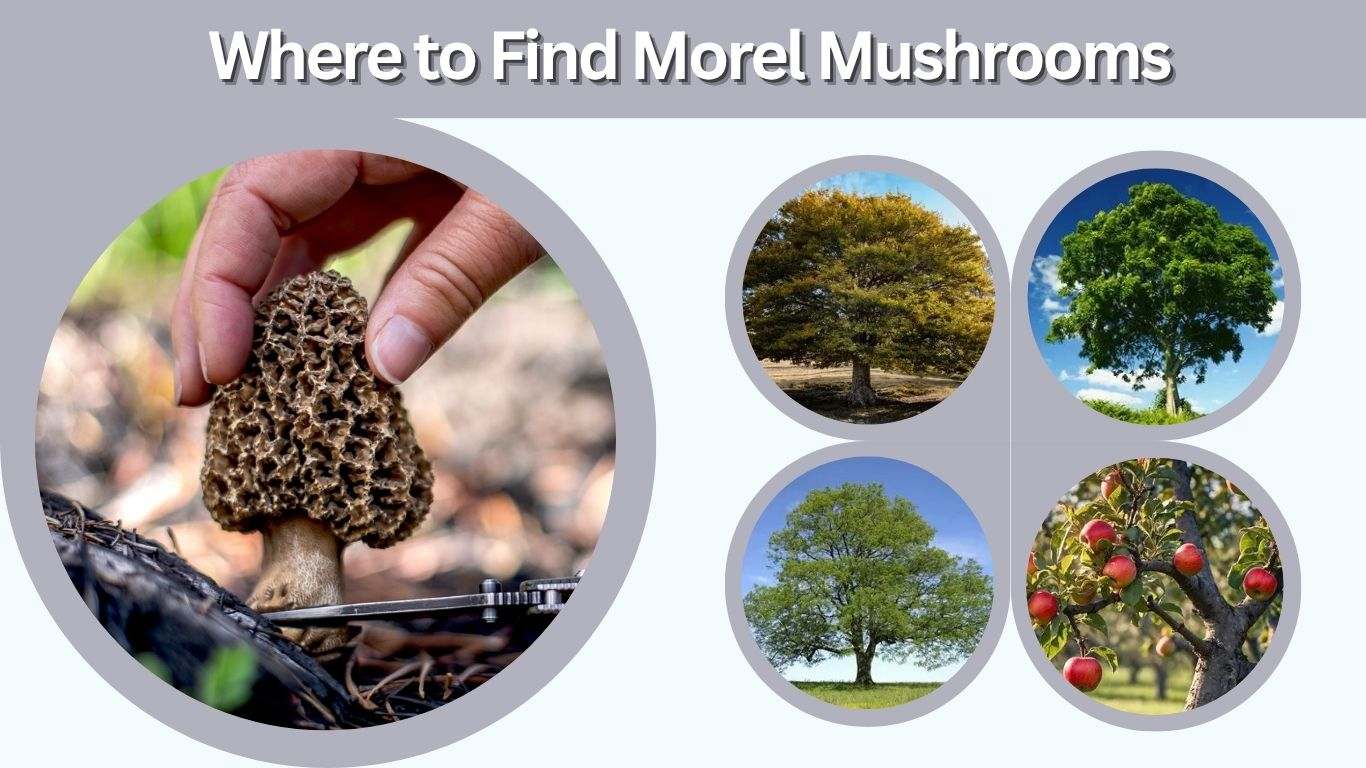
Morel mushrooms are one of the most wanted wild mushrooms because of their honeycomb caps, rich flavor, and short growing season. They usually appear in spring when the ground warms, rainfall is steady, and forest conditions are moist. Finding them takes patience, but knowing the right trees, habitats, and timing can make the search much easier. This guide explains where to find morel mushrooms in the wild and how to look safely.
What Are Morel Mushrooms?
Morel mushrooms are wild edible mushrooms known for their hollow stems and wrinkled, honeycomb-like caps. They are usually found in spring, often after warm rain and steady daytime temperatures. Unlike common grocery mushrooms, morels are usually foraged from natural areas, so correct identification is very important.
Basic Morel Identification
True morels have a distinct look, but beginners should still be careful because false morels can be dangerous. A true morel usually has a cap that is attached directly to the stem and a hollow inside from top to bottom.
Key identification signs include:
- Honeycomb-like cap with deep pits and ridges
- Cap attached to the stem, not hanging loosely
- Hollow stem and cap when sliced lengthwise
- Cream, tan, yellow, gray, or black color depending on type
- Firm but delicate texture
- Grows from soil, not directly from rotting logs
- Usually appears in spring
Never eat a wild mushroom unless you are completely sure of the identification. When in doubt, ask an experienced local forager, mushroom club, or mycology expert.
Why Morels Are Hard to Find
Morels are seasonal and unpredictable. They may appear in one place for several years, then suddenly stop. Weather, soil temperature, moisture, tree health, and forest disturbance all affect their growth.
They are also naturally camouflaged. Their brown, gray, or yellow caps blend with leaves, bark, and soil. Many beginners walk past them without noticing. The best strategy is to move slowly, scan the ground carefully, and focus on the right habitat instead of searching random woods.
When Morels Usually Appear
Morels usually appear in spring, but the exact month depends on the region. In warmer southern areas, they may start earlier. In northern areas, the season often begins later.
A useful sign is when daytime temperatures become mild and nights are no longer freezing. Many foragers watch for soil warmth, spring rain, budding trees, and blooming woodland plants. Morels often fruit after a few warm days followed by moisture.
Best Places to Find Morel Mushrooms
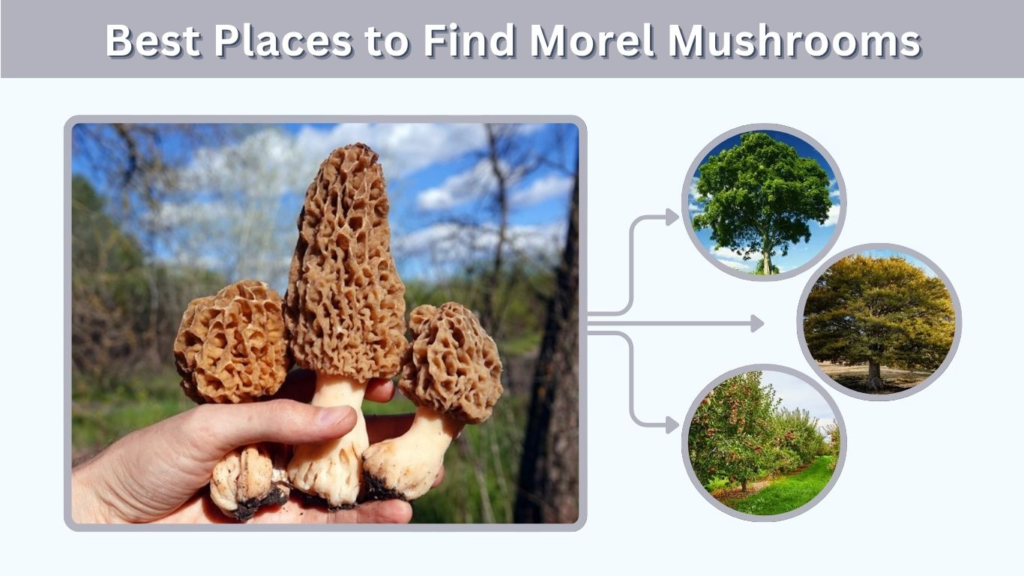
The best place to find morel mushrooms is usually a moist woodland with the right trees and spring conditions. Morels are often found near dead or dying trees, river bottoms, old orchards, south-facing slopes early in the season, and shaded forest areas later in the season.
| Place to Look | Why Morels Grow There | Best Time to Check |
| Elm trees | Dead or dying elms can trigger morel growth | Early to mid-spring |
| Ash trees | Common morel habitat in many regions | Mid-spring |
| Apple orchards | Old root systems and disturbed soil can support morels | Spring after rain |
| River bottoms | Moist soil and rich organic matter | Mid to late spring |
| South-facing slopes | Warm earlier than shaded areas | Early season |
| North-facing slopes | Stay cooler and moist longer | Late season |
| Burn areas | Disturbed soil can produce morels | Spring after wildfire years |
| Forest edges | Good balance of light, moisture, and leaf litter | Throughout season |
Near Dead or Dying Elm Trees
One of the classic places to find morel mushrooms is near dead or dying elm trees. When an elm tree starts to die, it can create conditions that support morel growth nearby. Many experienced foragers check around the drip line of old elms, where the outer branches reach over the ground.
Look for loose bark, dead limbs, and standing trees with signs of decline. Morels may grow a few feet from the trunk rather than directly at the base. Move slowly and scan the leaf litter around the tree.
Around Ash, Apple, and Poplar Trees
Morels are also commonly associated with ash, apple, poplar, cottonwood, and tulip poplar trees in many regions. Old apple orchards can be especially productive, but they should be approached carefully because some old orchards may have chemical residues in the soil.
In wooded areas, learn to recognize tree bark, leaves, and fallen branches. Finding the right tree species can help you narrow your search. Morels do not grow under every tree, but tree identification gives you a better chance than wandering without a plan.
Moist River Bottoms and Creek Edges
River bottoms, creek edges, and low wooded areas can be good morel habitats because they hold moisture and have rich soil. These areas often contain cottonwoods, elms, ash trees, and thick leaf litter.
However, avoid collecting mushrooms from polluted waterways, roadside drainage areas, or places with chemical runoff. Morels can absorb contaminants from their environment. Choose clean, natural areas away from heavy traffic, industrial sites, and treated lawns.
When and Where to Find Morels by Season
Morel hunting changes throughout spring. Early in the season, warmer slopes and open woods may produce first. Later, cooler shaded areas may become better. Understanding this movement helps you keep searching even when one area stops producing.
Early Season Spots
Early in the season, look in places that warm up faster. South-facing slopes, open woodland edges, and sunny patches near dead trees are good starting points. The soil warms faster in these areas, which can encourage early morel growth.
Early-season morels may be smaller and darker. Black morels are often among the first to appear in some regions. Check carefully around leaves, moss, and small plants because young morels can be easy to miss.
Mid-Season Spots
Mid-season is often the most productive time for many foragers. By this point, soil moisture and temperature are more balanced. Wooded hillsides, elm groves, ash areas, old orchards, and river bottoms may all produce.
This is when yellow morels often become more noticeable in many areas. They can grow larger than early morels and may be easier to spot. Still, they blend into tan leaves, so slow searching is important.
Late Season Spots
Late in the season, look in cooler, shaded, and north-facing areas. These places stay moist longer and may continue producing after sunny areas dry out.
Deep woods, shaded creek banks, and higher elevations can be useful late-season locations. Morels may become older and softer during this period, so check freshness before collecting. Avoid mushrooms that are rotten, slimy, or full of insects.
Where to Find Morels in Different Habitats
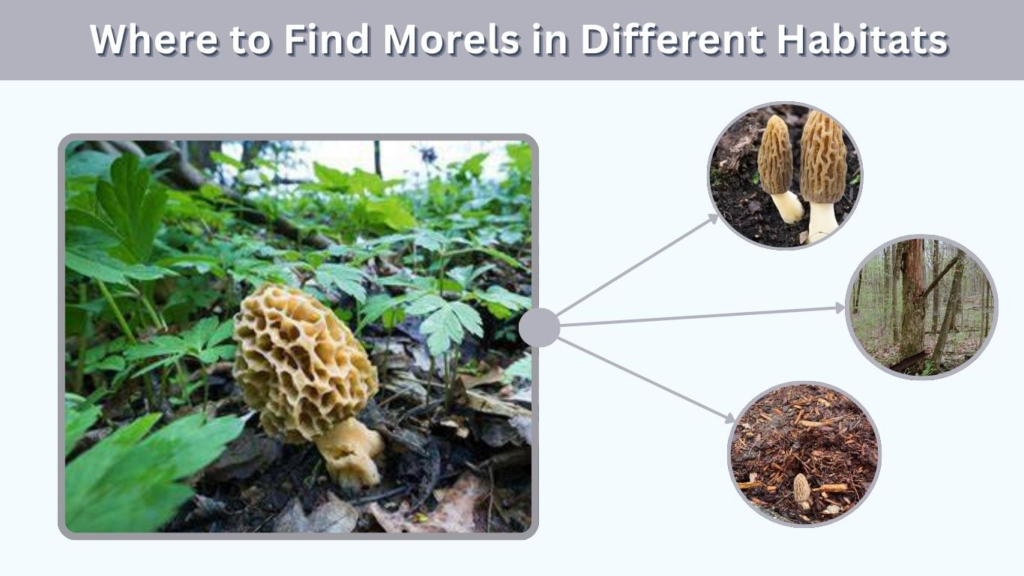
Morels can grow in several types of habitats, but not all woods are equally good. The best habitat usually has spring moisture, leaf litter, suitable trees, and soil that is not too dry or compacted.
Forests and Woodlands
Forests are the most common places to search for morels. Mixed hardwood forests with elm, ash, poplar, cottonwood, or tulip poplar can be productive. Morels may appear along trails, near fallen branches, at the edges of clearings, or around dying trees.
Useful forest signs include:
- Moist but not flooded soil
- Leaf litter from hardwood trees
- Dead or dying trees nearby
- Small spring plants growing
- Good airflow and filtered sunlight
- Areas that warmed recently after rain
- Natural slopes and drainage lines
Avoid digging or disturbing the soil. Morel patches can return if the habitat remains healthy.
Old Orchards and Farm Edges
Old apple orchards are famous morel spots in some regions. Morels may grow around old trees, especially where the ground has leaf litter, grass, and natural moisture. Farm edges, fence lines, and abandoned homesteads can also be worth checking.
Be careful with permission and safety. Do not enter private land without approval. Also, avoid areas that may have been heavily sprayed with pesticides or herbicides. Wild mushrooms from contaminated soil are not a safe choice.
Burn Areas and Disturbed Ground
Some morels grow well after forest fires, logging, or soil disturbance. Burn morels can appear in large numbers in certain western regions after wildfire events. These are often found in burned conifer forests during the spring following a fire.
Disturbed ground does not always produce morels, but it can create opportunities. Check local rules before entering burn zones because some areas may be closed or require permits. Burned landscapes can also have falling trees, unstable soil, and other hazards.
Where to Find Morels Near You
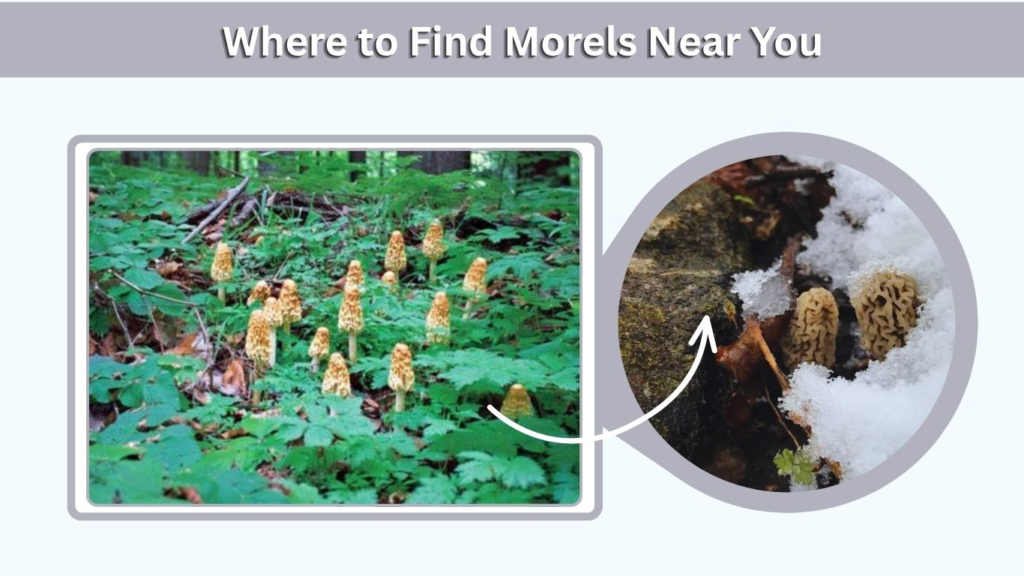
Finding morels near you depends on climate, region, and local land access. The same rules do not work equally everywhere. A good local strategy is to learn your state’s season, common tree associations, and public land rules.
State and Regional Timing
Morel season moves with temperature. Southern states often see morels earlier, while northern states may produce later. Mountain areas can have different timing based on elevation.
General timing pattern:
- Southern regions: late winter to early spring
- Midwest and central regions: spring
- Northern regions: mid to late spring
- Mountain areas: later at higher elevations
- Western burn areas: spring to early summer depending on elevation
These are general patterns, not fixed dates. Weather matters more than the calendar. A cold spring can delay morels, while warm rain can start the season quickly.
Public Land, Parks, and Permission
Some public forests allow mushroom foraging, while others limit or ban it. State parks, national forests, wildlife areas, and local parks may all have different rules. Always check local regulations before collecting.
Important reminders:
- Get permission for private land
- Check permit rules on public land
- Follow daily collection limits
- Avoid protected natural areas
- Do not damage plants or soil
- Carry mushrooms in a breathable mesh bag
- Leave some mushrooms behind
Responsible foraging protects both the habitat and future harvests.
Using Local Clues
Local clues are often more useful than broad advice. Watch spring plant growth, rainfall, tree budding, and reports from nearby areas. If morels are appearing south of you, your area may be next as temperatures rise.
Good clues include blooming mayapple, lilac, trillium, or other spring plants in some regions. These signs are not perfect, but they help you understand seasonal timing. Combine plant clues with weather and habitat for better results.
How to Search for Morel Mushrooms
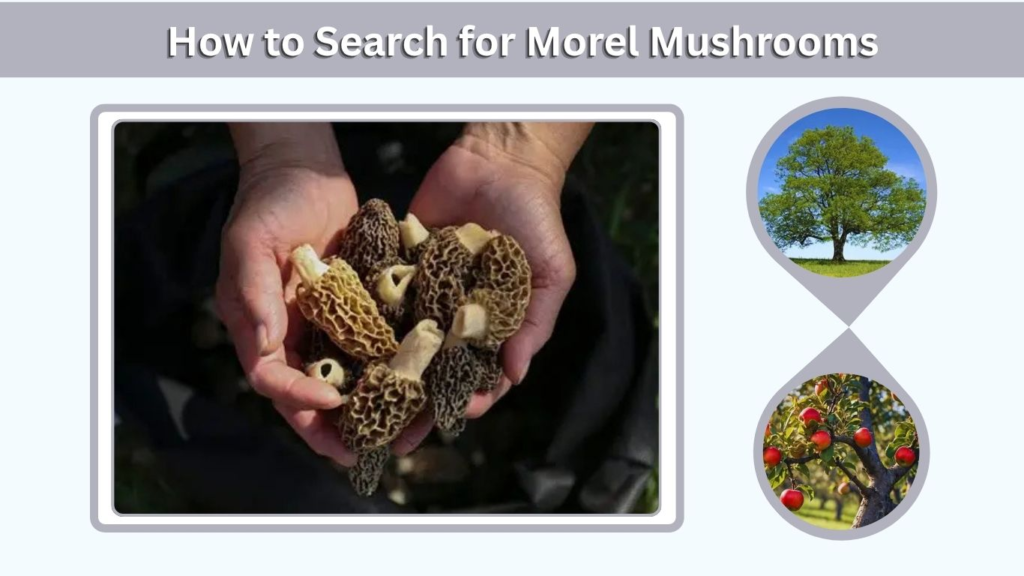
Morel hunting is not about walking fast through the woods. It is about slowing down, choosing good habitat, and training your eyes to notice shapes in leaf litter.
Search Slowly and Low
Walk slowly and scan the ground from different angles. Morels can hide behind leaves, sticks, and small plants. Sometimes you will see one only after crouching down or looking back from another direction.
When you find one morel, stop immediately. Look carefully around the area because morels often grow in groups or scattered patches. Many foragers find the first mushroom, then discover several more nearby after slowing down.
Follow the Right Trees
Tree identification is one of the best skills for finding morels. Instead of searching every forest, focus on trees that are commonly linked with morel growth in your region.
Good trees to check include:
- Dead or dying elm
- Ash
- Apple
- Cottonwood
- Poplar
- Tulip poplar
- Sycamore
- Oak edges in some regions
- Burned conifer areas in western regions
Tree associations vary by location, so learn what works in your area.
Check After Rain
Moisture is important for morels. A warm rain followed by mild weather can create good conditions. However, too much rain can flood low areas, and dry wind can quickly reduce mushroom quality.
The best time to check is often after a period of warming weather and steady moisture. Early mornings can be a good time because mushrooms are fresh and the woods are cooler.
Safety Tips Before Picking Morels
Morels are edible when correctly identified and properly cooked, but mushroom foraging has risks. False morels, polluted areas, and poor handling can all create problems.
Avoid False Morels
False morels can look somewhat similar to true morels, especially to beginners. Some have wrinkled or brain-like caps instead of clear honeycomb pits. Some are not fully hollow inside.
Before eating any morel, slice it lengthwise. A true morel should be hollow from the top of the cap through the stem. If it has cottony material, chambers, or a cap that is not attached properly, do not eat it.
Cook Morels Properly
Morels should not be eaten raw. Cooking helps make them safer and improves flavor. Clean them gently, slice them if needed, and cook thoroughly.
Avoid eating a large amount the first time. Some people may be sensitive even to edible mushrooms. Also, do not mix morels with alcohol if you are unsure how your body reacts, and avoid old or spoiled specimens.
Forage From Clean Areas
Do not collect morels from polluted locations. Mushrooms can absorb substances from soil and water. Avoid roadsides, industrial sites, treated lawns, golf courses, old chemical dump areas, and contaminated riverbanks.
Choose clean forests, natural woodland, and approved public or private land. Safe location choice is just as important as correct mushroom identification.
FAQs
Where is the best place to find morel mushrooms?
The best place to find morel mushrooms is usually a moist hardwood forest with dead or dying elm, ash, apple, cottonwood, or poplar trees. River bottoms, old orchards, forest edges, and spring slopes can also be productive. The right place depends on your region, weather, and local tree species.
When should I start looking for morel mushrooms?
Start looking for morels in spring when nights are no longer very cold, days are mild, and the ground has warmed after rain. Southern areas usually start earlier, while northern areas start later. Watch local weather, soil moisture, and spring plant growth instead of relying only on calendar dates.
Do morels grow in the same place every year?
Morels can grow in the same place for several years, but they are not guaranteed to return. Tree health, moisture, soil conditions, and weather all affect growth. A patch near a dying elm may produce well for a short time, then slow down when the tree and soil conditions change.
Can I find morel mushrooms in my backyard?
You may find morels in a backyard if the conditions are right, especially near old trees, natural soil, mulch-free areas, or old apple trees. However, they are not common in every yard. Avoid eating backyard mushrooms if the area has been treated with chemicals, pesticides, or herbicides.
What trees should I look near for morel mushrooms?
Good trees to check include dead or dying elm, ash, apple, cottonwood, poplar, tulip poplar, and sometimes sycamore. In western burn areas, morels may appear near burned conifers. Tree associations vary by region, so learning local tree patterns can greatly improve your chances.