
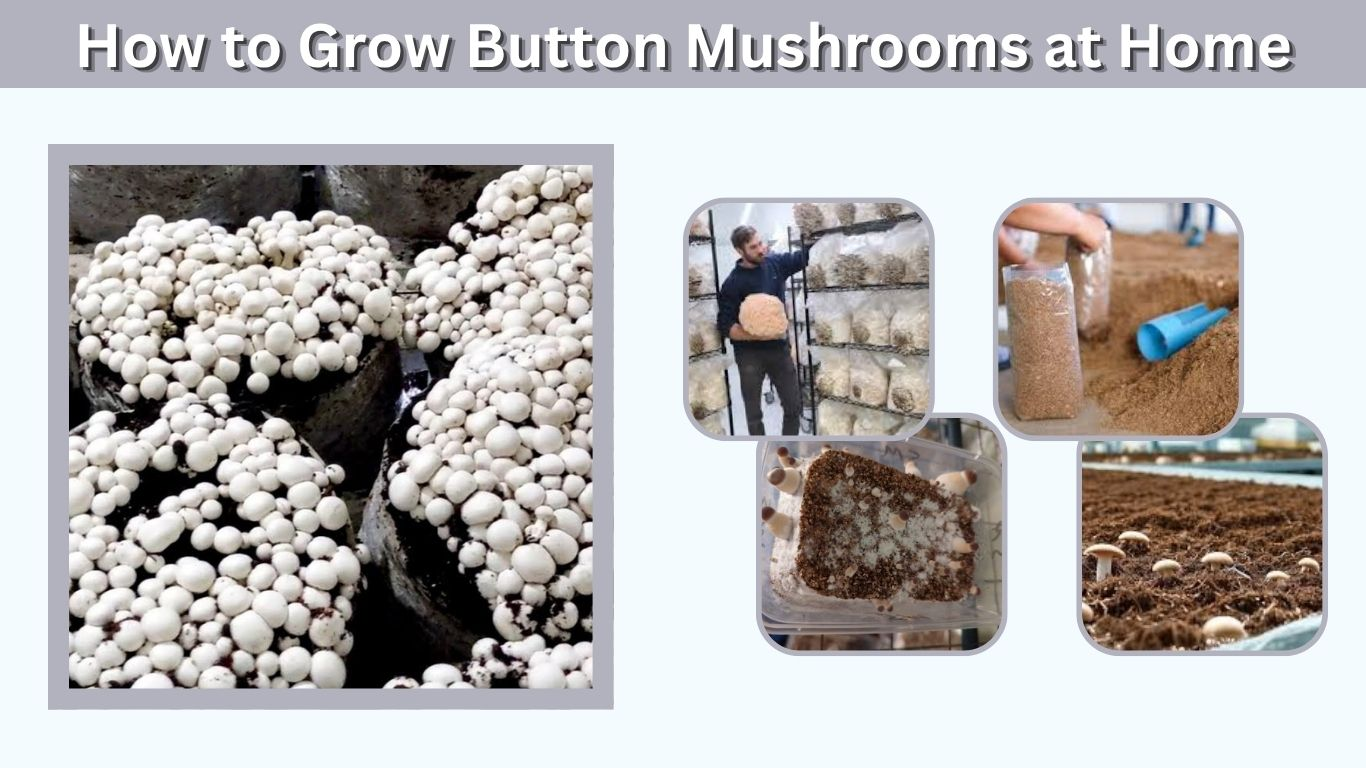
Button mushrooms are one of the most common mushrooms used in home cooking, but many people do not realize they can also be grown at home. Unlike many garden vegetables, button mushrooms need compost, darkness, moisture, and steady temperatures rather than direct sunlight. With the right setup, beginners can grow white button mushrooms indoors using a kit or a prepared growing medium.
What Are Button Mushrooms?
Button mushrooms are the young form of Agaricus bisporus, the same species that also produces cremini and portobello mushrooms at later growth stages. White button mushrooms are harvested early, when the caps are still small, smooth, and closed.
Before growing them, it helps to understand that mushrooms do not grow like plants. They do not need seeds, soil, or sunlight. Instead, they grow from mycelium, which is a network of fungal threads that spreads through a nutrient-rich material.
Why Button Mushrooms Are Different from Garden Crops
Button mushrooms grow best in controlled conditions. A vegetable seed may sprout in soil near a sunny window, but button mushrooms need a more specific environment.
They usually grow on composted material such as manure-based compost, straw compost, or a prepared mushroom substrate. This material must already contain mushroom spawn or be inoculated with spawn before mushrooms can develop.
Are Button Mushrooms Easy to Grow?
Button mushrooms are not the easiest mushroom for complete beginners because they require a prepared compost and a casing layer. Oyster mushrooms are often simpler, especially in coffee grounds or straw.
However, button mushrooms are still possible to grow at home if you use a button mushroom grow kit or buy ready-made compost with spawn already mixed in. A kit removes much of the difficult preparation work.
Best Conditions for Growing Button Mushrooms
Button mushrooms need the right balance of temperature, humidity, airflow, and darkness. If one condition is wrong, the mushrooms may grow slowly, dry out, or fail to fruit.
Here is a simple overview of the basic growing conditions.
| Growing Factor | Best Condition for Button Mushrooms |
| Growing medium | Prepared compost or manure-based mushroom substrate |
| Spawn run temperature | Around 70°F to 75°F |
| Fruiting temperature | Around 55°F to 65°F |
| Humidity | High humidity, usually around 80% to 90% |
| Light | Low light or darkness |
| Growing location | Basement, cupboard, garage, shed, or indoor growing box |
| Harvest time | Usually 3 to 4 weeks after casing, depending on conditions |
Button Mushroom Growing Temperature
Temperature is one of the most important factors. During the early stage, when the mycelium spreads through the compost, button mushrooms need a warmer temperature. This stage is often called the spawn run.
After the mycelium has grown through the compost, the temperature should be lowered to encourage mushrooms to form. This cooler stage is known as fruiting.
For home growers, this usually means keeping the tray in a warm dark place at first, then moving it to a cooler area once the casing layer is added and the surface is colonized.
Humidity and Moisture Needs
Button mushrooms need moisture, but they should not sit in water. The growing medium should feel damp, not soggy. Too much water can cause mold, bacteria, or a sour smell.
Use a spray bottle to mist the surface lightly when it begins to dry. Avoid pouring water directly onto the growing tray because this can compact the casing layer and damage young mushroom pins.
Do Button Mushrooms Need Light?
Button mushrooms do not need sunlight to grow. In fact, they grow well in dark or low-light areas. A basement, cupboard, pantry, or shaded garage can work if the temperature is suitable.
Some indirect light is not harmful, but direct sunlight can dry out the growing medium and raise the temperature too much.
What Do Button Mushrooms Grow On?
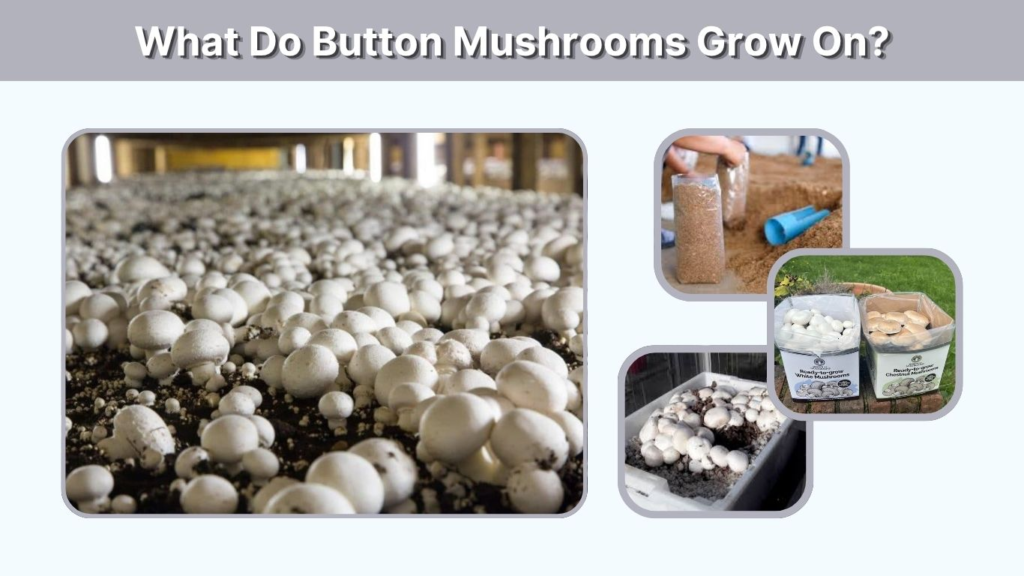
Button mushrooms grow on composted organic material. In commercial production, this is often a carefully prepared compost made from straw, poultry manure, horse manure, gypsum, and other materials.
At home, most beginners should avoid making button mushroom compost from scratch unless they are ready for a more advanced project. The composting process must reach proper temperatures and conditions to remove harmful organisms and prepare the nutrients for the mushroom mycelium.
Best Growing Medium for Button Mushrooms
The best growing medium for button mushrooms is prepared mushroom compost that has already been pasteurized and inoculated with button mushroom spawn.
Good options include:
- A ready-to-use button mushroom growing kit
- Prepared mushroom compost with spawn
- Commercial Agaricus bisporus substrate
- Manure-based mushroom compost from a trusted supplier
These options give beginners a better chance of success than trying to grow button mushrooms from random kitchen scraps.
Can Button Mushrooms Grow in Coffee Grounds?
Button mushrooms are not the best choice for coffee grounds. Coffee grounds are more commonly used for oyster mushrooms because oyster mycelium can colonize them more easily.
Some people search for growing button mushrooms in coffee grounds, but this method is usually unreliable. Coffee grounds alone do not provide the right structure and composted environment that button mushrooms prefer. If you want to experiment with coffee grounds, oyster mushrooms are a better starting point.
How to Grow Button Mushrooms at Home
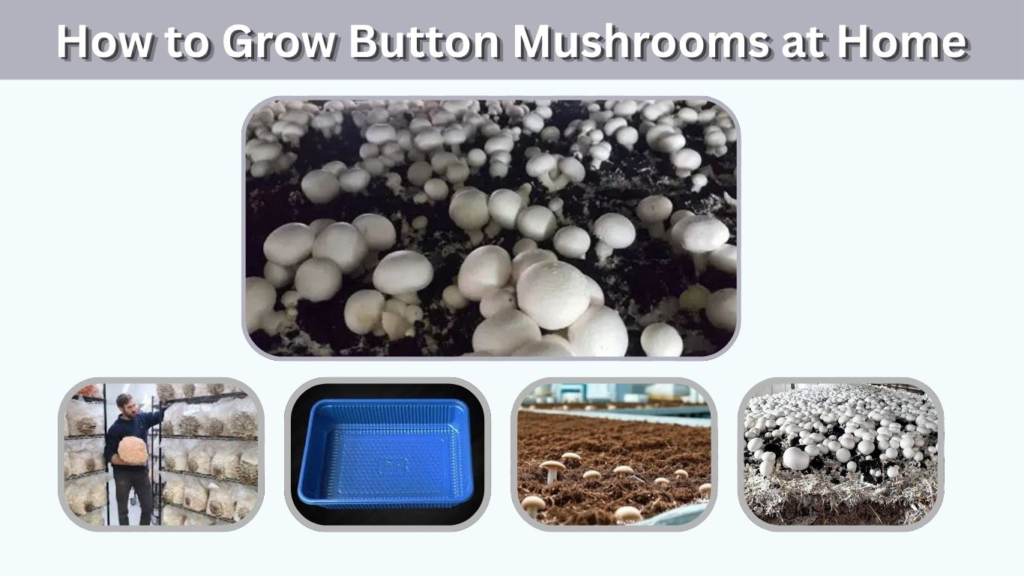
The easiest way to grow button mushrooms at home is to use a button mushroom grow kit. A kit usually includes prepared compost, spawn, and sometimes a casing layer. This allows you to focus on temperature, moisture, and harvesting.
If you are using prepared compost instead of a kit, the steps are similar, but you may need to add the casing layer yourself.
Step 1: Choose a Growing Location
Pick a place that is dark, clean, and easy to control. Good locations include a basement, closet, cupboard, garage, or indoor growing shelf.
The area should not be too hot or too dry. Button mushrooms grow best when the environment stays steady. Sudden changes in temperature can slow growth or stop mushrooms from forming.
Step 2: Prepare the Growing Tray
If you are using a kit, open it according to the instructions. Some kits are already fully prepared, while others require you to add water or spread a casing layer.
If you are using prepared compost, place it in a shallow tray or box. The tray should be deep enough to hold several inches of compost. Gently level the surface without pressing it too tightly.
Step 3: Let the Mycelium Grow
During the first stage, the mushroom mycelium spreads through the compost. Keep the tray warm, usually around 70°F to 75°F, and keep it in darkness or low light.
This stage may take 2 to 3 weeks, depending on the compost, spawn quality, and temperature. You may notice white thread-like growth spreading through the surface. This is a good sign.
Step 4: Add the Casing Layer
Button mushrooms need a casing layer to trigger fruiting. The casing layer is usually a moist material spread over the colonized compost. It does not feed the mushrooms much; instead, it helps hold moisture and creates the right surface conditions for mushroom pins.
Common casing materials include peat-based casing, soil-like casing mix, or casing material supplied with a kit.
Spread the casing layer evenly over the compost. Keep it moist with gentle misting, but do not soak it.
Step 5: Lower the Temperature for Fruiting
After the casing layer is added and the surface begins to show mycelium, reduce the temperature to around 55°F to 65°F. This cooler condition encourages small mushroom pins to appear.
This stage requires patience. Keep humidity high and mist lightly when needed. Avoid letting the surface dry out.
Step 6: Harvest the Mushrooms
Button mushrooms are ready to harvest when the caps are firm, white, and still mostly closed. To harvest, gently twist and pull each mushroom from the casing layer.
Do not cut too deeply into the surface. After harvesting, fill any small holes with casing material and keep the surface moist. More mushrooms may appear in later flushes.
How Long Do Button Mushrooms Take to Grow?
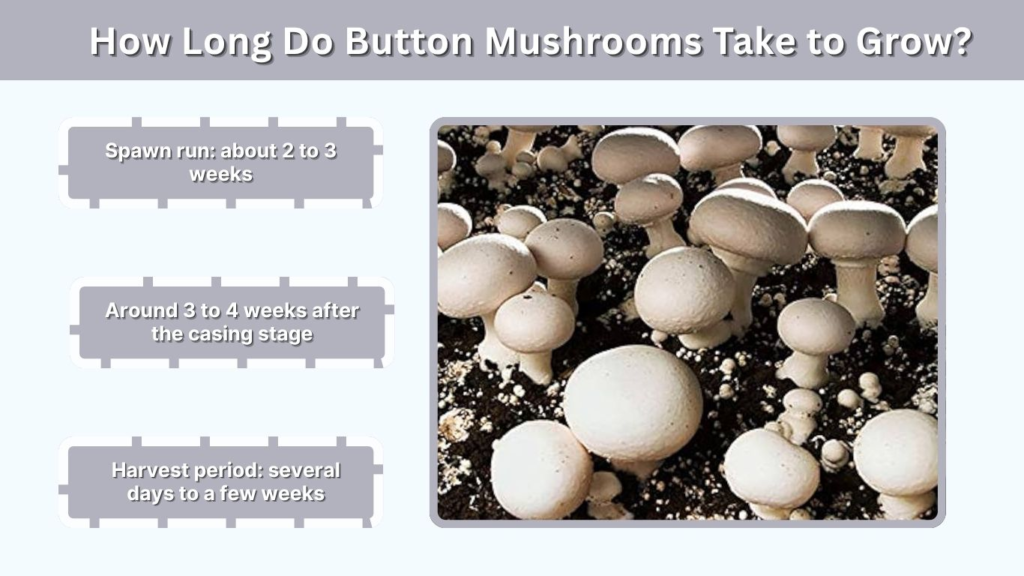
Button mushrooms usually take several weeks from setup to harvest. If you start with a kit or prepared compost, the process is faster than making compost from scratch.
In many home setups, the first harvest may appear around 3 to 4 weeks after the casing stage. The full growing cycle can take longer depending on the kit, temperature, and how well the mycelium colonizes the compost.
Button Mushroom Growing Time by Stage
The growing time can vary, but a general timeline looks like this:
- Spawn run: about 2 to 3 weeks
- Casing and surface colonization: about 1 week
- Pinning and mushroom formation: about 1 to 2 weeks
- Harvest period: several days to a few weeks
If the room is too cold, growth may slow down. If it is too hot, the mycelium may weaken or contamination may become more likely.
Can You Grow Button Mushrooms from Store-Bought Mushrooms?
Many beginners wonder if they can grow button mushrooms from store-bought mushrooms. It is sometimes possible to clone mushrooms from fresh stems using sterile methods, but it is not the easiest method for home growers.
Store-bought mushrooms may be old, treated, contaminated, or too weak to regrow successfully. Even if mycelium grows from a stem, you still need a suitable sterile or pasteurized growing medium.
Growing from Stems vs Growing from Spawn
Growing button mushrooms from stems is more experimental. Growing from spawn is more reliable.
Spawn is a prepared material already colonized by mushroom mycelium. It is designed for starting mushroom growth in compost. For beginners, buying button mushroom spawn or a complete kit is much easier than trying to clone mushrooms from the grocery store.
Can You Grow Button Mushrooms from Spores?
You can grow button mushrooms from spores, but this is usually an advanced method. Spores need sterile handling, agar work, and careful culture selection. Many beginners fail at this stage because contamination grows faster than the mushroom culture.
If your goal is to grow edible mushrooms at home, use spawn or a kit instead of spores.
Growing Button Mushrooms Indoors
Indoor growing is one of the best options for button mushrooms because you can control temperature, moisture, and cleanliness more easily.
A small indoor setup does not need to be expensive. A tray, a dark shelf, a spray bottle, and prepared mushroom compost may be enough for a basic grow.
Best Indoor Places to Grow Button Mushrooms
Good indoor locations include:
- Basement shelves
- Utility rooms
- Cupboards
- Closets
- Garages with stable temperatures
- Indoor grow tents
- Storage boxes with ventilation
The best place is cool, dark, and humid. It should also be away from direct heat, strong sunlight, and dusty airflow.
Growing Button Mushrooms Without a Kit
You can grow button mushrooms without a kit, but you still need the right materials. At minimum, you need prepared compost, button mushroom spawn, a tray, casing material, and a suitable indoor space.
For beginners, the hardest part is getting the compost right. Button mushrooms are more demanding than some other mushrooms, so poor compost often leads to weak growth or contamination.
Button Mushroom Grow Kit: Is It Worth It?
A button mushroom grow kit is often the best choice for beginners. It saves time and removes the most difficult parts of the process. Many kits come with prepared compost and simple instructions.
A kit is especially useful if you want to grow your own button mushrooms at home without learning compost preparation, pasteurization, or spawn production.
What to Look for in a Button Mushroom Growing Kit
When choosing a white button mushroom growing kit, check for:
- Fresh, active mushroom compost
- Clear growing instructions
- Included casing layer
- Good customer reviews
- Suitable shipping conditions
- Expected harvest timeline
- Indoor-friendly packaging
Avoid kits that look dried out, damaged, or poorly stored. Mushroom kits are living products, so freshness matters.
Button Mushroom Kit vs DIY Growing
A kit is better for beginners because it is simple and convenient. DIY growing is better if you want to learn the full mushroom cultivation process and control every step.
A kit costs more per harvest, but it reduces mistakes. DIY growing can be cheaper over time, but it requires more knowledge, space, and preparation.
Common Problems When Growing Button Mushrooms
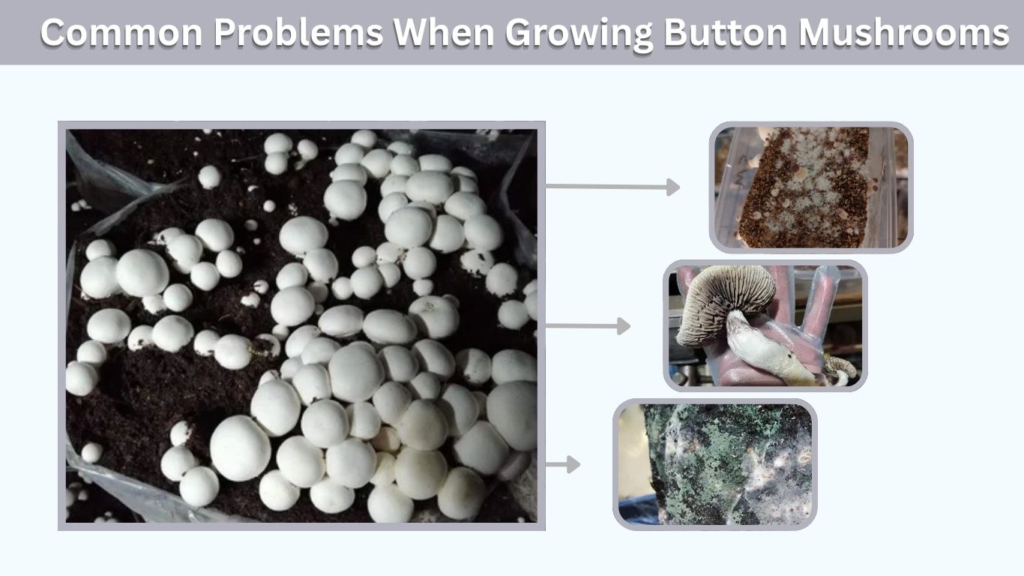
Even with a good setup, button mushrooms can face problems. Most issues come from incorrect moisture, poor temperature control, or contamination.
No Mushrooms Are Appearing
If no mushrooms appear, the temperature may be too warm, the casing layer may be too dry, or the mycelium may not have fully colonized the compost.
Check the growing instructions and make sure the tray has moved from the warm spawn stage to the cooler fruiting stage.
The Surface Is Dry
A dry casing layer can stop mushroom pins from forming. Mist the surface lightly with clean water. Do not flood it.
To hold humidity, you can loosely cover the tray with plastic or use the humidity tent provided with a kit. Make sure there is still some airflow.
Mold Is Growing
Green, black, or strong-smelling mold is a sign of contamination. A small amount of white mycelium is normal, but colorful mold is not.
Contamination can happen when the medium is too wet, the area is dirty, or the compost was not properly prepared. If contamination spreads, it is usually best to discard the batch.
Mushrooms Are Small or Cracked
Small or cracked mushrooms often mean the humidity is too low or the casing surface dried out. Mist more regularly and keep the growing area away from heaters, fans, and direct sunlight.
FAQs
Can I grow button mushrooms at home?
Yes, you can grow button mushrooms at home, especially with a ready-made grow kit or prepared mushroom compost. They need darkness, moisture, cool fruiting temperatures, and a casing layer. They are not as simple as some mushrooms, but beginners can succeed with the right setup.
What is the best temperature for growing button mushrooms?
Button mushrooms usually need warmer temperatures around 70°F to 75°F during the spawn run. For fruiting, they prefer cooler temperatures around 55°F to 65°F. Keeping the temperature steady is important because sudden changes can slow growth or prevent mushrooms from forming.
How long does it take to grow button mushrooms?
Button mushrooms commonly take several weeks to grow. With a kit or prepared compost, the first harvest may appear around 3 to 4 weeks after the casing stage. The total time depends on temperature, moisture, compost quality, and the strength of the mushroom spawn.
Can button mushrooms grow in coffee grounds?
Button mushrooms do not grow well in coffee grounds alone. They prefer prepared compost, usually manure-based or straw-based. Coffee grounds are more suitable for oyster mushrooms. For button mushrooms, use a proper button mushroom substrate, prepared compost, or a complete growing kit.
Can you grow button mushrooms from store-bought mushrooms?
It is possible in some cases, but it is not the easiest or most reliable method. Store-bought mushrooms may be too old or contaminated. Growing from button mushroom spawn or a white button mushroom growing kit gives beginners a much better chance of success.