
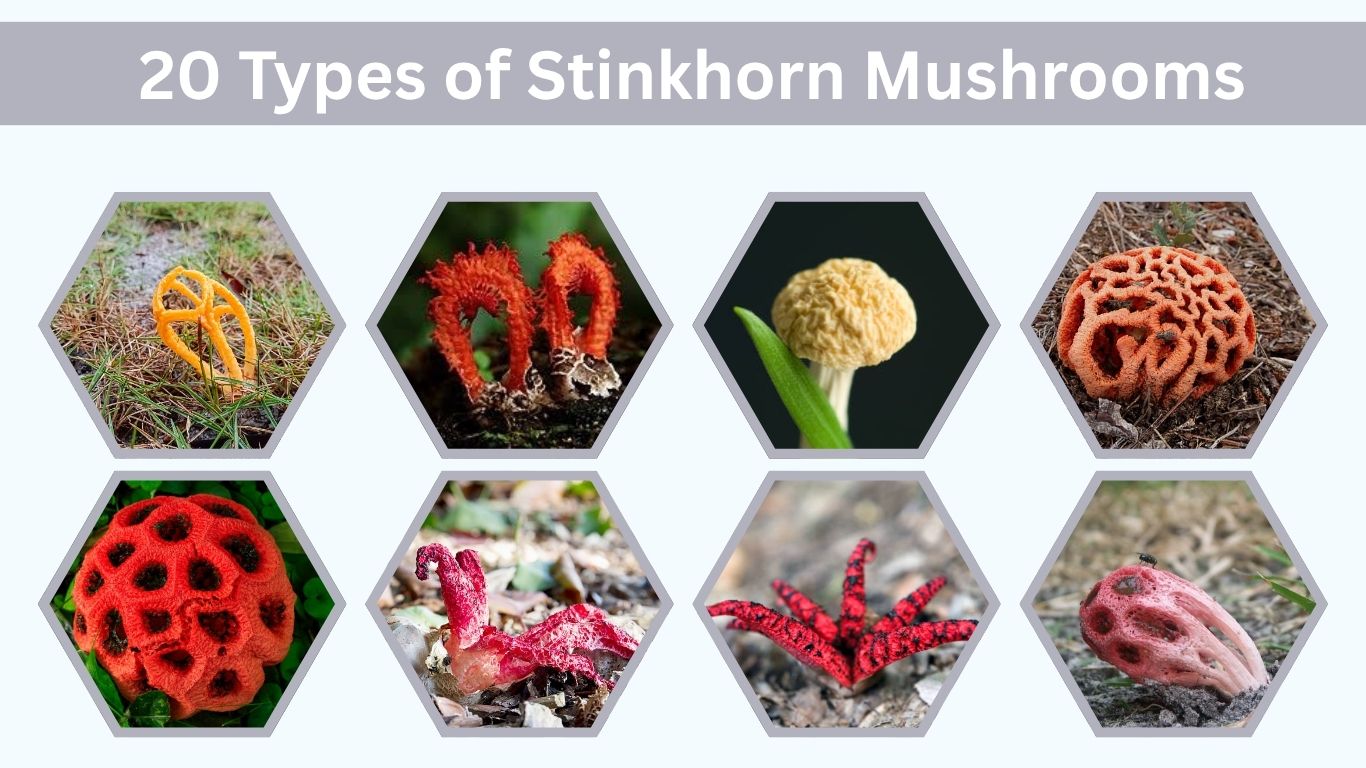
Stinkhorn mushrooms are among the most unusual fungi in the natural world, known for their bizarre shapes and strong, unpleasant odors. Despite their strange appearance, they play an essential role in ecosystems by breaking down organic matter and recycling nutrients. From cage-like structures to elegant veiled forms, these fungi display remarkable diversity. In this guide, you’ll explore 20 different types of stinkhorn mushrooms, each with unique features, habitats, and characteristics that make them fascinating to study.
1. Mutinus caninus

A slender and distinctive stinkhorn species, Mutinus caninus is commonly known as the “dog stinkhorn.” It typically appears in clusters or scattered groups and emerges from a small egg-like structure. As it matures, it develops into a narrow, elongated form that stands upright. This fungus plays an important ecological role by breaking down organic matter, contributing to nutrient cycling in forest and garden environments.
Identification
- Tall, thin, cylindrical shape with a slightly pointed tip
- Color ranges from pale pink to orange or reddish tones
- Tip covered in a dark olive-brown slimy spore mass
- Lacks a clearly defined cap structure
- Develops from a white, gelatinous egg at the base
Habitat
Mutinus caninus is commonly found in moist, shaded areas such as woodlands, gardens, and mulched landscapes. It prefers soil rich in decaying wood, leaf litter, or organic debris. This species often appears after rainfall, especially in warm seasons. It can grow singly or in small clusters and is widely distributed across Europe, North America, and parts of Asia.
Odor
The mature fungus emits a strong, unpleasant odor similar to rotting flesh. This smell is produced by the slimy spore mass at the tip. The odor serves a purpose by attracting flies and other insects, which land on the surface and carry spores away, aiding in reproduction and dispersal.
Edibility
The mature form is not considered edible due to its foul smell and slimy texture. However, the immature egg stage has been reported as edible in some regions. Despite this, it is rarely collected for food, as it lacks culinary appeal and may be easily confused with other less desirable fungi.
2. Mutinus elegans

Mutinus elegans, often called the “elegant stinkhorn” or “devil’s dipstick,” is a striking fungus known for its bright coloration and unusual shape. It emerges from an egg-like structure and quickly grows into a tall, slender form. This species is commonly seen in gardens, mulch beds, and forested areas, especially after rain. Its vivid appearance and strong odor make it easy to notice despite its relatively small size.
Identification
- Slender, upright, and tapering structure
- Bright orange to reddish color throughout the body
- Tip coated with dark olive-green slimy spore mass
- Smooth surface without a distinct cap
- Originates from a whitish egg-like base
Habitat
This species thrives in warm, moist environments and is frequently found in wood chips, compost, and decaying plant material. It commonly appears in gardens, landscaped areas, and forest floors. Mutinus elegans is widely distributed in North America and can also be found in other temperate regions. It tends to grow alone or in small groups, especially during humid weather.
Odor
The mature fungus produces a strong, foul odor similar to decaying organic matter. This smell is most intense at the tip, where the spore mass is located. The odor attracts flies and other insects, which help spread the spores by carrying them to new locations.
Edibility
Like many stinkhorns, Mutinus elegans is not considered edible in its mature form due to its unpleasant smell and texture. While the egg stage is sometimes noted as technically edible, it is rarely consumed. Most people avoid it entirely because of its strong odor and unusual appearance.
3. Phallus impudicus

Phallus impudicus, commonly known as the “common stinkhorn,” is one of the most recognizable stinkhorn mushrooms due to its bold shape and strong odor. It grows rapidly from an underground egg and develops into a tall, spongy structure topped with a slimy spore mass. This species plays a key role in decomposition, breaking down organic matter in its environment.
Identification
- Tall, white, spongy stem with a hollow interior
- Distinct bell-shaped cap covered in olive-brown slime
- Strong contrast between white stem and dark spore mass
- Develops from a round, white egg structure underground
- Slimy coating contains spores and attracts insects
Habitat
This fungus is commonly found in woodlands, gardens, and areas rich in decaying organic material. It prefers moist soil with plenty of leaf litter or wood debris. Phallus impudicus is widespread across Europe, North America, and parts of Asia. It often appears during warm, wet conditions and can grow individually or in small clusters.
Odor
The odor is extremely strong and unpleasant, often compared to rotting meat or sewage. This smell is produced by the slimy spore layer on the cap. It attracts flies and beetles, which land on the fungus and help distribute spores to new locations.
Edibility
The mature mushroom is not edible due to its overpowering odor and slimy texture. However, the egg stage is considered edible in some regions and has a mild taste. Despite this, it is not widely consumed, as many people find it unappealing and prefer to avoid it altogether.
4. Phallus impudicus

Phallus indusiatus, often called the “veiled lady” or “bridal veil stinkhorn,” is a visually striking species known for its delicate, lace-like skirt hanging beneath the cap. It emerges from an egg stage and quickly develops into an elegant structure. Despite its beauty, it shares the typical stinkhorn trait of producing a strong odor to attract insects for spore dispersal.
Identification
- Tall, white, spongy stem with a hollow center
- Bell-shaped cap covered in dark green to olive slimy spores
- Distinctive white, net-like veil (indusium) hanging below the cap
- Develops from a round, gelatinous egg at the base
- Fragile and delicate overall structure
Habitat
This species is commonly found in tropical and subtropical regions, growing in rich, organic soil. It thrives in forests, gardens, and areas with decaying wood or plant matter. Phallus indusiatus often appears after heavy rain and prefers warm, humid environments. It may grow singly or in small groups, particularly in well-shaded locations.
Odor
Like other stinkhorns, it produces a strong, unpleasant odor resembling rotting flesh. The smell originates from the slimy spore mass on the cap. This scent attracts flies and other insects, which help spread the spores as they move from place to place.
Edibility
Unlike many stinkhorns, this species is considered edible and is even used in some cuisines, particularly in parts of Asia. It is typically consumed at the immature egg stage or when fresh and properly prepared. It has a mild flavor and is sometimes used in soups and traditional dishes.
5. Phallus ravenelii

Phallus ravenelii, commonly known as Ravenel’s stinkhorn, is a distinctive species recognized for its spongy texture and strong odor. It emerges from an egg-like structure and quickly grows into a tall form with a well-defined cap. This fungus is often found in gardens and wooded areas, where it contributes to the breakdown of organic material.
Identification
- White to pale pink spongy stem with a hollow interior
- Clearly defined bell-shaped cap with a pitted surface
- Cap covered in dark olive-green slimy spore mass
- Develops from a whitish to pinkish egg at the base
- Often slightly smaller than some other stinkhorn species
Habitat
This species is commonly found in woodlands, gardens, and landscaped areas with rich organic matter. It prefers environments with decaying wood, mulch, or leaf litter. Phallus ravenelii is widely distributed in North America and tends to appear during warm, humid conditions, especially after rainfall. It may grow alone or in small clusters.
Odor
The mature fungus produces a strong, foul odor similar to rotting meat. This smell comes from the slimy spore layer on the cap. The odor attracts flies and other insects, which land on the fungus and help spread its spores to new locations.
Edibility
The mature form is not considered edible due to its unpleasant smell and texture. However, like some other stinkhorns, the immature egg stage is sometimes regarded as edible. Despite this, it is rarely consumed, as most people find it unappealing and prefer to avoid it.
6. Phallus hadriani

Phallus hadriani, often called the “sand stinkhorn” or “dune stinkhorn,” is a unique species known for its preference for sandy environments. It emerges from a pinkish egg and develops into a tall, spongy structure with a distinct cap. This fungus is notable for its ability to grow in coastal areas and disturbed soils, where it helps break down organic material.
Identification
- White to pale stem with a soft, spongy texture
- Bell-shaped cap covered in olive-green slimy spores
- Pink to violet-colored egg at the base
- Hollow interior structure
- Slightly thicker and sturdier than some related species
Habitat
This species is commonly found in sandy soils, including coastal dunes, grasslands, and disturbed urban areas. It thrives in places with buried organic matter such as wood debris. Phallus hadriani is distributed across Europe, parts of Asia, and North America. It often appears after rainfall and can grow singly or in small groups.
Odor
The mature fungus produces a strong, unpleasant smell similar to decaying flesh. This odor originates from the slimy spore layer on the cap. It attracts flies and other insects, which help spread the spores by carrying them to new locations.
Edibility
The mature mushroom is not edible due to its foul odor and slimy texture. However, the immature egg stage is sometimes considered edible in certain regions. Even so, it is not widely consumed, as its appearance and smell make it unappealing to most people.
7. Phallus duplicatus

Phallus duplicatus, commonly known as the “netted stinkhorn,” is closely related to the veiled lady but typically features a shorter and more delicate net-like skirt. It grows rapidly from an egg stage and develops into an elegant yet short-lived fruiting body. This species is often admired for its intricate structure despite its strong odor.
Identification
- White, spongy stem with a hollow interior
- Bell-shaped cap coated in olive-green slimy spores
- Short, lacy white skirt (indusium) hanging beneath the cap
- Develops from a round, gelatinous egg at the base
- Generally smaller and more compact than similar veiled species
Habitat
This species is commonly found in forests, gardens, and areas rich in decaying organic matter. It prefers moist soil with wood debris or leaf litter. Phallus duplicatus is distributed in parts of North America, Europe, and Asia. It typically appears during warm, humid conditions and may grow alone or in small scattered groups.
Odor
Like other stinkhorns, it produces a strong, unpleasant odor resembling rotting flesh. The smell comes from the slimy spore layer on the cap. This odor attracts flies and insects, which assist in spreading the spores to new environments.
Edibility
The mature fungus is not considered edible due to its foul smell and texture. While the egg stage is sometimes noted as edible, it is rarely consumed. Most people avoid this species entirely because of its odor and unusual appearance.
8. Phallus multicolor

Phallus multicolor, often referred to as the “yellow lattice stinkhorn,” is a brightly colored and unusual species known for its vivid tones and net-like structure. It emerges from an egg stage and develops into a hollow, spongy form with a distinctive cap. Its striking appearance makes it stand out in natural settings despite its short lifespan.
Identification
- Bright yellow to orange spongy stem
- Cap covered in olive-green to brown slimy spore mass
- Often features a delicate, lacy skirt beneath the cap
- Develops from a pale, gelatinous egg at the base
- Overall vibrant coloration compared to other stinkhorns
Habitat
This species is commonly found in tropical and subtropical regions, especially in gardens, forests, and landscaped areas with rich organic matter. It thrives in warm, humid conditions and often appears after rainfall. Phallus multicolor is frequently seen in wood chips, mulch, and decaying plant material, growing singly or in small groups.
Odor
The mature fungus emits a strong, foul odor similar to rotting flesh. This smell comes from the slimy spore coating on the cap. It attracts flies and other insects, which land on the fungus and help disperse its spores to new locations.
Edibility
The mature form is not considered edible due to its unpleasant odor and slimy texture. While the egg stage may be technically edible, it is not commonly consumed. Most people avoid this species because of its strong smell and unusual appearance.
9. Phallus rubicundus

Phallus rubicundus, commonly known as the “red stinkhorn,” is a vivid and eye-catching species recognized for its bright reddish tones. It grows quickly from an egg stage into a tall, spongy structure with a prominent cap. This fungus is often found in warm climates and plays an important role in decomposing organic material.
Identification
- Bright red to pinkish spongy stem
- Bell-shaped cap coated in dark olive-green slimy spores
- Smooth, hollow interior structure
- Develops from a whitish to pale egg at the base
- Noticeable color contrast between stem and spore mass
Habitat
This species thrives in tropical and subtropical regions, often appearing in gardens, lawns, and areas with wood mulch or decaying plant matter. It prefers warm, humid conditions and commonly emerges after rainfall. Phallus rubicundus is widely distributed in Asia, Africa, and parts of the Americas, usually growing alone or in small groups.
Odor
The mature fungus produces a strong, unpleasant odor similar to decaying flesh. This smell originates from the slimy spore mass on the cap. It attracts flies and other insects, which assist in spreading the spores by carrying them to new locations.
Edibility
The mature form is not considered edible due to its foul odor and slimy texture. Although the egg stage is sometimes regarded as edible, it is rarely consumed. Most people avoid this species entirely because of its strong smell and unusual appearance.
10. Phallus luteus

Phallus luteus, often called the “yellow stinkhorn,” is a visually striking species known for its bright yellow coloration and delicate structure. It develops بسرعة from an egg stage into a tall, spongy form with a slimy cap. This fungus is commonly found in warm climates and stands out due to its vivid appearance.
Identification
- Bright yellow spongy stem with a hollow interior
- Bell-shaped cap covered in olive-green slimy spores
- Smooth surface with a soft texture
- Develops from a whitish to pale egg-like base
- Overall slender and upright growth form
Habitat
This species typically grows in tropical and subtropical regions, especially in gardens, lawns, and mulched areas. It prefers moist, nutrient-rich soil with decaying organic matter. Phallus luteus often appears after rainfall and thrives in warm, humid environments. It may grow singly or in small clusters.
Odor
Like other stinkhorns, it produces a strong, unpleasant odor similar to rotting flesh. The smell comes from the slimy spore mass on the cap. This odor attracts flies and insects, which help disperse the spores to new locations.
Edibility
The mature fungus is not considered edible due to its foul smell and slimy texture. While the egg stage may be technically edible, it is not commonly consumed. Most people avoid this species because of its strong odor and unusual appearance.
11. Clathrus ruber

Clathrus ruber, commonly known as the “red cage fungus,” is a unique stinkhorn species recognized for its striking lattice-like structure. Instead of a typical stem and cap, it forms a hollow, spherical or oval cage. Its bright red color and unusual shape make it highly noticeable in natural environments.
Identification
- Bright red, cage-like or lattice structure
- Rounded to oval shape with interconnected arms
- Inner surfaces coated with dark, slimy spore mass
- Develops from a whitish egg at the base
- Lacks a traditional stem and cap form
Habitat
This species is commonly found in gardens, woodlands, and mulched areas with rich organic matter. It prefers warm climates and moist conditions, often appearing after rainfall. Clathrus ruber is widely distributed in Europe, North America, and parts of Asia, typically growing अकेले or in small groups.
Odor
The fungus produces a strong, foul odor similar to decaying flesh. This smell originates from the slimy spore coating inside the lattice. It attracts flies and other insects, which land on the surface and help spread the spores.
Edibility
The mature form is not edible due to its unpleasant odor and texture. Although the egg stage is sometimes mentioned as edible, it is rarely consumed. Most people avoid this species entirely because of its strong smell and unusual cage-like appearance.
12. Clathrus archeri

Clathrus archeri, commonly known as the “devil’s fingers,” is a bizarre and eye-catching stinkhorn species. It emerges from an egg stage and splits open into several long, finger-like arms that spread outward. Its unusual shape and vivid color make it one of the most distinctive fungi in its group.
Identification
- Bright red to pink finger-like arms radiating outward
- Typically 4 to 8 elongated arms with dark inner surfaces
- Inner surfaces coated with olive-brown slimy spore mass
- Develops from a pale, gelatinous egg at the base
- Lacks a central stem and traditional cap
Habitat
This species is commonly found in gardens, forests, and mulched areas rich in organic matter. It prefers moist soil and appears during warm, humid conditions, often after rainfall. Clathrus archeri is native to Australia but has spread to Europe and other regions, where it grows singly or in small scattered groups.
Odor
The mature fungus emits a strong, foul odor similar to rotting meat. This smell comes from the slimy spore layer on the inner surfaces of the arms. It attracts flies and insects, which help disperse the spores as they move between locations.
Edibility
The mature form is not considered edible due to its unpleasant odor and slimy texture. While the egg stage is sometimes noted as potentially edible, it is rarely consumed. Most people avoid this species entirely because of its strong smell and unusual, almost alien-like appearance.
13. Clathrus columnatus

Clathrus columnatus, commonly known as the “columned stinkhorn,” is a distinctive species that forms vertical, column-like structures instead of a typical cap and stem. It emerges from an egg stage and quickly develops into a hollow, upright form. Its unusual shape and odor make it easy to identify in suitable environments.
Identification
- Orange to reddish vertical columns forming a hollow structure
- Typically 2 to 5 columns joined at the top
- Inner surfaces coated with dark olive-brown slimy spore mass
- Develops from a whitish, gelatinous egg at the base
- Lacks a traditional cap and stem
Habitat
This species is commonly found in gardens, lawns, and wooded areas with rich organic matter. It prefers warm, humid climates and often appears in mulch, compost, or decaying wood. Clathrus columnatus is widely distributed in tropical and subtropical regions, especially in the Americas, and usually grows singly or in small groups.
Odor
The mature fungus produces a strong, unpleasant odor similar to rotting flesh. This smell originates from the slimy spore coating on the inner surfaces. It attracts flies and other insects, which help disperse the spores to new locations.
Edibility
The mature form is not edible due to its foul smell and slimy texture. Although the egg stage is sometimes considered edible, it is rarely consumed. Most people avoid this species because of its strong odor and unusual column-like appearance.
14. Clathrus crispus

Clathrus crispus is a lesser-known stinkhorn species characterized by its intricate, net-like structure. It develops from an egg stage and expands into a hollow, lattice form with a somewhat irregular pattern. Its delicate yet unusual appearance, combined with the typical stinkhorn odor, makes it both fascinating and easy to recognize.
Identification
- Pale to orange lattice or net-like structure
- Irregular, crinkled (“crisped”) surface pattern
- Hollow interior with interconnected ridges
- Inner surfaces coated with dark olive slimy spore mass
- Develops from a whitish egg-like base
Habitat
This species is typically found in warm, humid environments with abundant organic material. It grows in forests, gardens, and mulched areas, especially where decaying wood or plant matter is present. Clathrus crispus often appears after rainfall and thrives in tropical to subtropical regions, usually growing singly or in small scattered groups.
Odor
The mature fungus emits a strong, unpleasant odor similar to rotting organic matter. This smell comes from the slimy spore layer within the lattice structure. It attracts flies and other insects, which land on the surface and help disperse the spores.
Edibility
The mature form is not considered edible due to its foul smell and slimy texture. While the egg stage is sometimes mentioned as potentially edible, it is rarely consumed. Most people avoid this species because of its odor and unusual, net-like appearance.
15. Aseroe rubra

Aseroe rubra, commonly known as the “anemone stinkhorn” or “sea anemone fungus,” is a highly unusual species recognized for its star-shaped appearance. It emerges from an egg stage and opens into multiple arm-like structures radiating from a central disc. Its striking form and strong odor make it one of the most distinctive stinkhorns.
Identification
- Bright red to pink star-shaped structure
- Multiple arm-like rays spreading outward from the center
- Central disc coated with dark olive-brown slimy spore mass
- Develops from a pale, gelatinous egg at the base
- Lacks a traditional stem and cap
Habitat
This species is commonly found in gardens, forests, and mulched areas rich in organic matter. It prefers warm, humid climates and often appears after rainfall. Aseroe rubra is native to Australia but has spread to other regions, including parts of Europe and North America, where it grows singly or in small groups.
Odor
The mature fungus produces a strong, foul odor similar to rotting flesh. This smell originates from the slimy spore mass in the central disc. It attracts flies and other insects, which help disperse the spores to new locations.
Edibility
The mature form is not edible due to its unpleasant smell and texture. Although the egg stage is sometimes considered edible, it is rarely consumed. Most people avoid this species because of its strong odor and unusual star-like appearance.
16. Aseroe arachnoidea

Aseroe arachnoidea is a rare and unusual stinkhorn species known for its spider-like appearance. It develops from an egg stage and expands into a flattened structure with radiating arms connected by a web-like pattern. Its distinctive form and strong odor make it easily recognizable among stinkhorn fungi.
Identification
- Flattened, star-like structure with webbed or net-like connections
- Radiating arms resembling spider legs
- Surface coated with dark olive-brown slimy spore mass
- Develops from a pale, gelatinous egg at the base
- Lacks a central stem and traditional cap
Habitat
This species is typically found in tropical and subtropical regions, growing in forests, gardens, and areas rich in decaying organic matter. It prefers warm, moist conditions and often appears after rainfall. Aseroe arachnoidea is less common than related species and usually grows singly or in small scattered groups.
Odor
The mature fungus emits a strong, unpleasant odor similar to rotting organic material. This smell comes from the slimy spore layer on its surface. It attracts flies and other insects, which assist in dispersing the spores to new environments.
Edibility
The mature form is not considered edible due to its foul smell and texture. While the egg stage may be technically edible, it is rarely consumed. Most people avoid this species because of its strong odor and unusual spider-like appearance.
17. Lysurus mokusin

Lysurus mokusin, commonly known as the “lantern stinkhorn,” is a distinctive species recognized for its upright, ribbed structure and unusual tip. It develops rapidly from an egg stage into a tall, hollow form. Its appearance and strong odor make it a notable member of the stinkhorn group.
Identification
- Tall, cylindrical, and spongy structure with vertical ridges
- Orange to reddish coloration
- Tip covered with dark olive-brown slimy spore mass
- Hollow interior with a slightly expanded top
- Develops from a whitish, gelatinous egg at the base
Habitat
This species is commonly found in forests, gardens, and areas rich in decaying organic matter. It prefers warm, humid environments and often appears in mulch, compost, or leaf litter. Lysurus mokusin is widely distributed in Asia and can also be found in other regions with suitable climates, usually growing singly or in small groups.
Odor
The mature fungus produces a strong, unpleasant odor similar to rotting flesh. This smell originates from the slimy spore mass at the tip. It attracts flies and other insects, which help spread the spores as they move from place to place.
Edibility
The mature form is not considered edible due to its foul smell and slimy texture. Although the egg stage is sometimes mentioned as edible, it is rarely consumed. Most people avoid this species because of its strong odor and unusual appearance.
18. Lysurus periphragmoides

Lysurus periphragmoides, often called the “stalked cage stinkhorn,” is a unique species that combines features of both columned and lattice stinkhorns. It emerges from an egg stage and develops into a tall structure topped with a cage-like head. Its unusual form and strong odor make it easily noticeable in suitable habitats.
Identification
- Tall, spongy stalk with a hollow interior
- Orange to reddish coloration
- Cage-like or latticed head at the top
- Inner surfaces coated with dark olive-brown slimy spore mass
- Develops from a whitish, gelatinous egg at the base
Habitat
This species is commonly found in tropical and subtropical regions, growing in gardens, forests, and areas with rich organic material. It prefers warm, moist environments and often appears in mulch, compost, or decaying plant matter. Lysurus periphragmoides typically grows singly or in small scattered groups, especially after rainfall.
Odor
The mature fungus produces a strong, unpleasant odor similar to rotting flesh. This smell comes from the slimy spore layer on the cage-like head. It attracts flies and other insects, which help disperse the spores to new locations.
Edibility
The mature form is not considered edible due to its foul smell and slimy texture. While the egg stage may be technically edible, it is rarely consumed. Most people avoid this species because of its strong odor and unusual cage-like structure.
19. Laternea triscapa

Laternea triscapa, commonly known as a “lantern stinkhorn,” is a visually distinctive species with a cage-like structure supported by arching columns. It develops from an egg stage and expands into a hollow, airy form. Its unusual shape and strong odor make it stand out among other stinkhorn fungi.
Identification
- Three to five arching orange to red columns
- Columns join at the top to form a lantern-like shape
- Inner surfaces coated with dark olive-brown slimy spore mass
- Hollow, open structure without a true cap
- Develops from a whitish, gelatinous egg at the base
Habitat
This species is typically found in tropical and subtropical regions, growing in forests, gardens, and mulched areas rich in organic matter. It prefers warm, humid conditions and often appears after rainfall. Laternea triscapa usually grows singly or in small groups, especially in areas with decaying wood or plant debris.
Odor
The mature fungus emits a strong, unpleasant odor similar to rotting flesh. This smell originates from the slimy spore coating on the inner surfaces. It attracts flies and other insects, which help disperse the spores by carrying them to new locations.
Edibility
The mature form is not considered edible due to its foul smell and texture. Although the egg stage is sometimes regarded as edible, it is rarely consumed. Most people avoid this species because of its strong odor and unusual lantern-like appearance.
20. Pseudocolus fusiformis

Pseudocolus fusiformis, commonly known as the “stinky squid,” is a fascinating stinkhorn species recognized for its tentacle-like arms. It develops from an egg stage and expands into several elongated arms that curve and join at the tips. Its unusual form and strong odor make it one of the more striking members of the stinkhorn family.
Identification
- Multiple orange to reddish elongated arms
- Arms curve inward and often join at the top
- Inner surfaces coated with dark olive-brown slimy spore mass
- Hollow, soft, and spongy texture
- Develops from a whitish, gelatinous egg at the base
Habitat
This species is commonly found in tropical and subtropical regions, especially in gardens, forests, and mulched areas rich in organic matter. It thrives in warm, humid conditions and often appears after rainfall. Pseudocolus fusiformis typically grows singly or in small scattered groups.
Odor
The mature fungus produces a strong, unpleasant odor similar to rotting flesh. This smell originates from the slimy spore layer on the inner surfaces of the arms. It attracts flies and other insects, which help disperse the spores to new environments.
Edibility
The mature form is not considered edible due to its foul smell and slimy texture. While the egg stage may be technically edible, it is rarely consumed. Most people avoid this species because of its strong odor and unusual, tentacle-like appearance.
FAQs
What are stinkhorn mushrooms?
Stinkhorn mushrooms are a group of fungi known for their strong, unpleasant odor and unusual shapes. They belong to the family Phallaceae and often grow from egg-like structures. Their smell attracts insects, which help spread spores. They are commonly found in gardens, forests, and areas rich in decaying organic matter.
Why do stinkhorn mushrooms smell so bad?
The foul odor comes from a slimy spore mass called gleba, which smells like rotting flesh. This scent attracts flies and other insects. As insects land on the fungus, spores stick to their bodies and are carried away, helping the mushroom reproduce and spread to new locations.
Are stinkhorn mushrooms dangerous to humans?
Most stinkhorn mushrooms are not toxic to humans. However, they are generally not eaten due to their strong odor and slimy texture. While the immature egg stage of some species is considered edible, proper identification is important to avoid confusion with other fungi.
Where do stinkhorn mushrooms typically grow?
Stinkhorn mushrooms grow in moist environments rich in organic matter, such as forests, gardens, mulch beds, and compost piles. They thrive in warm and humid conditions and often appear after rainfall. They play an important role in breaking down decaying plant material.
How long do stinkhorn mushrooms last?
Stinkhorn mushrooms grow very quickly, sometimes appearing overnight from their egg stage. However, they are short-lived and may only last a few days. Once the spores are dispersed, the structure begins to break down and decay rapidly in its natural environment.