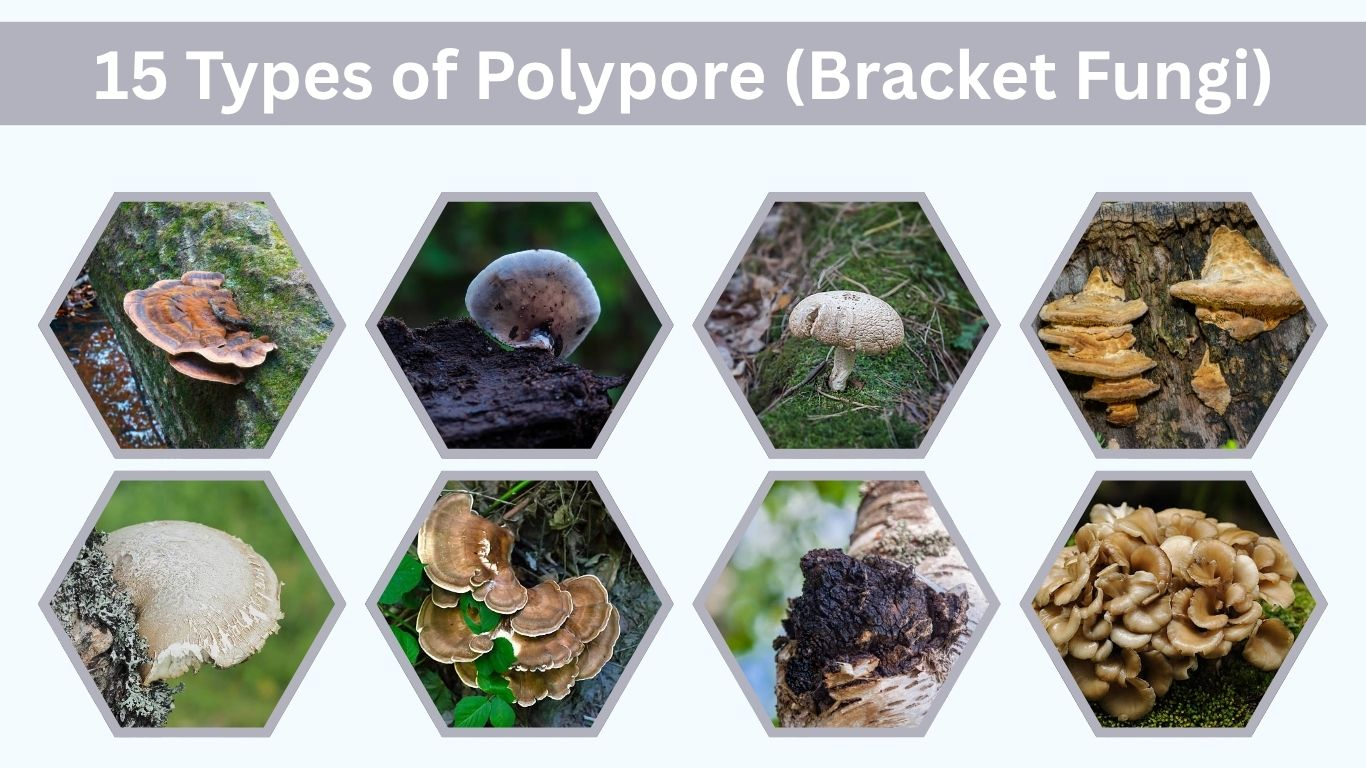
Polypore fungi, also known as bracket fungi, are a unique group of mushrooms that grow primarily on wood and feature pores instead of gills. They play a vital role in forest ecosystems by breaking down dead trees and recycling nutrients. Some species are valued for food or traditional uses, while many are known for their tough, woody structure. These fungi come in a wide range of shapes, sizes, and colors, making them both interesting and important to study. This guide covers 15 common types to help with identification and understanding.
1. Ganoderma lucidum

Ganoderma lucidum, commonly known as reishi or lingzhi, is one of the most प्रसिद्ध medicinal bracket fungi. It has been used for centuries in traditional practices, especially in Asia, for its potential health benefits. This fungus is easily recognized by its glossy, varnished appearance and woody texture, making it quite different from soft, edible mushrooms.
Identification
- Cap: Kidney-shaped, reddish-brown with a shiny, lacquered surface
- Underside: White to light brown pores, not gills
- Texture: Hard, woody, and tough
- Stem: Often present, off-center, with a similar glossy appearance as the cap
- Spore Print: Brown
Habitat and Distribution
Ganoderma lucidum grows on hardwood trees, especially oak, maple, and elm. It is typically found on decaying logs, stumps, or the base of living trees. This species is widely distributed across Asia, Europe, and North America. It prefers warm and humid environments and usually appears from late spring through autumn.
Uses and Benefits
This fungus is not eaten as a typical food due to its tough texture and bitter taste. Instead, it is widely used in teas, powders, and extracts. It is traditionally associated with supporting immunity and overall wellness. Modern use focuses on supplements rather than direct consumption.
Look-Alikes and Safety
Ganoderma lucidum may resemble other Ganoderma species, many of which also have similar properties. While generally considered safe in processed forms, it should not be consumed raw due to its hardness. Proper identification is important, especially when used for medicinal purposes.
2. Trametes versicolor

Trametes versicolor, commonly known as turkey tail, is a widely recognized bracket fungus named for its colorful, banded appearance that resembles a turkey’s tail. It is one of the most common polypores found in forests and is especially valued for its traditional and modern uses. Its thin, fan-shaped structure and vibrant patterns make it easy to identify.
Identification
- Cap: Thin, fan-shaped with concentric rings of brown, gray, white, and sometimes blue or green
- Underside: White to cream with very small, dense pores
- Texture: Flexible when fresh, becoming tough when dry
- Stem: Usually absent, attached directly to wood
- Spore Print: White
Habitat and Distribution
Trametes versicolor grows on dead or decaying hardwood, such as oak and maple. It is commonly found on fallen logs, stumps, and branches. This species is widely distributed across the world, including North America, Europe, and Asia. It thrives in moist environments and can be found year-round, though it is most visible in cooler, damp seasons.
Uses and Benefits
This fungus is not typically eaten due to its tough texture, but it is widely used in teas, extracts, and supplements. It has a long history in traditional practices and is often associated with immune support. Its popularity has grown in modern wellness communities, making it one of the most studied polypores.
Look-Alikes and Safety
Trametes versicolor can be confused with similar bracket fungi, such as false turkey tail species. Key differences include the presence of pores (not smooth undersides) and its distinct color bands. While generally considered safe in processed forms, proper identification is important before use.
3. Fomes fomentarius

Fomes fomentarius, commonly known as the tinder fungus or hoof fungus, is a well-known bracket fungus recognized for its hard, hoof-shaped structure. It has been used for centuries in traditional applications, especially for fire-starting. This species is not edible but is valued for its durability and historical significance.
Identification
- Cap: Hoof-shaped, gray to brown with a hard, woody surface
- Underside: Pale gray to whitish with fine pores
- Texture: Very hard, woody, and perennial (grows for multiple years)
- Stem: Absent, attached directly to wood
- Spore Print: White
Habitat and Distribution
Fomes fomentarius commonly grows on hardwood trees such as birch and beech. It is often found on dead or dying trees, as well as fallen logs. This species is widely distributed across Europe, Asia, and North America. It can be seen year-round due to its tough, long-lasting structure, often remaining on trees for several seasons.
Uses and Benefits
This fungus is not used as food due to its extremely hard texture. Historically, it was used as tinder to help start fires, which is how it got its common name. It has also been used in traditional crafts and materials. Today, it is mainly appreciated for its historical importance and unique appearance.
Look-Alikes and Safety
Fomes fomentarius can resemble other hard, hoof-shaped bracket fungi, but its smooth gray surface and common presence on birch trees help distinguish it. It is not toxic but should not be consumed. Proper identification is still recommended when studying or collecting fungi in the wild.
4. Laetiporus sulphureus

Laetiporus sulphureus, commonly known as chicken of the woods, is a bright and eye-catching bracket fungus famous for its vibrant yellow and orange colors. It is one of the few polypores that is widely considered edible and is popular for its meat-like texture. Its bold appearance makes it relatively easy to identify in the wild.
Identification
- Cap: Bright yellow to orange, forming overlapping shelf-like clusters
- Underside: Sulfur-yellow with tiny pores
- Texture: Soft and fleshy when young, becoming crumbly with age
- Stem: Absent or very short, attached directly to wood
- Spore Print: White
Habitat and Distribution
Laetiporus sulphureus grows on hardwood trees such as oak, chestnut, and beech. It is often found on living trees, fallen logs, or stumps. This species is widely distributed across North America, Europe, and parts of Asia. It typically appears from late spring to early autumn and can grow in large, noticeable clusters.
Edibility and Culinary Use
This mushroom is considered edible when young and properly cooked. It has a texture similar to chicken, which gives it its common name. It is commonly sautéed, fried, or used in various dishes. Older specimens become tough and are not recommended for eating. Some individuals may experience sensitivity, so caution is advised.
Look-Alikes and Safety
Laetiporus sulphureus is fairly easy to recognize due to its bright color and growth pattern. However, similar species growing on certain trees may cause digestive issues in some people. It is important to ensure proper identification and avoid consuming it raw. Always try a small amount first to check for any adverse reactions.
5. Polyporus squamosus

Polyporus squamosus, commonly known as dryad’s saddle or pheasant back, is a large and distinctive bracket fungus recognized for its scaly cap pattern and fresh, cucumber-like scent. It commonly grows on hardwood trees and is often found in spring. This species is edible when young, though it becomes tough with age.
Identification
- Cap: Large, fan-shaped, cream to yellow-brown with dark brown scales
- Underside: White to cream with large, angular pores
- Texture: Soft when young, becoming tough and leathery over time
- Stem: Short, thick, often off-center and dark at the base
- Spore Print: White
Habitat and Distribution
Polyporus squamosus grows on hardwood trees such as elm, maple, and ash. It is commonly found on dead or dying trees, logs, and stumps. This species is widely distributed across Europe, North America, and parts of Asia. It typically appears in spring and early summer, often growing in overlapping clusters on tree trunks.
Edibility and Culinary Use
This mushroom is edible when young and tender. It has a mild flavor and a distinctive cucumber-like aroma. It is best sliced thin and cooked thoroughly, often sautéed or added to soups. Older specimens become tough and fibrous, making them unsuitable for eating. Harvesting at an early stage is recommended for best quality.
Look-Alikes and Safety
Polyporus squamosus is fairly easy to identify due to its large size and scaly cap. It may resemble other bracket fungi, but its pattern and scent are distinctive. While generally safe when young, proper identification is still important. Avoid consuming old or tough specimens, as they are not suitable for food.
6. Grifola frondosa

Grifola frondosa, commonly known as maitake or hen of the woods, is a highly valued bracket fungus known for its clustered, leafy appearance and excellent culinary quality. It grows in large, overlapping formations and is often found at the base of trees. This species is popular both as a food and for its traditional uses.
Identification
- Cap: Numerous gray to brown, fan-shaped fronds forming a large cluster
- Underside: White with very small pores
- Texture: Soft and tender when young, becoming tougher with age
- Stem: Branched base rather than a single central stem
- Spore Print: White
Habitat and Distribution
Grifola frondosa typically grows at the base of hardwood trees, especially oak. It is often found in the same location year after year. This species is widely distributed across North America, Europe, and Asia. It prefers temperate forests and usually appears from late summer to autumn, often forming large, heavy clusters near tree roots.
Edibility and Culinary Use
This mushroom is considered an excellent edible species with a rich, earthy flavor and tender texture. It is commonly used in soups, stir-fries, and roasted dishes. It can also be dried or preserved. Its layered structure makes it easy to clean and prepare, and it is highly appreciated in many cuisines.
Look-Alikes and Safety
Grifola frondosa can be confused with similar clustered fungi, such as Meripilus giganteus. The key difference is that maitake does not blacken when bruised. While generally safe, proper identification is important. Only young, fresh specimens should be collected for the best flavor and texture.
7. Phellinus igniarius

Phellinus igniarius, commonly known as the willow bracket, is a tough and woody bracket fungus that commonly grows on hardwood trees. It is not edible but is well known for its durability and long lifespan. This species forms hard, perennial fruiting bodies that can remain attached to trees for many years.
Identification
- Cap: Dark brown to black, hard, crusty, and often cracked with age
- Underside: Brown with very small, dense pores
- Texture: Extremely hard and woody
- Stem: Absent, attached directly to wood
- Spore Print: Brown
Habitat and Distribution
Phellinus igniarius grows on a variety of hardwood trees, especially willow, birch, and alder. It is often found on living or dead trees, causing decay over time. This species is widely distributed across Europe, North America, and parts of Asia. It can be seen year-round due to its perennial nature and slow growth.
Uses and Benefits
This fungus is not edible due to its extremely hard texture. It has been used in traditional practices and sometimes studied for its biological properties. Today, it is mainly of interest to researchers and foragers who study wood-decaying fungi and forest ecosystems.
Look-Alikes and Safety
Phellinus igniarius may resemble other hard bracket fungi, particularly within the Phellinus group. Its dark, rough surface and growth on hardwood trees help distinguish it. While not toxic, it should not be consumed. Proper identification is still recommended when observing fungi in the wild.
8. Fomitopsis pinicola

Fomitopsis pinicola, commonly known as the red-belted conk, is a common and easily recognizable bracket fungus known for its colorful bands along the edge of the cap. It is a tough, woody species that plays an important role in forest ecosystems by breaking down dead wood. Although not edible, it is widely studied and appreciated for its striking appearance.
Identification
- Cap: Hard, hoof-shaped with distinct bands of red, orange, yellow, and brown
- Underside: White to pale yellow with fine pores
- Texture: Very hard, woody, and perennial
- Stem: Absent, attached directly to wood
- Spore Print: White
Habitat and Distribution
Fomitopsis pinicola grows on dead or dying coniferous trees, especially pine, spruce, and fir. It is commonly found on logs, stumps, and standing dead trees. This species is widely distributed across North America, Europe, and Asia. It can be seen year-round due to its durable structure and long lifespan.
Uses and Benefits
This fungus is not edible because of its hard, woody texture. However, it has been used in traditional practices and is sometimes studied for its potential biological properties. It also plays an important ecological role by helping decompose wood and recycle nutrients in forest environments.
Look-Alikes and Safety
Fomitopsis pinicola can resemble other bracket fungi, but its bright red or orange band near the edge of the cap makes it distinctive. While not toxic, it is not suitable for consumption. Proper identification is still recommended when observing or collecting fungi in the wild.
9. Inonotus obliquus

Inonotus obliquus, commonly known as chaga, is a unique and unusual bracket fungus that appears as a black, charred mass on trees rather than a typical shelf-like structure. It is highly valued for its traditional uses and is most commonly found on birch trees. Its rough, cracked exterior makes it easy to distinguish from other polypores.
Identification
- Cap: Irregular, black, cracked surface resembling burnt charcoal
- Underside: Not clearly visible in the sterile conk form
- Texture: Hard, brittle on the outside with a softer, orange-brown interior
- Stem: Absent, grows directly from the tree
- Spore Print: Rarely observed in this form
Habitat and Distribution
Inonotus obliquus grows primarily on birch trees, often on living trunks. It is commonly found in cold, northern climates across Europe, Asia, and North America. This fungus develops slowly and can remain on a tree for many years. It is usually found in forests with a high presence of birch and prefers colder environments.
Uses and Benefits
Chaga is not consumed as a typical mushroom due to its hard texture. Instead, it is commonly processed into teas, powders, or extracts. It has a long history of traditional use and is often associated with wellness practices. Its popularity has increased in modern health communities.
Look-Alikes and Safety
Inonotus obliquus is quite distinctive and unlikely to be confused with other fungi due to its burnt appearance. However, it should not be confused with tree growths or diseases. Proper identification is still important, especially when harvesting for use. It is not eaten raw and must be processed before consumption.
10. Meripilus giganteus

Meripilus giganteus, commonly known as the giant polypore, is a large and impressive bracket fungus that forms massive clusters at the base of trees. It is known for its rapid growth and darkening reaction when handled. While sometimes considered edible when young, it is generally not highly valued due to its texture and potential to cause digestive discomfort.
Identification
- Cap: Large, fan-shaped, pale brown to tan, forming overlapping clusters
- Underside: White with fine pores, quickly turning black when bruised
- Texture: Soft when young, becoming tough and fibrous with age
- Stem: Short and branched from a central base
- Spore Print: White
Habitat and Distribution
Meripilus giganteus grows at the base of hardwood trees, especially beech. It is often found in parks, gardens, and woodland areas. This species is widely distributed across Europe and has also been reported in other regions. It typically appears from summer to autumn and can form very large clusters around tree roots.
Edibility and Culinary Use
This mushroom is sometimes considered edible when young, but it is not widely recommended. Its texture becomes tough quickly, and some people may experience digestive upset after eating it. If used, only young, tender parts should be cooked thoroughly. It is generally less preferred compared to other edible polypores.
Look-Alikes and Safety
Meripilus giganteus can be confused with Grifola frondosa, but it differs by turning black when bruised. This color change is a key identifying feature. While not highly toxic, caution is advised due to possible digestive issues. Proper identification is important before consumption.
11. Piptoporus betulinus

Piptoporus betulinus, commonly known as the birch polypore, is a distinctive bracket fungus that grows almost exclusively on birch trees. It is easily recognized by its smooth, pale appearance and rounded shape. This species has a long history of traditional use and is commonly found in forests where birch is present.
Identification
- Cap: Smooth, rounded to hoof-shaped, white to light brown
- Underside: White with very fine pores
- Texture: Firm and rubbery when fresh, becoming hard with age
- Stem: Absent, attached directly to wood
- Spore Print: White
Habitat and Distribution
Piptoporus betulinus grows almost entirely on birch trees, especially dead or dying ones. It is commonly found on trunks and fallen logs. This species is widely distributed across Europe, North America, and parts of Asia. It can appear throughout the year but is most noticeable from summer to autumn.
Uses and Benefits
This fungus is not typically eaten due to its bitter taste and firm texture. However, it has been used in traditional practices and is sometimes made into teas or extracts. Historically, it has also been used for practical purposes such as sharpening tools and as a natural material.
Look-Alikes and Safety
Piptoporus betulinus is fairly easy to identify due to its exclusive association with birch trees and its pale, smooth surface. It has few close look-alikes, making it a good species for beginners to recognize. While not toxic, it is not considered a food mushroom, so proper use and identification are still important.
12. Daedalea quercina

Daedalea quercina, commonly known as the oak mazegill, is a distinctive bracket fungus recognized for its maze-like pore structure on the underside. It is a tough, woody species that commonly grows on oak wood. This fungus is not edible but is interesting due to its unique pattern and structure.
Identification
- Cap: Thick, bracket-shaped, gray to brown with a rough surface
- Underside: Maze-like pores forming elongated, gill-like patterns
- Texture: Very hard and woody
- Stem: Absent, attached directly to wood
- Spore Print: White
Habitat and Distribution
Daedalea quercina grows primarily on oak trees, especially on dead logs, stumps, and fallen branches. It prefers well-decayed wood and is commonly found in forests where oak is present. This species is widely distributed across Europe, North America, and parts of Asia. It can be seen year-round due to its tough and long-lasting structure.
Uses and Benefits
This fungus is not edible because of its extremely hard texture. It has no significant culinary use but is valued for study and observation due to its unusual pore structure. It plays an important ecological role by helping break down dead wood and recycle nutrients in forest environments.
Look-Alikes and Safety
Daedalea quercina may resemble other maze-like bracket fungi, but its strong association with oak and thick, woody body help distinguish it. While not toxic, it is not suitable for consumption. Proper identification is recommended when studying or collecting fungi in the wild.
13. Albatrellus ovinus

Albatrellus ovinus, commonly known as the sheep polypore, is a ground-growing polypore that differs from many bracket fungi by not growing directly on wood. It is valued as an edible species and is known for its pale color and firm texture. This mushroom is often found in clusters and is a good example of a terrestrial polypore.
Identification
- Cap: White to pale cream, smooth and slightly irregular in shape
- Underside: White with small, dense pores
- Texture: Firm and fleshy when young
- Stem: Short, thick, and centrally attached
- Spore Print: White
Habitat and Distribution
Albatrellus ovinus grows on the ground in coniferous forests, especially under pine and spruce trees. It prefers mossy or well-drained soil rather than decaying wood. This species is widely distributed across Europe, North America, and parts of Asia. It typically fruits from summer to autumn and often appears in groups or clusters.
Edibility and Culinary Use
This mushroom is considered a good edible species when young. It has a mild flavor and a firm texture, making it suitable for sautéing, frying, or adding to various dishes. Older specimens may become tough and less desirable. It is best harvested while still soft and fresh for optimal taste and texture.
Look-Alikes and Safety
Albatrellus ovinus may resemble other pale polypores, but its ground-growing habit and clustered growth help distinguish it. While generally safe to eat, proper identification is important to avoid confusion with less desirable species. As always, caution is recommended when foraging wild mushrooms.
14. Ischnoderma resinosum

Ischnoderma resinosum, commonly known as the resinous polypore, is a soft bracket fungus when young that becomes tougher with age. It is notable for its reddish-brown color and moist, slightly sticky surface. This species is often found on hardwood trees and is sometimes considered edible when very young.
Identification
- Cap: Reddish-brown, soft and velvety when young, becoming darker and tougher
- Underside: White to cream with fine pores
- Texture: Soft and juicy when young, later becoming leathery
- Stem: Absent, attached directly to wood
- Spore Print: White
Habitat and Distribution
Ischnoderma resinosum grows on hardwood trees such as oak, maple, and beech. It is commonly found on fallen logs, stumps, and occasionally on standing dead wood. This species is widely distributed across North America and parts of Europe. It typically fruits from late summer to autumn and often appears singly or in small groups.
Edibility and Culinary Use
This mushroom is edible only when young and tender. At this stage, it has a mild flavor and a soft texture that works well in sautéed dishes or soups. As it matures, it quickly becomes tough and unsuitable for eating. Harvesting at the right stage is important for culinary use.
Look-Alikes and Safety
Ischnoderma resinosum may resemble other brown bracket fungi, but its soft texture when young and slight resinous feel help in identification. While generally safe when young, proper identification is important. Avoid older, hardened specimens as they are not suitable for consumption.
15. Bjerkandera adusta

Bjerkandera adusta, commonly known as the smoky polypore, is a thin and widespread bracket fungus recognized for its grayish tones and darkening pore surface. It is commonly found on decaying wood and plays an important role in breaking down organic material in forests. This species is not edible but is frequently encountered in woodland environments.
Identification
- Cap: Thin, gray to brown with a slightly velvety surface
- Underside: White when fresh, quickly turning gray to black with age
- Texture: Thin, flexible when young, becoming tougher over time
- Stem: Absent, attached directly to wood
- Spore Print: White
Habitat and Distribution
Bjerkandera adusta grows on dead hardwood, such as oak, beech, and birch. It is commonly found on fallen logs, branches, and stumps. This species is widely distributed across Europe, North America, and Asia. It can appear throughout the year, especially in moist conditions, and often forms overlapping clusters on decaying wood.
Uses and Benefits
This fungus is not edible due to its thin and tough texture. However, it is important ecologically as it helps decompose wood and recycle nutrients. It is also studied for its potential role in breaking down environmental pollutants, making it of interest in scientific research.
Look-Alikes and Safety
Bjerkandera adusta may resemble other thin bracket fungi, but its smoky-gray appearance and darkening pore surface are key identifying features. It is not considered toxic but has no culinary value. Proper identification is still recommended when observing fungi in the wild.
FAQs
What are polypore or bracket fungi?
Polypore fungi are a group of mushrooms that grow on wood and have pores instead of gills on their underside. They often form shelf-like or bracket-shaped structures on trees, logs, or stumps. These fungi play an important role in breaking down wood and recycling nutrients in forest ecosystems.
Are all bracket fungi edible?
No, not all bracket fungi are edible. While some species like Grifola frondosa are highly valued for food, many others are too tough, woody, or bitter to eat. Some may also cause digestive discomfort. Proper identification is essential before consuming any wild fungus.
Where do polypore fungi usually grow?
Polypore fungi typically grow on dead or dying wood, including tree trunks, logs, and stumps. Some species grow at the base of trees, while a few can grow on the ground near tree roots. They are most commonly found in forests and wooded areas.
How can you identify a polypore fungus?
Polypores are identified by their pore surface instead of gills. Key features include cap shape, color, pore size, texture, and the type of wood they grow on. Many also have a tough or woody texture, especially as they mature.
Do bracket fungi grow all year round?
Many bracket fungi can be found year-round, especially the woody and perennial types that remain attached to trees for several seasons. However, some softer species appear mainly during specific times, such as summer or autumn, depending on climate conditions.