
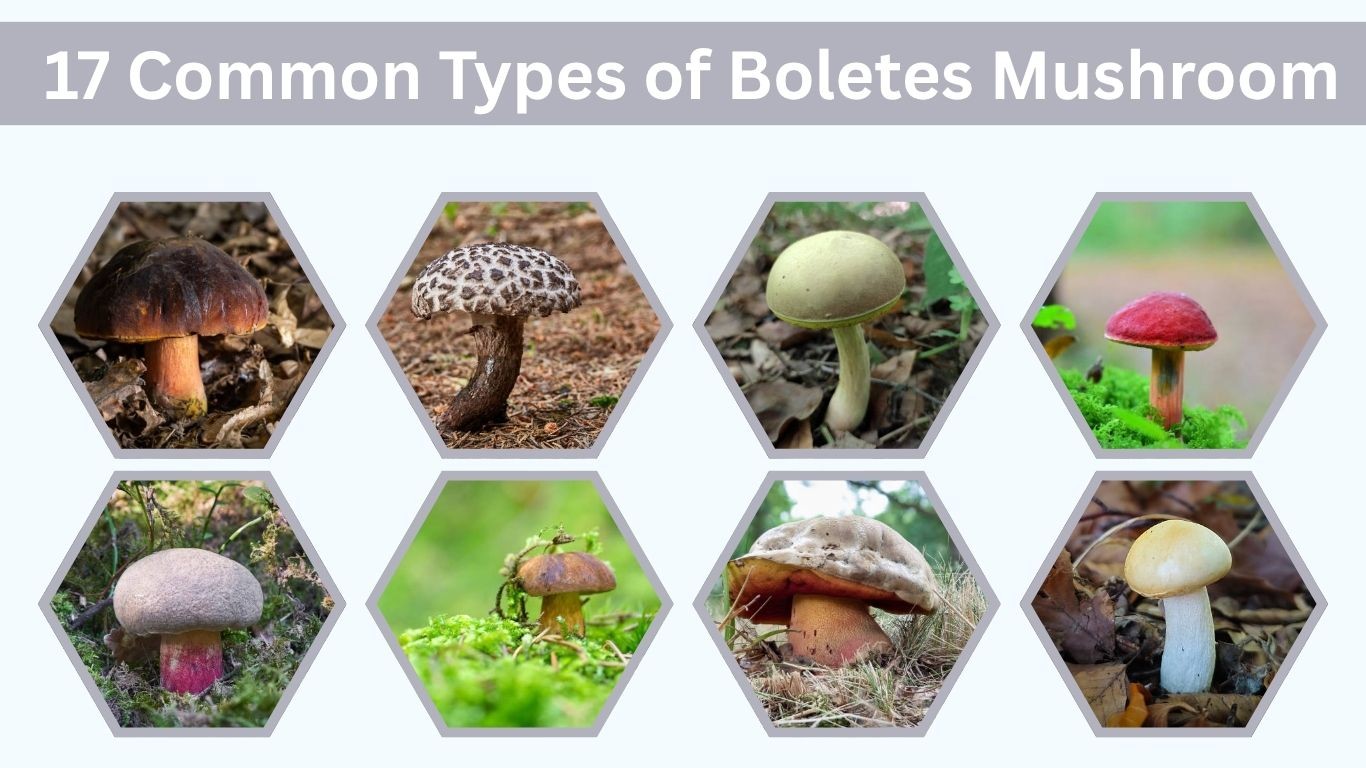
Boletes are a fascinating group of mushrooms known for their sponge-like pore surface instead of gills. They are widely found in forests around the world and form close relationships with trees. Many species are prized for their rich flavor and culinary value, while others are inedible or require caution. Understanding the different types of boletes helps both beginners and experienced foragers identify them more accurately. This guide introduces 17 common bolete species, highlighting their key characteristics, habitats, and uses in a simple and organized way.
1. Boletus edulis

Boletus edulis, commonly known as the porcini or king bolete, is one of the most highly valued wild mushrooms in the world. It is famous for its rich, nutty flavor and firm texture, making it a favorite among chefs and foragers alike. This species forms symbiotic relationships with trees and is widely distributed across Europe, Asia, and North America. Its large size, appealing appearance, and excellent taste make it one of the easiest and most rewarding boletes to recognize and collect in the wild.
Identification
- Cap: Broad and convex, ranging from light brown to deep chestnut; smooth and slightly sticky in damp conditions
- Pores: White when young, gradually turning yellow and then olive-green as it matures
- Stem: Thick, club-shaped, pale brown with a distinct white net-like pattern (reticulation)
- Flesh: Dense, white, and does not change color when cut or bruised
- Spore Print: Olive-brown
Habitat and Distribution
Boletus edulis grows in association with a variety of trees, including pine, spruce, fir, and oak. It prefers well-drained soils in temperate forests and is often found in mossy areas or among leaf litter. The fruiting season typically begins in late summer and continues into autumn, though timing varies depending on climate and rainfall. It can appear singly or in small groups and is often found in the same productive spots year after year, making it a reliable target for experienced foragers.
Edibility and Culinary Use
This species is considered one of the finest edible mushrooms available. Its flavor is deep, earthy, and slightly nutty, becoming even more concentrated when dried. Boletus edulis is commonly used in a wide range of dishes, including soups, risottos, pasta, and sauces. It can be sautéed, grilled, or preserved through drying or freezing. The firm texture holds up well during cooking, making it ideal for both simple and complex recipes.
Look-Alikes and Safety
While Boletus edulis is generally safe and easy to identify, it can be confused with similar species such as Tylopilus felleus, which is extremely bitter but not poisonous. Key differences include the bitter taste and darker pore surface in look-alikes. It is important to avoid any bolete that shows red pores or rapid blue staining, as some of these species may cause gastrointestinal upset. Proper identification and caution are essential before consuming any wild mushroom.
2. Boletus aereus

Boletus aereus, often called the bronze bolete, is a highly prized edible mushroom closely related to Boletus edulis. It is especially valued in Mediterranean regions for its intense flavor and dense texture. This species stands out due to its darker, almost blackish cap and robust appearance. It is considered one of the finest boletes for culinary use and is commonly sought after by experienced foragers.
Identification
- Cap: Dark brown to nearly black, velvety when young, becoming smoother with age
- Pores: White at first, gradually turning yellow and then olive with maturity
- Stem: Thick, swollen, pale to brownish with a fine net-like pattern near the top
- Flesh: Firm, white, does not change color when cut
- Spore Print: Olive-brown
Habitat and Distribution
Boletus aereus typically grows in warm, deciduous forests, especially under oak and chestnut trees. It prefers dry, sunny environments and is most commonly found in southern Europe, though it also appears in other temperate regions. The fruiting season usually occurs from late summer to early autumn. Unlike some other boletes, it thrives in warmer climates and is often found in well-spaced woodland areas rather than dense forests.
Edibility and Culinary Use
This mushroom is highly edible and considered a gourmet ingredient. Its flavor is richer and more intense than Boletus edulis, with a slightly sweet and nutty profile. It is excellent when sautéed, grilled, or dried for later use. Drying enhances its aroma and makes it a popular addition to soups, sauces, and traditional dishes. Its firm texture allows it to hold shape well during cooking.
Look-Alikes and Safety
Boletus aereus has few dangerous look-alikes, but it can be confused with other dark-capped boletes. Care should be taken to distinguish it from bitter or less desirable species. As with all wild mushrooms, proper identification is essential before consumption. Avoid specimens with unusual colors, especially red pores or blue staining, as these may indicate inedible or toxic species.
3. Boletus pinophilus

Boletus pinophilus, commonly known as the pine bolete, is another highly regarded edible mushroom within the porcini group. It is especially associated with coniferous forests and is valued for its rich flavor and sturdy texture. This species is slightly less common than Boletus edulis but equally appreciated by mushroom hunters. Its reddish-brown tones and preference for pine habitats make it relatively distinctive in the field.
Identification
- Cap: Reddish-brown to dark chestnut, often with a slightly wrinkled or uneven surface
- Pores: White when young, becoming yellow and then olive-green with age
- Stem: Thick and robust, pale with a noticeable white net-like pattern
- Flesh: White, firm, and does not change color when cut
- Spore Print: Olive-brown
Habitat and Distribution
Boletus pinophilus primarily grows in association with pine trees, though it may occasionally appear near other conifers. It favors sandy or acidic soils and is often found in open woodland areas, forest edges, or near trails. This species is widely distributed across Europe and parts of North America and Asia. Fruiting typically occurs from late summer through autumn, depending on weather conditions and rainfall patterns.
Edibility and Culinary Use
This mushroom is considered an excellent edible species, comparable in quality to Boletus edulis. It has a rich, earthy flavor with slightly sweet undertones. Boletus pinophilus is versatile in the kitchen and can be sautéed, roasted, or dried. Drying enhances its aroma and preserves it for long-term use. It is commonly added to soups, stews, and pasta dishes, where it contributes a deep, savory taste.
Look-Alikes and Safety
Although generally easy to recognize, Boletus pinophilus may be confused with other porcini-type boletes. Most of these are edible, but some, like Tylopilus felleus, are bitter and undesirable. Careful observation of cap color, habitat, and pore development helps ensure correct identification. As always, avoid consuming wild mushrooms unless identification is certain.
4. Boletus reticulatus

Boletus reticulatus, often referred to as the summer cep, is a well-known edible bolete closely related to Boletus edulis. It is especially valued for appearing earlier in the season and for its mild, pleasant flavor. This species is commonly found in warmer regions and is recognized by its lighter cap and prominent net-like stem pattern. It is a favorite among foragers due to its reliability and culinary quality.
Identification
- Cap: Light to medium brown, often dry and slightly cracked in hot weather
- Pores: White when young, turning yellow and eventually olive with age
- Stem: Thick, pale, with a very pronounced white net-like pattern covering much of the surface
- Flesh: White, firm, and does not change color when cut
- Spore Print: Olive-brown
Habitat and Distribution
Boletus reticulatus typically grows in deciduous forests, especially under oak, beech, and chestnut trees. It prefers warm, dry conditions and is often found in open woodland or grassy forest edges. Unlike many boletes, it fruits earlier in the year, usually from late spring to early autumn. This species is widespread across Europe and can also be found in similar climates elsewhere.
Edibility and Culinary Use
This mushroom is highly edible and considered a choice species. Its flavor is mild, slightly nutty, and less intense than Boletus edulis, making it versatile for various dishes. It can be sautéed, grilled, or dried for later use. Drying enhances its aroma, and it is commonly used in soups, sauces, and traditional recipes. Its firm texture holds up well during cooking.
Look-Alikes and Safety
Boletus reticulatus can resemble other porcini-type boletes, most of which are edible. However, it may be confused with bitter species like Tylopilus felleus. The strong reticulation on the stem and its early fruiting season help distinguish it. As always, proper identification is essential, and caution should be taken when foraging wild mushrooms.
5. Tylopilus felleus

Tylopilus felleus, commonly known as the bitter bolete, is a widespread mushroom that is often mistaken for edible porcini species. While it is not considered toxic, its extremely bitter taste makes it inedible. Even a small amount can ruin an entire dish. It is commonly found in forests and is an important species for foragers to recognize and avoid.
Identification
- Cap: Brown to tan, smooth and slightly velvety when young
- Pores: White at first, turning pinkish with age
- Stem: Thick, often club-shaped, with a dark brown net-like pattern
- Flesh: White, does not change color when cut
- Spore Print: Pinkish-brown
Habitat and Distribution
Tylopilus felleus grows in both coniferous and deciduous forests, often near pine, spruce, and oak trees. It prefers well-drained soil and is commonly found on forest floors, especially in mossy or shaded areas. This species is widely distributed across Europe, North America, and parts of Asia. It typically fruits from summer to autumn and may appear alone or in small groups.
Edibility and Culinary Use
Although not poisonous, Tylopilus felleus is considered inedible due to its intensely bitter taste. Cooking does not reduce the bitterness, and even a small piece can spoil a meal. Because of this, it has no culinary value. Some foragers may taste a tiny raw piece to confirm identification, but this should be done cautiously and only by experienced individuals.
Look-Alikes and Safety
This mushroom is commonly confused with Boletus edulis and related edible species. The key difference is its bitter taste and the pinkish pores as it matures. The darker net pattern on the stem is also a helpful clue. While it is not toxic, proper identification is important to avoid disappointment when foraging.
6. Leccinum scabrum

Leccinum scabrum, commonly known as the birch bolete, is a widely distributed edible mushroom that is closely associated with birch trees. It is easily recognized by its distinctive stem covered in dark, rough scales. While not as highly prized as porcini, it is still a popular choice among foragers due to its abundance and mild flavor.
Identification
- Cap: Light to dark brown, smooth and slightly convex
- Pores: White when young, becoming grayish with age
- Stem: Slender to thick, covered with dark, rough scales (scabers)
- Flesh: White, may slowly darken slightly when cut
- Spore Print: Brown
Habitat and Distribution
Leccinum scabrum grows almost exclusively in association with birch trees, forming a symbiotic relationship. It is commonly found in forests, woodland edges, and even urban areas where birch is present. This species is widespread across Europe, North America, and parts of Asia. It typically fruits from early summer to late autumn and can appear singly or in groups, often in large numbers during favorable conditions.
Edibility and Culinary Use
This mushroom is edible but considered of moderate quality compared to more prized boletes. It has a mild, slightly earthy flavor and a soft texture when cooked. It is best used fresh in soups, stews, or sautéed dishes. Proper cooking is important, as undercooked specimens may cause mild digestive discomfort in some individuals.
Look-Alikes and Safety
Leccinum scabrum can be confused with other Leccinum species, many of which are also edible. The presence of birch trees and the characteristic scaly stem help with identification. Some related species may cause digestive upset if not cooked thoroughly, so caution is advised. Always ensure accurate identification before consumption.
7. Leccinum aurantiacum

Leccinum aurantiacum, often known as the orange birch bolete or red-capped scaber stalk, is a striking mushroom recognized for its bright orange cap and scaly stem. It is a popular edible species among foragers and is commonly found in association with deciduous trees. Its bold coloration makes it easier to spot compared to many other boletes.
Identification
- Cap: Bright orange to reddish-orange, smooth and slightly convex
- Pores: White when young, turning grayish to brown with age
- Stem: Tall, covered with dark, rough scales (scabers) on a pale background
- Flesh: White, often darkens or turns grayish when cut
- Spore Print: Brown
Habitat and Distribution
Leccinum aurantiacum typically grows in deciduous forests, especially under birch, aspen, and sometimes oak trees. It prefers moist soil and is often found in woodland clearings, forest edges, or grassy areas. This species is widely distributed across Europe, North America, and parts of Asia. It usually fruits from summer to autumn and may appear singly or in small clusters.
Edibility and Culinary Use
This mushroom is considered edible and is commonly collected for food. It has a mild, pleasant flavor and a firm texture when properly cooked. It is often used in soups, stews, and sautéed dishes. Thorough cooking is recommended, as some individuals may experience digestive discomfort if it is undercooked. Its color may darken during cooking, which is normal.
Look-Alikes and Safety
Leccinum aurantiacum can resemble other orange-capped Leccinum species, many of which are also edible. Identification should focus on habitat, cap color, and the characteristic scaly stem. Some related species have been reported to cause mild stomach upset if not cooked well, so proper preparation is important. Always confirm identification before consumption.
8. Suillus luteus

Suillus luteus, commonly known as the slippery jack, is a well-known bolete recognized for its sticky cap and association with pine trees. It is a common species and often found in large numbers, making it a frequent choice for beginner foragers. While edible, it is usually considered of moderate quality compared to more prized boletes.
Identification
- Cap: Brown, shiny, and very slimy or sticky when wet
- Pores: Pale yellow when young, becoming deeper yellow with age
- Stem: Pale with a distinctive white ring (partial veil) near the top
- Flesh: Soft, yellowish to white, does not significantly change color when cut
- Spore Print: Brown
Habitat and Distribution
Suillus luteus grows in close association with pine trees, especially in plantations and coniferous forests. It prefers sandy or well-drained soils and is often found in grassy areas near pines. This species is widely distributed across Europe, North America, and other temperate regions. It typically fruits from late summer to autumn and can appear in large groups under suitable conditions.
Edibility and Culinary Use
This mushroom is edible but generally considered of average quality. The slimy skin on the cap is often removed before cooking, as it can be unpleasant in texture. Suillus luteus has a mild flavor and is commonly used in soups, stews, or sautéed dishes. It is best consumed fresh, as it does not preserve as well as some other boletes.
Look-Alikes and Safety
Suillus luteus is fairly easy to identify due to its sticky cap and ringed stem. It may be confused with other Suillus species, most of which are also edible. However, some individuals may experience mild digestive issues, particularly if the slimy cap skin is not removed. Proper preparation and correct identification are recommended before consumption.
9. Suillus granulatus

Suillus granulatus, commonly known as the weeping bolete, is a widespread species recognized for its sticky cap and association with pine trees. It is similar to Suillus luteus but lacks a ring on the stem. This mushroom is commonly found in large numbers and is a familiar sight in coniferous forests, especially during the rainy season.
Identification
- Cap: Yellow-brown to orange-brown, smooth and very sticky when wet
- Pores: Pale yellow, often exuding milky droplets when young
- Stem: Pale yellow, smooth, without a ring
- Flesh: Soft, yellowish, does not significantly change color when cut
- Spore Print: Brown
Habitat and Distribution
Suillus granulatus grows in close association with pine trees and is often found in sandy or well-drained soils. It commonly appears in pine forests, plantations, and grassy areas near conifers. This species is widely distributed across Europe, North America, and parts of Asia. Fruiting usually occurs from summer to autumn, often in large clusters after rainfall.
Edibility and Culinary Use
This mushroom is edible but considered to be of moderate quality. Like other Suillus species, the slimy cap skin is often removed before cooking to improve texture. It has a mild flavor and is best used in soups, stews, or sautéed dishes. It is typically consumed fresh, as it does not dry or preserve particularly well.
Look-Alikes and Safety
Suillus granulatus can be confused with other Suillus species, especially Suillus luteus. The absence of a ring on the stem is a key distinguishing feature. While generally safe to eat, some people may experience mild digestive discomfort. Proper identification and preparation are important when consuming wild mushrooms.
10. Xerocomellus chrysenteron

Xerocomellus chrysenteron, commonly known as the red cracking bolete, is a distinctive mushroom recognized for its cracked cap that reveals reddish flesh beneath. It is a common species in many forests and is often noticed due to its unique appearance. While edible, it is generally considered of lower culinary value compared to more prized boletes.
Identification
- Cap: Brown to olive-brown, often cracked with reddish tones visible underneath
- Pores: Yellow, sometimes bruising blue when touched
- Stem: Slender, yellowish with reddish streaks or patches
- Flesh: Pale yellow, may show slight blue staining when cut
- Spore Print: Olive-brown
Habitat and Distribution
Xerocomellus chrysenteron grows in both deciduous and coniferous forests, often under oak, beech, and pine trees. It prefers well-drained soil and is commonly found in woodland areas, forest edges, and parks. This species is widely distributed across Europe, North America, and parts of Asia. It typically fruits from summer to autumn and may appear alone or scattered in groups.
Edibility and Culinary Use
This mushroom is edible but not highly regarded due to its soft texture and mild flavor. It is best consumed when young and fresh, as older specimens can become mushy. It can be used in simple dishes such as soups or sautéed meals, but it is not commonly dried or preserved. Careful cleaning is recommended due to its tendency to host insects.
Look-Alikes and Safety
Xerocomellus chrysenteron can resemble other small boletes, some of which may also show blue staining. While it is not considered toxic, proper identification is still important. Avoid specimens that are overly soft, heavily infested, or show unusual characteristics. As always, caution is advised when collecting wild mushrooms.
11. Imleria badia

Imleria badia, commonly known as the bay bolete, is a popular edible mushroom valued for its pleasant flavor and widespread availability. It is often found in coniferous forests and is easily recognized by its smooth brown cap and yellow pores that bruise blue. This species is a reliable find for foragers and is considered a good alternative to more prized boletes.
Identification
- Cap: Smooth, chestnut-brown, slightly sticky in damp conditions
- Pores: Pale yellow, turning olive and bruising blue when pressed
- Stem: Slender to moderately thick, brownish without a net-like pattern
- Flesh: Pale yellow, quickly turns blue when cut or bruised
- Spore Print: Olive-brown
Habitat and Distribution
Imleria badia commonly grows in coniferous forests, especially under pine and spruce trees, though it may also appear in mixed woodlands. It prefers acidic, well-drained soils and is often found among moss or leaf litter. This species is widely distributed across Europe, North America, and parts of Asia. It typically fruits from late summer to autumn and may appear singly or in small groups.
Edibility and Culinary Use
This mushroom is considered a good edible species with a mild, slightly nutty flavor. It is versatile in cooking and can be sautéed, dried, or added to soups and stews. The flesh may turn blue when handled, but this does not affect its edibility. It is often dried for storage, as drying enhances its flavor.
Look-Alikes and Safety
Imleria badia can be confused with other brown-capped boletes, some of which also bruise blue. While most are not dangerous, accurate identification is important. Avoid specimens with red pores or strong bitter taste. As always, proper identification and caution are essential when foraging wild mushrooms.
12. Rubroboletus satanas

Rubroboletus satanas, commonly known as the devil’s bolete, is a striking and controversial mushroom due to its bold colors and toxic properties. It is known for its large size, pale cap, and vivid red pores and stem. Although visually impressive, it is considered poisonous and should be avoided by foragers.
Identification
- Cap: Large, pale gray to whitish, smooth and slightly velvety
- Pores: Bright red to orange-red, often bruising blue when touched
- Stem: Thick and bulbous, yellow to red with a reddish network pattern
- Flesh: Pale, quickly turns blue when cut
- Spore Print: Olive
Habitat and Distribution
Rubroboletus satanas typically grows in warm, deciduous forests, especially under oak, beech, and chestnut trees. It prefers calcareous (chalky) soils and is most commonly found in southern and central Europe. This species appears during the summer and early autumn, usually in open woodland or forest edges where sunlight is more abundant.
Edibility and Culinary Use
This mushroom is considered toxic and should not be eaten. Consumption can lead to severe gastrointestinal distress, including nausea, vomiting, and diarrhea. Despite some reports of detoxification through special preparation, it is not recommended for consumption under any circumstances due to the risk involved.
Look-Alikes and Safety
Rubroboletus satanas can be confused with other red-pored boletes, some of which are also toxic. Its pale cap combined with bright red pores is a key warning sign. Any bolete with red pores and strong blue staining should be treated with caution or avoided entirely. Proper identification is essential to prevent poisoning.
13. Caloboletus calopus

Caloboletus calopus, commonly known as the bitter beech bolete, is a visually attractive but inedible mushroom. It is recognized for its colorful stem and strong bitter taste. Although it is not considered toxic, its unpleasant flavor makes it unsuitable for consumption. It is commonly found in forested areas and is an important species for foragers to identify correctly.
Identification
- Cap: Light brown to grayish-brown, smooth and dry
- Pores: Pale yellow, often bruising blue when touched
- Stem: Thick, brightly colored with yellow at the top and red toward the base, with a fine net-like pattern
- Flesh: Pale yellow, quickly turns blue when cut
- Spore Print: Olive-brown
Habitat and Distribution
Caloboletus calopus grows in both deciduous and coniferous forests, often under beech, oak, and pine trees. It prefers well-drained soils and is commonly found in hilly or mountainous regions. This species is widely distributed across Europe and parts of North America and Asia. It typically fruits from summer to autumn and may appear singly or in small scattered groups.
Edibility and Culinary Use
This mushroom is considered inedible due to its extremely bitter taste. Even a small amount can spoil an entire dish, similar to Tylopilus felleus. Cooking does not remove the bitterness, and therefore it has no culinary value. It is best avoided when foraging, despite its attractive appearance.
Look-Alikes and Safety
Caloboletus calopus can resemble other colorful boletes, including some edible species. However, its strong bitterness and distinctive red-and-yellow stem help in identification. While not poisonous, it should not be consumed. As always, careful identification is important when collecting wild mushrooms.
14. Hortiboletus rubellus

Hortiboletus rubellus, commonly known as the ruby bolete, is a small and colorful mushroom recognized for its bright red cap and yellow pores. It is often found in grassy areas and open woodlands, making it more visible than many forest-dwelling boletes. While edible, it is generally considered of modest culinary value.
Identification
- Cap: Bright red to crimson, smooth and slightly velvety
- Pores: Yellow, sometimes bruising blue when touched
- Stem: Slender, yellow with reddish tones, smooth without netting
- Flesh: Yellow, may show slight blue staining when cut
- Spore Print: Olive-brown
Habitat and Distribution
Hortiboletus rubellus commonly grows in deciduous woodland, grassy clearings, parks, and gardens. It is often associated with trees like oak and beech but can also appear in more open, disturbed areas. This species is widely distributed across Europe and has been reported in other temperate regions. It typically fruits from summer to early autumn, often appearing singly or in small scattered groups.
Edibility and Culinary Use
This mushroom is edible but not highly prized due to its small size and relatively mild flavor. It can be used in simple dishes such as sautéed preparations or mixed mushroom recipes. It is best consumed fresh, as it does not preserve particularly well. Only young, firm specimens are recommended for eating.
Look-Alikes and Safety
Hortiboletus rubellus may be confused with other small red-capped boletes, some of which also show blue staining. While most are not dangerous, accurate identification is still important. Avoid overly mature or soft specimens, and always ensure correct identification before consumption.
15. Butyriboletus appendiculatus

Butyriboletus appendiculatus, commonly known as the buttery bolete, is a well-regarded edible mushroom known for its smooth texture and pleasant flavor. It is recognized by its yellow tones and tendency to bruise blue. This species is less common than some other boletes but is highly appreciated by experienced foragers for its quality.
Identification
- Cap: Yellow-brown to golden-brown, smooth and slightly sticky when moist
- Pores: Bright yellow, bruising blue when touched
- Stem: Thick, yellow with a faint net-like pattern near the top
- Flesh: Yellow, quickly turns blue when cut or bruised
- Spore Print: Olive-brown
Habitat and Distribution
Butyriboletus appendiculatus typically grows in deciduous forests, especially under oak and beech trees. It prefers well-drained soils and is often found in warm, temperate regions. This species is distributed across Europe and parts of North America. It usually fruits during summer and early autumn, appearing singly or in small groups in woodland areas.
Edibility and Culinary Use
This mushroom is considered an excellent edible species with a mild, slightly nutty flavor. Its firm texture makes it suitable for sautéing, grilling, and adding to various dishes such as soups and sauces. It can also be dried, though it is most commonly enjoyed fresh. Proper cooking enhances its flavor and texture.
Look-Alikes and Safety
Butyriboletus appendiculatus may resemble other yellow-pored boletes that bruise blue. While many are edible, some may cause digestive upset. Careful identification is important, especially to avoid confusing it with less desirable species. Always ensure correct identification before consuming wild mushrooms.
16. Neoboletus luridiformis

Neoboletus luridiformis, often known as the scarletina bolete, is a bold and eye-catching mushroom recognized for its dark cap and vivid red pores. It is widely known for its strong blue staining reaction when handled. Although edible when properly cooked, it requires caution and correct identification due to its resemblance to some toxic species.
Identification
- Cap: Dark brown to almost black, velvety when young
- Pores: Bright red to orange-red, bruising deep blue when touched
- Stem: Thick, yellow to orange with red dots or streaks, no net pattern
- Flesh: Yellow, instantly turns dark blue when cut
- Spore Print: Olive-brown
Habitat and Distribution
Neoboletus luridiformis grows in both deciduous and coniferous forests, often under oak, beech, spruce, and pine trees. It prefers acidic soils and is commonly found in woodland areas, forest edges, and sometimes along trails. This species is widely distributed across Europe and parts of North America and Asia. It typically fruits from summer to autumn, often appearing singly or in groups.
Edibility and Culinary Use
This mushroom is edible only when thoroughly cooked. Raw or undercooked specimens can cause gastrointestinal discomfort. When properly prepared, it has a mild flavor and can be used in a variety of dishes such as soups, stews, and sautéed meals. Due to its strong blue staining, its appearance may change during cooking, but this does not affect its edibility.
Look-Alikes and Safety
Neoboletus luridiformis can be confused with other red-pored boletes, including toxic species like Rubroboletus satanas. The absence of a net pattern on the stem and its habitat can help distinguish it. Because of potential confusion and required preparation, only experienced foragers should consider consuming it.
17. Strobilomyces strobilaceus

Strobilomyces strobilaceus, commonly known as the old man of the woods, is a unique and easily recognizable bolete due to its shaggy, dark appearance. Unlike most boletes, it has a rough, almost pinecone-like surface. It is less commonly collected but still appreciated for its distinct look and mild flavor.
Identification
- Cap: Dark gray to black, covered with large, shaggy scales
- Pores: White when young, turning gray to black with age
- Stem: Thick, dark, and also covered with rough, shaggy scales
- Flesh: White, slowly turning reddish and then black when cut
- Spore Print: Black
Habitat and Distribution
Strobilomyces strobilaceus grows in both deciduous and coniferous forests, often in well-drained soil. It is commonly found in woodland areas across Europe, North America, and parts of Asia. This species typically fruits from summer to autumn and may appear singly or in small groups. Its dark color helps it blend into forest debris, making it less noticeable despite its size.
Edibility and Culinary Use
This mushroom is edible but generally considered to be of low to moderate quality. It has a mild flavor and a somewhat soft texture when cooked. It is best used fresh in simple dishes such as soups or sautéed preparations. Due to its darkening flesh, it may not be visually appealing after cooking.
Look-Alikes and Safety
Strobilomyces strobilaceus is unlikely to be confused with many other boletes due to its distinctive shaggy appearance and black spore print. While it is not considered toxic, proper identification is always recommended. As with all wild mushrooms, caution should be exercised before consumption.
FAQs
What is the most popular bolete mushroom?
Boletus edulis is considered the most popular bolete. It is highly valued for its rich flavor, firm texture, and wide availability across many regions. It is commonly used in cooking and is often referred to as the king bolete or porcini.
Are all bolete mushrooms safe to eat?
No, not all boletes are safe to eat. While many are edible, some species can cause digestive problems or are toxic. Boletes with red pores or strong blue staining reactions should be approached with caution and properly identified before consumption.
How can you identify a bolete mushroom?
Boletes are typically identified by their sponge-like pore surface instead of gills. Key features include cap color, pore color, stem texture, and any color changes when cut or bruised. Habitat and tree association also play an important role in identification.
Do bolete mushrooms always grow near trees?
Yes, most bolete mushrooms form symbiotic relationships with trees. They commonly grow near species like pine, oak, birch, or spruce. This connection helps them obtain nutrients, so they are almost always found in forested or wooded areas.
Can beginners safely forage bolete mushrooms?
Beginners can forage boletes, but caution is essential. It is important to learn key identification features and avoid risky species. Starting with well-known edible types and consulting experts or reliable guides can help reduce the risk of misidentification.