
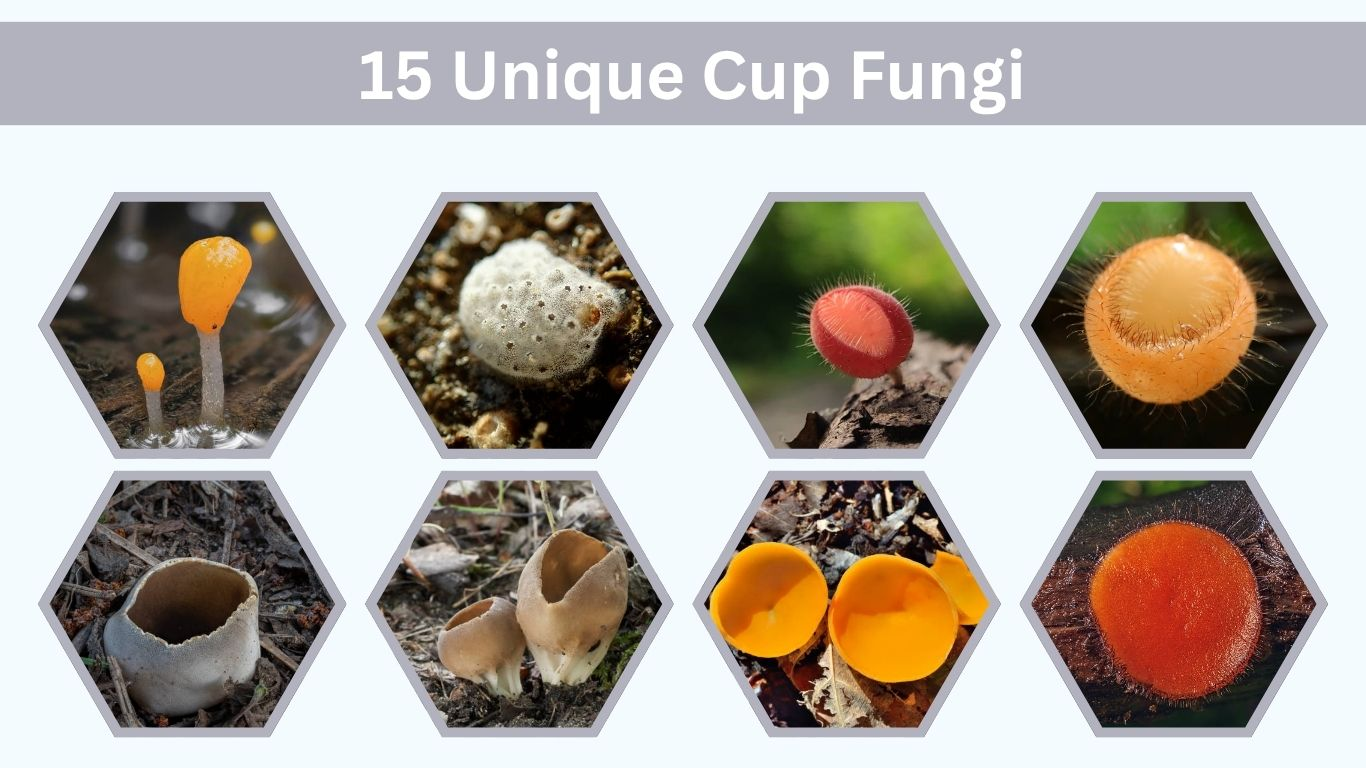
Cup fungi are a fascinating group of mushrooms known for their unique cup or disc-shaped structures. Found in forests, gardens, and even burned areas, these fungi play an important role in breaking down organic material and supporting ecosystem health. Their shapes, colors, and textures vary widely, from bright orange cups to subtle brown forms. Some are tiny and delicate, while others grow in noticeable clusters. In this guide, you will discover 15 different types of cup fungi, each with distinct features, habitats, and characteristics worth exploring in nature.
1. Peziza vesiculosa

Peziza vesiculosa, commonly known as the “blistered cup fungus,” is a widespread cup fungus recognized for its soft, irregularly shaped fruiting body. It often appears in clusters and develops a shallow, cup-like form that may flatten with age. This species plays an important role in decomposing organic material, especially in nutrient-rich environments.
Identification
- Cup-shaped to slightly flattened form
- Pale tan to light brown color
- Smooth inner surface with a slightly wrinkled or blistered outer surface
- Soft, fragile texture
- Often grows in clustered groups
Habitat
This fungus is commonly found in nutrient-rich environments such as compost piles, manure heaps, and fertile soil. It thrives in moist conditions and often appears after rainfall. Peziza vesiculosa is widely distributed across many regions and tends to grow in dense clusters rather than alone.
Appearance Changes
As it matures, the cup shape may become more irregular and flattened. The edges can curl or split, giving it a less defined form. Its color may darken slightly over time, and the surface may appear more wrinkled or uneven.
Edibility
This species is generally not considered edible due to its fragile texture and lack of flavor. While it is not widely known to be toxic, it is typically avoided as a food source and is more often observed for its ecological role.
You have not enough Humanizer words left. Upgrade your Surfer plan.
2. Peziza badia

Peziza badia, often called the “bay cup fungus,” is a distinctive cup fungus known for its rich brown coloration and well-formed cup shape. It typically appears as a solitary or scattered growth and maintains a more defined structure compared to some other Peziza species. This fungus contributes to the breakdown of organic matter in its environment.
Identification
- Deep brown to reddish-brown cup-shaped fruiting body
- Smooth inner surface with a slightly lighter outer surface
- Firm yet somewhat brittle texture
- Clearly defined cup shape, especially when young
- Grows singly or in small groups
Habitat
This species is commonly found on soil in forests, along paths, and in areas with decaying organic material. It prefers moist environments and often appears after rainfall. Peziza badia is widely distributed and can be found in temperate regions, typically growing on bare ground rather than directly on wood.
Appearance Changes
As it matures, the cup may flatten and become more irregular in shape. The edges can curl outward, and the surface may lose its smooth appearance. The color may fade slightly or become duller, especially in older specimens exposed to sunlight.
Edibility
This fungus is generally not considered edible due to its tough texture and lack of culinary value. Although it is not widely reported as toxic, it is typically avoided as food. It is mainly appreciated for its appearance and ecological role rather than for consumption.
3. Peziza domiciliana

Peziza domiciliana, commonly known as the “domestic cup fungus,” is a unique species often found growing indoors or in damp buildings. It forms shallow, irregular cups and is associated with moist, decaying materials such as plaster, wood, or concrete. Its ability to grow in human-made environments makes it especially noticeable.
Identification
- Shallow, irregular cup shape that may flatten with age
- Pale brown to grayish-brown coloration
- Smooth inner surface with a slightly rough outer surface
- Soft and somewhat leathery texture
- Often grows in clusters on damp surfaces
Habitat
This species is unusual because it frequently appears indoors, especially in damp basements, bathrooms, or buildings with water damage. It grows on moist materials like plaster, wood, sand, or concrete. Peziza domiciliana thrives in humid conditions and may appear after prolonged moisture exposure.
Appearance Changes
As it matures, the cup becomes more flattened and irregular, sometimes losing its defined shape. The edges may curl or split, and the color can become duller over time. Older specimens may appear more wrinkled and less structured.
Edibility
This fungus is not considered edible and should be avoided. It has no known culinary value and is often associated with damp or unsanitary conditions. It is primarily of interest due to its unusual indoor habitat rather than for consumption.
4. Aleuria aurantia

Aleuria aurantia, commonly known as the “orange peel fungus,” is a bright and easily recognizable cup fungus. Its vivid orange color and smooth, open cup shape make it stand out in natural environments. It often appears in groups and is commonly seen after rain, adding a splash of color to soil and disturbed ground.
Identification
- Bright orange, cup-shaped fruiting body
- Smooth inner surface with a slightly paler outer side
- Thin, flexible, and somewhat rubbery texture
- Irregular, wavy edges as it matures
- Often grows in clusters or scattered groups
Habitat
This species is commonly found on bare soil, roadside banks, trails, and disturbed ground. It prefers moist conditions and often appears after rainfall. Aleuria aurantia is widely distributed in temperate regions and can be found in both natural and urban environments.
Appearance Changes
As it ages, the cup may flatten and become more irregular in shape. The edges often curl or become wavy, and the bright orange color may fade slightly. Older specimens may appear more spread out and less cup-like.
Edibility
This fungus is considered edible and is sometimes consumed when properly cleaned. It has a mild flavor and is occasionally used as a garnish or in salads. However, it is not widely collected for food and is more commonly appreciated for its bright appearance.
5. Sarcoscypha coccinea

Sarcoscypha coccinea, commonly known as the “scarlet elf cup,” is a striking cup fungus admired for its vivid red interior. It typically appears in cooler seasons and is often found on decaying wood. Its bright color makes it highly visible against forest floors, especially in early spring or late winter.
Identification
- Bright scarlet to deep red inner cup surface
- Pale to whitish outer surface, often slightly fuzzy
- Smooth, well-defined cup shape when young
- Firm but somewhat flexible texture
- Usually small, growing individually or in clusters
Habitat
This species is commonly found in woodlands, especially on decaying sticks and branches. It prefers damp, shaded environments and often appears during cooler months. Sarcoscypha coccinea is widely distributed across Europe and other temperate regions, typically growing in groups on fallen wood.
Appearance Changes
As it matures, the cup may open wider and become more flattened. The edges can become irregular, and the bright red color may fade slightly over time. Older specimens may lose their smooth shape and appear more distorted.
Edibility
This fungus is considered edible, but it has little flavor and is not widely used in cooking. It is sometimes used for decorative purposes due to its bright color. Most people collect it for observation rather than consumption.
6. Sarcoscypha austriaca

Sarcoscypha austriaca, often called the “Austrian scarlet cup,” is a beautiful cup fungus closely related to Sarcoscypha coccinea. It is known for its vivid red interior and neat cup shape. This species is commonly found in cooler seasons and adds a bright contrast to forest floors.
Identification
- Bright red to scarlet inner surface
- Pale, often whitish outer surface with fine hairs
- Well-formed, round cup shape when young
- Smooth interior and slightly textured exterior
- Small size, usually growing in clusters
Habitat
This fungus typically grows on decaying wood such as sticks and small branches in damp woodlands. It prefers shaded, moist environments and is often seen in late winter to early spring. Sarcoscypha austriaca is widely distributed in temperate regions and commonly appears in groups.
Appearance Changes
As it ages, the cup may widen and become flatter. The edges can turn irregular, and the bright red color may become less intense. Older specimens may appear slightly distorted and less vibrant.
Edibility
This species is considered edible but has little taste or culinary value. It is sometimes used for decorative purposes due to its striking color. Most people observe it in nature rather than collect it for food.
7. Scutellinia scutellata

Scutellinia scutellata, commonly known as the “eyelash cup,” is a small but distinctive cup fungus famous for its tiny hair-like structures around the rim. These dark “eyelashes” give it a unique appearance. It is often found in damp environments and is easily recognized despite its small size.
Identification
- Small, bright orange to red cup-shaped body
- Dark, hair-like bristles around the edge (“eyelashes”)
- Smooth inner surface
- Flattened to shallow cup shape
- Typically very small in size, often less than 1 cm
Habitat
This species commonly grows on damp, decaying wood, especially in forests and shaded areas. It prefers moist conditions and is often found on logs, branches, or wood debris. Scutellinia scutellata is widely distributed and usually appears in clusters or scattered groups.
Appearance Changes
As it matures, the cup may flatten further and become more spread out. The color can fade slightly, and the tiny hairs around the edge may become less noticeable in older specimens. Despite these changes, its distinctive rim usually remains visible.
Edibility
This fungus is not considered edible due to its very small size and lack of culinary value. It is generally ignored as a food source and is instead appreciated for its unique and decorative appearance in natural settings.
8. Otidea onotica

Otidea onotica, commonly known as the “hare’s ear fungus,” is a distinctive cup fungus with elongated, ear-like shapes rather than a perfect cup. Its soft form and pale coloration make it recognizable in forest environments. It often grows in small groups and blends well with leaf litter.
Identification
- Elongated, ear-shaped or split cup form
- Pale yellow to light brown color
- Smooth inner surface with slightly paler outer side
- Thin, flexible, and soft texture
- Edges often split or folded inward
Habitat
This species is commonly found in forests, especially among leaf litter and soil rich in organic material. It prefers moist, shaded environments and typically appears during warm, damp conditions. Otidea onotica is widely distributed in temperate regions and often grows in small clusters.
Appearance Changes
As it matures, the ear-like shape may become more open and irregular. The edges can curl or split further, and the color may fade slightly. Older specimens may appear more flattened and less structured.
Edibility
This fungus is sometimes considered edible, but it is not widely consumed. It has a mild taste and limited culinary value. Due to its thin texture and similarity to other species, it is generally collected more for observation than for food.
9. Otidea alutacea

Otidea alutacea is a cup fungus known for its ear-like, split form and soft, leathery texture. It does not form a perfect cup but instead develops an irregular, folded shape. Its subtle coloration allows it to blend into forest floors, making it less noticeable than more brightly colored species.
Identification
- Ear-shaped or split cup with irregular folds
- Pale brown to tan coloration
- Smooth inner surface with a slightly lighter outer side
- Thin, flexible, and somewhat leathery texture
- Edges often curled or uneven
Habitat
This species is commonly found in forests, growing on soil rich in decaying organic matter. It prefers moist, shaded environments and often appears among leaf litter. Otidea alutacea is distributed in temperate regions and typically grows in small groups or scattered formations.
Appearance Changes
As it matures, the structure may become more open and irregular. The edges can curl further, and the shape may lose its defined form. The color may fade slightly, especially in older specimens exposed to sunlight.
Edibility
This fungus is generally not considered edible due to its thin texture and limited culinary value. While not widely known to be toxic, it is usually avoided. Most people observe it for its unique shape rather than use it as a food source.
10. Helvella acetabulum

Helvella acetabulum, commonly known as the “ribbed cup,” is a distinctive cup fungus recognized for its deep cup shape and prominent ribbed exterior. It often grows in clusters and stands out due to its structured form and contrasting textures. This species is commonly seen in woodland environments.
Identification
- Deep cup-shaped fruiting body
- Grayish-brown to tan inner surface
- Outer surface with prominent vertical ribs
- Firm and somewhat brittle texture
- Often attached to the ground by a short base
Habitat
This species is typically found in forests, especially in areas with rich soil and decaying organic matter. It prefers moist environments and often appears in spring or early summer. Helvella acetabulum is widely distributed in temperate regions and commonly grows in groups.
Appearance Changes
As it matures, the cup may widen and become more open. The ribs on the outer surface remain visible but may become less pronounced. The color can fade slightly, and the edges may become uneven or slightly curled.
Edibility
This fungus is not recommended for consumption. Some Helvella species contain compounds that may be harmful if not properly prepared. Due to potential toxicity and confusion with similar species, it is generally avoided as a food source.
11. Helvella leucomelaena

Helvella leucomelaena, commonly known as the “black and white cup fungus,” is a distinctive species recognized for its contrasting colors. It features a dark inner surface and a lighter outer side, creating a noticeable visual difference. This fungus is often found in open or lightly wooded areas.
Identification
- Cup-shaped to slightly irregular form
- Dark gray to black inner surface
- Pale gray to whitish outer surface
- Smooth interior with a slightly textured exterior
- Firm, somewhat brittle texture
Habitat
This species typically grows on soil in open woodlands, grassy areas, and disturbed ground. It prefers well-drained soil and often appears in spring. Helvella leucomelaena is found in temperate regions and usually grows singly or in small scattered groups.
Appearance Changes
As it matures, the cup may become more open and irregular in shape. The edges can curl or split slightly, and the color contrast may become less distinct. Older specimens may appear flatter and less structured.
Edibility
This fungus is generally not considered edible. Some Helvella species may contain harmful compounds, and proper identification can be difficult. Due to potential risks and limited culinary value, it is usually avoided as a food source.
12. Cookeina tricholoma

Cookeina tricholoma is a visually appealing cup fungus known for its delicate, hairy exterior and bright coloration. It forms neat, shallow cups that often appear in clusters on decaying wood. Its attractive appearance makes it one of the more noticeable cup fungi in tropical regions.
Identification
- Bright pink to reddish cup-shaped fruiting body
- Outer surface covered with fine, hair-like structures
- Smooth inner surface with a slightly glossy look
- Thin, flexible texture
- Typically grows in clustered formations
Habitat
This species is commonly found in tropical and subtropical forests, growing on decaying logs and branches. It prefers warm, humid environments and is often seen after rainfall. Cookeina tricholoma usually grows in groups, making it easier to spot in dense forest settings.
Appearance Changes
As it matures, the cup may become more open and slightly flattened. The color can fade somewhat over time, and the fine hairs on the outer surface may become less noticeable. Older specimens may appear more fragile and less vibrant.
Edibility
This fungus is sometimes considered edible and is consumed in certain regions. It has a mild taste and a soft texture. However, it is not widely used in cooking and is more often appreciated for its attractive appearance in natural habitats.
13. Cookeina speciosa

Cookeina speciosa is a striking cup fungus known for its vivid coloration and smooth, elegant form. It typically forms well-defined cups that grow in clusters on decaying wood. Its bright appearance makes it one of the more noticeable species in tropical forest environments.
Identification
- Bright orange to pink cup-shaped fruiting body
- Smooth inner surface with a glossy appearance
- Outer surface slightly lighter and may be faintly textured
- Thin, flexible, and delicate structure
- Often grows in clusters on wood
Habitat
This species is commonly found in tropical and subtropical regions, especially in forests with abundant decaying wood. It prefers warm, humid conditions and often appears after rainfall. Cookeina speciosa typically grows on fallen logs and branches, forming small to medium-sized clusters.
Appearance Changes
As it matures, the cup may widen and become more open. The edges can turn slightly wavy or irregular, and the bright color may fade over time. Older specimens may appear thinner and more fragile, sometimes losing their original shape.
Edibility
This fungus is sometimes considered edible, though it is not widely consumed. It has a mild taste and soft texture. Due to its delicate structure and limited culinary value, it is more often appreciated for its beauty rather than used as a food source.
14. Phillipsia domingensis

Phillipsia domingensis is a vibrant cup fungus known for its bright coloration and smooth, rounded shape. It forms shallow cups that often grow in clusters, creating a striking visual effect on decaying wood. This species is especially noticeable in tropical environments due to its bold appearance.
Identification
- Bright red to orange cup-shaped fruiting body
- Smooth inner surface with a glossy texture
- Outer surface slightly paler and smooth
- Shallow, rounded cup form
- Often grows in clustered groups on wood
Habitat
This species is commonly found in tropical and subtropical forests, growing on decaying logs and branches. It prefers warm, humid conditions and is often seen after rainfall. Phillipsia domingensis typically grows in groups, making it more visible in dense forest environments.
Appearance Changes
As it matures, the cup may become wider and more flattened. The edges can turn slightly irregular, and the bright color may fade over time. Older specimens may appear thinner and less structured.
Edibility
This fungus is generally not considered edible due to limited information about its safety and its lack of culinary value. It is primarily appreciated for its appearance and ecological role rather than for consumption.
15. Geopyxis carbonaria

Geopyxis carbonaria, commonly known as the “charcoal cup,” is a small cup fungus that often appears in recently burned areas. It is adapted to grow on charred ground, making it one of the first fungi to colonize fire-affected environments. Its simple structure and earthy tones help it blend into its surroundings.
Identification
- Small, cup-shaped fruiting body
- Brown to dark tan coloration
- Smooth inner surface with a slightly rough outer side
- Thin and somewhat brittle texture
- Usually grows in clusters on burned soil
Habitat
This species is commonly found in areas affected by fire, such as burned forests or campfire sites. It thrives on nutrient-rich, charred soil and often appears shortly after a fire. Geopyxis carbonaria is widely distributed and plays a role in early ecological recovery.
Appearance Changes
As it matures, the cup may open wider and become more flattened. The edges can become uneven, and the color may darken slightly. Older specimens may appear more fragile and less defined.
Edibility
This fungus is generally not considered edible due to its small size and lack of culinary value. It is not commonly collected for food and is mainly of interest for its ecological role in post-fire environments.
FAQs
What are cup fungi?
Cup fungi are a group of fungi that produce fruiting bodies shaped like cups, discs, or bowls. They belong mainly to the Ascomycota division. These fungi release spores from their inner surface and are commonly found on soil, wood, or decaying organic matter in various environments.
Where do cup fungi typically grow?
Cup fungi grow in a wide range of habitats, including forests, gardens, burned ground, and decaying wood. Some species prefer moist soil, while others grow on logs or even indoor damp surfaces. They are often seen after rainfall and thrive in humid conditions.
Are all cup fungi edible?
Not all cup fungi are edible. While some species are considered safe to eat, many have little taste or are not recommended due to potential toxicity or confusion with harmful species. Proper identification is essential before considering any cup fungus for consumption.
How do cup fungi reproduce?
Cup fungi reproduce by releasing spores from the inner surface of their cup-shaped bodies. These spores are often discharged into the air and carried by wind or water. This method allows them to spread efficiently across suitable environments.
Why are some cup fungi brightly colored?
Bright colors in cup fungi, such as red or orange, may help attract attention or play a role in protection. These pigments can also be related to environmental adaptation. The vivid colors make certain species easier to spot in natural habitats, especially against dark forest floors.