
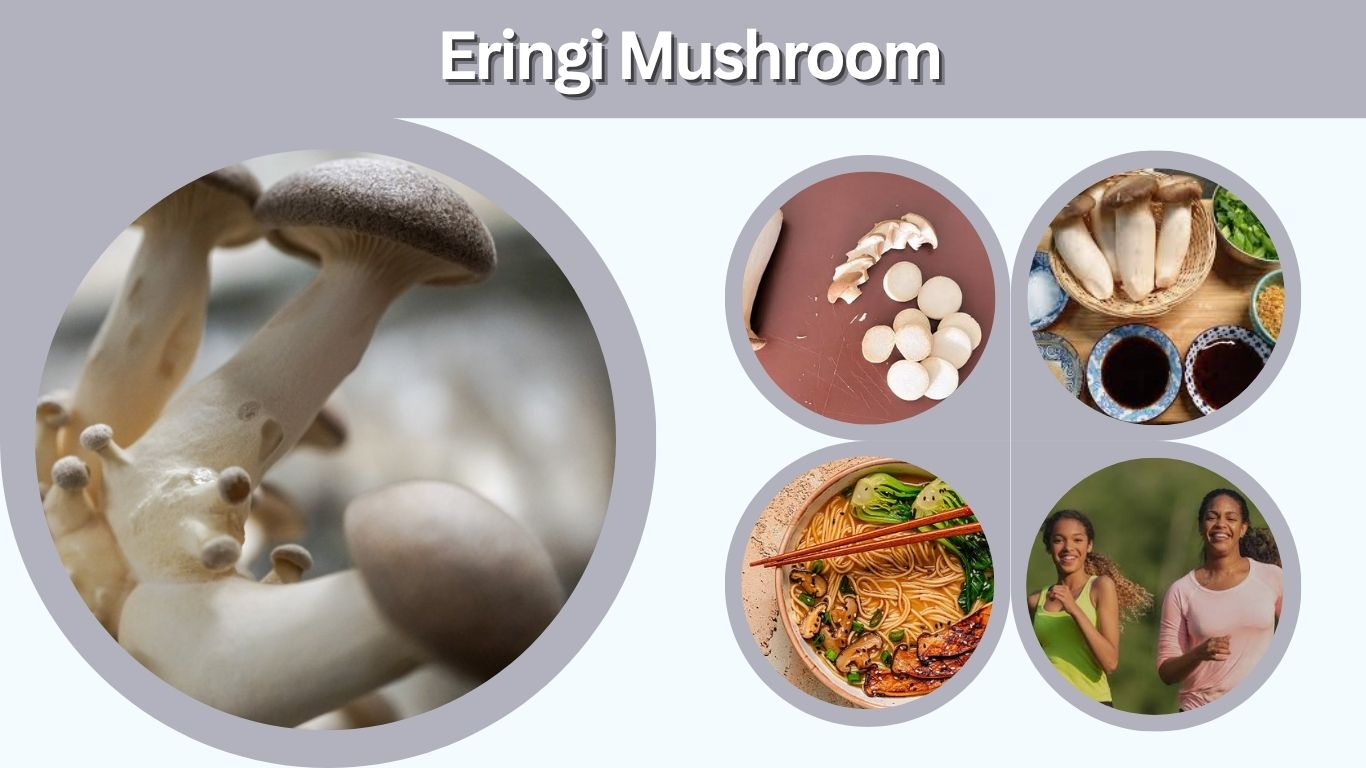
Eringi mushroom, also known as king oyster mushroom, king trumpet mushroom, or king eringi mushroom, is one of the most popular mushrooms for cooking because of its thick stem, chewy texture, and mild umami flavor. Unlike delicate mushrooms that shrink quickly, eringi mushrooms stay firm when grilled, roasted, sautéed, or fried, making them useful in Japanese, Korean, Chinese, vegetarian, and modern restaurant-style recipes.
What Is Eringi Mushroom?
Eringi mushroom is a large edible mushroom with a thick white stem and a small tan to brown cap. It belongs to the oyster mushroom family, but it looks and cooks differently from regular oyster mushrooms. While common oyster mushrooms grow in fan-shaped clusters, eringi mushrooms usually have a strong central stem and a compact cap.
The stem is the most valuable part of the mushroom. It has a dense, meaty bite that works well in many dishes. Because of this, eringi is often used as a plant-based substitute for scallops, chicken, pork, or steak-style mushroom dishes.
Eringi Mushroom vs King Oyster Mushroom
Eringi mushroom and king oyster mushroom are the same ingredient. “Eringi” is the name commonly used in Japan, while “king oyster mushroom” is more common in English-speaking markets. Other names include king trumpet mushroom, French horn mushroom, and king eringi mushroom.
For SEO, an article should naturally include all these terms because different users search in different ways. Someone looking for a Japanese recipe may type “eringi mushroom recipe,” while someone shopping in a supermarket may search “king oyster mushroom.”
What Does Eringi Mushroom Look Like?
Eringi mushrooms are easy to recognize. They usually have:
- A thick, firm, white stem
- A small brown or tan cap
- A smooth surface
- A sturdy shape that holds up during cooking
- A clean, mild mushroom aroma
Good eringi mushrooms should feel firm, not slimy or wrinkled. Avoid mushrooms with dark wet spots, strong odor, or soft stems.
Eringi Mushroom Taste and Texture
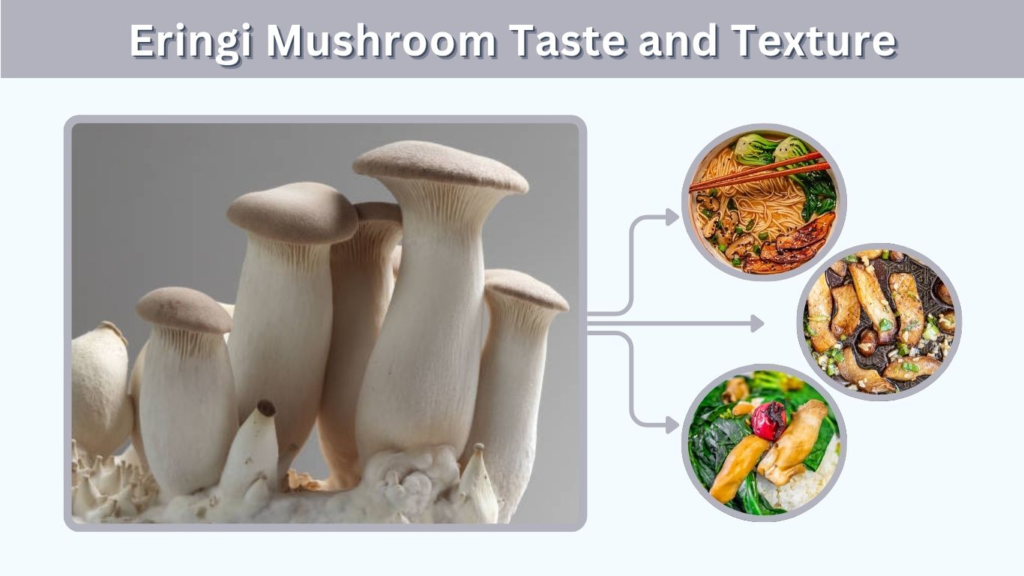
Eringi mushroom has a mild, savory, slightly nutty flavor. It is not as strong as shiitake and not as delicate as enoki. Its main appeal is texture. When sliced thick and cooked properly, it becomes juicy, chewy, and almost meat-like.
The flavor is subtle enough to absorb sauces, marinades, and seasonings. That is why eringi works well with soy sauce, miso, butter, garlic, sesame oil, ponzu, lemon, herbs, chili, black pepper, and barbecue-style marinades.
Why Chefs Like Eringi Mushrooms
Eringi mushrooms are popular in restaurants because they are versatile and attractive on the plate. They can be sliced into rounds to mimic scallops, cut lengthwise for grilling, diced for pasta, shredded for vegan meat dishes, or roasted whole for a dramatic side dish.
They also hold their shape better than many other mushrooms. This makes them useful for robata, BBQ skewers, tempura, stir-fries, salads, pasta, soups, and steak-style mushroom dishes.
Eringi Mushroom Nutrition
Eringi mushroom nutrition is one reason many people add it to everyday meals. Like most edible mushrooms, eringi is low in calories and naturally low in fat. It also provides fiber and important nutrients that support a balanced diet.
Exact nutrition facts vary depending on growing conditions, freshness, and cooking method. Adding butter, oil, sauce, or tempura batter will increase calories, so the healthiest method depends on how the mushroom is prepared.
| Nutrition/Feature | Why It Matters |
| Low calories | Useful for light meals and weight-conscious diets |
| Dietary fiber | Helps make meals more filling |
| Niacin and B vitamins | Support normal energy metabolism |
| Potassium | Helps balance savory meals with useful minerals |
| Meaty texture | Makes it a strong plant-based meat substitute |
| Mild flavor | Works in Asian, Western, and fusion recipes |
Eringi Mushroom Calories
Eringi mushroom calories are usually low when the mushrooms are grilled, steamed, sautéed with minimal oil, or added to soup. However, calories increase when they are deep-fried, cooked in butter, served with cream sauce, or used in tempura.
For a lighter meal, grill or roast eringi with a small amount of oil, soy sauce, garlic, and herbs. For a richer meal, use butter, miso, cream, cheese, or tempura batter.
Eringi Mushroom Benefits
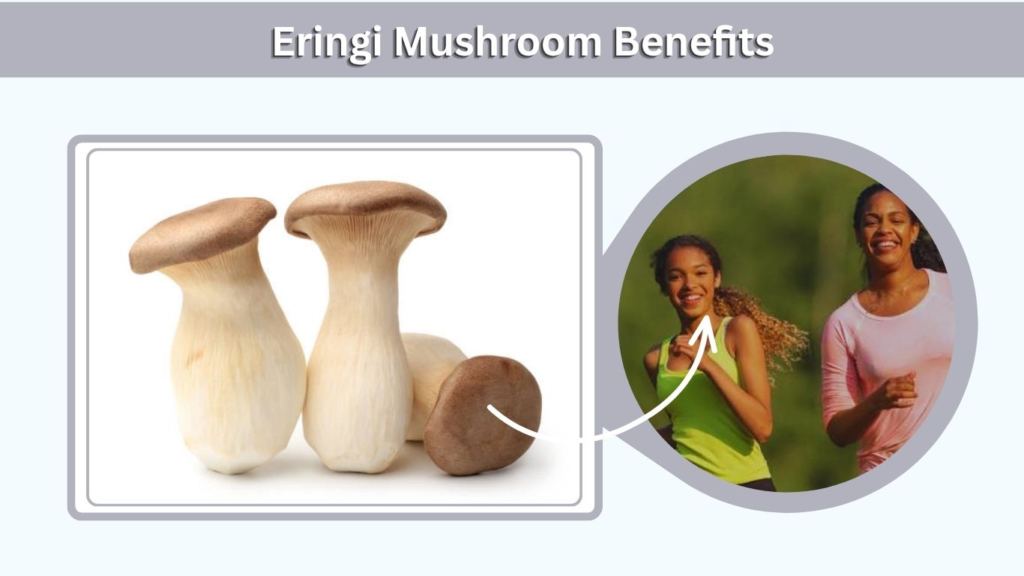
Eringi mushroom benefits are mostly linked to its role as a nutritious whole food. It can help make meals more satisfying without relying heavily on meat or processed ingredients.
Eringi mushrooms should not be promoted as a cure for disease. However, they can be part of a healthy eating pattern when combined with vegetables, grains, lean proteins, tofu, seafood, or legumes.
Potential Health Benefits of Eringi Mushroom
Eringi mushrooms may offer several practical benefits:
- They add flavor without many calories.
- Their fiber can help support fullness.
- Their firm texture makes plant-based meals more satisfying.
- They can replace meat in some dishes.
- They pair well with vegetables and whole grains.
- They provide useful nutrients found in edible mushrooms.
Eringi Mushroom Health Benefits vs Medicinal Claims
Some people search for “eringi mushroom health benefits” hoping for medicinal information. It is better to keep claims realistic. Eringi mushrooms are nutritious, but they should not be described as a treatment for medical conditions.
For most readers, the best benefit is simple: eringi mushrooms make healthy meals more flavorful, filling, and enjoyable.
How to Cook Eringi Mushrooms
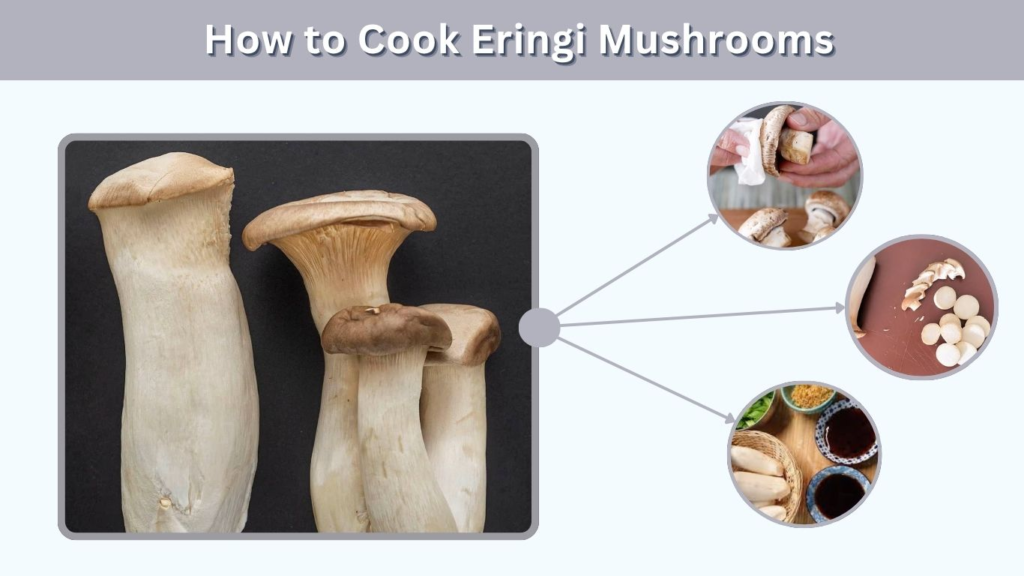
Eringi mushrooms are easy to cook, but the method affects the final texture. Since the stem is thick, cutting style matters.
For a scallop-like texture, slice the stem into thick rounds and score the surface lightly. For grilling, cut the mushroom lengthwise. For pasta, slice into strips or cubes. For stir-fry, cut into bite-size pieces so they cook evenly.
Basic Cooking Tips
Follow these tips for better eringi mushroom recipes:
- Wipe mushrooms clean instead of soaking them.
- Cut thick slices for a meaty bite.
- Cook over medium-high heat to brown the surface.
- Do not overcrowd the pan.
- Salt after browning to avoid releasing too much water early.
- Use butter, soy sauce, garlic, miso, or sesame oil for deeper flavor.
- Let the mushroom caramelize before stirring too often.
Eringi Mushroom Recipe: Garlic Butter Soy Eringi
This simple eringi mushroom recipe works as a side dish, rice topping, or appetizer.
Ingredients:
- 3 to 4 eringi mushrooms
- 1 tablespoon butter or oil
- 1 teaspoon soy sauce
- 1 garlic clove, minced
- Black pepper
- Chopped green onion or parsley
Instructions:
Slice the eringi mushrooms lengthwise or into thick rounds. Heat butter or oil in a pan. Add the mushrooms and cook until golden on both sides. Add garlic and cook briefly. Add soy sauce and black pepper, then toss until glossy. Finish with green onion or parsley.
This recipe is simple, but it highlights the natural texture of the mushroom.
Eringi Mushroom Recipe Ideas
Eringi mushrooms work in both simple home cooking and restaurant-style dishes. Their firm texture makes them suitable for high-heat cooking, rich sauces, and plant-based meals.
Eringi Mushroom BBQ Recipe
For BBQ eringi mushrooms, cut them lengthwise into thick slices. Brush with a marinade made from soy sauce, oil, garlic, black pepper, and a little sugar or mirin. Grill until browned and slightly charred.
This style works well with rice, noodles, grilled vegetables, or meat dishes. It is also a good vegetarian BBQ option because the mushroom stays firm.
Eringi Mushroom Japanese Recipe
A Japanese-style eringi mushroom recipe often uses soy sauce, butter, sake, mirin, miso, ponzu, or dashi. One easy version is butter soy eringi, where sliced mushrooms are pan-seared and finished with soy sauce and butter.
Another option is eringi robata, where the mushrooms are grilled over charcoal or high heat and served with salt, lemon, or tare sauce.
Eringi Mushroom Tempura
Eringi mushroom tempura is crispy outside and juicy inside. Slice the mushroom into thick pieces, dip in cold tempura batter, and fry until lightly golden. Serve with tentsuyu dipping sauce, grated daikon, salt, or lemon.
Because eringi is firm, it handles frying better than many delicate mushrooms.
Eringi Mushroom Pasta
Eringi mushroom pasta can be made with garlic, olive oil, butter, cream, miso, parmesan, or soy sauce. Cut the mushrooms into strips or cubes and brown them before adding sauce.
For a Japanese-style pasta, combine eringi with butter, soy sauce, garlic, and black pepper. For a creamy version, add cream or cheese. For a lighter version, use olive oil, lemon, parsley, and chili flakes.
Eringi Mushroom Soup
Eringi mushroom soup is mild, comforting, and easy to customize. Slice the mushrooms and simmer them in vegetable broth, chicken broth, miso soup, or noodle broth. Because eringi has a thick stem, it holds texture better than softer mushrooms.
It works well with tofu, bok choy, cabbage, noodles, chicken, seafood, or rice.
Dried Eringi Mushrooms
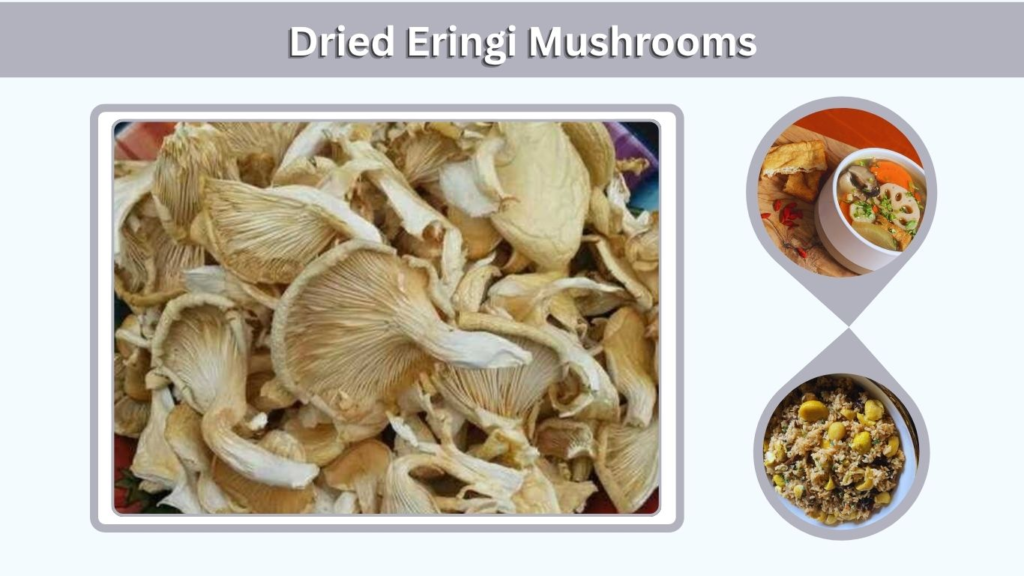
Dried eringi mushrooms are useful when fresh eringi is not available. They have a longer shelf life and can add concentrated mushroom flavor to soups, stews, sauces, and rice dishes.
Before cooking, soak dried eringi mushrooms in warm water until softened. The soaking liquid can be strained and used in broth or sauce for extra flavor. Rehydrated eringi may not have exactly the same texture as fresh eringi, but it can still be delicious in cooked dishes.
Best Uses for Dried Eringi Mushrooms
Dried eringi mushrooms are best used in:
- Mushroom soup
- Noodle broth
- Rice dishes
- Stews
- Pasta sauce
- Stir-fries after rehydrating
- Mushroom gravy
For dishes where texture is most important, such as BBQ or robata, fresh eringi is usually better.
Eringi Mushroom Substitute
If you cannot find eringi mushrooms, choose a substitute based on the recipe. The best substitute should have a firm texture and mild flavor.
Good eringi mushroom substitutes include king trumpet mushrooms, regular oyster mushrooms, shiitake mushrooms, portobello mushrooms, and cremini mushrooms. For vegan scallop recipes, thick king oyster-style mushrooms are the closest match. If those are unavailable, use portobello stems or thick-cut oyster mushrooms.
Best Substitute by Dish
For pasta, use shiitake, cremini, or oyster mushrooms. For grilling, use portobello or thick oyster mushrooms. For soup, use shiitake, beech, oyster, or button mushrooms. For tempura, use oyster, shiitake, or maitake mushrooms.
No substitute perfectly matches eringi’s thick stem, but several mushrooms can provide similar savory flavor.
Where to Buy Eringi Mushrooms
People often search “eringi mushroom where to buy,” “eringi mushroom available at Mitsuwa,” or “eringi mushrooms at Woodman’s.” Availability depends on location, season, and store inventory.
Eringi mushrooms are commonly found in Asian grocery stores, Japanese markets, Korean markets, Chinese supermarkets, specialty produce stores, farmers’ markets, and some larger supermarkets. They may also be available from online mushroom farms or produce delivery services.
Buying Tips
When buying eringi mushrooms, look for:
- Firm white stems
- Smooth tan caps
- No strong sour smell
- No slimy surface
- No dark wet patches
- Clean packaging
- Clear freshness date if packaged
Store fresh eringi mushrooms in the refrigerator, ideally in a paper bag or breathable container. Avoid sealing them in wet plastic for too long because moisture can shorten shelf life.
Eringi Mushroom Cultivation
Eringi mushroom cultivation is popular among mushroom growers because the mushroom has strong market value and excellent culinary appeal. It is usually grown on supplemented hardwood sawdust blocks under controlled conditions.
Compared with regular oyster mushrooms, eringi can be more challenging. It often needs careful humidity, fresh air, temperature control, and patience. Growers also manage cap and stem development depending on market preference.
Growing Eringi Mushrooms at Home
Home growers can start with a ready-to-fruit kit or a colonized sawdust block. A kit is easier because it reduces the need for sterile lab work. More advanced growers may use grain spawn, supplemented sawdust, and controlled fruiting chambers.
For beginners, buying fresh eringi mushrooms is easier than growing them. But for mushroom hobbyists, cultivating eringi can be rewarding because the harvest is unique and valuable.
Wagyu Sirloin With Eringi Mushroom
Wagyu sirloin with eringi mushroom is a premium pairing because the mushroom’s mild flavor and firm texture balance rich beef. Eringi can be grilled, pan-seared, or roasted alongside steak. It absorbs beef juices, soy butter, garlic, or miso-based sauces very well.
For a restaurant-style plate, slice eringi lengthwise, sear until golden, and serve with wagyu, sea salt, black pepper, and a small amount of ponzu or soy butter.
FAQs
What is eringi mushroom?
Eringi mushroom is another name for king oyster mushroom. It has a thick white stem, small brown cap, mild flavor, and firm meaty texture. It is popular in Japanese, Korean, Chinese, vegetarian, and restaurant-style cooking.
What does eringi mushroom taste like?
Eringi mushroom tastes mild, savory, earthy, and slightly nutty. Its texture is more noticeable than its flavor. When cooked, it becomes chewy, juicy, and meat-like, which makes it useful for grilling, stir-frying, pasta, tempura, and vegan scallop recipes.
Is eringi mushroom healthy?
Yes, eringi mushroom can be a healthy food choice. It is low in calories, naturally low in fat, and provides fiber and mushroom nutrients. However, health value depends on preparation. Grilled or sautéed eringi is lighter than deep-fried tempura or cream-based dishes.
How do you cook eringi mushrooms?
Slice eringi mushrooms into rounds, strips, or lengthwise pieces. Pan-sear, grill, roast, stir-fry, or fry them until golden. Season with soy sauce, butter, garlic, miso, sesame oil, lemon, black pepper, or herbs. Avoid overcrowding the pan so they brown properly.
What is the best substitute for eringi mushrooms?
The best substitute depends on the recipe. Use oyster mushrooms or shiitake for stir-fries and soups, portobello for grilling, cremini for pasta, and thick oyster mushroom stems for vegan scallop-style dishes. King oyster mushroom is the exact match if labeled differently.