
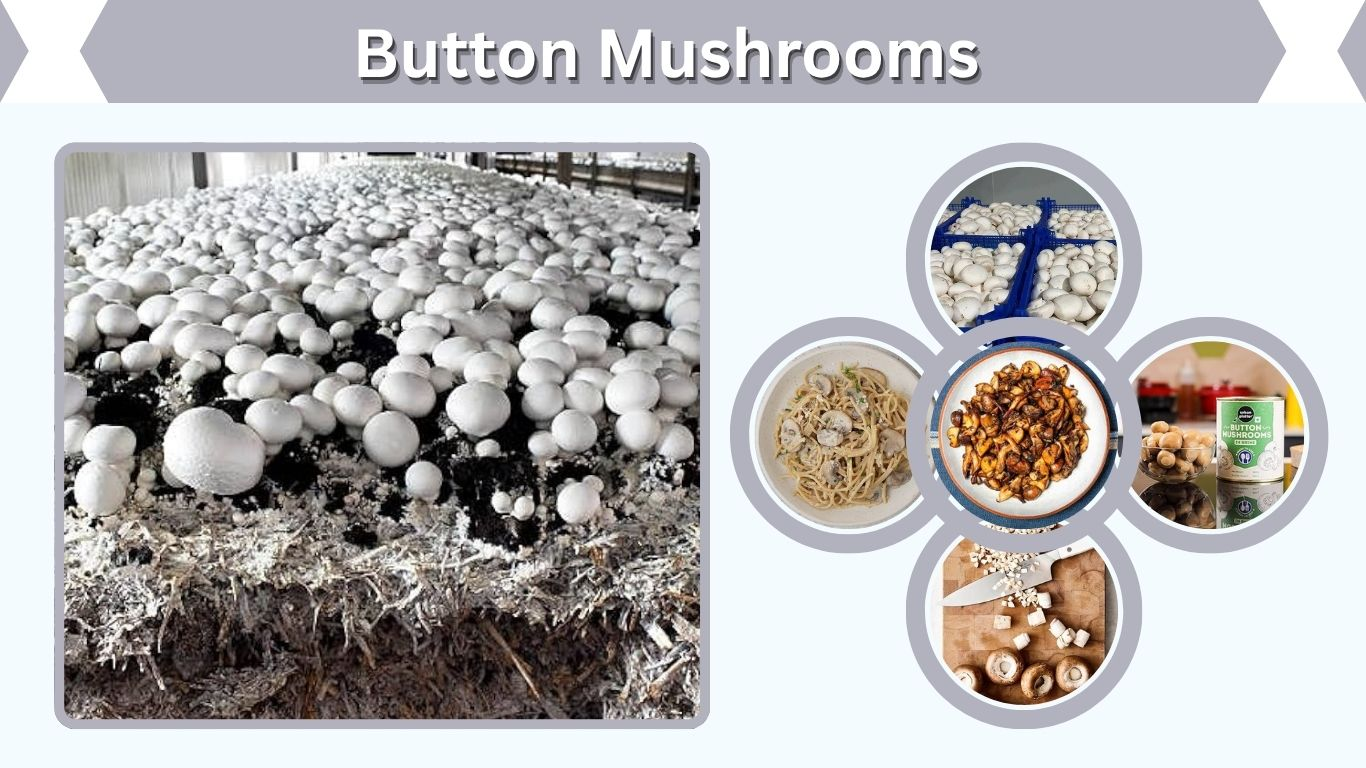
Button mushrooms are among the most common mushrooms used in everyday cooking. Also called white button mushrooms, they have a mild flavor, soft texture, and flexible use in soups, salads, pasta, pizza, stir-fries, and side dishes. They are easy to find, affordable, and simple to prepare, making them a great choice for beginners who want to add more mushrooms to their meals.
What Are Button Mushrooms?
Button mushrooms are small, round, white or light beige mushrooms with smooth caps and short stems. They are the youngest form of Agaricus bisporus, the same mushroom species that later develops into cremini and portobello mushrooms. Because they are harvested early, button mushrooms have a mild taste and tender texture.
They are often called white mushrooms, common mushrooms, or white button mushrooms. You can buy them fresh, sliced, canned, frozen, or sometimes dried. Fresh button mushrooms are the most popular option because they cook quickly and work in many recipes.
Button mushrooms are especially useful because they do not overpower a dish. Their gentle earthy flavor blends well with garlic, butter, olive oil, onions, herbs, cheese, chicken, beef, eggs, rice, and pasta.
Are Button Mushrooms the Same as White Mushrooms?
Yes, in most cases, button mushrooms and white mushrooms refer to the same ingredient. “White button mushroom” is simply the more specific name. Some stores may label them as “white mushrooms,” while others use “button mushrooms.”
Brown button mushrooms are closely related but have a slightly deeper flavor. Cremini mushrooms are also part of the same species, but they are more mature and usually firmer, darker, and earthier.
Button Mushroom Nutrition
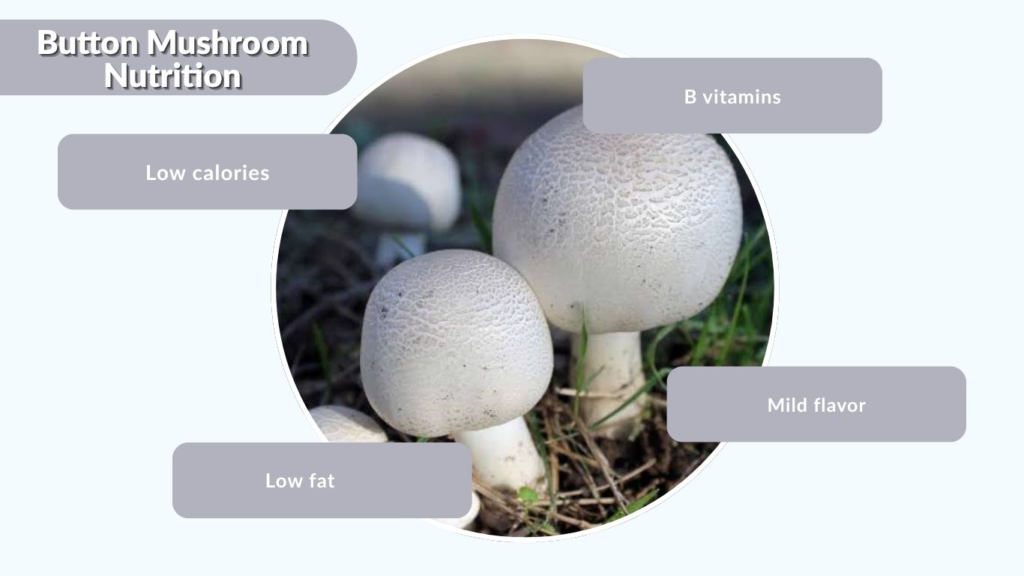
Button mushrooms are low in calories and naturally low in fat. They contain water, fiber, small amounts of protein, and several important nutrients. While they are not a high-protein food, they can still support a balanced diet when combined with vegetables, whole grains, legumes, eggs, fish, or lean meats.
Here is a simple overview of why people often include button mushrooms in healthy meals:
| Nutrition Feature | Why It Matters |
| Low calories | Helps add volume to meals without making them heavy |
| Low fat | Works well in lighter recipes when not cooked with too much oil |
| Fiber | Supports fullness and balanced meals |
| B vitamins | Helps the body use energy from food |
| Minerals | May provide nutrients such as selenium, copper, and potassium |
| Mild flavor | Easy to add to many recipes without changing the taste too much |
Button mushroom nutrition can vary depending on whether they are raw, cooked, canned, or exposed to UV light. UV-exposed mushrooms may contain more vitamin D than regular white button mushrooms.
Button Mushroom Benefits
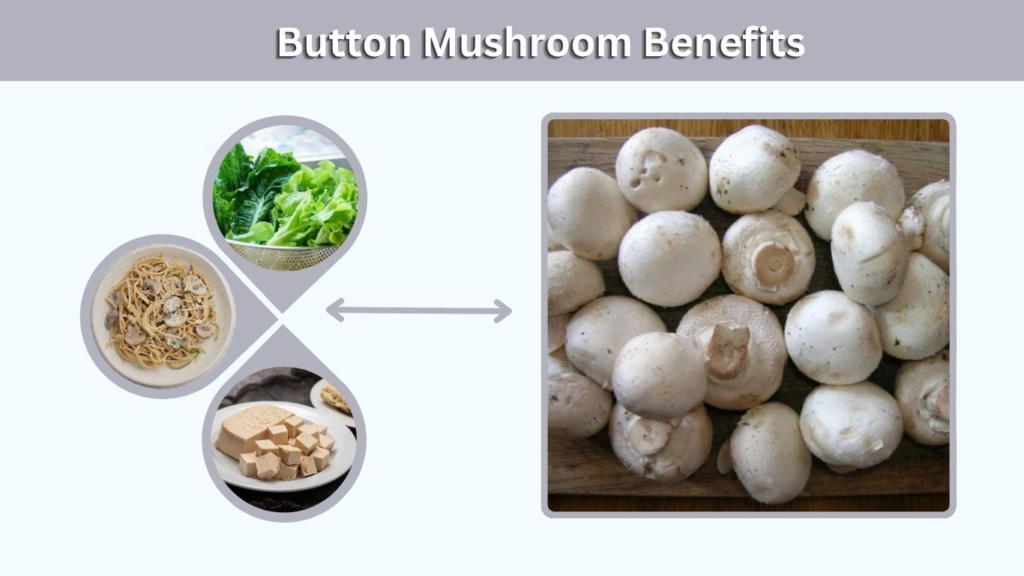
Button mushrooms can be a helpful part of a balanced diet. They are not a miracle food, but they offer practical benefits because they are low in calories, easy to cook, and rich in texture.
They Add Volume Without Many Calories
Button mushrooms contain a lot of water, so they help make meals feel fuller without adding many calories. This makes them useful in omelets, soups, stir-fries, pasta, rice bowls, and vegetable side dishes.
For example, adding sliced mushrooms to scrambled eggs or pasta sauce can increase the portion size while keeping the dish light.
They Support Balanced Eating
Button mushrooms pair well with many healthy foods. You can combine them with leafy greens, beans, lentils, tofu, chicken, fish, brown rice, quinoa, or whole wheat pasta. Their mild taste makes them easy to include in both vegetarian and non-vegetarian meals.
They Bring Savory Flavor
When cooked, button mushrooms develop a deeper, more savory taste. This makes them useful in recipes where you want extra flavor without relying only on salt, butter, or heavy sauces.
They Are Easy for Beginners
Some mushrooms have strong flavors or unusual textures, but button mushrooms are simple and familiar. They are one of the easiest mushrooms to clean, slice, cook, and add to daily meals.
How to Clean Button Mushrooms
Cleaning button mushrooms is simple. Many people think mushrooms should never touch water, but a quick rinse is fine if you dry them properly. The main goal is to remove dirt without soaking them for too long.
To clean button mushrooms:
- Wipe them with a damp paper towel if they are only lightly dirty.
- Rinse quickly under cool water if they have visible dirt.
- Pat them dry with a clean towel before cooking.
- Trim the dry end of the stem if needed.
- Avoid soaking them in water because they can become too wet.
If you plan to sauté mushrooms, drying them well is important. Wet mushrooms can steam instead of brown.
How to Cook Button Mushrooms
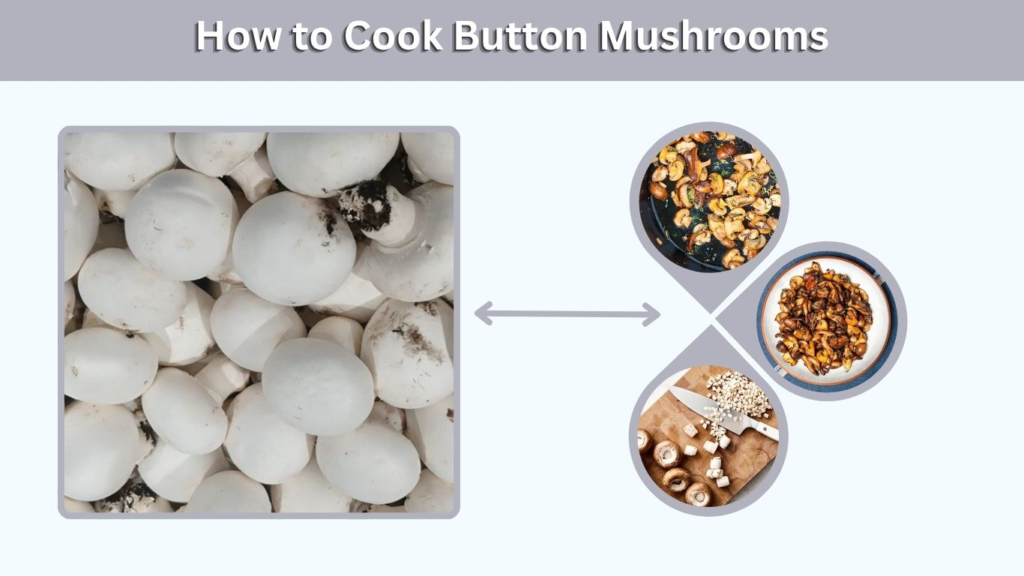
Button mushrooms can be cooked in many ways. They can be sautéed, roasted, grilled, added to soup, cooked into sauces, or baked into casseroles. Their flavor becomes richer when they are browned properly.
Sautéed Button Mushrooms
Sautéing is one of the easiest and best ways to cook button mushrooms. Heat a pan, add a little oil or butter, then add sliced mushrooms. Cook them until their moisture releases and evaporates. After that, they begin to brown and develop more flavor.
For better sautéed mushrooms:
- Do not overcrowd the pan.
- Cook over medium-high heat.
- Add salt after the mushrooms begin to soften.
- Let the moisture evaporate before adding sauces.
- Finish with garlic, herbs, lemon juice, or black pepper.
Sautéed button mushrooms are great with steak, chicken, eggs, toast, rice, pasta, or roasted vegetables.
Roasted Button Mushrooms
Roasting gives button mushrooms a deep, savory flavor. Toss whole or halved mushrooms with olive oil, salt, pepper, and garlic. Roast them until browned and tender.
Roasted mushrooms work well as a side dish or topping for grain bowls, salads, and sandwiches.
Button Mushroom Soup
Button mushroom soup is a classic comfort dish. You can make it creamy with milk or cream, or keep it lighter with broth and blended vegetables. Mushrooms, onions, garlic, thyme, and black pepper create a rich flavor base.
Can You Eat Button Mushrooms Raw?
Yes, many people eat raw button mushrooms in salads, sandwiches, and vegetable platters. However, cooked mushrooms are often easier to digest and usually taste better. Cooking also improves texture and helps reduce surface microbes when mushrooms are handled properly.
If you eat raw button mushrooms, use fresh mushrooms from a reliable source. Wash or wipe them clean, trim the stems, and avoid mushrooms that are slimy, moldy, or have a strong unpleasant smell.
People with sensitive digestion, weakened immunity, or pregnancy-related food safety concerns may prefer cooked mushrooms.
Button Mushroom Recipes and Meal Ideas
Button mushrooms are one of the most flexible ingredients in the kitchen. Their mild flavor allows them to fit into breakfast, lunch, dinner, and snacks.
Try button mushrooms in:
- Omelets with spinach and cheese
- Garlic butter mushrooms
- Mushroom soup
- Pasta with cream sauce or tomato sauce
- Stir-fried vegetables
- Fried rice
- Pizza toppings
- Mushroom gravy
- Chicken and mushroom skillet
- Stuffed mushrooms
- Roasted mushroom side dish
- Mushroom and onion sandwich
For a simple recipe, sauté sliced button mushrooms with olive oil, garlic, salt, and pepper. Add a splash of lemon juice at the end. This quick side dish can be served with rice, eggs, meat, pasta, or toast.
Fresh, Canned, or Frozen Button Mushrooms
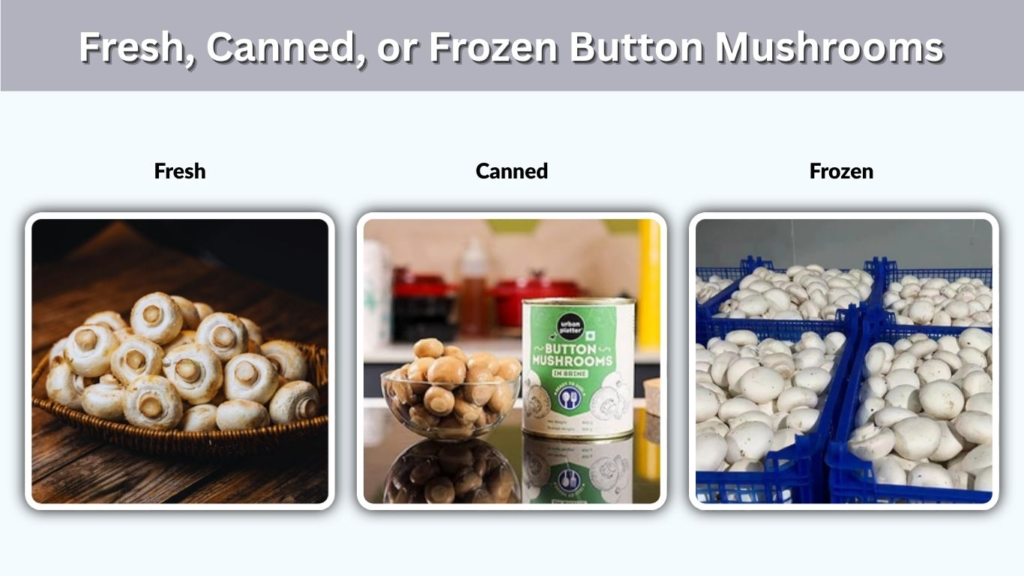
Fresh button mushrooms are best for sautéing, roasting, grilling, and salads. They have the best texture and most natural flavor.
Canned button mushrooms are convenient and already cooked, but they are softer and may taste saltier. They work well in soups, sauces, casseroles, and quick stir-fries.
Frozen mushrooms are useful for cooked dishes but may become watery when thawed. They are better for soups, sauces, and stews than for fresh salads.
Choose the type based on your recipe. For the best flavor and texture, fresh mushrooms are usually the strongest choice.
How to Store Button Mushrooms
Button mushrooms spoil faster when trapped in moisture. The best way to store them is in the refrigerator in a breathable container or paper bag. Avoid sealing fresh mushrooms in airtight plastic for too long, because moisture can build up and make them slimy.
Good storage tips include:
- Keep mushrooms in the refrigerator.
- Store them in a paper bag or original breathable packaging.
- Do not wash them until you are ready to use them.
- Use fresh mushrooms within a few days for best quality.
- Throw away mushrooms that smell bad, feel slimy, or show mold.
Small brown spots do not always mean mushrooms are unsafe, but sliminess, strong odor, or visible mold are signs they should not be eaten.
Button Mushrooms vs Cremini and Portobello
Button mushrooms, cremini mushrooms, and portobello mushrooms all come from the same species. The difference is mainly age and maturity.
Button mushrooms are the youngest. They are white, mild, and tender. Cremini mushrooms are slightly older, brown, and more flavorful. Portobello mushrooms are fully mature, large, meaty, and often used as a vegetarian burger or steak substitute.
Use button mushrooms when you want a light mushroom flavor. Use cremini when you want more earthiness. Use portobello when you want a larger, meatier texture.
Can Dogs Eat Button Mushrooms?
Plain store-bought button mushrooms are generally different from wild mushrooms, which can be dangerous. However, dogs should not eat mushrooms cooked with garlic, onion, butter, heavy seasoning, or rich sauces.
If your dog eats a small amount of plain cooked button mushroom, it may not be a problem, but it is still best to check with a veterinarian if you are unsure. Never let dogs eat wild mushrooms from yards, parks, or forests.
Growing Button Mushrooms at Home
Button mushrooms can be grown at home, but they need specific conditions. They grow best in a controlled environment with the right compost, moisture, temperature, and darkness. This is why many beginners use a button mushroom growing kit instead of starting from scratch.
A grow kit can be a good option if you want to learn the process. It usually includes prepared substrate and instructions. However, growing mushrooms is more sensitive than growing herbs, so cleanliness and moisture control are important.
FAQs
What are button mushrooms?
Button mushrooms are small, mild, white mushrooms commonly used in cooking. They are the young form of Agaricus bisporus, the same species that includes cremini and portobello mushrooms. They are popular because they are affordable, easy to cook, and suitable for many recipes.
Are white button mushrooms healthy?
Yes, white button mushrooms can be a healthy food when included in a balanced diet. They are low in calories, low in fat, and provide fiber, minerals, and B vitamins. Their mild flavor also makes them easy to add to meals with vegetables, grains, and protein.
How do you cook button mushrooms?
The easiest way to cook button mushrooms is to sauté them in a hot pan with oil or butter. Let their moisture cook off, then continue cooking until they brown. You can season them with garlic, salt, pepper, herbs, lemon juice, or soy sauce.
Can you freeze button mushrooms?
Yes, button mushrooms can be frozen, but they are best cooked first. Raw mushrooms may become watery and soft after freezing. For better results, sauté or blanch them, cool completely, and store them in freezer-safe bags or containers.
Are button mushrooms and white mushrooms the same?
Yes, button mushrooms and white mushrooms usually mean the same thing. “White button mushrooms” is the full name often used in grocery stores and nutrition searches. They are mild, small, white mushrooms commonly used in salads, soups, pasta, pizza, and stir-fries.