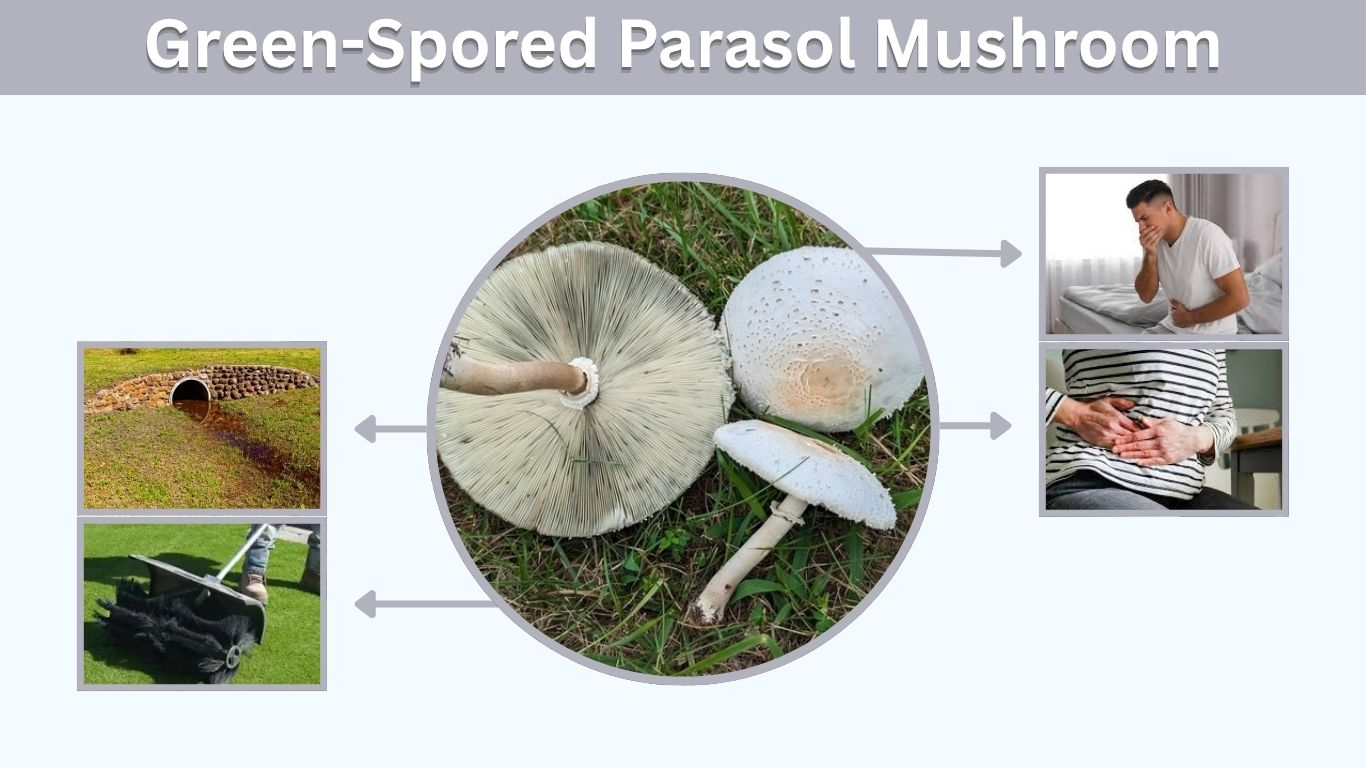
The green-spored parasol mushroom (Chlorophyllum molybdites) is one of the most commonly encountered poisonous mushrooms in lawns and grassy areas. Often mistaken for edible parasol mushrooms, this species is responsible for numerous cases of mushroom poisoning each year. Its large size and attractive appearance can easily fool inexperienced foragers. Learning how to identify the green-spored parasol, understand its toxicity, and recognize where it grows is essential for protecting yourself, your family, and your pets from accidental ingestion.
What Is a Green-Spored Parasol Mushroom?
The green-spored parasol mushroom is a toxic fungus commonly found in lawns, parks, golf courses, and open grassy spaces. Scientifically known as Chlorophyllum molybdites, it thrives in warm climates and frequently appears after periods of rain. Although it resembles several edible mushroom species, it should never be consumed due to its ability to cause severe gastrointestinal distress.
Scientific Classification
The green-spored parasol belongs to the Agaricaceae family and is one of the most widespread poisonous lawn mushrooms in North America. It is particularly common throughout the southern United States but can also be found in many other warm regions around the world.
Why Is It Called Green-Spored Parasol?
The mushroom gets its name from the distinctive green spore print it produces when mature. While young specimens have white gills, these gradually turn greenish as spores develop. This green coloration is one of the most important identification features and helps distinguish it from edible parasol mushrooms.
Where Does It Commonly Grow?
This species is most often found in:
- Residential lawns
- Public parks
- Athletic fields
- Pastures
- Golf courses
It frequently appears in groups, clusters, or large fairy-ring formations after rainfall during warm weather.
Green-Spored Parasol Identification Guide
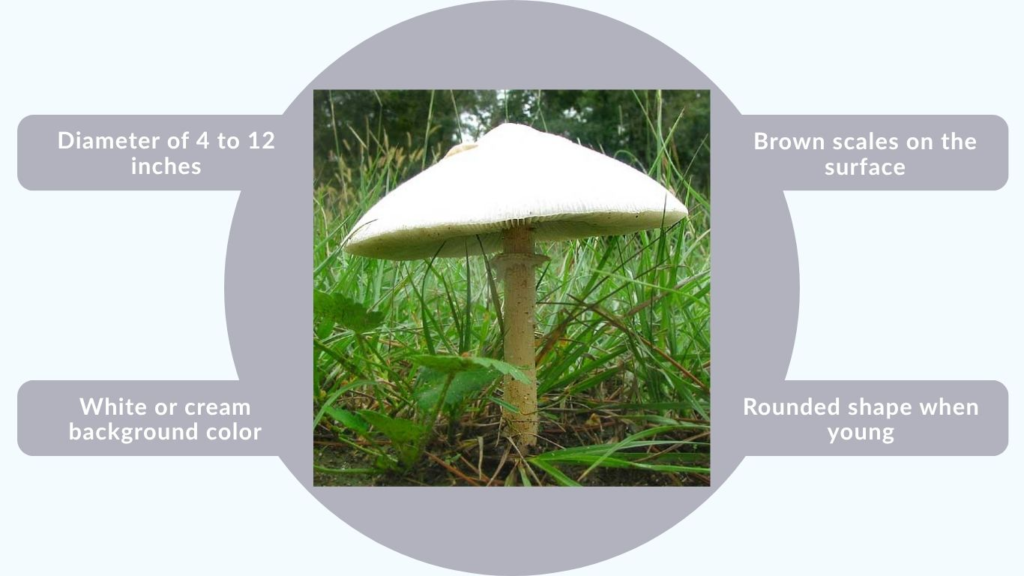
Accurate identification is critical because the green-spored parasol closely resembles several edible mushroom species. Observing multiple characteristics rather than relying on a single feature provides the safest approach to identification.
Cap Characteristics
The cap is typically large and eye-catching. Young mushrooms have rounded caps that gradually flatten as they mature. The surface is usually white to cream-colored and covered with brownish scales concentrated near the center.
Key cap features include:
- Diameter of 4 to 12 inches
- White or cream background color
- Brown scales on the surface
- Rounded shape when young
- Flat or umbrella-like shape when mature
Gills and Spore Print
The gills begin as white but gradually develop a greenish tint as spores mature. This change is one of the most reliable ways to identify the species. Mushroom experts often recommend obtaining a spore print when identification is uncertain.
Stem Features
The stem is thick, sturdy, and typically white. Mature specimens usually display a prominent ring around the upper portion of the stem. The stem may also become slightly enlarged near the base.
Young Green-Spored Parasol Mushrooms
Young green-spored parasol mushrooms are particularly difficult to identify because they have not yet developed their characteristic green spores. During this stage, they can look remarkably similar to edible parasol mushrooms and other harmless lawn fungi. This is one reason why accidental poisonings occur so frequently.
Why Identification Is Difficult in Early Stages
When immature, the mushroom lacks several features that experts rely on for accurate identification. The cap remains rounded, the gills stay white, and the spore-producing structures have not fully developed. As a result, inexperienced foragers may incorrectly assume the mushroom is edible.
Signs to Watch For
Even in younger specimens, several clues may help with identification:
- Large mushroom size
- White cap with brown scales
- Thick central stem
- Growth in lawns and grassy areas
- Appearance after warm rain
Green-Spored Parasol vs Parasol Mushroom
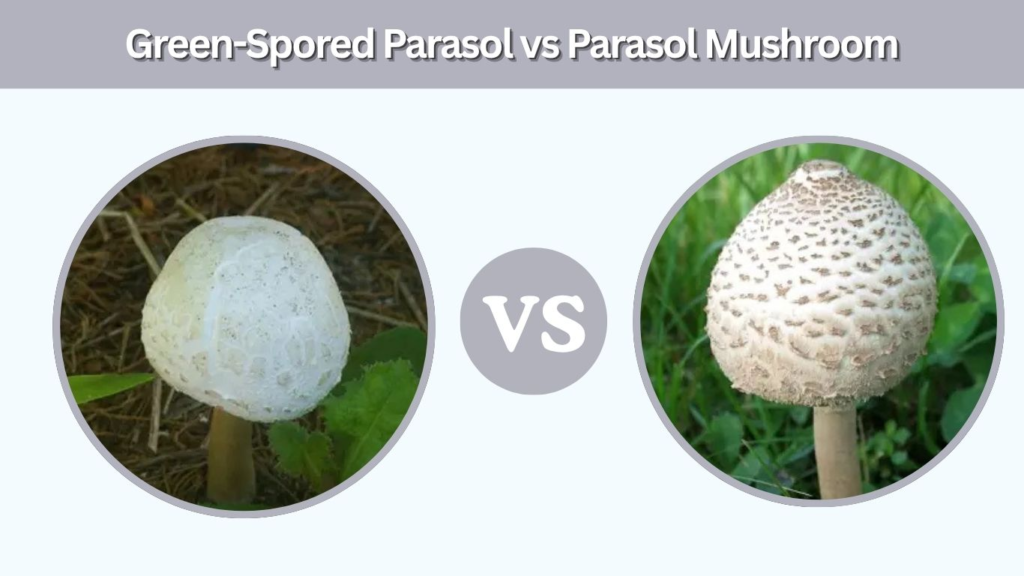
Many mushroom enthusiasts confuse the green-spored parasol with the true parasol mushroom because of their similar appearance. Understanding the differences between these species is essential for avoiding dangerous mistakes.
Difference Between Parasol Mushroom and Green-Spored Parasol
Although both mushrooms are large and umbrella-shaped, the green-spored parasol produces green spores while the true parasol mushroom produces white spores. This distinction is often considered the most reliable identification feature.
The true parasol mushroom also tends to have a more slender stem with a distinctive snakeskin-like pattern. In contrast, the green-spored parasol typically has a smoother stem and develops greenish gills as it matures.
Green-Spored Parasol vs Shaggy Parasol
The shaggy parasol is another species commonly confused with the green-spored parasol. While both have scaled caps and similar growth habits, their spore colors differ significantly. The shaggy parasol does not produce the characteristic green spores associated with Chlorophyllum molybdites.
Common Look-Alikes
Several mushrooms may resemble the green-spored parasol, including:
- True parasol mushroom
- Shaggy parasol
- Other Chlorophyllum species
- Large lawn mushrooms
- Young agaric mushrooms
Because visual similarities can be misleading, multiple identification methods should always be used before drawing conclusions about a mushroom’s identity.
Are Green-Spored Parasol Mushrooms Poisonous?
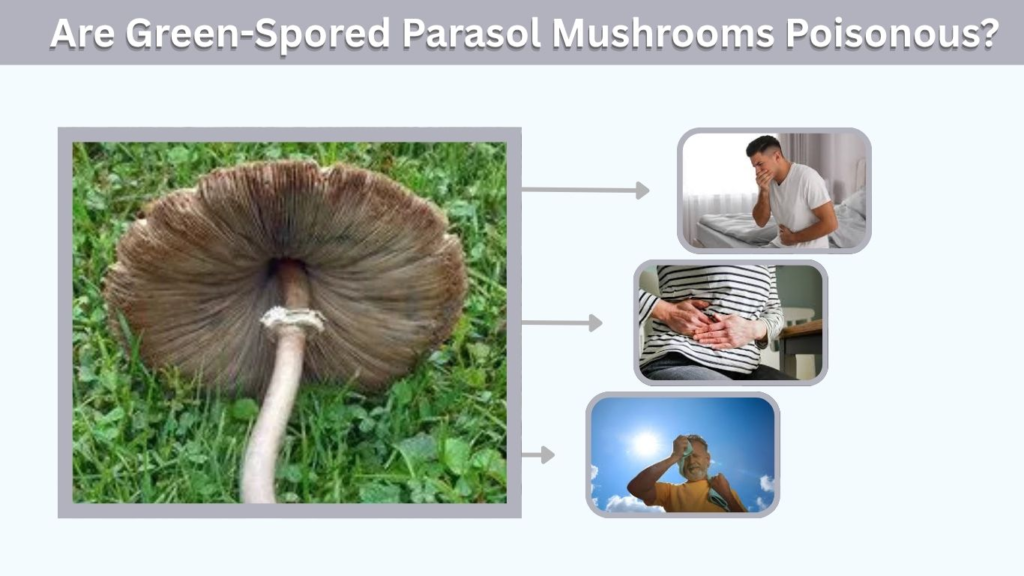
The green-spored parasol is considered a poisonous mushroom and is one of the leading causes of mushroom poisoning in North America. Although it is not generally classified as deadly, consuming this mushroom can result in severe gastrointestinal illness. Many poisoning cases occur when people mistake it for edible parasol species, particularly when the mushrooms are young and their green spores have not yet developed.
Why Is the Green-Spored Parasol Toxic?
The mushroom contains compounds that irritate the digestive system and trigger uncomfortable symptoms. The severity of poisoning can vary depending on the amount consumed, an individual’s health condition, and their sensitivity to the toxins.
Common Side Effects of Ingestion
People who eat green-spored parasol mushrooms often experience symptoms within a few hours. Common side effects include:
- Nausea
- Vomiting
- Severe stomach cramps
- Diarrhea
- Dehydration
Most healthy adults recover with proper medical care and hydration, but symptoms can be extremely unpleasant and may require hospitalization in severe cases.
Are Green-Spored Parasol Mushrooms Deadly?
Fatalities from green-spored parasol poisoning are extremely rare. However, the mushroom should still be treated as dangerous because severe gastrointestinal distress can lead to dehydration and other complications, especially in children, older adults, and individuals with underlying health conditions.
Are Green-Spored Parasol Mushrooms Edible?
Despite their attractive appearance and resemblance to edible species, green-spored parasol mushrooms should never be eaten. They are considered toxic and unsuitable for culinary use. Every year, many people become ill after mistakenly identifying them as edible parasol mushrooms.
Why People Mistake Them for Edible Mushrooms
Several factors contribute to accidental consumption. The mushroom is large, attractive, and often grows in areas where edible mushrooms are also found. Inexperienced foragers may focus on appearance alone without checking critical identification features such as the spore print.
What to Do If You Eat One
If a green-spored parasol mushroom is consumed, it is important to take prompt action. Recommended steps include:
- Stop eating the mushroom immediately
- Save a sample for identification
- Contact a poison control center
- Drink fluids if tolerated
- Seek medical attention if symptoms develop
Early identification can help healthcare professionals provide appropriate treatment.
Green-Spored Parasol Mushrooms and Dogs
Dogs are naturally curious and may investigate or consume mushrooms growing in yards and parks. Because green-spored parasol mushrooms commonly appear in lawns, they present a potential risk to pets. Pet owners should remove mushrooms promptly and monitor outdoor areas during mushroom-growing seasons.
Are Green-Spored Parasol Mushrooms Poisonous to Dogs?
Yes, these mushrooms can be toxic to dogs. The toxins primarily affect the digestive system and may cause symptoms similar to those seen in humans. Veterinary treatment is often recommended if ingestion occurs.
Symptoms of Poisoning in Dogs
Common symptoms may include:
- Vomiting
- Diarrhea
- Excessive drooling
- Weakness
- Loss of appetite
Symptoms can develop within a few hours after ingestion and may worsen without treatment.
What Should Pet Owners Do?
If a dog eats a suspected green-spored parasol mushroom, contact a veterinarian immediately. Bringing a sample of the mushroom can help with identification and treatment decisions.
Green-Spored Parasol Mushroom Growth Cycle
Understanding the growth cycle of the green-spored parasol can help homeowners identify and manage recurring mushroom outbreaks. Like other fungi, this species spends most of its life underground before producing visible mushrooms.
Life Cycle Overview
The process begins when spores germinate and form underground fungal threads called mycelium. These threads spread through the soil and feed on organic matter. When environmental conditions become favorable, mushrooms emerge above ground to release new spores.
When Do Green-Spored Parasols Appear?
The mushrooms are most common during warm and humid periods. Heavy rainfall followed by warm temperatures often triggers large fruiting events, causing numerous mushrooms to appear within a short time.
Why Do They Grow in Fairy Rings?
As the underground mycelium expands outward, mushrooms often emerge around the active growing edge. This creates the circular patterns known as fairy rings, which are frequently associated with green-spored parasol mushrooms.
How to Get Rid of Green-Spored Parasol Mushrooms
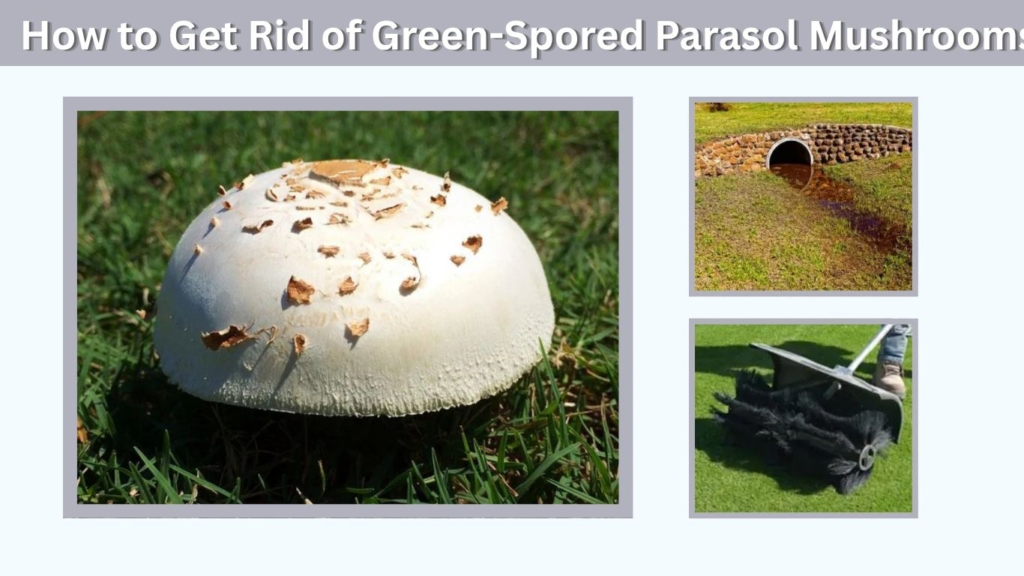
Removing green-spored parasol mushrooms can be challenging because the visible mushrooms represent only a small portion of the fungal organism. Effective management focuses on reducing favorable growing conditions rather than simply removing the mushrooms.
Remove Existing Mushrooms
Visible mushrooms should be collected and discarded before they release additional spores. While this does not eliminate the underground fungus, it can reduce future spread and lower the risk of accidental ingestion.
Lawn Management Strategies
Several practices may help reduce mushroom growth:
- Improve soil drainage
- Aerate compacted soil
- Remove decaying organic matter
- Reduce excessive watering
- Maintain healthy turf grass
Do Fungicides Work?
Fungicides may provide limited results, but they rarely eliminate established fungal colonies. Long-term success typically depends on improving lawn conditions and removing food sources that support fungal growth.
FAQs
Is a green-spored parasol mushroom poisonous?
Yes. The green-spored parasol is a poisonous mushroom that commonly causes gastrointestinal illness, including vomiting, diarrhea, and stomach cramps.
How can I identify a green-spored parasol?
The most reliable feature is its green spore print. Mature mushrooms also develop greenish gills, helping distinguish them from edible parasol species.
Are green-spored parasol mushrooms poisonous to dogs?
Yes. Dogs that consume these mushrooms may experience vomiting, diarrhea, drooling, and weakness and should be examined by a veterinarian.
What is the difference between a parasol mushroom and a green-spored parasol?
The key difference is the spore print color. True parasol mushrooms have white spores, while green-spored parasols produce green spores.
Why do green-spored parasol mushrooms grow in lawns?
They grow by feeding on organic matter in the soil and often appear after warm, wet weather, especially in nutrient-rich grassy areas.