
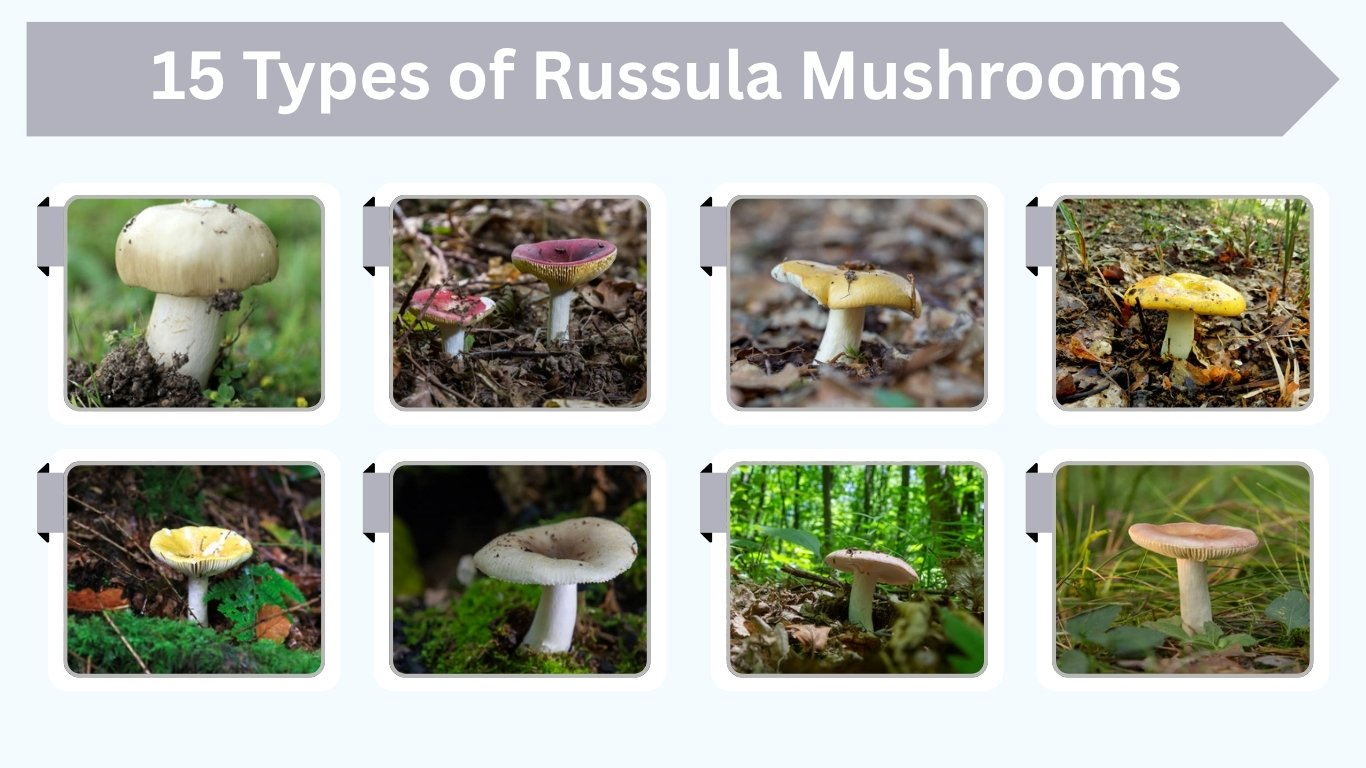
Russula mushrooms are among the most common and colorful fungi found in forests around the world. Known for their brittle gills and wide variety of cap colors, these mushrooms range from edible and mild-flavored species to sharply bitter or toxic varieties. Many Russula species grow in close association with trees, making them an important part of woodland ecosystems. Because several species look similar, proper identification is essential for mushroom enthusiasts and foragers. This guide explores 15 notable types of Russula mushrooms, including their appearance, habitat, edibility, and distinguishing features.
1. Russula cyanoxantha

Russula cyanoxantha, commonly known as the Charcoal Burner, is one of the most recognizable Russula mushrooms found in woodland environments. It is admired for its colorful cap, firm texture, and flexible gills, which make it different from many other brittle Russula species. This mushroom is commonly seen during late summer and autumn and is widely distributed across Europe and North America. Its appearance can vary greatly in color, making careful observation important during identification.
Identification
- Cap colors range from purple and violet to green, blue, or gray
- Smooth cap surface that may become sticky in wet weather
- White gills that are soft and flexible instead of brittle
- Thick white stem with a sturdy texture
- Flesh remains mostly white when cut or damaged
- Mild odor and taste without strong bitterness
- Spore print is creamy white
- Typically grows under hardwood and mixed forest trees
Habitat
Russula cyanoxantha commonly grows in deciduous and mixed forests, especially near oak, beech, and chestnut trees. It prefers rich woodland soil with good moisture levels. Fruiting bodies usually appear from summer through autumn, often after rainfall. This species may grow alone, scattered, or in small groups across forest floors covered with leaf litter. It forms mycorrhizal relationships with trees, helping exchange nutrients through the root system. Because of its adaptability, it can survive in various woodland ecosystems and is frequently encountered by mushroom foragers in temperate regions.
Edibility
Russula cyanoxantha is considered an edible mushroom and is often regarded as one of the better-tasting Russula species. It has a mild flavor and firm flesh that holds its texture during cooking. Many mushroom enthusiasts appreciate it for frying, sautéing, or adding to mixed mushroom dishes. Although it is generally safe when properly identified, foragers should still exercise caution because some Russula species can cause stomach irritation. Beginners are advised to avoid consuming wild mushrooms without expert confirmation. Proper cleaning and cooking are recommended before eating this species.
Distinct Features
The most distinctive feature of Russula cyanoxantha is its flexible gills, which separate it from many other Russula mushrooms known for brittle gill structures. The cap also displays highly variable coloration, often combining shades of blue, green, purple, and gray in a single specimen. Unlike some related species, the flesh does not stain dramatically when damaged. Its sturdy stem and smooth cap texture further help with recognition. These combined characteristics make it one of the easiest Russula species for experienced mushroom hunters to identify in woodland habitats.
2. Russula emetica

Russula emetica, commonly known as the Sickener, is a brightly colored mushroom known for its striking red cap and toxic properties. It is one of the most famous Russula species because of its intensely peppery taste and ability to cause digestive illness when eaten raw or improperly prepared. This mushroom commonly appears in damp forests and boggy woodland areas during late summer and autumn. Its attractive appearance can easily mislead inexperienced foragers, making accurate identification extremely important.
Identification
- Bright red or scarlet cap with a smooth surface
- Cap becomes slightly sticky in wet conditions
- White, brittle gills that break easily
- White stem with a smooth texture
- Flesh is white and fragile
- Strongly hot or peppery taste
- Spore print is pure white
- Commonly found in moist woodland habitats
Habitat
Russula emetica prefers wet and acidic environments, especially coniferous forests, peat bogs, and mossy woodland areas. It often grows near pine and spruce trees where soil moisture remains high throughout the season. Fruiting bodies usually appear from late summer to autumn, sometimes forming scattered groups across damp forest floors. This species forms mycorrhizal relationships with surrounding trees, helping exchange nutrients within the ecosystem. It is widespread across Europe, North America, and parts of Asia where cool and humid woodland conditions are common.
Toxicity
Russula emetica is considered poisonous when consumed raw because it can cause nausea, vomiting, stomach cramps, and digestive discomfort. The mushroom’s intensely spicy taste serves as a natural warning sign against consumption. Although some traditional preparation methods claim to reduce toxicity through extensive cooking, many experts still advise avoiding this species entirely. Mushroom poisoning symptoms are usually temporary but can be unpleasant and severe in sensitive individuals. Proper identification is essential because its bright appearance may resemble edible red-capped Russula species.
Distinct Features
The vivid red cap and intensely peppery taste are the most recognizable features of Russula emetica. Unlike edible Russula species with mild flavors, this mushroom produces a sharp burning sensation when tasted carefully and then spat out during identification. Its brittle white gills and preference for wet woodland habitats also help distinguish it from similar mushrooms. The combination of scarlet coloration, fragile texture, and toxic reputation has made it one of the best-known Russula species among mushroom enthusiasts and field guides.
3. Russula xerampelina

Russula xerampelina, often called the Crab Brittlegill, is a well-known Russula species recognized for its seafood-like smell and large colorful cap. This mushroom is popular among experienced foragers because of its edible quality and distinctive odor that resembles cooked crab or shellfish. The species displays a wide range of cap colors, making visual identification more challenging. It commonly appears in forests during late summer and autumn and is widely distributed across Europe and North America.
Identification
- Cap colors vary from red and purple to brown or wine shades
- Smooth cap surface with a slightly greasy texture
- Creamy white to yellowish brittle gills
- Thick white stem that may discolor with age
- Flesh slowly turns brownish when handled
- Strong crab or seafood-like odor
- Mild taste without strong bitterness
- Spore print is cream to pale yellow
Habitat
Russula xerampelina grows in both coniferous and deciduous forests, commonly near pine, spruce, fir, and beech trees. It prefers moist woodland soil rich in organic matter and usually fruits during late summer through autumn. This species often appears singly or in scattered groups across forest floors covered with moss and leaf litter. Like many Russula mushrooms, it forms mycorrhizal relationships with nearby trees, helping support forest nutrient exchange. It is frequently found in temperate woodland regions with cool and humid conditions.
Edibility
Russula xerampelina is considered edible and is valued for its firm texture and mild flavor. Many mushroom enthusiasts appreciate this species because of its unique seafood-like aroma, which becomes even more noticeable during cooking. It is commonly sautéed, grilled, or added to mixed mushroom dishes. Proper identification is important because some Russula species may cause digestive problems. Beginners should avoid relying only on cap color since this mushroom can appear in several shades and forms depending on environmental conditions.
Distinct Features
The strongest identifying feature of Russula xerampelina is its unmistakable crab-like smell, especially in mature specimens. Few other Russula species produce such a distinctive seafood odor. The mushroom also tends to develop brownish discoloration on damaged flesh and stems. Its large cap with variable reddish or purplish coloration further contributes to its recognition. Combined with its edible reputation and unique scent, these features make it one of the more memorable Russula mushrooms found in woodland habitats.
4. Russula virescens

Russula virescens, commonly known as the Green-cracked Brittlegill, is one of the most prized edible Russula mushrooms. It is easily recognized by its greenish cap covered with cracked or mosaic-like patterns. This species is highly valued by mushroom foragers because of its pleasant flavor, firm texture, and relatively easy identification compared to many other Russula mushrooms. It usually appears during warm and humid seasons in broadleaf forests and is widely distributed across Europe, Asia, and North America.
Identification
- Green to grayish-green cap with cracked mosaic patterns
- Dry and matte cap surface rather than slimy
- White brittle gills spaced closely together
- Thick white stem with a firm structure
- White flesh that remains mostly unchanged when cut
- Mild taste without bitterness or peppery flavor
- Spore print is creamy white
- Medium to large mushroom size compared to many Russula species
Habitat
Russula virescens commonly grows in deciduous forests, especially near oak, chestnut, and beech trees. It prefers warm woodland environments with rich soil and good moisture levels. Fruiting bodies usually appear from summer through early autumn, particularly after rainfall. The mushroom often grows alone or in scattered groups among fallen leaves and forest debris. Like other Russula species, it forms mycorrhizal relationships with tree roots, helping support nutrient exchange within forest ecosystems. It is frequently found in temperate and subtropical woodland regions.
Edibility
Russula virescens is widely regarded as one of the best edible Russula mushrooms. Its firm flesh, mild flavor, and pleasant texture make it highly valued in many culinary traditions. The mushroom is commonly sautéed, grilled, or added to soups and mixed mushroom dishes. Because it is considered a premium edible species, it is often collected by experienced foragers. However, careful identification remains important since some toxic greenish mushrooms may appear similar to inexperienced collectors in natural settings.
Distinct Features
The cracked green cap is the most distinctive feature of Russula virescens. The surface often develops patchy or mosaic-like patterns that clearly separate it from smoother Russula species. Unlike many brittle Russulas with spicy flavors, this species has a mild taste and firm texture. Its stable white flesh and dry cap surface further assist identification. These characteristics, combined with its reputation as a high-quality edible mushroom, make it one of the most recognizable and respected members of the Russula genus.
5. Russula rosea

Russula rosea, also known as the Rosy Brittlegill, is a striking mushroom recognized for its bright pink to rosy-red cap and sturdy appearance. This species is commonly found in deciduous forests during summer and autumn. Although visually attractive, it is not generally considered a desirable edible mushroom because of its bitter taste. Its colorful cap and firm texture make it one of the easier Russula species to notice in woodland habitats.
Identification
- Bright pink, rosy-red, or reddish cap coloration
- Dry and smooth cap surface
- White to cream-colored brittle gills
- Thick white stem often flushed with pink tones
- Firm white flesh with a dense texture
- Mild to slightly bitter taste
- Spore print is pale cream
- Cap edges may crack slightly with age
Habitat
Russula rosea commonly grows in deciduous woodlands, especially near beech, oak, and chestnut trees. It prefers well-drained forest soil rich in organic matter and often appears in sunny woodland clearings. Fruiting bodies usually emerge from summer through autumn after periods of rainfall. This species can grow singly or in small scattered groups among leaves and moss. Like other Russula mushrooms, it forms mycorrhizal associations with nearby trees, helping maintain healthy forest ecosystems through nutrient exchange.
Edibility
Russula rosea is generally considered inedible or of low culinary value because of its bitter flavor and tough texture. While it is not strongly poisonous, many mushroom guides advise against eating it due to its unpleasant taste. Cooking does not always remove the bitterness completely, making it unpopular among mushroom foragers. Accurate identification is still important because brightly colored Russula species can sometimes resemble edible varieties. Beginners should avoid consuming unfamiliar red-capped mushrooms collected from the wild.
Distinct Features
The vivid rosy-red cap and thick firm stem are the most recognizable features of Russula rosea. Unlike many softer Russula species, this mushroom often feels solid and compact when handled. The stem may show faint pink shades that match the cap coloration. Its dry cap texture and slightly bitter taste further help distinguish it from edible Russula mushrooms with milder flavors. These characteristics make it a noticeable but less desirable species within the Russula genus.
6. Russula nigricans

Russula nigricans, commonly called the Blackening Brittlegill, is a large and unusual Russula species known for its dramatic color changes as it ages or becomes damaged. The mushroom gradually darkens from white to brown and eventually black, giving it a very distinctive appearance in woodland environments. It commonly grows in forests during late summer and autumn and is widely distributed across Europe and parts of North America. Its tough texture and darkening flesh make it easier to recognize than many other Russula mushrooms.
Identification
- Large whitish to gray cap that darkens with age
- Thick and widely spaced gills
- White stem that slowly turns brown or black when bruised
- Firm flesh with a dense texture
- Flesh changes color from white to reddish, then black
- Mild earthy smell without strong odor
- Spore print is white to cream-colored
- Mature mushrooms often appear dark and weathered
Habitat
Russula nigricans commonly grows in deciduous and mixed forests, especially near beech, oak, and pine trees. It prefers woodland soil rich in organic material and often appears among fallen leaves and moss. Fruiting bodies usually emerge from summer through autumn, sometimes forming scattered groups or clusters. Like many Russula species, it forms mycorrhizal relationships with nearby trees, helping exchange nutrients within the forest ecosystem. This mushroom is frequently found in temperate woodland habitats with moist environmental conditions.
Edibility
Russula nigricans is considered edible by some sources, but its culinary value is generally regarded as low because of its tough texture and bland flavor. Young specimens are sometimes collected and cooked, while older mushrooms are usually avoided due to their darkened flesh and deteriorating quality. Proper cooking is recommended before consumption. Some individuals may experience digestive discomfort after eating this species, so cautious identification and preparation are important. Many foragers prefer more flavorful Russula species instead.
Distinct Features
The most striking feature of Russula nigricans is its gradual blackening reaction after bruising, cutting, or aging. Few Russula species display such dramatic color transformation. The mushroom’s thick widely spaced gills and large sturdy body also help separate it from more delicate Russula species. As the mushroom matures, the cap and stem often become almost entirely black, creating a weathered appearance on the forest floor. These unusual characteristics make it one of the easiest Russula mushrooms to recognize in natural habitats.
7. Russula vesca

Russula vesca, commonly known as the Flirt, is a popular edible Russula species recognized for its mild flavor and distinctive cap appearance. It is commonly found in woodland habitats during summer and autumn and is appreciated by mushroom foragers for its reliable edibility. The mushroom often has a soft pinkish or brownish cap with exposed white gill edges, making it easier to identify than many other Russula species. It is widely distributed across Europe and parts of Asia and North America.
Identification
- Pinkish, reddish-brown, or flesh-colored cap
- Dry and smooth cap surface
- Cap margin often does not fully cover the gills
- White brittle gills with exposed edges
- Thick white stem with a firm texture
- Mild taste without peppery bitterness
- White flesh that remains mostly unchanged when cut
- Spore print is creamy white
Habitat
Russula vesca commonly grows in deciduous and mixed forests, especially near oak, beech, and chestnut trees. It prefers dry to moderately moist woodland soil rich in organic matter. Fruiting bodies usually appear from summer through autumn and may grow singly or in scattered groups among leaf litter and moss. Like many Russula mushrooms, it forms mycorrhizal relationships with surrounding trees, supporting nutrient exchange within forest ecosystems. This species is frequently encountered in temperate woodland environments with stable seasonal rainfall.
Edibility
Russula vesca is considered a good edible mushroom and is valued for its mild nutty flavor and pleasant texture. It is commonly cooked by frying, grilling, or adding to mixed mushroom dishes. Unlike some Russula species with spicy or bitter tastes, this mushroom has a gentle flavor that makes it suitable for culinary use. Proper identification remains important because several similar Russula species may not be edible. Foragers are advised to collect only fresh and healthy specimens for consumption.
Distinct Features
One of the most distinctive features of Russula vesca is the exposed white gill edges visible around the cap margin. In many specimens, the cap skin does not fully extend to the edge, revealing part of the gills underneath. Its firm stem, mild taste, and soft pinkish-brown cap also help with recognition. Compared to more brightly colored Russula mushrooms, this species often appears more subtle in coloration. These characteristics make it a respected and commonly collected edible member of the Russula genus.
8. Russula ochroleuca

Russula ochroleuca, commonly known as the Ochre Brittlegill, is a widespread woodland mushroom recognized for its yellow to ochre-colored cap and brittle structure. It is one of the more commonly encountered Russula species in forests across Europe and North America. Although not considered highly poisonous, this mushroom is generally avoided for eating because of its unpleasant taste and possible digestive effects. Its bright cap color and pale stem make it fairly noticeable among woodland leaf litter during the mushroom season.
Identification
- Yellow to ochre-colored cap with a smooth surface
- Cap may become slightly sticky in damp weather
- White brittle gills attached closely beneath the cap
- White cylindrical stem with a firm texture
- Flesh is white and fragile
- Taste ranges from mild to peppery or unpleasant
- Spore print is pale cream
- Medium-sized mushroom commonly found in forests
Habitat
Russula ochroleuca commonly grows in deciduous and coniferous woodlands, especially near beech, birch, pine, and spruce trees. It prefers acidic soil and moist forest conditions where leaf litter and moss are abundant. Fruiting bodies usually appear from summer through late autumn, often after rainfall. The mushroom may grow alone or in scattered groups across the forest floor. Like other Russula species, it forms mycorrhizal relationships with nearby trees, contributing to nutrient exchange and overall woodland health.
Edibility
Russula ochroleuca is generally considered inedible or of poor culinary quality. While it is not highly toxic, many people avoid eating it because of its bitter or peppery taste and potential to cause stomach discomfort. Some mushroom guides classify it as mildly poisonous due to digestive irritation reported after consumption. Because edible yellow Russula species also exist, careful identification is important. Most foragers prefer avoiding this species in favor of better-tasting and safer Russula mushrooms.
Distinct Features
The most recognizable feature of Russula ochroleuca is its dull yellow or ochre-colored cap combined with its brittle white gills and stem. Unlike some brightly colored Russulas, this species often has a softer earthy appearance. The flesh remains white when cut, and the cap surface may become sticky during wet conditions. Its unpleasant taste also helps distinguish it from edible Russula species with milder flavors. These characteristics make it a familiar but generally avoided mushroom among woodland foragers.
9. Russula delica

Russula delica, commonly known as the Milk-white Brittlegill, is a large white Russula species often found in woodland habitats. Despite its plain appearance, it is a distinctive mushroom because of its funnel-shaped cap and thick flesh. This species is commonly encountered during summer and autumn and is widespread across Europe and parts of North America. It often grows partially buried beneath leaves and soil, making mature specimens appear dirty or stained. Although edible in some regions, it is not highly valued because of its tough texture and mild flavor.
Identification
- Large white to cream-colored cap
- Funnel-shaped cap that becomes depressed with age
- Dry and matte cap surface often covered with debris
- Thick white brittle gills spaced closely together
- Short sturdy white stem
- Dense white flesh with a firm texture
- Mild to slightly peppery taste
- Spore print is creamy white
Habitat
Russula delica commonly grows in deciduous and mixed forests, especially near beech, oak, and pine trees. It prefers woodland soil rich in leaf litter and organic material. Fruiting bodies usually emerge from summer through autumn, often hidden beneath leaves or partly buried in the ground. The mushroom may grow singly or in scattered groups across forest floors. Like many Russula species, it forms mycorrhizal associations with nearby trees, helping support nutrient exchange and forest ecosystem health in temperate woodland environments.
Edibility
Russula delica is considered edible in some regions, though its culinary reputation is generally average because of its dense flesh and relatively bland taste. Younger specimens are preferred for cooking since older mushrooms often become tough and infested with insects. It is sometimes grilled, fried, or preserved after proper preparation. However, some related white Russula species can have a much sharper taste, so careful identification is important. Many foragers collect this species only when higher-quality edible mushrooms are unavailable.
Distinct Features
The most noticeable feature of Russula delica is its large funnel-shaped white cap that frequently traps dirt and forest debris. Unlike smoother woodland mushrooms, it often appears rough or partially buried in the soil. Its thick firm flesh and sturdy stem also help distinguish it from more delicate Russula species. Mature specimens commonly develop cracked cap surfaces and deep central depressions. These characteristics make it one of the more recognizable white Russula mushrooms found in forest habitats.
10. Russula foetens

Russula foetens, commonly known as the Stinking Brittlegill, is a large woodland mushroom famous for its unpleasant odor and sticky yellow-brown cap. It belongs to a group of Russula species known for strong smells and slimy surfaces in wet weather. This mushroom is commonly found in forests during late summer and autumn. Although it has an unattractive scent, it remains an interesting species for mushroom enthusiasts because of its distinctive appearance and strong identifying characteristics.
Identification
- Yellow-brown to ochre cap with a sticky surface
- Cap becomes deeply depressed with age
- White to cream-colored brittle gills
- Thick white stem with a firm structure
- Strong unpleasant or rancid smell
- Flesh is white and fragile
- Taste is sharp or unpleasant
- Spore print is pale cream
Habitat
Russula foetens commonly grows in deciduous and mixed forests, especially near oak, beech, and birch trees. It prefers moist woodland soil rich in organic material and often appears among leaf litter after rainfall. Fruiting bodies usually emerge from summer through autumn and may grow singly or in scattered groups. Like other Russula mushrooms, it forms mycorrhizal relationships with nearby trees, supporting nutrient exchange within the forest ecosystem. This species is widely distributed across Europe, Asia, and parts of North America.
Edibility
Russula foetens is generally considered inedible because of its unpleasant smell, sharp taste, and potential to cause digestive discomfort. Some traditional cultures prepare it using special preservation methods, but most mushroom guides recommend avoiding consumption. The mushroom’s strong odor alone discourages many foragers from collecting it for food. Careful identification is important because several similar-looking Russula species exist in woodland habitats. Most mushroom enthusiasts study this species mainly for identification purposes rather than culinary use.
Distinct Features
The most distinctive feature of Russula foetens is its strong foul smell, which becomes more noticeable as the mushroom ages. Its sticky yellow-brown cap and deeply depressed center also help separate it from many other Russula species. During wet weather, the cap surface often appears slimy and glossy. The combination of unpleasant odor, sharp taste, and large brittle structure makes this species relatively easy to recognize in woodland environments. These features have earned it the common name Stinking Brittlegill.
11. Russula lutea

Russula lutea, commonly known as the Yellow Brittlegill, is a colorful woodland mushroom recognized for its bright yellow cap and contrasting white stem. This species is commonly found in damp forest habitats during summer and autumn. It is considered one of the more attractive Russula mushrooms because of its vivid coloration and smooth appearance. Although not as widely known as some other Russula species, it is appreciated by mushroom enthusiasts for its mild flavor and relatively pleasant edibility.
Identification
- Bright yellow to golden-yellow cap coloration
- Smooth and slightly shiny cap surface
- White to pale cream brittle gills
- Slender white stem with a smooth texture
- White flesh that remains mostly unchanged when cut
- Mild smell and gentle taste
- Spore print is pale cream to yellowish
- Medium-sized mushroom with a delicate appearance
Habitat
Russula lutea commonly grows in moist deciduous and mixed forests, especially near birch, oak, and beech trees. It prefers acidic woodland soil with abundant moss and leaf litter. Fruiting bodies usually appear from summer through autumn, particularly after periods of rainfall. The mushroom often grows singly or in small scattered groups across damp forest floors. Like many Russula species, it forms mycorrhizal relationships with nearby trees, helping support nutrient exchange and healthy forest ecosystems in temperate woodland environments.
Edibility
Russula lutea is generally considered edible and has a mild flavor compared to many sharper-tasting Russula species. Its tender flesh and pleasant texture make it suitable for simple mushroom dishes when properly identified. However, it is not regarded as one of the finest edible Russulas because of its relatively fragile structure and limited flavor intensity. Mushroom foragers should still exercise caution during identification since several yellow Russula species can appear similar and may differ in edibility or taste.
Distinct Features
The vivid yellow cap is the most recognizable feature of Russula lutea. Unlike duller yellow Russula species, this mushroom often displays a brighter and cleaner coloration in fresh specimens. Its smooth cap, pale gills, and slender white stem create a balanced appearance that stands out in woodland environments. The mild taste also helps distinguish it from more peppery yellow Russula mushrooms. These characteristics make it a visually attractive and fairly easy-to-recognize species within the Russula genus.
12. Russula fragilis

Russula fragilis, commonly known as the Fragile Brittlegill, is a small and delicate Russula species recognized for its extremely brittle structure and variable purple or violet cap colors. This mushroom is commonly found in damp woodland habitats during late summer and autumn. It is known for its sharp peppery taste and fragile flesh, which make it unsuitable for eating. Because of its delicate appearance and easily broken gills, it is considered one of the more fragile members of the Russula genus.
Identification
- Purple, violet, pink, or reddish cap coloration
- Thin and delicate cap with a smooth surface
- White brittle gills that break very easily
- Slender white stem with a fragile structure
- Flesh is thin and easily damaged
- Strongly peppery or burning taste
- Spore print is white to pale cream
- Small mushroom size compared to many Russula species
Habitat
Russula fragilis commonly grows in moist deciduous and coniferous forests, especially near birch, beech, oak, and pine trees. It prefers acidic woodland soil rich in moss and decomposing leaves. Fruiting bodies usually appear from summer through autumn, often after periods of rain. This species may grow singly or in scattered groups across damp forest floors. Like other Russula mushrooms, it forms mycorrhizal relationships with surrounding trees, helping support nutrient exchange within woodland ecosystems and contributing to overall forest health.
Edibility
Russula fragilis is generally considered inedible because of its intensely peppery taste and delicate texture. Although it is not regarded as dangerously poisonous, eating it may cause digestive discomfort and irritation. The burning flavor is often immediately noticeable, making it easy to reject during careful taste testing used by experienced mushroom identifiers. Most foragers avoid collecting this species for food because better edible Russula mushrooms are widely available in the same habitats during the growing season.
Distinct Features
The most distinctive feature of Russula fragilis is its extremely brittle structure, especially the fragile gills and thin flesh that break apart easily when handled. Its small size and purple-toned cap also help distinguish it from larger Russula species. The intensely peppery taste further separates it from edible Russulas with milder flavors. In moist woodland conditions, the cap may appear slightly shiny or translucent near the edges. These characteristics make it one of the easiest fragile Russula species to recognize in forests.
13. Russula paludosa

Russula paludosa, commonly known as the Swamp Brittlegill, is a large colorful Russula species commonly found in moist coniferous forests. It is especially associated with pine woodlands and boggy environments, where it appears during summer and autumn. This mushroom is appreciated for its attractive reddish cap, firm texture, and edible quality. Compared to many brittle Russula species, it has a more solid structure and milder flavor, making it popular among experienced mushroom foragers in northern forest regions.
Identification
- Red, reddish-orange, or scarlet cap coloration
- Smooth cap surface that may become sticky when wet
- Cream-colored brittle gills beneath the cap
- Thick white stem with a sturdy texture
- Flesh is white and fairly firm
- Mild taste without strong bitterness
- Spore print is pale cream to yellowish
- Large mushroom size compared to many Russula species
Habitat
Russula paludosa commonly grows in moist coniferous forests, especially near pine trees and swampy woodland areas. It prefers acidic soil rich in moss and organic matter. Fruiting bodies usually emerge from summer through autumn, particularly after periods of rainfall. The mushroom often appears singly or in scattered groups across damp forest floors covered with pine needles and moss. Like other Russula species, it forms mycorrhizal relationships with nearby trees, helping maintain healthy nutrient exchange within forest ecosystems.
Edibility
Russula paludosa is considered a good edible mushroom and is valued for its mild flavor and firm texture. It is commonly prepared by frying, sautéing, or adding to mixed mushroom dishes. Unlike many red-capped Russula species with sharp or peppery tastes, this mushroom has a pleasant mild flavor that makes it suitable for culinary use. Proper identification remains important because several toxic or unpleasant red Russula species may grow in similar habitats and resemble this mushroom in appearance.
Distinct Features
The bright reddish cap and preference for swampy pine forests are among the most distinctive features of Russula paludosa. Its large size and sturdy structure help separate it from smaller, more fragile Russula species. The mild taste also distinguishes it from peppery red Russulas that are considered inedible. In wet conditions, the cap surface may appear glossy or slightly sticky. These combined characteristics make it one of the more recognizable edible Russula mushrooms found in northern woodland habitats.
14. Russula aeruginea

Russula aeruginea, commonly known as the Green Brittlegill, is a medium-sized Russula species recognized for its greenish cap and association with birch forests. It is commonly found in temperate woodland habitats during summer and autumn. This mushroom is considered edible and is valued for its mild flavor, although it is less famous than some other edible Russula species. Its calm green coloration and brittle structure make it a typical yet attractive woodland mushroom for mushroom enthusiasts and foragers.
Identification
- Green to grayish-green cap coloration
- Smooth cap surface that may become slightly sticky when wet
- White brittle gills attached beneath the cap
- White cylindrical stem with a firm texture
- White flesh that remains mostly unchanged when cut
- Mild smell and gentle taste
- Spore print is pale cream
- Medium-sized mushroom with a balanced shape
Habitat
Russula aeruginea commonly grows in deciduous and mixed forests, especially in association with birch trees. It prefers moist woodland soil rich in organic material and often appears among moss, grass, and fallen leaves. Fruiting bodies usually emerge from summer through autumn, particularly after rainfall. The mushroom may grow singly or in small scattered groups across forest floors. Like other Russula species, it forms mycorrhizal relationships with nearby trees, helping support nutrient exchange and healthy woodland ecosystems in temperate regions.
Edibility
Russula aeruginea is generally considered edible and has a mild flavor that makes it suitable for cooking. It is commonly sautéed, fried, or added to mixed mushroom dishes after proper identification. Although not regarded as one of the finest edible Russulas, it is appreciated for its pleasant taste and relatively firm texture. Careful identification is still important because several greenish Russula species exist, and some may differ in flavor or edibility. Fresh young specimens are usually preferred for culinary use.
Distinct Features
The soft green cap is the most recognizable feature of Russula aeruginea. Unlike more brightly colored Russula mushrooms, this species often displays calm green or gray-green shades that blend into woodland surroundings. Its association with birch trees also helps with identification in the field. The brittle white gills and mild taste further separate it from sharper or more fragile Russula species. These characteristics make it a fairly easy-to-recognize green Russula found in temperate forest habitats.
15. Russula claroflava

Russula claroflava, commonly known as the Yellow Swamp Brittlegill, is a bright yellow Russula species commonly found in wet woodland habitats. It is especially associated with birch trees and swampy ground, where it appears during late summer and autumn. This mushroom is valued for its edible quality and attractive coloration. Compared to some other yellow Russula species, it has firmer flesh and a milder flavor, making it a recognizable and respected mushroom among experienced foragers.
Identification
- Bright yellow to golden-yellow cap coloration
- Smooth cap surface that may become sticky in wet weather
- White to pale cream brittle gills
- White stem that may gray slightly with age
- Flesh slowly turns gray when damaged
- Mild taste without strong bitterness
- Spore print is pale cream to yellowish
- Medium-sized mushroom with a sturdy structure
Habitat
Russula claroflava commonly grows in wet birch woodlands, boggy forests, and swampy areas with acidic soil. It prefers moist environments rich in moss and organic matter. Fruiting bodies usually emerge from summer through autumn, especially after rainfall. The mushroom often appears singly or in small scattered groups across damp woodland floors. Like other Russula species, it forms mycorrhizal relationships with nearby birch trees, supporting nutrient exchange and helping maintain healthy forest ecosystems in cool temperate regions.
Edibility
Russula claroflava is considered a good edible mushroom and is appreciated for its mild flavor and relatively firm texture. It is commonly fried, sautéed, or added to mixed mushroom dishes after proper identification. Unlike many brightly colored Russula species with peppery tastes, this mushroom is generally mild and pleasant to eat. Careful identification remains important because several yellow Russula mushrooms may appear similar in woodland habitats. Fresh young specimens are usually preferred for the best texture and flavor.
Distinct Features
The vivid yellow cap combined with its swampy birch woodland habitat makes Russula claroflava relatively easy to recognize. One of its most distinctive characteristics is the gray discoloration that develops on damaged flesh and older stems. This feature helps separate it from other yellow Russula species that remain unchanged when bruised. Its sturdy structure and mild flavor further contribute to identification. These characteristics make it one of the more noticeable edible yellow Russula mushrooms found in wet forest environments.
FAQs
Is Russula claroflava edible?
Yes, Russula claroflava is considered an edible mushroom. It is known for its mild flavor and firm texture, making it suitable for frying, sautéing, and other mushroom dishes. Proper identification is still important because several yellow Russula species can appear similar in woodland environments.
Where does Russula claroflava usually grow?
This mushroom commonly grows in wet birch forests, swampy woodland areas, and moss-covered acidic soil. It is especially associated with birch trees and is often found in damp habitats during late summer and autumn after periods of rainfall.
How can you identify Russula claroflava?
Russula claroflava can be identified by its bright yellow cap, pale brittle gills, white stem, and flesh that slowly turns gray when damaged. Its preference for wet birch woodland habitats also helps distinguish it from similar yellow Russula species.
Does Russula claroflava change color when bruised?
Yes, one of the key identifying features of Russula claroflava is its gray discoloration. The flesh and stem gradually develop gray tones after being cut, bruised, or aged, which helps separate it from other yellow Russula mushrooms.
When does Russula claroflava appear in forests?
Russula claroflava usually appears from summer through autumn. Fruiting is most common after rainfall when woodland soil remains moist. It often grows singly or in small scattered groups across swampy forest floors near birch trees.