
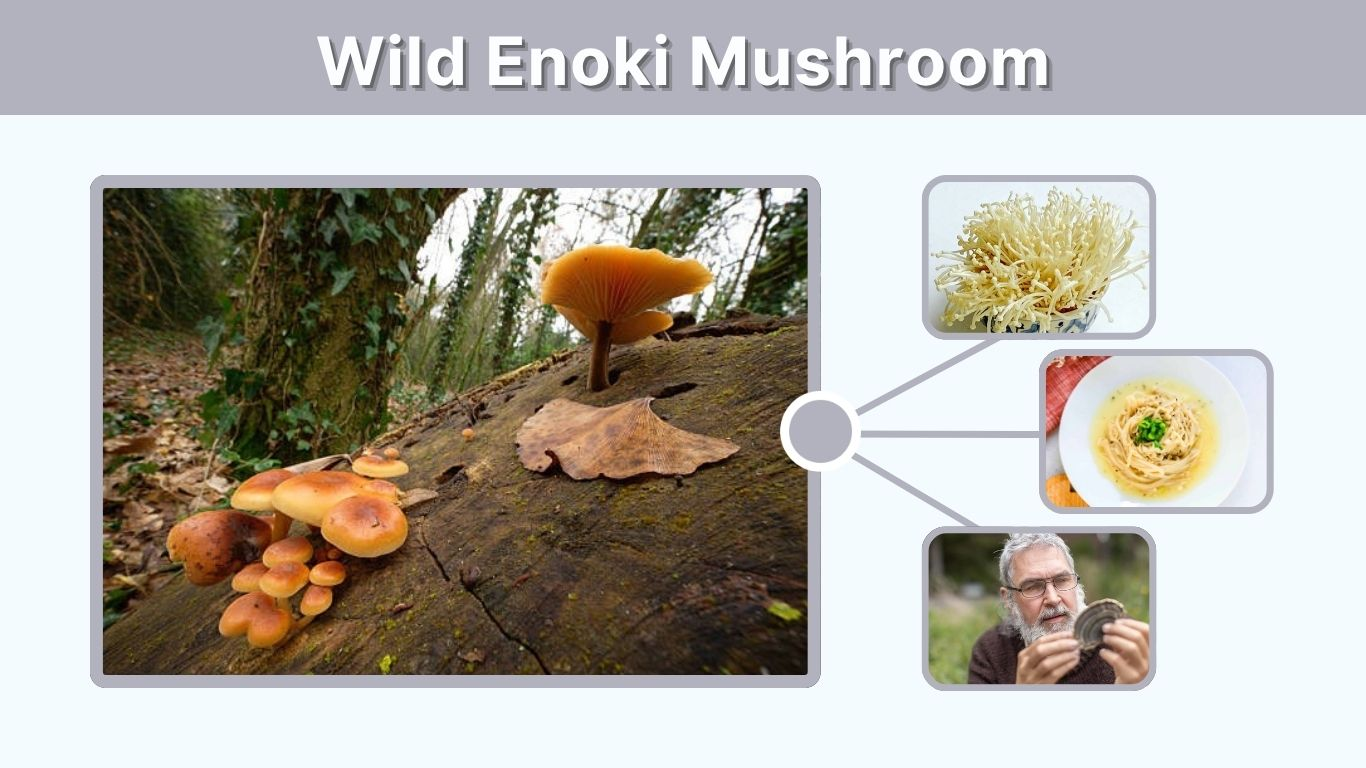
Wild enoki mushroom is the natural form of the popular enoki often found in grocery stores. In the wild, it looks very different from the thin white cultivated type. Wild enoki usually has golden to brown caps, pale gills, and darker velvety stems. It often grows in clusters on dead or weakened wood during cool weather. This guide explains how wild enoki mushrooms look, where they grow, how to identify them, and how to cook them safely after expert confirmation.
What Is a Wild Enoki Mushroom?
Wild enoki mushroom is a wood-growing edible mushroom known for its cold-weather growth and clustered appearance. It is often called velvet shank or velvet foot because the lower stem can become dark and velvety. Unlike cultivated enoki, wild enoki develops color, shape, and texture from outdoor light, weather, and natural growing conditions.
Wild Enoki Mushroom Scientific Name
The scientific name of wild enoki mushroom is Flammulina velutipes. It belongs to a group of gilled mushrooms that grow on wood. The name “velvet shank” comes from one of its most useful features: the stem often darkens near the base and develops a soft, velvety texture.
Why Wild Enoki Looks Different
Store-bought enoki is usually long, thin, and white because it is grown in controlled darkness. Wild enoki grows in natural light, so it often forms shorter stems and golden, orange, honey-brown, or reddish-brown caps. This difference can surprise beginners who expect wild enoki to look like the supermarket version.
Where Do Wild Enoki Mushrooms Grow?
Wild enoki mushrooms usually grow on dead, dying, or weakened hardwood. They are not typical soil mushrooms, although they may appear to come from the ground when growing from buried wood. Their cool-season fruiting habit makes them easier to notice when many other mushrooms are less active or absent.
Common Wild Habitat
Wild enoki is commonly found on logs, stumps, fallen branches, and damaged tree trunks. It often grows in clusters, with many stems emerging from the same woody surface. The mushroom prefers moist conditions and may appear after rain, frost, or cool seasonal changes.
Wild Enoki Mushroom Growing Season
Wild enoki is often associated with late fall, winter, and early spring in many regions. It can appear during cold weather, which is one reason some foragers call it a winter mushroom. However, timing can vary depending on local climate, tree type, moisture, and region.
Wild Enoki Mushroom Identification
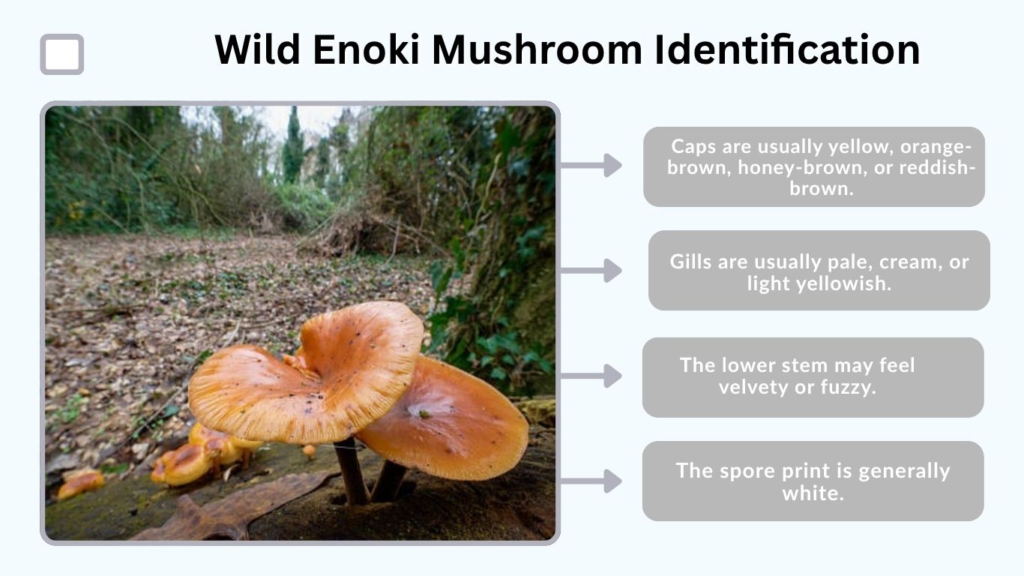
Correct identification is the most important part of learning about wild enoki mushrooms. This mushroom has several useful traits, but no single feature is enough to confirm it safely. Beginners should study the cap, gills, stem, spore print, habitat, season, and growth pattern together before asking an expert to verify the mushroom.
Key Identification Features
- Caps are usually yellow, orange-brown, honey-brown, or reddish-brown.
- The cap surface may look shiny, sticky, or moist in wet weather.
- Gills are usually pale, cream, or light yellowish.
- Stems are lighter near the top and darker toward the base.
- The lower stem may feel velvety or fuzzy.
- Wild enoki usually grows in clusters on wood.
- The spore print is generally white.
Wild Cluster Enoki Mushroom
A wild cluster enoki mushroom often appears as several mushrooms growing tightly together from the same log or stump. Clustered growth is a helpful clue, but it is not enough for identification. Many other mushrooms also grow in clusters, including some that should not be eaten.
Spore Print and Stem Texture
A white spore print is an important feature of wild enoki. The dark, velvety stem base is also a valuable clue. However, both traits must be considered with the full mushroom. Old specimens, damaged mushrooms, and wet weather can make identification harder.
Wild Enoki vs Store-Bought Enoki
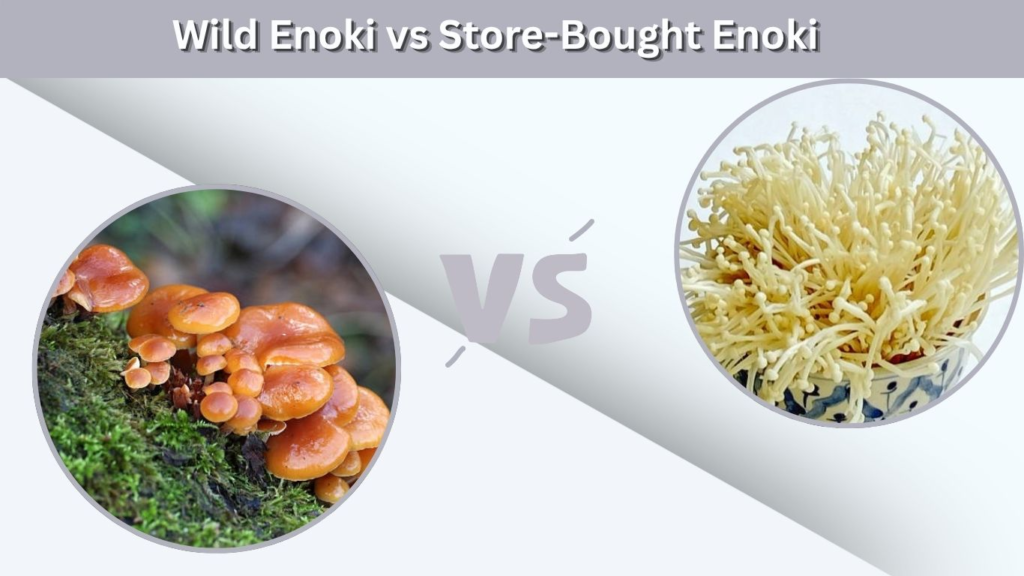
Wild enoki and cultivated enoki may belong to the same general species group, but they look very different. Cultivated enoki is shaped by commercial growing methods, while wild enoki is shaped by natural light, temperature, wood type, and outdoor moisture. This difference matters when comparing photos or learning identification.
Comparison Table
| Feature | Wild Enoki Mushroom | Store-Bought Enoki |
|---|---|---|
| Color | Golden, orange-brown, honey-brown | White or pale cream |
| Stem | Shorter, firmer, darker at base | Long, thin, pale |
| Cap | Wider and darker | Small and pale |
| Texture | Often firmer | Tender and delicate |
| Habitat | Grows on dead or dying wood | Grown commercially |
| Season | Often cool weather | Available year-round in stores |
| Use | Foraged only with expert confirmation | Purchased for cooking |
Why This Difference Matters
Many beginners search for enoki mushrooms in the wild and expect them to look white and needle-like. This can cause confusion. Wild enoki should be studied as its own natural form, not judged only by the appearance of cultivated enoki sold in plastic packages.
Wild Enoki Mushroom Lookalikes and Safety
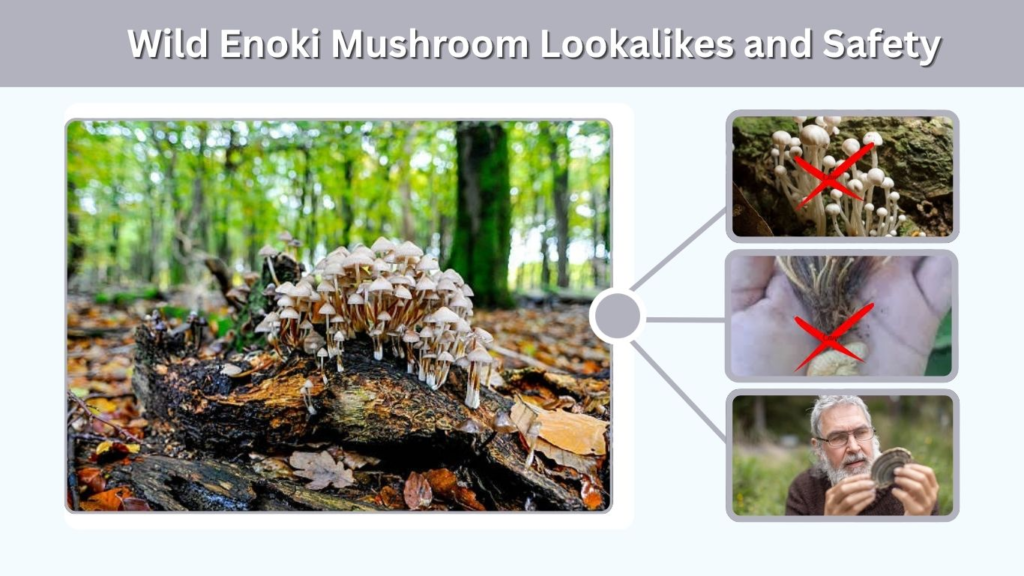
Wild mushroom safety should always come before curiosity or cooking. Wild enoki has lookalikes, and some wood-growing brown mushrooms can be dangerous. Articles, apps, and photos cannot confirm edibility with complete certainty. The safest approach is to use educational information only and ask a qualified local mushroom expert before eating anything collected.
Safety Rules Before Eating
- Never eat wild enoki based only on photos.
- Do not rely only on cap color or clustered growth.
- Confirm the mushroom is growing from wood.
- Check the gills, stem, base, and spore print.
- Avoid old, rotten, slimy, or damaged specimens.
- Ask a local mushroom club or mycologist for confirmation.
- When in doubt, do not eat it.
Dangerous Identification Mistakes
A common mistake is assuming every small brown mushroom growing on wood is safe. Another mistake is ignoring the stem base. Wild enoki should have a darker, velvety lower stem, but that feature still needs to be checked with other traits. Mushroom identification must be careful, patient, and local.
Are Wild Enoki Mushrooms Edible?
Wild enoki mushrooms are commonly described as edible when correctly identified and properly cooked. However, the word “edible” does not mean safe for every beginner to collect. Edibility depends on accurate identification, freshness, preparation, and personal tolerance. Misidentification can be serious, so expert confirmation is essential before any wild mushroom is eaten.
Cook Before Eating
Wild mushrooms should be cooked thoroughly before eating. Cooking improves texture and flavor and may make mushrooms easier to digest. Raw wild mushrooms are not recommended for casual eating, especially when someone is trying a species for the first time.
Start With a Small Portion
Even correctly identified edible mushrooms can bother some people. If a confirmed wild edible mushroom is new to you, start with a small cooked portion. Avoid mixing several new wild mushrooms in one meal, because that makes it harder to know what caused a reaction if discomfort occurs.
How to Cook Wild Enoki Mushrooms
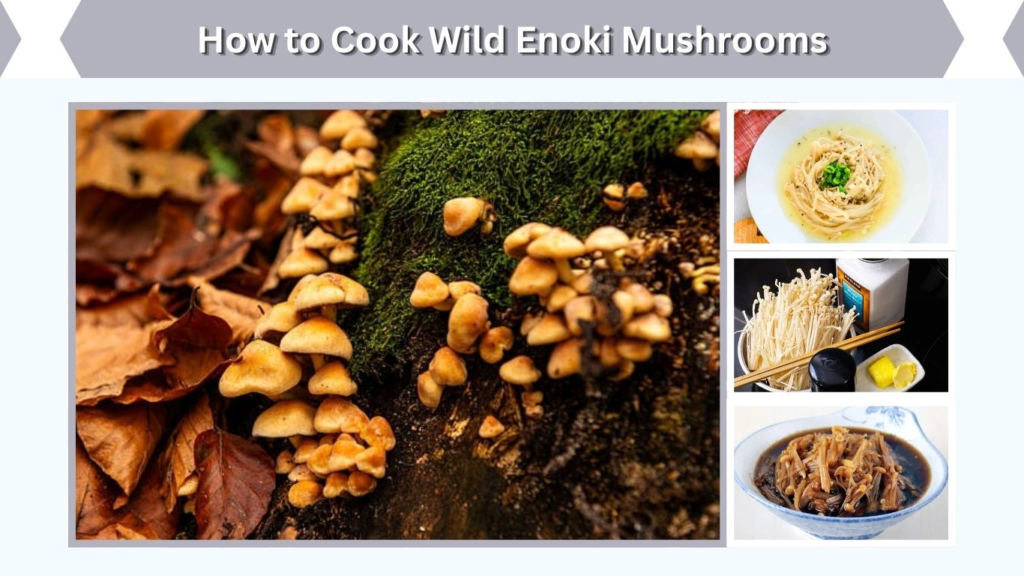
Wild enoki mushrooms can have a mild, earthy flavor and a firmer texture than cultivated enoki. They work well in simple dishes where their texture can stand out. Before cooking, only use mushrooms confirmed by an expert, and discard any specimens that are too old, dirty, insect-damaged, or unpleasant in smell.
Simple Cooking Ideas
- Sauté with garlic, butter, salt, and black pepper.
- Add to noodle soup near the end of cooking.
- Stir into fried rice or vegetable stir-fry.
- Use as a topping for toast, eggs, or rice bowls.
- Add to broth with ginger, soy sauce, and green onion.
- Mix with other confirmed edible mushrooms for a side dish.
Wild Enoki Mushroom Recipe
For a simple garlic sauté, trim the tough bases and clean the mushrooms gently. Heat butter or oil in a pan, add minced garlic, and cook briefly. Add the mushrooms and sauté until they soften and release moisture. Season with salt, pepper, and a little soy sauce or lemon juice before serving warm.
Cleaning and Storing Wild Enoki Mushrooms
Cleaning and storing wild enoki properly helps protect texture and flavor. Because wild mushrooms can carry bark, insects, and soil particles, they should be inspected carefully. Freshness matters. Mushrooms that look slimy, smell bad, or have damaged gills should not be used for food, even if the identity seems correct.
Cleaning Method
Trim away the tough lower stem bases and remove any bark or debris. Use a soft brush or damp cloth when possible. If the mushrooms are very dirty, rinse quickly and dry them well. Avoid soaking them for a long time because mushrooms absorb water easily.
Short-Term Storage
Fresh wild enoki should be kept in the refrigerator with airflow. A paper bag is usually better than a sealed plastic bag because it helps reduce excess moisture. Use fresh mushrooms soon after collection, because wild mushrooms can decline quickly.
Tips for Photographing Wild Enoki
Good photos are useful for learning and expert review. A single top-down photo is usually not enough. Mushroom experts often need to see the cap, gills, stem, base, growing surface, and surrounding habitat. Clear photos and notes can make identification discussions much more accurate and helpful.
What to Photograph
- The cap from above.
- The gills from underneath.
- The full stem, including the base.
- The cluster growing on wood.
- The log, stump, or tree surface.
- Young and mature mushrooms together.
- A spore print if possible.
What to Record
Write down the date, weather, location type, tree type if known, and whether the mushroom was growing directly from wood. Also note whether the cap felt sticky, dry, or slimy. These details can help an expert compare your find with known wild enoki features.
Common Beginner Mistakes
Many mistakes happen because beginners focus on one attractive feature and ignore the full mushroom. Wild enoki identification requires patience. Color, season, and cluster growth are useful, but they do not confirm safety alone. The best habit is to slow down, document everything, and avoid eating any mushroom that has not been checked carefully.
Comparing Only With Grocery Enoki
Cultivated enoki looks pale, thin, and delicate. Wild enoki is usually darker and sturdier. Comparing wild specimens only with grocery-store enoki can lead to confusion, so learners should study photos and descriptions of the wild form specifically.
Skipping Expert Confirmation
Another serious mistake is eating first and asking questions later. Wild mushroom learning should not work that way. If you are not completely sure, treat the mushroom as unknown. Expert review is especially important for beginners, because many mushrooms share similar colors and growth habits.
Final Thoughts
Wild enoki mushroom is a fascinating cold-weather mushroom with a very different appearance from cultivated enoki. It often grows in clusters on dead or weakened hardwood and may show golden-brown caps, pale gills, a white spore print, and darker velvety stems. Still, identification must be handled carefully. Learn the features, take good photos, consult local experts, and never eat any wild mushroom unless its identity is confirmed with confidence.
FAQs
What is the scientific name of wild enoki mushroom?
The scientific name of wild enoki mushroom is Flammulina velutipes. It is also known as velvet shank, velvet foot, or velvet stem because the lower part of the stem can become dark and velvety as the mushroom matures.
Are wild enoki mushrooms safe to eat?
Wild enoki mushrooms are considered edible only when correctly identified and cooked. However, beginners should never eat them without expert confirmation. Some mushrooms can look similar, and misidentification may be dangerous. When in doubt, do not eat the mushroom.
Where do enoki mushrooms grow in the wild?
Enoki mushrooms in the wild usually grow on dead, dying, or weakened hardwood. They may appear on logs, stumps, fallen branches, or buried wood. They often grow in clusters and are commonly noticed during cool weather.
How are wild enoki mushrooms different from store-bought enoki?
Store-bought enoki is usually white, long, and thin because it is grown in controlled darkness. Wild enoki is usually shorter, firmer, and golden to brown because it grows outdoors in natural light and natural weather conditions.
How do you cook wild enoki mushrooms?
After expert identification, wild enoki mushrooms can be trimmed, cleaned, and cooked thoroughly. A simple method is to sauté them with butter or oil, garlic, salt, and pepper. They can also be used in soups, stir-fries, rice bowls, and noodle dishes.