
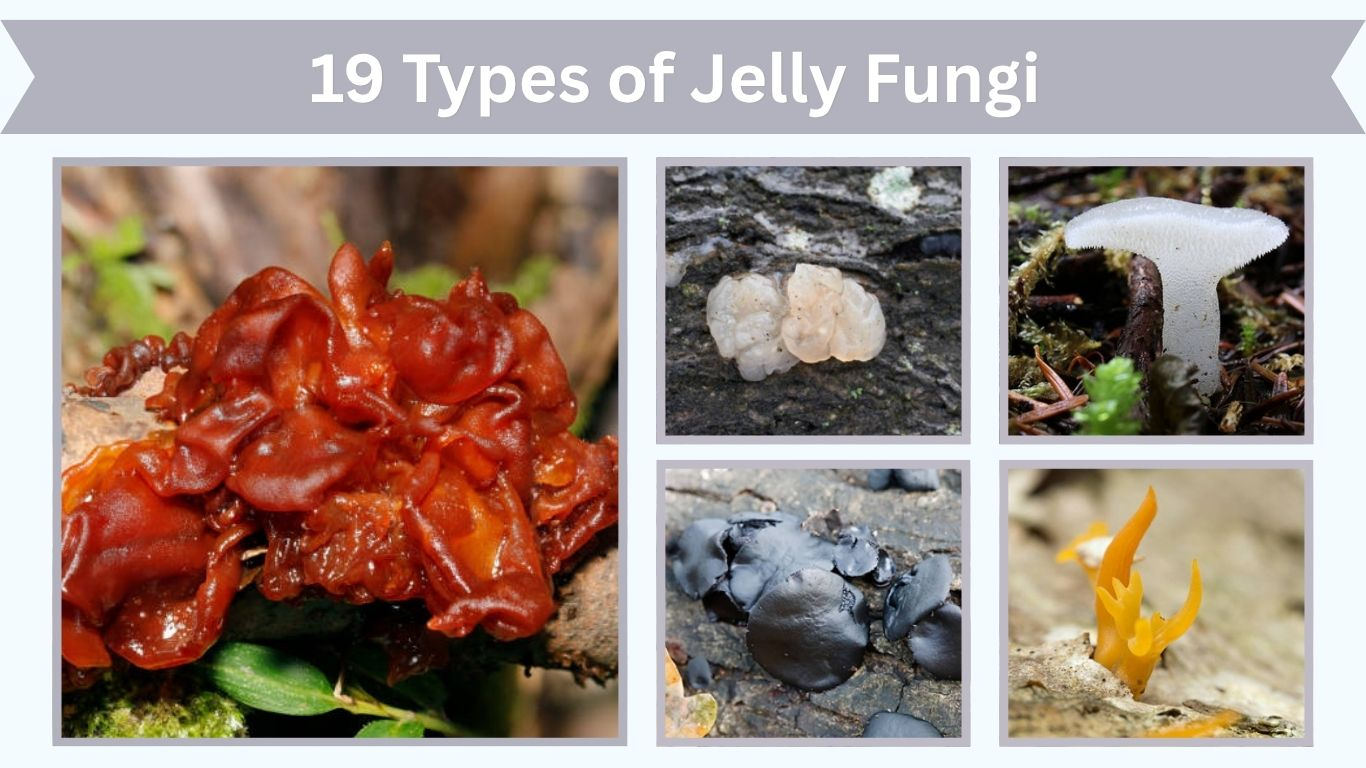
Jelly fungi are some of the most unusual and fascinating organisms found in forests around the world. Known for their soft, gelatinous texture, these fungi thrive in damp environments and often appear after rainfall. They come in a variety of shapes, colors, and sizes, from bright yellow blobs to ear-shaped or coral-like forms. While some are edible and widely used in cooking, others are mainly valued for their ecological role. This guide introduces 19 different types of jelly fungi to help you recognize and understand them more easily.
1. Tremella fuciformis

A translucent, jelly-like fungus commonly known as “snow fungus” or “white jelly mushroom.” It is widely found in tropical and subtropical regions, growing on decaying hardwood. This species is valued for both culinary and traditional uses, especially for its soft texture and ability to retain moisture.
Identification
- Gelatinous, soft, and lobed fruiting body with a white to pale yellow color
- Translucent and delicate, often resembling coral or seaweed
- Forms irregular, ruffled clusters with thin folds
- Typically appears on dead hardwood branches, especially after rain
- Dries into a hard, brittle form but rehydrates quickly when exposed to moisture
Habitat and Distribution
Tremella fuciformis thrives in warm, humid environments, particularly in tropical and subtropical forests. It is commonly found across Asia, parts of Central and South America, and other regions with consistent rainfall. Unlike many fungi, it often grows parasitically on other fungi that inhabit decaying wood. This dependency makes it more selective about its habitat. It usually appears after periods of heavy moisture, contributing to its seasonal visibility in natural environments.
Edibility and Uses
This fungus is edible and widely appreciated in culinary traditions, especially in soups and sweet dishes. It has a neutral taste but absorbs surrounding flavors effectively, making it versatile in cooking. Beyond food, it is used in traditional health practices and modern skincare products. Its natural polysaccharides are known for moisture retention, contributing to its popularity in beauty and wellness industries.
Interesting Facts
Tremella fuciformis has been cultivated for centuries, particularly in East Asia, where it is considered a valuable ingredient. It is often compared to modern hydrating compounds due to its impressive water-retention ability. Historically, it was regarded as a delicacy reserved for nobility. Today, it remains popular worldwide, both as a functional food and a natural ingredient in cosmetics.
2. Tremella mesenterica

A bright yellow, jelly-like fungus often called “witch’s butter.” It is commonly seen on dead branches, especially after rain, forming soft, brain-like masses. This species is widely distributed and is one of the most recognizable jelly fungi due to its vivid color and gelatinous texture.
Identification
- Bright yellow to orange, gelatinous and lobed structure
- Soft, slippery texture with a brain-like or folded appearance
- Forms irregular, rounded clusters on wood
- Shrinks and hardens when dry, but regains shape when wet
- Usually found on dead hardwood branches, often associated with other fungi
Habitat and Distribution
Tremella mesenterica is found in temperate and tropical regions around the world. It typically grows on dead or fallen branches of hardwood trees, especially oak. This fungus is parasitic, feeding on other fungi that inhabit the same wood. It thrives in damp conditions and is most visible during rainy seasons. Its ability to dry out and rehydrate allows it to survive fluctuating environmental conditions, making it a resilient species in woodland ecosystems.
Edibility and Uses
This fungus is considered edible, but it has little taste or nutritional value, so it is not commonly used in cooking. Its gelatinous texture is similar to other jelly fungi, but it lacks the culinary popularity of species like Tremella fuciformis. While not toxic, it is generally collected more for observation than for consumption.
Interesting Facts
Tremella mesenterica is often nicknamed “witch’s butter” due to folklore that associated its appearance with supernatural activity. It can repeatedly dry out and rehydrate without damage, which is unusual among fungi. This adaptability allows it to persist through dry periods and quickly return to its original form when moisture is available.
3. Tremella aurantia

A golden-yellow jelly fungus often confused with Tremella mesenterica due to its similar appearance. It forms soft, lobed masses on decaying wood and is known for its parasitic relationship with other fungi. Its rich color and gelatinous texture make it a noticeable presence in damp forest environments.
Identification
- Golden-yellow to orange gelatinous fruiting body
- Lobed, folded, and irregular shape similar to a small brain
- Soft, slippery, and elastic texture when fresh
- Grows in clusters on decaying hardwood
- Shrinks and becomes firm when dry, rehydrating with moisture
Habitat and Distribution
Tremella aurantia is commonly found in temperate regions, especially in North America and Europe. It grows on dead hardwood branches and logs, particularly in moist woodland areas. Like many jelly fungi, it is parasitic, feeding on fungi within the wood rather than the wood itself. It tends to appear after rainfall and can persist through changing weather due to its ability to dry and revive.
Edibility and Uses
This species is generally considered edible, but it is not widely used in cooking due to its bland taste and soft texture. It lacks the culinary value of some other jelly fungi. Most people encounter it in the wild rather than in kitchens, and it is often left undisturbed.
Interesting Facts
Tremella aurantia is often mistaken for other yellow jelly fungi, making identification challenging without close observation. It survives dry conditions by shrinking and hardening, then returning to its original form when wet. Its parasitic lifestyle is an interesting trait, as it depends on other fungi to complete its life cycle.
4. Tremella encephala

A small, pinkish jelly fungus with a brain-like appearance, often found on conifer wood. Unlike many other jelly fungi, it has a firmer inner core, which makes it distinct in both structure and texture. It is less conspicuous than brighter species but still notable upon close inspection.
Identification
- Pink to salmon-colored gelatinous outer layer
- Brain-like, folded shape with irregular lobes
- Contains a firm, whitish inner core
- Small in size, usually a few centimeters wide
- Grows on decaying conifer wood, often partially hidden
Habitat and Distribution
Tremella encephala is typically found in temperate regions, especially in forests dominated by conifer trees such as pine and spruce. It grows on dead branches and logs, often in damp, shaded environments. Like other species in its genus, it is parasitic and relies on other fungi living in the wood. It appears most frequently during wet seasons and can persist by drying and rehydrating when conditions improve.
Edibility and Uses
This fungus is generally considered inedible due to its tough inner core and lack of culinary value. It does not have a pleasant texture for consumption, and there is little tradition of using it as food. Most encounters with this species are for identification or study rather than harvesting.
Interesting Facts
The name “encephala” refers to its brain-like shape, which is one of its most distinguishing features. Its dual texture—soft outside and firm inside—sets it apart from many other jelly fungi. Despite being less known, it plays an important ecological role by interacting with other fungi in forest decomposition processes.
5. Auricularia auricula-judae

A brown, ear-shaped jelly fungus commonly known as “wood ear” or “Jew’s ear.” It has a rubbery texture and grows in clusters on decaying wood. This species is widely recognized for its culinary use and distinctive shape that resembles a human ear.
Identification
- Ear-shaped, thin, and flexible fruiting body
- Brown to dark reddish-brown color with a smooth or slightly veined surface
- Gelatinous but firm and rubbery texture
- Usually forms small clusters on wood
- Dries into a hard, shriveled form and rehydrates when wet
Habitat and Distribution
Auricularia auricula-judae is commonly found in temperate regions worldwide. It grows on dead or dying hardwood trees, especially elder. This fungus thrives in moist, shaded environments and can appear throughout the year in suitable conditions. Its ability to dry and rehydrate allows it to survive varying climates, making it a frequent sight in forests and wooded areas.
Edibility and Uses
This species is edible and widely used in cooking, particularly in Asian cuisine. It is valued for its crunchy, slightly chewy texture rather than its flavor. It is often added to soups, stir-fries, and salads. Additionally, it has been used in traditional medicine for its potential health benefits.
Interesting Facts
Auricularia auricula-judae has been consumed for centuries and is one of the most popular edible jelly fungi. Its ear-like shape has influenced both its common names and cultural associations. It is often sold dried and can be easily rehydrated before cooking, maintaining its texture and form.
6. Auricularia polytricha

A dark, ear-shaped jelly fungus often referred to as “black wood ear.” It is closely related to Auricularia auricula-judae but typically has a thicker texture and larger size. This species is widely cultivated and commonly used in cooking due to its firm, slightly crunchy consistency.
Identification
- Dark brown to black, ear-shaped fruiting body
- Thick, rubbery, and slightly velvety surface
- Larger and firmer than similar species
- Grows in overlapping clusters on wood
- Dries hard and shriveled, but expands when soaked in water
Habitat and Distribution
Auricularia polytricha is commonly found in tropical and subtropical regions, especially in Asia. It grows on dead or decaying hardwood, often in humid forest environments. Due to its popularity, it is also widely cultivated on logs or artificial substrates. In the wild, it appears during wet conditions and can persist through dry periods by shrinking and rehydrating when moisture returns.
Edibility and Uses
This fungus is edible and highly valued in many cuisines, particularly in stir-fries, soups, and salads. It has a mild taste but is prized for its crunchy texture. It is often sold dried and must be soaked before use. In addition to culinary use, it is sometimes included in traditional remedies for general health support.
Interesting Facts
Auricularia polytricha is one of the most commercially produced jelly fungi. Its ability to absorb water and expand significantly makes it a convenient dried ingredient. It is often confused with other wood ear species, but its thicker texture and darker color help distinguish it.
7. Exidia glandulosa

A black, gelatinous fungus often known as “black witch’s butter.” It forms shiny, irregular blobs on dead wood and is especially noticeable in wet conditions. Its dark color and glossy surface make it stand out among other jelly fungi.
Identification
- Black to very dark brown, gelatinous masses
- Shiny, smooth, and slightly bumpy surface
- Forms irregular, cushion-like or blob-shaped clusters
- Soft and jelly-like when wet, hard and crusty when dry
- Commonly grows on dead hardwood branches
Habitat and Distribution
Exidia glandulosa is widely distributed across temperate regions, particularly in Europe and North America. It grows on dead hardwood such as oak and beech, often in damp forests or wooded areas. This fungus thrives in cool, moist conditions and is most visible after rainfall. Like other jelly fungi, it can dry out during dry weather and later regain its gelatinous form when rehydrated.
Edibility and Uses
This species is generally considered edible but is not commonly consumed due to its unappealing texture and lack of flavor. It has little culinary value and is rarely used in cooking. Most people encounter it in the wild rather than as a food source.
Interesting Facts
Exidia glandulosa is often confused with similar black jelly fungi, making identification tricky. Its ability to repeatedly dry and rehydrate helps it survive changing environmental conditions. Despite its unusual appearance, it plays an important role in breaking down dead wood in forest ecosystems.
8. Exidia nigricans

A dark, jelly-like fungus that closely resembles other black Exidia species. It forms soft, irregular masses on decaying wood and is commonly found in damp forest environments. Its glossy appearance and ability to change texture with moisture make it a typical example of jelly fungi.
Identification
- Black to dark brown gelatinous fruiting body
- Smooth, shiny surface with irregular, lobed shapes
- Forms clustered, cushion-like masses
- Soft and jelly-like when wet, becoming hard and crusty when dry
- Typically grows on dead hardwood
Habitat and Distribution
Exidia nigricans is widely distributed in temperate regions around the world. It grows on fallen branches and decaying hardwood, especially in moist, shaded forests. This fungus appears most often during wet weather and can persist through dry periods by shrinking and later rehydrating. It plays a role in wood decomposition, contributing to nutrient cycling in forest ecosystems.
Edibility and Uses
This species is considered edible but is rarely used as food due to its bland taste and gelatinous texture. It lacks culinary appeal compared to other edible jelly fungi. As a result, it is more often observed in nature rather than collected for consumption.
Interesting Facts
Exidia nigricans is frequently confused with similar black jelly fungi, making accurate identification difficult without close study. Its ability to dry out and later regain its original form is a key survival feature. This resilience allows it to thrive in environments with fluctuating moisture levels.
9. Exidia recisa

A small, amber to brown jelly fungus known for its disc-like or lobed shape. It often appears less conspicuous than darker Exidia species but becomes more noticeable when hydrated. Its soft, gelatinous texture and warm coloration make it distinct among wood-decaying fungi.
Identification
- Amber to light brown gelatinous fruiting body
- Small, disc-shaped or irregularly lobed form
- Smooth and slightly translucent surface
- Soft and jelly-like when wet, shrinking and hardening when dry
- Typically found on dead or fallen hardwood branches
Habitat and Distribution
Exidia recisa is commonly found in temperate regions, especially in North America and Europe. It grows on dead hardwood such as willow and other deciduous trees. This species prefers moist environments and is most visible after rainfall. Like other jelly fungi, it can endure dry conditions by shrinking and later rehydrating when moisture returns, allowing it to persist across seasons.
Edibility and Uses
This fungus is considered edible but has little culinary value due to its mild taste and soft texture. It is not commonly used in cooking and is generally overlooked as a food source. Most encounters with this species are for observation rather than consumption.
Interesting Facts
Exidia recisa is sometimes called “amber jelly roll” because of its color and texture. Its ability to repeatedly dry and rehydrate is a key adaptation for survival. Though not widely known, it contributes to the breakdown of dead wood, supporting forest ecosystem health.
10. Dacrymyces stillatus

A small, bright orange jelly fungus often called the “orange jelly spot.” It appears as tiny, blob-like structures on decaying wood and is commonly seen after rain. Despite its small size, its vivid color makes it easy to notice in damp forest environments.
Identification
- Bright orange to yellow, gelatinous blobs
- Very small, often only a few millimeters wide
- Smooth, shiny, and rounded shape
- Soft and jelly-like when wet, becoming dry and shriveled in dry conditions
- Grows scattered or in small groups on dead wood
Habitat and Distribution
Dacrymyces stillatus is widely distributed across temperate regions worldwide. It grows on decaying hardwood and occasionally on conifer wood. This fungus thrives in moist, shaded environments and is most visible after rainfall. Its ability to dry out and rehydrate allows it to survive changing weather conditions, making it a common yet often overlooked species in forests.
Edibility and Uses
This species is generally considered non-toxic but is not used for food due to its very small size and lack of flavor. It has no significant culinary value and is rarely collected. Most people encounter it incidentally while observing other fungi.
Interesting Facts
Dacrymyces stillatus is sometimes overlooked because of its tiny size, but it can appear in large numbers on suitable wood. Its bright color helps distinguish it from other small fungi. Like many jelly fungi, it can repeatedly dry and rehydrate, allowing it to persist in fluctuating environmental conditions.
11. Dacrymyces chrysospermus

A bright orange jelly fungus that forms larger, more irregular masses compared to other species in its group. It is commonly found on decaying wood and is easily recognized by its vivid color and gelatinous texture, especially in damp conditions.
Identification
- Bright orange to deep yellow gelatinous fruiting body
- Irregular, lobed, and often brain-like shape
- Soft, slippery texture when fresh
- Forms larger clusters than similar small jelly fungi
- Dries into a firm, shriveled mass and rehydrates with moisture
Habitat and Distribution
Dacrymyces chrysospermus is widely distributed in temperate regions, particularly in North America and Europe. It typically grows on decaying conifer wood such as pine. This fungus prefers moist, shaded environments and often appears after rainfall. Like other jelly fungi, it can withstand dry periods by shrinking and later returning to its original form when rehydrated, allowing it to persist across seasons.
Edibility and Uses
This fungus is considered edible but is not commonly used in cooking due to its soft texture and lack of strong flavor. It has little culinary significance and is rarely collected for food. Most encounters are for observation rather than consumption.
Interesting Facts
Dacrymyces chrysospermus is sometimes called “orange jelly” due to its appearance. It is larger and more noticeable than some related species, making it easier to identify. Its resilience to drying and rehydration is a key adaptation that helps it survive in changing environmental conditions.
12. Calocera viscosa

A bright yellow to orange jelly fungus known for its upright, branching shape. Often called the “yellow stagshorn,” it resembles small antlers growing from decaying wood. Its firm, gelatinous texture and vivid color make it one of the more visually striking jelly fungi.
Identification
- Bright yellow to orange, upright branching structure
- Antler-like or coral-shaped appearance
- Firm, rubbery, and slightly gelatinous texture
- Smooth surface with pointed or forked tips
- Grows in clusters on decaying wood, especially conifers
Habitat and Distribution
Calocera viscosa is commonly found in temperate regions across Europe, North America, and parts of Asia. It typically grows on rotting conifer wood such as pine or spruce. This fungus prefers moist forest environments and is often seen during wet seasons. Unlike flatter jelly fungi, its upright growth makes it easier to spot among forest debris.
Edibility and Uses
This species is generally considered edible but is not widely consumed due to its tough, rubbery texture. It lacks significant flavor and is not a popular choice for cooking. Most people observe it for its unique appearance rather than collect it as food.
Interesting Facts
Calocera viscosa stands out among jelly fungi because of its vertical, branched form rather than a blob-like shape. Its antler-like structure has earned it descriptive common names. Despite its firm texture, it still shares the jelly fungi trait of retaining moisture and thriving in damp environments.
13. Calocera cornea

A small, yellow jelly fungus with simple, upright structures that resemble tiny horns. It is less branched than Calocera viscosa and usually appears as short, unbranched spikes on decaying wood. Its bright color and simple form make it easy to recognize in moist environments.
Identification
- Bright yellow, slender, horn-like structures
- Typically unbranched or only slightly forked
- Smooth surface with a firm, gelatinous texture
- Small in size, usually a few centimeters tall
- Grows in small clusters on decaying wood
Habitat and Distribution
Calocera cornea is widely distributed in temperate regions, including Europe, North America, and Asia. It grows on rotting wood, often hardwood, in damp forest environments. This fungus prefers moist conditions and is commonly seen after rainfall. Its simple structure allows it to blend into forest debris, though its color helps it stand out.
Edibility and Uses
This species is generally considered edible but has little culinary value due to its small size and firm texture. It is not commonly collected for food and is mostly observed in the wild. Its lack of strong flavor makes it an uncommon ingredient in cooking.
Interesting Facts
Calocera cornea is sometimes overlooked because of its small size and simple shape. Unlike more complex jelly fungi, it does not form large lobed masses or elaborate branches. Despite this, it shares the same moisture-retaining properties, allowing it to survive in fluctuating environmental conditions.
14. Pseudohydnum gelatinosum

A unique jelly fungus known as the “toothed jelly fungus” due to the small, spine-like structures on its underside. It has a soft, grayish, gelatinous body and often grows in overlapping clusters on decaying wood. Its combination of jelly texture and toothed surface makes it quite distinctive.
Identification
- Gray to brownish, gelatinous cap with a soft texture
- Underside covered with tiny, tooth-like spines
- Fan-shaped or irregularly rounded form
- Slightly translucent with a smooth upper surface
- Grows in overlapping clusters on decaying wood
Habitat and Distribution
Pseudohydnum gelatinosum is found in temperate regions across North America, Europe, and Asia. It typically grows on decaying conifer wood, especially in cool, moist forests. This fungus prefers shaded environments and often appears during wet seasons. Its ability to retain moisture helps it persist even when conditions briefly dry out.
Edibility and Uses
This fungus is edible and sometimes used in cooking, though it is not widely popular. It has a mild taste and a soft, slightly rubbery texture. In some regions, it is added to soups or mixed dishes. However, it remains more of a curiosity than a commonly used ingredient.
Interesting Facts
Pseudohydnum gelatinosum is unusual among jelly fungi because of its toothed underside, which is more typical of other fungal groups. This feature makes it easy to distinguish from smoother jelly species. Its combination of textures gives it a unique place among wood-decaying fungi.
15. Guepinia helvelloides

A striking jelly fungus known for its ear- or funnel-shaped form and vibrant orange to salmon color. It has a soft, flexible texture and often grows in small groups on decaying wood or forest debris, making it a noticeable species in moist woodland environments.
Identification
- Orange to salmon-pink, gelatinous fruiting body
- Ear-shaped, funnel-like, or irregularly lobed form
- Smooth outer surface with a slightly wrinkled inner side
- Soft, flexible, and rubbery texture
- Typically grows in small clusters on decaying wood or soil-rich debris
Habitat and Distribution
Guepinia helvelloides is commonly found in temperate regions across North America, Europe, and parts of Asia. It grows on decaying wood, buried logs, or rich forest soil, often in coniferous or mixed forests. This fungus prefers moist conditions and is most visible during rainy seasons. Its bright color makes it easier to spot among forest litter.
Edibility and Uses
This species is edible and sometimes used in cooking, although it is not widely popular. It has a mild flavor and a soft, slightly chewy texture. It can be eaten raw in small amounts or cooked in various dishes. Despite being safe to eat, it is more often appreciated for its appearance than its culinary value.
Interesting Facts
Guepinia helvelloides is sometimes called the “apricot jelly” due to its color and shape. Its flexible structure allows it to withstand drying conditions by shrinking and later rehydrating. Its unusual form and bright color make it one of the more visually appealing jelly fungi in the wild.
16. Leotia lubrica

A small, jelly-like fungus often called the “jelly baby” due to its rounded head and stem-like base. It has a soft, rubbery texture and a greenish to yellow color. Unlike many jelly fungi, it has a more structured shape with a distinct cap and stalk.
Identification
- Small, club-shaped fruiting body with a rounded head
- Olive-green to yellowish color
- Slimy or sticky surface when moist
- Distinct stem with a soft, rubbery texture
- Grows in groups on soil, leaf litter, or decaying wood
Habitat and Distribution
Leotia lubrica is widely distributed in temperate regions, including Europe, North America, and Asia. It typically grows on forest floors rather than directly on wood, often among leaf litter or moss. It prefers damp, shaded environments and is commonly seen during wet seasons. Its unusual shape helps distinguish it from more typical jelly fungi.
Edibility and Uses
This species is generally considered inedible or of little culinary value. Its texture and appearance are not appealing for consumption, and it is rarely collected as food. Most people encounter it while exploring forest habitats rather than foraging.
Interesting Facts
Leotia lubrica is nicknamed “jelly baby” because of its resemblance to a small figure with a head and body. It differs from many jelly fungi by having a more defined structure. Its slimy coating helps retain moisture, allowing it to thrive in damp environments.
17. Bulgaria inquinans

A dark, rubbery fungus often called the “black bulgar” or “poor man’s licorice.” It forms firm, cup-like structures rather than soft blobs, making it somewhat different from typical jelly fungi. Its black, shiny appearance makes it noticeable on decaying wood.
Identification
- Black, shiny, cup-shaped fruiting body
- Firm, rubbery texture rather than soft gelatin
- Smooth inner surface with a slightly rough outer side
- Typically round with a shallow depression in the center
- Grows in clusters on dead hardwood, especially oak
Habitat and Distribution
Bulgaria inquinans is commonly found in temperate regions, particularly in Europe and North America. It grows on dead hardwood, especially oak logs and branches. This fungus prefers moist, shaded forest environments and often appears after rainfall. It can persist for long periods due to its tougher texture compared to softer jelly fungi.
Edibility and Uses
This species is generally considered inedible due to its tough, rubbery texture and lack of flavor. It is not used in cooking and has no significant culinary value. Most encounters with this fungus are for observation rather than consumption.
Interesting Facts
Bulgaria inquinans stand out because of its cup-like shape, which differs from the typical blob-like form of many jelly fungi. Its firm texture allows it to last longer in the environment. The nickname “poor man’s licorice” comes from its dark color, though it does not share the taste of actual licorice.
18. Ascotremella faginea

A pale, gelatinous fungus with a brain-like appearance, often found on decaying hardwood. It forms soft, folded masses that resemble clustered lobes. Though not as brightly colored as other jelly fungi, its unusual shape makes it identifiable in moist woodland environments.
Identification
- Pale pink to beige, gelatinous fruiting body
- Brain-like, folded, and lobed structure
- Soft, jelly-like texture when fresh
- Irregular, clustered growth form
- Typically grows on dead hardwood
Habitat and Distribution
Ascotremella faginea is found in temperate regions, particularly in Europe and North America. It grows on decaying hardwood such as beech, often in damp forest conditions. This fungus appears during wet seasons and thrives in shaded environments. Like many jelly fungi, it can shrink during dry periods and rehydrate when moisture returns, allowing it to persist over time.
Edibility and Uses
This species is generally considered inedible due to its soft texture and lack of known culinary use. It is not commonly collected for food and is mainly observed for study or identification purposes. There is little documentation of it being used in cooking or traditional practices.
Interesting Facts
Ascotremella faginea is relatively uncommon compared to other jelly fungi. Its brain-like form can cause confusion with similar species, making identification challenging. Despite its subtle color, its unique structure helps distinguish it from smoother or more brightly colored jelly fungi.
19. Myxarium nucleatum

A translucent, white to pale gray jelly fungus that forms smooth, gelatinous patches on decaying wood. It is less conspicuous than brightly colored species but can be recognized by its soft texture and subtle, glassy appearance in moist conditions.
Identification
- Translucent white to pale gray gelatinous body
- Smooth, soft, and slightly lobed surface
- Forms thin, spread-out patches or small clusters
- Jelly-like when wet, becoming nearly invisible when dry
- Grows on decaying hardwood
Habitat and Distribution
Myxarium nucleatum is commonly found in temperate regions across Europe and North America. It grows on dead hardwood, often in damp, shaded forests. This fungus thrives in moist conditions and is most visible after rainfall. Like other jelly fungi, it can dry out and later rehydrate, allowing it to survive changing environmental conditions.
Edibility and Uses
This species is generally considered edible but is not used for food due to its delicate texture and lack of flavor. It has no significant culinary value and is rarely collected. Most encounters with this fungus are for observation rather than consumption.
Interesting Facts
Myxarium nucleatum is sometimes difficult to notice because of its pale color and thin structure. It blends easily with wet wood surfaces, especially in low light. Despite its subtle appearance, it plays an important role in breaking down organic material in forest ecosystems.
FAQs
What are jelly fungi?
Jelly fungi are a group of fungi known for their soft, gelatinous texture when wet. They often grow on decaying wood and can shrink when dry, then return to their original form after rain. Their unique consistency makes them easy to distinguish from other fungi.
Are all jelly fungi edible?
Not all jelly fungi are edible. While some species are safe and even widely used in cooking, others have little to no culinary value. Most are non-toxic, but they may not taste good or have a pleasant texture, so proper identification is always important.
Where can jelly fungi usually be found?
Jelly fungi are commonly found on dead or decaying wood in forests. They thrive in moist, humid environments and are most visible after rainfall. Some species prefer hardwood, while others grow on conifer wood or even forest soil and debris.
Why do jelly fungi shrink and expand?
Jelly fungi have a high water content, which allows them to shrink and dry out during dry conditions. When moisture returns, they absorb water and regain their original shape. This adaptation helps them survive in environments with changing weather conditions.
Do jelly fungi have any practical uses?
Yes, some jelly fungi are used in food, traditional remedies, and skincare products. Certain species are valued for their texture in cooking, while others are known for moisture-retaining properties. However, many species are mainly important for their ecological role in breaking down organic matter.