
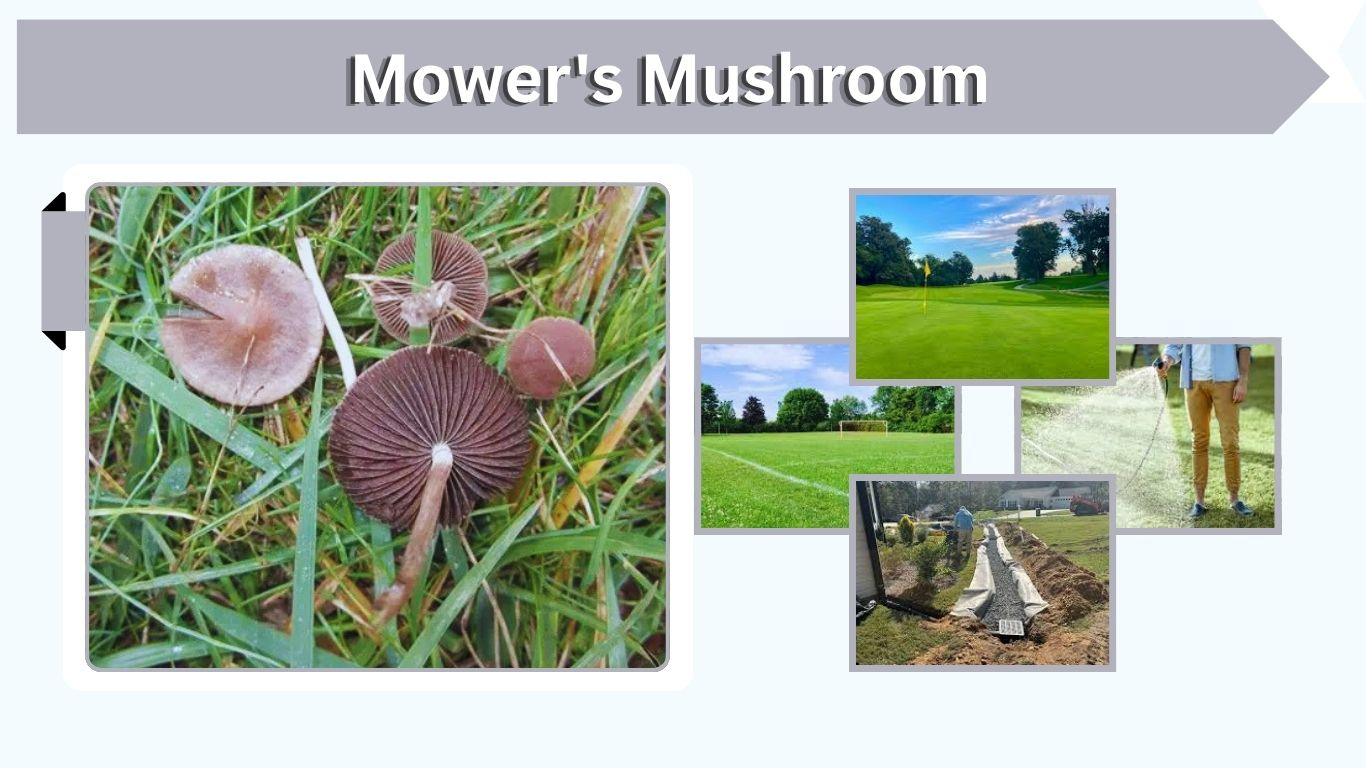
Mower’s mushroom (Panaeolina foenisecii) is one of the most common mushrooms found in lawns, gardens, parks, and grassy areas worldwide. Many homeowners discover these small brown mushrooms after periods of rainfall and wonder whether they are edible, poisonous, or even psychedelic. While Mower’s mushrooms are generally not considered a desirable edible species, they continue to generate interest due to their widespread appearance and resemblance to other mushrooms. Understanding their identification, habitat, and potential risks is essential for both foragers and pet owners.
What Is a Mower’s Mushroom?
Mower’s mushrooms are small lawn-dwelling fungi that commonly grow in nutrient-rich grass. They are among the most frequently encountered mushrooms in residential yards and public green spaces. Their widespread distribution and ordinary appearance often lead people to question whether they are safe to handle, consume, or leave growing in their lawns.
Scientific Classification
Mower’s mushroom belongs to the species Panaeolina foenisecii, a member of the Bolbitiaceae family. It is known for producing small brown fruiting bodies that emerge rapidly following moisture-rich weather conditions.
Classification details include:
- Kingdom: Fungi
- Family: Bolbitiaceae
- Genus: Panaeolina
- Species: Panaeolina foenisecii
Common Names
This mushroom is known by several common names depending on region and local usage.
Common names include:
- Mower’s Mushroom
- Lawn Mower’s Mushroom
- Haymaker Mushroom
- Brown Hay Mushroom
- Mower’s Cap Mushroom
These names generally refer to the same species commonly found in lawns and grassy environments.
How to Identify a Mower’s Mushroom
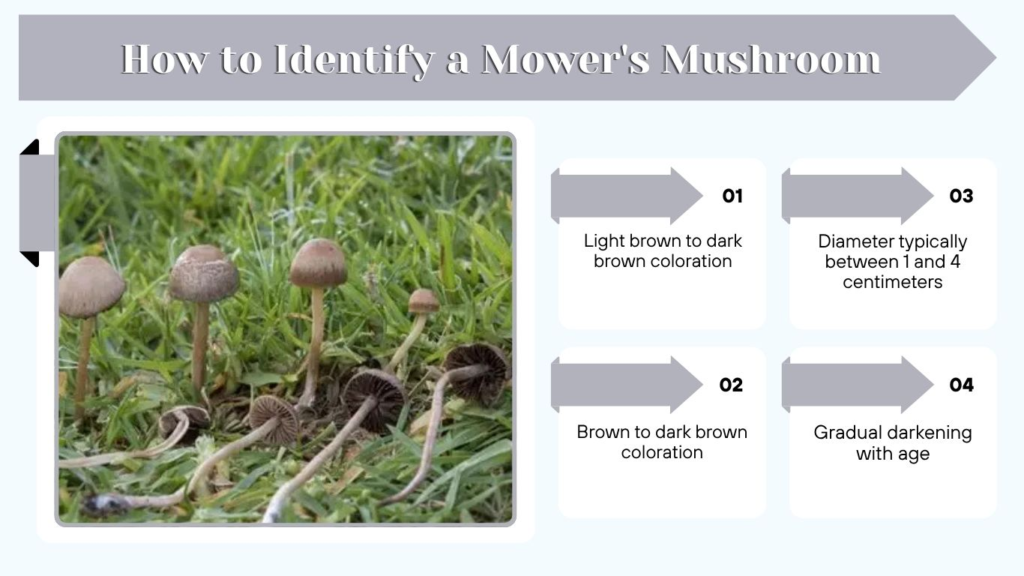
Accurate identification is important because many small brown mushrooms share similar appearances. Mower’s mushrooms possess several distinctive characteristics, but no single feature should be used alone for identification. Examining the cap, stem, gills, and spore print provides the most reliable results.
Cap Characteristics
The cap undergoes noticeable changes as the mushroom matures. Young specimens often display a bell-shaped appearance that gradually broadens with age.
Key cap features include:
- Light brown to dark brown coloration
- Bell-shaped when young
- Convex or flattened with maturity
- Smooth surface texture
- Diameter typically between 1 and 4 centimeters
The cap may appear darker after rainfall and become lighter as it dries.
Gills and Spore Production
The gills are an important identification feature. They often display a mottled appearance due to uneven spore maturation.
Characteristics commonly observed include:
- Brown to dark brown coloration
- Mottled appearance
- Closely spaced gills
- Gradual darkening with age
A mature specimen eventually releases spores that contribute to identification through spore printing.
Stem Features
The stem is generally thin and fragile compared to many larger mushroom species.
Typical stem characteristics include:
- Pale tan coloration
- Slender shape
- Smooth texture
- Hollow interior
- No ring structure
These features help distinguish Mower’s mushrooms from certain other lawn-dwelling fungi.
Where Do Mower’s Mushrooms Grow?
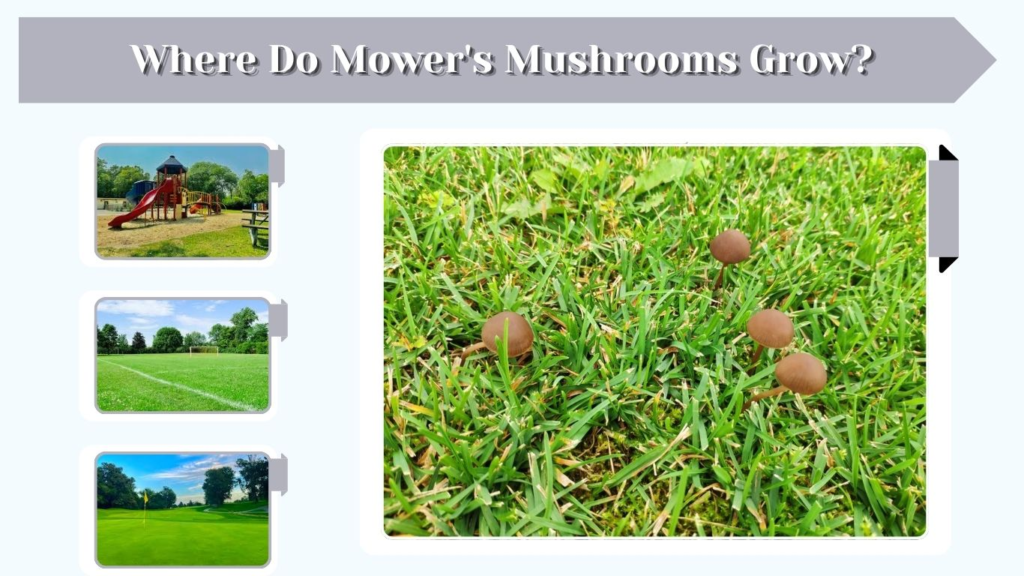
Mower’s mushrooms thrive in grassy environments where organic matter accumulates beneath the soil surface. Unlike woodland mushrooms that grow among trees, this species prefers open spaces with regular moisture and moderate temperatures.
They often appear after rainfall, especially during periods of warm weather. Their ability to grow in lawns makes them one of the most commonly encountered mushrooms by homeowners.
Common Habitats
Mower’s mushrooms are frequently found in locations such as:
- Residential lawns
- Public parks
- Athletic fields
- Golf courses
- Pastures
- School grounds
These environments provide the nutrients needed for fungal growth and reproduction.
Seasonal Appearance
Growth patterns depend largely on climate and moisture levels. In many regions, Mower’s mushrooms can appear throughout much of the growing season.
Peak growth often occurs during:
- Spring
- Early summer
- Autumn
Rainfall followed by warm temperatures usually encourages the development of new mushrooms.
Are Mower’s Mushrooms Edible?
Many people discover Mower’s mushrooms in their yards and immediately wonder whether they can be eaten. Although they are not among the most dangerous mushrooms known, they are generally not considered a desirable edible species.
Unlike popular edible mushrooms collected by foragers, Mower’s mushrooms offer little culinary value. Their small size, delicate structure, and potential for confusion with toxic species make them a poor choice for consumption.
Because many similar-looking mushrooms grow in the same habitats, mushroom experts generally discourage eating Mower’s mushrooms unless identification is absolutely certain. The risks associated with misidentification far outweigh any potential benefit.
Can You Eat Mower’s Mushrooms?
While reports regarding edibility vary, most field guides do not recommend consuming them.
Reasons include:
- Limited food value
- Difficult identification
- Similarity to toxic species
- Potential digestive discomfort
For these reasons, most mushroom experts classify them as mushrooms best left unharvested.
What Happens If You Eat Mower’s Mushrooms?
Consumption may result in mild gastrointestinal symptoms in some individuals. Reactions can vary depending on personal sensitivity and the specific mushroom consumed.
Possible symptoms include:
- Nausea
- Stomach cramps
- Vomiting
- Diarrhea
- Digestive discomfort
Any severe reaction should be evaluated by a medical professional.
Are Mower’s Mushrooms Poisonous?
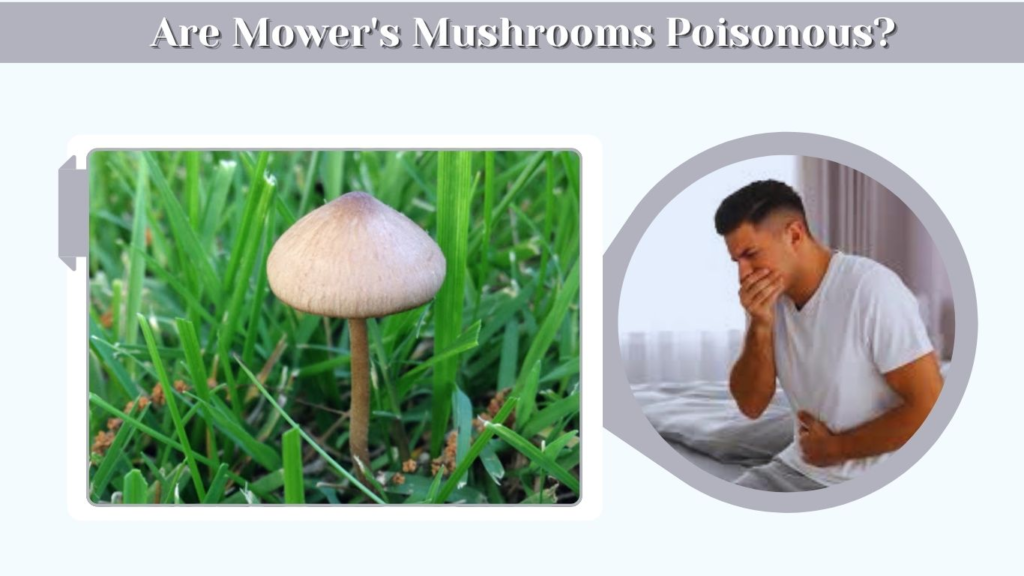
Questions about toxicity are common because these mushrooms frequently appear in family yards and public spaces. While Mower’s mushrooms are not typically classified among the most dangerous poisonous mushrooms, caution is still advised.
The greatest concern comes from confusion with other small brown mushrooms that may contain harmful toxins. Many species share similar colors, sizes, and growth habits, making identification challenging for beginners.
Because of this uncertainty, mushroom specialists generally recommend treating unknown lawn mushrooms as potentially unsafe until they have been properly identified.
Understanding Mushroom Toxicity
Toxicity reports involving Mower’s mushrooms are usually associated with accidental ingestion or mistaken identity. Although severe poisonings are uncommon, consuming any unidentified mushroom carries risk and should be avoided.
Are Mower’s Mushrooms Psychedelic?
One of the most frequently asked questions about Mower’s mushrooms is whether they contain psychoactive compounds. This confusion often arises because they are small brown mushrooms that may resemble certain psychedelic species. However, appearance alone should never be used to determine whether a mushroom is psychoactive.
Scientific studies generally do not classify Panaeolina foenisecii as a reliable psychedelic mushroom. While occasional reports have created debate among mushroom enthusiasts, the species is not widely recognized as producing consistent hallucinogenic effects.
Do Mower’s Mushrooms Contain Psilocybin?
Most mushroom identification guides and mycological references do not consider Mower’s mushrooms a dependable source of psilocybin.
Important facts include:
- They are not classified as a true psychedelic species.
- Psychoactive effects are not consistently documented.
- Misidentification with other mushrooms is common.
- Consumption is not recommended for recreational purposes.
Because of frequent confusion with similar mushrooms, accurate identification remains essential.
Mower’s Mushroom vs Liberty Cap
Liberty Caps are among the best-known psychedelic mushrooms and are often mistaken for Mower’s mushrooms by beginners.
Key differences include:
- Liberty Caps have a distinctive pointed cap.
- Mower’s mushrooms usually have rounded or bell-shaped caps.
- Liberty Caps contain psilocybin.
- Mower’s mushrooms are not considered reliably psychoactive.
- Liberty Caps typically grow in pastures, while Mower’s mushrooms commonly appear in lawns.
Learning these distinctions can help prevent dangerous identification mistakes.
Are Mower’s Mushrooms Poisonous to Dogs?
Pet owners often become concerned when mushrooms appear in their yards. Dogs naturally explore their surroundings and may accidentally chew or swallow wild mushrooms. Because accurate mushroom identification can be difficult, veterinarians generally advise treating all unknown mushrooms as potentially hazardous.
Even if a mushroom itself is not highly toxic, confusion with dangerous species creates unnecessary risk. Immediate attention is recommended whenever mushroom ingestion is suspected.
Symptoms of Mushroom Poisoning in Dogs
Dogs may display a variety of symptoms after consuming wild mushrooms. The severity depends on the species involved and the quantity ingested.
Common symptoms include:
- Vomiting
- Diarrhea
- Excessive drooling
- Weakness
- Lethargy
- Tremors
- Loss of coordination
Severe cases may require emergency veterinary treatment.
Dog Ate a Mower’s Mushroom: What Should You Do?
If your dog eats a mushroom, quick action can help protect its health.
Recommended steps include:
- Remove any remaining mushrooms.
- Take clear photographs for identification.
- Contact your veterinarian immediately.
- Monitor your dog for symptoms.
- Seek emergency care if symptoms develop.
It is always safer to assume that an unknown mushroom may be harmful until proven otherwise.
How to Get Rid of Mower’s Mushrooms
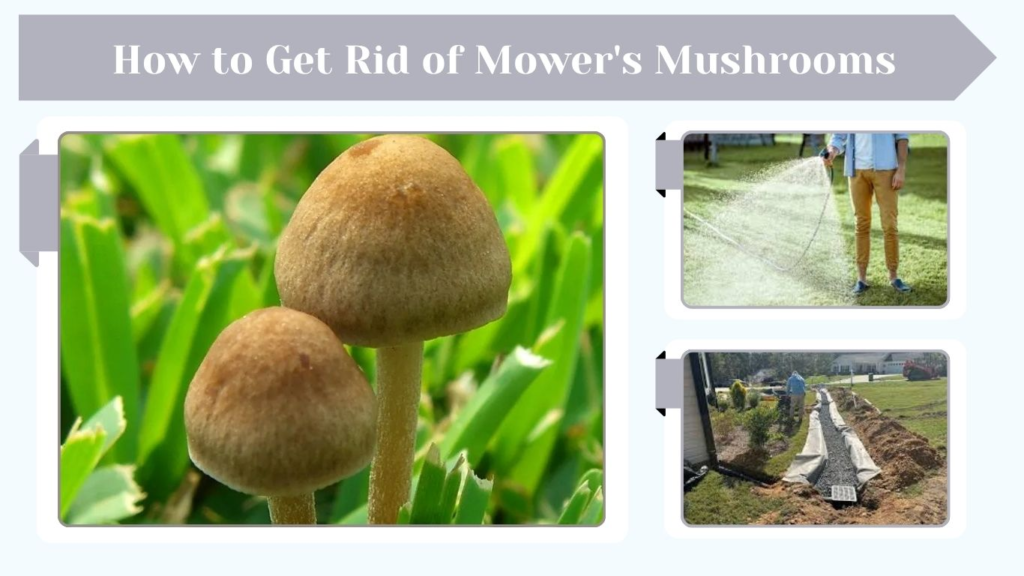
Mower’s mushrooms are often considered a nuisance by homeowners because they repeatedly appear in lawns after rain. Fortunately, these mushrooms do not usually damage grass. Their presence simply indicates that underground fungal networks are breaking down organic material in the soil.
Eliminating the conditions that support fungal growth is often more effective than removing the mushrooms themselves.
Reduce Excess Moisture
Moisture is one of the primary factors that encourages mushroom growth.
Helpful strategies include:
- Watering less frequently
- Improving lawn drainage
- Avoiding over-irrigation
- Fixing low spots where water collects
Drier soil conditions often reduce mushroom production.
Improve Lawn Conditions
Healthy lawn maintenance can discourage recurring mushroom growth.
Recommended practices include:
- Aerating compacted soil
- Removing excess thatch
- Cleaning up grass clippings
- Improving sunlight exposure
- Mowing regularly
These measures help create a less favorable environment for fungi.
Mower’s Mushrooms in the UK
Mower’s mushrooms are widely distributed throughout the United Kingdom. They thrive in the country’s mild temperatures and regular rainfall, making them a common sight in gardens, parks, and public green spaces.
Because they grow so frequently, they are often mistaken for edible or psychedelic mushrooms. Understanding their identifying characteristics can help UK residents avoid potentially dangerous confusion with other species.
Where They Commonly Appear
In the UK, Mower’s mushrooms are often found in:
- Residential gardens
- Public parks
- Sports fields
- School grounds
- Grazing pastures
They typically emerge after rainy periods when soil moisture levels increase.
FAQs
Can Mower’s Mushrooms Grow Overnight?
Yes. Mower’s mushrooms can appear very quickly, often within 24 to 48 hours after rainfall. The underground fungal network is already present in the soil, and favorable moisture conditions trigger the growth of visible mushrooms.
Why Do Mower’s Mushrooms Keep Coming Back?
Mower’s mushrooms return because the fungus lives beneath the soil surface. Removing visible mushrooms does not eliminate the underground mycelium. Improving drainage, reducing excess moisture, and removing organic debris can help reduce future growth.
What Color Is a Mower’s Mushroom Spore Print?
A Mower’s mushroom typically produces a dark brown to dark purple-brown spore print. Spore print color is an important identification feature that helps distinguish it from similar lawn mushrooms.
Are Mower’s Mushrooms Dangerous to Children?
Children should never eat wild mushrooms, including Mower’s mushrooms. Because many lawn mushrooms look alike, accidental ingestion can be risky. Parents should remove mushrooms from play areas and seek medical advice if a child consumes an unknown mushroom.
Do Mower’s Mushrooms Damage Lawns?
No. Mower’s mushrooms do not usually harm grass or plant roots. They help break down organic matter in the soil and are generally a sign of healthy biological activity rather than a lawn disease or pest problem.