
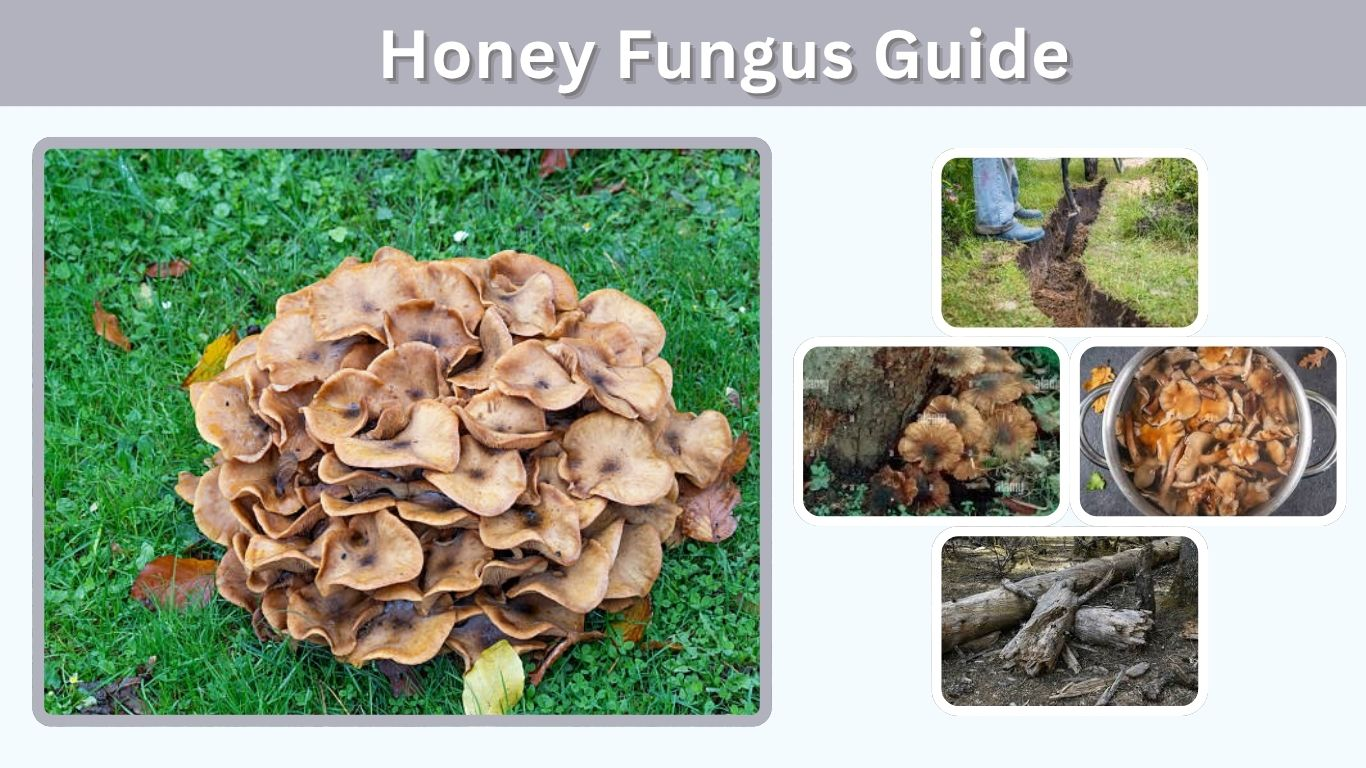
Honey fungus is one of the most destructive fungal diseases affecting trees, shrubs, and woody plants. Known scientifically as Armillaria, this fungus spreads underground through root-like structures and can survive in soil for many years. Gardeners, arborists, and mushroom foragers often search for honey fungus because of its damaging effects on trees and its edible mushroom varieties. The fungus is also famous for the massive Armillaria colony discovered in Oregon, considered one of the largest living organisms on Earth. Understanding how to identify, manage, and prevent honey fungus is essential for protecting landscapes and forests.
What Is Honey Fungus?
Honey fungus refers to several species within the Armillaria group of fungi. These fungi attack plant roots, causing root rot and gradual decline in trees and shrubs. The disease is common in forests, gardens, orchards, and landscaped areas where woody plants are present.
The fungus spreads through underground black strands called rhizomorphs, often described as bootlaces. These structures move through soil and infect nearby roots, allowing the fungus to spread over large areas.
Why It Is Called Honey Fungus
The name comes from the honey-colored mushrooms produced by many Armillaria species. These mushrooms usually appear in dense clusters near infected stumps, roots, or tree bases during autumn.
Common features include:
- Golden or honey-brown caps
- White or pale gills underneath
- Clustered mushroom growth
- Thick stems with or without rings
Some species, such as ringless honey fungus, lack the ring normally found around the stem.
Common Types of Honey Fungus
Several Armillaria species are associated with honey fungus disease. Each species varies slightly in appearance and aggressiveness.
Ringless Honey Fungus
Ringless honey fungus does not develop the typical ring on its stem. It commonly infects hardwood trees and is widespread in forests and urban landscapes.
Bulbous Honey Fungus
Bulbous honey fungus has a swollen stem base and lighter cap coloration. Some mushroom foragers consider it edible when properly cooked.
Dark Honey Fungus
Dark honey fungus is often associated with severe tree damage in forest environments. It tends to produce darker caps and aggressive underground growth.
Honey Fungus Identification
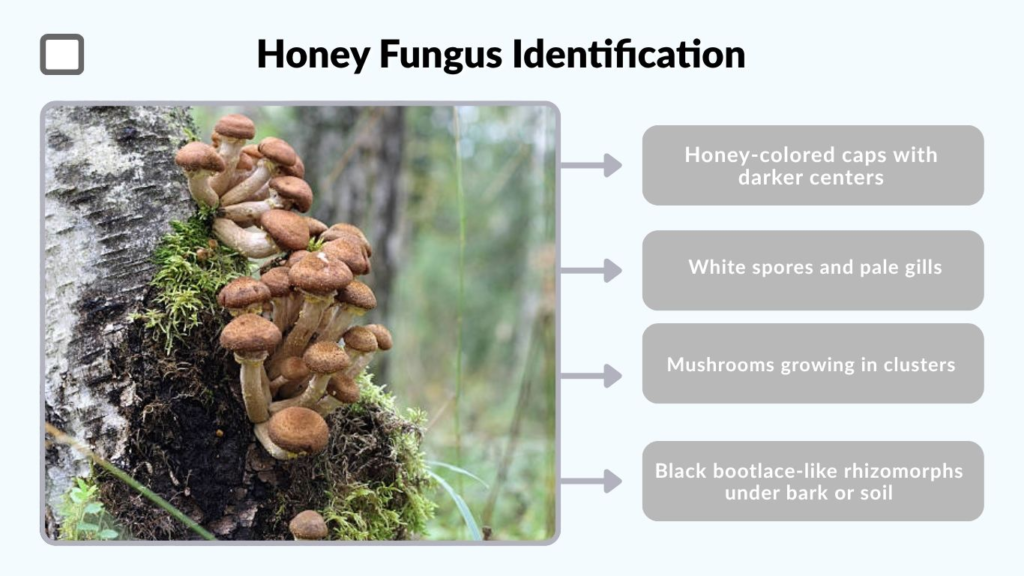
Correct identification is important because some honey fungus look-alikes are poisonous. While the mushrooms may appear harmless, confusion with toxic species can be dangerous.
Honey fungus mushrooms usually emerge in autumn after wet weather. They grow around tree roots, decaying wood, buried stumps, or infected lawns.
Main Identification Features
Several physical characteristics help identify honey fungus in gardens or forests.
- Honey-colored caps with darker centers
- White spores and pale gills
- Mushrooms growing in clusters
- Black bootlace-like rhizomorphs under bark or soil
- White fungal sheets beneath infected bark
The presence of black rhizomorphs is one of the strongest signs of Armillaria infection.
Honey Fungus Gills and Stems
The gills underneath the cap are usually cream or white and become darker with age. Stems may contain a ring depending on the species.
Younger mushrooms typically have smoother caps and firmer flesh, while old honey fungus becomes flatter and darker over time.
Honey Fungus Look-Alikes
Several mushrooms resemble honey fungus, especially when growing in clusters around wood.
Sulphur Tuft vs Honey Fungus
Sulphur tuft is one of the most common honey fungus look-alikes. Although visually similar, sulphur tuft is poisonous.
Key differences include:
- Sulphur tuft has yellow-green gills
- Honey fungus has pale or white gills
- Sulphur tuft tastes bitter
- Honey fungus usually has thicker stems
Because dangerous confusion is possible, wild mushrooms should never be eaten without expert identification.
Honey Fungus in Trees and Soil
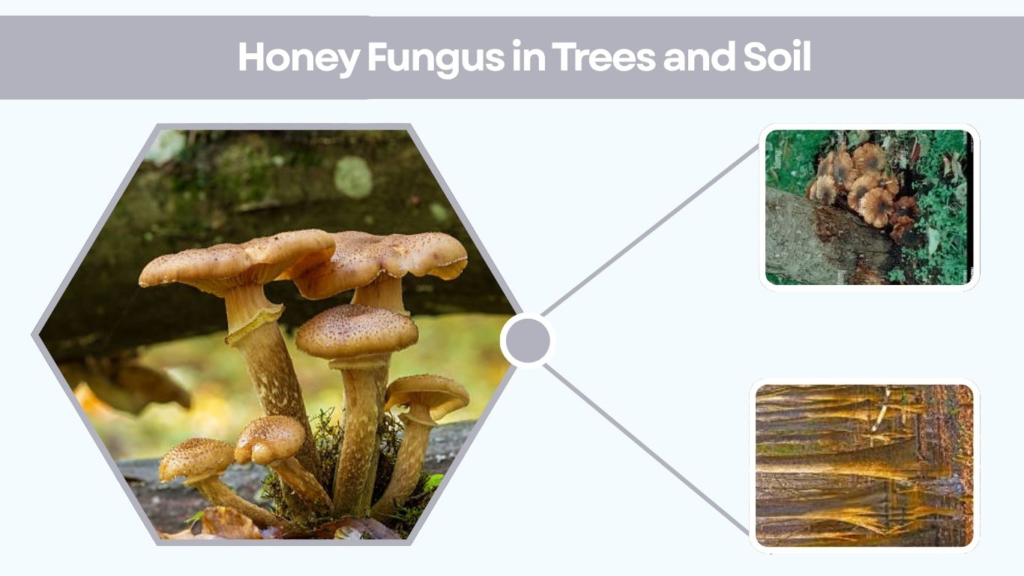
Honey fungus is especially destructive because it attacks roots underground before visible symptoms appear above ground. By the time mushrooms emerge, the infection may already be advanced.
Trees weakened by drought, poor drainage, or stress are particularly vulnerable to Armillaria infection.
How Honey Fungus Damages Trees
The fungus invades roots and spreads beneath the bark, interrupting the movement of water and nutrients through the tree. Over time, infected trees decline and may eventually die.
Common symptoms include dying branches, yellow leaves, reduced growth, and bark decay near the base of the trunk.
Plants Commonly Affected
Honey fungus infects a wide range of woody plants found in gardens and forests.
Frequently affected plants include:
- Apple trees
- Privet hedges
- Conifers
- Ornamental shrubs
- Forest hardwoods
In some landscapes, the disease can remain active in buried roots for decades.
Honey Fungus in Lawns
Honey fungus can also appear in lawns where old tree roots remain underground. Mushrooms may emerge in circular groups or scattered clusters after rainfall.
The visible mushrooms are only a small part of the fungus. Most of the organism exists underground as a large network of fungal threads and rhizomorphs.
Can Honey Fungus Spread Through Soil?
Yes, honey fungus spreads through soil using rhizomorphs that search for nearby roots. These structures allow the fungus to move between plants even when direct root contact is absent.
This underground spread makes honey fungus difficult to eliminate completely once established in a garden or woodland area.
Oregon’s Giant Honey Fungus
One of the main reasons honey fungus became globally famous is the enormous Armillaria colony discovered in Oregon. Scientists identified this underground fungal network as one of the largest living organisms on Earth.
The colony stretches across thousands of acres in the Blue Mountains of eastern Oregon. Although the mushrooms visible above ground appear separate, genetic testing revealed they belong to the same organism connected underground.
Why the Oregon Colony Is So Important
The giant honey fungus colony demonstrates how extensive Armillaria networks can become under favorable conditions. The fungus survives by spreading through tree roots and decaying wood over many years.
Researchers believe the Oregon colony may be thousands of years old. Its underground rhizomorph system allows it to continue expanding through forest soil while infecting weakened trees nearby.
Facts About the Giant Honey Fungus
The Oregon Armillaria colony is remarkable for several reasons.
- Covers more than 2,000 acres
- Considered one of Earth’s largest organisms
- Located in eastern Oregon forests
- Spreads underground through rhizomorphs
- Estimated to be thousands of years old
The discovery helped scientists better understand how root diseases affect forest ecosystems and tree health.
Is Honey Fungus Edible?
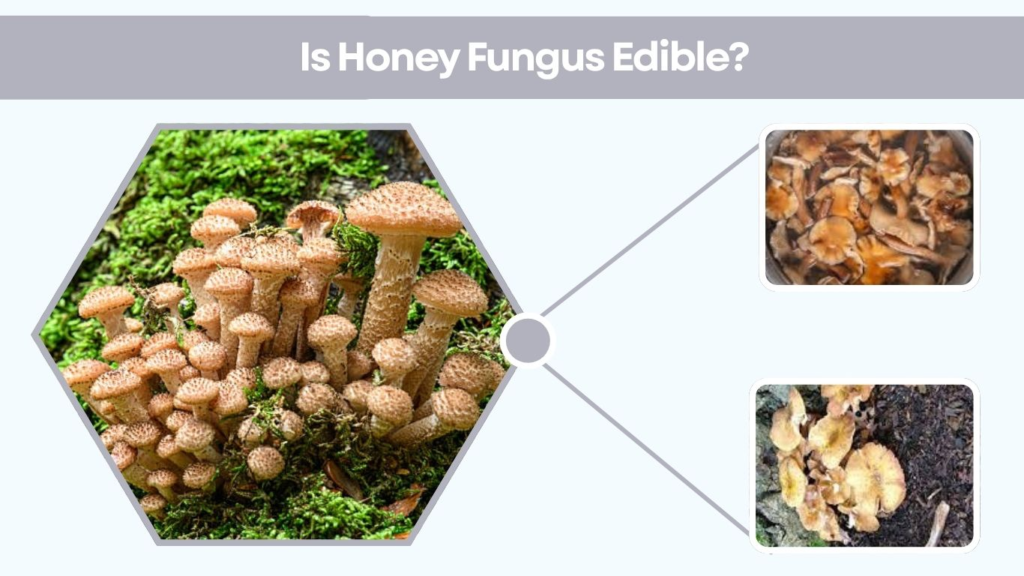
Some species of honey fungus are considered edible, but caution is extremely important. Proper identification is necessary because poisonous mushrooms can resemble honey fungus closely.
Even edible Armillaria species may cause stomach upset in some people if undercooked or consumed in large amounts.
Can You Eat Honey Fungus?
Experienced mushroom foragers sometimes collect young honey fungus mushrooms for cooking. Younger mushrooms are preferred because they have firmer texture and milder flavor.
Important safety guidelines include:
- Never eat unidentified wild mushrooms
- Cook honey fungus thoroughly before eating
- Avoid old or decaying mushrooms
- Test small amounts first for sensitivity
- Do not rely only on photos for identification
Because toxic look-alikes exist, beginners should avoid consuming wild honey fungus without expert guidance.
Is Honey Fungus Dangerous to Humans?
Honey fungus mainly threatens trees and shrubs rather than humans. However, eating the wrong mushroom due to misidentification can be dangerous.
Some look-alike mushrooms contain serious toxins that may cause severe illness. Pets, especially dogs, can also become sick after eating unknown mushrooms growing in yards or forests.
Honey Fungus Treatment and Control
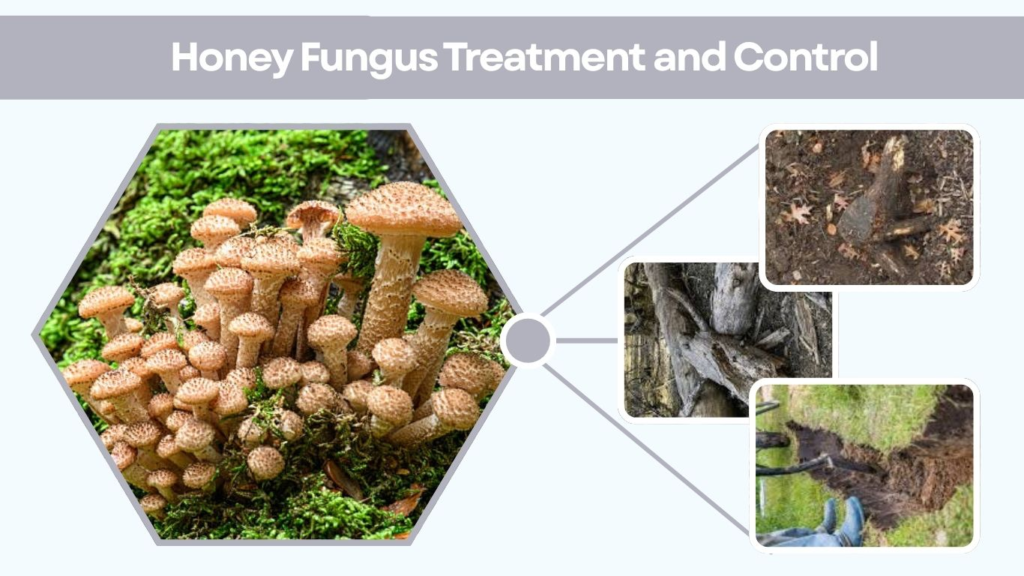
Treating honey fungus is difficult because the fungus survives underground for long periods. Once established, complete eradication is rarely possible without extensive root removal.
Management usually focuses on limiting spread and improving plant health.
Best Ways to Treat Honey Fungus
Several approaches may help reduce the impact of Armillaria infections in gardens and landscapes.
- Remove infected stumps and roots
- Improve soil drainage
- Reduce stress on vulnerable trees
- Avoid planting susceptible species nearby
- Remove dead wood from infected areas
Healthy trees are generally more resistant to fungal attack than stressed or damaged plants.
Does Fungicide Work Against Honey Fungus?
Fungicides are usually not very effective against honey fungus because the infection spreads deep underground through roots and rhizomorphs. Surface treatments rarely reach the main fungal network.
Professional arborists may recommend soil improvement, root isolation, or selective tree removal instead of chemical treatments.
Does Honey Fungus Glow in the Dark?
Some Armillaria species are known for bioluminescence, meaning parts of the fungus can produce a faint glow in darkness. The glowing effect is usually seen in the fungal mycelium rather than the mushroom caps themselves.
Scientists believe the glow may result from chemical reactions occurring within fungal tissues.
Honey Fungus Bioluminescence
Bioluminescent honey fungus is sometimes visible in rotting wood or underground fungal threads. The glow is often weak and difficult to see without complete darkness.
This unusual characteristic has contributed to the scientific interest surrounding Armillaria species and forest fungi.
Manuka Honey and Fungus Claims
Search interest around honey fungus often overlaps with questions about honey and fungal infections, especially toenail fungus. Manuka honey is frequently promoted as a natural remedy because of its antibacterial and antifungal properties.
However, scientific evidence remains limited for severe fungal infections.
Can Honey Kill Fungus?
Certain types of honey may slow fungal growth because of their moisture-reducing and antimicrobial properties. Manuka honey, in particular, has been studied for wound care and skin applications.
Still, honey should not replace medical treatment for persistent fungal infections.
Manuka Honey for Toenail Fungus
Some people apply manuka honey to mild nail fungus infections, hoping to reduce fungal growth naturally. Results vary widely, and serious infections often require prescription antifungal medication.
Anyone with painful, spreading, or long-term nail fungus should seek professional medical advice rather than relying entirely on home remedies.
FAQs
What does honey fungus look like?
Honey fungus usually appears as clusters of honey-brown mushrooms growing near tree roots, stumps, or buried wood. The mushrooms often have pale gills, thick stems, and black root-like strands called rhizomorphs beneath the soil or bark.
Can honey fungus kill healthy trees?
Honey fungus is more likely to attack stressed or weakened trees, but aggressive Armillaria species can eventually infect healthy trees as well. The fungus damages roots and blocks water movement, causing gradual decline and possible tree death.
How does honey fungus spread?
Honey fungus spreads underground through rhizomorphs, which are black fungal strands that move through soil searching for roots. It can also spread through infected wood, root contact, and decaying stumps left in the ground.
Is honey fungus common in lawns?
Yes, honey fungus can appear in lawns, especially where old roots or buried wood remain underground. Mushrooms often emerge after wet weather, but the main fungal network usually stays hidden beneath the soil surface.
What is the difference between ringless honey fungus and common honey fungus?
Ringless honey fungus lacks the ring around the stem that many common honey fungus species have. While both belong to the Armillaria group, ringless varieties often differ slightly in appearance, habitat, and host preference.