
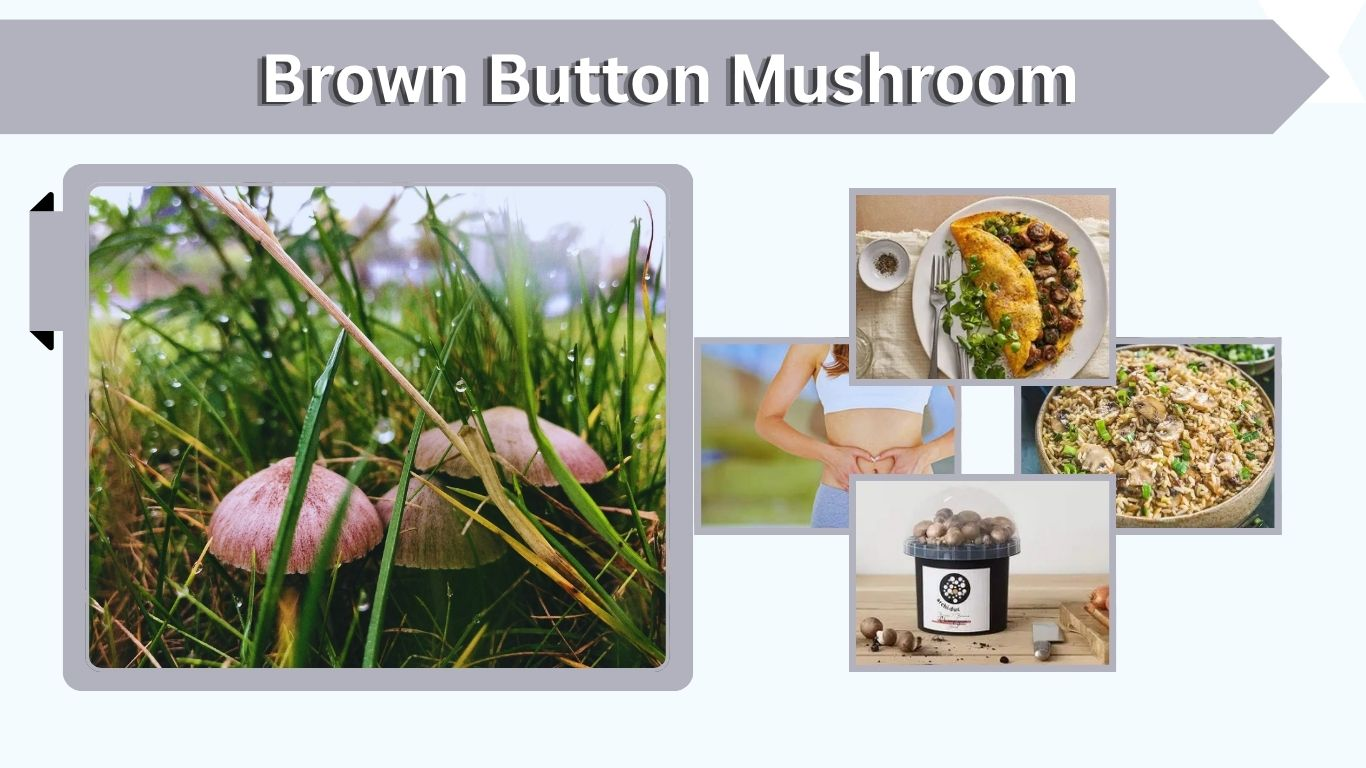
Brown button mushrooms are small, firm, earthy mushrooms often sold as cremini, baby bella, or Swiss brown mushrooms. They belong to the same species as white button and portobello mushrooms, but they have a darker cap and deeper flavor. These mushrooms are easy to cook, nutritious, and useful in everyday meals, from soups and sauces to stir-fries, pasta, and grilled dishes.
What Are Brown Button Mushrooms?
Brown button mushrooms are immature brown forms of Agaricus bisporus, the same cultivated mushroom species that includes white button mushrooms and mature portobello mushrooms. Their size is usually small to medium, with a rounded cap, short stem, and firm texture. Compared with white button mushrooms, brown button mushrooms usually taste richer, nuttier, and more savory.
They are widely available in grocery stores because they are cultivated, not usually collected from the wild. This makes them safer and more consistent than wild mushrooms. Brown button mushrooms are commonly used in home cooking because they hold their shape well and absorb seasonings without losing their natural earthy taste.
Identification
- Brown button mushrooms have smooth light-brown to chestnut-brown caps.
- The cap is usually rounded and firm when fresh.
- Young mushrooms often have closed caps with gills hidden underneath.
- As they age, the gills may become visible and turn pinkish-brown to dark brown.
- The stem is short, thick, and pale cream to light brown.
- Fresh mushrooms should feel firm, not slimy or wet.
- They should smell mild, earthy, and pleasant.
- Avoid mushrooms with a sour odor, heavy slime, or very soft texture.
Brown Button Mushroom Nutrition
Brown button mushrooms are low in calories but still provide useful nutrients. They contain water, fiber, small amounts of protein, and important minerals. Their natural savory flavor also makes them helpful for adding depth to meals without adding much fat or heavy seasoning.
They are not a complete protein source, but they can support a balanced diet when paired with grains, legumes, eggs, fish, poultry, or other protein-rich foods. Their low-calorie profile makes them useful in soups, salads, omelets, rice dishes, and vegetable-based meals.
| Nutrient Feature | Why It Matters |
| Low calories | Helpful for lighter meals and weight-conscious diets |
| Small amount of protein | Adds extra nutrition to vegetable-based dishes |
| B vitamins | Support energy metabolism in the body |
| Minerals | Provide nutrients such as potassium, copper, and selenium |
| Fiber | Supports digestion and helps make meals more filling |
| Umami flavor | Adds savory taste without needing much fat or salt |
Calories and Protein
Brown button mushrooms are naturally low in calories. A serving can add volume and flavor to a meal without making it heavy. They also contain a small amount of protein, though not enough to replace major protein foods on their own.
For a balanced meal, pair brown button mushrooms with eggs, tofu, beans, lentils, chicken, fish, beef, or whole grains. This makes the dish more filling while keeping the mushroom’s earthy flavor at the center.
Vitamins and Minerals
Brown button mushrooms provide several micronutrients, especially B vitamins and minerals. They may contain riboflavin, niacin, pantothenic acid, copper, selenium, and potassium. These nutrients support normal body functions, including energy use, immune support, and cell protection.
Nutrient levels can vary depending on growing conditions, storage, and cooking method. Still, brown button mushrooms are a useful way to add extra nutrients to everyday meals.
Brown Button Mushroom Benefits
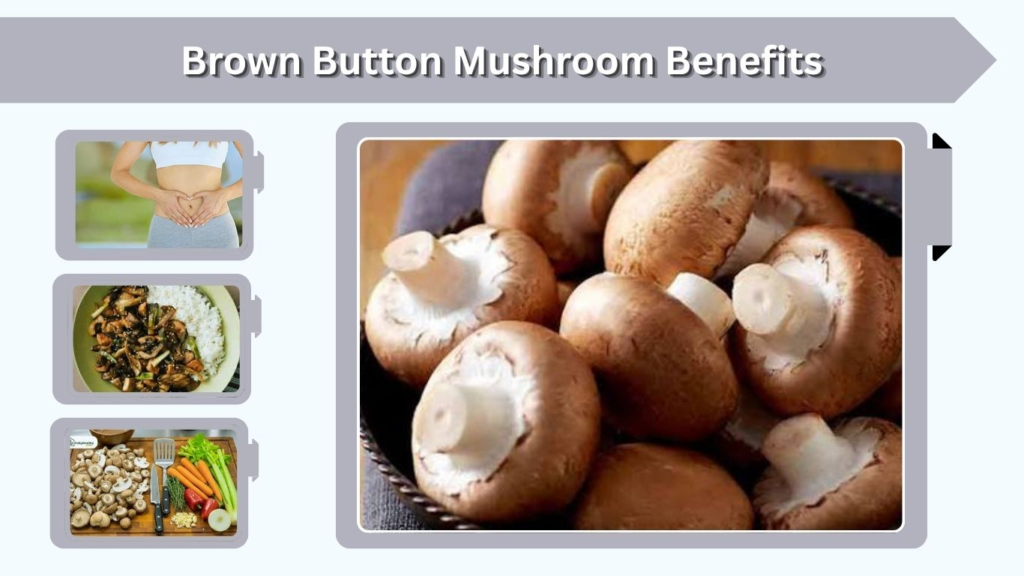
Brown button mushrooms are popular because they are affordable, versatile, and easy to include in many diets. Their benefits come from their nutrient content, low calorie level, fiber, and savory taste.
They are especially useful for people who want to eat more vegetables or reduce heavy ingredients in recipes. Their meaty texture can make dishes feel satisfying, even when less meat is used.
Key Health Benefits
- They are low in calories and fit well into light meals.
- Their fiber supports better digestion and fullness.
- Their savory flavor can reduce the need for extra salt or fat.
- They contain minerals that support normal body functions.
- They add texture and depth to vegetarian and non-vegetarian dishes.
- They can help increase vegetable intake in everyday cooking.
- They are easy to combine with protein-rich foods for balanced meals.
Are Brown Button Mushrooms Good for Gut Health?
Brown button mushrooms contain fiber and natural compounds that may support digestive health as part of a balanced diet. They are not a magic cure for gut problems, but they can contribute to a healthy eating pattern when combined with fruits, vegetables, whole grains, and fermented foods.
Cooking them can make them easier to digest for many people. If raw mushrooms cause bloating or discomfort, lightly sautéing or roasting them may be a better option.
Brown vs White Button Mushrooms
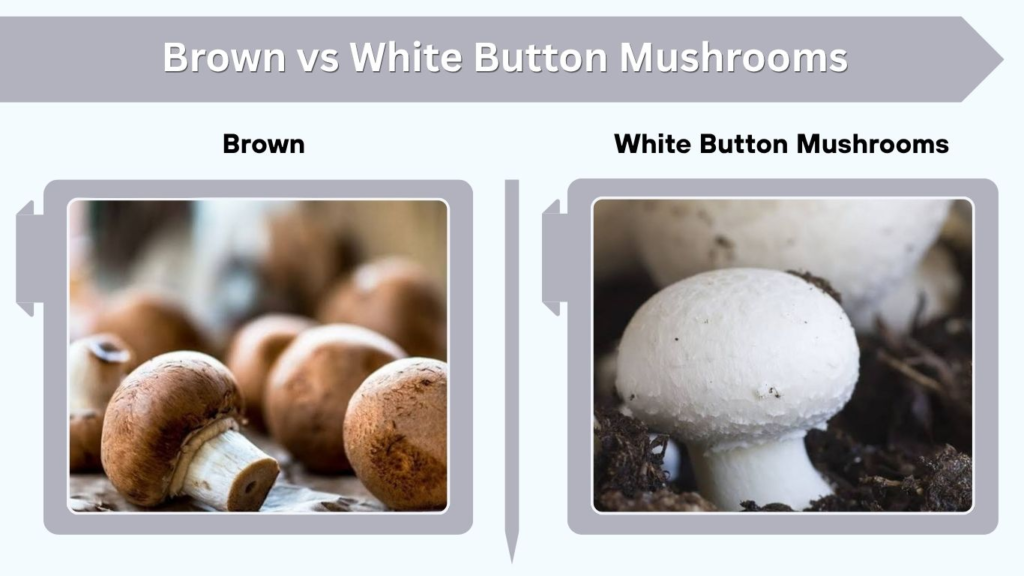
Brown and white button mushrooms are closely related because they come from the same species. The main differences are color, flavor, texture, and how they behave in cooking.
White button mushrooms are usually milder, softer, and lighter in flavor. Brown button mushrooms have a firmer bite and a stronger earthy taste. Because of this, brown mushrooms are often preferred in dishes where a deeper mushroom flavor is wanted.
Main Differences
- Brown button mushrooms have a richer, earthier taste.
- White button mushrooms are milder and slightly more delicate.
- Brown mushrooms usually hold texture better during cooking.
- White mushrooms blend easily into light soups, salads, and sauces.
- Brown mushrooms work well in pasta, steak dishes, stir-fries, and roasted recipes.
- Both types are low-calorie and nutritious.
- Both should be stored properly and discarded if spoiled.
Which One Should You Choose?
Choose brown button mushrooms when you want stronger flavor and firmer texture. They are better for sautéing, roasting, grilling, and adding to rich sauces. Choose white button mushrooms when you want a lighter taste or a softer texture.
For most recipes, you can replace white button mushrooms with brown button mushrooms. The final dish may taste slightly deeper and more savory, which is often a good thing.
Brown Spots on Button Mushrooms
Brown spots on button mushrooms do not always mean they are unsafe. Small dry brown marks can appear from age, handling, or light bruising. Mushrooms are delicate, so they can discolor when pressed or stored too long.
However, brown spots combined with slime, a bad smell, or soft texture can be a sign of spoilage. The safest choice is to check the full condition of the mushroom, not just the color.
When Brown Spots Are Usually Okay
Small dry spots are often harmless if the mushroom is still firm and smells fresh. You can trim away minor blemishes before cooking. Slight darkening on the cap or gills can also happen as mushrooms mature.
If the mushrooms still look mostly fresh, feel firm, and smell earthy, they are usually fine to cook. Cooking is best for older mushrooms that are still safe but no longer look perfect for raw use.
When to Throw Them Away
Throw away brown button mushrooms if they feel slimy, sticky, mushy, or wet in a bad way. Also avoid them if they smell sour, fishy, rotten, or strongly unpleasant.
Dark spots that spread across the mushroom, wrinkled caps, or blackened soft areas may mean the mushrooms are too old. When the texture and smell are clearly off, do not try to save them.
How to Clean Brown Button Mushrooms
Brown button mushrooms often carry a little compost or dirt on the surface. Cleaning them properly helps keep their texture firm and prevents them from becoming waterlogged.
The best method is quick and gentle. Mushrooms absorb moisture easily, so avoid soaking them in a bowl of water. A short rinse or wipe is usually enough.
Cleaning Steps
- Check the mushrooms and remove any spoiled pieces.
- Trim the dry end of the stem if needed.
- Wipe the caps with a damp paper towel or clean cloth.
- For dirty mushrooms, rinse quickly under cool running water.
- Dry them immediately with a towel.
- Slice only after cleaning and drying.
- Cook soon after washing for the best texture.
How to Cook Brown Button Mushrooms
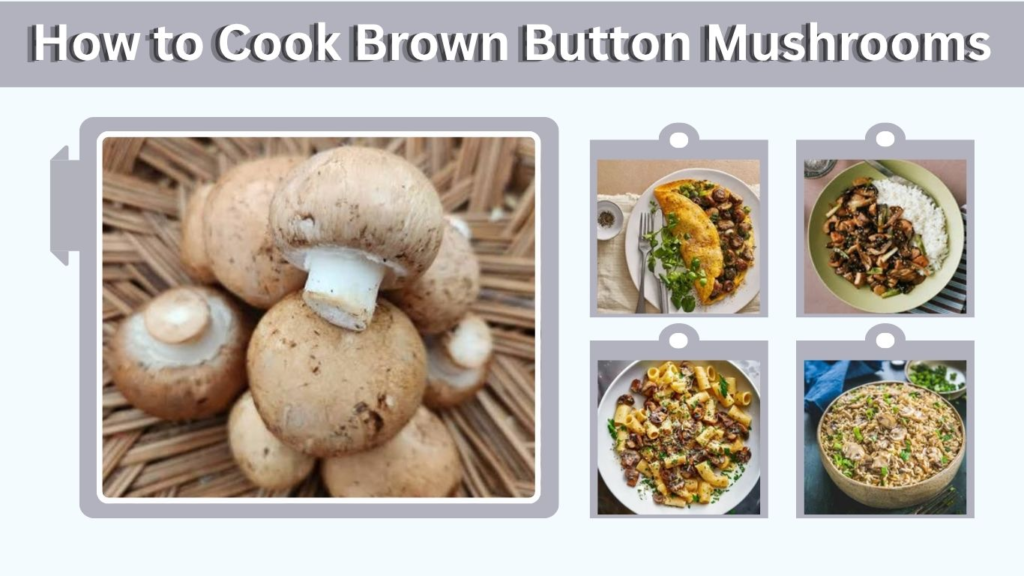
Brown button mushrooms can be cooked in many simple ways. Sautéing is one of the best methods because it brings out their savory flavor and removes excess moisture.
For better browning, do not overcrowd the pan. If too many mushrooms are added at once, they steam instead of brown. Cooking them in a wide pan helps create better texture and deeper flavor.
Simple Sautéed Brown Button Mushrooms
Slice the mushrooms evenly. Heat a pan over medium-high heat with a little oil or butter. Add the mushrooms in a single layer and let them cook without stirring too much at first. Once they release moisture and start browning, stir and continue cooking until tender.
Add salt near the end, then finish with garlic, black pepper, parsley, soy sauce, thyme, or a small splash of lemon juice. These simple seasonings bring out the mushroom’s natural umami flavor.
Best Recipe Ideas
Brown button mushrooms work well in many everyday recipes. They can be used as a main vegetable, side dish, or flavor base.
Try them in mushroom soup, garlic butter mushrooms, mushroom omelets, pasta sauce, fried rice, risotto, stir-fry, pizza toppings, beef stew, chicken gravy, and vegetable curry. They also pair well with onions, garlic, butter, cream, thyme, black pepper, soy sauce, cheese, potatoes, and eggs.
How to Store Brown Button Mushrooms
Proper storage keeps brown button mushrooms fresh longer. They need cool temperature and some airflow. Keeping them sealed in a wet plastic bag can make them slimy faster.
Store them in the refrigerator, preferably in their original breathable packaging or in a paper bag. Avoid washing them before storage because extra moisture speeds up spoilage.
Storage Tips
- Keep fresh mushrooms in the refrigerator.
- Store them in a paper bag or breathable container.
- Do not wash before storing.
- Keep them away from strong-smelling foods.
- Use them while they are firm and fresh.
- Cooked mushrooms should be refrigerated in a sealed container.
- Leftover cooked mushrooms are best used within a few days.
Can You Eat White Button Mushrooms That Turn Brown?
White button mushrooms can turn brown because of bruising, age, or exposure to air. If they are still firm, dry, and smell normal, slight browning does not always mean they are bad.
However, if white button mushrooms turn brown and also become slimy, soft, wet, or smelly, they should be discarded. Color alone is not enough. Texture and smell are more important signs of freshness.
Are Brown Button Mushrooms Safe to Eat Raw?
Brown button mushrooms are commonly cooked, but some people eat small amounts raw in salads. Cooking is usually better because it improves flavor, texture, and digestibility. It also makes mushrooms more enjoyable in warm dishes.
People with sensitive digestion may prefer cooked mushrooms. Also, always use fresh, store-bought mushrooms from a trusted source. Do not eat wild mushrooms that look similar unless identified by a qualified expert, because some wild mushrooms can be dangerous.
Growing Brown Button Mushrooms at Home
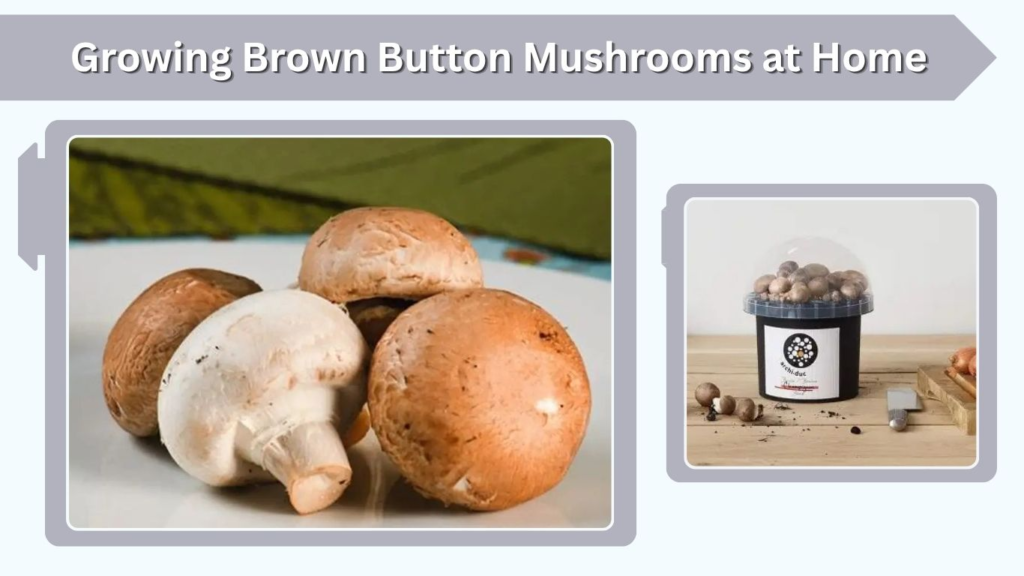
Brown button mushrooms can be grown at home using a mushroom kit. These kits usually include prepared compost or growing medium already inoculated with mushroom spawn. They are easier than starting from scratch.
Home growing requires the right moisture, temperature, airflow, and cleanliness. Mushrooms do not need sunlight like plants, but they still need proper growing conditions. A kit is the easiest option for beginners because the setup instructions are already prepared.
Basic Growing Needs
A brown button mushroom kit should be kept in a cool, shaded place according to the kit instructions. The growing surface usually needs gentle misting to stay moist but not soaked. Too much water can cause mold or poor growth.
Once small mushrooms appear, they develop quickly. Harvest them when the caps are still rounded and firm. Twist gently or cut at the base, depending on the kit’s instructions.
FAQs
Are brown button mushrooms the same as cremini?
Yes, brown button mushrooms are commonly sold as cremini or baby bella mushrooms. They are the brown immature form of Agaricus bisporus. They are closely related to white button mushrooms and portobello mushrooms, but they have a firmer texture and deeper flavor than white button mushrooms.
Are brown button mushrooms healthier than white button mushrooms?
Brown and white button mushrooms are both nutritious, low-calorie foods. Brown button mushrooms may have a slightly stronger flavor and firmer texture, but both can fit into a healthy diet. The best choice depends on your recipe, taste preference, and how you plan to cook them.
Can I cook brown button mushrooms without washing them?
Yes, if they are clean, you can simply wipe them with a damp towel. If they have visible dirt, rinse them quickly under cool water and dry them immediately. Avoid soaking mushrooms because they can absorb water and become soft during cooking.
Why did my button mushrooms turn brown inside?
Button mushrooms can darken inside as they age or when the gills mature. Light browning is not always unsafe. However, if the inside is very dark, slimy, mushy, or has a bad smell, the mushrooms are likely spoiled and should not be eaten.
What is the best way to cook brown button mushrooms?
Sautéing is one of the best methods. Slice the mushrooms, cook them in a hot pan with oil or butter, and avoid overcrowding. Let them brown before stirring too much. Finish with garlic, pepper, herbs, soy sauce, or lemon juice for a deeper savory flavor.