
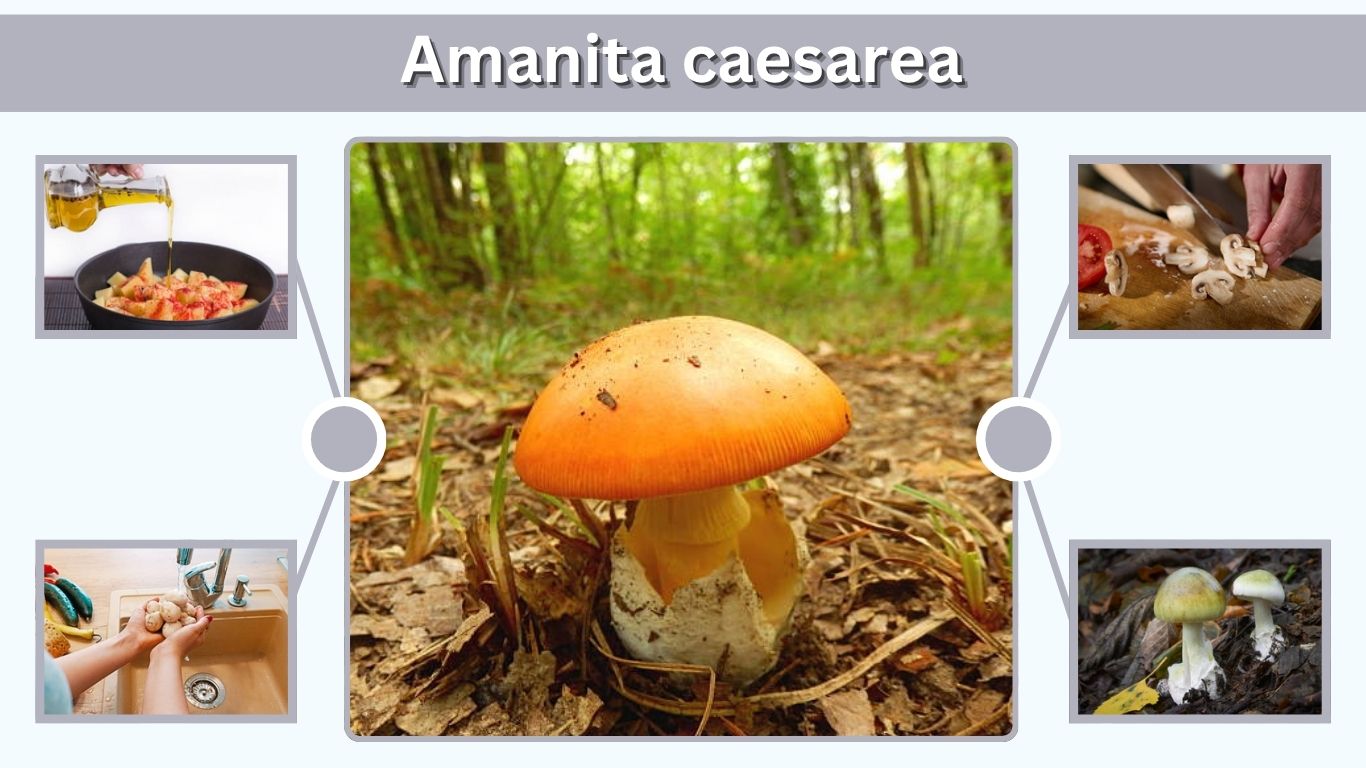
Amanita caesarea, commonly known as Caesar’s mushroom, is one of the most prized edible mushrooms in the world. Its vibrant appearance and rich culinary history make it highly sought after by foragers and chefs alike. However, this mushroom belongs to a genus that also includes some of the most dangerous species on Earth. Because of this, proper identification is essential before consumption. This guide explains how to recognize Amanita caesarea, where it grows, and how to distinguish it from toxic look-alikes.
What is Amanita caesarea?
Amanita caesarea is a well-known edible mushroom species native to warm regions, particularly in Europe and parts of North Africa. It has been valued since ancient Roman times, where it was considered a delicacy reserved for emperors.
Scientific Classification
- Scientific name: Amanita caesarea
- Family: Amanitaceae
- Common names: Caesar’s mushroom, Royal agaric
Historical Importance
- Consumed by Roman nobility
- Considered a luxury food item
- Still prized in Mediterranean cuisine today
Amanita caesarea Identification Guide
Correct identification is the most important step when dealing with any Amanita species. Amanita caesarea has several distinct features that help differentiate it from other mushrooms.
Key Identification Features
- Bright orange to reddish cap with a smooth surface
- Yellow gills that are free from the stem
- Yellow stem (stipe) with a visible ring
- White, sac-like volva at the base
Growth Stages
- Begins as a white “egg” enclosed in a volva
- Gradually expands as the cap emerges
- Fully mature mushrooms display a wide, open cap
Free Gills Explained
- Gills do not attach directly to the stem
- This is a key trait for distinguishing edible species from some toxic ones
Amanita caesarea Habitat and Distribution

Amanita caesarea thrives in warm climates and forms symbiotic relationships with certain trees. It is most commonly found in natural forest environments rather than urban areas.
Where It Grows
- Deciduous forests with oak or chestnut trees
- Areas with well-drained soil
- Sunny forest edges and clearings
Geographic Distribution
- Southern Europe (Spain, Italy, France)
- North Africa and parts of the Mediterranean
- Some regions of Mexico
Seasonal Growth
- Appears during summer and autumn
- Often emerges after rainfall
- Growth depends on temperature and humidity
Is Amanita caesarea Edible?
Amanita caesarea is widely regarded as one of the finest edible mushrooms. Its flavor, texture, and versatility make it a favorite ingredient in many traditional dishes.
The mushroom has a mild, slightly nutty taste and a soft texture that works well in both raw and cooked preparations. In Mediterranean cuisine, it is sometimes sliced thin and served fresh, while in other recipes it is sautéed, grilled, or added to pasta dishes.
Despite its excellent culinary reputation, extreme caution is necessary. Amanita caesarea closely resembles several toxic species, especially during its early growth stages. For this reason, it should only be consumed by those who are completely confident in their identification skills.
Amanita caesarea Look-Alikes and Confusion
Amanita caesarea is often confused with other species in the Amanita genus, some of which are extremely toxic. This confusion is especially dangerous during the early “egg stage,” when identifying features are not fully visible. Careful observation of color, gills, and base structure is essential to avoid mistakes.
Dangerous Look-Alikes
- Amanita phalloides (Death Cap), highly poisonous and often fatal
- Amanita muscaria (Fly agaric), toxic and psychoactive
- Amanita pantherina, a toxic species with neurological effects
Key Differences
- A. caesarea has yellow gills, while many toxic species have white gills
- Cap color differs (orange vs greenish or spotted red)
- Volva and stem characteristics vary between species
Amanita caesarea vs Amanita phalloides

Understanding the differences between these two species is critical, as Amanita phalloides is one of the deadliest mushrooms in the world.
Visual Comparison
- A. caesarea: orange cap, yellow gills, yellow stem
- A. phalloides: greenish or pale cap, white gills, white stem
Toxicity Differences
- A. caesarea: edible when correctly identified
- A. phalloides: contains deadly toxins affecting the liver
Amanita caesarea vs Amanita muscaria

These two mushrooms are often compared due to their bright colors, but they differ significantly in both appearance and effects.
Appearance Differences
- A. muscaria has a red cap with white spots
- A. caesarea has a smooth orange cap without spots
Effects on Humans
- A. muscaria: toxic and psychoactive
- A. caesarea: non-toxic and edible
Culinary Uses and Preparation

Amanita caesarea is highly valued in cooking due to its delicate flavor and texture. It can be prepared in a variety of ways depending on regional traditions.
Common Uses
- Sliced raw in salads
- Lightly sautéed with olive oil
- Grilled or added to pasta dishes
Cooking Tips
- Use fresh mushrooms for best flavor
- Avoid overcooking to preserve texture
- Clean gently without soaking in water
Can Amanita caesarean be Cultivated?
Cultivating Amanita caesarea is extremely difficult because it forms a symbiotic relationship with tree roots. This relationship, known as mycorrhiza, makes it hard to replicate growing conditions artificially. As a result, most Amanita caesarea mushrooms available in markets are wild-harvested rather than farm-grown. Efforts to cultivate this species continue, but success remains limited compared to other edible mushrooms.
Safety Tips for Foragers
Essential Safety Rules
- Never eat wild mushrooms without proper identification
- Always check for yellow gills and orange cap
- Cut open young specimens to confirm features
- Avoid mushrooms with uncertain characteristics
When to Avoid Consumption
- If the mushroom is damaged or decayed
- If identification is unclear
- If growing in unusual or contaminated areas
Conclusion
Amanita caesarea is a prized edible mushroom with a long history of culinary use. However, its similarity to highly toxic species makes careful identification essential. By understanding its key features, habitat, and differences from dangerous look-alikes, foragers can reduce risks and appreciate this unique mushroom safely.
FAQs
Is Amanita caesarea edible?
Yes, Amanita caesarea is edible and considered a delicacy. However, it must be correctly identified before consumption because it closely resembles some highly toxic Amanita species.
Is Amanita caesarea poisonous?
No, Amanita caesarean itself is not poisonous. The real danger comes from confusing it with poisonous mushrooms like Amanita phalloides, which can be fatal if eaten.
What does Amanita caesarea taste like?
It has a mild, slightly nutty flavor with a soft and pleasant texture. It is often used in gourmet dishes and traditional Mediterranean recipes.
Where does Amanita caesarea grow?
It grows in warm deciduous forests, especially under oak and chestnut trees. It is commonly found in southern Europe and similar climates.
Is Amanita caesarea psychedelic?
No, Amanita caesarean is not psychedelic. It does not contain psychoactive compounds and is valued only for its culinary qualities.