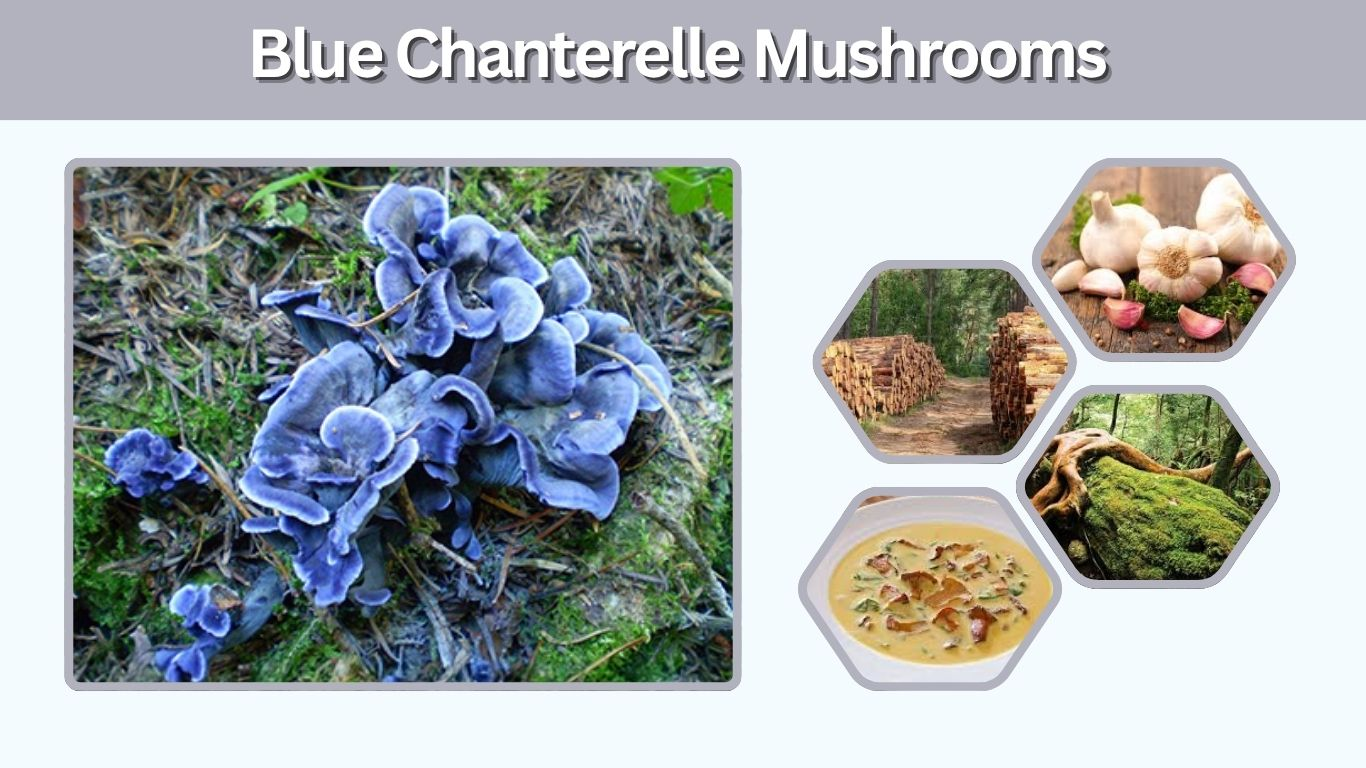
Blue chanterelle mushrooms are among the most unusual wild mushrooms foragers can encounter. With their deep blue, purple, or blackish color and clustered, vase-like shape, they look almost unreal on the forest floor. Although commonly called chanterelles, they are not true chanterelles. This guide explains what blue chanterelles are, how to identify them, whether they are edible, where they grow, and how people use them in the kitchen.
What Is a Blue Chanterelle?
Blue chanterelle is the common name for Polyozellus multiplex, a dark blue to purple-black wild mushroom that grows in clustered, fan-shaped formations. It is sometimes also called the black chanterelle, purple chanterelle, or clustered blue chanterelle.
Despite the common name, blue chanterelles are not in the same genus as true golden chanterelles. True chanterelles belong to the genus Cantharellus, while blue chanterelles belong to Polyozellus. They are grouped with chanterelle-like mushrooms because they share some similar body forms, such as ridged undersides and vase-like shapes.
Scientific Name and Classification
The scientific name most often associated with blue chanterelle mushrooms is Polyozellus multiplex. Older references may mention names such as Cantharellus multiplex, but modern mycology separates this mushroom from true chanterelles.
The name “multiplex” refers to the mushroom’s many-parted, clustered form. A single fruiting body often looks like several small fans or funnels fused together at the base.
Why It Looks So Different
The blue chanterelle stands out because of its color. Many edible mushrooms are tan, yellow, white, or brown, but this species can appear deep indigo, violet-gray, purple-black, or frosted blue. Older specimens may darken or fade, depending on weather and age.
Its shape is equally distinctive. Rather than growing as a single neat cap and stem, it often forms compact clusters of overlapping lobes. These lobes may look like ruffled fans, spoons, or small vases joined together.
Blue Chanterelle Identification
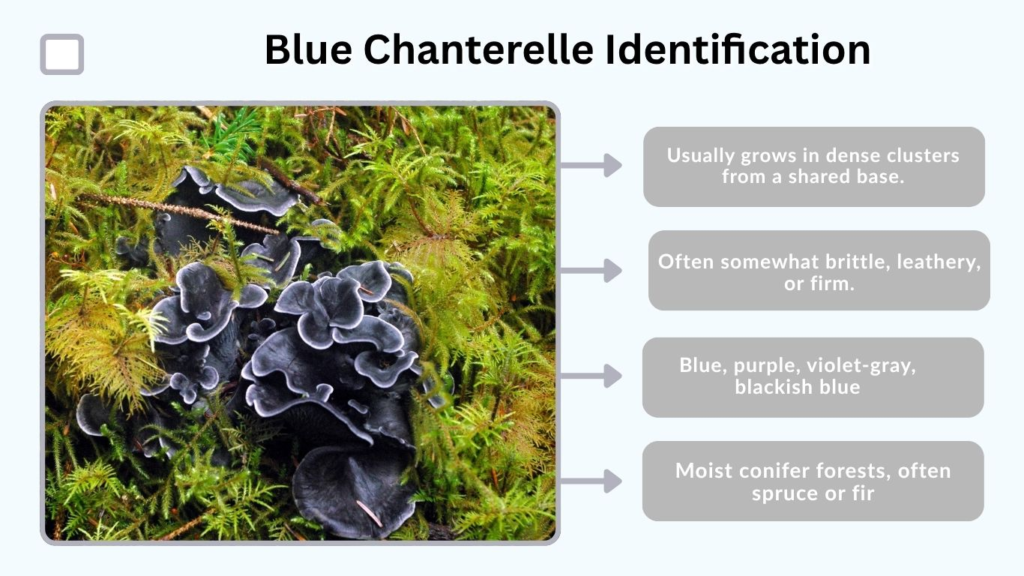
Correct identification is essential with any wild mushroom. Blue chanterelles have several key traits, but no one should eat a wild mushroom unless its identity has been confirmed by an expert or trusted local guide.
Key Identification Features
Blue chanterelles are usually recognized by a combination of color, shape, underside texture, and growth habit.
Look for these traits:
- Color: Deep blue, bluish gray, purple, violet-black, or dark charcoal with blue tones.
- Growth habit: Usually grows in dense clusters from a shared base.
- Shape: Fan-shaped, spoon-shaped, vase-like, or funnel-like lobes.
- Underside: Wrinkled, veined, or ridged rather than having true blade-like gills.
- Texture: Often somewhat brittle, leathery, or firm.
- Habitat: Usually found on the ground in coniferous forests, especially spruce and fir areas.
The underside is especially important. Blue chanterelles do not have the thin, sharp gills seen on many common mushrooms. Instead, they have shallow folds, wrinkles, or veins that run down the mushroom’s surface.
Blue Chanterelle Identification at a Glance
| Feature | What to Look For |
| Common name | Blue chanterelle, black chanterelle, purple chanterelle |
| Scientific name | Polyozellus multiplex |
| Color | Blue, purple, violet-gray, blackish blue |
| Underside | Wrinkled, veined, or ridged; not true gills |
| Growth style | Compact clusters from a common base |
| Habitat | Moist conifer forests, often spruce or fir |
| Edibility | Edible when correctly identified and cooked |
| Best use | Sautéing, drying, sauces, soups, and savory dishes |
Common Identification Mistakes
The biggest mistake is assuming every blue or black trumpet-shaped mushroom is the same species. Blue chanterelles can resemble other dark chanterelle-like mushrooms, especially to beginners.
Some people also confuse “blue chanterelle” with unrelated phrases, such as blue cheese chanterelle recipes, “blue foot” mushrooms, or even non-mushroom search results like a singer or song title. For foraging, the only relevant target is the wild mushroom commonly known as Polyozellus multiplex.
Are Blue Chanterelles Edible?
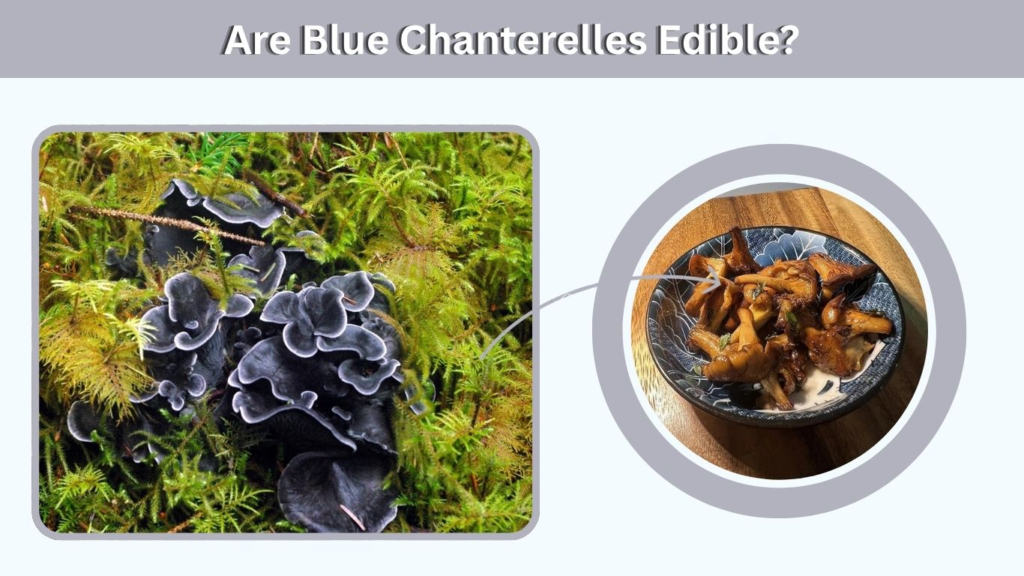
Blue chanterelles are generally listed as edible when correctly identified. They are collected by some foragers and are sometimes sold commercially where they occur. However, they are not a beginner mushroom, and their rarity means many foragers choose to harvest them lightly or leave them in place.
Safety Notes Before Eating
Wild mushroom safety should always come first. Even edible mushrooms can cause stomach upset for some people, especially if eaten raw, undercooked, old, or in large amounts.
Follow these safety rules:
- Never eat a blue chanterelle based only on photos.
- Confirm the mushroom with a local expert before consuming it.
- Cook wild mushrooms thoroughly.
- Try a small amount the first time.
- Avoid old, decaying, bug-filled, or waterlogged specimens.
- Do not mix unknown mushrooms into a meal.
Blue chanterelles are considered edible, but “edible” does not mean automatically safe for every person in every situation. Identification, freshness, preparation, and personal tolerance all matter.
What Do Blue Chanterelles Taste Like?
Blue chanterelles are often described as earthy, mild, savory, and somewhat meaty. Some foragers compare their flavor to a cross between chanterelles and black trumpet mushrooms. Their dark color and firm structure make them useful in cooked dishes where a rich, woodland flavor is welcome.
They are not usually prized for a sweet or fruity aroma like golden chanterelles. Instead, their appeal comes from their rarity, striking appearance, and deep savory character.
Blue Chanterelle Look-Alikes
Blue chanterelles do not have many perfect look-alikes, but several mushrooms can cause confusion. The safest approach is to compare the full set of features: color, underside, shape, habitat, and growth pattern.
Blue Chanterelle vs Black Trumpet
Black trumpet mushrooms are usually thinner, more trumpet-shaped, and more hollow. Blue chanterelles tend to grow in thicker, clustered, fan-like groups with a more veined or wrinkled underside.
Black trumpets are also dark, but they often appear black, gray, or brownish black rather than blue-purple. Both are edible when correctly identified, but they are different mushrooms with different shapes and textures.
Blue Chanterelle vs True Chanterelle
True chanterelles are usually yellow, orange, white, or reddish depending on the species. They have false gills or ridges, a fruity aroma, and a more classic cap-and-stem form.
Blue chanterelles are darker, more clustered, and belong to a different genus. They may resemble chanterelles in structure, but they are not simply a blue version of the golden chanterelle.
Blue Chanterelle vs Pig’s Ear
Pig’s ear mushrooms, often associated with Gomphus species, can have vase-like or folded shapes and may appear lilac, tan, or brownish purple. They can grow in clusters and may confuse foragers looking for chanterelle-like mushrooms.
The color, underside, and overall structure are key differences. Blue chanterelles are usually darker and more blue-black, while pig’s ear mushrooms often look chunkier and more muted in color.
Where Do Blue Chanterelles Grow?
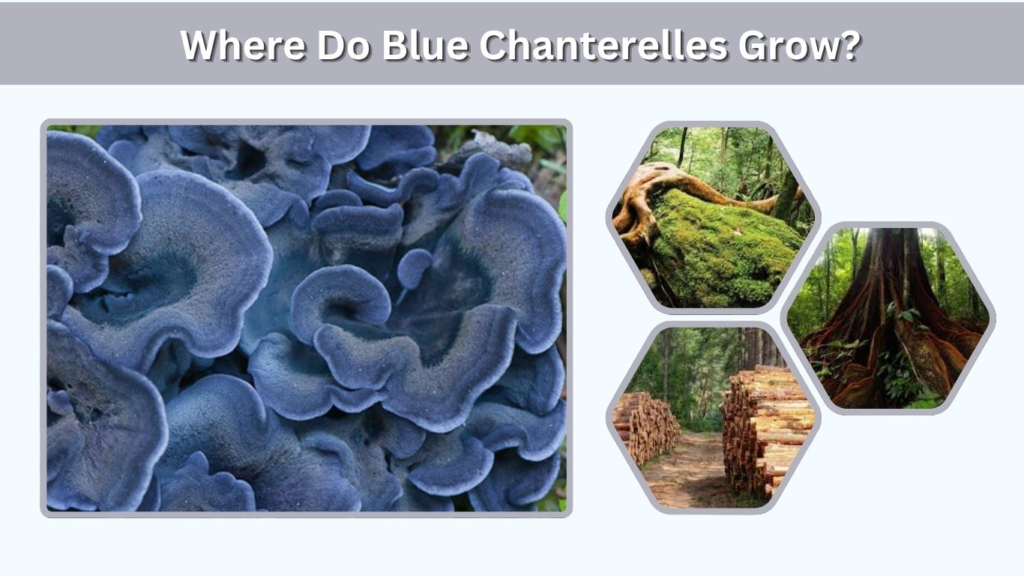
Blue chanterelles are associated with forest ecosystems and are not commonly found in grocery stores. They are mycorrhizal, meaning they grow in relationship with trees rather than from simple compost or dead wood.
Preferred Habitat
Blue chanterelles are most often reported in moist, mature, or montane conifer forests. They are commonly associated with spruce and fir. In North America, they are known from northern and western regions, including parts of the Pacific Northwest, Alaska, British Columbia, and other cool forest zones.
They usually grow on the ground, often in mossy areas, rather than directly on logs or stumps. Their dark color can make them surprisingly hard to see, even when they form large clusters.
Blue Chanterelles in Oregon, British Columbia, and Haida Gwaii
Searches for “blue river Oregon chanterelle mushroom,” “where to find chanterelles in Oregon Blue Mountains,” and “blue chanterelles Haida Gwaii” suggest that many users are looking for regional foraging information.
In the Pacific Northwest, blue chanterelles may appear in suitable conifer habitat, especially in cool, moist forests. However, they are not as commonly encountered as golden chanterelles. Foragers should also check local harvesting rules, protected areas, and Indigenous land access guidelines before collecting.
Season
Blue chanterelle season depends on region, elevation, rainfall, and temperature. In many areas, they are associated with summer through fall fruiting, especially after consistent moisture. In cooler northern regions, the season may be shorter and more localized.
Because they are uncommon, finding them often requires experience, patience, and repeated visits to suitable habitats.
Blue Chanterelle Price and Availability
Blue chanterelles are not a common commercial mushroom. They are wild-harvested, seasonal, and difficult to find in quantity. That makes their price variable.
Why Prices Vary
The price of blue chanterelles depends on supply, location, freshness, demand, and whether they are sold fresh or dried. A local forager may sell them differently from a specialty food distributor. In some seasons, they may not be available at all.
Factors that affect price include:
- Rarity in the region
- Harvest size and condition
- Transportation and storage costs
- Restaurant demand
- Whether the mushrooms are fresh or dried
- Local foraging regulations
Searches for “average price blue chanterelles,” “blue chanterelle for sale,” and “buying blue chanterelles” show commercial interest, but buyers should be cautious. Only buy wild mushrooms from reputable sellers who can verify the species and handling quality.
Can You Grow Blue Chanterelles?
Blue chanterelles are not commonly cultivated. Like true chanterelles, they form relationships with living trees, which makes cultivation much more complex than growing button mushrooms, oyster mushrooms, or shiitake.
Because of this, most blue chanterelles in circulation are wild-foraged. Their limited supply is one reason they remain a specialty mushroom rather than a standard supermarket item.
How to Cook Blue Chanterelle Mushrooms
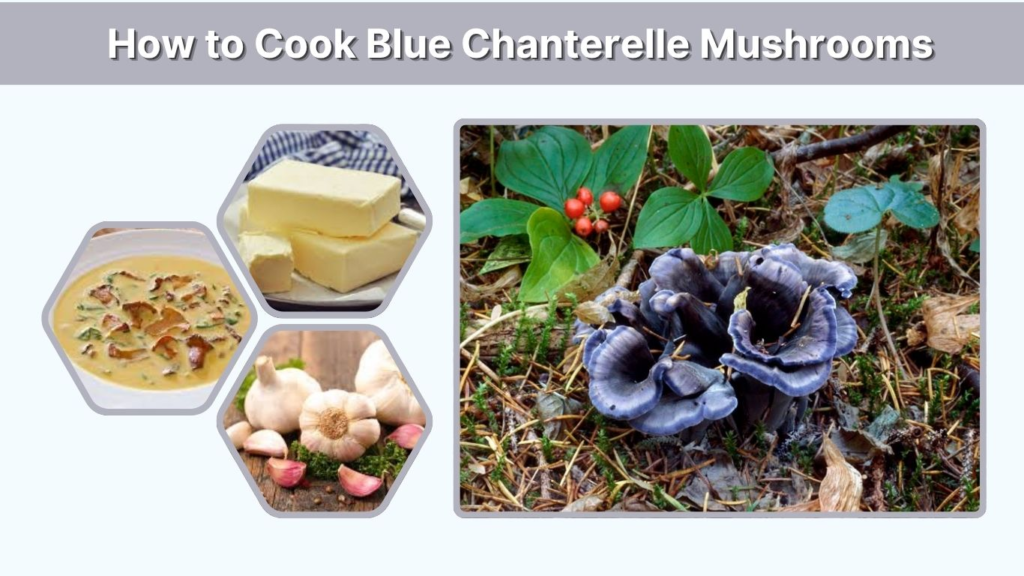
Blue chanterelles are best cooked, not eaten raw. Their flavor works well in savory dishes where their earthy depth can stand out.
Simple Cooking Ideas
A basic preparation is often best for rare wild mushrooms. Clean them gently, slice thicker pieces if needed, and cook them in a hot pan until their moisture reduces.
Good ways to use blue chanterelles include:
- Sautéed with butter, garlic, and herbs
- Added to cream sauces
- Cooked into risotto or pasta
- Used in soups and broths
- Dried and rehydrated for winter dishes
- Paired with eggs, potatoes, or roasted meats
Because they are dark, they may tint sauces or dishes slightly. This is normal and can make them visually interesting in cream-based recipes, mushroom gravies, and reductions.
Blue Chanterelle Recipe Idea
For a simple blue chanterelle recipe, sauté cleaned mushrooms in butter or olive oil over medium heat. Add minced garlic, a pinch of salt, black pepper, and fresh thyme. Cook until the mushrooms are tender and any released moisture has evaporated. Finish with a splash of cream or white wine, then serve over toast, pasta, rice, or roasted potatoes.
This method lets the mushroom’s flavor remain central without hiding it under too many strong ingredients.
Blue Foot Chanterelle Mushrooms and Other Name Confusion
The keyword list includes “blue foot chanterelle mushrooms,” but this phrase can be confusing. “Blue foot” may refer to other mushrooms with bluish stems or purple tones, not necessarily blue chanterelles.
For SEO and reader safety, it is important to clarify that mushroom common names are often inconsistent. Regional names, old guidebook names, and online marketplace names can overlap. When identifying mushrooms, the scientific name and physical features matter more than the common name.
Blue Chanterelle Singer and Other Unrelated Searches
The keyword “blue chanterelle singer” appears in the list, but it does not match the mushroom search intent. It may be a mistaken, unrelated, or entertainment-based query. For an article about mushrooms, it is better not to build a section around that term unless the website also covers music or pop culture.
The main article should stay focused on the informational mushroom intent: identification, edibility, look-alikes, habitat, price, recipes, and scientific name.
FAQs
Are blue chanterelles edible?
Yes, blue chanterelles are generally considered edible when correctly identified and cooked. However, they should not be eaten based only on online photos. Wild mushrooms must be confirmed by an expert, cooked thoroughly, and tried in small amounts the first time.
What is the scientific name for blue chanterelle?
The scientific name most commonly used for blue chanterelle is Polyozellus multiplex. Older names and synonyms may appear in mushroom books or online sources, but modern references usually place it in the genus Polyozellus, not Cantharellus.
Are blue chanterelles true chanterelles?
No. Blue chanterelles are chanterelle-like mushrooms, but they are not true chanterelles. True chanterelles belong to the genus Cantharellus, while blue chanterelles belong to Polyozellus. Their common name comes from their similar ridged, funnel-like appearance.
Where can you find blue chanterelles?
Blue chanterelles usually grow on the ground in cool, moist conifer forests, often around spruce and fir. They are reported from northern and montane regions, including parts of North America’s Pacific Northwest, Alaska, British Columbia, and similar forest habitats.
What do blue chanterelles taste like?
Blue chanterelles are often described as earthy, mild, savory, and somewhat meaty. Some foragers compare them to a mix between chanterelles and black trumpet mushrooms. They work well in sautés, sauces, soups, risotto, pasta, and dried mushroom preparations.