
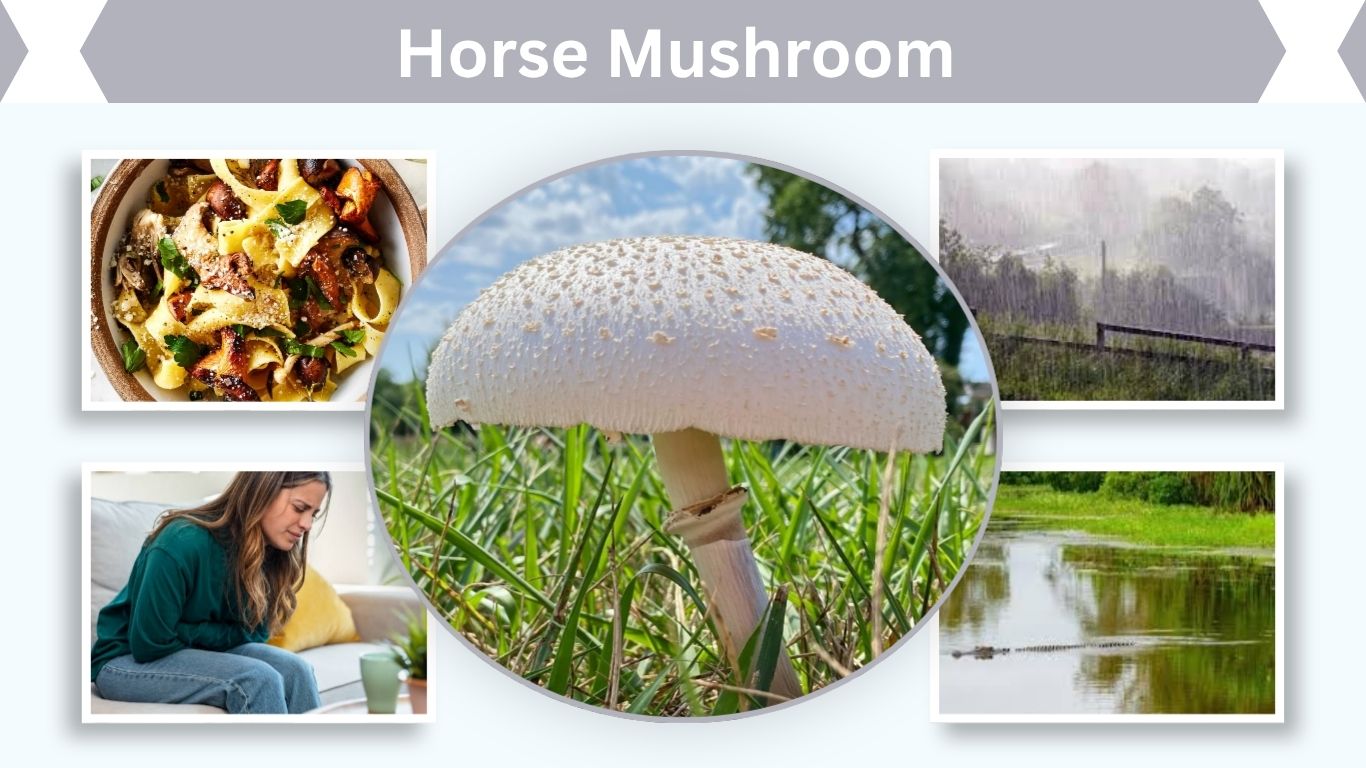
Horse mushrooms are large edible mushrooms that grow in grassy fields, meadows, and areas rich in organic matter. Known scientifically as Agaricus arvensis, they are popular among wild mushroom foragers because of their mild flavor and pleasant smell. However, they can look similar to several poisonous mushrooms, making careful identification very important. Learning about their appearance, habitat, smell, and common look-alikes can help people safely recognize horse mushrooms while avoiding dangerous species found in the wild.
What Is a Horse Mushroom?
Horse mushrooms are among the largest edible mushrooms in grassy habitats. They are commonly found in fields, horse pastures, gardens, and meadow areas after rainy weather. Many people enjoy them because they have a sweet almond-like smell and a rich taste when cooked. Although they are edible, beginners should always study their identification carefully because some toxic mushrooms can look very similar in shape and color.
Scientific Name and Classification
The horse mushroom belongs to the Agaricus family. Its scientific name is Agaricus arvensis. It is related to common store mushrooms but grows naturally in the wild. The species is widely known in Europe, North America, Australia, and New Zealand.
Why It Is Called a Horse Mushroom
This mushroom earned its common name because it often grows in horse pastures and grassy land enriched by manure. It does not usually grow directly from horse dung, but it prefers nutrient-rich soil commonly found around grazing animals.
Common Features of Horse Mushrooms
- Large white or cream-colored cap
- Thick stem with a hanging ring
- Pink gills that darken with age
- Strong almond or anise smell
- Brown spore print
- Smooth cap surface
Horse Mushroom Identification Features
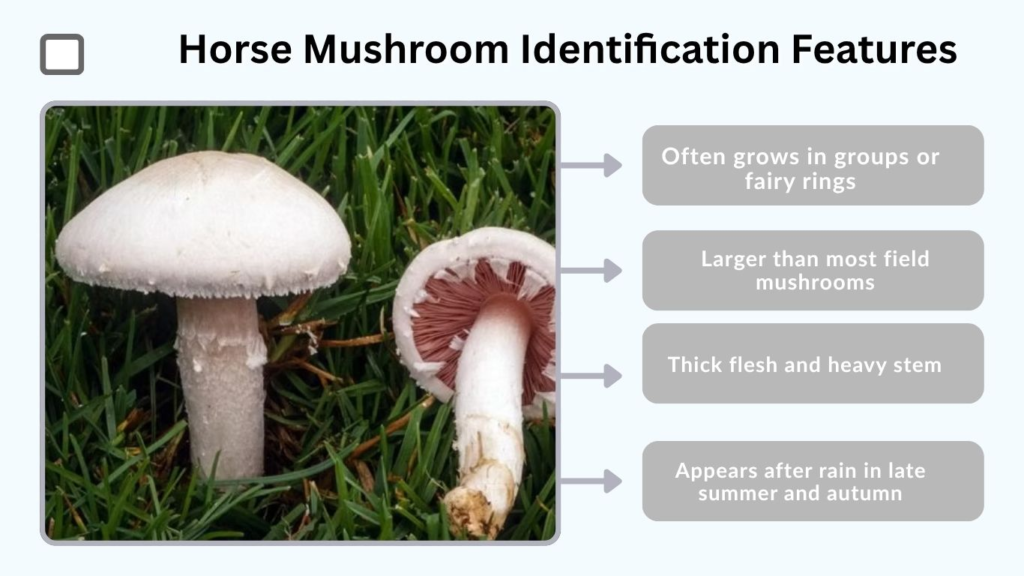
Correct identification is the most important step before eating any wild mushroom. Horse mushrooms have several special features that help distinguish them from poisonous look-alikes. Size, smell, cap color, and gill changes are especially useful for safe recognition. Looking at only one feature is risky, so mushroom hunters should always examine the entire mushroom carefully before collecting or cooking it.
Cap Appearance
The cap of a horse mushroom is usually white, pale cream, or slightly yellowish. Young mushrooms have a rounded cap, but older ones flatten as they mature. Some caps may grow very large, sometimes reaching over 20 centimeters wide.
Gills and Stem
Young horse mushrooms have pale pink gills that slowly turn chocolate brown as spores mature. The stem is thick and sturdy with a large hanging ring near the upper section. The ring often appears double-layered in mature mushrooms.
Smell and Spore Print
One of the easiest ways to identify a horse mushroom is its smell. Many people describe it as sweet, almond-like, or similar to anise. The spore print is dark brown, which helps separate it from deadly white-spored mushrooms.
Size and Growth Pattern
- Often grows in groups or fairy rings
- Larger than most field mushrooms
- Thick flesh and heavy stem
- Common in open grassy habitats
- Appears after rain in late summer and autumn
Where Horse Mushrooms Grow
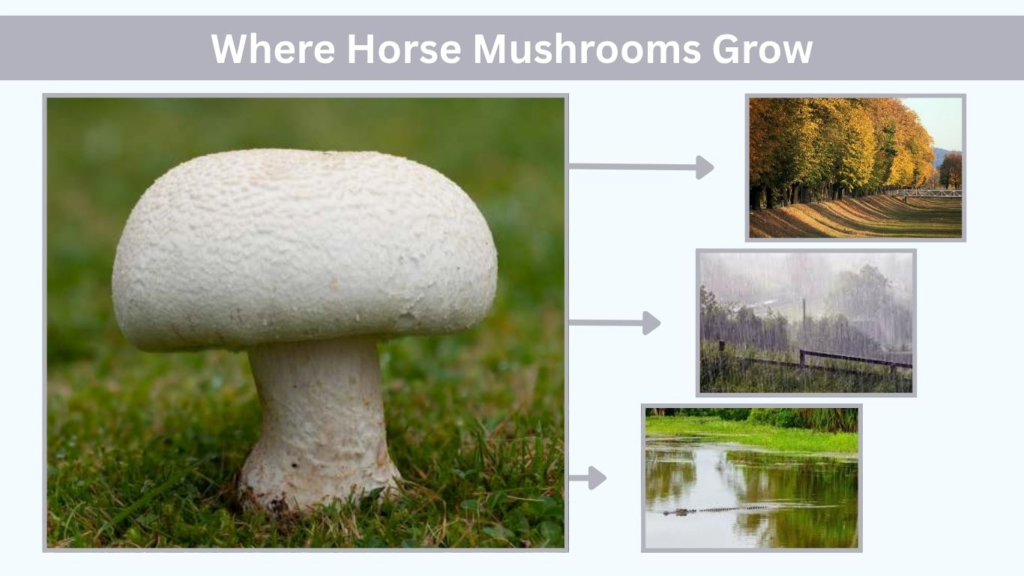
Horse mushrooms prefer open grassy environments with rich soil. They are commonly found in meadows, lawns, parks, horse fields, and pastureland. These mushrooms thrive in moist conditions and often appear after periods of rain. Their connection with nutrient-rich ground explains why many people search for them around horse grazing areas. Even though they are linked with manure-rich soil, they usually grow from the ground rather than directly on dung itself.
Horse Pastures and Meadows
Grasslands are one of the best places to find horse mushrooms. Open meadows with healthy soil and moisture create excellent growing conditions. Many mushroom hunters search old grazing fields during autumn months.
Mushrooms Growing Near Horse Manure
Some mushrooms grow in soil enriched with horse manure because decomposed organic material feeds fungal growth. Horse mushrooms may appear nearby, though they are not true dung mushrooms.
Horse Mushroom Season
- Late summer to autumn in many regions
- Often appears after heavy rain
- Common in the UK during cooler months
- Found in Australia and New Zealand during local wet seasons
- May return yearly in the same location
Are Horse Mushrooms Edible?
Horse mushrooms are considered edible and are widely collected by experienced mushroom hunters. They have a rich flavor and soft texture that works well in many dishes. Despite their popularity, people should never eat them unless identification is completely certain. Several toxic mushrooms resemble horse mushrooms during early growth stages, making mistakes dangerous. Safe preparation, careful cleaning, and proper cooking are all important before eating any wild mushroom collected from fields or pastures.
Taste and Texture
Horse mushrooms have a mild earthy flavor with a slightly nutty taste. Their texture stays firm during cooking, making them useful in soups, pasta dishes, and fried meals.
Nutritional Benefits
These mushrooms contain useful nutrients including protein, fiber, vitamins, and minerals. Like many edible mushrooms, they are low in calories and high in natural compounds.
Can You Eat Mushrooms Growing Near Horse Manure?
Mushrooms collected near manure-rich soil can sometimes be eaten if properly identified and cleaned. However, mushrooms growing directly from dung should be approached carefully because some species may cause illness or confusion with toxic varieties.
Horse Mushroom Look-Alikes
Many edible mushrooms have poisonous relatives that look very similar. Horse mushrooms can easily be confused with dangerous species, especially by beginners. Learning the differences between smell, staining, gill color, and habitat is extremely important for safe foraging. Some toxic mushrooms may cause stomach illness, while others can be deadly if eaten. Comparing horse mushrooms with common look-alikes helps reduce the risk of dangerous mistakes during mushroom hunting.
Horse Mushroom vs Field Mushroom
Field mushrooms are usually smaller than horse mushrooms and often have a less noticeable smell. Horse mushrooms normally grow larger and produce a sweet almond scent. Both species belong to the Agaricus group, so careful checking is still necessary.
| Feature | Horse Mushroom | Field Mushroom |
| Size | Large | Medium |
| Smell | Almond or anise | Mild mushroom smell |
| Habitat | Pastures and meadows | Grass fields |
| Cap Color | Creamy white | White |
| Stem | Thick with large ring | Slimmer stem |
Horse Mushroom vs Yellow Stainer
The yellow stainer is one of the most important poisonous look-alikes. It often bruises bright yellow near the stem base and produces a strong chemical smell similar to ink or disinfectant. Eating it can cause stomach pain and vomiting.
Horse Mushroom vs Death Cap
The deadly Death cap mushroom has white spores and pure white gills, unlike the pink-to-brown gills of horse mushrooms. Beginners should avoid collecting any mushroom if identification is uncertain.
Cooking Horse Mushrooms
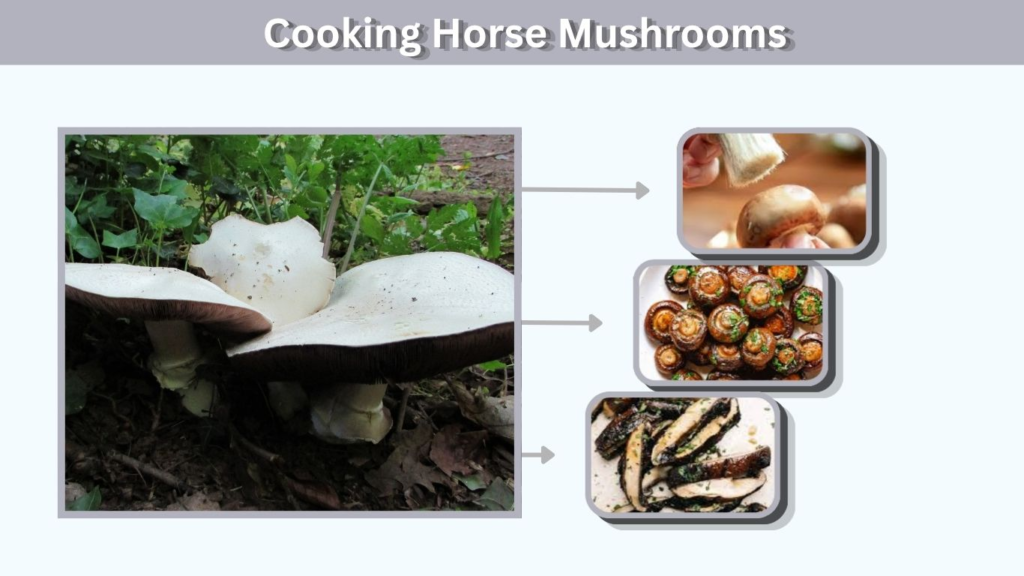
Horse mushrooms are popular in home cooking because of their rich flavor and large size. They can be fried, grilled, roasted, or added to soups and sauces. Fresh mushrooms should always be cleaned carefully before cooking. Many people prefer young mushrooms because they have a firmer texture and milder taste. Proper cooking also helps improve flavor while reducing possible digestive irritation from eating wild mushrooms raw.
How to Clean Horse Mushrooms
- Brush off dirt and grass carefully
- Trim damaged stem parts
- Avoid soaking mushrooms too long in water
- Rinse lightly if necessary
- Pat dry before cooking
Popular Cooking Methods
Horse mushrooms can be cooked in butter, grilled over heat, or sliced into soups and pasta dishes. Their thick texture makes them suitable for roasting and stuffing recipes as well.
Simple Horse Mushroom Recipe Ideas
- Garlic butter fried mushrooms
- Creamy mushroom soup
- Mushroom pasta sauce
- Grilled mushroom slices
- Mushroom toast with herbs
Growing Mushrooms in Horse Manure
Horse manure is commonly used in mushroom cultivation because it contains nutrients that support fungal growth. Compost made from aged manure creates a rich substrate that holds moisture well. Many cultivated mushrooms grow successfully in manure-based compost. Fresh manure is usually composted first to reduce harmful bacteria and improve growing conditions. Proper preparation is essential for healthy mushroom growth and safe handling.
Why Horse Manure Helps Mushrooms Grow
Horse manure contains organic material that breaks down into nutrients fungi can use. When mixed with straw and composted properly, it becomes an effective growing medium for many mushroom species.
Mushrooms That Grow in Horse Manure
- Button mushrooms
- Some wild field mushrooms
- Compost-loving fungi
- Certain dung-loving mushroom species
- Various harmless pasture mushrooms
Horse Manure vs Cow Manure
Horse manure usually contains more straw and plant fiber, making it lighter and more airy. Cow manure often holds more moisture and breaks down differently during composting.
Are Mushrooms Dangerous for Horses?
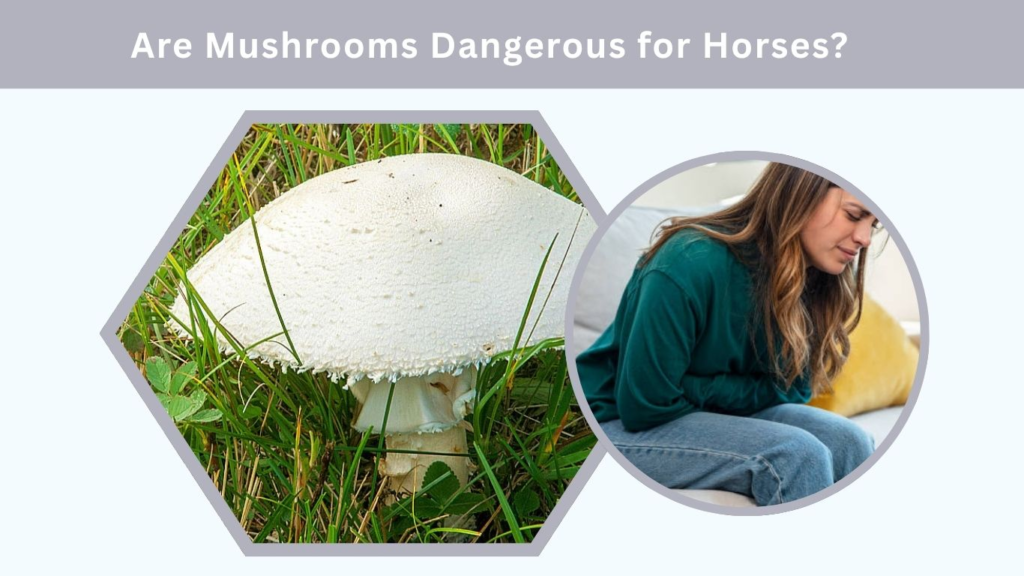
Wild mushrooms growing in pastures may sometimes be harmful to grazing horses. While horses usually avoid toxic plants naturally, curious animals may accidentally eat mushrooms during feeding. Some poisonous fungi can cause digestive problems, weakness, or nervous system symptoms. Horse owners should regularly inspect grazing fields and remove suspicious mushrooms when possible. Fast veterinary care is important if mushroom poisoning is suspected.
Can Horses Eat Mushrooms?
Horses occasionally nibble mushrooms while grazing, but most do not actively seek them out as food. Safe feeding practices help reduce accidental poisoning risks.
Signs of Mushroom Poisoning in Horses
- Loss of appetite
- Stomach discomfort
- Weakness or confusion
- Excessive drooling
- Trouble walking
How to Protect Horses From Toxic Mushrooms
- Check pastures regularly
- Remove unknown mushrooms
- Keep grazing areas clean
- Avoid wet overgrown fields
- Contact a veterinarian if symptoms appear
Tips for Safe Mushroom Foraging
Wild mushroom foraging can be enjoyable, but safety should always come first. Many edible mushrooms have dangerous look-alikes, and mistakes can be serious. Beginners should learn from experienced foragers and use trusted identification guides. Smell, gill color, habitat, bruising, and spore prints should all be checked before eating any mushroom collected from nature.
Important Safety Rules
- Never eat unidentified mushrooms
- Use multiple identification features
- Avoid polluted roadside areas
- Carry a mushroom field guide
- When unsure, do not eat it
You have not enough Humanizer words left. Upgrade your Surfer plan.
FAQs
Are horse mushrooms edible?
Yes, horse mushrooms are considered edible when correctly identified. They are popular among mushroom foragers because of their mild flavor and almond-like smell. However, they should never be eaten unless identification is completely certain, since some poisonous mushrooms closely resemble them.
What does a horse mushroom smell like?
Horse mushrooms usually have a sweet smell similar to almonds, anise, or licorice. This pleasant scent is one of the easiest identification features. A strong chemical or ink-like smell may indicate a poisonous look-alike such as the yellow stainer mushroom.
Can you eat mushrooms growing near horse manure?
Some edible mushrooms grow in manure-rich soil and can be eaten if properly identified and cooked. However, mushrooms growing directly on dung should be approached carefully because harmful or toxic species may also grow in those conditions.
How can you tell a horse mushroom from a yellow stainer?
The yellow stainer bruises bright yellow when handled and often smells like chemicals or disinfectant. Horse mushrooms usually smell sweet and almond-like instead. Checking bruising color, smell, and gill changes can help identify the correct species safely.
Are wild mushrooms poisonous to horses?
Some wild mushrooms are toxic to horses and may cause digestive or nervous system problems if eaten. Horse owners should regularly inspect pastures and remove suspicious fungi to reduce the risk of accidental mushroom poisoning.