
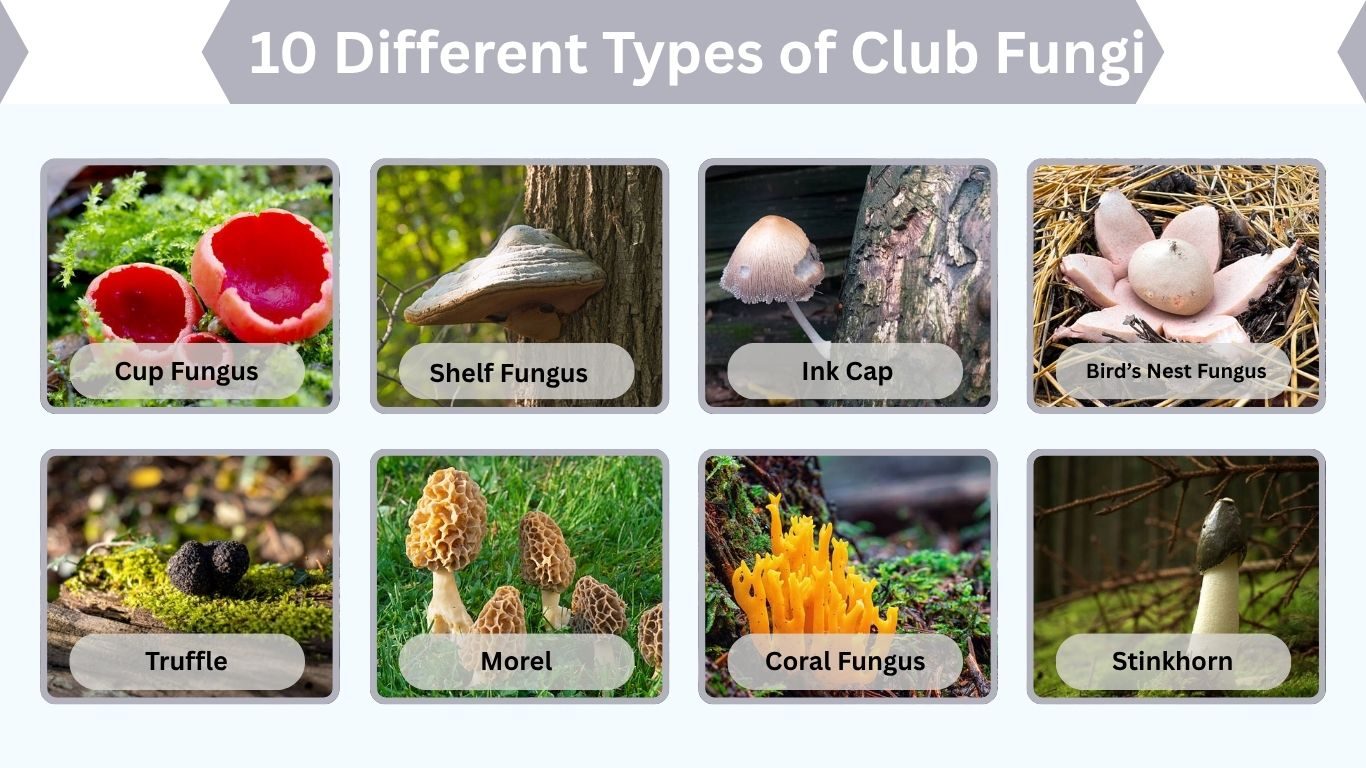
Club fungi are an important group of fungi known for their unique reproductive structures and wide variety of forms. They include mushrooms, puffballs, truffles, shelf fungi, and several other fascinating species found in forests, gardens, and grasslands worldwide. These fungi play a major role in decomposition, nutrient recycling, and ecosystem balance. Some club fungi are edible and highly valued in cooking, while others are studied for their ecological importance and unusual growth patterns. Understanding different types of club fungi helps reveal their contribution to nature and biodiversity.
1. Puffball
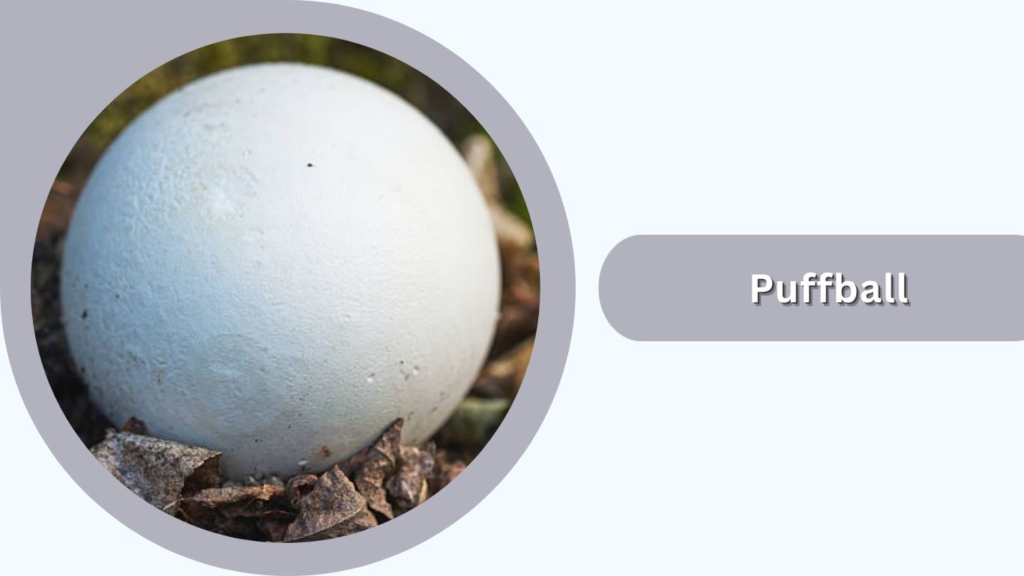
Puffballs are round-shaped club fungi commonly found in forests, gardens, and grassy fields. They are known for producing clouds of spores when mature and disturbed. Young puffballs are often edible and soft inside, while older ones become dry and powdery. These fungi play an important role in decomposition by breaking down dead organic matter in natural ecosystems.
Identification
- Round or pear-shaped body
- White or cream color when young
- No visible gills or cap
- Produces powdery spores at maturity
- Soft inside during early growth stages
Habitat
Puffballs usually grow in moist forests, grasslands, gardens, and woodland areas during late summer and autumn. They often appear after rainfall and may grow alone or in groups. These fungi prefer nutrient-rich soil containing decaying organic matter, which supports their growth and development throughout the growing season.
Reproduction
Puffballs reproduce by releasing millions of tiny spores into the air. As the fungus matures, its inner tissue dries into powder. Pressure from raindrops, animals, or human contact causes spores to escape through an opening in the outer layer. Wind then carries the spores to new locations for growth.
Importance
Puffballs help maintain healthy ecosystems by decomposing dead plants and organic material. This process returns nutrients to the soil and supports plant growth. Some species are edible when young and are used in cooking. They also contribute to biodiversity by serving as food sources for insects and animals.
2. Earthstar
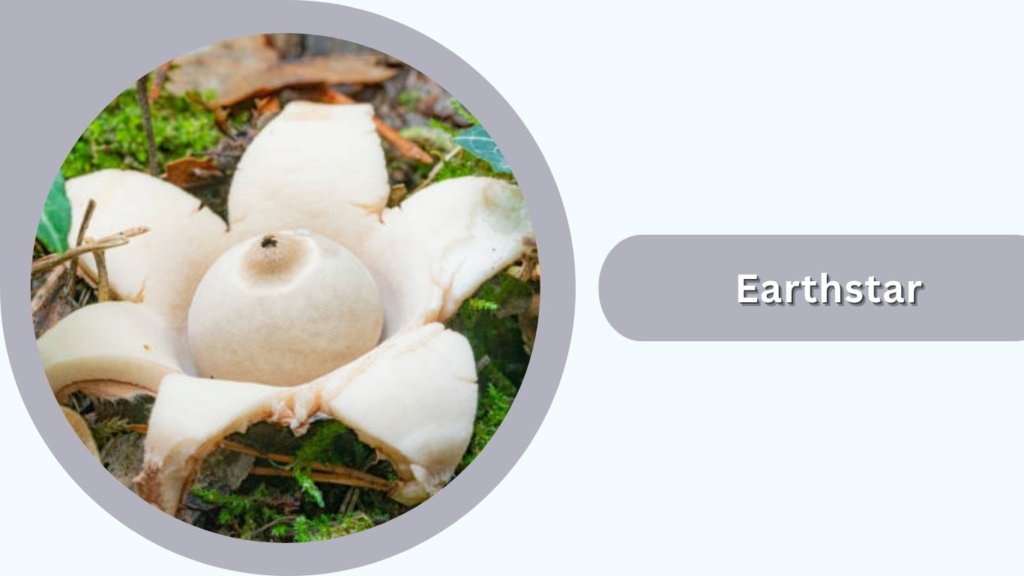
Earthstars are unusual club fungi recognized for their star-like outer layers that open as the fungus matures. They are commonly found on forest floors, especially in dry woodland environments. The inner spore sac remains in the center while the outer layer splits into pointed rays. Earthstars are valued for their unique appearance and important role in breaking down organic matter.
Identification
- Star-shaped outer rays surrounding a central spore sac
- Brown, gray, or tan coloration
- Outer layer opens when mature
- Dry and leathery texture
- Releases spores through a small hole at the top
Habitat
Earthstars usually grow in forests, woodland soil, and areas rich in decaying leaves or wood debris. They prefer dry environments and are often found beneath trees during autumn. These fungi grow directly on the ground and can appear alone or in small scattered groups across forest floors.
Reproduction
Earthstars reproduce through spores stored inside the central sac. When raindrops or physical pressure strike the fungus, spores escape through a small opening at the top. Wind spreads these spores to new areas where suitable moisture and organic material allow the fungus to grow and develop successfully.
Importance
Earthstars contribute to nutrient recycling by decomposing dead organic matter in forests and woodland ecosystems. This process enriches the soil and supports plant life. Although generally not edible, they are important in fungal biodiversity studies because of their distinctive structure and ecological role in natural habitats.
3. Stinkhorn
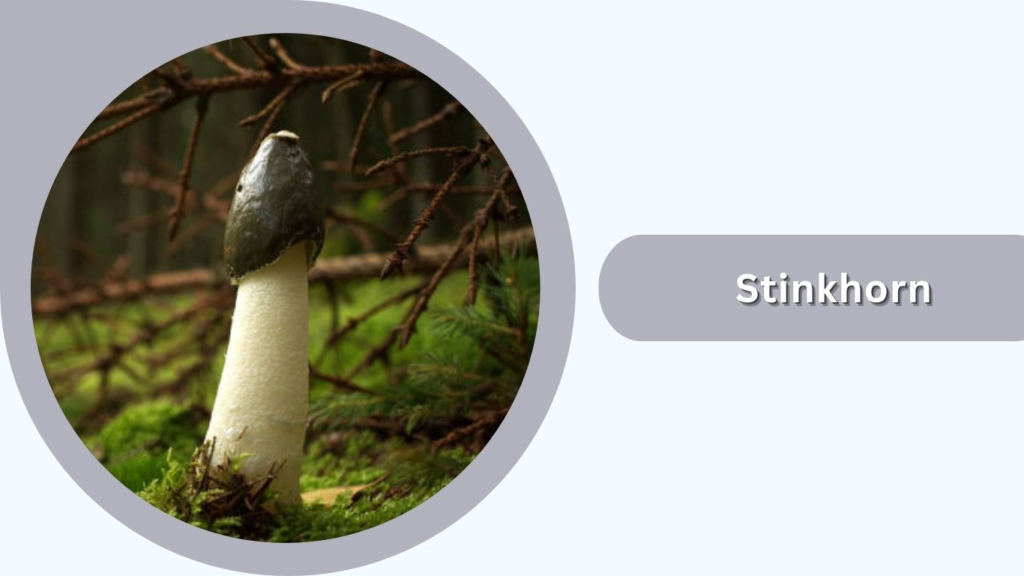
Stinkhorn fungi are unusual club fungi famous for their strong unpleasant smell and strange appearance. They often resemble horns, cages, or tentacles growing from the ground. Their odor attracts flies and insects, which help spread spores to new locations. Stinkhorns commonly appear in gardens, forests, and mulch-rich soil, especially during warm and wet environmental conditions.
Identification
- Tall horn-like or cage-shaped structure
- Strong foul odor similar to rotting meat
- Slimy spore-covered surface
- White egg-like structure at early stage
- Bright colors such as red, orange, or white
Habitat
Stinkhorn fungi commonly grow in forests, gardens, compost piles, and wood mulch during warm and rainy seasons. They thrive in moist environments rich in decaying organic matter. These fungi often appear suddenly after rainfall and may grow alone or in small clusters on nutrient-rich ground surfaces.
Reproduction
Stinkhorns reproduce through sticky spores carried by insects. Their foul smell attracts flies and beetles that land on the slimy spore mass. Spores stick to the insects’ bodies and spread to different areas. This unique reproduction method allows stinkhorn fungi to colonize new environments effectively and quickly.
Importance
Stinkhorn fungi play an important ecological role by decomposing dead organic material and recycling nutrients into the soil. Their interaction with insects also supports natural food chains. Although most species are not eaten, some young stinkhorns are considered edible before developing their mature foul-smelling structures.
4. Coral Fungus
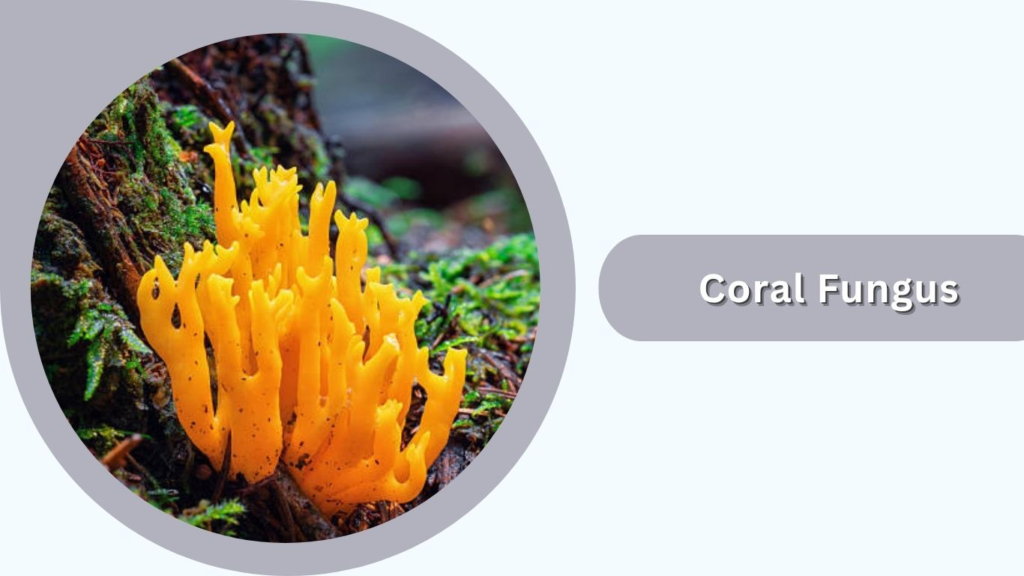
Coral fungi are branching club fungi that resemble underwater coral structures. They grow in forests and woodland areas, displaying colors such as white, yellow, pink, or orange. Their delicate branches form dense clusters rising from the soil or decaying wood. Coral fungi are important decomposers and contribute greatly to nutrient recycling in natural ecosystems worldwide.
Identification
- Branching coral-like appearance
- Multiple upright finger-shaped structures
- White, yellow, orange, or pink coloration
- Soft or brittle texture depending on species
- Grows in clustered formations
Habitat
Coral fungi are commonly found in forests, woodlands, and mossy areas with moist soil and decaying wood. They grow during autumn and thrive in cool, humid conditions. Some species grow directly on the ground, while others develop on fallen logs, tree roots, or decomposing plant material.
Reproduction
Coral fungi reproduce through microscopic spores produced on the outer surface of their branches. Wind carries these spores to suitable environments where moisture and nutrients support growth. Once conditions become favorable, the spores germinate and form new fungal networks that eventually develop into visible fruiting bodies.
Importance
Coral fungi help decompose dead organic matter, returning valuable nutrients to forest soil and supporting plant growth. They also contribute to biodiversity by providing food and shelter for insects and small organisms. Some species are edible, while others may cause stomach discomfort, requiring careful identification before consumption.
5. Morel
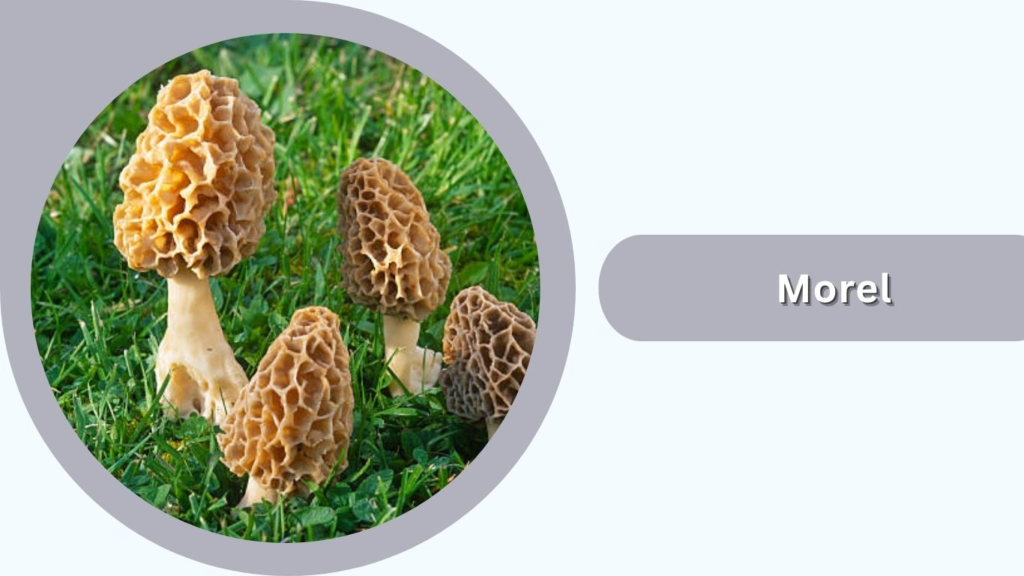
Morels are highly valued club fungi known for their honeycomb-shaped caps and rich earthy flavor. They are commonly found in forests, especially during spring. Morels are popular edible mushrooms and are often collected by mushroom hunters worldwide. Their unique appearance makes them easy to recognize, although careful identification is still important for safe consumption and study.
Identification
- Honeycomb-like cap with deep pits and ridges
- Cone-shaped or oval structure
- Yellow, brown, or black coloration
- Hollow interior from cap to stem
- Attached cap connected directly to the stem
Habitat
Morels usually grow in forests, woodland edges, burned areas, and near decaying trees during spring. They prefer moist soil rich in organic matter and are often found near elm, ash, or apple trees. These fungi may grow alone or in scattered groups after seasonal rainfall and warming temperatures.
Reproduction
Morels reproduce through tiny spores released from the surface of their honeycomb-like caps. Wind carries these spores to suitable environments where moisture and nutrients support fungal growth. Underground fungal networks develop first, eventually producing visible fruiting bodies when environmental conditions become favorable for reproduction and development.
Importance
Morels are highly prized edible fungi and are widely used in cooking because of their unique flavor and texture. They also contribute to forest ecosystems by decomposing organic material and recycling nutrients into the soil. Their seasonal appearance supports biodiversity and provides food sources for insects and wildlife.
6. Truffle
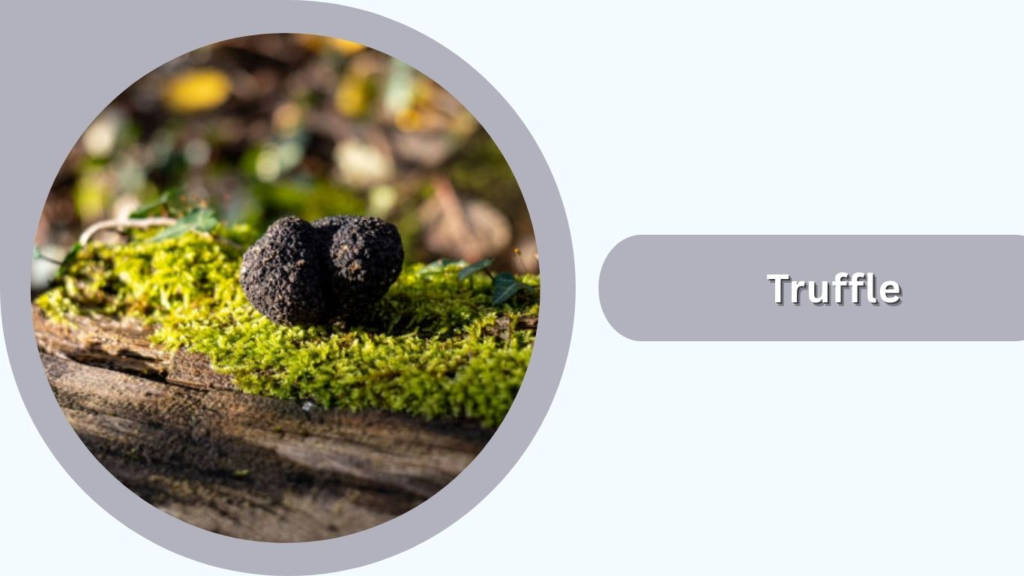
Truffles are underground club fungi highly valued for their strong aroma and culinary importance. They grow near the roots of certain trees and are considered expensive delicacies in many countries. Unlike most mushrooms, truffles remain hidden beneath the soil surface. Animals such as dogs and pigs are often used to locate mature truffles in forests.
Identification
- Grows underground near tree roots
- Round or irregular lumpy shape
- Dark brown, black, or whitish color
- Strong earthy aroma
- Rough outer surface with dense interior texture
Habitat
Truffles commonly grow in forests beneath oak, hazel, pine, and beech trees. They prefer well-drained soil rich in minerals and organic matter. These fungi form close relationships with tree roots and usually develop in cool environments with moderate moisture levels throughout the growing season and reproductive cycle.
Reproduction
Truffles reproduce through spores contained inside their underground fruiting bodies. Animals attracted by the strong smell dig up and eat the truffles. The spores pass through the animals’ digestive systems and spread into new locations through waste, allowing the fungi to colonize suitable environments for future growth.
Importance
Truffles are economically important because they are highly prized in the food industry for their unique flavor and aroma. Ecologically, they support forest health by forming beneficial relationships with tree roots that improve nutrient absorption. They also contribute to biodiversity by interacting with animals involved in spore dispersal.
7. Bird’s Nest Fungus
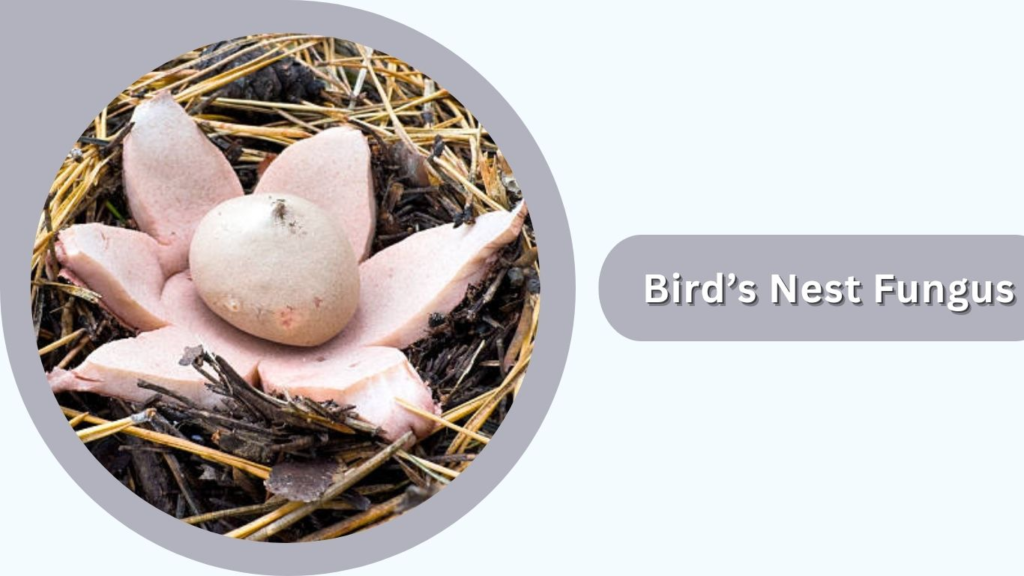
Bird’s Nest fungi are tiny club fungi that resemble miniature bird nests filled with eggs. The cup-shaped structures contain spore packets that look like small eggs inside the nest. These fungi commonly grow on decaying wood and mulch in moist environments. Their unusual appearance and unique spore dispersal method make them fascinating organisms in nature.
Identification
- Small cup-shaped fruiting body
- Contains tiny egg-like spore packets
- Brown, gray, or cream coloration
- Grows in clusters on decaying material
- Smooth or ridged inner surface
Habitat
Bird’s Nest fungi usually grow on rotting wood, bark, compost, and mulch in damp environments. They are commonly found in forests, gardens, and woodland areas after rainfall. These fungi thrive in places rich in decaying organic matter and often appear in groups during warm and humid seasons.
Reproduction
Bird’s Nest fungi reproduce using spore-containing structures called peridioles. Raindrops hitting the cup-shaped fungus force the peridioles out into the surrounding environment. The spore packets attach to nearby surfaces and eventually release spores, allowing new fungal growth when moisture and nutrients become available in suitable habitats.
Importance
Bird’s Nest fungi help decompose dead organic material, supporting nutrient recycling in forests and gardens. Their activity improves soil quality and contributes to ecosystem balance. Although not edible because of their tiny size and tough texture, they are important for scientific study due to their unusual reproductive strategy.
8. Ink Cap
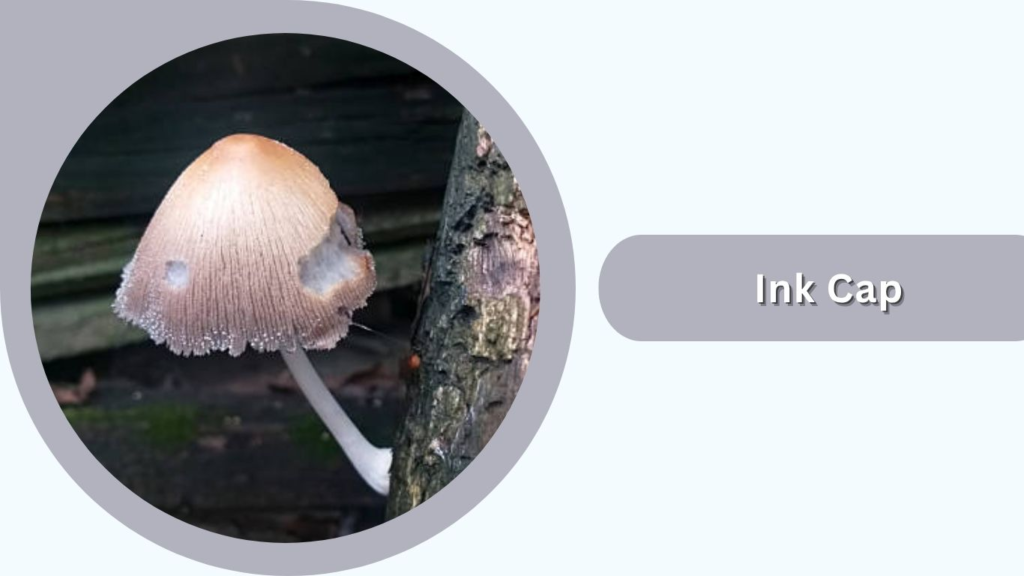
Ink Cap fungi are delicate club fungi known for their ability to dissolve into a black liquid as they mature. This process gives them their common name because the liquid resembles ink. They grow quickly in moist environments and are commonly found in lawns, forests, and decaying wood. Some species are edible when harvested at young stages.
Identification
- Tall thin stem with bell-shaped cap
- White, gray, or black coloration
- Cap edges curl upward with age
- Dissolves into black liquid at maturity
- Fragile and soft texture
Habitat
Ink Cap fungi commonly grow in gardens, lawns, forests, compost piles, and rotting wood. They prefer damp environments rich in decaying organic matter and often appear after rainfall. These fungi usually grow in clusters and are most commonly seen during cool and moist seasons throughout the year.
Reproduction
Ink Caps reproduce through spores produced beneath their caps. As the fungus matures, the cap dissolves into a dark liquid containing spores. This liquid spreads spores into the environment, where wind, water, or contact with surfaces allows new fungal colonies to develop under favorable growing conditions.
Importance
Ink Cap fungi play an essential role in decomposition by breaking down dead plant material and recycling nutrients into the soil. Some species are edible and valued in cooking when young. They also contribute to biodiversity by supporting microorganisms and insects that depend on decomposing organic matter in ecosystems.
9. Shelf Fungus
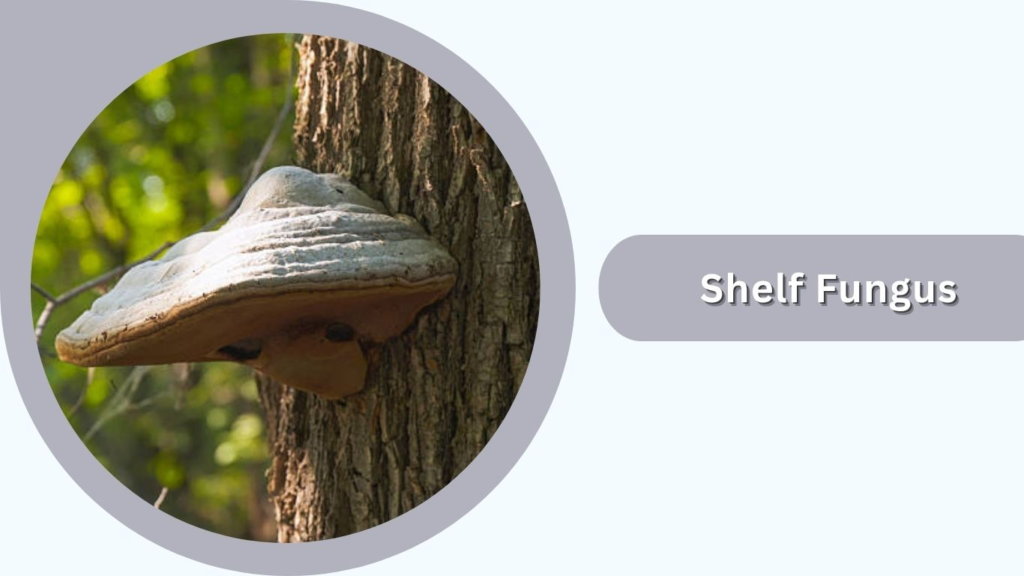
Shelf fungi are hard, woody club fungi that grow on tree trunks and fallen logs in layered shelf-like formations. They are also called bracket fungi because of their shape. These fungi are important decomposers in forest ecosystems and can survive for long periods. Some species are colorful, while others appear dull brown or gray in appearance.
Identification
- Shelf or bracket-shaped growth
- Hard woody texture
- Attached directly to trees or logs
- Brown, white, gray, or colorful surfaces
- Grows in overlapping layers
Habitat
Shelf fungi commonly grow on living trees, dead logs, stumps, and decaying wood in forests and woodland areas. They thrive in moist environments where wood decomposition occurs naturally. These fungi may remain attached to the same surface for several years, especially in cool and humid conditions.
Reproduction
Shelf fungi reproduce through microscopic spores released from pores located underneath the fruiting body. Wind carries the spores to new surfaces where moisture and decaying wood support fungal growth. Once established, underground fungal networks spread through wood and eventually produce new shelf-like fruiting structures.
Importance
Shelf fungi are important decomposers that break down dead wood and recycle nutrients into forest ecosystems. Some species are used in traditional medicine and scientific research because of their chemical compounds. They also provide habitats for insects and microorganisms that depend on decaying wood for survival.
10. Cup Fungus
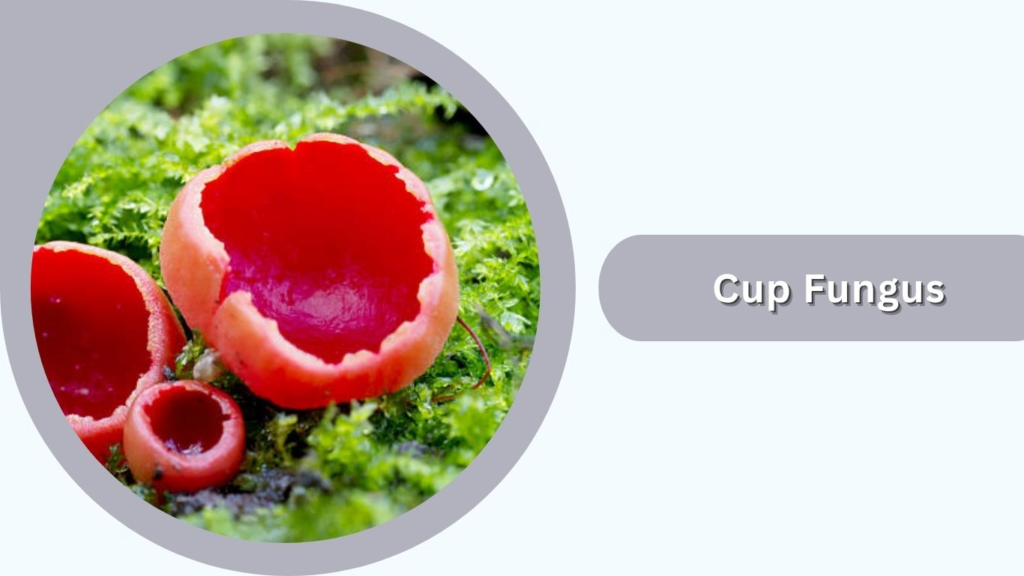
Cup fungi are small to medium-sized fungi recognized for their cup-shaped fruiting bodies. They are commonly found on soil, wood, or decaying plant material in moist environments. Their open cup structure helps release spores into the air efficiently. Cup fungi display various bright or dull colors and are important decomposers in many natural ecosystems worldwide.
Identification
- Cup or bowl-shaped fruiting body
- Smooth inner surface containing spores
- Red, orange, brown, yellow, or white coloration
- Soft or rubbery texture
- Grows on soil, wood, or decaying matter
Habitat
Cup fungi commonly grow in forests, gardens, and damp woodland areas rich in decaying organic material. They are often found on rotting wood, leaf litter, or moist soil after rainfall. These fungi thrive in cool and humid conditions and may appear alone or in dense scattered groups.
Reproduction
Cup fungi reproduce by releasing spores from the inner surface of their cup-shaped bodies. Wind carries the spores to new environments where suitable moisture and nutrients support fungal growth. Once established, fungal threads spread through organic material and eventually form new fruiting bodies for reproduction.
Importance
Cup fungi help decompose dead plants and organic matter, returning nutrients to the soil and supporting ecosystem health. Their activity improves soil fertility and promotes plant growth. Some species are studied for their ecological significance, while a few edible types are collected and used in culinary practices.
FAQs
What are club fungi?
Club fungi are a group of fungi that produce spores on specialized club-shaped structures called basidia. They include mushrooms, puffballs, shelf fungi, and many other species. These fungi are important in ecosystems because they help decompose dead organic matter and recycle nutrients into the environment.
Where are club fungi commonly found?
Club fungi are commonly found in forests, grasslands, gardens, and damp woodland areas. They usually grow on soil, decaying wood, fallen leaves, or tree trunks. Moist and humid conditions support their growth, especially during rainy seasons and cooler parts of the year.
Are all club fungi edible?
No, not all club fungi are edible. Some species are safe and commonly eaten, such as morels and certain puffballs, while others can be poisonous or harmful. Proper identification is essential before consuming any wild fungus because toxic species may resemble edible varieties closely.
How do club fungi reproduce?
Club fungi reproduce through microscopic spores produced on club-shaped structures called basidia. These spores spread by wind, water, insects, or animals. When spores land in suitable environments with moisture and nutrients, they grow into fungal networks that later form new fruiting bodies.
Why are club fungi important in nature?
Club fungi are important because they break down dead plants, wood, and other organic materials. This decomposition process returns nutrients to the soil, helping plants grow. They also support biodiversity by providing food and habitats for insects, animals, and microorganisms in many ecosystems.