
The common puffball mushroom is a popular wild fungus known for its round shape, white interior, and edible young stage. Found in grassy fields, forest edges, lawns, and woodland trails, this mushroom attracts foragers because of its mild flavor and unique appearance. The scientific name of the common puffball is Lycoperdon perlatum, and it belongs to a group of fungi that release spores through a small opening when mature. Learning how to identify common puffballs correctly is extremely important because some poisonous mushrooms can resemble young puffballs during early growth stages.
What Is a Common Puffball Mushroom?
The common puffball is a small to medium-sized fungus belonging to the puffball mushroom family. Unlike typical mushrooms that grow with visible caps and gills, puffballs develop as rounded balls filled with spores.
Young common puffballs contain firm white flesh inside, making them edible when harvested at the correct stage. As the fungus matures, the interior changes color and eventually transforms into a powdery spore mass used for reproduction.
Scientific Name and Classification
The scientific name of the common puffball is Lycoperdon perlatum. It belongs to the fungal kingdom and is classified within the phylum Basidiomycota.
Several features help identify this species within the puffball group.
- Rounded or pear-shaped body
- White outer skin with small spines
- Soft white interior when young
- Spore-producing center at maturity
- Absence of visible gills beneath the surface
These characteristics help separate puffballs from many other common mushrooms found in forests and grassy areas.
What Does a Common Puffball Look Like?
Young common puffballs usually appear bright white or cream-colored with a slightly textured outer surface. Many specimens develop tiny wart-like bumps or spines that gradually wear away with age.
Inside, edible puffballs should remain completely white and firm. Mature puffballs become yellow, olive, or brown internally as spores develop. Once discoloration begins, the mushroom is no longer considered good for eating.
Common Puffball Habitat and Growth
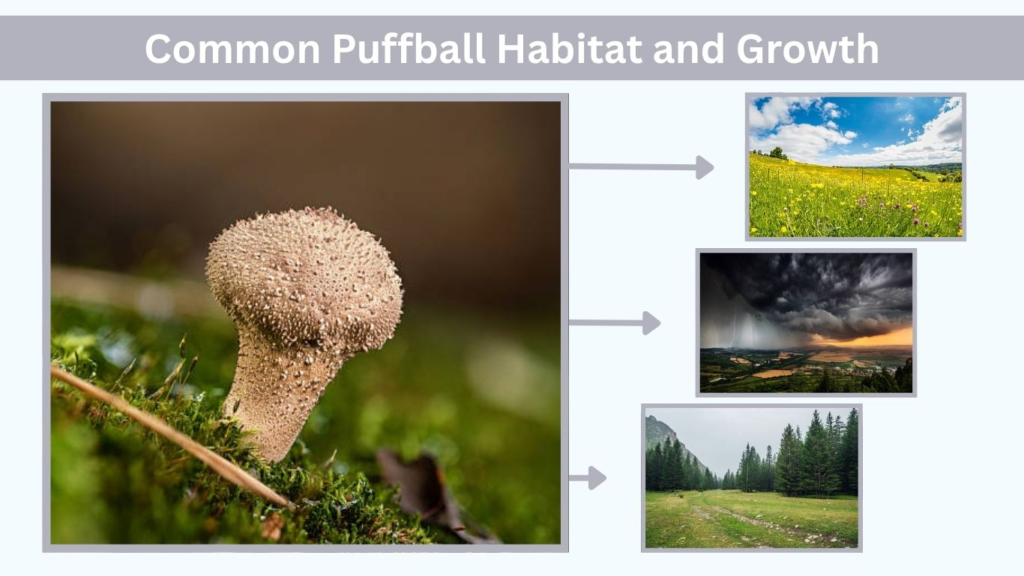
Common puffballs grow in a wide range of environments where moisture and organic material are available. They often appear after rainfall during late summer and autumn when fungal growth conditions improve.
Unlike some woodland mushrooms, common puffballs frequently grow in lawns and grassy spaces, making them easy to spot in parks, gardens, and open fields.
Where Do Common Puffballs Grow?
The species thrives in nutrient-rich environments with moist soil and decaying organic matter.
Common habitats include:
- Grasslands and meadows
- Forest edges and woodland trails
- Lawns and backyard gardens
- Mossy areas with damp soil
- Open spaces after seasonal rainfall
Because puffballs depend on organic decomposition, healthy soil conditions strongly influence their growth patterns.
Common Puffballs in North America
Common puffballs are widespread throughout North America and appear across many regions of Canada and the United States. They are especially common in Ontario, Alberta, Quebec, Montana, Idaho, and the Pacific Northwest.
Seasonal rainfall and cool autumn temperatures often create ideal conditions for large puffball growth in forests and grassy environments.
Are Common Puffballs Edible?
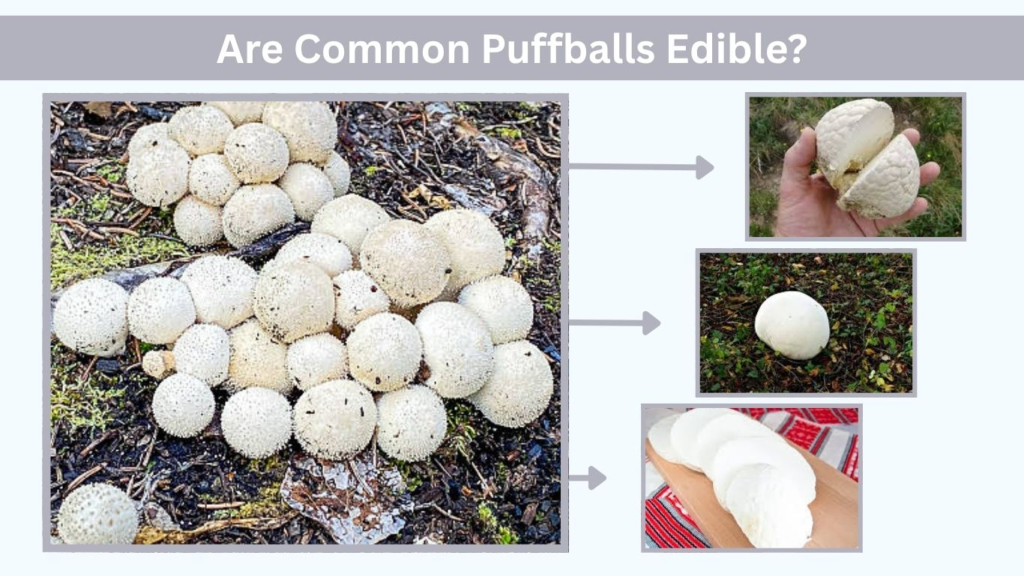
Common puffballs are considered edible when harvested young and properly identified. Many foragers enjoy them because they have a mild taste and soft texture that absorbs flavors easily during cooking.
Correct identification is extremely important because some poisonous mushrooms resemble puffballs during early stages of growth.
Is the Common Puffball Edible?
A common puffball is edible only when the inside remains completely white and solid. Any yellow, brown, or dark discoloration indicates maturity and possible spoilage.
Safe edible puffballs should have:
- Pure white flesh inside
- Soft but firm texture
- No visible gills or internal structures
- Fresh earthy smell
- Smooth clean interior when sliced open
Foragers should always cut puffballs in half before eating them to confirm the interior is fully white and free from hidden structures.
Common Puffball Taste and Texture
The flavor of common puffballs is mild, earthy, and slightly nutty. Their soft interior absorbs oils, herbs, and seasonings well, making them useful in many mushroom recipes.
Some people compare the texture to tofu or soft bread when cooked properly. Because the taste is gentle, puffballs are commonly fried, sautéed, grilled, or added to soups and pasta dishes.
Dangerous Puffball Look-Alikes
One of the most important aspects of puffball identification involves recognizing dangerous look-alikes. Certain poisonous fungi may resemble young puffballs before they fully develop.
Mistaken identification can be extremely dangerous, especially when immature toxic mushrooms are collected accidentally.
Common Puffball vs Earthball
Earthballs are one of the most common toxic puffball look-alikes. Unlike edible puffballs, earthballs usually develop darker interiors much earlier and have thicker, rougher outer skin.
Important differences include:
- Earthballs often feel harder and heavier
- Interior flesh darkens quickly
- Outer skin appears thicker and rougher
- Mature earthballs contain dark purple-black spores
- Many earthballs are poisonous or inedible
Careful inspection of the inside remains one of the safest identification methods.
Puffball vs Death Cap Mushroom
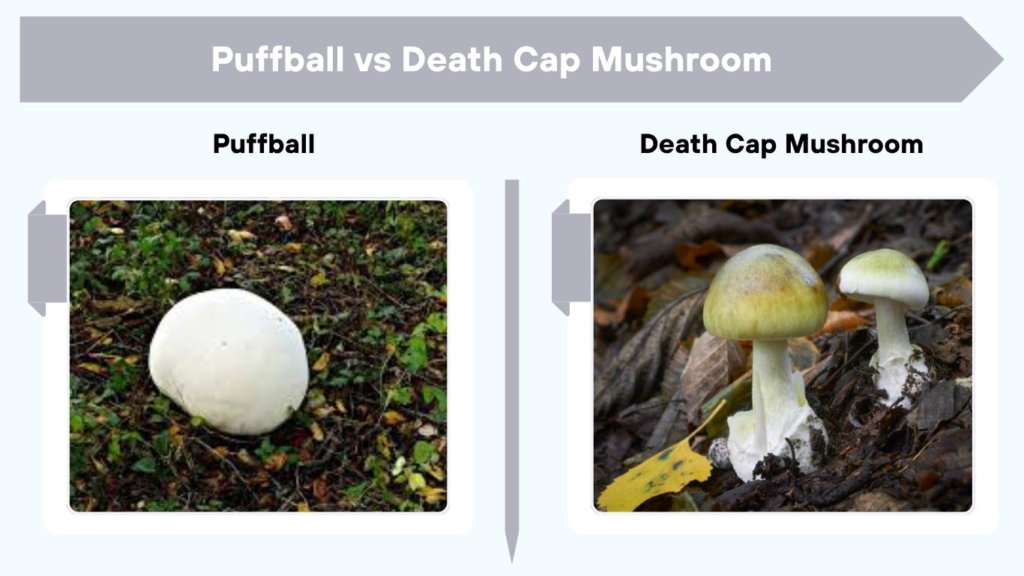
Young death cap mushrooms can sometimes resemble puffballs before their caps and stems emerge fully. However, cutting the mushroom open reveals developing internal structures that true puffballs do not possess.
Unlike puffballs, immature death caps contain visible developing caps, stems, and gill structures inside the mushroom body. This difference is critical because death cap mushrooms are highly poisonous and potentially deadly.
Common Puffball Look-Alikes
Several mushroom species can resemble common puffballs during early growth stages, making careful identification extremely important for safe foraging. Beginners should avoid eating any wild puffball unless the interior has been checked carefully by slicing it open.
False puffballs and immature toxic mushrooms are the most common causes of dangerous identification mistakes.
Common Puffball Look-Alikes
Foragers should watch for several species that may appear similar to edible puffballs.
- Earthballs with dark interiors
- Immature amanita mushrooms
- False puffball fungi
- Pear-shaped puffball variations
- Small toxic woodland fungi
Proper identification always requires examining both the outer texture and the internal structure of the mushroom before consumption.
How to Cook Common Puffball Mushrooms
Common puffballs are versatile edible mushrooms that can be prepared in several different ways. Their mild flavor makes them suitable for frying, grilling, roasting, and adding to soups or pasta dishes.
Fresh puffballs should be cleaned gently with a dry cloth or soft brush to remove dirt before cooking. Washing them heavily with water may affect texture because the mushroom flesh absorbs moisture easily.
Preparing Common Puffballs for Cooking
Several preparation steps help improve flavor and texture before cooking.
- Slice away dirty or damaged areas
- Remove tough outer skin if necessary
- Cut the mushroom into even slices
- Confirm the inside is fully white
- Use fresh mushrooms soon after harvesting
Young puffballs generally provide the best flavor and texture because older specimens become soft and spore-filled.
How to Fry Common Puffball Mushrooms
Frying is one of the most popular ways to cook common puffballs. Thick slices can be sautéed in butter or oil until golden brown on both sides.
Some cooks coat puffball slices with breadcrumbs or flour before frying to create a crisp outer texture. Garlic, herbs, black pepper, and butter are commonly used seasonings because they complement the mushroom’s mild earthy flavor.
Common Puffball Mushroom Recipes
Puffballs are used in a variety of recipes because they absorb flavors easily during cooking.
Popular recipe ideas include:
- Butter-fried puffball slices
- Creamy mushroom soups
- Grilled puffball steaks
- Breaded puffball appetizers
- Puffball pasta and stir fry dishes
Because of their soft texture, puffballs cook quickly and work well in simple recipes with light seasoning.
Common Puffball Biology and Ecology
Common puffballs play an important ecological role as decomposer fungi. They help break down dead plant material and recycle nutrients back into the soil, supporting healthy ecosystems and plant growth.
Unlike green plants, puffballs do not produce their own food. Instead, they absorb nutrients from organic matter in the environment.
How Common Puffballs Reproduce
As puffballs mature, the white interior gradually transforms into millions of tiny spores. Eventually, a small opening develops at the top of the mushroom.
When raindrops, wind, or physical pressure strike the puffball, spores are released into the air in visible clouds. This process allows the fungus to spread and reproduce in new locations.
What Do Common Puffballs Eat?
Common puffballs feed on decaying organic material found in soil and plant debris.
Their nutrient sources include:
- Dead leaves and grasses
- Decomposing wood fragments
- Organic soil material
- Plant waste and roots
- Moist forest debris
This decomposing activity makes puffballs important contributors to nutrient recycling in natural ecosystems.
Common Puffball in the UK and Europe
Common puffballs are widely distributed across the United Kingdom and Europe. They frequently appear in woodland paths, grassy parks, meadows, and countryside trails during damp autumn weather.
Because they are easy to recognize when young, common puffballs are among the most commonly collected edible mushrooms by beginner foragers in many European regions.
Seasonal Growth Patterns
Common puffballs usually grow during late summer and autumn when rainfall and cooler temperatures increase fungal activity.
Important seasonal conditions include:
- Moist soil after rainfall
- Cool nighttime temperatures
- Organic-rich grassy areas
- Humid woodland environments
- Reduced summer heat
Large clusters may appear suddenly after wet weather and remain visible for only a short period before maturing.
Common Puffball Facts
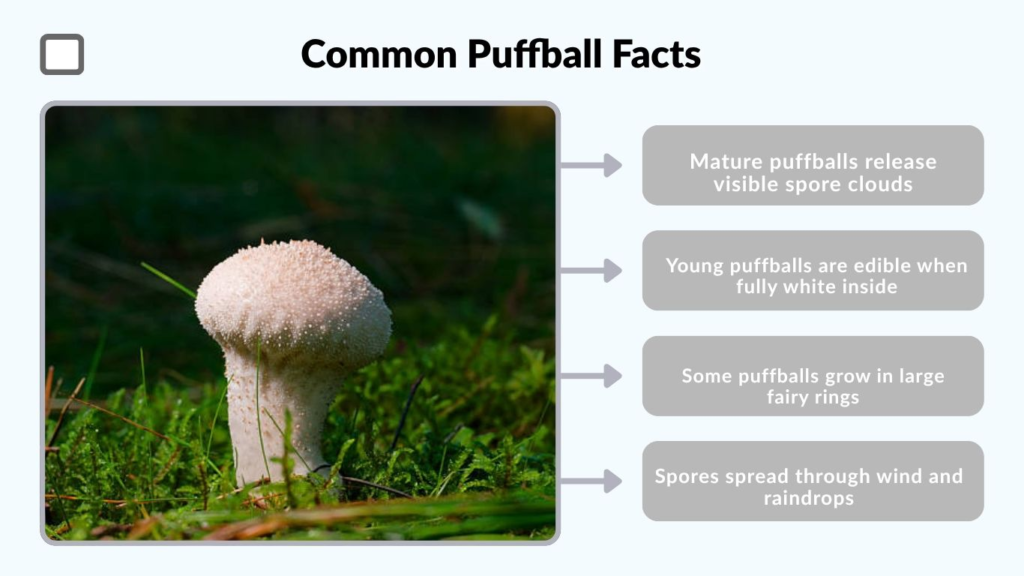
The common puffball is one of the most recognizable fungi found in forests and grassy habitats. Its unusual spore-release system and edible young stage make it especially popular among mushroom enthusiasts and students studying fungi.
Unlike many mushrooms, puffballs release spores through pressure rather than open gills beneath a cap.
Fun Facts About Common Puffballs
Several interesting facts make puffballs unique among fungi.
- Mature puffballs release visible spore clouds
- Young puffballs are edible when fully white inside
- Some puffballs grow in large fairy rings
- Spores spread through wind and raindrops
- Puffballs belong to decomposer fungi groups
These characteristics help puffballs play an important role in ecosystems while also attracting attention from mushroom foragers and nature enthusiasts.
FAQs
Can you eat common puffball mushrooms raw?
Common puffball mushrooms are generally safer and more enjoyable when cooked rather than eaten raw. Cooking improves texture, flavor, and digestibility. Only young puffballs with a completely white interior should ever be considered for consumption, and proper identification is essential before eating any wild mushroom.
How do you know if a puffball is edible?
An edible puffball must be pure white and solid inside when sliced open. There should be no gills, stem shapes, or dark discoloration. If the interior appears yellow, brown, purple, or contains developing mushroom structures, the puffball should not be eaten.
What happens when puffballs turn brown inside?
When puffballs turn brown inside, they are entering the mature spore-producing stage. At this point, the texture becomes powdery and unsuitable for eating. Mature puffballs release spores through a small opening at the top when disturbed by wind, rain, or pressure.
Are all white puffballs safe to eat?
No, not all white puffballs are safe to eat. Some dangerous mushrooms, including immature death caps and other amanita species, may resemble puffballs during early growth stages. Cutting the mushroom open completely is necessary to confirm that no internal stem or gill structures are present.
How long do common puffballs last after picking?
Fresh common puffballs are best eaten within a few days after harvesting. They should be stored in a cool, dry place or refrigerated to maintain quality. Puffballs quickly become soft and discolored as they age, especially if exposed to excess moisture or warm temperatures.