
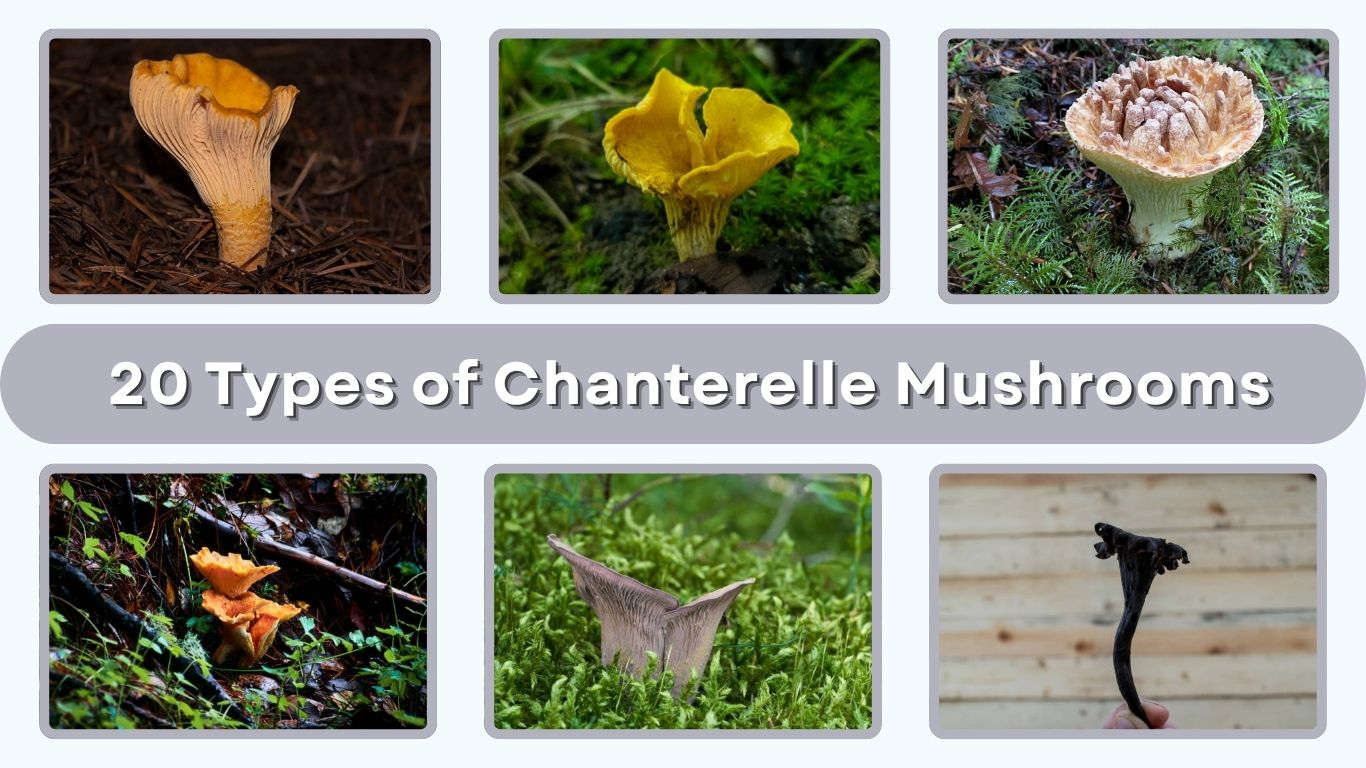
Chanterelle mushrooms are among the most prized wild mushrooms because of their rich flavor, fruity aroma, and beautiful funnel-shaped appearance. Found in forests around the world, chanterelles belong to several closely related groups that vary in color, size, and habitat. Some species display bright golden shades, while others appear black, purple, or trumpet-shaped. These mushrooms commonly grow in association with trees and play an important role in woodland ecosystems. This guide explores 20 fascinating types of chanterelle mushrooms, including their identification features, habitats, edibility, and the unique characteristics that make each species stand out.
1. Cantharellus cibarius

Cantharellus cibarius, commonly known as the Golden Chanterelle, is one of the most famous and widely collected wild edible mushrooms in the world. It is admired for its golden-yellow color, fruity aroma, and rich flavor. This mushroom commonly grows in forests during summer and autumn and is highly valued by mushroom foragers and chefs. Unlike many mushrooms with true gills, chanterelles have blunt ridges beneath the cap, which helps distinguish them from toxic look-alike species.
Identification
- Bright golden-yellow to orange-yellow cap coloration
- Wavy and irregular cap margins
- Thick blunt ridges instead of true gills
- Ridges run down the stem slightly
- Firm pale yellow flesh with a fruity aroma
- Smooth solid stem matching the cap color
- Funnel-shaped cap develops with age
- Spore print is pale yellow to creamy white
Habitat
Cantharellus cibarius commonly grows in deciduous and coniferous forests, especially near oak, beech, pine, and spruce trees. It prefers moist woodland soil rich in organic matter and often appears among moss, grass, and leaf litter. Fruiting bodies usually emerge from summer through autumn after rainfall. The mushroom may grow singly, scattered, or in large groups across forest floors. Like other chanterelles, it forms mycorrhizal relationships with nearby trees, supporting nutrient exchange and contributing to healthy woodland ecosystems.
Edibility
Cantharellus cibarius is considered one of the finest edible wild mushrooms. It has a rich nutty flavor, meaty texture, and a pleasant fruity scent often compared to apricots. The mushroom is commonly sautéed, grilled, dried, or added to soups and sauces. Because of its popularity, it is widely sold in local markets and gourmet restaurants. Proper identification remains important because poisonous mushrooms such as the Jack-o’-lantern mushroom can resemble chanterelles to inexperienced foragers.
Distinct Features
The most recognizable feature of Cantharellus cibarius is its blunt ridge-like folds beneath the cap rather than thin true gills. Its golden-yellow coloration and fruity aroma further help with identification. The mushroom also has thick firm flesh that rarely becomes fragile like many other woodland mushrooms. Mature specimens often develop wavy cap edges and shallow funnel shapes. These characteristics make the Golden Chanterelle one of the easiest and most prized chanterelle mushrooms to recognize in forest environments.
2. Cantharellus formosus

Cantharellus formosus, commonly known as the Pacific Golden Chanterelle, is a highly prized edible mushroom native to western North America. It is especially common in coniferous forests along the Pacific coast and is valued for its bright golden color, fruity aroma, and excellent flavor. This chanterelle is frequently harvested commercially and is popular in gourmet cooking. Its attractive appearance and association with evergreen forests make it one of the best-known chanterelle species in the Pacific Northwest.
Identification
- Golden-yellow to orange-yellow cap coloration
- Wavy and uneven cap margins
- Thick blunt ridges instead of true gills
- Ridges extend slightly down the stem
- Smooth solid yellow stem
- Firm pale yellow flesh with a fruity scent
- Funnel-shaped cap develops in mature specimens
- Spore print is pale yellow to creamy white
Habitat
Cantharellus formosus commonly grows in coniferous forests, especially near Douglas fir, spruce, and hemlock trees. It prefers moist woodland soil rich in moss and decomposing needles. Fruiting bodies usually emerge from late summer through autumn, particularly after seasonal rainfall. The mushroom often grows singly or in large scattered groups across forest floors. Like other chanterelles, it forms mycorrhizal relationships with nearby trees, helping exchange nutrients and supporting healthy forest ecosystems throughout temperate woodland environments.
Edibility
Cantharellus formosus is considered an excellent edible mushroom and is highly valued for its rich flavor and firm texture. It is commonly sautéed, grilled, dried, or used in soups, sauces, and gourmet dishes. The mushroom’s fruity aroma becomes more noticeable during cooking, adding to its culinary appeal. Because of its popularity, it is often sold in specialty food markets. Careful identification remains important since some toxic mushrooms may resemble chanterelles to inexperienced mushroom collectors.
Distinct Features
The most recognizable features of Cantharellus formosus are its bright golden coloration, fruity smell, and thick ridge-like folds beneath the cap. Unlike mushrooms with thin true gills, this species has blunt ridges that feel smooth and sturdy. Its strong association with Pacific conifer forests also helps distinguish it from chanterelles found in other habitats. Mature mushrooms often develop deeply wavy cap edges and shallow funnel shapes. These characteristics make it one of the most recognizable chanterelle species in western North America.
3. Cantharellus lateritius

Cantharellus lateritius, commonly known as the Smooth Chanterelle, is a distinctive edible chanterelle species recognized for its nearly smooth underside instead of well-developed ridges. It commonly grows in hardwood forests during summer and autumn, especially in eastern North America. This mushroom is appreciated for its mild flavor, thick flesh, and attractive yellow-orange coloration. Because its underside lacks the strong ridges seen in many chanterelles, it can appear unusual compared to other members of the chanterelle group.
Identification
- Bright yellow to orange-yellow cap coloration
- Smooth or nearly smooth underside beneath the cap
- Wavy and irregular cap margins
- Funnel-shaped cap develops with age
- Thick firm flesh with a mild fruity aroma
- Smooth yellow stem blending with the cap color
- Lacks true gills beneath the cap
- Spore print is pale yellow to creamy white
Habitat
Cantharellus lateritius commonly grows in deciduous forests, especially near oak and other hardwood trees. It prefers warm moist woodland soil rich in organic material and often appears among leaves and moss after rainfall. Fruiting bodies usually emerge from summer through autumn and may grow singly or in scattered groups across forest floors. Like other chanterelles, this species forms mycorrhizal relationships with nearby trees, helping support nutrient exchange and contributing to healthy woodland ecosystems in temperate regions.
Edibility
Cantharellus lateritius is considered an excellent edible mushroom and is valued for its meaty texture and mild flavor. It is commonly sautéed, grilled, or added to soups and sauces. The mushroom’s thick flesh holds up well during cooking, making it popular among mushroom enthusiasts. Because the underside appears smoother than typical chanterelles, beginners should identify it carefully to avoid confusion with unrelated mushrooms. Fresh young specimens are generally preferred for the best texture and flavor.
Distinct Features
The most distinctive feature of Cantharellus lateritius is the unusually smooth underside beneath the cap. Unlike most chanterelles with clear ridge-like folds, this species often has only faint wrinkles or nearly flat surfaces underneath. Its bright yellow coloration, wavy cap edges, and thick flesh also help with recognition. The mushroom’s preference for hardwood forests further supports identification. These combined characteristics make the Smooth Chanterelle one of the more unusual and recognizable chanterelle species found in woodland habitats.
4. Cantharellus cinnabarinus

Cantharellus cinnabarinus, commonly known as the Red Chanterelle, is a small but striking chanterelle species admired for its vivid red to reddish-orange coloration. This mushroom commonly grows in hardwood forests during summer and autumn and is especially noticeable against green moss and leaf litter. Although smaller than many chanterelles, it is considered edible and is appreciated for its delicate flavor and attractive appearance. Its bright color makes it one of the easiest chanterelles to spot in woodland environments.
Identification
- Bright red to reddish-orange cap coloration
- Small to medium mushroom size
- Wavy and uneven cap margins
- Thick blunt ridges instead of true gills
- Ridges extend slightly down the stem
- Slender reddish stem matching the cap color
- Flesh is pale orange to yellowish
- Spore print is pale yellow to creamy white
Habitat
Cantharellus cinnabarinus commonly grows in deciduous forests, especially near oak, beech, and other hardwood trees. It prefers moist woodland soil rich in leaf litter and organic material. Fruiting bodies usually appear from summer through autumn, particularly after rainfall. The mushroom may grow singly or in scattered groups across mossy forest floors. Like other chanterelles, it forms mycorrhizal relationships with nearby trees, helping support nutrient exchange and contributing to healthy woodland ecosystems in temperate forest regions.
Edibility
Cantharellus cinnabarinus is considered an edible mushroom and is valued for its mild flavor and tender texture. It is commonly sautéed, added to sauces, or mixed with other wild mushrooms in cooking. Because the mushroom is usually smaller than golden chanterelles, large harvests may be less common. Proper identification is important because several small reddish woodland mushrooms can resemble chanterelles to inexperienced collectors. Fresh specimens are generally preferred for the best flavor and culinary quality.
Distinct Features
The most distinctive feature of Cantharellus cinnabarinus is its vivid red or cinnabar-orange coloration. Few chanterelle species display such intense warm colors throughout the cap and stem. Its small size and blunt ridge-like folds beneath the cap further help distinguish it from unrelated red mushrooms with true gills. Mature specimens often develop slightly funnel-shaped caps with wavy edges. These characteristics make the Red Chanterelle one of the most visually striking chanterelle mushrooms found in forests.
5. Cantharellus friesii

Cantharellus friesii, commonly known as Fries’ Chanterelle, is a brightly colored chanterelle species recognized for its vivid orange to reddish-orange appearance and delicate structure. It commonly grows in deciduous forests during summer and autumn and is especially associated with hardwood trees. This mushroom is smaller and more slender than many other chanterelles but is still valued as an edible species. Its bright coloration and graceful shape make it an attractive woodland mushroom for foragers and nature enthusiasts.
Identification
- Bright orange to reddish-orange cap coloration
- Small and delicate mushroom size
- Wavy and irregular cap margins
- Thick blunt ridges instead of true gills
- Ridges extend slightly down the stem
- Slender orange stem with a smooth texture
- Flesh is thin and pale yellow to orange
- Spore print is pale yellow to creamy white
Habitat
Cantharellus friesii commonly grows in deciduous woodlands, especially near oak and beech trees. It prefers moist forest soil rich in leaf litter and organic material. Fruiting bodies usually emerge from summer through autumn after periods of rainfall. The mushroom often grows singly or in scattered groups across woodland floors covered with moss and fallen leaves. Like other chanterelles, it forms mycorrhizal relationships with nearby trees, helping exchange nutrients and supporting healthy forest ecosystems in temperate woodland environments.
Edibility
Cantharellus friesii is considered an edible mushroom and is appreciated for its mild flavor and tender texture. Although smaller than many larger chanterelle species, it is still collected for culinary use in some regions. The mushroom can be sautéed, added to soups, or mixed with other edible wild mushrooms. Because of its small size, it is usually gathered in moderate amounts rather than large harvests. Proper identification is important since some small orange woodland mushrooms may resemble chanterelles.
Distinct Features
The most distinctive feature of Cantharellus friesii is its vivid orange-red coloration combined with its small graceful shape. Unlike larger golden chanterelles, this species appears more delicate and slender in woodland habitats. Its blunt ridge-like folds beneath the cap and wavy cap edges further help with identification. The mushroom’s bright warm colors often stand out clearly against green moss and brown leaf litter. These characteristics make Fries’ Chanterelle one of the more visually appealing small chanterelle species found in forests.
6. Cantharellus appalachiensis

Cantharellus appalachiensis, commonly known as the Appalachian Chanterelle, is a woodland chanterelle species native to the Appalachian region of eastern North America. It is recognized for its yellow-brown coloration, fruity aroma, and sturdy structure. This mushroom commonly grows in deciduous forests during summer and autumn and is considered an edible species. Although less brightly colored than golden chanterelles, it is valued by mushroom foragers for its rich flavor and association with mature hardwood forests.
Identification
- Yellow-brown to golden-brown cap coloration
- Wavy and irregular cap margins
- Thick blunt ridges instead of true gills
- Ridges extend down the stem slightly
- Firm pale yellow flesh with a fruity scent
- Thick solid stem with yellowish tones
- Funnel-shaped cap develops with age
- Spore print is pale yellow to creamy white
Habitat
Cantharellus appalachiensis commonly grows in deciduous forests, especially near oak, beech, and hickory trees within the Appalachian region. It prefers moist woodland soil rich in leaf litter and organic material. Fruiting bodies usually emerge from summer through autumn after rainfall. The mushroom may grow singly or in scattered groups across forest floors covered with moss and fallen leaves. Like other chanterelles, it forms mycorrhizal relationships with nearby trees, helping support nutrient exchange and healthy woodland ecosystems.
Edibility
Cantharellus appalachiensis is considered an edible mushroom and is appreciated for its pleasant flavor and firm texture. It is commonly sautéed, grilled, or added to soups and sauces in wild mushroom dishes. The mushroom’s fruity aroma becomes more noticeable during cooking, adding to its culinary appeal. Because its coloration can appear darker than common golden chanterelles, proper identification is important to avoid confusion with unrelated woodland mushrooms. Fresh specimens are generally preferred for the best flavor and texture.
Distinct Features
The most distinctive features of Cantharellus appalachiensis are its yellow-brown coloration and strong association with Appalachian hardwood forests. Unlike brighter golden chanterelles, this species often displays more muted earthy tones. Its thick ridge-like folds beneath the cap and fruity scent further help with identification. Mature mushrooms frequently develop wavy funnel-shaped caps that blend into woodland surroundings. These characteristics make the Appalachian Chanterelle a recognizable and valued chanterelle species within eastern North American forests.
7. Cantharellus subalbidus

Cantharellus subalbidus, commonly known as the White Chanterelle, is a unique chanterelle species recognized for its pale cream to white coloration. It is native to western North America and commonly grows in coniferous forests during autumn. Unlike the bright golden chanterelles, this species has a much lighter appearance while still sharing the same thick ridge-like folds and fruity aroma typical of chanterelles. It is considered an edible mushroom and is valued for its firm texture and mild flavor.
Identification
- Pale cream to nearly white cap coloration
- Wavy and irregular cap margins
- Thick blunt ridges instead of true gills
- Ridges run slightly down the stem
- Thick white stem with a solid texture
- Firm pale flesh with a mild fruity scent
- Funnel-shaped cap develops with age
- Spore print is creamy white
Habitat
Cantharellus subalbidus commonly grows in coniferous forests, especially near Douglas fir, spruce, and hemlock trees. It prefers moist woodland soil rich in moss and decomposing needles. Fruiting bodies usually emerge from late summer through autumn after rainfall. The mushroom may grow singly or in scattered groups across forest floors. Like other chanterelles, it forms mycorrhizal relationships with nearby trees, helping exchange nutrients and supporting healthy forest ecosystems in temperate woodland regions.
Edibility
Cantharellus subalbidus is considered an excellent edible mushroom and is appreciated for its meaty texture and delicate flavor. It is commonly sautéed, grilled, or used in soups and sauces. The pale flesh remains firm during cooking, making it suitable for a variety of culinary uses. Because its white appearance differs from typical yellow chanterelles, careful identification is important to avoid confusion with unrelated pale mushrooms. Fresh specimens are generally preferred for the best flavor and texture.
Distinct Features
The most distinctive feature of Cantharellus subalbidus is its pale white to cream coloration, which separates it from the golden and orange chanterelle species commonly found in forests. Its blunt ridge-like folds beneath the cap and fruity aroma further support identification. Mature specimens often develop deeply wavy cap edges and shallow funnel shapes. The mushroom’s strong association with western conifer forests also helps distinguish it from similar pale woodland fungi. These characteristics make the White Chanterelle a unique member of the chanterelle group.
8. Cantharellus californicus

Cantharellus californicus, commonly known as the California Golden Chanterelle, is one of the largest chanterelle species found in North America. It is native to California and commonly grows beneath oak trees during winter and early spring. This mushroom is highly prized for its rich flavor, fruity aroma, and impressive size. Mature specimens can become very large compared to other chanterelles, making them especially noticeable in woodland environments. It is considered one of the finest edible chanterelle species in western North America.
Identification
- Golden-yellow to deep yellow-orange cap coloration
- Large mushroom size with broad caps
- Wavy and irregular cap margins
- Thick blunt ridges instead of true gills
- Ridges extend down the stem slightly
- Thick solid stem with pale yellow tones
- Firm flesh with a fruity apricot-like aroma
- Spore print is pale yellow to creamy white
Habitat
Cantharellus californicus commonly grows in oak woodlands and mixed forests throughout California. It is especially associated with coast live oak and other native oak species. The mushroom prefers moist soil rich in organic matter and usually appears after seasonal winter rains. Fruiting bodies may grow singly, scattered, or in large groups across woodland floors covered with leaves and moss. Like other chanterelles, it forms mycorrhizal relationships with nearby trees, helping exchange nutrients and supporting healthy forest ecosystems.
Edibility
Cantharellus californicus is considered an excellent edible mushroom and is highly valued in gourmet cooking. Its rich nutty flavor and meaty texture make it suitable for sautéing, grilling, soups, sauces, and pasta dishes. The mushroom’s fruity aroma often becomes stronger during cooking. Because of its large size, a single specimen can provide substantial culinary use. Proper identification remains important since some toxic mushrooms may resemble chanterelles to inexperienced mushroom collectors in woodland habitats.
Distinct Features
The most distinctive feature of Cantharellus californicus is its exceptionally large size compared to most chanterelle species. Mature specimens can develop broad thick caps with deeply wavy edges. Its golden coloration, fruity scent, and thick ridge-like folds beneath the cap further help with identification. The mushroom’s strong association with California oak woodlands also separates it from many chanterelles found in conifer forests. These characteristics make it one of the most impressive and recognizable chanterelle mushrooms in North America.
9. Cantharellus roseocanus

Cantharellus roseocanus, commonly known as the Rainbow Chanterelle, is a colorful chanterelle species native to western North America. It is especially common in coniferous forests of the Pacific Northwest and is admired for its bright yellow to orange coloration with subtle pinkish tones. This mushroom is considered edible and is valued for its pleasant flavor and firm texture. Its attractive appearance and association with mountain forests make it a favorite among chanterelle foragers in cooler woodland regions.
Identification
- Yellow to orange-yellow cap with pinkish shades
- Wavy and irregular cap margins
- Thick blunt ridges instead of true gills
- Ridges run slightly down the stem
- Firm pale yellow flesh with a fruity aroma
- Thick solid stem matching the cap color
- Funnel-shaped cap develops in mature specimens
- Spore print is pale yellow to creamy white
Habitat
Cantharellus roseocanus commonly grows in coniferous forests, especially near spruce, fir, and hemlock trees. It prefers cool moist woodland soil rich in moss and decomposing needles. Fruiting bodies usually emerge from summer through autumn, particularly in mountainous or coastal forest regions after rainfall. The mushroom may grow singly or in scattered groups across forest floors. Like other chanterelles, it forms mycorrhizal relationships with nearby trees, helping support nutrient exchange and maintain healthy forest ecosystems.
Edibility
Cantharellus roseocanus is considered an excellent edible mushroom and is appreciated for its mild nutty flavor and firm texture. It is commonly sautéed, grilled, or added to soups and sauces. The mushroom’s fruity aroma becomes more noticeable during cooking, making it popular in gourmet dishes. Because it closely resembles other golden chanterelles, proper identification is still important when foraging in mixed woodland habitats. Fresh specimens are generally preferred for the best culinary quality and flavor.
Distinct Features
The most distinctive feature of Cantharellus roseocanus is its combination of golden-yellow coloration with subtle rosy or pinkish tones. Its thick ridge-like folds beneath the cap and fruity scent further support identification. Mature mushrooms often develop deeply wavy caps with shallow funnel shapes. The species is also strongly associated with cool Pacific Northwest conifer forests, helping distinguish it from chanterelles growing in hardwood habitats. These characteristics make the Rainbow Chanterelle one of the more visually attractive chanterelle species.
10. Cantharellus tubaeformis

Cantharellus tubaeformis, commonly known as the Yellowfoot Chanterelle or Winter Chanterelle, is a small funnel-shaped chanterelle species valued for its delicate flavor and late-season growth. It commonly appears in damp coniferous forests during autumn and early winter. Unlike larger golden chanterelles, this species has a slender hollow stem and a darker brownish cap. It is widely collected in Europe and North America and is appreciated for both fresh cooking and drying because of its rich earthy aroma.
Identification
- Brown to grayish-brown funnel-shaped cap
- Thin wavy cap margins
- Yellow to pale orange ridges beneath the cap
- Blunt ridges run down the stem
- Slender hollow yellow stem
- Soft thin flesh with a mild earthy aroma
- Small to medium mushroom size
- Spore print is pale cream to light yellow
Habitat
Cantharellus tubaeformis commonly grows in damp coniferous forests, especially near spruce, pine, and fir trees. It prefers moss-covered woodland soil rich in decomposing needles and organic matter. Fruiting bodies usually emerge from autumn through early winter, often after cool wet weather. The mushroom frequently grows in large scattered groups or clusters across forest floors. Like other chanterelles, it forms mycorrhizal relationships with nearby trees, helping support nutrient exchange and healthy woodland ecosystems in temperate forest environments.
Edibility
Cantharellus tubaeformis is considered an excellent edible mushroom despite its smaller size and delicate structure. It has a pleasant earthy flavor and is commonly sautéed, dried, or added to soups, sauces, and pasta dishes. The mushroom dries particularly well and retains much of its aroma after preservation. Because it often grows in large numbers, it can provide abundant harvests during late-season mushroom foraging. Proper identification remains important because some small woodland mushrooms may resemble chanterelles from a distance.
Distinct Features
The most distinctive feature of Cantharellus tubaeformis is its hollow yellow stem combined with its brown funnel-shaped cap. Unlike larger golden chanterelles, this species appears thinner and more delicate in structure. Its blunt ridge-like folds beneath the cap and preference for damp conifer forests further assist with identification. Mature specimens often develop deep trumpet-like shapes that help explain the species name. These characteristics make the Yellowfoot Chanterelle one of the most recognizable late-season chanterelle mushrooms.
11. Cantharellus lutescens

Cantharellus lutescens, commonly known as the Yellowfoot Chanterelle or Orange Chanterelle, is a slender chanterelle species recognized for its trumpet-like shape and bright yellow-orange stem. It commonly grows in damp mossy forests during autumn and is especially abundant in coniferous woodland habitats. This mushroom is valued as an edible species because of its pleasant aroma and delicate flavor. Its graceful structure and vivid stem coloration make it one of the more elegant chanterelle mushrooms found in woodland environments.
Identification
- Brownish to gray-brown funnel-shaped cap
- Thin wavy cap margins
- Smooth to lightly wrinkled underside
- Bright yellow to orange hollow stem
- Small and slender mushroom structure
- Mild fruity or earthy aroma
- Thin flexible flesh with delicate texture
- Spore print is pale cream to light yellow
Habitat
Cantharellus lutescens commonly grows in moist coniferous forests, especially near spruce, fir, and pine trees. It prefers moss-covered woodland soil rich in decomposing needles and organic matter. Fruiting bodies usually emerge during autumn after periods of cool wet weather. The mushroom often appears in dense groups or clusters across damp forest floors. Like other chanterelles, it forms mycorrhizal relationships with nearby trees, helping exchange nutrients and supporting healthy woodland ecosystems in temperate forest regions.
Edibility
Cantharellus lutescens is considered an excellent edible mushroom and is appreciated for its delicate flavor and pleasant aroma. It is commonly sautéed, dried, or added to soups, sauces, and pasta dishes. The mushroom retains much of its fragrance after drying, making it popular for preservation. Because the flesh is relatively thin, it cooks quickly compared to thicker chanterelle species. Proper identification remains important since several small trumpet-shaped woodland mushrooms may appear similar in damp forest habitats.
Distinct Features
The most distinctive feature of Cantharellus lutescens is its bright yellow-orange hollow stem combined with its trumpet-shaped brownish cap. Unlike many chanterelles with thick ridges beneath the cap, this species often has a smoother or only lightly wrinkled underside. Its delicate structure and tendency to grow in mossy conifer forests further support identification. Mature specimens frequently develop deep funnel shapes that resemble small trumpets. These characteristics make it one of the most graceful and recognizable small chanterelle species.
12. Cantharellus ignicolor

Cantharellus ignicolor, commonly known as the Flame Chanterelle, is a small brightly colored chanterelle species admired for its vivid orange and yellow tones. It commonly grows in moist woodland habitats during summer and autumn, especially in eastern North America. This mushroom is considered edible and is appreciated for its delicate texture and mild flavor. Its glowing colors and slender shape make it one of the most visually striking small chanterelle species found in forests.
Identification
- Bright orange to fiery orange cap coloration
- Small funnel-shaped cap with wavy edges
- Smooth to lightly wrinkled underside beneath the cap
- Bright yellow to orange hollow stem
- Thin delicate flesh with a mild aroma
- Blunt folds instead of true gills
- Slender and graceful mushroom structure
- Spore print is pale cream to light yellow
Habitat
Cantharellus ignicolor commonly grows in moist deciduous and mixed forests, especially near oak and beech trees. It prefers damp mossy soil rich in organic material and often appears near streams, wetlands, or heavily shaded woodland areas. Fruiting bodies usually emerge from summer through autumn after rainfall. The mushroom may grow singly or in dense scattered groups across forest floors. Like other chanterelles, it forms mycorrhizal relationships with nearby trees, helping exchange nutrients and supporting healthy woodland ecosystems.
Edibility
Cantharellus ignicolor is considered an edible mushroom and is appreciated for its mild flavor and tender texture. It is commonly sautéed, mixed with other wild mushrooms, or added to soups and sauces. Because of its small size and delicate flesh, it cooks quickly and is often collected in moderate quantities. Proper identification remains important because several small orange woodland mushrooms can resemble chanterelles to inexperienced foragers. Fresh specimens are usually preferred for the best culinary quality.
Distinct Features
The most distinctive feature of Cantharellus ignicolor is its bright flame-like orange coloration combined with its slender hollow stem. Unlike larger golden chanterelles, this species appears smaller and more delicate in woodland habitats. Its smooth or lightly wrinkled underside and trumpet-like shape further help with identification. The mushroom’s preference for damp mossy forests also separates it from some drier woodland chanterelle species. These characteristics make the Flame Chanterelle one of the most colorful and recognizable small chanterelles in nature.
13. Craterellus cornucopioides

Craterellus cornucopioides, commonly known as the Black Trumpet or Horn of Plenty, is a highly prized edible mushroom related to chanterelles. It is recognized for its dark trumpet-shaped body and rich smoky aroma. Despite its dark color, this mushroom can be difficult to spot on forest floors because it blends well with fallen leaves and damp soil. It commonly grows in deciduous forests during late summer and autumn and is valued in gourmet cooking for its deep earthy flavor.
Identification
- Dark gray to black trumpet-shaped body
- Thin wavy edges around the cap opening
- Smooth or lightly wrinkled outer surface
- Hollow interior extending through the stem
- Lacks true gills beneath the cap
- Thin delicate flesh with a rich earthy aroma
- Slender dark stem blending into the trumpet shape
- Spore print is pale cream to light yellow
Habitat
Craterellus cornucopioides commonly grows in deciduous forests, especially near oak, beech, and hazel trees. It prefers moist woodland soil rich in leaf litter and organic material. Fruiting bodies usually emerge from late summer through autumn after periods of rainfall. The mushroom often grows in groups or clusters hidden among fallen leaves and moss. Like chanterelles, it forms mycorrhizal relationships with nearby trees, helping support nutrient exchange and contributing to healthy forest ecosystems in temperate woodland regions.
Edibility
Craterellus cornucopioides is considered an excellent edible mushroom and is highly valued for its rich smoky flavor and delicate texture. It is commonly sautéed, dried, or added to soups, sauces, and gourmet dishes. Drying intensifies its flavor, making it popular for long-term culinary use. Because the mushroom is hollow and thin, it cooks quickly and blends well with many ingredients. Proper cleaning is important since debris and insects may collect inside the hollow trumpet-shaped body.
Distinct Features
The most distinctive feature of Craterellus cornucopioides is its dark hollow trumpet shape, which gives the mushroom a dramatic appearance. Unlike most chanterelles with bright colors, this species is dark gray to black and lacks noticeable ridge-like folds beneath the cap. Its smoky earthy aroma and deeply funnel-shaped body further help with identification. The mushroom’s tendency to grow in hidden clusters among leaf litter makes it challenging to spot despite its unique shape.
14. Craterellus fallax

Craterellus fallax, commonly known as the Eastern Black Trumpet, is a dark trumpet-shaped mushroom closely related to the Black Trumpet chanterelle group. It commonly grows in deciduous forests of eastern North America during summer and autumn. This mushroom is highly valued for its rich earthy flavor and delicate texture. Because of its dark coloration, it often blends into leaf litter and woodland soil, making it difficult to notice while foraging. Its funnel-shaped body and hollow structure make it a distinctive woodland fungus.
Identification
- Dark gray to black trumpet-shaped body
- Thin wavy edges around the cap opening
- Smooth to slightly wrinkled outer surface
- Hollow interior extending through the stem
- Lacks true gills beneath the cap
- Thin fragile flesh with a rich earthy aroma
- Slender dark stem merging into the trumpet body
- Spore print is pale cream to light yellow
Habitat
Craterellus fallax commonly grows in deciduous forests, especially near oak, beech, and maple trees. It prefers moist woodland soil rich in decomposing leaves and organic matter. Fruiting bodies usually emerge from summer through autumn after periods of rainfall. The mushroom often grows in groups or scattered clusters hidden among leaf litter and moss. Like other chanterelle relatives, it forms mycorrhizal relationships with nearby trees, helping exchange nutrients and supporting healthy forest ecosystems in temperate woodland habitats.
Edibility
Craterellus fallax is considered an excellent edible mushroom and is prized for its deep smoky flavor and tender texture. It is commonly sautéed, dried, or used in soups, sauces, and gourmet dishes. Drying often intensifies its aroma and flavor, making it popular for long-term culinary use. Because the mushroom is thin and hollow, it cooks quickly and pairs well with many savory recipes. Proper cleaning is recommended since dirt and small insects may collect inside the hollow trumpet body.
Distinct Features
The most distinctive feature of Craterellus fallax is its dark hollow trumpet-shaped body that blends naturally into woodland environments. Unlike bright golden chanterelles, this species has a dark gray to black appearance with smooth outer surfaces instead of strong ridges. Its rich earthy aroma and tendency to grow in hidden clusters further assist with identification. The mushroom’s delicate texture and deep funnel shape make it one of the most recognizable black chanterelle relatives found in eastern forests.
15. Craterellus odoratus

Craterellus odoratus, commonly known as the Fragrant Chanterelle, is a bright yellow trumpet-shaped mushroom admired for its strong pleasant aroma and delicate appearance. It commonly grows in moist forests during summer and autumn and is considered an edible species. This mushroom belongs to the chanterelle-related Craterellus group and is especially valued for its fruity scent and graceful shape. Its vivid coloration and hollow structure make it stand out clearly among moss and leaf litter in woodland habitats.
Identification
- Bright yellow to golden-yellow trumpet-shaped body
- Thin wavy edges around the cap opening
- Smooth to lightly wrinkled underside
- Hollow interior extending through the stem
- Slender yellow stem blending into the trumpet shape
- Mild fruity or fragrant aroma
- Thin delicate flesh with a flexible texture
- Spore print is pale cream to light yellow
Habitat
Craterellus odoratus commonly grows in moist deciduous and mixed forests, especially near oak and beech trees. It prefers damp woodland soil rich in leaf litter, moss, and organic material. Fruiting bodies usually emerge from summer through autumn after periods of rainfall. The mushroom may grow singly or in scattered groups across shaded forest floors. Like other chanterelle relatives, it forms mycorrhizal relationships with nearby trees, helping exchange nutrients and supporting healthy woodland ecosystems in temperate forest environments.
Edibility
Craterellus odoratus is considered an edible mushroom and is appreciated for its delicate texture and pleasant aroma. It is commonly sautéed, dried, or added to soups, sauces, and mixed mushroom dishes. Because the flesh is thin and tender, it cooks quickly and blends well with light savory recipes. Its fragrant scent often becomes stronger during cooking, adding to its culinary appeal. Proper identification remains important because several small trumpet-shaped woodland mushrooms may appear similar in natural habitats.
Distinct Features
The most distinctive feature of Craterellus odoratus is its bright yellow trumpet-shaped body combined with its strong fragrant aroma. Unlike dark trumpet chanterelles, this species has vivid golden coloration that stands out clearly on woodland floors. Its hollow structure and smooth underside further help with identification. Mature specimens often develop deeply funnel-shaped forms with thin wavy edges. These characteristics make the Fragrant Chanterelle one of the more elegant and easily recognized chanterelle relatives found in forests.
16. Gomphus clavatus

Gomphus clavatus, commonly known as the Pig’s Ear or Violet Chanterelle, is a large funnel-shaped mushroom related to chanterelles. It is recognized for its unusual ear-like shape and distinctive purple to lilac coloration. This mushroom commonly grows in coniferous forests during late summer and autumn and is considered edible. Its thick flesh and striking appearance make it one of the most unusual chanterelle relatives found in woodland environments across Europe and North America.
Identification
- Purple, violet, or lilac funnel-shaped body
- Broad ear-like or fan-shaped cap structure
- Wrinkled ridges instead of true gills
- Ridges run down the stem area
- Thick firm flesh with a mild earthy aroma
- Pale purple to brownish stem
- Irregular wavy cap edges
- Spore print is pale yellow to creamy brown
Habitat
Gomphus clavatus commonly grows in coniferous forests, especially near spruce and fir trees. It prefers moist woodland soil rich in moss, decomposing needles, and organic matter. Fruiting bodies usually emerge from late summer through autumn after rainfall. The mushroom may grow singly, scattered, or in clusters across forest floors. Like chanterelles, it forms mycorrhizal relationships with nearby trees, helping exchange nutrients and supporting healthy woodland ecosystems in cool temperate forest regions.
Edibility
Gomphus clavatus is considered an edible mushroom and is appreciated for its thick texture and mild flavor. It is commonly sautéed, grilled, or added to soups and mixed mushroom dishes. Younger specimens are generally preferred because older mushrooms may become tough or develop insect damage. Although valued in some regions, the species has become less common in certain areas, leading foragers to harvest it carefully and sustainably. Proper identification remains important because unusual purple mushrooms may confuse inexperienced collectors.
Distinct Features
The most distinctive feature of Gomphus clavatus is its unusual ear-shaped body with purple to violet coloration. Unlike traditional chanterelles with separate caps and stems, this species often appears as a thick folded trumpet or fan. Its wrinkled ridge-like folds beneath the cap and fleshy texture further help with identification. Mature specimens may fade toward brownish shades while retaining traces of purple tones. These characteristics make the Violet Chanterelle one of the most visually unique chanterelle relatives found in forests.
17. Turbinellus floccosus

Turbinellus floccosus, commonly known as the Scaly Vase Chanterelle, is a large trumpet-shaped mushroom related to chanterelles. It is recognized for its orange to brownish scales and deeply vase-like shape. This species commonly grows in coniferous forests during summer and autumn and is found in North America and parts of Asia. Although once considered edible in some regions, it is now generally regarded as inedible or mildly poisonous because it may cause digestive discomfort in many people.
Identification
- Orange to reddish-orange vase-shaped body
- Dark brown or orange scales covering the cap surface
- Deep funnel or trumpet-shaped structure
- Wrinkled ridges instead of true gills
- Thick sturdy stem merging into the trumpet body
- Flesh is pale and firm
- Slight earthy or fruity smell
- Spore print is pale yellow to brownish
Habitat
Turbinellus floccosus commonly grows in coniferous forests, especially near spruce, fir, and pine trees. It prefers moist woodland soil rich in decomposing needles and moss. Fruiting bodies usually emerge from summer through autumn after rainfall. The mushroom may grow singly or in scattered groups across forest floors. Like chanterelle relatives, it forms mycorrhizal relationships with nearby trees, helping exchange nutrients and supporting healthy forest ecosystems in cool temperate woodland regions.
Toxicity
Turbinellus floccosus is generally considered inedible or mildly poisonous because it may cause nausea, stomach cramps, and digestive irritation in some individuals. Although it was traditionally eaten in certain areas after special preparation, many modern mushroom guides recommend avoiding it. Reactions may vary from person to person, making the species unreliable for culinary use. Proper identification is important because its colorful vase-shaped appearance can attract inexperienced foragers searching for edible chanterelles.
Distinct Features
The most distinctive feature of Turbinellus floccosus is its deeply vase-shaped body covered with coarse orange-brown scales. Unlike smooth chanterelles, this species has a rough textured surface and a heavier structure. Its wrinkled folds beneath the cap and thick trumpet form further assist with identification. Mature specimens often develop dramatic funnel shapes with wavy edges. These characteristics make the Scaly Vase Chanterelle one of the most unusual and recognizable chanterelle relatives in forest habitats.
18. Turbinellus kauffmanii

Turbinellus kauffmanii, commonly known as Kauffman’s Vase Chanterelle, is a large funnel-shaped mushroom related to chanterelles and vase fungi. It is native to western North America and commonly grows in coniferous forests during autumn. This species is recognized for its thick trumpet-like body, wrinkled folds, and brownish-orange coloration. Although visually impressive, it is generally considered inedible because of its bitter taste and tough texture. Its large size and unusual shape make it a striking woodland mushroom.
Identification
- Brownish-orange to yellow-brown vase-shaped body
- Thick trumpet or funnel-shaped structure
- Wrinkled folds instead of true gills
- Wavy and irregular cap edges
- Thick sturdy stem merging into the vase shape
- Firm pale flesh with a dense texture
- Mild earthy smell with slightly bitter taste
- Spore print is pale yellow to brownish
Habitat
Turbinellus kauffmanii commonly grows in moist coniferous forests, especially near fir, spruce, and hemlock trees. It prefers woodland soil rich in decomposing needles, moss, and organic material. Fruiting bodies usually emerge during autumn after periods of rainfall. The mushroom may grow singly or in scattered groups across shaded forest floors. Like other chanterelle relatives, it forms mycorrhizal relationships with nearby trees, helping exchange nutrients and supporting healthy woodland ecosystems in temperate forest regions.
Edibility
Turbinellus kauffmanii is generally considered inedible because of its bitter flavor and tough flesh. Although not regarded as dangerously poisonous, the mushroom has little culinary value and is rarely collected for food. Older specimens often become leathery and difficult to cook properly. Most mushroom guides recommend avoiding consumption, especially since more desirable chanterelle species commonly grow in similar habitats. Proper identification remains important because large vase-shaped mushrooms can sometimes resemble edible chanterelle relatives.
Distinct Features
The most distinctive feature of Turbinellus kauffmanii is its thick vase-shaped body with deeply wrinkled folds beneath the cap. Unlike smooth golden chanterelles, this species appears heavier and more rugged in structure. Its brownish-orange coloration and association with western conifer forests further assist with identification. Mature specimens often develop dramatic wavy edges and broad trumpet forms. These characteristics make Kauffman’s Vase Chanterelle one of the more unusual chanterelle relatives found in woodland habitats.
19. Cantharellus enelensis

Cantharellus enelensis, commonly known as the Enel Chanterelle, is a lesser-known chanterelle species found in northern woodland regions. It is recognized for its yellow-orange coloration, fruity aroma, and association with coniferous forests. This mushroom commonly appears during summer and autumn and is considered edible. Although it resembles several golden chanterelle species, it has distinct ecological and microscopic characteristics that separate it from related mushrooms. Its bright appearance and woodland habitat make it an attractive species for chanterelle enthusiasts.
Identification
- Yellow to orange-yellow cap coloration
- Wavy and uneven cap margins
- Thick blunt ridges instead of true gills
- Ridges run slightly down the stem
- Firm pale yellow flesh with a fruity scent
- Smooth solid stem matching the cap color
- Funnel-shaped cap develops with age
- Spore print is pale yellow to creamy white
Habitat
Cantharellus enelensis commonly grows in coniferous forests, especially near spruce and pine trees. It prefers moist woodland soil rich in moss, decomposing needles, and organic matter. Fruiting bodies usually emerge from summer through autumn after rainfall. The mushroom may grow singly or in scattered groups across forest floors covered with moss and leaf litter. Like other chanterelles, it forms mycorrhizal relationships with nearby trees, helping exchange nutrients and supporting healthy woodland ecosystems in cooler temperate regions.
Edibility
Cantharellus enelensis is considered an edible mushroom and is appreciated for its mild flavor and firm texture. It is commonly sautéed, grilled, or added to soups and sauces in mixed mushroom dishes. The mushroom’s fruity aroma often becomes more noticeable during cooking, contributing to its culinary appeal. Because it closely resembles other yellow chanterelles, careful identification is important when foraging in mixed woodland habitats. Fresh young specimens are generally preferred for the best flavor and texture.
Distinct Features
The most distinctive features of Cantharellus enelensis are its golden-yellow coloration, blunt ridge-like folds, and fruity scent. Like many chanterelles, it lacks true gills beneath the cap and instead has thick wrinkled ridges. Its association with northern conifer forests further supports identification. Mature specimens often develop wavy funnel-shaped caps with sturdy stems. These combined characteristics make the Enel Chanterelle a recognizable member of the chanterelle group in temperate woodland environments.
20. Cantharellus minor

Cantharellus minor, commonly known as the Small Chanterelle, is a tiny but brightly colored chanterelle species commonly found in deciduous forests. Despite its small size, it displays the classic chanterelle features of blunt ridges and a funnel-shaped cap. This mushroom usually appears during summer and autumn and is considered edible. Its vivid yellow coloration and delicate structure make it an attractive woodland mushroom, especially for nature enthusiasts and experienced mushroom foragers exploring moist forest habitats.
Identification
- Bright yellow to golden-yellow cap coloration
- Very small mushroom size compared to other chanterelles
- Funnel-shaped cap with wavy edges
- Thick blunt ridges instead of true gills
- Ridges extend slightly down the stem
- Slender yellow stem with a smooth texture
- Thin delicate flesh with a mild fruity aroma
- Spore print is pale yellow to creamy white
Habitat
Cantharellus minor commonly grows in deciduous forests, especially near oak and beech trees. It prefers moist woodland soil rich in leaf litter, moss, and organic material. Fruiting bodies usually emerge from summer through autumn after rainfall. The mushroom often grows in scattered groups across damp forest floors and may be overlooked because of its very small size. Like other chanterelles, it forms mycorrhizal relationships with nearby trees, helping exchange nutrients and supporting healthy woodland ecosystems.
Edibility
Cantharellus minor is considered an edible mushroom and has a mild pleasant flavor similar to larger chanterelle species. However, because the mushroom is very small and delicate, it is usually collected only in modest quantities. It can be sautéed, mixed with other mushrooms, or added to soups and sauces. Proper identification remains important because several small yellow woodland mushrooms may resemble chanterelles to inexperienced foragers. Fresh specimens are preferred for the best texture and flavor.
Distinct Features
The most distinctive feature of Cantharellus minor is its miniature size combined with its bright yellow chanterelle appearance. Unlike larger chanterelle species, this mushroom remains small and slender even when fully mature. Its blunt ridge-like folds beneath the cap and funnel-shaped structure further help with identification. The mushroom’s delicate texture and preference for moist deciduous forests also support recognition. These characteristics make the Small Chanterelle one of the most charming and easily recognizable tiny chanterelle species.
FAQs
Are all chanterelle mushrooms edible?
Many chanterelle species are edible and highly valued for cooking, but not every chanterelle-like mushroom is safe to eat. Some toxic mushrooms can resemble chanterelles, so careful identification is essential before consuming any wild mushroom collected from forests.
How can you identify a true chanterelle?
True chanterelles usually have blunt ridge-like folds beneath the cap instead of thin true gills. They also often display wavy cap edges, a fruity aroma, and firm flesh. Many species grow in association with trees in woodland environments.
Where do chanterelle mushrooms commonly grow?
Chanterelle mushrooms commonly grow in deciduous and coniferous forests around the world. They are often found near oak, pine, spruce, beech, and fir trees. Most species prefer moist woodland soil rich in moss, leaves, and organic matter.
When is chanterelle mushroom season?
Most chanterelle species appear from summer through autumn, especially after periods of rainfall. Some species in cooler or coastal climates may continue growing into winter. Fruiting times vary depending on the region, climate, and surrounding tree species.
Why are chanterelle mushrooms popular in cooking?
Chanterelle mushrooms are popular because of their rich flavor, meaty texture, and fruity aroma often compared to apricots. They are commonly sautéed, grilled, dried, or added to soups and sauces, making them highly valued in gourmet cuisine.