
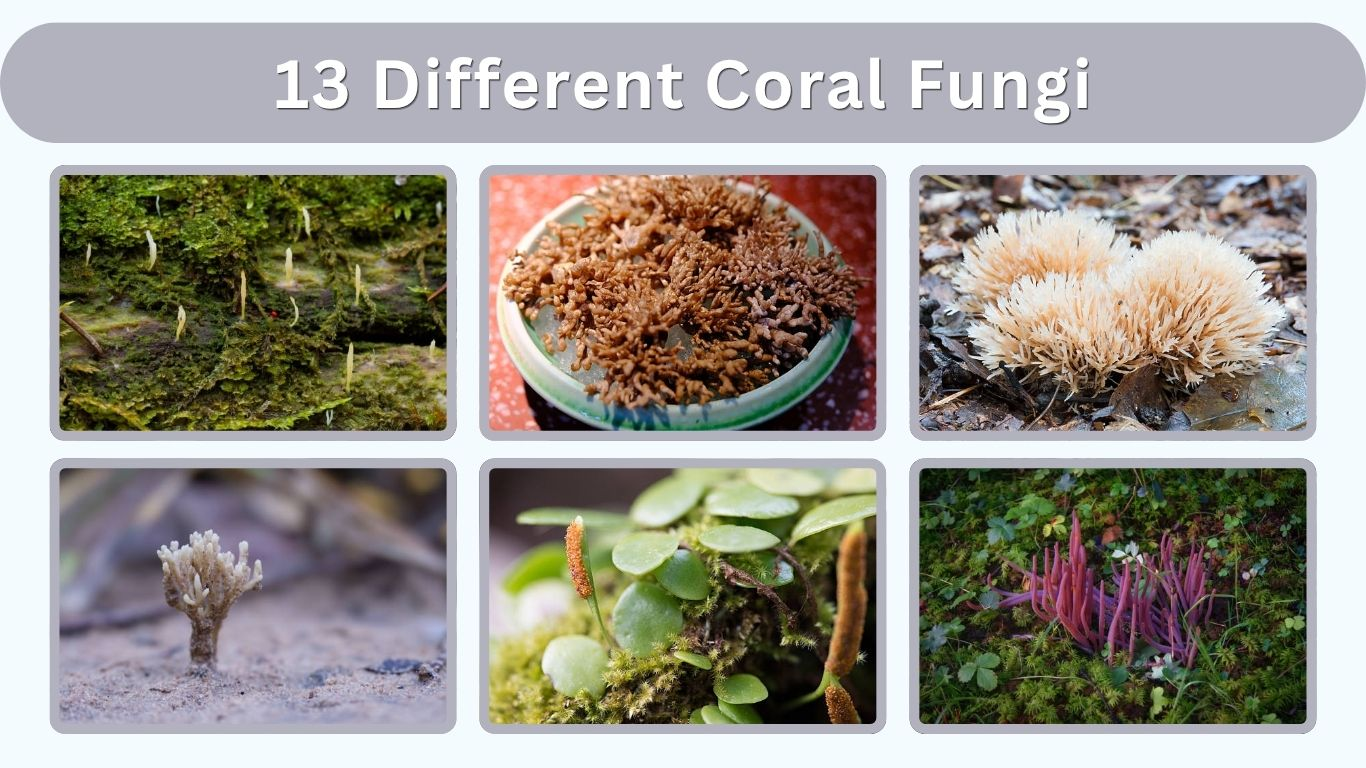
Coral fungi are among the most visually striking fungi, known for their branching shapes that resemble underwater coral formations. They come in a wide variety of forms, colors, and sizes, ranging from simple club-like structures to complex, tree-like clusters. These fungi can be found in forests, grasslands, and decaying wood, playing important ecological roles in nature. While some species are edible, others are not, making proper identification essential. This guide explores 13 different types of coral fungi to help you better understand their characteristics and habitats.
1. Clavaria

Clavaria is a genus of coral fungi recognized for its simple, upright, club-like appearance. Unlike many coral fungi that branch extensively, Clavaria species tend to remain unbranched or only slightly divided. They are often overlooked due to their delicate structure but are quite distinctive once noticed in natural habitats.
Identification
- Upright, club-shaped fruiting bodies with minimal or no branching
- Smooth surface texture without ridges or folds
- Colors range from white and cream to pale yellow
- Fragile and brittle structure that breaks easily
- Typically grows in small clusters or scattered formations
Habitat
Clavaria species are commonly found in grasslands, lawns, and open woodland areas. They thrive in moist soil and are most frequently seen during late summer and autumn. These fungi often appear after rainfall, emerging from the ground in groups that blend subtly with surrounding vegetation.
Edibility
Some Clavaria species are considered edible, but they are not commonly collected for food. Their small size and fragile nature make them less desirable compared to other edible mushrooms. Additionally, accurate identification is important, as similar-looking species may not be suitable for consumption.
Ecological Role
Clavaria fungi contribute to ecosystem health by helping break down organic matter in the soil. Most species are saprotrophic, meaning they feed on decaying plant material, playing a key role in nutrient recycling and soil enrichment.
2. Clavulina

Clavulina is a genus of coral fungi known for its branched, antler-like structures and pale coloration. These fungi are more visibly “coral-like” compared to Clavaria, often forming intricate, forked shapes that stand out on forest floors. They are commonly found in woodland ecosystems and are relatively easy to recognize due to their unique form.
Identification
- Branched, coral-like structure with flattened or crested tips
- Colors typically white, grayish, or pale cream
- Smooth to slightly wrinkled surface
- Tips may appear jagged, forked, or comb-like
- Flesh is soft but slightly tougher than Clavaria
Habitat
Clavulina species are usually found in forests, particularly in association with trees such as oaks and conifers. They grow on soil rather than wood and prefer moist, shaded environments. These fungi commonly appear in late summer through autumn, often forming small groups or scattered clusters.
Edibility
Some species, such as Clavulina cristata, are considered edible, but they are not highly prized due to their bland taste and somewhat tough texture. As with all wild fungi, proper identification is essential before consumption to avoid confusion with inedible species.
Ecological Role
Clavulina fungi are often mycorrhizal, forming beneficial relationships with tree roots. This symbiosis helps trees absorb nutrients more efficiently while the fungus receives sugars in return, making them important contributors to forest ecosystem health.
3. Ramaria

Ramaria is a large and diverse genus of coral fungi known for its highly branched, tree-like structures. These fungi often resemble underwater coral formations, with complex branching that can vary greatly in color and size. Ramaria species are among the most visually striking coral fungi and are commonly found in forest environments.
Identification
- Dense, bushy, coral-like structure with extensive branching
- Branches often upright and repeatedly divided
- Colors range from yellow, orange, and pink to white or tan
- Tips may be blunt, pointed, or slightly forked
- Flesh can be brittle or somewhat firm depending on species
Habitat
Ramaria species typically grow on the forest floor, especially in coniferous or mixed woodlands. They prefer rich, moist soil and are often found in leaf litter or near decaying organic matter. These fungi are most commonly seen during late summer and autumn, sometimes forming large clusters.
Edibility
Some Ramaria species are edible, but many are not recommended due to their potential to cause digestive upset. A few species are considered choice edibles, while others are mildly toxic. Because of this variation, only experienced foragers should consider collecting them for consumption.
Ecological Role
Ramaria fungi can be either saprotrophic or mycorrhizal, depending on the species. They contribute to nutrient cycling by decomposing organic matter or by forming symbiotic relationships with trees, supporting overall forest health and soil vitality.
4. Clavicorona

Clavicorona is a genus of coral fungi recognized for its distinctive crown-like branch tips. Unlike many other coral fungi, its branching ends often form small, ringed or coronet shapes, giving it a unique and easily noticeable appearance. These fungi are typically found growing on decaying wood in forest environments.
Identification
- Upright, branched coral-like structure
- Branch tips form crown-like or ringed shapes
- Usually white to pale cream in color
- Smooth surface with delicate, thin branches
- Grows directly from wood rather than soil
Habitat
Clavicorona species are commonly found on rotting logs, fallen branches, and decaying wood in forests. They prefer moist, shaded environments and are most often seen during late summer and autumn. Their growth on wood helps distinguish them from soil-growing coral fungi.
Edibility
Some species, such as Clavicorona pyxidata, are considered edible and are occasionally collected by foragers. However, they are not widely consumed due to their small size and limited availability. As always, proper identification is essential before eating any wild fungi.
Ecological Role
Clavicorona fungi are saprotrophic, meaning they feed on decaying wood. By breaking down dead plant material, they play an important role in nutrient recycling within forest ecosystems, contributing to soil formation and overall forest health.
5. Lentaria

Lentaria is a lesser-known genus of coral fungi characterized by its slender, branched structures and often subtle coloration. These fungi are not as dense or bushy as Ramaria but still display a delicate coral-like form. They are typically found in forested environments, growing among leaf litter or decaying organic matter.
Identification
- Thin, upright branches with a sparse, open structure
- Light colors such as white, cream, or pale yellow
- Smooth surface with flexible but fragile branches
- Branching is simple and not densely packed
- Often smaller and less conspicuous than other coral fungi
Habitat
Lentaria species are usually found on forest floors, especially in areas rich in leaf litter and organic debris. They prefer moist conditions and shaded woodland environments. These fungi typically appear during late summer and autumn, often growing singly or in small scattered groups.
Edibility
Very little information is available regarding the edibility of Lentaria species. They are generally not collected for food due to their small size, fragile structure, and lack of culinary value. It is best to avoid consumption unless identified with certainty by an expert.
Ecological Role
Lentaria fungi are primarily saprotrophic, meaning they help decompose organic material such as fallen leaves and plant debris. This process contributes to nutrient cycling, enriching the soil and supporting the health of forest ecosystems.
6. Artomyces

Artomyces is a genus of coral fungi best known for its distinctive branching pattern and crown-like tips. The most recognized species, Artomyces pyxidatus, features clearly defined, symmetrical branches that give it a decorative, almost geometric appearance. These fungi are commonly found on decaying wood and are relatively easy to identify.
Identification
- Highly branched, coral-like structure with organized growth
- Branch tips form small, crown-like shapes
- Typically white to pale cream in color
- Smooth surface with firm yet slightly flexible texture
- Grows in clusters directly on decaying wood
Habitat
Artomyces species are usually found on rotting hardwood logs and stumps in forested areas. They prefer moist, shaded environments and are most commonly seen during late summer and autumn. Their direct attachment to wood helps distinguish them from soil-growing coral fungi.
Edibility
Artomyces pyxidatus is considered edible and is sometimes collected by foragers. It has a mild flavor and a slightly crunchy texture when cooked. However, proper identification is essential before consumption to avoid confusion with similar-looking species.
Ecological Role
Artomyces fungi are saprotrophic, playing an important role in breaking down dead wood. By decomposing organic material, they help recycle nutrients back into the ecosystem, supporting soil health and forest regeneration.
7. Alloclavaria

Alloclavaria is a small genus of coral fungi that features simple, upright, and minimally branched structures. Unlike many coral fungi with complex branching, this genus maintains a more straightforward, grass-like appearance. It is often overlooked due to its subtle form and coloration.
Identification
- Slender, upright fruiting bodies with little to no branching
- Grayish, brownish, or dull-colored appearance
- Smooth surface without distinctive ridges
- Flexible but slightly tough texture
- Often grows in small, clustered groups
Habitat
Alloclavaria species are commonly found in forested areas, especially among moss or needle-covered ground. They prefer moist, shaded environments and are often associated with coniferous forests. These fungi typically appear during late summer and autumn, blending easily with their surroundings.
Edibility
Alloclavaria species are generally not considered edible due to their small size, tough texture, and lack of culinary value. They are not commonly collected for food, and there is limited information available regarding their safety for consumption.
Ecological Role
Alloclavaria fungi are believed to be saprotrophic, feeding on decaying organic matter such as leaf litter and forest debris. Through this process, they contribute to nutrient cycling and help maintain soil health within forest ecosystems.
8. Typhula

Typhula is a genus of small, club-shaped coral fungi known for its simple and often thread-like appearance. These fungi are typically much smaller than other coral fungi and may appear as tiny pins or slender clubs emerging from plant debris. Despite their size, they play an important role in natural ecosystems.
Identification
- Very small, thin, club-shaped fruiting bodies
- Minimal or no branching, often straight and needle-like
- Colors range from white and cream to pale yellow or light brown
- Smooth surface with a delicate structure
- Often grows in dense clusters on plant material
Habitat
Typhula species are commonly found on decaying plant matter such as fallen leaves, twigs, and grass stems. They prefer cool, moist environments and are often seen in forests, lawns, or fields. Some species are notable for appearing in colder seasons, even during winter.
Edibility
Typhula species are not considered edible due to their extremely small size and lack of culinary value. They are generally ignored by foragers and are more of interest to those studying fungi rather than for food purposes.
Ecological Role
Typhula fungi are saprotrophic, meaning they decompose dead plant material. This helps recycle nutrients back into the soil, supporting plant growth and maintaining the balance of ecosystems, particularly in cooler climates.
9. Pterula

Pterula is a genus of delicate coral fungi known for its fine, hair-like branching and graceful structure. Unlike thicker coral fungi, Pterula species appear more feathery and fragile, often forming small, intricate clusters that can be easily overlooked in natural settings.
Identification
- Very thin, hair-like branches forming a delicate coral shape
- Highly branched but with a sparse, airy structure
- Colors usually white, cream, or light brown
- Soft and fragile texture that collapses easily
- Often forms small, clustered or tuft-like growths
Habitat
Pterula species are commonly found on decaying wood, leaf litter, or rich organic soil in forest environments. They prefer moist, shaded areas and are most often seen during late summer and autumn. Their fine structure allows them to blend easily into their surroundings.
Edibility
Pterula fungi are not considered edible due to their extremely small size and fragile nature. They provide no practical food value and are generally ignored by foragers.
Ecological Role
Pterula fungi are saprotrophic, feeding on decomposing organic matter such as wood and plant debris. By breaking down this material, they contribute to nutrient recycling and support the health of forest ecosystems.
10. Lachnocladium

Lachnocladium is a genus of coral fungi distinguished by its somewhat coarse, fibrous texture and irregular branching pattern. Compared to more delicate coral fungi, it often appears thicker and slightly rough, giving it a sturdier look in forest environments.
Identification
- Irregular, branched coral-like structure
- Surface may appear rough or slightly hairy
- Colors range from tan and brown to pale yellow
- Branches are thicker and less delicate than many coral fungi
- Texture is firm and somewhat fibrous
Habitat
Lachnocladium species are typically found growing on decaying wood, fallen branches, or forest debris. They prefer humid, shaded environments and are most commonly seen in tropical and subtropical forests, though some species occur in temperate regions as well.
Edibility
Lachnocladium species are generally not considered edible. Their tough, fibrous texture and lack of appealing taste make them unsuitable for culinary use. They are primarily of interest for ecological and scientific study rather than foraging.
Ecological Role
Lachnocladium fungi are saprotrophic, meaning they break down dead organic material such as wood. This decomposition process plays a key role in nutrient cycling, helping return essential elements to the soil and supporting overall ecosystem balance.
11. Scytinopogon

Scytinopogon is a genus of coral fungi known for its wiry, branched structure and darker coloration compared to many other coral fungi. These fungi often have a tough, fibrous appearance and are typically found growing on wood rather than soil, making them distinct in both form and habitat.
Identification
- Slender, branched structure with a wiry or tough appearance
- Darker colors such as brown, gray, or purplish tones
- Surface may appear slightly rough or textured
- Branches are thin but firm and not easily broken
- Often grows in small clusters on wood
Habitat
Scytinopogon species are commonly found on decaying wood, logs, and forest debris. They thrive in moist, shaded forest environments and are most often seen in tropical and subtropical regions, although some species may appear in temperate forests.
Edibility
Scytinopogon fungi are not considered edible due to their tough texture and lack of culinary value. They are rarely collected for food and are mainly studied for their ecological significance.
Ecological Role
Scytinopogon fungi are saprotrophic, feeding on decaying wood and plant material. By breaking down organic matter, they contribute to nutrient recycling and help maintain the balance of forest ecosystems.
12. Deflexula

Deflexula is a genus of coral fungi known for its small size and downward-bending branch tips. Unlike many upright coral fungi, its branches often curve or droop, giving it a slightly irregular and soft appearance. These fungi are typically subtle and easy to miss in natural habitats.
Identification
- Small, branched coral-like structure with drooping or curved tips
- Light colors such as white, cream, or pale yellow
- Smooth surface with thin, delicate branches
- Flexible and fragile texture
- Often forms loose, scattered clusters
Habitat
Deflexula species are usually found on forest floors, growing on decaying organic matter such as leaf litter or small wood debris. They prefer moist, shaded environments and are most commonly seen during late summer and autumn.
Edibility
Deflexula species are not considered edible due to their small size and lack of culinary value. They are rarely collected and are mainly of interest for observation and study rather than consumption.
Ecological Role
Deflexula fungi are saprotrophic, meaning they decompose organic material. By breaking down plant debris, they help recycle nutrients back into the soil, supporting healthy forest ecosystems.
13. Multiclavula

Multiclavula is a unique genus of coral fungi that differs from many others by forming a symbiotic relationship with algae, making it lichenized. Its simple, club-like structures are often associated with a crust-like base, giving it a distinctive appearance compared to typical coral fungi.
Identification
- Small, club-shaped fruiting bodies with little to no branching
- Colors typically white, cream, or pale yellow
- Often grows from a greenish or grayish lichen-like base
- Smooth surface with a soft texture
- Usually appears in small clusters
Habitat
Multiclavula species are commonly found in moist forest environments, especially in mossy or shaded areas. They grow on soil, decaying wood, or among leaf litter, often in association with algae. These fungi are most frequently seen during damp seasons, particularly in late summer and autumn.
Edibility
Multiclavula species are not considered edible. Their small size, delicate structure, and ecological uniqueness make them unsuitable for consumption. They are primarily of interest to researchers and nature enthusiasts.
Ecological Role
Multiclavula fungi are lichenized, meaning they live in partnership with photosynthetic algae. This relationship allows them to obtain nutrients through both decomposition and photosynthesis, making them important contributors to biodiversity and ecosystem stability.
FAQs
What are coral fungi?
Coral fungi are a group of fungi that resemble marine coral in shape, forming branched, club-like, or tree-like structures. They belong to several genera and are commonly found on forest floors or decaying wood. Their unique appearance makes them easy to recognize in natural environments.
Where do coral fungi usually grow?
Coral fungi typically grow in forests, grasslands, and areas rich in organic matter. Some species grow on soil, while others prefer decaying wood such as logs and branches. They are most commonly seen in moist conditions during late summer and autumn.
Are all coral fungi edible?
Not all coral fungi are edible. While some species are safe to eat, others can cause digestive issues or are simply not suitable due to poor taste and texture. Proper identification is essential before consuming any wild coral fungi.
How can you identify coral fungi safely?
Safe identification involves examining features such as branching pattern, color, texture, and habitat. Using field guides or consulting experts is highly recommended. Many coral fungi look similar, so relying on a single feature is not enough for accurate identification.
What role do coral fungi play in ecosystems?
Coral fungi play an important role in ecosystems by breaking down organic matter or forming symbiotic relationships with plants. This helps recycle nutrients back into the soil, supporting plant growth and maintaining ecological balance.