
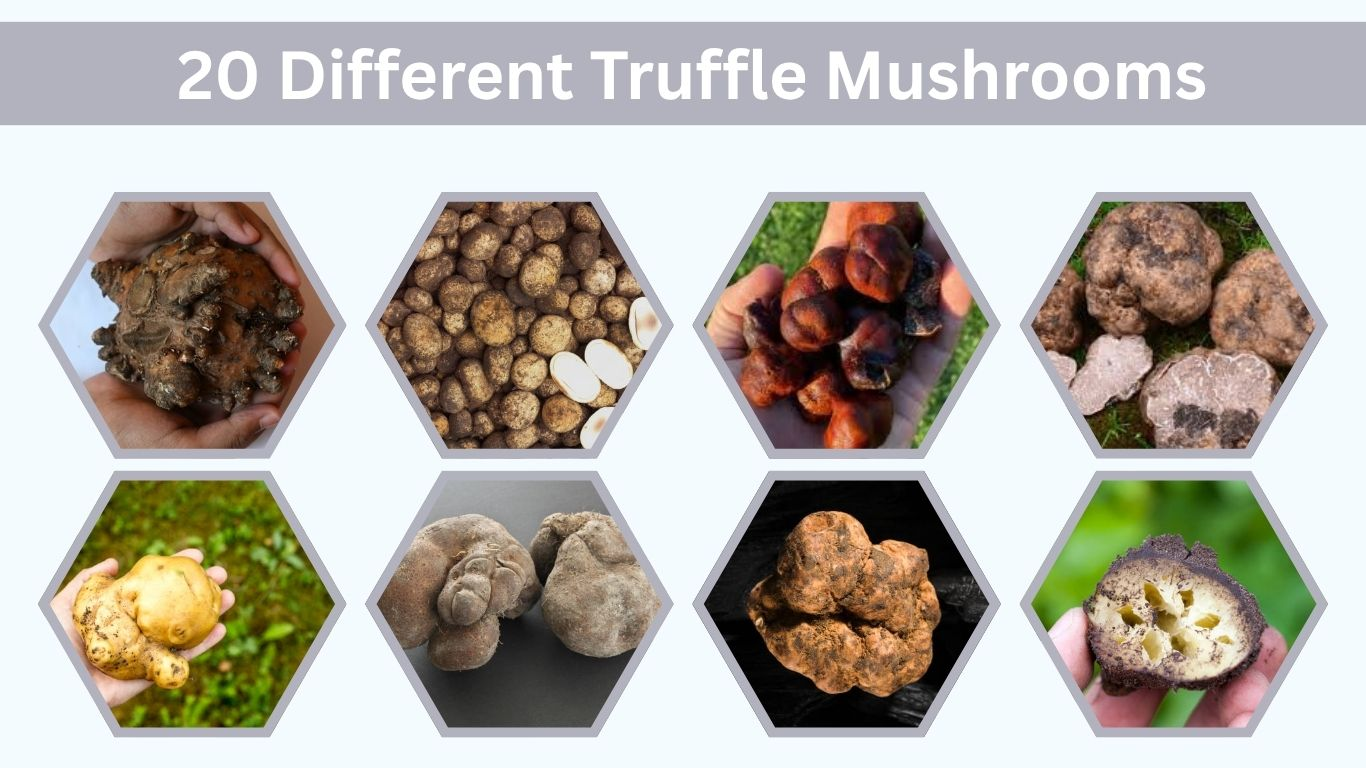
Truffle mushrooms are among the most prized fungi in the world, valued for their rich aroma and unique underground growth. Unlike typical mushrooms, they develop beneath the soil in partnership with tree roots, making them rare and difficult to find. Their flavors range from mild and nutty to intensely earthy and complex. Found in various regions across the globe, truffles play an important role in both ecosystems and gourmet cuisine. In this guide, you will explore 20 different types of truffle mushrooms and their key characteristics.
1. Tuber melanosporum

Tuber melanosporum, commonly known as the “black truffle” or “Perigord truffle,” is one of the most prized and expensive edible fungi in the world. It grows underground in symbiotic relationship with tree roots, particularly oak and hazelnut. Known for its rich aroma and intense flavor, it is widely used in gourmet cuisine.
Identification
- Dark brown to black outer surface with a rough, warty texture
- Round to irregular underground fruiting body
- Interior flesh (gleba) is dark with white marbling
- Firm and dense texture
- Strong, earthy aroma when mature
Habitat
This truffle grows underground in calcareous (lime-rich) soils, typically near oak and hazelnut trees. It thrives in temperate regions, especially in parts of Europe. Tuber melanosporum requires specific soil conditions, climate, and host trees, making it relatively rare and highly valued.
Aroma and Flavor
The aroma is rich, earthy, and slightly musky, often described as complex and intense. Its flavor enhances dishes significantly, even in small amounts. This truffle is commonly shaved over pasta, eggs, and meats to add depth and luxury to culinary preparations.
Edibility
This species is highly edible and considered a gourmet delicacy. It is widely used in fine dining and culinary traditions. Due to its rarity and demand, it is one of the most expensive mushrooms in the world and is often harvested using trained animals.
2. Tuber magnatum

Tuber magnatum, commonly known as the “white truffle” or “Alba truffle,” is one of the rarest and most valuable truffles in the world. It is highly prized for its intense aroma and delicate flavor. Unlike many other truffles, it is typically used raw to preserve its unique qualities.
Identification
- Smooth to slightly wrinkled pale yellow to light brown outer surface
- Irregular, rounded underground shape
- Interior flesh is creamy to light brown with fine white marbling
- Soft to firm texture depending on maturity
- Strong, distinctive aroma even when small
Habitat
This truffle grows underground in association with trees such as oak, poplar, and hazelnut. It prefers moist, well-drained soils and is commonly found in parts of Italy and surrounding regions. Tuber magnatum is difficult to cultivate and is mostly harvested in the wild during specific seasons.
Aroma and Flavor
The aroma is powerful and complex, often described as garlicky, earthy, and slightly cheesy. Its flavor is delicate yet intense, making it ideal for enhancing simple dishes. It is typically shaved raw over pasta, risotto, or eggs to preserve its natural fragrance.
Edibility
This species is highly edible and considered a luxury ingredient in gourmet cuisine. It is rarely cooked because heat can reduce its aroma. Due to its rarity and demand, it commands extremely high prices and is often sold at auctions or specialty markets.
3. Tuber aestivum

Tuber aestivum, commonly known as the “summer truffle,” is a widely distributed and more affordable truffle species compared to premium varieties. It is appreciated for its mild aroma and pleasant flavor, making it popular in everyday culinary use. It grows underground and forms symbiotic relationships with various trees.
Identification
- Dark brown to black outer surface with coarse, warty texture
- Rounded to irregular underground shape
- Interior flesh is pale to light brown with white veins
- Firm texture when fresh
- Less intense aroma compared to premium truffles
Habitat
This species grows underground in association with trees such as oak, beech, and hazelnut. It prefers well-drained, calcareous soils and is commonly found across Europe and parts of Asia. Tuber aestivum thrives in warmer months and is typically harvested during summer.
Aroma and Flavor
The aroma is mild, earthy, and slightly nutty. Its flavor is more subtle than that of high-end truffles, making it suitable for a variety of dishes without overpowering other ingredients. It is often used in oils, sauces, and shaved over simple meals.
Edibility
This truffle is edible and commonly used in cooking. While it is less expensive than premium varieties, it still offers good culinary value. It is widely available and enjoyed by both chefs and home cooks for its balanced flavor and versatility.
4. Tuber uncinatum

Tuber uncinatum, often referred to as the “Burgundy truffle,” is closely related to the summer truffle but is typically harvested later in the year. It is valued for its stronger aroma and richer flavor compared to Tuber aestivum. This species is popular in European cuisine and is widely used in a variety of dishes.
Identification
- Dark brown to black outer surface with small, warty bumps
- Rounded to irregular underground shape
- Interior flesh is brown with well-defined white marbling
- Firm and dense texture
- More aromatic than summer truffle
Habitat
This truffle grows underground in association with trees such as oak, hazelnut, and beech. It prefers calcareous soils and is commonly found in temperate regions of Europe. Tuber uncinatum is typically harvested in autumn, thriving in slightly cooler and moist conditions.
Aroma and Flavor
The aroma is deeper and more pronounced than that of the summer truffle, with earthy and nutty notes. Its flavor is richer, making it a preferred choice for enhancing dishes like pasta, meats, and sauces without being overwhelming.
Edibility
This species is edible and widely appreciated in culinary applications. It is more affordable than premium truffles but still offers excellent flavor. It is commonly used fresh, sliced, or infused into oils and sauces for added depth.
5. Tuber brumale

Tuber brumale, commonly known as the “winter truffle,” is a dark truffle species that grows during colder months. It is less expensive than premium varieties but still valued for its earthy aroma and culinary use. It is often confused with higher-value truffles due to its similar appearance.
Identification
- Dark brown to black outer surface with rough, warty texture
- Rounded to irregular underground form
- Interior flesh is dark with lighter marbling
- Firm texture when fresh
- Slightly less aromatic than premium black truffles
Habitat
This species grows underground in association with trees such as oak and hazelnut. It prefers calcareous soils and is commonly found in Europe. Tuber brumale thrives in cooler conditions and is typically harvested during winter months.
Aroma and Flavor
The aroma is earthy and somewhat musky but less complex than more prized truffles. Its flavor is milder, making it suitable for cooking where a subtle truffle taste is desired. It is often used in processed truffle products and blended preparations.
Edibility
This truffle is edible and used in cooking, though it is considered lower in quality compared to premium species. It is often more affordable and accessible, making it a practical option for adding truffle flavor to various dishes.
6. Tuber indicum

Tuber indicum, commonly known as the “Chinese black truffle,” is a widely distributed truffle species often compared to the prized black truffle. While it shares a similar appearance, it is generally less aromatic and more affordable. It is commonly used as a substitute in culinary applications.
Identification
- Dark brown to black outer surface with a rough, warty texture
- Rounded to irregular underground shape
- Interior flesh is dark with lighter, less distinct marbling
- Firm texture when fresh
- Mild aroma compared to premium black truffles
Habitat
This species grows underground in association with trees such as pine and oak. It is commonly found in parts of Asia, particularly China, where it thrives in mountainous regions with suitable soil conditions. Tuber indicum prefers well-drained soils and is typically harvested during cooler seasons.
Aroma and Flavor
The aroma is mild and less complex than that of high-end truffles. Its flavor is subtle, making it suitable for dishes where a light truffle presence is desired. It is often used in oils, sauces, and processed truffle products.
Edibility
This truffle is edible and widely used as a more affordable alternative to premium truffles. While it lacks the intensity of more expensive species, it still adds a touch of truffle flavor to dishes. It is commonly used in both fresh and preserved forms.
7. Tuber borchii

Tuber borchii, commonly known as the “bianchetto truffle” or “whitish truffle,” is a smaller and more affordable relative of the white truffle. It is appreciated for its strong aroma and is often used in regional cuisine. Despite its lower cost, it still offers a notable truffle experience.
Identification
- Pale cream to light brown outer surface
- Smooth to slightly rough texture
- Rounded to irregular underground shape
- Interior flesh ranges from whitish to light brown with fine marbling
- Firm texture with a noticeable aroma
Habitat
This species grows underground in association with trees such as pine, oak, and hazelnut. It is commonly found in southern Europe and prefers sandy or calcareous soils. Tuber borchii typically appears in late winter to early spring and thrives in mild climates.
Aroma and Flavor
The aroma is strong and can be somewhat sharp, sometimes described as garlicky when mature. Its flavor is more intense than expected for its size, making it useful in enhancing dishes. It is often used in pasta, eggs, and sauces.
Edibility
This truffle is edible and widely used in cooking. Although it is less expensive than premium white truffles, it is still valued for its bold aroma. It is commonly used fresh or preserved and is popular in regional dishes where a strong truffle presence is desired.
8. Tuber macrosporum

Tuber macrosporum, commonly known as the “smooth black truffle,” is a lesser-known but highly aromatic truffle species. It is valued for its pleasant scent and culinary potential, though it is not as widely traded as premium varieties. Its relatively smooth surface sets it apart from many other black truffles.
Identification
- Dark brown to black outer surface with a relatively smooth texture
- Rounded to irregular underground shape
- Interior flesh is dark with fine white marbling
- Firm and dense texture
- Noticeable aroma even when small
Habitat
This species grows underground in association with trees such as oak, hazelnut, and poplar. It prefers calcareous soils and is found in parts of Europe. Tuber macrosporum typically appears in autumn and thrives in temperate climates with moderate moisture.
Aroma and Flavor
The aroma is rich and somewhat garlicky, with earthy undertones. Its flavor is more pronounced than some lower-grade truffles, making it suitable for enhancing dishes. It is often used fresh in pasta, eggs, and simple recipes to highlight its natural taste.
Edibility
This truffle is edible and appreciated for its aroma and flavor. While it is less famous than premium species, it still holds culinary value. It is often used by chefs and enthusiasts who seek a balance between quality and affordability.
9. Tuber mesentericum

Tuber mesentericum, commonly known as the “Bagnoli truffle,” is a dark truffle species recognized for its distinctive aroma. While it resembles other black truffles in appearance, its scent can be quite strong and sometimes polarizing. It is used in cooking but is generally considered less desirable than premium varieties.
Identification
- Dark brown to black outer surface with warty texture
- Rounded to irregular underground shape
- Interior flesh is dark with pale marbling
- Firm and dense structure
- Often has a small cavity or hollow inside
Habitat
This species grows underground in association with trees such as oak and beech. It prefers calcareous soils and is commonly found in parts of Europe. Tuber mesentericum typically appears in autumn and winter, thriving in cool, moist conditions.
Aroma and Flavor
The aroma is strong and can be somewhat sharp or tar-like, which may not appeal to everyone. Its flavor is earthy but less refined compared to high-quality truffles. It is often used in processed truffle products or blended preparations.
Edibility
This truffle is edible, but its strong aroma limits its popularity. It is generally considered lower in culinary value compared to premium species. However, it is still used in cooking, especially where a bold truffle scent is desired.
10. Tuber rufum

Tuber rufum, commonly known as the “red truffle,” is a small and less commercially valued truffle species. It is recognized for its reddish tones and mild aroma. While not as sought after as premium truffles, it still plays a role in forest ecosystems and is occasionally used in culinary contexts.
Identification
- Reddish-brown to dark brown outer surface
- Small, rounded to irregular underground shape
- Interior flesh is pale to brownish with light marbling
- Firm but relatively small in size
- Mild aroma compared to other truffles
Habitat
This species grows underground in association with trees such as oak and beech. It prefers forest soils rich in organic matter and is commonly found in temperate regions. Tuber rufum typically appears during cooler seasons and grows singly or in small scattered groups.
Aroma and Flavor
The aroma is mild and slightly earthy, lacking the intensity of more prized truffles. Its flavor is subtle and not very complex, making it less desirable for high-end culinary use. It may still be used in simple dishes or blended products.
Edibility
This truffle is edible but not highly valued due to its weak aroma and flavor. It is rarely used in gourmet cooking and is often overlooked in favor of more aromatic species. However, it remains safe to consume when properly identified.
11. Tuber dryophilum

Tuber dryophilum is a lesser-known truffle species that grows underground in association with hardwood trees. It is relatively small and not widely used in culinary applications. This species is more often studied for its ecological role than for its food value.
Identification
- Small, rounded to irregular underground fruiting body
- Brown to dark brown outer surface
- Interior flesh is pale to brownish with faint marbling
- Firm but relatively small in size
- Mild or barely noticeable aroma
Habitat
This species grows in forest soils, particularly in association with oak and other hardwood trees. It prefers temperate regions and thrives in soils rich in organic matter. Tuber dryophilum is typically found in woodland environments and appears during cooler seasons.
Aroma and Flavor
The aroma is very mild and not as appealing as more well-known truffle species. Its flavor is subtle and lacks complexity, which limits its use in cooking. It is rarely chosen for culinary purposes due to its low aromatic intensity.
Edibility
This truffle is generally considered edible but has little to no culinary value. It is not commonly harvested or sold in markets. Most interest in this species comes from its ecological importance rather than its use as food.
12. Tuber excavatum

Tuber excavatum, commonly known as the “hollow truffle,” is a small truffle species notable for often having a cavity inside. It is not widely valued for culinary use but is commonly found in woodland environments. Its unique internal structure makes it interesting from a biological perspective.
Identification
- Small, rounded to irregular underground shape
- Brown to dark brown outer surface
- Interior often contains a hollow cavity
- Flesh is pale to brownish with light marbling
- Mild aroma compared to other truffles
Habitat
This species grows underground in association with trees such as oak and beech. It prefers forest soils rich in organic material and is commonly found in temperate regions. Tuber excavatum typically appears in woodland areas and may grow singly or in small groups.
Aroma and Flavor
The aroma is mild and not particularly distinctive. Its flavor is subtle and lacks the depth found in more prized truffles. Because of this, it is not commonly used in cooking or gourmet dishes.
Edibility
This truffle is considered edible but has little culinary value due to its weak aroma and flavor. It is rarely collected for food and is generally overlooked in favor of more flavorful truffle species.
13. Tuber puberulum

Tuber puberulum is a small and relatively lesser-known truffle species that grows underground in forest ecosystems. It is not widely used in culinary applications due to its mild aroma and limited flavor. This species is more commonly noted for its ecological role than for its food value.
Identification
- Small, rounded to irregular underground fruiting body
- Light brown to yellowish-brown outer surface
- Fine, slightly fuzzy or “pubescent” texture when young
- Interior flesh is pale with faint marbling
- Mild and subtle aroma
Habitat
This species typically grows in association with trees such as oak and beech. It prefers temperate forest environments with soil rich in organic matter. Tuber puberulum is usually found in woodland areas and may appear during cooler seasons, growing singly or in small scattered groups.
Aroma and Flavor
The aroma is very mild and often barely noticeable compared to more well-known truffles. Its flavor is subtle and lacks complexity, making it less desirable for culinary use. It is rarely chosen for cooking purposes.
Edibility
This truffle is considered edible but has little to no culinary value. It is not commonly harvested or sold due to its weak aroma and flavor. Most interest in this species comes from its role in forest ecosystems rather than as a food source.
14. Tuber ferrugineum

Tuber ferrugineum is a lesser-known truffle species recognized for its rusty coloration and small size. It grows underground and is not widely valued in culinary use. This species is more commonly observed in natural environments and studied for its ecological role.
Identification
- Small, rounded to irregular underground fruiting body
- Rusty brown to reddish-brown outer surface
- Smooth to slightly rough texture
- Interior flesh is pale with faint marbling
- Mild and not very noticeable aroma
Habitat
This species grows in forest soils, typically in association with trees such as oak and beech. It prefers temperate regions and thrives in soil rich in organic matter. Tuber ferrugineum is usually found in woodland areas and appears during cooler seasons.
Aroma and Flavor
The aroma is very mild and lacks the intensity of more valuable truffles. Its flavor is subtle and not particularly distinctive, making it unsuitable for most culinary uses. It is rarely used in cooking due to its limited sensory appeal.
Edibility
This truffle is generally considered edible but has little culinary value. It is not commonly harvested or sold in markets. Most attention to this species comes from its presence in forest ecosystems rather than its use as food.
15. Tuber lyonii

Tuber lyonii, commonly known as the “pecan truffle,” is a North American truffle species valued for its mild aroma and association with pecan trees. It is sometimes used in regional cuisine and is appreciated for its subtle flavor and availability compared to more expensive truffles.
Identification
- Light tan to brown outer surface
- Smooth to slightly wrinkled texture
- Rounded to irregular underground shape
- Interior flesh is pale with light marbling
- Mild but pleasant aroma
Habitat
This species grows underground in association with trees such as pecan and oak. It is commonly found in parts of North America, especially in regions with suitable soil conditions. Tuber lyonii prefers well-drained soils and often appears in orchards or woodland environments.
Aroma and Flavor
The aroma is mild, slightly nutty, and less intense than European truffles. Its flavor is subtle but pleasant, making it suitable for light dishes. It is sometimes used fresh or infused into oils and simple recipes.
Edibility
This truffle is edible and occasionally used in cooking, particularly in local cuisines. While it is not as highly valued as premium truffles, it still offers a gentle truffle flavor and is appreciated for its accessibility and versatility.
16. Tuber oregonense

Tuber oregonense, commonly known as the “Oregon white truffle,” is a native North American species prized for its pleasant aroma and seasonal availability. It is commonly harvested in the Pacific Northwest and is valued in regional cuisine for its unique scent and flavor.
Identification
- Pale cream to light brown outer surface
- Smooth to slightly rough texture
- Rounded to irregular underground shape
- Interior flesh is whitish with subtle marbling
- Noticeable aroma when mature
Habitat
This species grows underground in association with Douglas fir trees. It is commonly found in the Pacific Northwest of North America, especially in forested areas with suitable soil conditions. Tuber oregonense thrives in cool, moist environments and is typically harvested during winter months.
Aroma and Flavor
The aroma is distinct, often described as earthy with hints of garlic and spice. Its flavor is mild but pleasant, making it suitable for enhancing simple dishes. It is often used fresh to preserve its natural scent.
Edibility
This truffle is edible and valued in regional cuisine. While it is less expensive than European truffles, it is still appreciated for its aroma and seasonal appeal. It is commonly used in fresh preparations, especially when in peak condition.
17. Tuber gibbosum

Tuber gibbosum, commonly known as the “spring white truffle,” is a North American species valued for its seasonal appearance and pleasant aroma. It is closely related to other Pacific Northwest truffles and is appreciated for its culinary potential when fresh.
Identification
- Pale cream to light brown outer surface
- Smooth to slightly uneven texture
- Rounded to irregular underground shape
- Interior flesh is whitish with light marbling
- Mild but noticeable aroma
Habitat
This species grows underground in association with conifer trees, especially Douglas fir. It is commonly found in the Pacific Northwest of North America. Tuber gibbosum prefers cool, moist forest environments and is typically harvested in late winter to spring.
Aroma and Flavor
The aroma is earthy with subtle spicy and garlicky notes. Its flavor is mild but pleasant, making it suitable for enhancing simple dishes. It is best used fresh to preserve its natural characteristics.
Edibility
This truffle is edible and used in regional cuisine. While not as highly valued as premium European truffles, it is appreciated for its freshness and availability. It is often used in light dishes where its subtle aroma can be enjoyed.
18. Tuber canaliculatum

Tuber canaliculatum, commonly known as the “Michigan truffle,” is a North American species recognized for its subtle aroma and association with hardwood forests. It is not widely commercialized but is occasionally used in local culinary traditions.
Identification
- Light brown to yellowish-brown outer surface
- Smooth to slightly grooved texture
- Rounded to irregular underground shape
- Interior flesh is pale with faint marbling
- Mild aroma compared to premium truffles
Habitat
This species grows underground in association with hardwood trees such as oak. It is commonly found in parts of North America, particularly in temperate forest regions. Tuber canaliculatum prefers well-drained soils and appears during cooler seasons.
Aroma and Flavor
The aroma is mild and slightly earthy, lacking the intensity of more prized truffles. Its flavor is subtle and not very complex, making it suitable for simple dishes. It is sometimes used fresh when available.
Edibility
This truffle is edible but not highly valued in gourmet cuisine due to its mild aroma and flavor. It is occasionally used in local dishes but is generally overlooked in favor of more aromatic truffle species.
19. Tuber himalayense

Tuber himalayense is a truffle species found in mountainous regions, particularly in parts of Asia. It is similar in appearance to other black truffles but is generally less aromatic and less commercially valuable. It is sometimes confused with higher-grade species due to its внешняя similarity.
Identification
- Dark brown to black outer surface with a warty texture
- Rounded to irregular underground shape
- Interior flesh is dark with lighter marbling
- Firm texture
- Mild aroma compared to premium black truffles
Habitat
This species grows underground in association with trees such as oak and pine. It is commonly found in Himalayan regions and nearby areas with suitable soil conditions. Tuber himalayense prefers cool climates and well-drained soils.
Aroma and Flavor
The aroma is mild and less complex than that of high-end truffles. Its flavor is subtle, making it suitable for basic culinary uses. It is often used as a more affordable alternative in some markets.
Edibility
This truffle is edible and sometimes used in cooking. However, it is not as highly valued due to its weaker aroma and flavor. It is often sold at lower prices compared to premium truffle species.
20. Tuber panniferum

Tuber panniferum is a lesser-known truffle species that grows underground in forest ecosystems. It is not widely used in culinary applications and is more commonly studied for its ecological role. Like many minor truffle species, it has a subtle presence compared to more famous varieties.
Identification
- Small to medium, rounded to irregular underground shape
- Brown to dark brown outer surface with a slightly rough texture
- Interior flesh is pale to brownish with faint marbling
- Firm texture
- Mild and not very noticeable aroma
Habitat
This species typically grows in association with trees such as oak and beech. It prefers temperate forest environments with soil rich in organic matter. Tuber panniferum is usually found in woodland areas and appears during cooler seasons, often growing singly or in small scattered groups.
Aroma and Flavor
The aroma is very mild and lacks the intensity found in more valued truffles. Its flavor is subtle and not particularly distinctive, limiting its use in cooking. It is rarely chosen for culinary purposes.
Edibility
This truffle is generally considered edible but has little culinary value. It is not commonly harvested or sold due to its weak aroma and flavor. Most interest in this species comes from its ecological importance rather than its use as food.
FAQs
What are truffle mushrooms?
Truffle mushrooms are underground fungi that grow in symbiosis with the roots of certain trees. They belong mainly to the genus Tuber. Unlike typical mushrooms, they do not grow above ground and are known for their strong aroma, making them highly valued in cooking.
Why are truffles so expensive?
Truffles are expensive because they are rare, difficult to cultivate, and require specific soil and climate conditions. They also grow underground, making them hard to find. Harvesting often requires trained animals, which adds to the cost and exclusivity.
Where do truffles typically grow?
Truffles grow underground near the roots of trees such as oak, hazelnut, pine, and beech. They prefer well-drained, nutrient-rich soils and are commonly found in Europe, North America, and parts of Asia in temperate climates.
Are all truffles edible?
Most true truffles in the Tuber genus are edible, but not all are highly valued. Some have strong, pleasant aromas, while others are mild or less desirable. Proper identification is important, as some underground fungi that resemble truffles are not edible.
How are truffles harvested?
Truffles are usually harvested with the help of trained dogs or pigs that can detect their strong aroma underground. Once located, they are carefully dug out to avoid damage. Harvesting typically occurs during specific seasons depending on the truffle species.