
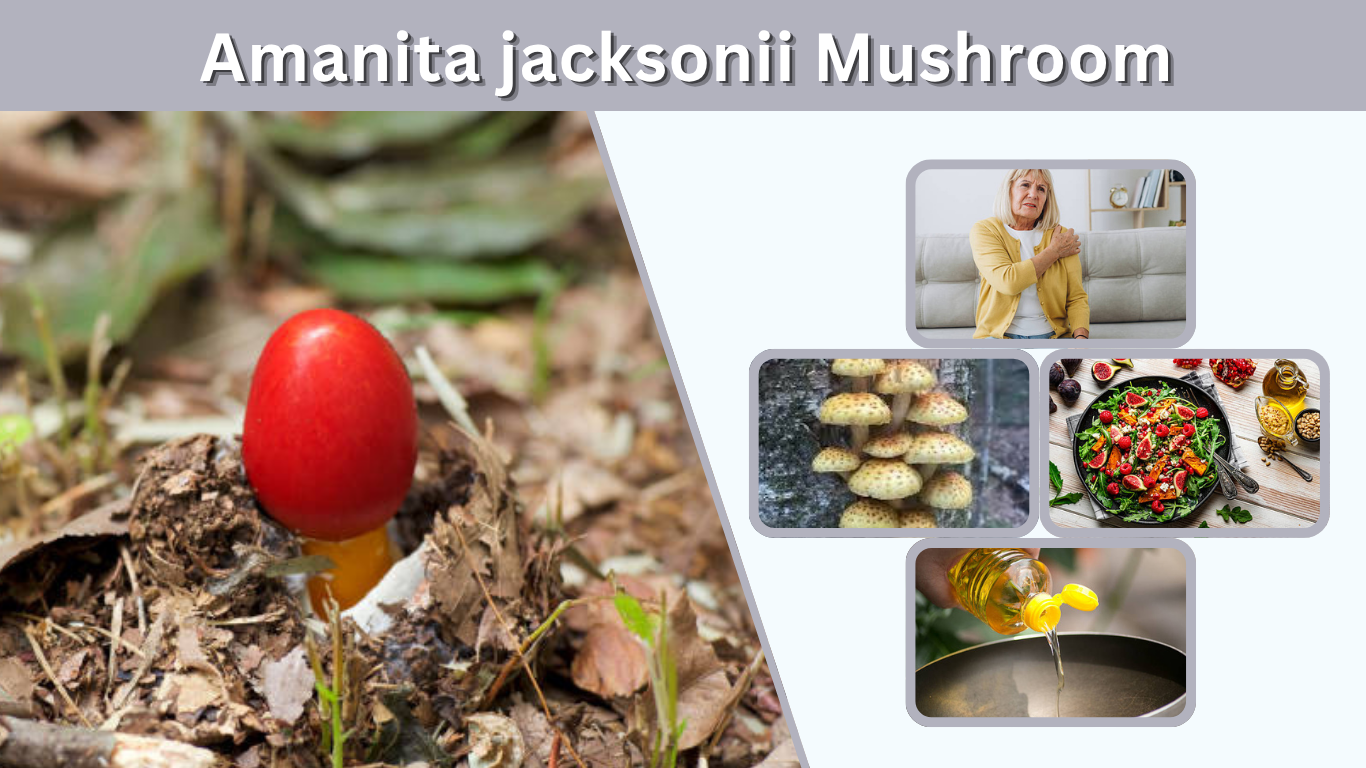
Amanita jacksonii, often called the American Caesar’s mushroom, is a striking red and yellow species found in North America. Known for its culinary appeal, it is considered edible when correctly identified. However, because it belongs to the Amanita genus—home to some of the world’s deadliest mushrooms—proper identification is essential. This guide explores its features, habitat, and safety considerations to help readers understand both its value and potential risks in foraging.
What Is Amanita jacksonii?
Amanita jacksonii is a visually distinctive mushroom closely related to the European Amanita caesarea. It belongs to the Amanitaceae family and is admired for both its appearance and taste. While it is one of the few edible Amanitas, it requires careful identification due to its similarity to toxic species.
Scientific Classification
- Scientific name: Amanita jacksonii
- Family: Amanitaceae
- Order: Agaricales
- Phylum: Basidiomycota
Common Names and Meaning
- American Caesar’s mushroom
- American Caesar
- Named after botanist Henry Jackson
Amanita jacksonii Characteristics
This mushroom stands out due to its bright colors and elegant structure. Its appearance changes slightly as it matures, but key features remain consistent. Recognizing these traits is important for distinguishing it from other Amanita species.
Cap (Pileus)
- Bright red to orange cap
- Smooth surface, sometimes slightly sticky
- Expands from oval to flat with age
Gills
- Yellow to golden color
- Free from the stem
- Remain vibrant as the mushroom matures
Stem and Ring
- Yellow stem with a soft texture
- Ring (annulus) present near the top
- Slender and slightly tapering
Volva (Base)
- White sac-like structure at the base
- Remnant of the universal veil
- Essential for identification
Amanita jacksonii Habitat and Distribution

Amanita jacksonii is commonly found in eastern North America, particularly in regions such as North Carolina and Florida. It grows in hardwood forests where it forms a symbiotic relationship with trees. The mushroom typically appears during warm months, especially from summer to early fall. Its preference for forested environments makes it a frequent find for experienced foragers exploring wooded areas.
Amanita jacksonii Identification Guide
Correct identification is critical when dealing with any Amanita species. Although Amanita jacksonii is edible, confusing it with toxic relatives can be dangerous. Paying attention to color, structure, and growth features helps reduce the risk of misidentification.
Key Identification Features
- Red or orange cap with yellow gills
- Yellow stem and ring
- White volva at the base
Spore Print
- White spore print
- Confirms its placement in the Amanita genus
Amanita jacksonii Look-Alikes
Many mushrooms resemble Amanita jacksonii, which can make identification challenging. Some are edible, while others may be toxic or unsuitable for consumption. Understanding these similarities helps prevent dangerous mistakes during foraging.
Edible Look-Alikes
- Amanita caesarea (European Caesar’s mushroom)
Toxic or Risky Look-Alikes
- Amanita muscaria (psychoactive, not edible)
- Amanita frostiana
- Immature Amanita species
How to Tell the Difference
Careful observation is essential when distinguishing Amanita jacksonii from similar species. Its combination of a red-orange cap, yellow gills, and white volva helps set it apart. Checking multiple features rather than relying on a single trait significantly improves identification accuracy.
Amanita jacksonii vs Amanita caesarea

Amanita jacksonii is often compared to Amanita caesarea, its European counterpart. Both mushrooms share similar colors, structure, and edibility, making them highly valued among foragers. However, they differ mainly in geographic distribution, with A. jacksonii found in North America and A. caesarea in Europe. Despite their similarities, both require careful identification to avoid confusion with toxic Amanita species.
Is Amanita jacksonii Edible?
Amanita jacksonii is considered edible and is often praised by experienced foragers for its flavor and texture. However, it belongs to a genus that includes some of the most poisonous mushrooms in the world. Because of this, proper identification is absolutely essential before consumption. Beginners are generally advised to avoid eating any Amanita species unless guided by an expert.
Edibility Facts
- Considered safe when correctly identified
- Popular among experienced mushroom foragers
- Not recommended for beginners
Safety Considerations
- Risk of confusion with toxic Amanita species
- Always verify multiple identifying features
- Avoid consuming if there is any doubt
Amanita jacksonii Taste and Culinary Uses

Amanita jacksonii is valued for its mild flavor and delicate texture. It is often compared to gourmet mushrooms and is used in a variety of simple dishes that highlight its natural taste. Many chefs prefer minimal preparation to preserve its unique qualities.
Flavor Profile
- Mild and slightly nutty taste
- Soft, tender texture
- Pleasant aroma when fresh
Common Culinary Uses
- Light sautéing in butter or oil
- Fresh preparations like carpaccio
- Added to salads or simple dishes
Toxicity and Side Effects

While Amanita jacksonii is not poisonous when correctly identified, it is still important to approach it with caution. Some individuals may experience mild digestive discomfort, especially if the mushroom is consumed raw or in large quantities. The greater danger lies in misidentification, which can lead to accidental ingestion of toxic species.
How to Cook Amanita jacksonii
Cooking methods for Amanita jacksonii are typically simple, as the mushroom’s natural flavor is best enjoyed with minimal seasoning. Proper preparation also helps reduce the chance of digestive discomfort and enhances its texture.
Basic Cooking Methods
- Sauté lightly over medium heat
- Use minimal seasoning to preserve flavor
- Cook until tender but not overdone
Preparation Tips
- Clean gently without soaking
- Slice evenly for consistent cooking
- Avoid mixing with unidentified mushrooms
Safety Tips for Foragers
Foraging for Amanita jacksonii requires careful attention and responsible practices. Even experienced foragers take precautions to ensure safety when collecting wild mushrooms. Awareness and proper technique can significantly reduce risks.
Essential Safety Practices
- Learn identification from experts
- Check for yellow gills and white volva
- Avoid collecting damaged specimens
- Use reliable field guides
Common Mistakes to Avoid
- Relying on color alone
- Ignoring key structural features
- Assuming all red mushrooms are safe
FAQs
Is Amanita jacksonii edible for beginners?
While it is considered edible, Amanita jacksonii is not recommended for beginners. Its similarity to toxic Amanita species makes it risky without proper experience. Beginners should avoid consuming it unless guided by a knowledgeable expert.
Is Amanita jacksonii poisonous?
No, it is not poisonous when correctly identified. However, misidentification with toxic Amanita species can lead to serious health risks, which is why caution is always necessary.
Does Amanita jacksonii have psychedelic effects?
No, Amanita jacksonii is not psychedelic. It does not contain hallucinogenic compounds and is valued only for its culinary qualities rather than any psychoactive effects.
What does Amanita jacksonii taste like?
It has a mild, slightly nutty flavor with a soft and delicate texture. This makes it popular in simple dishes where its natural taste can be appreciated without heavy seasoning.
Where is Amanita jacksonii commonly found?
Amanita jacksonii is commonly found in eastern North America, especially in hardwood forests. It typically appears during summer and early fall, often in warm and humid conditions.