
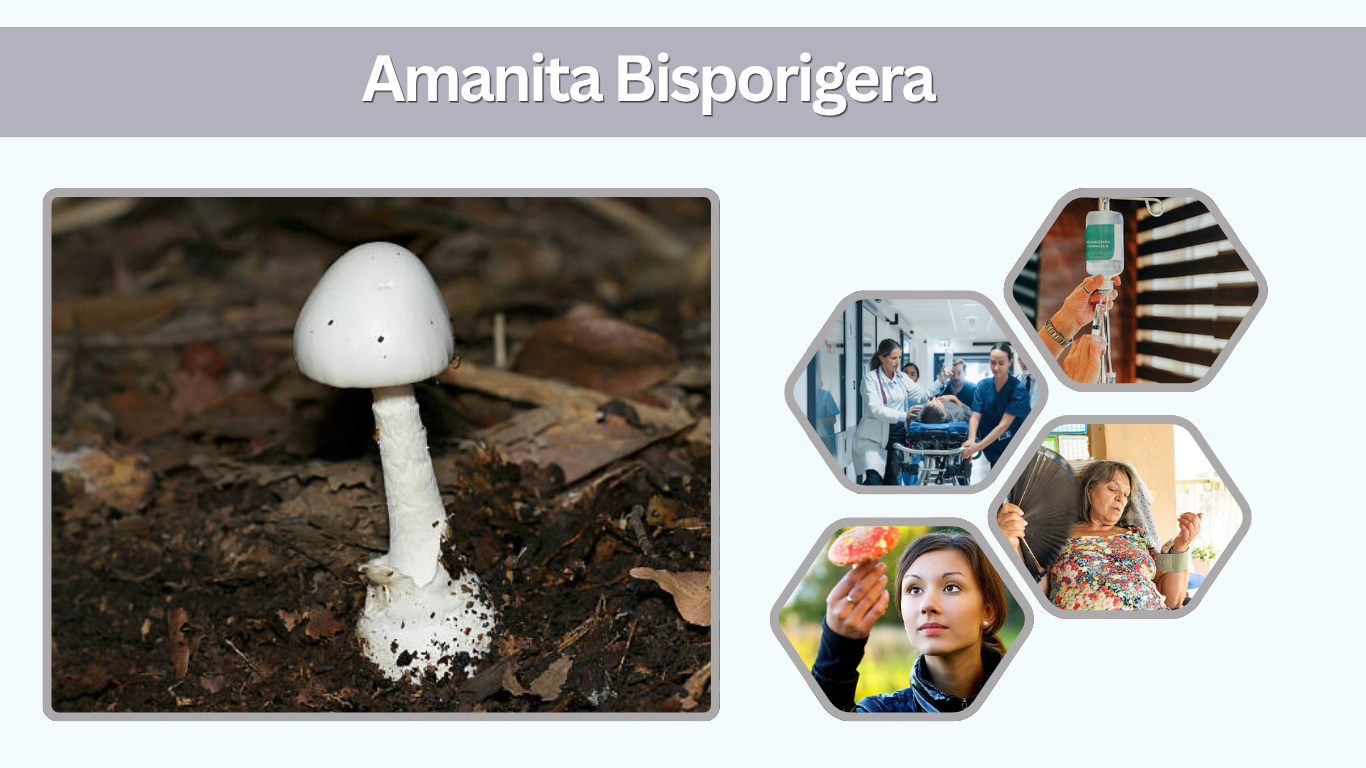
Amanita bisporigera, commonly known as the Destroying Angel, is one of the most poisonous mushrooms in North America. Its clean white appearance often tricks people into thinking it is safe to eat, leading to serious and sometimes fatal poisoning cases. This mushroom contains powerful toxins that attack the liver and kidneys. Learning how to recognize it, where it grows, and why it is dangerous is essential for anyone interested in mushroom foraging or outdoor safety.
What Is Amanita bisporigera?
Amanita bisporigera is a toxic species belonging to the Amanitaceae family. It is part of the Destroying Angel group, which includes several visually similar white mushrooms. Despite its delicate look, it is responsible for many severe poisoning incidents across North America. The species name refers to its unique biological feature of producing two spores per basidium, which helps distinguish it from related species at a microscopic level.
Scientific Classification
- Scientific name: Amanita bisporigera
- Family: Amanitaceae
- Order: Agaricales
- Phylum: Basidiomycota
Common Names and Pronunciation
- Common name: Destroying Angel
- Alternate names: White Amanita
- Pronunciation: uh-MAN-ih-tuh by-spor-ih-JAIR-uh
Amanita bisporigera Characteristics
This mushroom is known for its striking white color and elegant structure. While it may appear harmless, its physical features provide important clues for identification. Careful observation of each part of the mushroom is essential, especially the base and stem, which often reveal its true identity.
Cap (Pileus)
- Smooth and white, sometimes slightly sticky
- Egg-shaped when young, flattening as it matures
- Typically 5–10 cm wide
Gills
- White and closely spaced
- Free from the stem
- Do not change color with age
Stem and Annulus
- Slender white stem
- Ring (annulus) located near the upper part
- Fibrous texture
Base (Volva)
- Bulbous base enclosed in a sac-like volva
- One of the most critical identification features
Amanita bisporigera Habitat and Distribution

Amanita bisporigera is widely found in eastern North America, where it grows in forests and wooded areas. It forms a symbiotic relationship with trees, especially hardwood species such as oak. The mushroom typically appears during the warmer months, from summer to early fall. Its presence in many U.S. states, including Illinois, Ohio, and Georgia, makes it a common source of concern for foragers.
Amanita bisporigera Identification Guide
Proper identification is crucial because this mushroom closely resembles several edible species. Many poisoning cases occur due to confusion with harmless-looking white mushrooms. By focusing on specific features, it becomes easier to recognize and avoid this dangerous species.
Key Identification Features
- Entirely white mushroom
- Presence of both ring and volva
- White spore print
Growth Phases
- Egg stage resembling a puffball
- Expanding cap stage
- Fully mature flat cap
Amanita bisporigera Look-Alikes
The resemblance of Amanita bisporigera to other mushrooms makes it particularly hazardous. Some edible species look similar during early stages, while others are equally toxic. Understanding these look-alikes is essential for safe identification and avoiding accidental ingestion.
Edible Look-Alikes
- Button mushrooms (Agaricus species)
- Puffballs in early growth stages
Toxic Look-Alikes
- Amanita virosa
- Amanita verna
- Amanita ocreata
How to Tell the Difference
The most reliable way to identify Amanita bisporigera is by examining the base for a volva and checking for a ring on the stem. Edible mushrooms often lack these features. Additionally, cutting open a suspected puffball can reveal internal structures, helping distinguish it from immature Amanita species.
Amanita bisporigera vs Other Destroying Angels

Amanita bisporigera is often confused with other members of the Destroying Angel group. While these species share similar appearances and toxicity levels, they differ in geographic distribution. For example, Amanita virosa is more common in Europe, while Amanita ocreata is found in western North America. Despite these differences, all of them contain dangerous toxins and should be avoided completely.
Amanita bisporigera Toxicity and Poison (Amanitin)
Amanita bisporigera is highly toxic due to the presence of amatoxins, particularly alpha-amanitin. These compounds are extremely stable and remain active even after cooking or drying. Once ingested, they attack vital organs, especially the liver, making this mushroom one of the deadliest in North America. Understanding its toxicity helps explain why even small amounts can be fatal.
Toxins Present
- Alpha-amanitin (primary lethal toxin)
- Other amatoxins affecting liver cells
- Heat-resistant compounds
How It Affects the Body
- Blocks protein synthesis in cells
- Causes severe liver damage
- Leads to organ failure if untreated
Amanita bisporigera Poisoning

Poisoning from Amanita bisporigera usually occurs when people mistake it for edible white mushrooms. The delayed onset of symptoms makes it particularly dangerous, as victims may not seek immediate medical help. By the time symptoms appear, significant internal damage may already have occurred.
Common Causes of Poisoning
- Misidentification during foraging
- Confusion with edible species
- Lack of knowledge about Amanita features
Symptoms of Poisoning
- Severe vomiting and diarrhea
- Abdominal cramps
- Dehydration and weakness
Amanita bisporigera Symptoms Timeline
The progression of poisoning follows a distinct pattern that can mislead victims. After initial symptoms, a brief recovery phase may occur, giving the illusion that the danger has passed. However, this stage is often followed by serious organ failure, which can be life-threatening without prompt treatment.
Early Stage (6–24 Hours)
- Nausea and vomiting
- Watery diarrhea
- Abdominal pain
False Recovery Phase
- Symptoms temporarily improve
- Internal liver damage continues
Severe Stage
- Liver and kidney failure
- Jaundice and confusion
- Risk of coma or death
Amanita bisporigera Treatment and Survival

There is no guaranteed cure for Amanita bisporigera poisoning, but immediate medical care greatly increases survival chances. Treatment focuses on removing toxins from the body and supporting damaged organs. In severe cases, advanced medical procedures may be required.
Emergency Response
- Immediate hospitalization
- Activated charcoal to reduce toxin absorption
- Intravenous fluids
Advanced Treatment
- Silibinin-based therapy
- Intensive liver support
- Liver transplant in critical cases
Amanita bisporigera Life Cycle and Reproduction
Amanita bisporigera reproduces through spores that are released from its gills and dispersed by wind. These spores germinate in suitable soil conditions and form a network of fungal threads. The mushroom develops through distinct growth stages, beginning as a small egg-like structure and eventually expanding into its mature form. It forms a symbiotic relationship with trees, exchanging nutrients and supporting forest ecosystems.
Safety Tips for Mushroom Foragers
Foraging requires caution, especially when dealing with potentially deadly species like Amanita bisporigera. Following proper safety practices can significantly reduce the risk of accidental poisoning and ensure a safer outdoor experience.
Essential Safety Practices
- Never eat unidentified mushrooms
- Avoid all-white mushrooms if unsure
- Check for both ring and volva
- Use reliable field guides
Common Mistakes to Avoid
- Relying only on color
- Ignoring the mushroom base
- Trusting unverified information
FAQs
What is Amanita bisporigera commonly called?
Amanita bisporigera is commonly known as the Destroying Angel. This name refers to its white, angelic appearance and its extremely toxic nature, which can cause fatal poisoning even in small amounts.
Where is Amanita bisporigera found?
It is mainly found in eastern North America, especially in forested areas with hardwood trees. It commonly appears during summer and early fall in several U.S. states.
How can you identify Amanita bisporigera?
It can be identified by its all-white color, free gills, ring on the stem, and a sac-like volva at the base. Proper identification requires careful observation and experience.
What happens if you eat Amanita bisporigera?
Ingestion leads to severe poisoning, starting with gastrointestinal symptoms and progressing to liver failure. Without timely medical treatment, it can be fatal.
Is Amanita bisporigera different from Amanita virosa?
Yes, Amanita bisporigera is mainly found in North America, while Amanita virosa is more common in Europe. Both are highly toxic and look very similar.