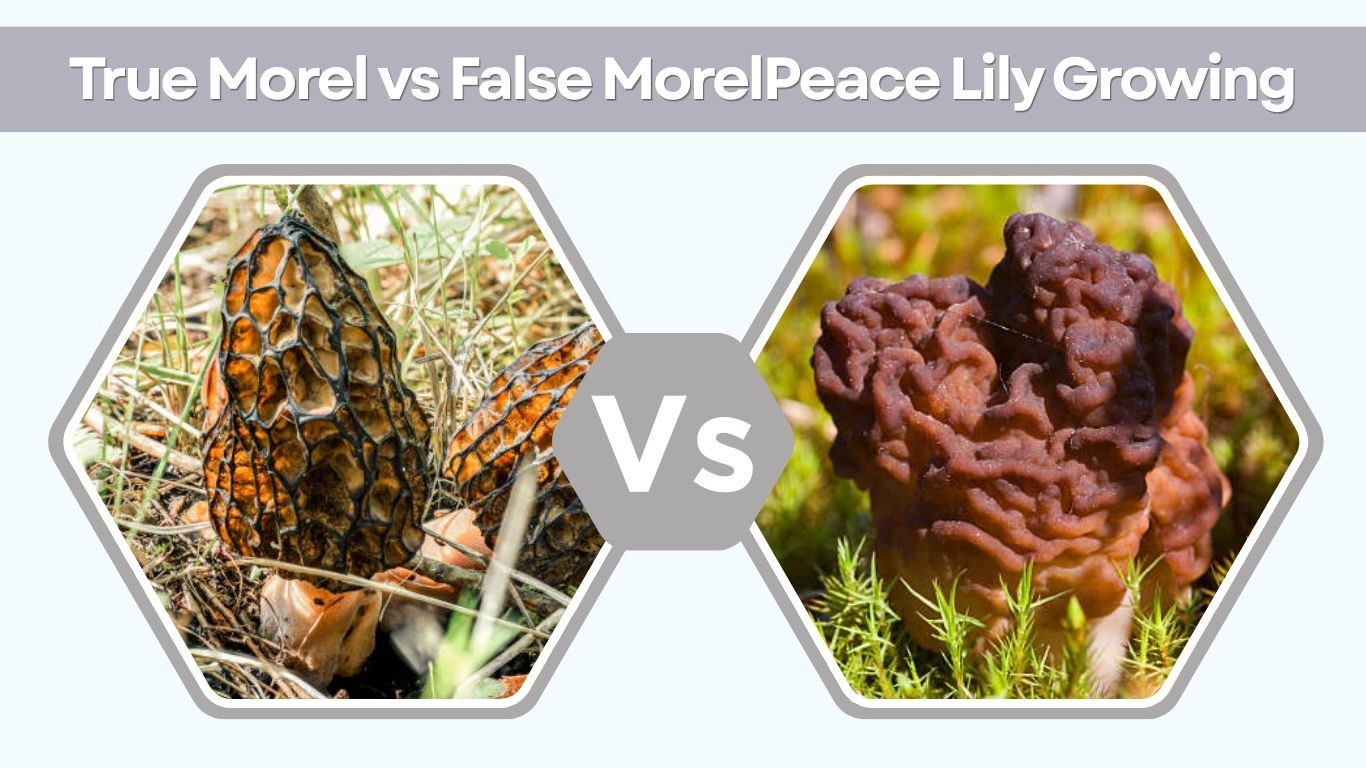
Morel mushrooms are among the most sought-after wild fungi, prized for their unique flavor and culinary value. However, foraging for morels comes with a serious challenge—correct identification. True morels are safe to eat when properly cooked, but their lookalikes, known as false morels, can be toxic and even dangerous.
Because both types often grow in similar environments and seasons, confusion is common, especially among beginners. This guide will help you clearly understand the differences between true morels and false morels, focusing on safe and accurate identification.
What Are True Morels?
True morels belong to the genus Morchella and are considered a delicacy in many parts of the world. They are highly valued for their rich, earthy flavor and are commonly used in gourmet cooking.
These mushrooms typically appear in spring and are often found in forests, especially near dead or dying trees such as elm, ash, and apple. True morels have a very distinctive appearance that makes them easier to identify once you know what to look for.
Key Characteristics of True Morels
- Honeycomb-like cap with deep pits and ridges
- Cap is fully attached to the stem
- Completely hollow inside from top to bottom
- Colors range from yellow to brown or black
Their hollow structure and uniform pattern are the most reliable features for identification.
What Are False Morels?
False morels are a group of mushrooms that resemble true morels but belong to different genera, mainly Gyromitra and Verpa. Unlike true morels, many false morels are toxic and can cause serious health problems if consumed.
They often grow in the same types of environments as true morels, which increases the risk of misidentification. At first glance, they may look similar, but closer inspection reveals key differences.
Key Characteristics of False Morels
- Irregular, wrinkled, or brain-like cap
- Cap may hang loosely from the stem
- Interior is solid, cotton-like, or chambered
- Often reddish-brown or dark in color
Because of their inconsistent shape and internal structure, false morels can be distinguished with careful observation.
Why Identification Matters (Safety First)
Correct identification of morel mushrooms is extremely important because consuming the wrong type can lead to poisoning. False morels may contain toxins such as gyromitrin, which can affect the nervous system and digestive system.
Risks of Misidentification
- Nausea and vomiting
- Dizziness and headaches
- Severe poisoning in extreme cases
Even experienced foragers take extra precautions when identifying mushrooms. If there is any doubt, it is always safer not to consume the mushroom.
True Morel vs False Morel – Key Differences

| Feature | True Morel | False Morel |
| Cap Shape | Honeycomb with pits | Wrinkled or brain-like |
| Cap Attachment | Fully attached to stem | Often loose or hanging |
| Inside Structure | Completely hollow | Solid or cotton-like |
| Texture | Uniform and structured | Irregular and lobed |
| Color | Yellow, tan, brown | Reddish, dark brown |
| Edibility | Edible (cooked) | Often toxic |
This comparison table provides a quick way to differentiate between the two, but it’s important to examine multiple features before making a decision.
Physical Identification Guide
Identifying morels correctly involves closely examining their external and internal features.
Cap Structure
True morels have a well-defined honeycomb pattern made up of deep pits and ridges. This structure looks organized and symmetrical. In contrast, false morels have irregular folds that resemble a brain or wrinkled cloth, with no clear pattern.
Stem and Cap Connection
In true morels, the cap is fully attached to the stem along its base, forming a continuous structure. False morels often have caps that hang loosely or are only partially attached, creating a skirt-like appearance.
Interior Structure
One of the most reliable ways to identify a true morel is by checking its interior. When cut open, a true morel is completely hollow from the tip of the cap to the base of the stem. False morels, however, are filled with tissue, fibers, or chambers.
Cross-Section Test (Most Reliable Method)
The cross-section test is one of the easiest and most dependable ways to distinguish between true and false morels.
To perform this test, carefully cut the mushroom lengthwise from top to bottom.
- True morel: Completely hollow inside
- False morel: Solid, cotton-like, or segmented interior
This simple test can quickly confirm whether the mushroom is safe or potentially dangerous. It is especially useful for beginners who may not yet recognize subtle external differences.
Habitat and Growing Conditions

Both true and false morels grow in similar environments, which is why they are often confused. However, there are slight differences in their preferred conditions.
True Morels
True morels are commonly found in:
- Deciduous forests
- Areas near dead or dying trees (elm, ash, apple)
- Burn sites or recently disturbed soil
- Moist, well-drained ground
They typically appear in spring, often after rainfall when temperatures begin to rise.
False Morels
False morels also grow in wooded areas but may appear in slightly different conditions:
- Coniferous forests (pine-heavy areas)
- Sandy or disturbed soil
- Early spring or even late winter in some regions
Because both types can grow in overlapping habitats, location alone is not enough for identification.
Common Species Examples
Understanding specific species can help improve identification accuracy.
True Morels
- Yellow Morel (Morchella esculenta) – Light-colored, rounded honeycomb cap
- Black Morel (Morchella elata) – Darker, more elongated shape
False Morels
- Gyromitra esculenta – Brain-like cap, highly toxic
- Verpa bohemica – Cap hangs loosely, often mistaken for true morel
Learning these common species can make field identification easier and safer.
Toxicity and Health Risks

False morels can be dangerous due to the presence of toxic compounds, especially gyromitrin. This toxin can convert into a harmful substance in the body, affecting the nervous system and liver.
Possible Symptoms
- Nausea and vomiting
- Headaches and dizziness
- Abdominal pain
- Severe poisoning in extreme cases
It’s important to note that toxicity can vary depending on the species and even individual sensitivity. Some people may experience stronger reactions than others.
Edibility and Cooking

True Morels
True morels are safe to eat only when fully cooked. Raw morels can cause digestive discomfort, so proper cooking is essential. They are widely used in gourmet dishes and are valued for their rich, earthy flavor.
False Morels
False morels are not recommended for consumption. Although some cultures have historically consumed them after special preparation, the risk of poisoning remains high. For safety, it is best to avoid eating them altogether.
Beginner Tips for Safe Identification
If you are new to mushroom foraging, following simple guidelines can help prevent mistakes.
- Always cut the mushroom open to check if it is hollow
- Look closely at the cap pattern (honeycomb vs irregular folds)
- Avoid mushrooms with brain-like or wrinkled caps
- Never rely on a single feature—check multiple characteristics
- When unsure, do not consume the mushroom
Consulting experienced foragers or field guides can also improve your confidence and safety.
Quick Identification Checklist
Use this checklist as a quick reference when examining a mushroom:
- Honeycomb cap with defined pits → likely true morel
- Irregular, brain-like folds → likely false morel
- Completely hollow inside → true morel
- Solid or cotton-like interior → false morel
- Cap fully attached to stem → true morel
- Cap hanging or loosely attached → false morel
This checklist is especially helpful in the field when quick decisions are needed.
FAQs
How can you tell a true morel from a false morel?
The easiest way is to examine the cap and interior. True morels have a honeycomb-like cap and are completely hollow inside. False morels have irregular, brain-like folds and are usually solid or filled inside.
Are false morels always poisonous?
Most false morels contain toxins, though the level of toxicity can vary by species and location. Because of the risk and unpredictability, they are generally considered unsafe to eat.
Can you eat false morels if cooked?
Cooking does not reliably remove all toxins from false morels. While some traditional methods exist, they are risky and not recommended for beginners or casual foragers.
Where do true morels grow?
True morels typically grow in spring in deciduous forests, especially near dead or dying trees like elm, ash, and apple. They prefer moist soil and often appear after rainfall.
What happens if you eat a false morel?
Eating a false morel can cause symptoms like nausea, vomiting, dizziness, and abdominal pain. In severe cases, it can lead to serious poisoning affecting the liver and nervous system.