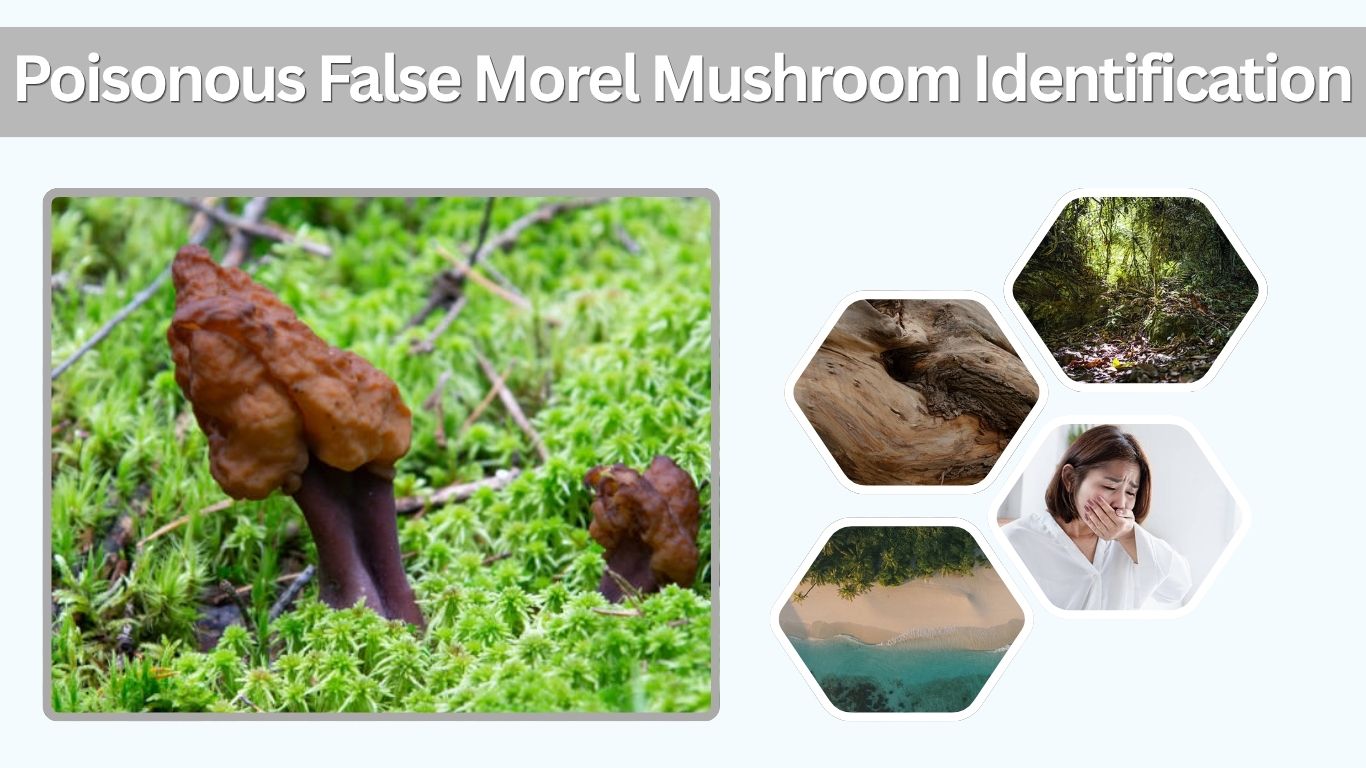
Foraging wild mushrooms can be rewarding, but it also comes with serious risks—especially when it comes to identifying false morels. Poisonous false morel mushrooms are among the most commonly misidentified fungi because they resemble edible true morels. This confusion can lead to dangerous consequences, as some false morels contain toxins that may cause severe illness.
Learning how to correctly identify poisonous false morels is essential for anyone interested in mushroom hunting. This guide focuses specifically on identifying these toxic lookalikes and avoiding potential hazards.
What Is a Poisonous False Morel?
False morels are a group of mushrooms that resemble true morels but are not part of the Morchella genus. Most belong to genera such as Gyromitra and Verpa. Many species in this group are considered poisonous due to the presence of harmful toxins.
The most dangerous compound found in some false morels is gyromitrin, which converts into a toxic substance in the body. This toxin can affect the liver, nervous system, and digestive tract.
Key Identification Features of Poisonous False Morels
1. Brain-Like Cap Structure
One of the most noticeable features of a false morel is its cap. Instead of having a neat, honeycomb pattern, the cap appears:
- Wrinkled or folded
- Irregular and uneven
- Similar to the shape of a brain
The folds are often random and lack the deep, uniform pits seen in true morels.
2. Irregular Shape and Texture
Poisonous false morels do not have a symmetrical or structured appearance. Their caps often look:
- Twisted or lobed
- Bulky and distorted
- Uneven in form
This irregularity is a key warning sign when identifying mushrooms in the wild.
3. Loose or Hanging Cap
Unlike true morels, false morels may have caps that are not fully attached to the stem.
- The cap may hang loosely like a skirt
- It may only connect at the top of the stem
- The edges can appear free or drooping
This partial attachment is a major identification clue.
4. Solid or Cotton-Like Interior
One of the most reliable ways to identify a poisonous false morel is by cutting it open.
- The inside is not hollow
- It may contain cotton-like fibers
- Some species have chambered or folded interiors
This contrasts sharply with edible morels, which are completely hollow.
5. Color and Appearance
False morels often have darker and more uneven coloring compared to true morels.
Common colors include:
- Reddish-brown
- Dark brown
- Chestnut or rusty tones
The surface may appear dull or slightly shiny depending on moisture.
6. Unusual Cap-to-Stem Proportion
In many false morels, the cap looks oversized or disproportionate compared to the stem.
- Cap may appear inflated or bulky
- Stem is often shorter or less defined
- Overall structure looks less balanced
This visual imbalance can help in quick field identification.
Common Poisonous False Morel Species

Gyromitra esculenta
- Known as the “brain mushroom”
- Highly toxic in many regions
- Distinct wrinkled, brain-like cap
Verpa bohemica
- Cap hangs loosely from the stem
- Often mistaken for early morels
- Interior is not fully hollow
These species are frequently confused with edible mushrooms and should be avoided.
Habitat and When to Find Them

Poisonous false morels often grow in similar environments to true morels, which increases the risk of confusion.
Common Locations
- Forest floors, especially under pine or conifer trees
- Sandy or disturbed soil
- Areas with decaying organic matter
Season
- Early spring to late spring
- Sometimes appear slightly earlier than true morels
Because they grow in overlapping habitats, location alone is not enough for identification.
Why Identification Is Critical

Misidentifying a false morel as an edible mushroom can lead to poisoning. The toxins present in these mushrooms are not always destroyed by cooking, drying, or freezing.
Health Risks
- Digestive distress (nausea, vomiting)
- Neurological symptoms (dizziness, confusion)
- Severe cases may affect liver function
Even experienced foragers treat unknown mushrooms with caution.
Simple Field Identification Checklist
Use this quick checklist when examining a mushroom:
- Cap looks like a brain or wrinkled mass → likely false morel
- Shape is irregular and uneven → warning sign
- Cap hangs loosely from stem → likely false morel
- Inside is solid or filled → toxic indicator
- Color is reddish or dark brown → possible false morel
If multiple signs match, do not consume the mushroom.
Final Safety Tips

- Always cut mushrooms open before identifying
- Never rely on appearance alone—check multiple features
- Avoid mushrooms with irregular or brain-like caps
- Do not eat wild mushrooms unless 100% certain of identification
- When in doubt, leave it out
Conclusion
Poisonous false morel mushrooms can be deceptively similar to edible morels, making proper identification absolutely essential. By focusing on key features such as cap shape, attachment, interior structure, and overall appearance, you can avoid dangerous mistakes.
Foraging should always be approached with caution and respect for nature. A careful eye and proper knowledge are your best tools for staying safe while exploring the world of wild mushrooms.