
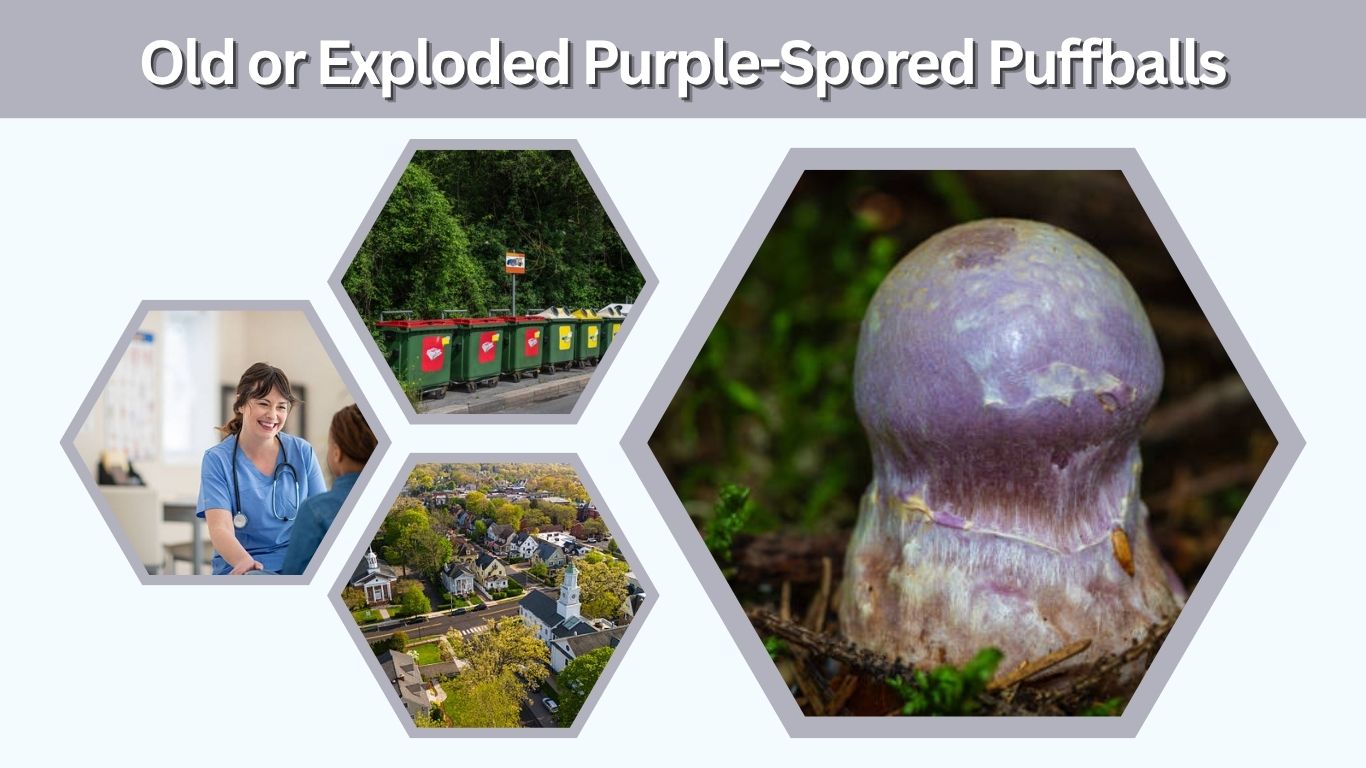
The purple-spored puffball (Calvatia cyathiformis) is a unique and fascinating wild mushroom known for its large size and distinctive purple spores. Commonly found in fields and grassy areas, it attracts attention from both foragers and nature enthusiasts. But many people ask: is it edible, or could it be dangerous? Understanding how to properly identify and use this mushroom is essential. In this guide, you’ll learn what it is, how to recognize it, and whether it’s safe to eat.
What Is a Purple-Spored Puffball?
The purple-spored puffball is a type of puffball mushroom that belongs to the Calvatia genus. Unlike typical mushrooms with caps and stems, puffballs grow as round, ball-like structures. What makes this species special is the purple-brown spore mass it develops as it matures.
Scientific Classification
- Genus: Calvatia
- Species: cyathiformis
This mushroom is closely related to other puffballs but stands out due to its size and spore color.
Where Does It Grow?
Purple-spored puffballs are commonly found across North America, including regions like New Jersey. They typically grow in:
- Open fields and grasslands
- Lawns and pastures
- Roadsides and meadows
They usually appear from late summer to early fall, especially after rainfall, when conditions are moist and favorable for growth.
How to Identify Purple-Spored Puffball
Correct identification is crucial when dealing with wild mushrooms. While the purple-spored puffball has some distinct features, beginners should always be cautious.
Key Identification Features
This mushroom is usually round or slightly flattened and can grow quite large—sometimes as big as a melon. When young, it has:
- A smooth, pale outer surface
- A firm and solid structure
- No visible cap, gills, or stem
Its thick outer skin protects the interior as it develops.
Inside Appearance
The inside of the mushroom is the most important clue for identification.
- Young (edible stage): Completely white, firm, and uniform
- Mature (non-edible stage): Turns yellow, then purple or brown
If the interior is anything other than pure white, it should not be eaten.
Spore Characteristics
As the mushroom matures, it produces a powdery spore mass. In this species, the spores are:
- Purple-brown in color
- Released when the outer skin breaks or is disturbed
This stage is often when the mushroom looks “exploded” or dusty.
Purple-Spored Puffball Look-Alikes
One of the biggest risks with wild mushrooms is confusing them with toxic species. While puffballs are generally easy to recognize, there are some dangerous look-alikes.
Dangerous Look-Alikes
- Earthballs (Scleroderma species): These are toxic and often mistaken for puffballs. They usually have a darker interior early on.
- Immature Amanita mushrooms: These can be deadly and may look similar before they fully develop.
How to Tell the Difference
The safest way to identify a true puffball is by cutting it open.
- A real edible puffball will be completely white inside
- There should be no gills, stems, or developing cap structures
- Any signs of color, pattern, or internal structure mean it is not safe
This simple test is one of the most reliable ways to avoid dangerous mistakes.
Are Purple-Spored Puffballs Edible?
Yes, purple-spored puffballs are edible—but only at a specific stage of their growth.
When Is It Safe to Eat?
The mushroom is safe to eat when:
- The interior is pure white and firm
- There are no signs of discoloration
- It is still young and fresh
At this stage, the texture is pleasant and suitable for cooking.
When Is It Not Edible?
The mushroom becomes inedible when:
- The inside turns yellow, green, or purple
- The texture becomes soft or powdery
- Spores have started forming
Eating mature puffballs is not recommended, as they are no longer safe or enjoyable.
Are Purple-Spored Puffballs Poisonous?
Purple-spored puffballs are not poisonous when properly identified and eaten at the right stage. However, there are still risks involved.
The main dangers come from:
- Misidentifying the mushroom
- Consuming it after it has matured
Safety Warnings
Wild mushroom foraging always carries some risk. To stay safe:
- Only eat mushrooms you can confidently identify
- Avoid consuming anything with uncertain features
- When in doubt, do not eat it
Proper knowledge and caution are essential when dealing with wild mushrooms.
Old or Exploded Purple-Spored Puffballs
As purple-spored puffballs mature, they go through a noticeable transformation that marks the end of their edible stage.
Mature Stage Characteristics
When fully mature:
- The interior turns into a dry, powdery spore mass
- The color changes to purple-brown
- The outer skin may crack or rupture
At this point, the mushroom often releases spores into the air when disturbed, creating a dusty “puff.”
Are They Still Edible?
No, mature or “exploded” purple-spored puffballs are not edible. The texture becomes unpleasant, and the nutritional value declines. These mushrooms should be left in nature to complete their life cycle.
How to Cook Purple-Spored Puffball

When harvested at the right stage, purple-spored puffballs can be a delicious and versatile ingredient.
Preparation Tips
- Always cut the mushroom open to confirm it is pure white inside
- Remove the outer skin if it feels tough
- Clean gently with a dry or slightly damp cloth (avoid soaking)
- Slice into even pieces for cooking
Cooking Methods
Purple-spored puffballs have a mild flavor and absorb seasonings well. Popular cooking methods include:
- Sautéing with butter, garlic, and herbs
- Grilling thick slices for a meat-like texture
- Pan-frying for a crispy outside
- Baking as part of casseroles or dishes
Purple-Spored Puffball Recipes

These simple recipes highlight the mushroom’s texture and flavor.
Sauteed Puffball
Slice the puffball into pieces and cook in a pan with oil or butter. Add garlic, salt, and pepper for a quick and flavorful dish.
Puffball “Steaks”
Cut thick slices and grill or pan-fry them like steaks. Season well and serve as a plant-based main dish.
Breaded Puffball Slices
Dip slices in egg and breadcrumbs, then lightly fry until golden. This creates a crispy texture similar to fried mushrooms.
Taste and Texture
Purple-spored puffballs have a mild, slightly earthy flavor that pairs well with many ingredients.
- Flavor: Subtle and slightly nutty
- Texture: Soft and sponge-like when cooked
- Cooking quality: Absorbs flavors easily
Because of their neutral taste, they work well in a variety of recipes.
Where to Find Purple-Spored Puffballs

These mushrooms are relatively easy to find if you know where to look.
- Common in fields, meadows, and grassy lawns
- Often appear after rainfall
- Found in regions like New Jersey and across North America
They tend to grow in open areas rather than dense forests, making them easier to spot.
Nutritional Value and Benefits
Like many edible mushrooms, purple-spored puffballs provide useful nutrients.
- Low in calories
- Contains small amounts of protein and fiber
- Provides minerals and antioxidants
While not a superfood, they can be a healthy addition to a balanced diet when consumed fresh and properly prepared.
Tips for Foraging Safely

Foraging can be rewarding, but safety should always come first.
- Only pick mushrooms that are young and white inside
- Avoid areas with pollution, such as roadsides
- Learn from experienced foragers or reliable guides
- Never eat a mushroom unless you are 100% certain of its identity
When in doubt, it’s always safer to leave it untouched.
Conclusion
The purple-spored puffball is an interesting and edible wild mushroom when harvested at the right stage. Its large size, unique purple spores, and mild flavor make it appealing to foragers and cooks alike.
However, proper identification is essential. Only young specimens with a pure white interior are safe to eat, while mature ones should be avoided. By following safe foraging practices and proper preparation, you can enjoy this mushroom as a unique addition to your meals.
FAQs
Is purple-spored puffball edible?
Yes, purple-spored puffballs are edible when they are young and have a firm, completely white interior. Once the inside begins to change color or becomes powdery, they are no longer safe or suitable for eating.
Are purple-spored puffballs poisonous?
They are not poisonous when correctly identified and consumed at the right stage. However, misidentification with toxic mushrooms or eating mature specimens can pose risks, so caution is essential.
How do you identify a purple-spored puffball?
You can identify it by its round shape, smooth outer skin, and lack of gills or stems. The most important test is cutting it open—if the inside is pure white, it is safe; any discoloration means it should not be eaten.
Can you eat old purple-spored puffballs?
No, old or mature puffballs are not edible. Their interior turns into a powdery spore mass, making them unsafe and unpleasant to eat.
What does purple-spored puffball taste like?
Purple-spored puffballs have a mild, slightly earthy flavor and a soft texture. They absorb seasonings well, which makes them versatile for cooking in a variety of dishes.