
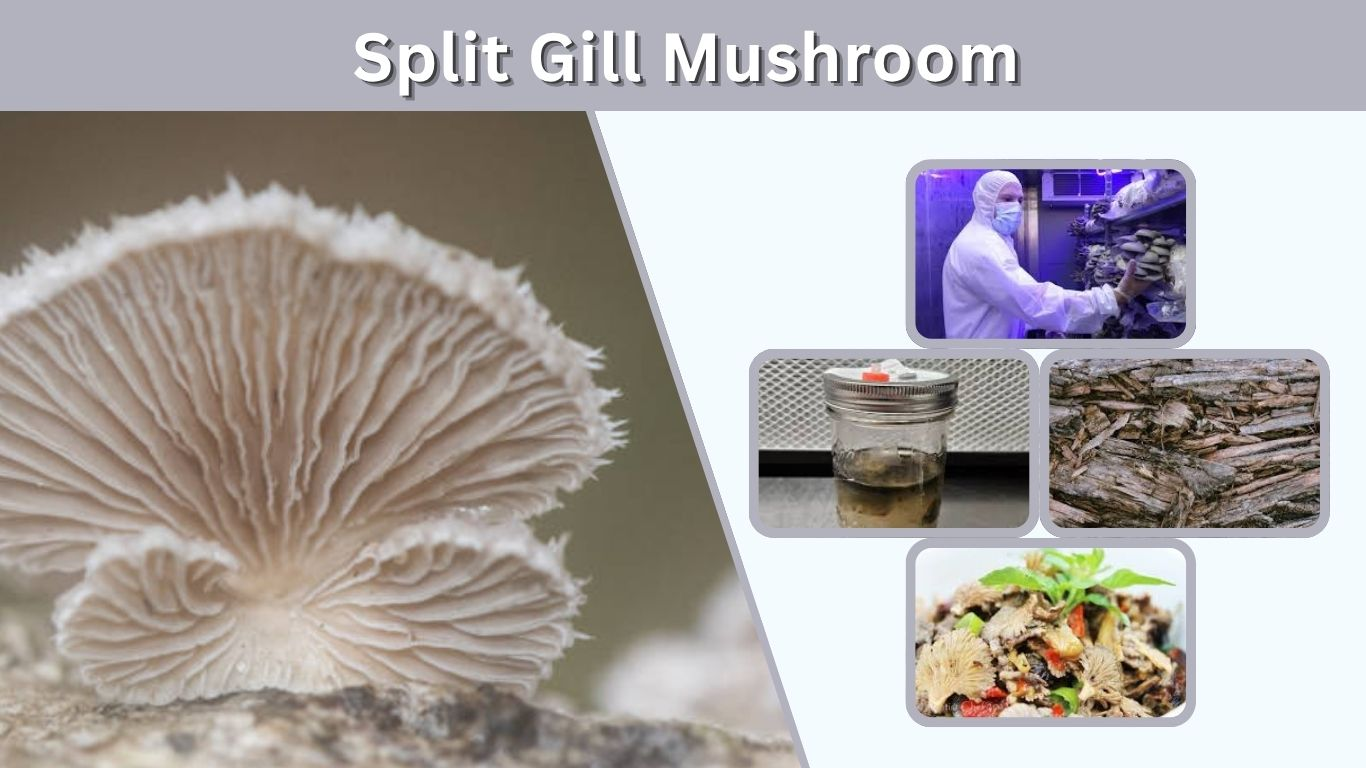
The split gill mushroom is a fascinating and widely distributed fungus known for its unique structure and resilience. Scientifically called Schizophyllum commune, it grows on dead wood and thrives in diverse environments across the world. Its distinctive split gills and ability to survive drying conditions make it stand out among fungi. While it is not commonly eaten, it has attracted attention for its potential health benefits and scientific importance. This guide explores its identification, habitat, uses, and safety considerations.
What Is a Split Gill Mushroom?
The split gill mushroom is a small, fan-shaped fungus commonly found on decaying wood. It belongs to a group of fungi known for breaking down organic matter and recycling nutrients in ecosystems. Despite its simple appearance, it has complex biological features that make it a subject of scientific study worldwide.
Key Characteristics
- Scientific name: Schizophyllum commune
- Common names include split gill and common split gill
- Grows on dead hardwood and fallen branches
- Recognized for its split gill structure underneath
Split Gill Mushroom Identification
Identifying the split gill mushroom is relatively easy once you know what to look for. Its shape, texture, and underside structure are distinct compared to other fungi. These features help distinguish it from similar-looking species found on wood surfaces.
Physical Appearance
- Small, fan-shaped or shell-like caps
- Grayish-white to pale color
- Hairy or fuzzy upper surface
- Gills underneath appear split down the middle
Look-Alike Species
- May resemble small bracket fungi
- Can be confused with polypores at first glance
- Split gills are the key identifying feature
Split Gill Mushroom Habitat and Distribution

The split gill mushroom is one of the most widespread fungi on Earth. It adapts easily to different climates and environments, making it common in both natural forests and urban areas where wood is present.
Where It Grows
This fungus grows mainly on dead or decaying hardwood. It is often found on fallen logs, branches, and tree stumps. It prefers moist environments but can survive dry periods by becoming dormant and reactivating when moisture returns.
Global Range
It is found across North America, Europe, Asia, and tropical regions. Its ability to thrive in various climates makes it one of the most commonly encountered fungi worldwide.
Split Gill Mushroom Edibility

The edibility of the split gill mushroom is a common question among foragers. While it is not considered poisonous, it is not widely consumed due to its texture and preparation challenges.
Is It Edible or Poisonous?
- Not classified as toxic
- Generally safe but not recommended for casual eating
- Tough and leathery texture makes it hard to consume
Culinary Considerations
- Rarely used in cooking
- Requires long boiling or drying
- Not popular in most cuisines
Split Gill Mushroom Benefits

Although not commonly eaten, the split gill mushroom has attracted attention for its potential benefits. Researchers have studied its compounds for possible health and industrial applications, making it an important fungus beyond culinary use.
Potential Health Benefits
- Contains bioactive compounds
- Studied for immune-support properties
- May have antimicrobial effects
Other Uses
- Used in scientific research
- Explored for skincare applications
- Studied for enzyme production
Split Gill Mushroom Reproduction
The reproduction system of the split gill mushroom is one of the most complex in the fungal world. It plays a key role in how the species spreads and adapts to different environments.
Unique Reproductive System
This fungus has thousands of mating types, often referred to as sexes. This diversity increases the chances of successful reproduction and genetic variation, allowing it to thrive in many conditions.
Spore Production
- Produces airborne spores
- Spores spread through wind
- Quickly colonizes new wood surfaces
Adaptations of Split Gill Mushroom
The split gill mushroom is highly adaptable, which explains its global presence. Its survival strategies allow it to endure harsh environmental conditions and continue growing when circumstances improve.
Key Adaptations
- Can dry out completely and revive later
- Gills open and close based on moisture levels
- Highly resistant to environmental stress
Split Gill Mushroom Uses
The split gill mushroom is valued more for its scientific and practical uses than for food. Its unique biological properties make it useful in research and industrial applications. It has also gained attention in emerging fields such as skincare and biotechnology.
Scientific and Industrial Uses
- Widely studied in microbiology and genetics
- Used to understand fungal reproduction systems
- Helps in enzyme and biochemical research
Skincare and Cosmetic Uses
- Extracts used in moisturizing products
- Studied for skin-repair properties
- Increasing interest in natural formulations
Split Gill Mushroom Infection and Risks
Although generally harmless in nature, the split gill fungus can pose risks in rare situations. These risks are mostly associated with human health, especially when spores are inhaled or when individuals have weakened immune systems.
Can It Cause Infection?
In rare cases, this fungus has been linked to respiratory infections in humans. These infections are uncommon and typically affect people with compromised immune systems. Healthy individuals are unlikely to experience problems from casual exposure.
Safety Considerations
- Avoid inhaling large amounts of spores
- Not recommended for inexperienced foragers
- Handle with care in indoor environments
Split Gill Mushroom Cultivation

Cultivating split gill mushrooms is possible but not very common. Unlike popular edible mushrooms, it requires specific conditions and is mainly grown for research or experimental purposes rather than for food production.
Growing Conditions
- Requires wood-based substrates
- Prefers humid and shaded environments
- Grows slowly compared to common edible fungi
Spore and Culture Availability
- Available for research purposes
- Sold as liquid cultures or spores
- Used by hobbyists and scientists
Interesting Facts About Split Gill Mushroom
The split gill mushroom has several unusual features that make it one of the most interesting fungi in the natural world. Its resilience and biological complexity set it apart from many other species.
- One of the most widely distributed fungi globally
- Can survive complete drying and revive later
- Has thousands of mating types
- Plays a key role in breaking down dead wood
FAQs
Are split gill mushrooms edible?
Split gill mushrooms are technically edible, but they are not commonly eaten due to their tough texture. They require extensive preparation and are not considered suitable for regular culinary use.
Is split gill mushroom poisonous?
No, it is not classified as poisonous. However, it is not widely consumed and may be difficult to digest, so it is generally avoided by most people.
What are the benefits of split gill mushroom?
It contains compounds studied for potential health benefits, including immune support and antimicrobial properties. It is also used in scientific research and emerging skincare applications.
Where does split gill fungus grow?
It grows on dead or decaying wood in forests, parks, and urban areas. It is found worldwide in both tropical and temperate climates.
Can split gill mushroom cause infection?
In rare cases, it can cause infections, particularly in individuals with weakened immune systems. These cases are uncommon but have been documented in medical research.