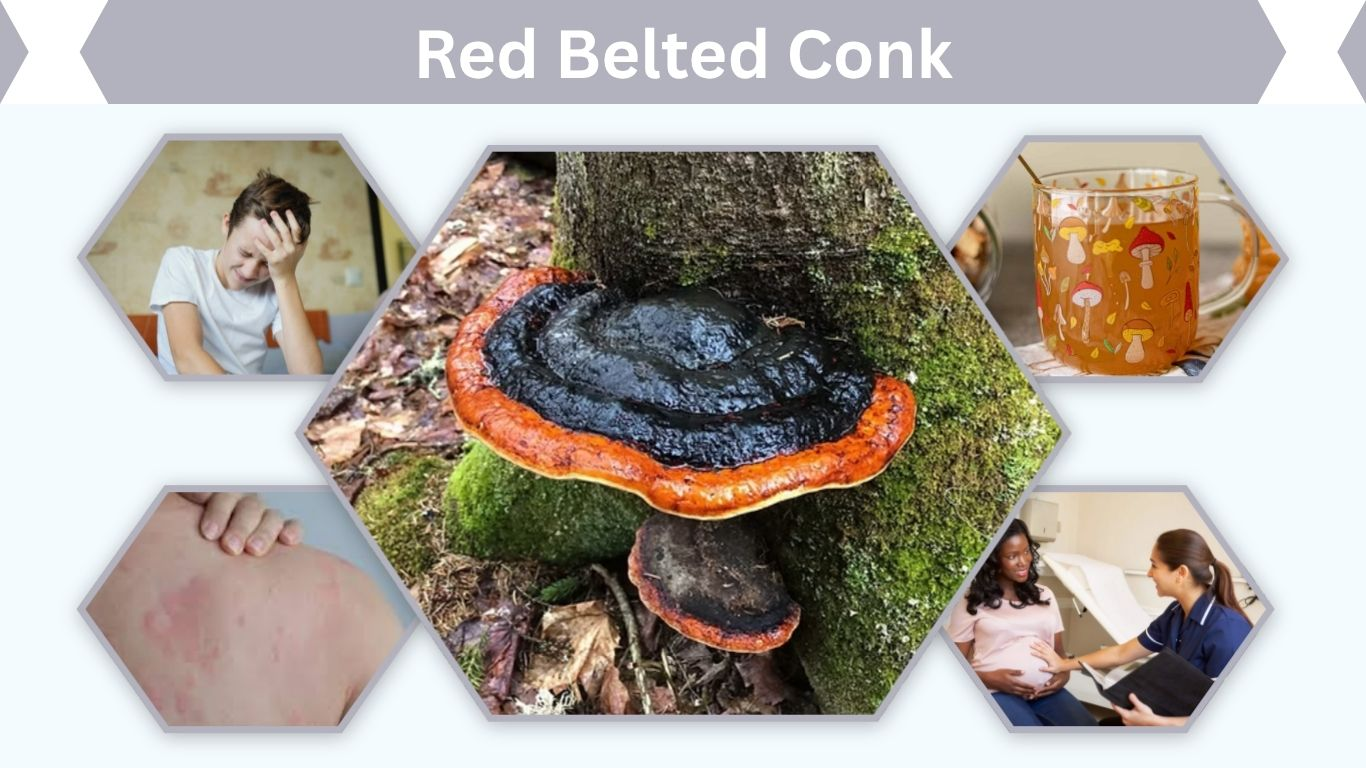
The red belted conk is a unique medicinal fungus recognized for its striking red band and shelf-like appearance. Found on decaying hardwoods in forests, this mushroom has long been used in traditional medicine and is now gaining popularity in herbal supplements. Beyond its visual appeal, it offers potential health benefits ranging from immune support to anti-inflammatory effects, making it an important species in both natural and scientific medicine.
This guide explores its identification, edibility, medicinal properties, traditional uses, and how it compares to the well-known reishi mushroom.
Overview of Red Belted Conk
The red belted conk is a bracket fungus with a hard, woody texture, often growing on dead or dying trees. Its most striking feature is the bright red band along its upper surface, which helps distinguish it from other fungi. Popular in herbal medicine, it has been historically used for immune support, while its presence also plays a role in forest ecology by decomposing wood and recycling nutrients.
Identification and Characteristics
- Appearance: Shelf-like, hard surface with brown to gray tones and a prominent red band.
- Fruiting Body: Concentric growth rings with a smooth upper surface; underside is porous.
- Illustrations: Helpful for field identification and educational purposes.
Red Belted Conk Edibility and Culinary Uses
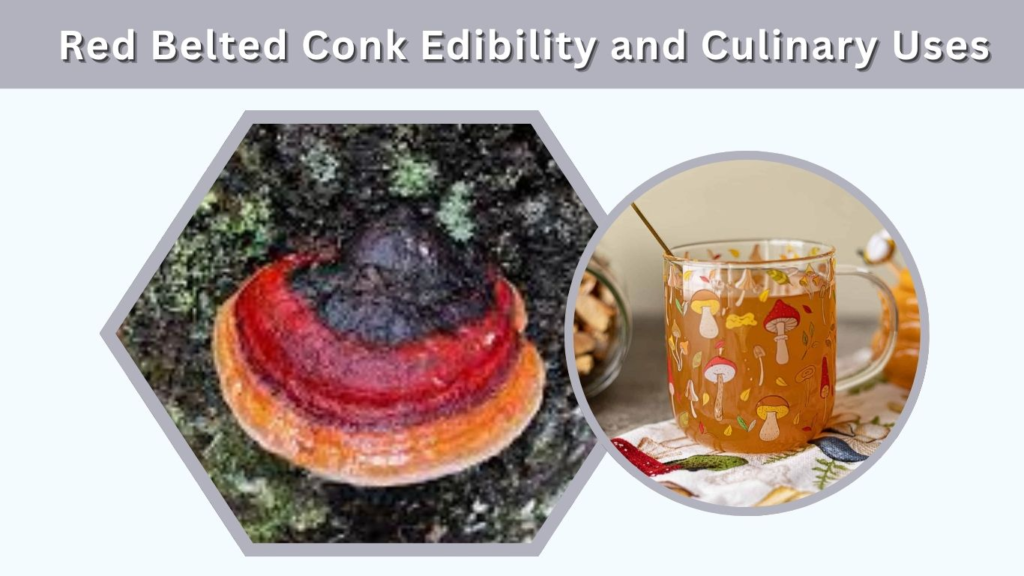
Though tough and not typically eaten like other mushrooms, the red belted conk is widely used in medicinal preparations. Its edibility focuses more on teas and extracts rather than direct consumption.
Edibility
- Considered inedible raw due to its woody texture.
- Can be used to prepare infusions or decoctions for medicinal purposes.
- Sometimes included in powdered form in herbal supplements.
Teas and Beverages
- Red Belted Conk Tea: Brewed slowly to extract beneficial compounds.
- Often combined with other medicinal mushrooms for immune-boosting effects.
- Slightly bitter taste, similar to reishi tea, making it a functional herbal drink rather than a culinary delight.
Red Belted Conk Medicinal Properties and Benefits
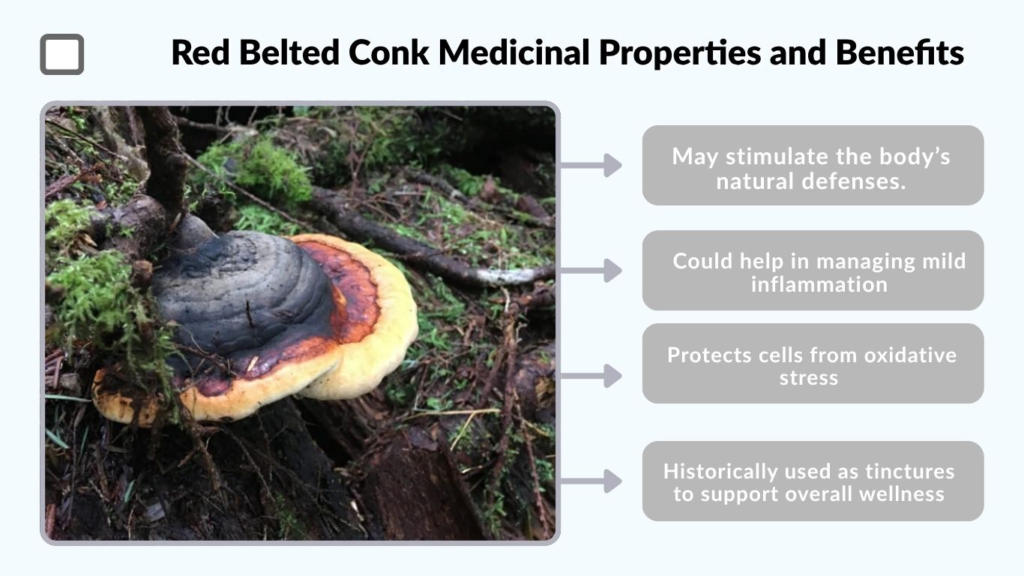
The red belted conk is valued primarily for its health-promoting properties. Its compounds may help modulate immune function and reduce inflammation. Traditional medicine systems, especially in North America, have recognized its potential for centuries.
Key Benefits
- Immune Support: May stimulate the body’s natural defenses.
- Anti-inflammatory Properties: Could help in managing mild inflammation.
- Antioxidant Effects: Protects cells from oxidative stress.
Traditional Uses
- Historically used as tinctures to support overall wellness.
- Employed in teas or decoctions to aid recovery from minor illnesses.
- Sometimes used externally in folk medicine for minor skin ailments.
Comparison with Reishi Mushroom
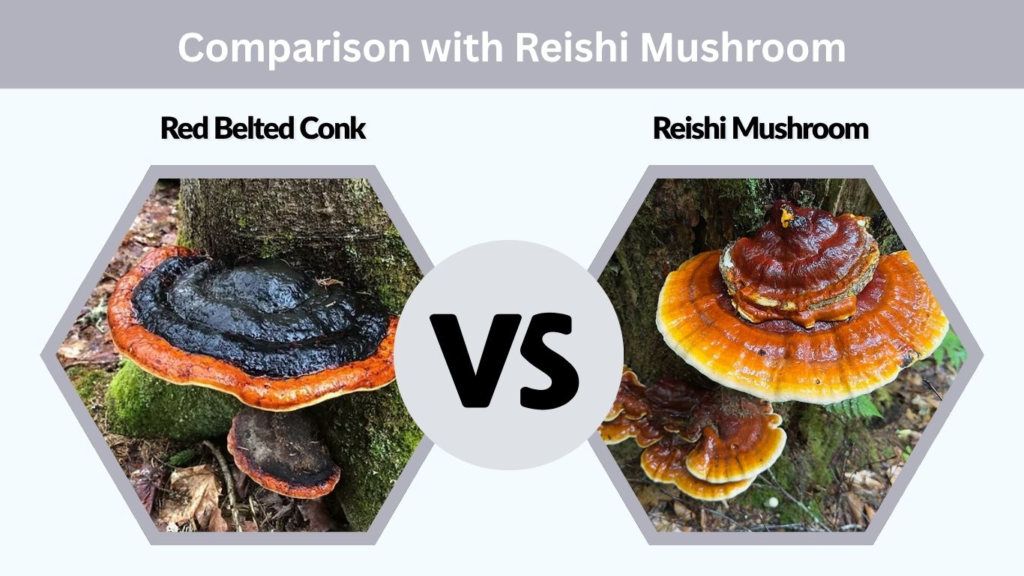
The red belted conk is frequently compared to reishi, a globally known medicinal mushroom. While they share some properties, there are notable differences in appearance, texture, and traditional usage.
Red Belted Conk vs Reishi
- Appearance: Red belted conk has a prominent red stripe; reishi is usually reddish-brown and shiny.
- Texture: Both are tough, woody bracket fungi, making them primarily medicinal rather than culinary.
- Medicinal Focus: Both support immunity and contain bioactive compounds, but red belted conk is less studied than reishi in modern clinical research.
Red Belted Conk Cultivation and Harvesting
The red belted conk grows naturally on dead or decaying hardwood trees, and while mostly wild-harvested, some mushroom enthusiasts cultivate it for medicinal use. Understanding its growth habits ensures sustainable harvesting and maintains forest ecology.
Growth and Habitat
- Prefers decaying hardwoods, especially oak and maple.
- Found in temperate forests, often growing in clusters.
- Fruiting occurs seasonally, typically in late summer to fall.
Harvesting Tips
- Harvest only mature specimens to avoid damaging young fungi.
- Sustainable collection ensures spores can disperse for future growth.
- Dry or powder harvested conk for long-term storage and medicinal use.
Herbal and Supplement Forms
To make the benefits of red belted conk more accessible, it is commonly processed into different herbal forms. These are easier to consume and integrate into wellness routines.
Available Forms
- Tinctures: Alcohol-based extracts concentrated with bioactive compounds.
- Teas and Decoctions: Traditional method involves boiling slices for extended periods.
- Powders and Capsules: Convenient for supplementation and blending into herbal formulas.
Preparation Guidelines
- Recommended dosages vary, depending on preparation and desired effect.
- Can be combined with other mushrooms like reishi or chaga for synergistic effects.
- Avoid overuse; follow herbalist or product instructions.
Red Belted Conk Safety and Precautions
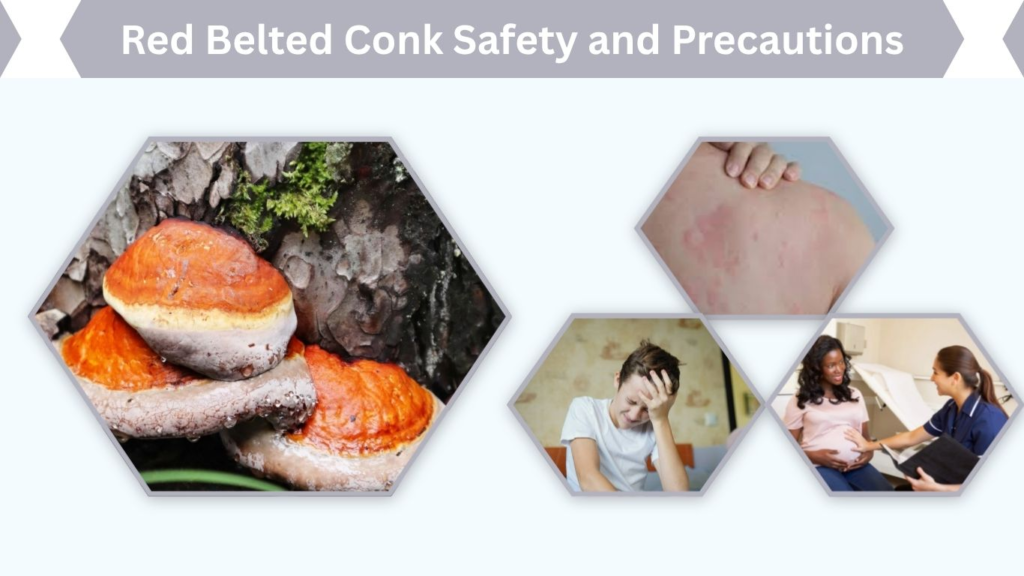
Red belted conk is generally considered safe for consumption in teas and tinctures. However, certain precautions ensure safe use, particularly for sensitive individuals.
- Allergic Reactions: Rare, but possible in individuals sensitive to fungi.
- Pregnancy and Nursing: Should be used only under medical guidance.
- Medication Interactions: Consult a healthcare professional if taking anticoagulants or immunosuppressants.
- Dosage Caution: Excessive consumption can lead to mild digestive discomfort.
Scientific Research and Studies
Although less studied than reishi, modern research has started exploring the red belted conk’s medicinal potential.
- Bioactive Compounds: Polysaccharides and triterpenes contribute to immune modulation.
- Anti-inflammatory and Antioxidant Activity: Early lab studies suggest protective effects on cells.
- Comparative Studies: Red belted conk shows overlapping benefits with reishi but requires more clinical trials.
Conclusion
The red belted conk is a striking, medicinally valuable fungus with both traditional and modern applications. While not a culinary mushroom, its use in teas, tinctures, and supplements provides potential immune support and antioxidant benefits. Understanding its identification, safe consumption, and comparison with reishi can help enthusiasts and herbalists maximize its wellness potential while protecting natural habitats.
FAQs
What is the red belted conk?
The red belted conk is a woody, bracket fungus with a distinctive red stripe. It grows on dead or decaying hardwoods and has been used in traditional medicine for immune support and general wellness.
Is the red belted conk edible?
It is generally considered inedible as a food mushroom due to its tough, woody texture. Its consumption is mainly through teas, tinctures, or powdered forms for medicinal purposes.
What are the main benefits of red belted conk?
It may support the immune system, provide antioxidant protection, and exhibit mild anti-inflammatory properties. Traditional use includes wellness teas and tinctures to enhance overall health.
How does it compare to reishi mushroom?
Both are woody, medicinal mushrooms. Red belted conk has a prominent red stripe, while reishi is shiny reddish-brown. They share immune-supporting properties, but reishi has been more widely studied scientifically.
Can I grow red belted conk at home?
It is possible but challenging. It naturally grows on hardwoods in temperate forests. Cultivation requires providing decaying wood substrates and proper environmental conditions to mimic its natural habitat.