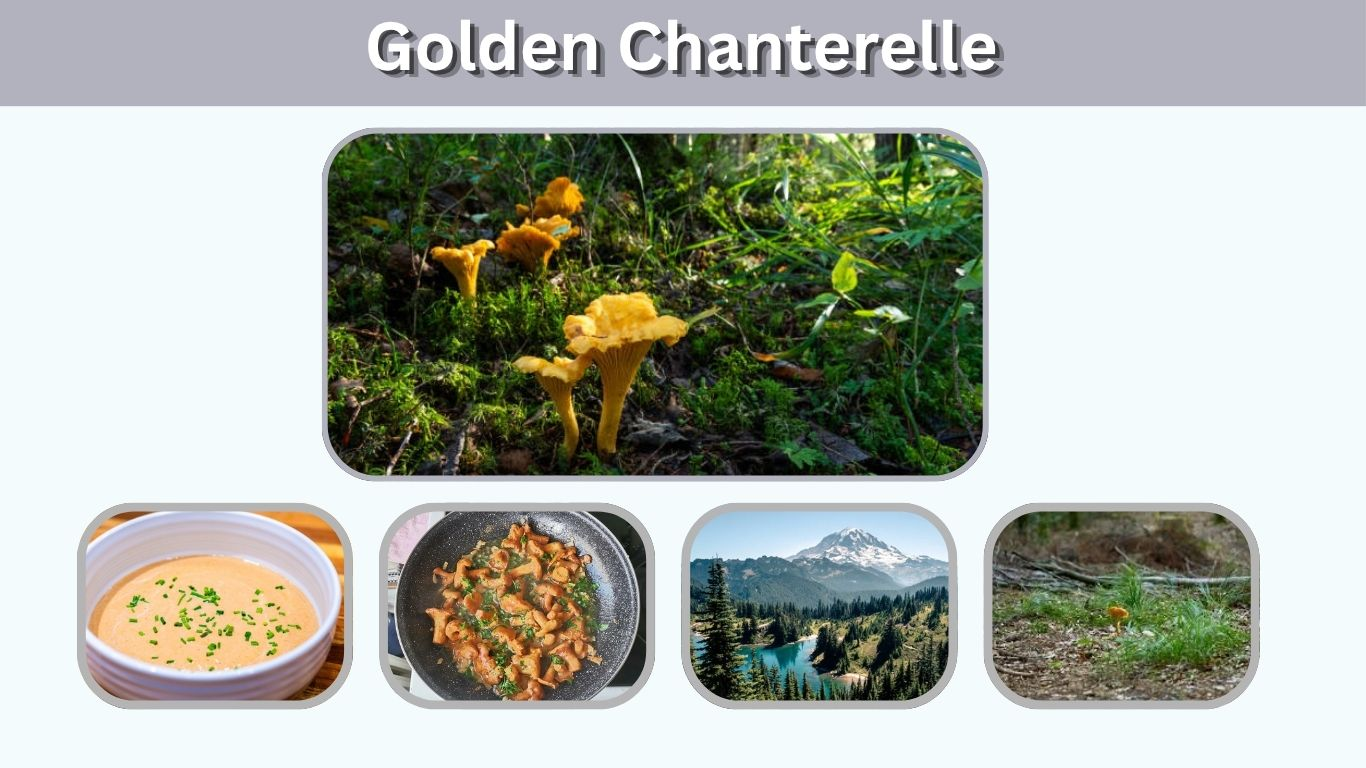
Golden chanterelle mushrooms are among the most loved wild mushrooms because of their golden color, fruity aroma, and rich flavor. They are prized by cooks, foragers, and mushroom lovers, but they must be identified carefully before eating. True golden chanterelles have special features that separate them from unsafe lookalikes. This guide explains what golden chanterelles are, where they grow, how to identify them, when they are in season, how they taste, and how to cook them safely.
What Is a Golden Chanterelle?
Golden chanterelle is a common name used for several yellow to orange wild mushrooms in the Cantharellus group. These mushrooms are famous for their bright color, firm texture, and fruity smell. They are not usually cultivated like button mushrooms, so most fresh golden chanterelles come from wild harvesting or specialty mushroom sellers.
Golden Chanterelle Scientific Name
The name “golden chanterelle” is often linked with Cantharellus cibarius, especially in older field guides and European references. However, in North America, the same common name may refer to several related species. For example, the Pacific golden chanterelle and California golden chanterelle are regional types that may have their own scientific names.
Golden Chanterelle Mushrooms in Simple Terms
Golden chanterelle mushrooms are wild edible mushrooms with a golden-yellow color and a trumpet or vase-like shape when mature. They grow from the ground near trees, not directly from dead logs like some other mushrooms. Their underside has thick, blunt ridges rather than thin, blade-like gills.
Golden Chanterelle Identification
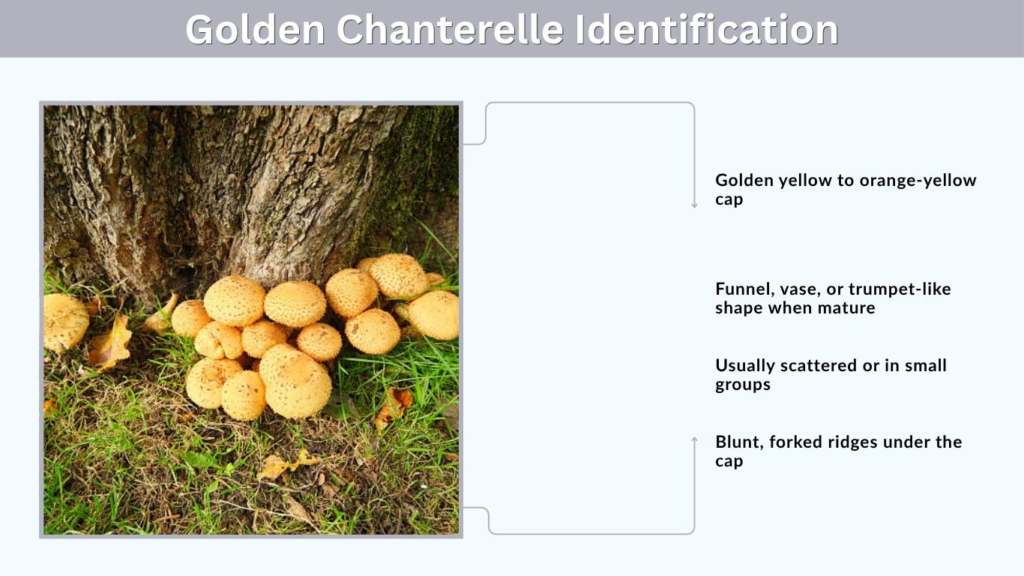
Correct golden chanterelle identification is very important because some mushrooms can look similar from a distance. A safe identification should never depend only on color. You need to study the underside, stem, shape, smell, flesh, habitat, and growth pattern together. Beginners should always ask a local expert before eating any wild mushroom.
Key Identification Features
- Golden yellow to orange-yellow cap
- Funnel, vase, or trumpet-like shape when mature
- Blunt, forked ridges under the cap
- Ridges running down the stem
- Firm and solid stem
- Pale inner flesh
- Fruity or apricot-like smell
- Grows from soil near trees
- Usually scattered or in small groups
Golden Chanterelle Identification Table
| Feature | Golden Chanterelle |
| Color | Golden yellow, orange-yellow, or yellow-orange |
| Underside | Thick, blunt, forked false gills or ridges |
| Smell | Fruity, sometimes apricot-like |
| Stem | Solid, firm, and often same color as the cap |
| Flesh | Pale, firm, and not hollow |
| Growth | Usually from soil near trees |
| Season | Often summer to fall, depending on region |
| Safety note | Must be confirmed before eating |
False Gills vs True Gills
One of the most important signs of a golden chanterelle is the underside. True chanterelles do not have thin, sharp, blade-like gills. Instead, they have thick, blunt ridges that may fork and run down the stem. These ridges look more like wrinkles or folds than separate gills.
Golden Chanterelle Look Alikes
Golden chanterelle lookalikes are a serious topic because some similar mushrooms may cause illness. The two most discussed lookalikes are false chanterelles and jack-o’-lantern mushrooms. They can confuse beginners because they may share yellow or orange colors. However, their underside, growth habit, and texture are usually different from true chanterelles.
Golden Chanterelle vs False Chanterelle
False chanterelles may have an orange color and a similar cap shape, but they usually have thinner, more crowded, true gill-like structures. Their texture may also be softer than true chanterelles. Color alone is not enough to separate them. You must inspect the underside carefully and compare several features together.
Golden Chanterelle vs Jack O Lantern
Jack-o’-lantern mushrooms are one of the most important dangerous lookalikes. They are usually bright orange and often grow in dense clusters from wood or buried roots. Golden chanterelles usually grow from soil near trees and have blunt ridges, while jack-o’-lantern mushrooms have true gills. Beginners should be especially careful with this comparison.
Safety Rules for Beginners
- Never eat a mushroom based only on color.
- Do not trust only one photo or app result.
- Check the underside carefully.
- Confirm whether it grows from soil or wood.
- Avoid old, rotten, or insect-damaged mushrooms.
- Ask a mushroom club or mycologist before eating.
- When unsure, leave the mushroom alone.
Where Do Golden Chanterelles Grow?
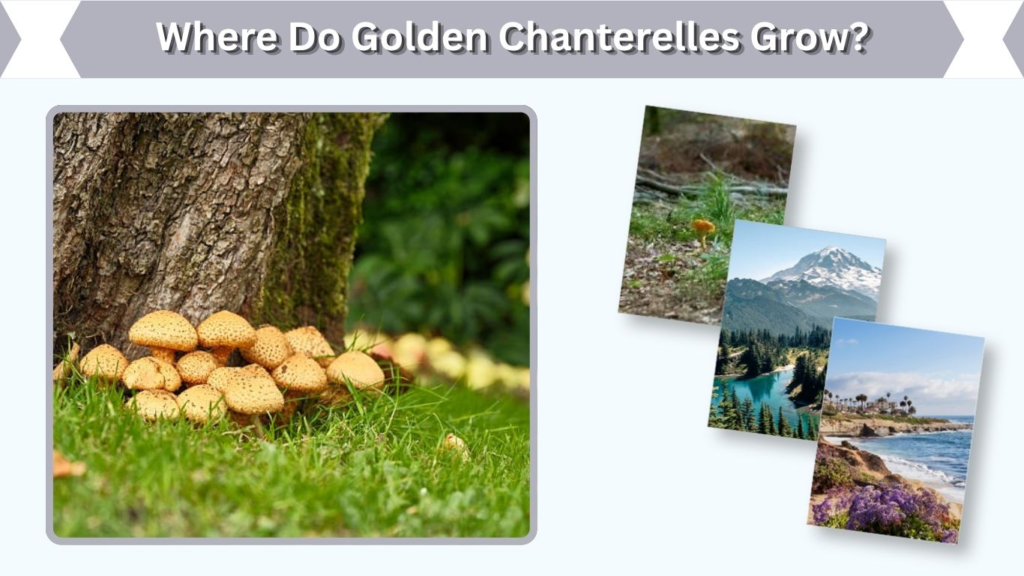
Golden chanterelles grow in association with trees. They are mycorrhizal mushrooms, meaning they form a natural partnership with tree roots. Because of this, they are usually found on the forest floor rather than directly on dead wood. Their habitat changes by region, climate, soil, rainfall, and nearby tree species.
Common Habitat
Golden chanterelles often grow in forests, mossy woodland areas, leafy ground, and places with healthy trees. They may appear near hardwoods or conifers, depending on the species and region. They often return to similar areas year after year when weather conditions are right.
Pacific Golden Chanterelle
The Pacific golden chanterelle is commonly associated with the Pacific Northwest. It is often found in conifer forests and is highly valued by foragers and chefs. This regional type may look similar to other golden chanterelles, but local identification details matter.
California Golden Chanterelle
The California golden chanterelle is another well-known regional type. It is often associated with oak woodlands and can grow larger than many other chanterelles. In California, the season may be linked more closely with winter rains than summer rains.
Golden Chanterelle Season
Golden chanterelle season depends strongly on region and weather. In many areas, they appear from summer through fall after periods of rain. In some West Coast regions, the season may happen during cooler rainy months. Moisture, temperature, and healthy tree partnerships all play a role in when they appear.
When Are Golden Chanterelles in Season?
In many parts of North America and Europe, golden chanterelles are most common from summer to fall. Warm rain followed by mild weather can encourage fruiting. In places with Mediterranean-style climates, such as parts of California, chanterelles may appear during the winter rainy season instead.
Best Conditions for Finding Golden Chanterelles
- Recent rainfall
- Mild temperatures
- Moist forest soil
- Mossy or leafy ground
- Healthy hardwood or conifer trees
- Shaded woodland areas
- Known chanterelle-producing locations
Do Golden Chanterelles Return?
Golden chanterelles can return to the same general area when conditions are suitable. Because they grow in relationship with trees, a productive spot may produce again in future seasons. However, yearly harvests can change depending on rainfall, drought, temperature, and disturbance.
What Do Golden Chanterelles Taste Like?
Golden chanterelles are famous for their delicate but memorable flavor. Their taste is often described as earthy, nutty, lightly peppery, and slightly fruity. Many fresh chanterelles also have an apricot-like aroma. Their texture is firm and meaty, which makes them useful in simple dishes where their natural flavor can stand out.
Golden Chanterelle Taste
Fresh golden chanterelles have a flavor that is more complex than common button or baby bella mushrooms. They are not usually very strong or heavy. Instead, they offer a fragrant, woodsy flavor that works well with butter, cream, eggs, pasta, rice, and herbs.
Golden Chanterelles vs Baby Bella Taste
Baby bella mushrooms have a deeper, familiar mushroom flavor and a softer texture when cooked. Golden chanterelles are usually more aromatic and slightly fruity. They also keep a firmer bite, especially when cooked gently. For special dishes, many cooks prefer chanterelles because of their unique aroma.
Are Golden Chanterelle Mushrooms Edible?
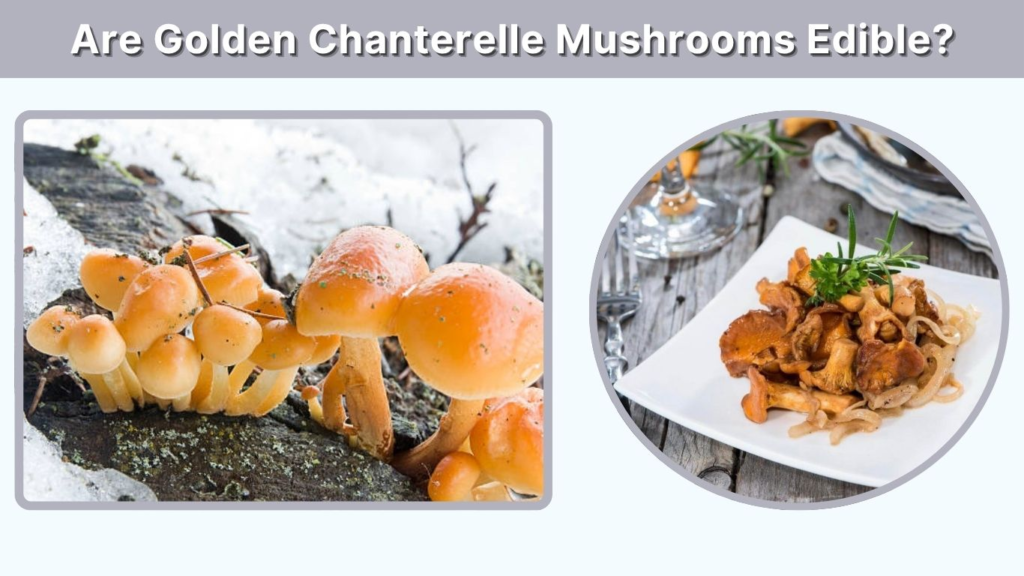
True golden chanterelle mushrooms are considered edible and are highly valued in cooking. However, “edible” only applies when the mushroom has been correctly identified. Wild mushrooms should never be eaten casually. Misidentification can be dangerous, especially for beginners who may confuse chanterelles with unsafe orange mushrooms.
Can You Eat Golden Chanterelle Mushrooms?
Yes, properly identified golden chanterelles can be eaten and are often considered a gourmet mushroom. They should be cooked before serving. Anyone trying them for the first time should start with a small amount, because even edible mushrooms can cause digestive discomfort in some people.
Are Golden Chanterelles Poisonous?
True golden chanterelles are not considered poisonous when correctly identified. The danger comes from lookalikes, poor condition, or incorrect preparation. If a mushroom is old, slimy, full of insects, or uncertain in identity, it should not be eaten.
Golden Chanterelle Nutrition and Benefits
Golden chanterelles may provide fiber, minerals, and natural mushroom nutrients. They are also valued because they add flavor without needing heavy seasoning. However, they should not be treated as a cure for disease. Their main benefit is culinary: they bring taste, aroma, and texture to meals.
How to Cook Golden Chanterelles
Cooking golden chanterelles is simple when the mushrooms are fresh and properly identified. Their flavor is delicate, so they do not need strong seasoning. Many cooks prefer to sauté them first so moisture evaporates and the mushroom flavor becomes stronger. Butter, garlic, cream, herbs, and eggs pair especially well with them.
How to Prepare Golden Chanterelle Mushrooms
- Brush away dirt and forest debris.
- Trim tough or dirty stem ends.
- Tear large mushrooms into smaller pieces.
- Avoid soaking unless they are very dirty.
- Pat dry before cooking.
- Cook off extra moisture first.
- Add butter or oil after the pan moisture reduces.
Best Way to Cook Golden Chanterelles
The best beginner method is a simple sauté. Place cleaned chanterelles in a dry pan over medium heat and let them release moisture. After the liquid reduces, add butter or oil, then season with salt, pepper, garlic, or herbs. This keeps the texture firm and the flavor clear.
How to Cook Wild Golden Chanterelles
Wild golden chanterelles should always be cooked thoroughly. They can be used in pasta, soup, risotto, omelets, toast, or cream sauce. Avoid overpowering them with too many spices. Their natural flavor is the main reason people enjoy them.
Golden Chanterelle Recipes
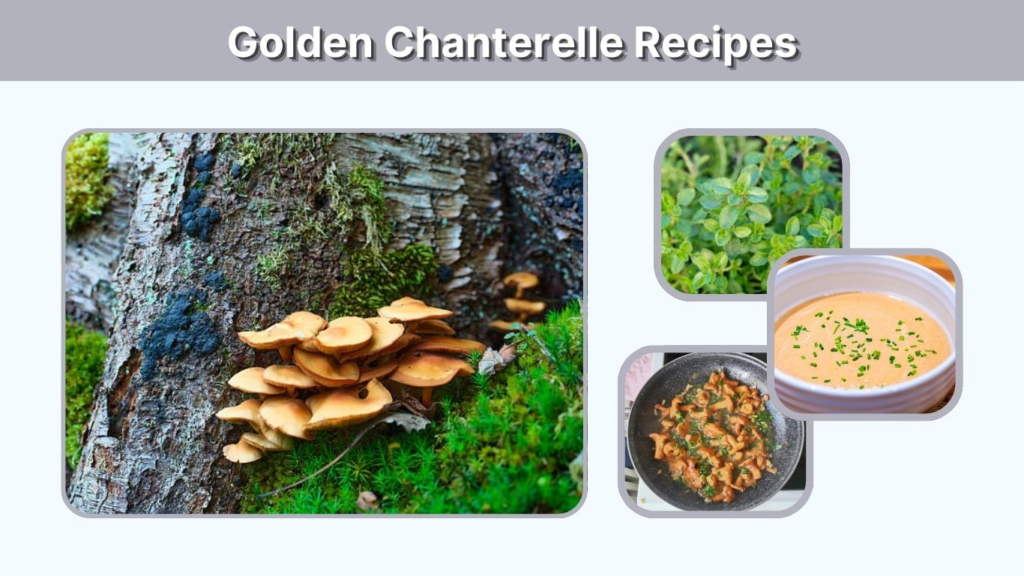
Golden chanterelle recipes work best when they highlight the mushroom instead of hiding it. Creamy, buttery, and lightly herbed dishes are especially popular. Chanterelles can also improve simple comfort foods because they bring a wild, earthy flavor. Fresh mushrooms are best for quick recipes, while dried ones work well in soups and sauces.
Golden Chanterelle Recipe Ideas
- Golden chanterelle pasta
- Golden chanterelle soup
- Garlic butter chanterelles
- Chanterelle cream sauce
- Chanterelle omelet
- Chanterelle risotto
- Chanterelles on toast
- Chanterelles with potatoes and herbs
Golden Chanterelle Soup
Golden chanterelle soup can be made with onion, garlic, broth, cream, thyme, and sautéed chanterelles. The mushrooms should be cooked gently before adding liquid. A creamy base works well because it carries the fruity and earthy flavor without covering it.
Golden Chanterelle Pasta Recipe
For a simple pasta, sauté cleaned chanterelles with butter and garlic. Add cooked pasta, a splash of pasta water, black pepper, parsley, and a little parmesan. Cream can be added for a richer version. The goal is to keep the sauce light enough for the chanterelle flavor to remain clear.
Golden Chanterelle Price and Buying Guide
Golden chanterelle price changes by season, location, supply, and freshness. Fresh chanterelles are often more expensive than common mushrooms because they are usually wild harvested and have a short fresh shelf life. Prices may also rise when harvests are limited by dry weather or low seasonal supply.
Golden Chanterelle Price Per Pound
The price per pound can vary widely. Fresh wild chanterelles usually cost more than common cultivated mushrooms. Dried chanterelles may seem expensive by weight, but they are concentrated and can be rehydrated for soups, sauces, and broths.
Golden Chanterelle for Sale
Fresh golden chanterelles may be available at farmers markets, specialty grocery stores, gourmet food shops, wild mushroom sellers, and seasonal online suppliers. Buyers should choose reputable sellers who understand wild mushroom handling and proper identification.
Fresh vs Dried Golden Chanterelles
Fresh chanterelles are best for sautés, pasta, eggs, and simple side dishes. Dried chanterelles are useful for soups, sauces, and stocks. When using dried mushrooms, soak them first and strain the soaking liquid if you want to use it in cooking.
FAQs
Are golden chanterelles edible?
Yes, true golden chanterelles are edible and highly valued when correctly identified. However, beginners should never eat wild mushrooms without expert confirmation. Some lookalikes can cause illness, so safety must always come before cooking.
What is the scientific name of golden chanterelle?
The classic golden chanterelle is often called Cantharellus cibarius. However, different regions may have related species also called golden chanterelles, such as Pacific golden chanterelle or California golden chanterelle.
What do golden chanterelles taste like?
Golden chanterelles taste earthy, nutty, lightly peppery, and sometimes fruity. Fresh mushrooms often have an apricot-like aroma. Their firm texture and delicate flavor make them popular in pasta, soup, eggs, and cream sauces.
What is the best way to cook golden chanterelles?
The best way is usually a simple sauté. Cook the mushrooms first to release moisture, then add butter or oil, garlic, salt, pepper, and herbs. This method keeps their flavor clear and their texture firm.
What are golden chanterelle lookalikes?
Common lookalikes include false chanterelles and jack-o’-lantern mushrooms. True chanterelles have blunt, forked ridges rather than thin blade-like gills. Because lookalikes can be unsafe, expert confirmation is important before eating.