
Mushroom coffee has become popular among people who want better focus, smoother energy, and possible wellness benefits without drinking as much regular coffee. It usually blends coffee with extracts from functional mushrooms like lion’s mane, chaga, reishi, cordyceps, and turkey tail. While it may offer some benefits, mushroom coffee is not a miracle drink, and some people should use it carefully.
What Is Mushroom Coffee?
Mushroom coffee is not regular coffee with sliced mushrooms floating in it. It is usually made by mixing coffee beans or instant coffee with powdered mushroom extracts. These extracts come from mushrooms that are often marketed for focus, immune support, stress balance, or energy.
Common mushrooms used in mushroom coffee include lion’s mane, chaga, reishi, cordyceps, and turkey tail. Some products contain one mushroom, while others use a blend. Many mushroom coffees still contain caffeine, although some have less caffeine than regular coffee.
How It Is Made
Most mushroom coffee products are made by drying mushrooms, extracting their active compounds, and turning the extract into powder. That powder is then mixed with ground coffee, instant coffee, cacao, or other ingredients.
You can find mushroom coffee in several forms:
- Instant powder packets
- Ground coffee blends
- Coffee pods
- Latte mixes
- Caffeine-free mushroom drinks
The quality can vary widely. Some products clearly list the amount of each mushroom extract, while others use proprietary blends without showing exact doses.
Does It Taste Like Mushrooms?
Most mushroom coffee does not taste strongly like mushrooms. It usually tastes earthy, nutty, or slightly bitter, depending on the blend. If it contains real coffee, the coffee flavor usually covers most of the mushroom taste. Latte-style mixes may include cacao, cinnamon, coconut milk powder, or sweeteners to make the flavor smoother.
Mushroom Coffee Nutrition and Ingredients
The nutrition of mushroom coffee depends on the product. A plain mushroom coffee with no sugar or creamer may be low in calories, while flavored latte mixes can contain added sugar, fats, and extra ingredients.
| Ingredient | Common Purpose | Possible Concern |
|---|---|---|
| Coffee | Energy, alertness, flavor | Caffeine jitters, sleep issues, acid reflux |
| Lion’s mane | Focus and cognitive support | Limited human evidence, possible allergy |
| Chaga | Antioxidant support | High oxalate content, kidney concerns |
| Reishi | Stress and immune support | Possible drug interactions, rare liver concerns |
| Cordyceps | Energy and performance support | Limited evidence, possible medication concerns |
| Turkey tail | Immune and gut support | May cause digestive discomfort |
| Sweeteners or creamers | Better flavor and texture | Added sugar or calories |
Benefits of Mushroom Coffee
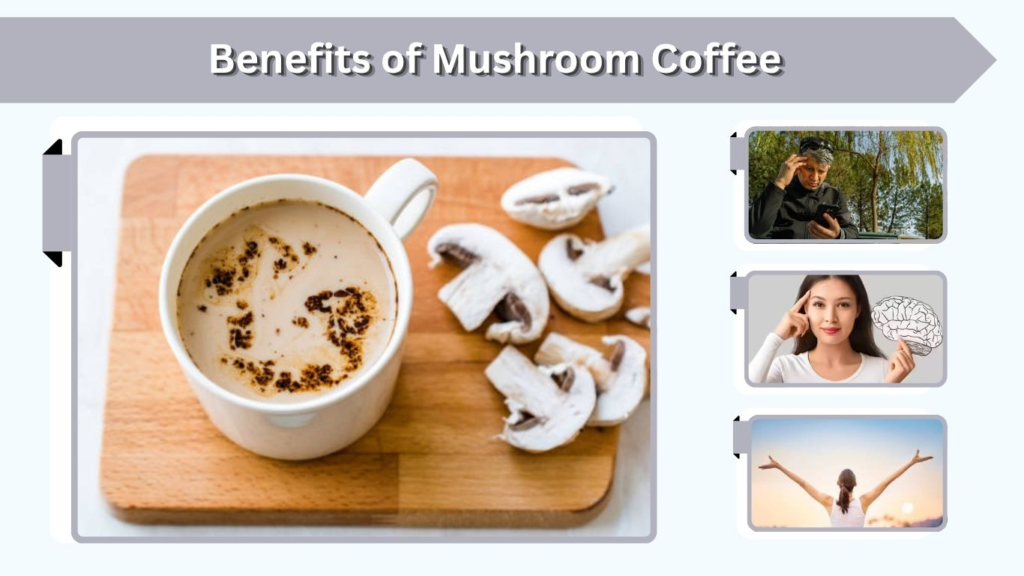
Mushroom coffee may have benefits, but many claims are stronger than the current evidence. Most research looks at individual mushrooms or mushroom compounds, not mushroom coffee products specifically. That means a mushroom may show promise in studies, but your coffee blend may not contain enough of it to produce the same effect.
May Lower Caffeine Intake
One of the most practical benefits of mushroom coffee is that it may contain less caffeine than regular coffee. Some blends use half coffee and half mushroom powder, which can reduce the total caffeine per serving.
This may help people who feel anxious, jittery, or wired after drinking regular coffee. Lower caffeine intake may also be helpful for people who want a morning coffee ritual without as much impact on sleep.
However, not all mushroom coffees are low in caffeine. Some contain nearly as much caffeine as regular coffee, so it is important to check the label.
May Support Focus
Lion’s mane is one of the most popular mushrooms in mushroom coffee. It is often promoted for brain health, focus, and memory support. Some early studies suggest lion’s mane may have potential cognitive benefits, but the evidence is still limited and more research is needed.
For everyday users, any focus boost may come from a combination of caffeine, routine, hydration, and expectation, not just the mushroom extract. Still, people who want a gentler coffee option may enjoy blends that include lion’s mane.
May Provide Antioxidants
Mushrooms such as chaga and reishi contain antioxidant compounds. Antioxidants help protect cells from oxidative stress, which is linked to aging and many health concerns.
That does not mean mushroom coffee can prevent disease. It simply means some mushroom extracts may contribute antioxidant compounds to the diet. A balanced diet with fruits, vegetables, whole grains, and enough protein is still much more important than any single beverage.
May Support Immune Health
Many functional mushrooms contain beta-glucans, which are natural compounds studied for their effects on immune function. Turkey tail, reishi, and chaga are often marketed for immune support.
However, immune support does not mean “immune boosting” in a simple or guaranteed way. The immune system is complex, and stronger is not always better. People with autoimmune conditions or those taking immune-related medications should talk to a healthcare provider before using mushroom supplements regularly.
May Feel Gentler Than Regular Coffee
Some people report that mushroom coffee feels smoother than regular coffee. This may be because certain blends have less caffeine, lower acidity, or added ingredients that make the drink easier on the stomach.
People who get heartburn, nervousness, or energy crashes from regular coffee may prefer a lower-caffeine mushroom blend. However, mushroom coffee can still cause digestive discomfort in some users, especially if it contains several extracts, sweeteners, or added fibers.
Mushroom Coffee Side Effects

Mushroom coffee is generally tolerated by many healthy adults, but side effects are possible. The risk depends on the type of mushroom, the dose, the product quality, your health conditions, and any medications you take.
Digestive Upset
The most common side effects are digestive. Some people may notice bloating, gas, nausea, stomach cramps, or diarrhea after drinking mushroom coffee.
This may happen because of the mushroom extracts, caffeine, added sweeteners, or other ingredients in the product. People with irritable bowel syndrome or sensitive digestion may be more likely to react.
To reduce the chance of stomach upset, start with a small serving and avoid drinking it on an empty stomach.
Caffeine-Related Side Effects
If the mushroom coffee contains real coffee, it can still cause caffeine-related symptoms. These may include:
- Jitters
- Anxiety
- Fast heartbeat
- Trouble sleeping
- Headaches
- Acid reflux
- Increased urination
People who are sensitive to caffeine should choose low-caffeine or caffeine-free blends and avoid drinking them late in the day.
Possible Allergic Reactions
Mushrooms can trigger allergic reactions in some people. Symptoms may include itching, rash, swelling, wheezing, or trouble breathing. Anyone with a known mushroom allergy should avoid mushroom coffee unless cleared by a healthcare professional.
Even if you eat culinary mushrooms without problems, concentrated extracts may affect you differently. Stop using the product if you notice signs of allergy.
Medication Interactions
Some mushrooms may interact with medications. Reishi, chaga, and other functional mushrooms may affect blood sugar, bleeding risk, immune activity, or how the body responds to certain treatments.
Be especially careful if you take:
- Blood thinners
- Diabetes medication
- Blood pressure medication
- Immune-suppressing drugs
- Cancer treatments
- Liver-related medications
Mushroom coffee should not be used as a replacement for prescribed treatment.
Kidney Concerns With Chaga
Chaga is naturally high in oxalates. High oxalate intake may be a concern for people prone to kidney stones or those with kidney disease. There have also been reports linking heavy chaga use with kidney problems.
If you have kidney disease, a history of kidney stones, or have been told to follow a low-oxalate diet, avoid chaga-containing mushroom coffee unless your clinician says it is safe.
Possible Liver Concerns With Reishi
Reishi is widely used in supplement form, but rare liver problems have been reported, especially with powdered forms or high intake. This does not mean every reishi product is unsafe, but it does mean people with liver disease or those taking liver-affecting medications should be cautious.
Stop using mushroom coffee and seek medical advice if you develop symptoms such as yellowing skin, dark urine, severe fatigue, or unexplained abdominal pain.
Who Should Avoid Mushroom Coffee?
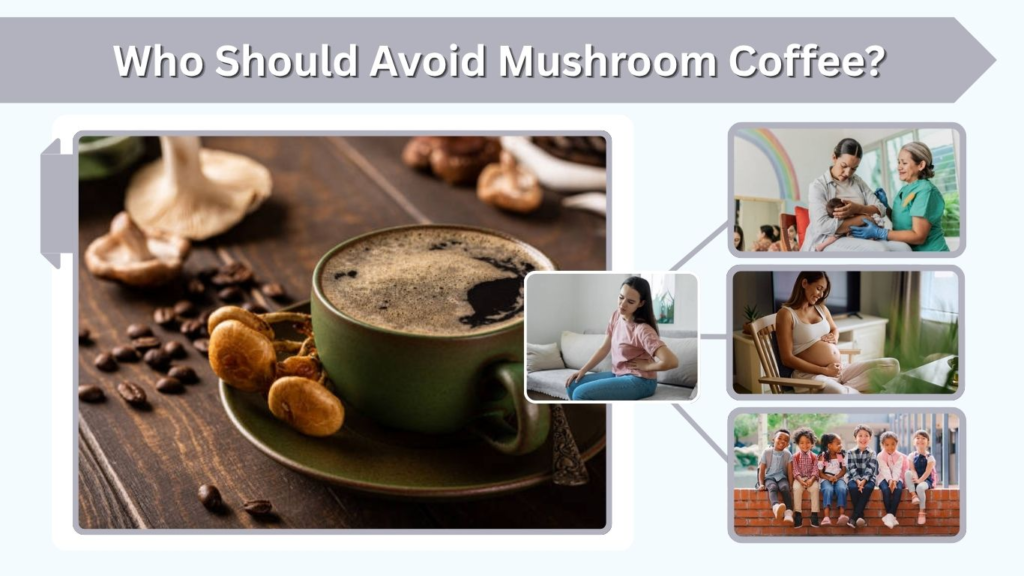
Mushroom coffee is not suitable for everyone. Some people should avoid it or ask a healthcare provider first.
Pregnant or Breastfeeding People
There is not enough reliable safety information for many functional mushroom extracts during pregnancy or breastfeeding. Regular culinary mushrooms are different from concentrated supplement extracts. A cautious approach is best.
People With Kidney or Liver Disease
People with kidney disease should be especially careful with chaga. People with liver disease should be cautious with reishi and other concentrated extracts. In these cases, regular coffee or caffeine-free alternatives may be safer than mushroom supplement blends.
People Taking Daily Medications
If you take daily medications, especially for blood pressure, blood sugar, clotting, immune conditions, or cancer treatment, ask a healthcare professional before drinking mushroom coffee regularly.
Children
Mushroom coffee is not ideal for children, especially if it contains caffeine. Children do not need functional mushroom supplements, and caffeine can affect sleep, mood, and heart rate.
How to Choose a Good Mushroom Coffee
A good mushroom coffee should be transparent, tested, and easy to understand. Avoid products that make extreme claims, such as curing disease, replacing medication, or guaranteeing major health results.
Look for products that:
- List the exact mushrooms used
- Show the amount of mushroom extract per serving
- Use third-party testing when possible
- Avoid unnecessary added sugar
- Clearly state caffeine content
- Use fruiting body or well-described extracts
- Avoid vague proprietary blends
Start with a small amount to see how your body reacts. If you feel worse, stop using it.
How Much Mushroom Coffee Should You Drink?
Most people who tolerate it should keep intake moderate. One serving per day is a reasonable starting point. More is not always better, especially when the product contains caffeine or multiple extracts.
Follow the serving size on the label. Do not combine mushroom coffee with several other mushroom supplements unless a healthcare professional approves it.
FAQs
Is mushroom coffee actually good for you?
Mushroom coffee may be helpful if it lowers your caffeine intake or replaces a sugary coffee drink. Some mushrooms contain compounds linked to antioxidant, immune, or cognitive support. However, evidence for mushroom coffee itself is limited, and it should not be treated as a cure or medical treatment.
What are the main side effects of mushroom coffee?
The most common side effects include stomach upset, bloating, nausea, jitters, headaches, and sleep problems if the product contains caffeine. Some people may also have allergic reactions. Certain mushrooms may interact with medications or be risky for people with kidney or liver conditions.
Can I drink mushroom coffee every day?
Some healthy adults may drink mushroom coffee daily without problems, but it depends on the ingredients and dose. Daily use may not be safe for everyone, especially people taking medications or those with kidney, liver, autoimmune, or bleeding conditions. Start slowly and monitor your reaction.
Is mushroom coffee better than regular coffee?
Mushroom coffee is not automatically better than regular coffee. It may be useful for people who want less caffeine or added functional mushroom extracts. Regular coffee also has antioxidants and well-studied benefits. The better choice depends on your health, caffeine tolerance, budget, and taste preference.
Who should not drink mushroom coffee?
Pregnant or breastfeeding people, children, people with mushroom allergies, kidney disease, liver disease, bleeding disorders, autoimmune conditions, or those taking certain medications should be cautious. Anyone in these groups should ask a healthcare professional before using mushroom coffee regularly.