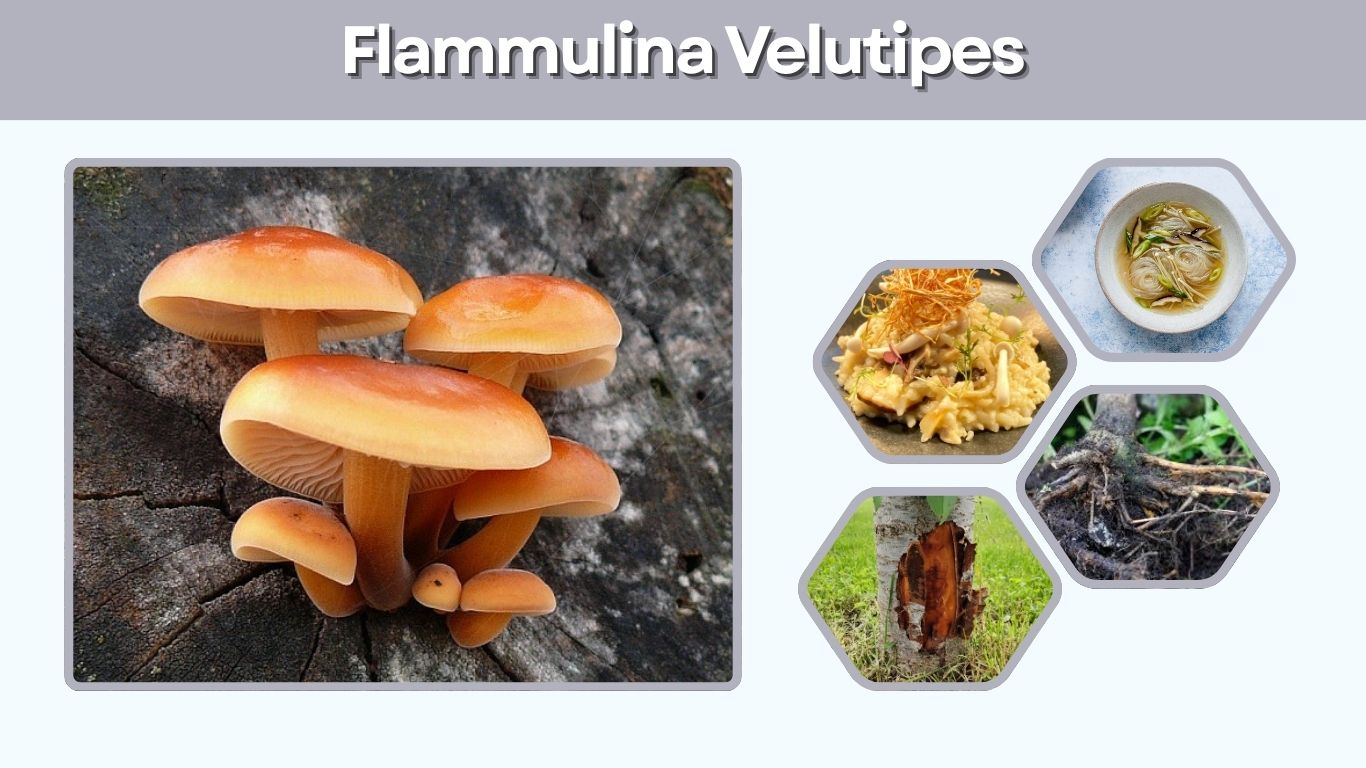
Flammulina velutipes is an edible wild mushroom best known as velvet shank, velvet foot, velvet stem, or wild enoki. It is famous for fruiting in cold weather when many other mushrooms disappear. With its orange-brown cap, dark velvety stem, and habit of growing on dead wood, this mushroom is interesting to foragers, cooks, and fungi enthusiasts.
What Is Flammulina Velutipes?
Flammulina velutipes is a gilled mushroom in the family Physalacriaceae. It grows on dead or dying wood and is often seen in clusters on tree stumps, fallen logs, and damaged trunks. Unlike many mushrooms that prefer mild autumn conditions, velvet shank can continue appearing through winter.
Common Names
This mushroom has several common names. “Velvet shank” and “velvet foot” refer to the dark, fuzzy lower part of the stem. “Wild enoki” is sometimes used because it is closely related to mushrooms sold as enoki, although modern taxonomy often separates cultivated East Asian enoki as Flammulina filiformis.
Common names include:
- Velvet shank
- Velvet foot
- Velvet stem
- Wild enoki
- Winter mushroom
- Enoki relative
The name “winter mushroom” fits its unusual fruiting season. In cold months, its bright caps can stand out clearly against bare wood and leaf litter.
Scientific Classification
Flammulina velutipes has been studied and renamed over time as mycologists learned more about its structure and relationships. Older sources may group different enoki-like mushrooms under this name, so it is useful to understand the distinction between wild velvet shank and cultivated enoki.
| Feature | Details |
|---|---|
| Scientific name | Flammulina velutipes |
| Common name | Velvet shank |
| Mushroom type | Gilled mushroom |
| Family | Physalacriaceae |
| Growth habit | On dead or dying wood |
| Spore print | White |
| Edibility | Edible when correctly identified and cooked |
| Season | Often late autumn through winter |
What Does Flammulina Velutipes Look Like?
Wild Flammulina velutipes looks very different from the long white enoki mushrooms commonly sold in stores. In nature, it usually has orange, amber, or honey-colored caps and darker stems.
Cap Appearance
The cap is usually orange-brown, yellow-orange, or honey-colored. It may be darker in the center and paler near the edge. In wet weather, the cap can look shiny, sticky, or slimy. As it dries, it may become smoother and less glossy.
The caps often grow close together in clusters. Because of this crowded growth, some caps may appear slightly misshapen or uneven. Young caps are usually more rounded, while older ones flatten out as they mature.
Stem Appearance
The stem is one of the most important features. It is usually pale near the cap but becomes darker toward the base. The lower part often has a velvety or fuzzy texture, which gives the mushroom its common name.
The stem can be tough compared with the cap. For cooking, many people prefer using the caps or the tender upper parts of the stems.
Gills and Spore Print
Flammulina velutipes has gills under the cap. The gills are usually pale cream to yellowish. A white spore print is another important identification feature.
However, mushroom identification should never depend on one feature alone. Cap color, stem texture, growth location, season, gills, spore print, and look-alikes all matter.
Flammulina Velutipes Habitat
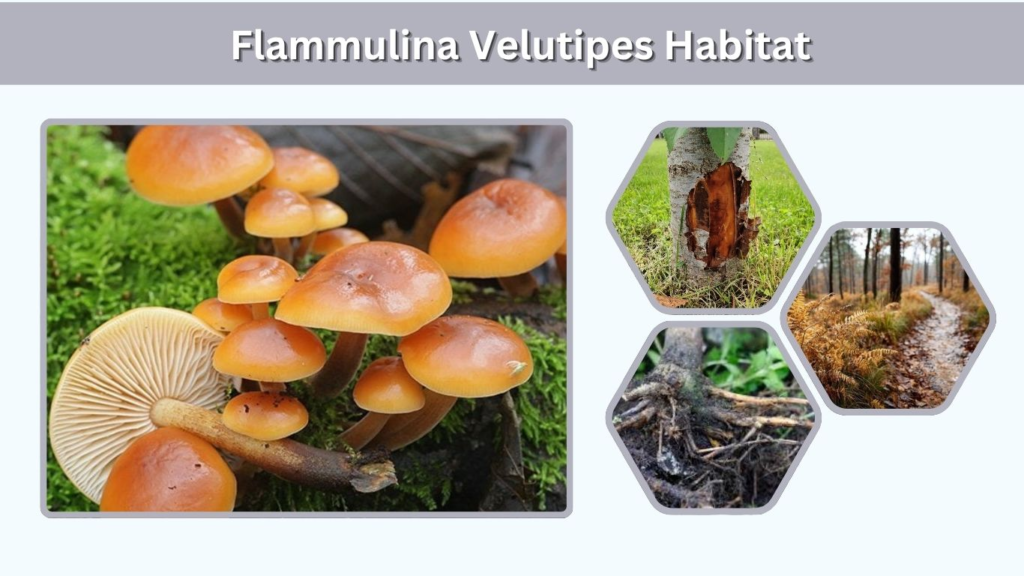
Flammulina velutipes is a wood-decaying fungus. It helps break down dead or weakened trees, returning nutrients to the forest environment. This ecological role makes it important even beyond its value as an edible mushroom.
Where It Grows
Velvet shank grows on dead or dying hardwood. It is often found on stumps, fallen branches, logs, and the bases of damaged trees. It may also appear on living trees where wood is already weakened or decaying.
Common growing sites include:
- Dead hardwood stumps
- Fallen logs
- Standing dead trees
- Tree wounds
- Decaying roots
- Woodland edges
- Damp forest paths
- Old hedgerows
It is commonly associated with deciduous trees such as elm, ash, beech, oak, and other hardwoods. It is less commonly linked with conifers.
Season and Weather
One of the most interesting things about Flammulina velutipes is its cold-weather fruiting. It can appear in late autumn and continue into winter. In some regions, it may still be found after frosts or during mild winter spells.
This makes it a memorable mushroom for winter walks. When many other fungi have stopped fruiting, velvet shank may still produce clusters of bright caps on old wood.
Flammulina Velutipes vs Enoki Mushroom
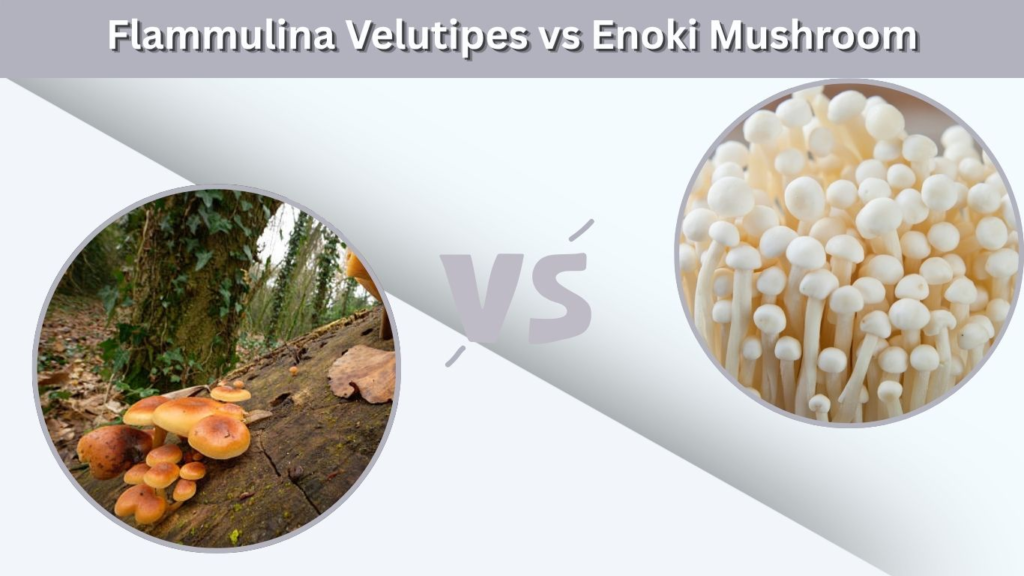
Many people search for Flammulina velutipes because they know enoki mushrooms from grocery stores. The relationship between velvet shank and enoki can be confusing because older sources often used the same scientific name for cultivated enoki.
Why the Names Are Confusing
For many years, commercially cultivated enoki mushrooms were commonly labeled as Flammulina velutipes. More recent DNA research has shown that the East Asian cultivated enoki is often better treated as a separate species, Flammulina filiformis.
That means “enoki” in a supermarket is usually not the same as wild European or North American velvet shank. In everyday cooking, people may still use the names loosely, but in scientific writing the difference matters.
Wild vs Cultivated Appearance
Wild velvet shank is usually orange-brown with a darker velvety stem. Cultivated enoki is usually long, thin, white, and grown in tight clusters. This difference comes partly from species differences and partly from cultivation methods.
Cultivated enoki is often grown in low-light, controlled conditions. This produces pale mushrooms with long stems and small caps. Wild velvet shank grows outdoors with natural light, weather changes, and wood-based nutrition, so it has a darker and sturdier appearance.
Is Flammulina Velutipes Edible?
Flammulina velutipes is considered edible when correctly identified and properly cooked. However, wild mushroom foraging always requires caution. Some mushrooms can look similar, and mistakes can be dangerous.
Foraging Safety
No one should eat a wild mushroom based only on a photo, short description, or online article. Safe identification requires experience and careful checking of multiple features. Beginners should learn from local experts, mushroom clubs, field guides, or trained foragers.
Important safety steps include:
- Confirm the mushroom with several identification features.
- Check the tree or wood where it is growing.
- Take a spore print if needed.
- Compare it with possible look-alikes.
- Avoid old, rotten, or insect-filled specimens.
- Cook edible mushrooms before eating.
- Try only a small amount the first time.
- Never eat a mushroom if unsure.
Wild mushrooms may also absorb pollutants from their environment. Avoid collecting from roadsides, industrial areas, sprayed landscapes, or contaminated wood.
Possible Look-Alikes
Velvet shank may be confused with other small brown or orange mushrooms growing on wood. Some wood-growing mushrooms are not safe to eat. This is why identification should be done carefully, especially by beginners.
The white spore print, cold-season fruiting, clustered wood growth, slimy orange cap, and dark velvety stem are useful clues, but they should not be treated as a guarantee without full confirmation.
How to Cook Flammulina Velutipes
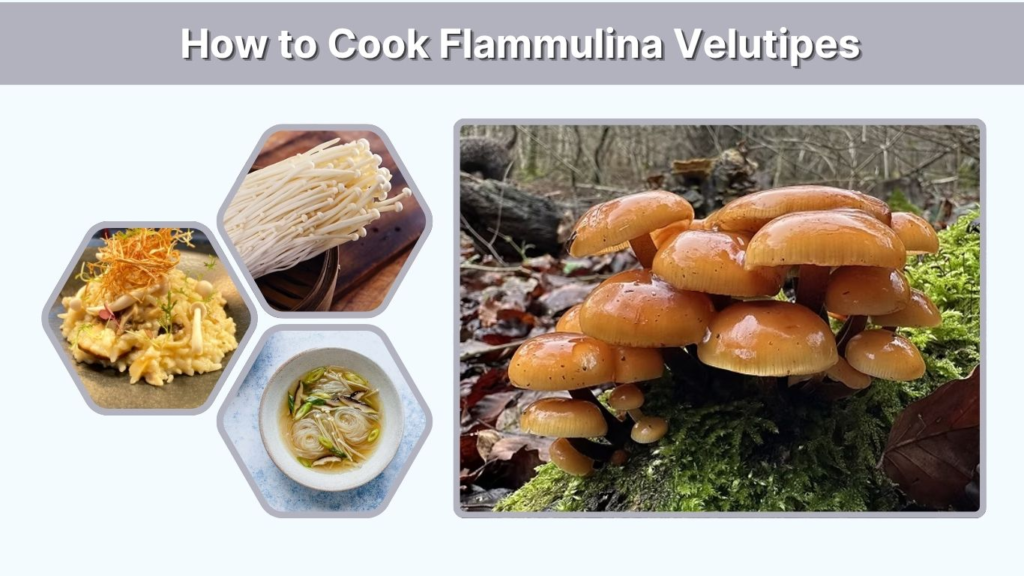
When correctly identified, Flammulina velutipes can be used in simple cooked dishes. Its caps are usually more tender than the lower stems. The flavor is mild and mushroomy, making it useful in soups, sauces, and sautés.
Preparation Tips
Before cooking, clean the mushrooms gently. Remove dirt, wood fragments, and tough lower stem sections. Avoid soaking them for too long, as mushrooms can absorb water and lose texture.
Basic preparation steps:
- Trim away tough stem bases.
- Brush off dirt or debris.
- Rinse quickly only if needed.
- Slice larger caps if desired.
- Cook thoroughly before eating.
- Use fresh, firm specimens only.
Older mushrooms may become tough or less pleasant to eat. Younger, fresher clusters are usually better for cooking.
Cooking Ideas
Velvet shank can be added to warm dishes where its texture and flavor blend with other ingredients. It is often best cooked rather than eaten raw.
Possible uses include:
- Mushroom soup
- Stir-fried mushrooms
- Noodle bowls
- Omelets
- Mushroom gravy
- Risotto
- Stews
- Savory sauces
- Toast toppings
- Mixed mushroom dishes
Because the mushroom is delicate, it does not need very long cooking. However, it should still be heated thoroughly for safety and digestibility.
Nutrition and Food Value
Like many edible mushrooms, Flammulina velutipes is low in calories and contains water, fiber, small amounts of protein, minerals, and bioactive compounds. Its exact nutritional value depends on growing conditions, freshness, and preparation.
Why People Eat It
Velvet shank is valued more for its seasonal interest, texture, and flavor than for being a major calorie source. It can add variety to meals, especially in colder months when fewer wild mushrooms are available.
Mushrooms like Flammulina velutipes can be part of a balanced diet when handled safely. They pair well with vegetables, grains, eggs, broths, noodles, and other savory ingredients.
Food Safety at Home
Fresh mushrooms should be used soon after harvesting or purchase. Store them in a breathable container in the refrigerator and avoid sealing wet mushrooms in plastic for long periods. Discard any that smell sour, become slimy in a spoiled way, or show heavy decay.
Ecological Importance of Flammulina Velutipes
Although many people notice Flammulina velutipes because it is edible, its ecological role is just as important. As a decomposer, it helps break down wood and recycle nutrients.
Role in Forests
Dead wood is not waste in a forest. It supports fungi, insects, mosses, birds, and many other organisms. Velvet shank is part of this natural recycling system. By decomposing wood, it helps return nutrients to the soil and supports the wider woodland food web.
This is one reason dead logs and stumps are valuable in natural areas. They provide habitat for fungi and many small creatures.
Growing Flammulina Velutipes
Growing Flammulina velutipes requires more knowledge than simply placing mushrooms on wood. Like other cultivated fungi, it needs the right substrate, temperature, moisture, airflow, and cleanliness.
Cultivation Basics
Commercial and home growers may use prepared substrates, logs, or sterile growing methods depending on the species and desired result. Controlled conditions can influence the mushroom’s shape, color, and stem length.
Basic growing needs include:
- Suitable wood-based substrate
- Clean growing conditions
- Moisture control
- Cool fruiting temperatures
- Fresh air exchange
- Proper incubation time
- Protection from contamination
Beginners interested in cultivation may prefer starting with a reliable mushroom grow kit or learning from a detailed cultivation guide.
FAQs
What is Flammulina velutipes?
Flammulina velutipes is an edible wild mushroom commonly called velvet shank, velvet foot, or wild enoki. It grows in clusters on dead or dying wood and is known for its orange-brown caps, dark velvety stems, and ability to fruit in cold weather.
Is Flammulina velutipes the same as enoki?
Older sources often used Flammulina velutipes for enoki mushrooms, but modern taxonomy commonly separates cultivated East Asian enoki as Flammulina filiformis. Wild F. velutipes usually has orange-brown caps and darker stems, while cultivated enoki is typically long, thin, and white.
Can you eat Flammulina velutipes?
Yes, Flammulina velutipes is edible when correctly identified and cooked. However, wild mushroom identification must be done carefully because some mushrooms can be dangerous. Beginners should not eat wild mushrooms without confirmation from an expert or trusted local guide.
Where does Flammulina velutipes grow?
Flammulina velutipes grows on dead or dying wood, especially hardwood stumps, logs, roots, and damaged tree trunks. It is often found in woodland areas, hedgerows, and damp places where decaying deciduous wood is available.
Why is Flammulina velutipes called velvet shank?
It is called velvet shank because the lower part of its stem is often dark, fibrous, and velvety. This feature helps distinguish it from many other small wood-growing mushrooms and gives the species one of its most common English names.