
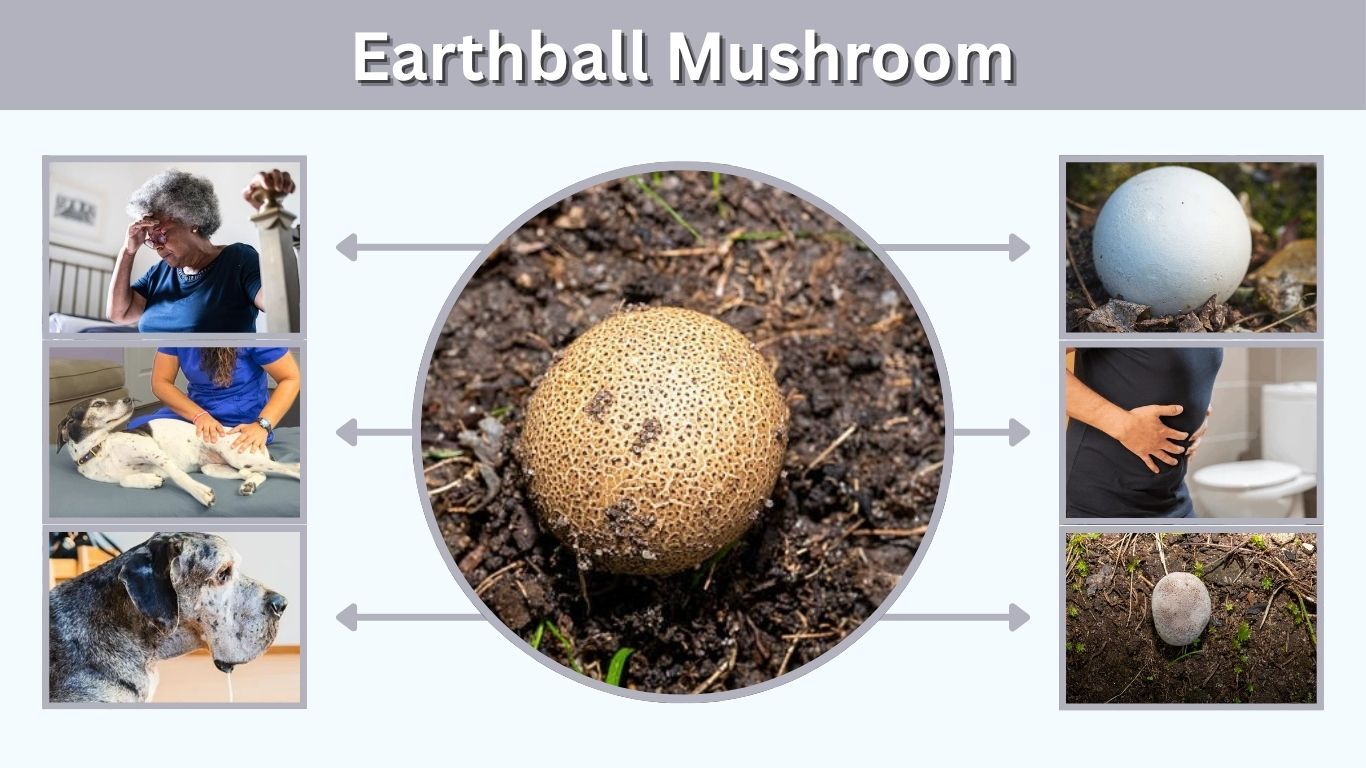
The earthball mushroom is a group of fungi commonly found in woodlands, lawns, gardens, and grassy areas throughout many parts of the world. Often mistaken for edible puffball mushrooms, earthballs belong to the genus Scleroderma and are generally considered poisonous. Their round shape, thick outer skin, and dark interior help distinguish them from similar species. Understanding how to identify earthball mushrooms, where they grow, and the risks they may pose to humans and pets can help prevent dangerous mistakes and improve mushroom safety awareness.
What Is an Earthball Mushroom?
Earthball mushrooms are fungi that belong to the genus Scleroderma. Unlike true puffballs, earthballs have a tougher outer layer and a dark spore-producing interior that develops as they mature. These mushrooms are commonly found in forests, lawns, parks, and gardens. Although their appearance may seem harmless, they are not considered edible and should be approached with caution due to their toxic properties and similarity to certain edible species.
Scientific Classification
Earthballs belong to the family Sclerodermataceae. The most widely recognized species is the common earthball, scientifically known as Scleroderma citrinum. Several related species occur throughout North America, Europe, and other temperate regions.
Earthball Mushroom Facts
Important characteristics include:
- Round or irregular shape
- Thick, leathery outer skin
- Dark interior at maturity
- No obvious stem
- Underground or partially buried growth
Why Are They Called Earthballs?
The name “earthball” comes from their rounded appearance and tendency to emerge directly from the soil. Many species resemble small balls partially buried in the ground, making them easy to overlook until they mature.
Earthball Mushroom Identification
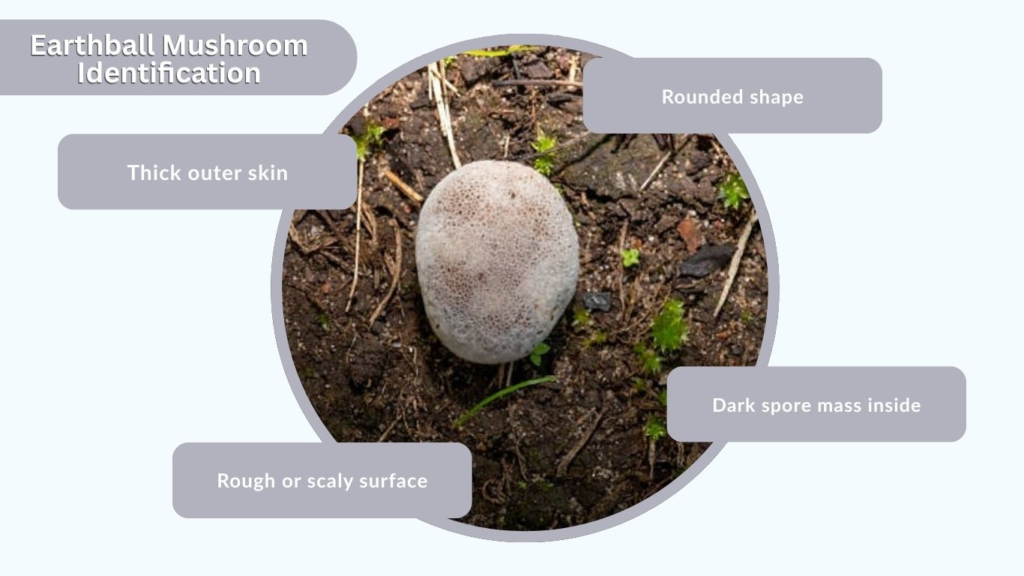
Proper identification is important because earthballs are frequently confused with edible puffball mushrooms. Although both groups share a similar shape during early growth stages, several key differences become visible upon closer inspection. Learning these distinguishing features can help prevent accidental consumption and improve overall mushroom identification skills.
What Does an Earthball Mushroom Look Like?
Young earthballs often appear as small, rounded balls with a rough surface. As they mature, the outer skin thickens and the internal spore mass gradually darkens from white to purple-black.
Key Identification Features
Several characteristics help identify earthballs:
- Thick outer skin
- Rough or scaly surface
- Rounded shape
- Dark spore mass inside
- Lack of visible gills
Earthball Mushroom Inside Appearance
One of the easiest ways to distinguish an earthball is by examining its interior. Young specimens may appear pale, but the inside quickly develops dark purple, gray, or black spore-producing tissue. This dark interior is an important identification feature.
Types of Earthball Mushrooms
Several earthball species occur throughout North America and Europe. While their appearances vary slightly, most share the same basic characteristics and ecological roles. Understanding the most common species can help mushroom enthusiasts recognize the diversity found within the Scleroderma genus.
Common Earthball Mushroom
The common earthball (Scleroderma citrinum) is the species most frequently encountered. It features a thick yellow-brown skin covered with coarse scales and is often found in woodland habitats.
Leopard Earthball
The leopard earthball displays distinctive surface markings that resemble spots or patches. These patterns give the mushroom a unique appearance compared to other earthball species.
Potato Earthball
This species resembles a small potato due to its shape and coloration. Like other earthballs, it develops a dark internal spore mass as it matures.
Scaly Earthball
Scaly earthballs possess rough outer surfaces covered with prominent scales. These features make them easier to identify in the field.
Earthball Mushroom vs Puffball
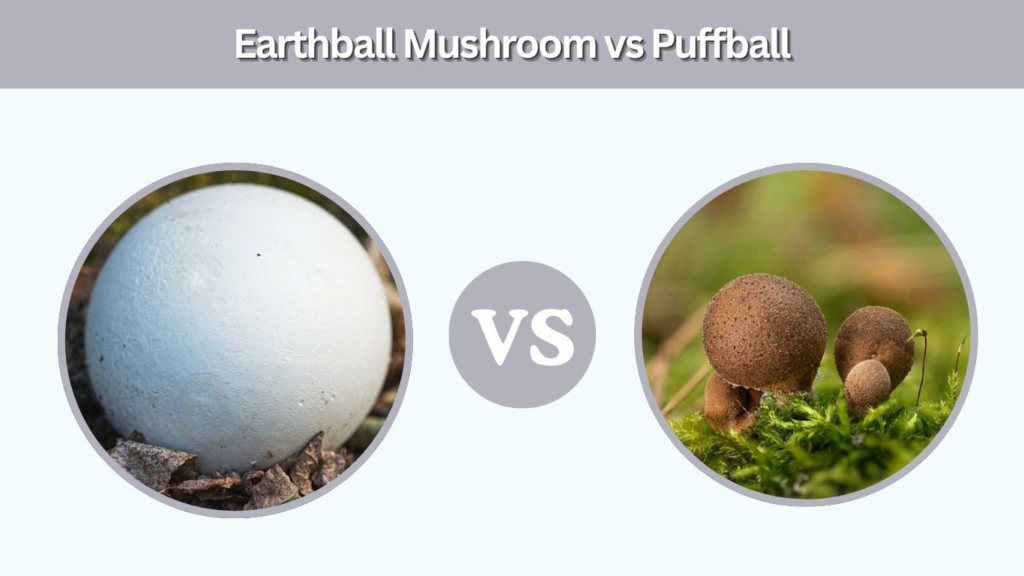
Earthballs and puffballs are commonly confused because both appear as rounded fungi lacking traditional stems and caps. However, significant differences exist between these groups. Understanding these distinctions is essential because many puffballs are edible when young, while earthballs are generally regarded as poisonous.
Why They Are Often Confused
Both mushrooms share a similar shape during early development and frequently grow in grassy or wooded environments. At first glance, inexperienced observers may find it difficult to tell them apart.
Puffball Characteristics
Young puffballs typically contain a pure white interior with a soft texture. As they mature, spores develop and eventually disperse through openings in the outer surface.
Earthball Characteristics
Earthballs differ in several important ways:
- Thicker outer skin
- Darker interior
- Rough surface texture
- More irregular shape
- Toxic reputation
Internal Differences
Cutting a mushroom open often reveals the most reliable difference. Edible puffballs maintain a solid white interior when young, while earthballs rapidly develop dark internal tissue even at relatively early stages of growth.
Earthball Mushrooms Habitat and Distribution
Earthball mushrooms are widely distributed across temperate regions of the world. They form beneficial relationships with trees and other plants, helping exchange nutrients through underground fungal networks. Their ability to thrive in diverse environments contributes to their widespread occurrence in both natural and human-modified landscapes.
Where Do Earthball Mushrooms Grow?
Earthballs commonly appear in forests, lawns, gardens, parks, and woodland edges. They are particularly associated with sandy or well-drained soils where suitable environmental conditions support fungal growth.
Earthball Mushrooms in the United States
Numerous earthball species occur throughout the United States. They are frequently reported in northeastern states, the Pacific Northwest, Texas, and many other regions with favorable moisture and soil conditions.
Are Earthball Mushrooms Poisonous?
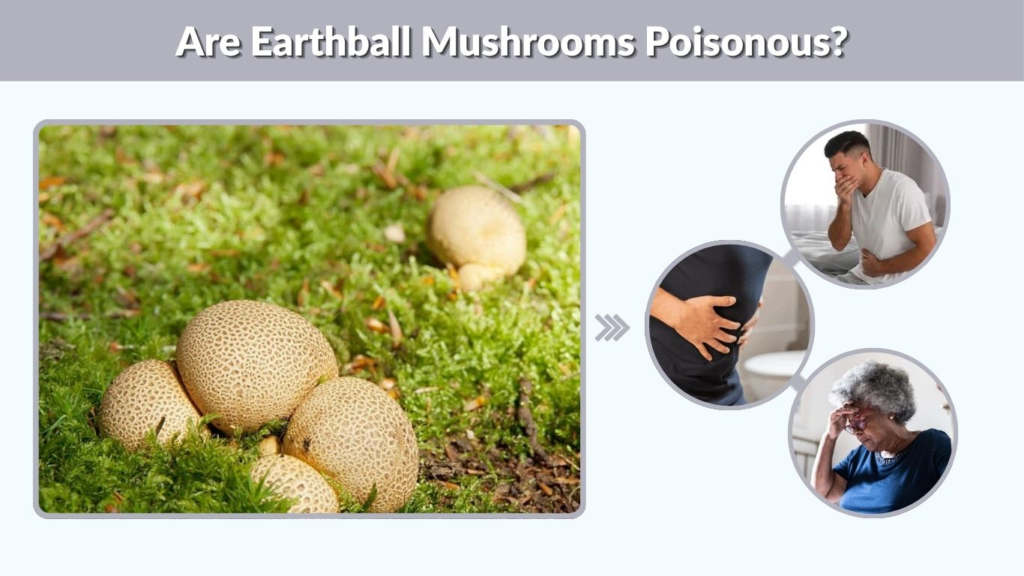
Earthball mushrooms are widely regarded as poisonous and should not be consumed. Although they may resemble edible puffballs during certain stages of development, earthballs contain compounds that can cause illness in humans and animals. The severity of symptoms varies depending on the species involved, the amount consumed, and the individual’s sensitivity. Because identification mistakes are common, caution should always be exercised when encountering wild mushrooms that resemble earthballs.
Earthball Mushroom Toxicity
Earthballs contain toxic substances that may cause gastrointestinal distress. While poisoning is rarely fatal, symptoms can be unpleasant and may require medical attention in some cases.
What Happens If You Eat an Earthball Mushroom?
Consuming an earthball mushroom may result in digestive irritation and other health problems. Symptoms often develop within a few hours of ingestion and can vary from mild to severe.
Common Symptoms
Signs of earthball mushroom poisoning may include:
- Nausea
- Vomiting
- Diarrhea
- Abdominal pain
- Dizziness
Anyone experiencing significant symptoms after consuming a wild mushroom should seek medical assistance promptly.
Are Earthball Mushrooms Poisonous to Dogs?
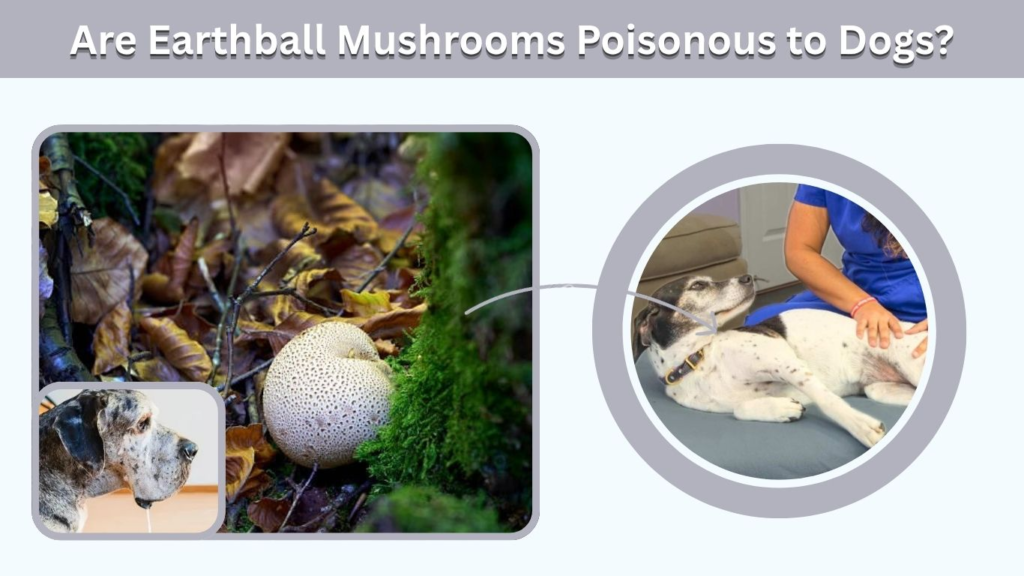
Dogs are naturally curious and may investigate mushrooms growing in lawns, gardens, or wooded areas. Because earthball mushrooms are toxic, accidental ingestion can lead to illness. Pet owners should monitor outdoor areas where mushrooms appear and remove potentially harmful species whenever possible.
Why Dogs Are Vulnerable
Dogs often explore the environment using their mouths, making accidental mushroom ingestion more likely. Puppies and young dogs may be especially prone to eating unfamiliar objects found outdoors.
Signs of Earthball Mushroom Poisoning in Dogs
Symptoms may include:
- Vomiting
- Drooling
- Diarrhea
- Weakness
- Loss of appetite
What to Do if a Dog Ate an Earthball Mushroom
If you suspect a dog has consumed an earthball mushroom, contact a veterinarian immediately. Early intervention can improve outcomes and reduce the risk of complications. When possible, photograph the mushroom or bring a sample for identification.
Are Earthball Mushrooms Edible?
Questions about edibility are common because earthballs are frequently confused with puffball mushrooms. Despite their similar appearance, earthballs should not be considered edible. Their toxic properties and resemblance to edible species create a significant risk for inexperienced mushroom foragers.
Can You Eat Earthball Mushrooms?
No. Earthball mushrooms are generally classified as poisonous and should not be consumed. Even small amounts may cause digestive upset and other adverse reactions.
Why They Are Considered Inedible
The primary reasons include their toxic compounds, unpleasant taste, and potential health risks. Unlike edible puffballs, earthballs do not possess a consistently safe stage for consumption.
Common Identification Mistakes
Many accidents occur because young earthballs resemble puffballs. Cutting a mushroom open and examining the interior is one of the most reliable ways to distinguish between the two groups.
Earthball Mushroom Life Cycle
Like all fungi, earthballs reproduce through spores rather than seeds. Their life cycle begins beneath the soil, where extensive fungal networks develop before producing visible fruiting bodies. Environmental conditions such as moisture, temperature, and soil quality influence each stage of development.
Spore Production
Mature earthballs generate millions of microscopic spores inside their dark interior. These spores are eventually released into the environment when the outer surface breaks apart.
Growth Stages
The development process generally follows several stages:
- Spore germination
- Mycelium formation
- Underground growth
- Fruiting body development
- Spore release
Ecological Role
Earthballs form beneficial associations with plant roots, helping trees and other vegetation absorb nutrients from the soil. This relationship contributes to ecosystem health and nutrient cycling.
How to Get Rid of Earthball Mushrooms
Earthballs often appear in lawns, gardens, and landscaped areas where suitable environmental conditions exist. Although they are a natural part of the ecosystem, some homeowners choose to remove them because of concerns about pets or children.
Why Earthballs Appear in Lawns
Earthballs thrive in soils containing organic matter and fungal networks. Moist conditions and healthy root systems can encourage their growth.
Reducing Favorable Conditions
Several practices may help reduce mushroom growth:
- Improve lawn drainage
- Remove decaying organic material
- Reduce excessive watering
- Increase sunlight exposure
- Maintain healthy turf
Should You Remove Them?
Removal may be advisable when pets or young children frequently use the area. However, eliminating the visible mushroom does not remove the underground fungal network responsible for future growth.
FAQs
Are Earthball Mushrooms Common in the United States?
Yes. Earthball mushrooms are found throughout many parts of the United States, including the Northeast, Midwest, Pacific Northwest, and Texas. They commonly grow in woodlands, parks, gardens, and lawns with suitable soil conditions.
When Do Earthball Mushrooms Typically Appear?
Earthball mushrooms most often appear during late summer and autumn when moisture levels are higher. However, in some regions with mild climates, they may be found during other parts of the year as well.
Can Earthball Mushrooms Grow in Lawns?
Yes. Earthball mushrooms frequently grow in lawns, landscaped areas, and gardens. They develop from underground fungal networks and may reappear in the same location for several years.
Do Earthball Mushrooms Have Stems or Gills?
Most earthball mushrooms lack a noticeable stem and do not have exposed gills like traditional cap mushrooms. Instead, they contain an enclosed spore mass inside a thick outer skin.
Why Are Earthball Mushrooms Mistaken for Puffballs?
Earthballs and puffballs share a similar round shape during early growth stages. However, puffballs have a pure white interior when young, while earthballs develop dark gray, purple, or black spore tissue as they mature, making proper identification essential.