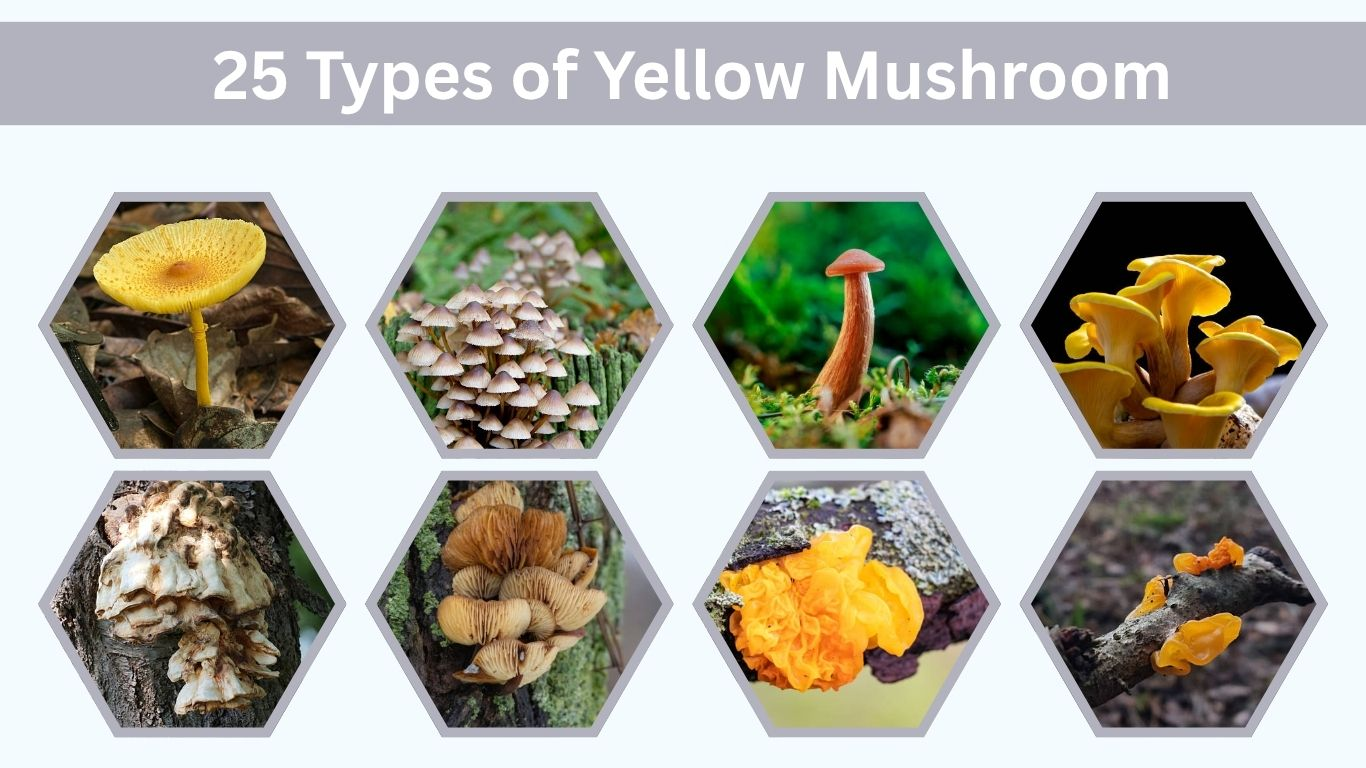
Yellow mushrooms are some of the most eye-catching fungi found in nature, ranging from bright golden caps to unusual jelly-like forms. They grow in diverse environments such as forests, grasslands, and even garden soil, each with unique shapes and features. While some are edible and highly valued, others can be toxic, making proper identification essential. This guide introduces 25 types of yellow mushrooms with their common names and key details to help you recognize them more easily in the wild.
1. Chicken of the Woods

A bright yellow to orange shelf-like mushroom, Chicken of the Woods is one of the most recognizable wild fungi. It grows in large, overlapping clusters and stands out due to its vivid color. This mushroom is commonly found on trees rather than on the ground, making it easy to spot. Its soft texture and unique appearance have made it popular among foragers and nature enthusiasts. Despite its appealing look, correct identification is essential before any use.
Identification
- Bright yellow to deep orange color with fading edges
- Grows in layered, shelf-like clusters
- Smooth and slightly velvety surface when young
- Underside contains tiny pores instead of gills
- Thick, soft, and fleshy white interior
Habitat
Chicken of the Woods typically grows on hardwood trees such as oak, beech, and chestnut. It is often found on dead, dying, or weakened trees, sometimes appearing directly from the trunk or large branches. This mushroom prefers warm, humid conditions and is most commonly seen from late spring to early autumn. It can grow at various heights on trees, making it visible from a distance due to its bright coloration.
Edibility
This mushroom is widely considered edible when properly identified and cooked. It is known for its firm, meat-like texture, which resembles chicken when prepared. However, it should never be eaten raw, as it may cause digestive discomfort. Some people may also have sensitivity to this mushroom, so trying a small amount first is recommended. Avoid specimens growing on conifer trees, as they may cause adverse reactions.
Lookalikes
While Chicken of the Woods is quite distinctive, it can sometimes be confused with other bracket fungi. Most lookalikes lack the same bright yellow-orange color or have different textures. Certain species growing on conifers may resemble it but are not recommended for consumption. Careful observation of color, growth pattern, and underside structure helps distinguish it from similar fungi.
2. Golden Chanterelle

Golden Chanterelle is a well-known yellow mushroom admired for its funnel shape and rich golden color. It is commonly found in forests and is highly valued for its delicate texture and pleasant aroma. This mushroom has a distinctive appearance that makes it easier to recognize compared to many other wild varieties. It often grows in groups and blends beautifully with forest floors covered in leaves and moss.
Identification
- Bright golden to yellow color
- Funnel or trumpet-shaped cap with wavy edges
- Underside has ridges instead of true gills
- Smooth, firm flesh with a fruity aroma
- Stem is thick and usually the same color as the cap
Habitat
Golden Chanterelles grow in forests, especially near hardwood trees like oak and beech, as well as some conifers. They form a natural relationship with tree roots and are usually found on the ground rather than on wood. These mushrooms prefer moist environments and are commonly seen during summer and early autumn, often appearing after rainfall.
Edibility
Golden Chanterelles are considered edible and are highly prized in cooking. They have a mild, slightly peppery taste and a pleasant fruity scent. They should always be cooked before eating, as raw consumption can cause digestive issues. Proper identification is important because some toxic mushrooms may appear similar to beginners.
Lookalikes
The most common lookalike is the false chanterelle, which has true gills instead of ridges and a more orange color. Another is the jack-o’-lantern mushroom, which is toxic and grows on wood rather than soil. Careful attention to growth location and underside structure helps avoid confusion.
3. Yellow Morel

Yellow Morel is a distinctive and highly sought-after mushroom known for its honeycomb-like cap and pale yellow color. It has a unique appearance that makes it stand out among forest mushrooms. Often associated with springtime, this mushroom is popular among foragers due to its rarity and seasonal growth. Its hollow structure and textured surface make it easy to recognize when properly identified.
Identification
- Pale yellow to golden cap with a honeycomb pattern
- Cap is oval to cone-shaped and attached to the stem
- Entire mushroom is hollow inside
- Stem is light-colored, thick, and slightly wrinkled
- Surface has deep pits and ridges
Habitat
Yellow Morels are commonly found on the ground in wooded areas, especially near hardwood trees like elm, ash, and apple. They often appear in disturbed soils, burned areas, or near decaying roots. These mushrooms prefer moist conditions and are typically seen in spring, especially after warm rains.
Edibility
Yellow Morels are considered edible and are highly prized for their rich, nutty flavor. However, they must always be cooked thoroughly before consumption, as raw morels can be toxic. Proper preparation enhances both safety and taste. As with all wild mushrooms, correct identification is essential.
Lookalikes
False morels are the main lookalike and can be toxic. Unlike true morels, they are not completely hollow inside and often have a wrinkled or lobed cap instead of a honeycomb structure. Cutting the mushroom lengthwise is a reliable way to distinguish between them.
4. Sulphur Tuft

Sulphur Tuft is a small, bright yellow mushroom that often grows in dense clusters. Its vivid color makes it easy to notice, especially when growing in large numbers. Despite its attractive appearance, this mushroom is not considered edible and is best observed rather than collected. It commonly appears in woodland areas and adds a splash of color to decaying wood.
Identification
- Bright sulphur-yellow cap, often darker toward the center
- Grows in tight clusters
- Caps are small, smooth, and slightly convex
- Gills are yellow when young, turning greenish or dark with age
- Slender yellow stem with no ring
Habitat
Sulphur Tuft typically grows on decaying wood, including tree stumps, logs, and buried roots. It is commonly found in forests and wooded areas, especially where hardwood trees are present. This mushroom can appear in large groups and is often seen from spring through late autumn. It thrives in damp, shaded environments.
Edibility
Sulphur Tuft is considered poisonous and should not be eaten. Consuming it can cause stomach pain, nausea, and other digestive issues. Its bright color may attract attention, but it is important to avoid using it for food. Proper identification helps prevent accidental ingestion.
Lookalikes
It can be confused with some edible cluster-growing mushrooms, such as honey mushrooms. However, Sulphur Tuft lacks a ring on the stem and has greenish gills as it matures. Paying attention to these features helps distinguish it from safer species.
5. Yellow Fieldcap

Yellow Fieldcap is a small, delicate mushroom with a bright yellow appearance that often grows in grassy areas. It is commonly seen in lawns, fields, and gardens, especially after rainfall. Due to its fragile structure and short lifespan, it may appear suddenly and disappear quickly. Its simple yet striking look makes it easy to notice among green surroundings.
Identification
- Bright yellow to pale lemon-colored cap
- Small, thin, and fragile structure
- Cap is smooth and slightly bell-shaped when young
- Gills are light yellow to pale brown
- Slender, delicate stem without a ring
Habitat
Yellow Fieldcap typically grows in open grassy areas such as lawns, meadows, and roadside fields. It thrives in moist soil and often appears after rain, especially in warm seasons. Unlike many mushrooms, it does not grow on wood but directly from the ground. It is commonly found in clusters or scattered groups.
Edibility
Yellow Fieldcap is generally not considered edible and may cause mild digestive discomfort if consumed. Due to its small size and fragile nature, it is not used for culinary purposes. It is best appreciated for observation rather than collection.
Lookalikes
It may resemble other small yellow lawn mushrooms, some of which can be toxic. Confusion is possible due to similar size and color, so careful identification is necessary. Observing features like cap shape and habitat can help distinguish it from other species.
6. Golden Waxcap

Golden Waxcap is a vibrant yellow mushroom known for its glossy, waxy surface and smooth texture. It is often found in open grasslands and is admired for its bright coloration. This mushroom stands out due to its simple structure and clean appearance. It is commonly associated with undisturbed natural areas and is a favorite among those who enjoy observing wild fungi.
Identification
- Bright golden-yellow cap with a shiny, waxy surface
- Cap is smooth, slightly convex, and may flatten with age
- Gills are thick, widely spaced, and also yellow
- Stem is slender, smooth, and matches the cap color
- Flesh is soft and slightly moist
Habitat
Golden Waxcap typically grows in grasslands, meadows, and pastures, especially in areas that are not heavily fertilized or disturbed. It prefers moist soil and is often seen during autumn. This mushroom grows directly from the ground and may appear alone or in small groups, adding bright color to grassy landscapes.
Edibility
Golden Waxcap is generally considered edible, but it is not widely used due to its small size and delicate texture. It has a mild taste and should always be cooked before consumption. As with all wild mushrooms, proper identification is important to ensure safety.
Lookalikes
It can resemble other waxcap species, many of which are also brightly colored. While most are not harmful, some may differ in texture or habitat. Careful observation of its waxy cap and grassland habitat helps distinguish it from similar mushrooms.
7. Yellowfoot

Yellowfoot is a small, slender mushroom recognized for its bright yellow stem and muted brownish cap. It has a delicate appearance and often grows in groups, blending into mossy forest floors. Despite its modest look, it is valued by experienced foragers and is easier to identify when its key features are observed carefully.
Identification
- Yellow to orange-yellow slender stem
- Small cap, usually brownish or grayish-yellow
- Cap is slightly funnel-shaped with a depressed center
- Underside has shallow, vein-like ridges instead of true gills
- Thin, flexible, and delicate structure
Habitat
Yellowfoot commonly grows in damp, mossy forests, especially among conifer trees. It prefers cool, moist environments and is often found in clusters on the forest floor. This mushroom typically appears in late summer through autumn and thrives in areas with rich organic matter.
Edibility
Yellowfoot is considered edible and is appreciated for its mild, earthy flavor. It is often used in cooking, especially in soups and sauces. Like most wild mushrooms, it should be properly cleaned and cooked before consumption to ensure safety and enhance taste.
Lookalikes
It may be confused with small chanterelle-like mushrooms, but its thinner structure and darker cap help distinguish it. Some similar species are also edible, but careful identification is still necessary to avoid mistakes.
8. Butter Mushroom

Butter Mushroom is a bright yellow fungus known for its smooth, slightly sticky cap that often appears glossy, especially in moist conditions. Its soft texture and warm color make it noticeable in natural settings. This mushroom is commonly found in forested areas and is appreciated for its simple yet appealing appearance.
Identification
- Bright yellow to golden cap with a slightly sticky surface
- Cap is smooth, rounded, and may flatten with age
- Gills or pores are light yellow and closely spaced
- Stem is short, sturdy, and similar in color to the cap
- Flesh is soft and pale yellow inside
Habitat
Butter Mushroom typically grows in forests, often near trees where it can form natural associations with roots. It prefers moist soil and shaded environments. This mushroom is usually found during warm and wet seasons, especially after rainfall, and may appear alone or in small groups on the ground.
Edibility
Some Butter Mushrooms are considered edible, but identification at the species level is important since similar-looking mushrooms may not be safe. It is generally recommended to cook them before consumption. Beginners should avoid eating wild mushrooms unless confirmed by an expert.
Lookalikes
It may resemble other yellow forest mushrooms with smooth caps. Some of these lookalikes can differ in texture, smell, or underside structure. Careful observation of cap surface and growth habitat helps in distinguishing it from similar species.
9. Yellow Parasol

Yellow Parasol is a small to medium-sized mushroom known for its bright yellow cap and umbrella-like shape. It is commonly found in warm, humid environments and often appears in indoor plant pots as well as outdoor gardens. Its delicate structure and striking color make it easy to notice, especially when it appears suddenly after moisture.
Identification
- Bright lemon-yellow cap with a slightly darker center
- Cap starts oval and opens into a parasol shape
- Surface may have fine scales or powdery texture
- Gills are free, soft, and yellow
- Slender yellow stem with a small ring
Habitat
Yellow Parasol commonly grows in rich, moist soil, especially in flower pots, greenhouses, gardens, and compost piles. It thrives in warm and humid conditions and often appears after watering or rainfall. This mushroom can grow alone or in small groups and is frequently seen indoors in potted plants.
Edibility
Yellow Parasol is considered toxic and should not be consumed. Eating it can lead to stomach upset and other digestive issues. Although it looks attractive, it is best left untouched and only observed. Proper awareness helps prevent accidental ingestion.
Lookalikes
It may resemble small edible parasol mushrooms, but its bright yellow color is a key distinguishing feature. Most edible parasols are larger and have different coloration. Observing its habitat and vivid color helps avoid confusion with safer species.
10. Golden Spindles

Golden Spindles is a unique yellow fungus that stands out due to its tall, thin, and finger-like shape. Instead of having a typical cap and stem, it grows as upright, spindle-shaped structures. Its bright yellow color makes it easy to spot among forest debris, especially in damp conditions. This unusual form gives it a distinct appearance compared to most common mushrooms.
Identification
- Bright yellow, slender, spindle-shaped structures
- No distinct cap or gills
- Grows upright in clustered groups
- Surface is smooth and slightly shiny
- Flesh is firm but fragile
Habitat
Golden Spindles are commonly found on forest floors, especially in areas rich in decaying wood and organic matter. They prefer moist, shaded environments and are often seen in woodland settings. This fungus typically appears during late summer and autumn, growing in clusters among leaf litter or near rotting logs.
Edibility
Golden Spindles are generally not considered edible due to their tough texture and lack of culinary value. They are mainly appreciated for their unusual shape and bright color rather than for food. It is best to avoid consumption unless properly identified by an expert.
Lookalikes
They may resemble other coral or club-shaped fungi, some of which vary in color and size. While most are harmless, differences in texture and growth pattern can help distinguish them. Observing their slender, upright form is key to proper identification.
11. Yellow Patches

Yellow Patches is a striking mushroom recognized for its bright yellow cap often covered with small patches or scales. It has a classic mushroom shape and is commonly found in wooded areas. Its bold color and patterned surface make it visually distinctive, though it should be approached with caution due to its toxicity.
Identification
- Bright yellow cap with scattered yellow or pale patches
- Cap is rounded when young, flattening with age
- Surface may appear slightly rough or scaly
- Gills are free and pale to yellowish
- Stem is yellow with a noticeable ring
Habitat
Yellow Patches typically grows in forests, especially under hardwood trees. It prefers rich soil and shaded environments, often appearing during warm and humid seasons. This mushroom can grow alone or in small groups and is usually found on the ground rather than on wood.
Edibility
Yellow Patches is considered poisonous and should not be consumed. It may cause stomach upset and other adverse reactions if eaten. Despite its attractive appearance, it is not safe for culinary use. Proper identification is essential to avoid accidental ingestion.
Lookalikes
It can resemble other yellow mushrooms, including some edible species. However, the presence of patches on the cap and its overall structure help distinguish it. Careful observation of its features, especially the cap texture and ring on the stem, is important for correct identification.
12. Lemon Disco

Lemon Disco is a tiny, bright yellow fungus that forms small, disc-shaped bodies on decaying wood. Unlike typical mushrooms, it does not have a cap and stem but instead appears as flat or slightly cupped discs. Its vivid lemon color makes it stand out against dark, rotting surfaces, especially in damp environments.
Identification
- Small, bright lemon-yellow disc-shaped bodies
- Smooth, flat or slightly concave surface
- No stem or gills present
- Grows in clusters or scattered groups
- Soft and delicate texture
Habitat
Lemon Disco is commonly found on decaying wood, fallen branches, and rotting logs. It thrives in moist, shaded environments such as forests and wooded areas. This fungus appears during wet seasons and is often seen after rainfall, adding bright color to decomposing organic matter.
Edibility
Lemon Disco is not considered edible due to its very small size and lack of culinary value. It is mainly appreciated for its appearance rather than for food. It should be left undisturbed and observed in its natural habitat.
Lookalikes
It may resemble other small cup fungi that grow on wood. However, its bright yellow color and disc-like shape help distinguish it. Careful observation of size, color, and growth surface is useful for identification.
13. Yellow Stainer

Yellow Stainer is a common yellowish mushroom known for its smooth cap and the distinct yellow staining that appears when it is bruised or cut. It has a typical mushroom shape and is often found in grassy areas. Despite its ordinary look, it is important to recognize its key traits, as it is not safe to eat.
Identification
- White to pale cap that bruises yellow when handled
- Cap is smooth, rounded, and becomes flatter with age
- Gills start pink and turn dark brown over time
- Stem is white with a ring and may yellow at the base
- Often has a strong, unpleasant odor when cut
Habitat
Yellow Stainer commonly grows in lawns, gardens, parks, and grassy fields. It prefers rich soil and often appears after rain, especially in warm weather. This mushroom is usually found in groups and can sometimes form rings or clusters in open areas.
Edibility
Yellow Stainer is considered poisonous and should not be consumed. Eating it can cause stomach cramps, nausea, and other digestive problems. Its appearance may resemble edible field mushrooms, so proper identification is very important.
Lookalikes
It is often confused with edible Agaricus species. However, the yellow staining and unpleasant smell are key differences. Checking for these features helps avoid mistaking it for safe-to-eat mushrooms.
14. Yellow Knight

Yellow Knight is a bright yellow mushroom with a smooth cap and sturdy appearance. It is often found in sandy soils and forested areas, making it a noticeable species due to its uniform yellow color. While it may look appealing, it has a controversial reputation regarding edibility and should be approached with caution.
Identification
- Bright yellow cap, sometimes with a slightly darker center
- Cap is smooth and slightly sticky in moist conditions
- Gills are yellow and closely spaced
- Stem is thick, solid, and matches the cap color
- Flesh is firm and pale yellow
Habitat
Yellow Knight typically grows in sandy soils, often in association with pine trees. It is commonly found in forests and woodland edges, especially in dry, well-drained areas. This mushroom usually appears during autumn and may grow alone or in small groups.
Edibility
Yellow Knight was once considered edible, but it is now regarded as potentially toxic due to reports of serious health effects after repeated consumption. Because of these risks, it is generally advised not to eat this mushroom. Caution and proper identification are essential.
Lookalikes
It can resemble other yellow woodland mushrooms, some of which may be edible or toxic. Its consistent yellow color and habitat near pine trees help in identification. However, confusion is possible, so careful observation is important.
15. Golden Scalycap

Golden Scalycap is a striking yellow to golden mushroom covered with small, darker scales on its cap. It often grows in clusters and has a slightly sticky surface, especially in damp conditions. Its textured appearance and warm coloration make it easy to notice on decaying wood in forested areas.
Identification
- Golden-yellow cap with darker brownish scales
- Cap is sticky or slimy when wet
- Grows in dense clusters
- Gills are pale yellow to brownish
- Stem is sturdy with a ring and may have scaly texture
Habitat
Golden Scalycap typically grows on decaying wood such as logs, stumps, and tree bases. It is commonly found in forests and woodland areas, especially where hardwood trees are present. This mushroom prefers moist environments and usually appears in late summer through autumn, often forming large, noticeable clusters.
Edibility
Golden Scalycap is sometimes considered edible, but it is not widely recommended due to possible confusion with toxic species. Its taste can also be bitter, reducing its culinary value. It is best approached with caution and avoided unless properly identified by an expert.
Lookalikes
It may resemble other cluster-growing mushrooms, including some that are toxic. Differences in cap texture, color, and growth pattern help distinguish it. Careful observation is necessary to avoid confusing it with unsafe species.
16. Yellow Fairy Cup

Yellow Fairy Cup is a small, delicate fungus that forms cup-shaped structures with a bright yellow color. Unlike typical mushrooms, it does not have a cap and stem but appears as tiny cups scattered on wood or soil. Its vivid color and unusual shape make it an interesting find in natural settings.
Identification
- Small, bright yellow cup-shaped bodies
- Smooth inner surface with slightly curved edges
- No stem or gills present
- Grows in clusters or scattered groups
- Soft and fragile texture
Habitat
Yellow Fairy Cup is commonly found on decaying wood, forest litter, or moist soil. It thrives in damp, shaded environments such as forests and woodland floors. This fungus often appears after rainfall and is usually seen during wet seasons, adding a splash of color to decomposing organic material.
Edibility
Yellow Fairy Cup is not considered edible due to its small size and lack of culinary value. It is mainly appreciated for its appearance rather than for consumption. It is best left undisturbed in its natural habitat.
Lookalikes
It may resemble other small cup fungi that grow in similar environments. However, its bright yellow color and cup-like shape help distinguish it. Careful observation of size, structure, and growth surface is useful for accurate identification.
17. Yellow Coral Fungus

Yellow Coral Fungus is a branching, coral-like mushroom that stands out with its bright yellow color and intricate structure. Instead of a typical cap and stem, it forms multiple upright branches that resemble underwater coral. Its unique appearance makes it easy to recognize in forest environments.
Identification
- Bright yellow, coral-like branching structure
- Multiple upright branches growing from a single base
- No distinct cap or gills
- Surface is smooth to slightly rough
- Flesh is brittle and easily broken
Habitat
Yellow Coral Fungus is commonly found on forest floors, especially in areas rich in decaying organic matter. It grows among leaf litter, moss, or near rotting wood. This fungus prefers moist, shaded environments and is typically seen during late summer and autumn.
Edibility
Some yellow coral fungi are edible, while others may cause mild digestive issues. Due to the difficulty in identifying species within this group, it is generally not recommended for consumption unless confirmed by an expert. It is best appreciated for its unique appearance.
Lookalikes
It may resemble other coral fungi that vary in color, including white, orange, or pale yellow species. Some lookalikes can be bitter or mildly toxic. Careful observation of branching pattern and color helps with identification, but caution is always advised.
18. Golden Jelly Fungus

Golden Jelly Fungus is a bright yellow, gelatinous fungus known for its soft, jelly-like texture. It has an irregular, lobed shape and often appears as small, wavy masses on wood. Its vivid color and unusual consistency make it easy to distinguish from typical mushrooms.
Identification
- Bright golden-yellow, jelly-like body
- Irregular, lobed or brain-like shape
- Soft, slippery, and flexible texture
- No cap, stem, or gills
- Shiny and translucent when moist
Habitat
Golden Jelly Fungus typically grows on dead or decaying wood, especially on fallen branches and logs. It prefers damp, shaded environments and is commonly found in forests. This fungus often appears after rain and can be seen throughout the year in humid conditions.
Edibility
Golden Jelly Fungus is generally considered edible, but it has little flavor or texture, making it less desirable for cooking. It is sometimes used in soups or for its gelatinous consistency. Proper identification is still important before consumption.
Lookalikes
It may resemble other jelly fungi, including orange or darker-colored species. While many are harmless, differences in color and shape help distinguish them. Observing its bright yellow color and growth on wood aids in proper identification.
19. Yellow Brain Fungus

Yellow Brain Fungus is a soft, gelatinous fungus that resembles a wrinkled brain due to its folded and lobed surface. Its bright yellow color and unusual shape make it stand out, especially in damp forest environments. It often appears after rain and can change shape as it dries and rehydrates.
Identification
- Bright yellow, brain-like folded structure
- Gelatinous, soft, and wobbly texture
- Irregular, lobed surface with deep folds
- No cap, stem, or gills
- Becomes smaller and firmer when dry
Habitat
Yellow Brain Fungus typically grows on dead or decaying wood, especially on branches and logs. It thrives in moist, shaded environments and is commonly found in forests. This fungus often appears after rainfall and can persist in humid conditions throughout much of the year.
Edibility
Yellow Brain Fungus is generally considered edible, but it has little flavor and a gelatinous texture that may not appeal to everyone. It is sometimes used in certain dishes for its texture rather than taste. Proper identification is still necessary before consumption.
Lookalikes
It can be confused with other jelly-like fungi, especially those with orange or brown tones. While many are harmless, differences in color and structure help with identification. Observing its bright yellow color and brain-like folds is key to distinguishing it.
20. Yellow Club Fungus

Yellow Club Fungus is a simple, upright fungus with a smooth, club-like shape and bright yellow color. Unlike typical mushrooms, it does not have a cap or gills, giving it a clean and minimal appearance. It often grows in small groups and blends into grassy or mossy areas despite its vivid color.
Identification
- Bright yellow, club-shaped structure
- Smooth, unbranched and upright form
- No cap, stem distinction, or gills
- Soft but slightly firm texture
- Typically small and slender
Habitat
Yellow Club Fungus is commonly found in grasslands, meadows, and mossy forest floors. It prefers moist soil and shaded or partially shaded environments. This fungus usually appears during late summer and autumn, often growing in scattered groups or small clusters.
Edibility
Yellow Club Fungus is generally not considered edible due to its small size and lack of culinary value. It is mainly observed for its appearance rather than used for food. As with all wild fungi, it should not be consumed without proper identification.
Lookalikes
It may resemble other club-shaped fungi that vary in color and size. Some species may be pale or more orange in tone. Careful observation of its bright yellow color and simple shape helps distinguish it from similar fungi.
21. Golden Needle Mushroom

Golden Needle Mushroom is a slender, delicate fungus known for its long stems and small caps. It often appears in clusters and has a soft golden-yellow tone. Its thin, needle-like form gives it a graceful appearance, making it easy to distinguish from thicker, more typical mushrooms.
Identification
- Slender, elongated stems with small rounded caps
- Pale to golden-yellow color
- Grows in dense clusters
- Caps are smooth and slightly sticky
- Thin, flexible, and delicate structure
Habitat
Golden Needle Mushroom typically grows on decaying wood, tree stumps, or buried roots. It prefers cool, moist environments and is often found in forests. This mushroom commonly appears during autumn and early winter, especially in shaded areas with high humidity.
Edibility
Some needle mushrooms are considered edible and are used in cooking, but wild identification must be done carefully. They should always be cooked before consumption. Beginners are advised not to consume them unless confirmed by an expert.
Lookalikes
It may resemble other small, clustered mushrooms growing on wood, some of which can be toxic. Differences in color, season, and growth pattern are important for correct identification. Careful observation helps avoid confusion.
22. Yellow Fan Mushroom

Yellow Fan Mushroom is a brightly colored fungus that grows in a fan-like or semicircular shape. It often appears in overlapping clusters, creating a layered look on wood surfaces. Its vivid yellow color and spreading form make it easy to spot in forest environments.
Identification
- Bright yellow, fan-shaped or semicircular caps
- Grows in overlapping, shelf-like clusters
- Smooth surface with slightly wavy edges
- Underside may have pores or fine gills
- Flesh is thin and flexible
Habitat
Yellow Fan Mushroom typically grows on dead or decaying wood, such as logs, stumps, and fallen branches. It prefers moist, shaded environments and is commonly found in forests. This fungus often appears during warm and humid seasons, especially after rainfall.
Edibility
Yellow Fan Mushroom is generally not considered edible due to its thin texture and lack of culinary value. It is mainly appreciated for its appearance in nature. Consumption is not recommended unless properly identified by an expert.
Lookalikes
It may resemble other fan-shaped or bracket fungi that grow on wood. Some lookalikes differ in color, thickness, or underside structure. Observing its bright yellow color and growth pattern helps distinguish it from similar species.
23. Golden Oyster Mushroom

Golden Oyster Mushroom is a vibrant yellow fungus known for its soft, fan-shaped caps and clustered growth. It is a striking variety of oyster mushroom that stands out due to its bright color and layered appearance. Often found growing in groups, it adds a bold visual contrast to its natural surroundings.
Identification
- Bright golden-yellow, fan-shaped caps
- Grows in overlapping clusters
- Smooth surface with slightly curved edges
- Underside has fine, decurrent gills
- Short or absent stem, with soft flesh
Habitat
Golden Oyster Mushroom typically grows on dead or dying hardwood trees, including logs and stumps. It prefers warm, humid environments and is often found in forests. This mushroom usually appears during late spring through summer and can grow rapidly under the right conditions.
Edibility
Golden Oyster Mushroom is considered edible and is commonly used in cooking. It has a mild flavor and soft texture, making it suitable for a variety of dishes. It should always be cooked before consumption, and fresh specimens are preferred for the best taste.
Lookalikes
It may resemble other oyster mushroom varieties that differ in color, such as white or gray types. Some non-edible lookalikes exist, but differences in color and growth pattern help with identification. Careful observation ensures accurate recognition.
24. Yellow Laccaria

Yellow Laccaria is a small, simple mushroom with a soft yellow tone and a slightly uneven shape. It has a modest appearance and is often overlooked due to its size and variability. This mushroom blends well into natural surroundings, especially among leaf litter and forest debris.
Identification
- Pale yellow to orange-yellow cap
- Cap is small, thin, and may become wavy or irregular
- Gills are thick, widely spaced, and light-colored
- Stem is slender, fibrous, and similar in color to the cap
- Overall delicate and slightly variable in shape
Habitat
Yellow Laccaria is commonly found on forest floors, growing among leaf litter, moss, or soil. It prefers woodland environments and is often associated with trees. This mushroom appears during moist seasons, especially in late summer and autumn, and may grow scattered or in small groups.
Edibility
Yellow Laccaria is generally considered edible, but it is not widely collected due to its small size and limited flavor. As with all wild mushrooms, proper identification is essential before consumption. It is best suited for experienced foragers.
Lookalikes
It may resemble other small Laccaria species that vary in color and size. Some lookalikes can appear more brown or orange. Observing its gill spacing and overall shape helps in distinguishing it from similar mushrooms.
25. Yellow Mycena

Yellow Mycena is a small, delicate mushroom known for its bright yellow coloration and slender structure. It often appears fragile and elegant, with a thin stem and a tiny cap. This mushroom is usually found in damp environments and is more appreciated for its appearance than for any practical use.
Identification
- Bright yellow, small cap with a smooth surface
- Cap is bell-shaped when young, becoming flatter with age
- Gills are pale yellow to whitish and delicate
- Stem is very thin, long, and fragile
- Overall tiny and graceful appearance
Habitat
Yellow Mycena typically grows on decaying wood, leaf litter, or forest debris. It prefers moist, shaded environments and is commonly found in forests. This mushroom often appears after rainfall and can be seen during warm, humid seasons, usually in scattered groups.
Edibility
Yellow Mycena is not considered edible due to its small size and lack of culinary value. Some species within this group may also be toxic, so it is best not to consume them. It is mainly observed for its delicate beauty in nature.
Lookalikes
It may resemble other small Mycena species that vary in color, including white or pale brown types. Due to their similar size and structure, careful observation is needed. Its bright yellow color helps distinguish it from less colorful relatives.
FAQs
Are all yellow mushrooms edible?
No, not all yellow mushrooms are edible. While some, like Golden Chanterelle and Chicken of the Woods, are safe when properly identified and cooked, others such as Yellow Parasol and Sulphur Tuft are toxic. Color alone is not a reliable indicator of safety, so careful identification is always necessary.
Where are yellow mushrooms commonly found?
Yellow mushrooms can grow in a variety of environments, including forests, grasslands, and even gardens. Some prefer decaying wood, while others grow directly from soil. Moist, shaded conditions and warm seasons often encourage their growth, especially after rainfall.
How can I safely identify yellow mushrooms?
Safe identification requires examining multiple features such as cap shape, gill structure, color changes, and habitat. It is important to avoid relying on appearance alone. Using field guides or consulting experts can help ensure accurate identification before handling or consuming any wild mushroom.
Do yellow mushrooms grow year-round?
Most yellow mushrooms do not grow year-round. Their appearance depends on environmental conditions like temperature and moisture. Many species are seasonal, commonly appearing in spring, summer, or autumn, especially after rain. However, some may persist longer in consistently humid climates.
Can yellow mushrooms be grown at home?
Yes, some yellow mushrooms, such as Golden Oyster Mushroom, can be cultivated at home using proper growing kits or controlled conditions. They require the right balance of moisture, temperature, and substrate. However, wild varieties should not be transplanted or grown without proper knowledge and experience.