
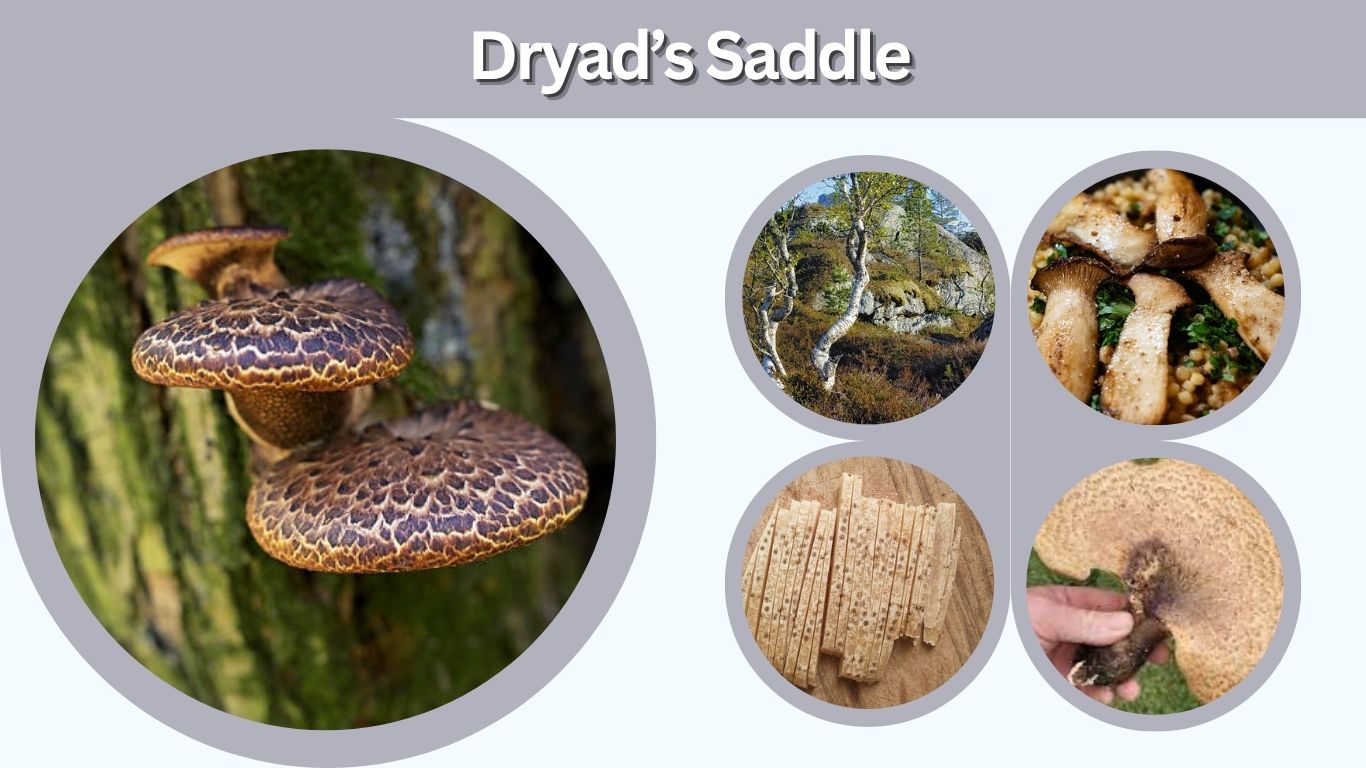
Dryad’s saddle mushroom, also known as pheasant back mushroom, is a popular wild edible fungus found growing on hardwood trees. It is especially valued by foragers for its unique appearance, fresh cucumber-like scent, and early seasonal availability. While it is edible when young, proper identification and preparation are essential to enjoy it safely. This mushroom is not only used in cooking but also appreciated for its ecological role in breaking down dead wood, making it an important part of forest ecosystems.
What Is Dryad’s Saddle Mushroom?
Dryad’s saddle (Cerioporus squamosus) is a type of bracket fungus that grows on trees, particularly hardwood species like elm. It gets its name from its saddle-like shape and mythological reference to dryads, or tree spirits. This mushroom is widely recognized for its large size and patterned cap.
Scientific Name and Background
The scientific name of dryad’s saddle is Cerioporus squamosus. It belongs to the polypore family, meaning it has pores instead of gills underneath its cap. It typically appears in spring and early summer.
Common Names
- Pheasant back mushroom
- Dryad saddle
- Hawk’s wing (less common)
Dryad’s Saddle Identification
Correct identification is crucial when foraging wild mushrooms. Dryad’s saddle has several distinct features that make it easier to recognize in the wild.
Cap and Appearance
- Large, fan-shaped or semicircular cap
- Light brown surface with darker scales
- Pattern resembles pheasant feathers
Underside and Pores
- White or cream-colored underside
- Covered in tiny pores, not gills
- Soft and spongy when young
Smell and Texture
- Fresh cucumber or watermelon rind scent
- Tender when young, tough with age
Where to Find Dryad’s Saddle

Dryad’s saddle mushrooms are commonly found growing on dead or dying hardwood trees. They are especially abundant on elm trees, but can also appear on maple, beech, and other species. These mushrooms grow in shelf-like formations attached to tree trunks or logs. They are most often seen in spring and early summer, making them one of the first wild mushrooms available to foragers. Their presence indicates wood decay, as they help break down dead material in forests.
Dryad’s Saddle Look-Alikes
Although dryad’s saddle is relatively easy to identify, there are a few look-alike species that can cause confusion. While most are not dangerously toxic, correct identification is still important for safe foraging.
Common Look-Alikes
- Tuberous polypore
- Other bracket fungi with similar shape
Key Differences
- Dryad’s saddle has a distinctive scaled cap
- Strong cucumber-like smell
- Larger size compared to similar species
Is Dryad’s Saddle Edible?

Dryad’s saddle is considered edible, but only at a certain stage of growth. Young mushrooms are tender and suitable for cooking, while older ones become woody and difficult to eat.
Edibility Factors
- Best harvested when young and soft
- Avoid thick, mature specimens
- Texture determines quality
Can You Eat It Raw?
- Not recommended due to toughness
- Cooking improves flavor and digestibility
Dryad’s Saddle Taste and Texture
The taste and texture of dryad’s saddle can vary depending on its age. Younger mushrooms are more desirable for cooking because they are softer and more flavorful.
Flavor Profile
- Mild and slightly nutty
- Fresh cucumber-like aroma
Texture Changes
- Tender when young
- Tough and chewy when mature
How to Clean and Prepare Dryad’s Saddle

Proper cleaning and preparation are essential before cooking dryad’s saddle mushrooms. These steps help maintain their flavor and ensure a better texture in dishes.
Cleaning Tips
- Gently brush off dirt and debris
- Use a damp cloth if needed
- Avoid soaking in water
Preparation Steps
- Trim tough edges and stems
- Slice thinly for even cooking
- Use only soft, young parts
How to Cook Dryad’s Saddle Mushroom
Cooking dryad’s saddle correctly enhances its flavor and makes it more enjoyable to eat. Simple methods work best to highlight its natural taste.
Best Cooking Methods
- Sautéing with oil or butter
- Stir-frying with vegetables
- Adding to soups or broths
Cooking Tips
- Cook on medium heat
- Slice thin for better texture
- Avoid overcooking to prevent toughness
Dryad’s Saddle Recipes
Dryad’s saddle mushrooms can be used in a variety of simple and flavorful dishes. Because of their mild taste and unique texture, they pair well with herbs, butter, and light seasonings. Using young mushrooms ensures the best results in cooking.
Easy Recipe Ideas
- Sautéed dryad’s saddle – Cook with garlic and butter for a quick side
- Dryad’s saddle soup – Adds depth to broths and light soups
- Stir-fried dryad’s saddle – Combine with vegetables and soy sauce
Creative Uses
- Dryad’s saddle jerky – Thin slices dried for snacks
- Pickled dryad’s saddle – Tangy preservation option
- Dryad’s saddle pasta – Mixed with creamy sauces
Can You Eat Dryad’s Saddle Raw?
Dryad’s saddle mushrooms are not recommended for raw consumption. Their firm and fibrous texture makes them difficult to chew and digest without cooking. Additionally, cooking helps enhance their flavor and reduces any potential digestive discomfort. For the best experience, always cook dryad’s saddle mushrooms thoroughly before eating, especially when using them in meals like soups, stir-fries, or sautéed dishes.
Dryad’s Saddle Nutrition and Benefits
Dryad’s saddle mushrooms offer some nutritional value, especially when included as part of a balanced diet. While they are not as nutrient-dense as some other mushrooms, they still provide useful compounds.
Nutritional Highlights
- Low in calories
- Contains dietary fiber
- Provides small amounts of vitamins and minerals
Potential Benefits
- May support digestion due to fiber
- Contains antioxidant compounds
- Adds natural flavor without excess fat
How to Preserve Dryad’s Saddle

Preserving dryad’s saddle mushrooms allows you to enjoy them beyond their short growing season. Proper storage methods help maintain their texture and usability.
Short-Term Storage
- Keep in the refrigerator
- Store in a paper bag
- Use within a few days
Long-Term Preservation
- Drying or dehydrating slices
- Freezing after cooking
- Pickling for extended shelf life
FAQs
Is dryad’s saddle mushroom edible?
Yes, dryad’s saddle is edible when young and tender. Older mushrooms become tough and are not suitable for eating, so it is best to harvest them early.
What does dryad’s saddle taste like?
It has a mild, slightly nutty flavor with a fresh cucumber-like aroma. The taste is subtle, making it a good addition to many dishes.
How do you cook dryad’s saddle mushrooms?
They are best sautéed, stir-fried, or added to soups. Thin slicing helps improve their texture and ensures even cooking.
Are there poisonous look-alikes of dryad’s saddle?
There are no highly dangerous look-alikes, but some bracket fungi can resemble it. Proper identification is always important before consuming any wild mushroom.
Can you eat dryad’s saddle raw?
No, it is not recommended to eat raw due to its tough texture. Cooking improves both its safety and overall eating experience.