
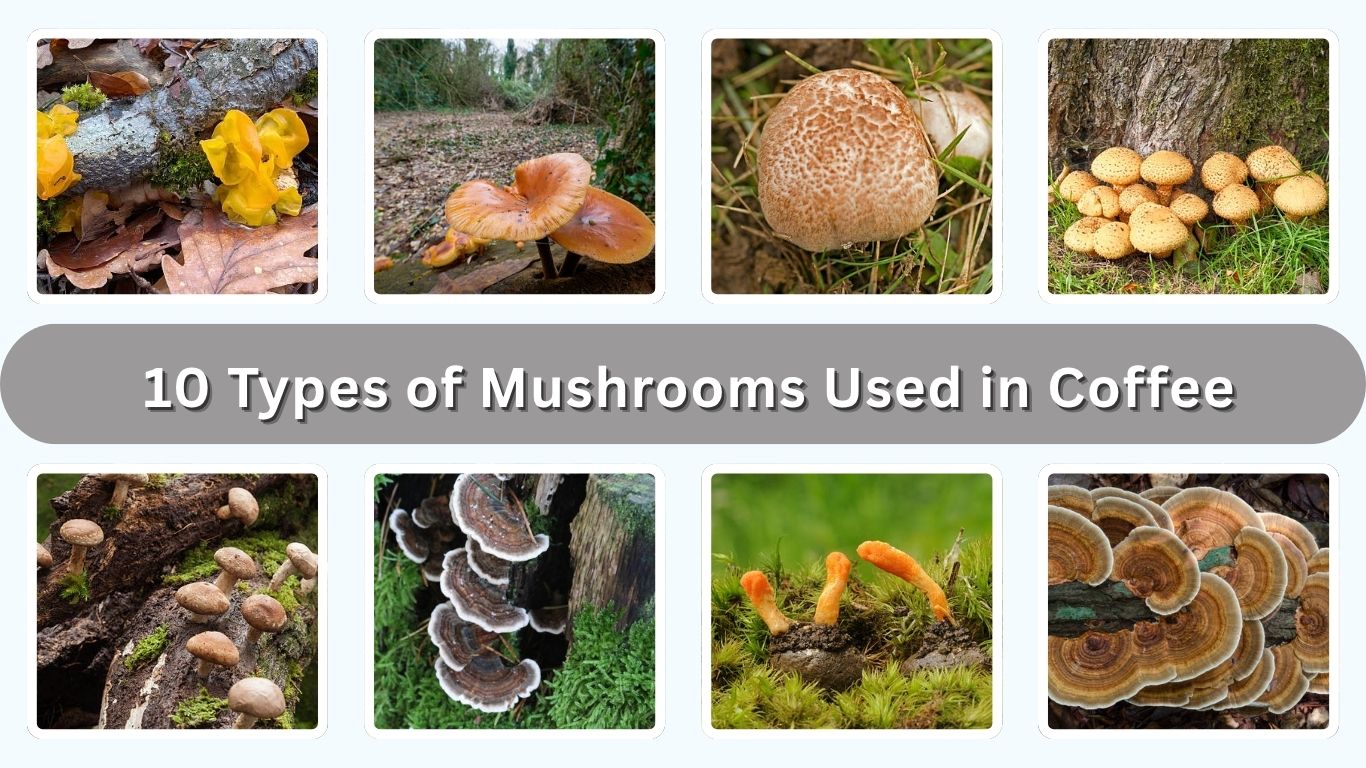
Mushroom coffee has gained popularity as a healthier alternative to traditional coffee, combining the rich taste of coffee with the natural benefits of medicinal mushrooms. These mushrooms are carefully selected for their unique properties, ranging from boosting energy and focus to supporting immunity and overall wellness.
In this guide, you’ll discover 10 types of mushrooms commonly used in coffee, along with their key characteristics, benefits, and how they are used to create functional and balanced coffee blends.
1. Chaga Mushroom

Chaga is a medicinal fungus commonly used in mushroom coffee for its earthy flavor and high antioxidant content. It grows primarily on birch trees and has been used in traditional remedies for centuries.
Identification
- Dark black, cracked outer surface (charcoal-like appearance)
- Rusty orange-brown interior
- Irregular, hardened mass (not a typical mushroom shape)
- Grows mainly on birch trees
How It’s Used in Coffee
Chaga is usually dried and ground into a fine powder or extracted into a concentrate before being added to coffee blends. It mixes well with brewed coffee, giving a smooth, slightly woody taste without overpowering the flavor.
Benefits
Chaga is valued for its high antioxidant levels, which may support immune health and help reduce inflammation. It is also believed to support overall wellness and provide a gentle energy boost without caffeine-related jitters.
Where It’s Found
Chaga is commonly found in cold climates, especially in regions like Siberia, Russia, Northern Europe, Canada, and parts of the northern United States. It grows almost exclusively on birch trees in these areas.
2. Reishi Mushroom

Reishi is a well-known medicinal mushroom often used in coffee blends for its calming properties and slightly bitter taste. It has a long history in traditional wellness practices.
Identification
- Reddish-brown, glossy surface (varnished look)
- Kidney or fan-shaped cap
- Woody and tough texture
- Grows on hardwood trees
How It’s Used in Coffee
Reishi is typically used in powdered or extract form and blended into coffee. Its slightly bitter flavor pairs well with strong coffee, often balanced with creamers or sweeteners.
Benefits
Reishi is known for its calming effects and may help reduce stress and support better sleep. It is also associated with immune system support and overall relaxation without causing drowsiness during the day.
Where It’s Found
Reishi grows in warm and humid regions, commonly found in Asia, especially in China and Japan, as well as parts of North America on decaying hardwood trees.
3. Lion’s Mane Mushroom

Lion’s Mane is a popular mushroom in coffee for its mild taste and potential cognitive benefits. It has a unique appearance and is widely used in modern wellness products.
Identification
- White, shaggy, hair-like spines
- Resembles a lion’s mane
- Soft and fleshy texture
- Grows on hardwood trees
How It’s Used in Coffee
Lion’s Mane is usually added as a powder or extract to coffee. It blends smoothly and has a mild, slightly sweet flavor that doesn’t overpower the drink.
Benefits
Lion’s Mane is often linked to brain health and may support focus, memory, and mental clarity. It is commonly used by people looking for improved cognitive performance and productivity.
Where It’s Found
Lion’s Mane is found in forests across North America, Europe, and Asia. It typically grows on dead or dying hardwood trees, especially oak and beech.
4. Cordyceps Mushroom

Cordyceps is a unique mushroom widely used in coffee for its energizing properties and subtle, earthy taste. It is especially popular among people seeking natural stamina support.
Identification
- Slender, elongated, finger-like shape
- Yellow to orange-brown color
- Smooth surface
- Grows from insect hosts (in the wild)
How It’s Used in Coffee
Cordyceps is typically used as a powdered extract in coffee blends. It mixes easily and adds a mild, nutty flavor, making it suitable for daily consumption without altering the taste too much.
Benefits
Cordyceps is known for boosting energy and endurance. It may help improve physical performance and reduce fatigue, making it a popular choice for athletes and active individuals.
Where It’s Found
Cordyceps is mainly found in high-altitude regions like the Himalayas, Tibet, and parts of China. Today, it is mostly cultivated in controlled environments for commercial use.
5. Turkey Tail Mushroom

Turkey Tail is a common medicinal mushroom used in coffee for its health-supporting properties and mild flavor. It gets its name from its colorful, fan-like appearance.
Identification
- Thin, fan-shaped layers
- Multicolored rings (brown, tan, white)
- Velvety texture
- Grows in clusters on dead wood
How It’s Used in Coffee
Turkey Tail is usually consumed as a powdered extract or tea and added to coffee blends. It has a light, earthy flavor that blends well without overpowering the drink.
Benefits
Turkey Tail is rich in antioxidants and may support immune health. It is often used to promote gut health and overall wellness, making it a popular addition to functional coffee.
Where It’s Found
Turkey Tail is widely found across forests in North America, Europe, and Asia. It grows on fallen logs, tree stumps, and decaying wood in both temperate and tropical regions.
6. Shiitake Mushroom

Shiitake is a well-known edible and medicinal mushroom often included in functional coffee blends for its rich nutritional profile and slightly savory undertone. It has been used for centuries in traditional diets and wellness practices, especially in East Asia.
Identification
- Medium to large brown cap with slightly curved edges
- Cream-colored underside with visible gills
- Firm, meaty texture
- Short, thick stem
- Often found growing in clusters
How It’s Used in Coffee
Shiitake is typically processed into a fine powder or extract before being added to coffee. In most blends, it is combined with other mushrooms to balance its slightly savory flavor, resulting in a smoother and more neutral coffee taste.
Benefits
Shiitake is rich in vitamins, minerals, and bioactive compounds that may support immune function and heart health. It is also known for promoting healthy cholesterol levels and providing natural energy support without caffeine spikes.
Where It’s Found
Shiitake mushrooms are commonly found in East Asia, particularly in Japan, China, and Korea. They grow naturally on decaying hardwood trees like oak and chestnut but are now widely cultivated around the world.
7. Maitake Mushroom

Maitake, also known as “Hen of the Woods,” is a popular medicinal mushroom used in coffee blends for its potential health benefits and mild earthy flavor. It is valued both as a culinary ingredient and a functional supplement.
Identification
- Clustered, leafy appearance resembling feathers or ruffles
- Grayish-brown color
- Soft but dense texture
- Grows in large, overlapping clusters
- Found at the base of trees
How It’s Used in Coffee
Maitake is usually dried and ground into powder or used as an extract in coffee products. It blends well with other mushrooms and coffee, contributing a subtle earthy note without making the drink too strong or bitter.
Benefits
Maitake is known for supporting immune health and may help regulate blood sugar levels. It is also associated with overall wellness and metabolic support, making it a common ingredient in health-focused coffee blends.
Where It’s Found
Maitake grows in temperate forests, especially in North America, Europe, and Asia. It is typically found at the base of hardwood trees like oak and maple, particularly in late summer and autumn.
8. Agaricus Blazei Mushroom

Agaricus Blazei is a medicinal mushroom often used in functional coffee for its immune-supporting properties and mild, slightly sweet flavor. It is less common than other mushrooms but highly valued in wellness products.
Identification
- Light brown to tan cap
- Smooth, slightly rounded surface
- White gills underneath
- Medium-sized with a firm texture
- Resembles common button mushrooms but larger
How It’s Used in Coffee
Agaricus Blazei is typically used in extract or powdered form in coffee blends. It is often combined with other mushrooms to create a balanced flavor, as its taste is mild and slightly nutty.
Benefits
Agaricus Blazei is known for its strong immune-supporting compounds. It may help improve overall health, support the body’s defense system, and provide antioxidant benefits that contribute to long-term wellness.
Where It’s Found
This mushroom is native to Brazil but is now cultivated in various parts of the world, including Japan and China. It grows in warm climates and is commonly farmed for commercial use.
9. Tremella Mushroom

Tremella, also known as “snow fungus,” is used in mushroom coffee for its hydrating properties and light taste. It is popular in beauty and wellness products due to its unique benefits.
Identification
- White to pale yellow color
- Jelly-like, soft texture
- Translucent, ruffled appearance
- Resembles a small coral or flower
- Grows on decaying wood
How It’s Used in Coffee
Tremella is usually processed into a powder or extract and blended into coffee. It has a very mild taste, making it easy to mix without affecting the overall flavor of the drink.
Benefits
Tremella is widely known for supporting skin hydration and elasticity. It may also provide antioxidant benefits and support overall health, making it a popular addition to beauty-focused coffee blends.
Where It’s Found
Tremella is commonly found in tropical and subtropical regions, especially in Asia. It grows on dead or decaying branches and is widely cultivated for commercial and culinary use.
10. Enoki Mushroom

Enoki is a delicate, edible mushroom sometimes used in mushroom coffee blends for its mild flavor and nutritional value. It is widely recognized for its unique appearance and subtle taste.
Identification
- Long, thin white stems
- Small, round caps
- Grows in dense clusters
- Smooth and slightly crunchy texture
- Pale white to light cream color
How It’s Used in Coffee
Enoki is typically dried and turned into a fine powder or extract before being added to coffee. Its very mild flavor allows it to blend easily without altering the overall taste of the coffee.
Benefits
Enoki is rich in antioxidants and nutrients that may support immune health and overall wellness. It is also known for promoting digestion and providing light nutritional support without adding heaviness.
Where It’s Found
Enoki mushrooms are commonly found in East Asia, especially in Japan, China, and Korea. In the wild, they grow on decaying hardwood trees, but most Enoki used today is cultivated in controlled environments.
FAQs
What is mushroom coffee?
Mushroom coffee is a blend of regular coffee and medicinal mushroom extracts. It is designed to provide the taste of coffee with added health benefits such as improved focus, reduced stress, and immune support, often with less caffeine than traditional coffee.
Does mushroom coffee taste like mushrooms?
No, mushroom coffee usually does not taste like mushrooms. Most blends are carefully formulated so the earthy flavors are mild and balanced with coffee, resulting in a smooth, rich taste that is very similar to regular coffee.
Is mushroom coffee safe to drink daily?
Yes, mushroom coffee is generally safe for daily consumption when used in moderate amounts. However, it’s important to choose high-quality products and consult a healthcare professional if you have medical conditions or are taking medications.
Does mushroom coffee contain caffeine?
Most mushroom coffee contains some caffeine because it is mixed with regular coffee. However, the caffeine content is usually lower than standard coffee, making it a good option for those looking to reduce their caffeine intake.
Who should avoid mushroom coffee?
People with allergies to mushrooms, pregnant or breastfeeding individuals, and those with specific health conditions should consult a doctor before consuming mushroom coffee. It’s always best to ensure it fits your personal health needs.