
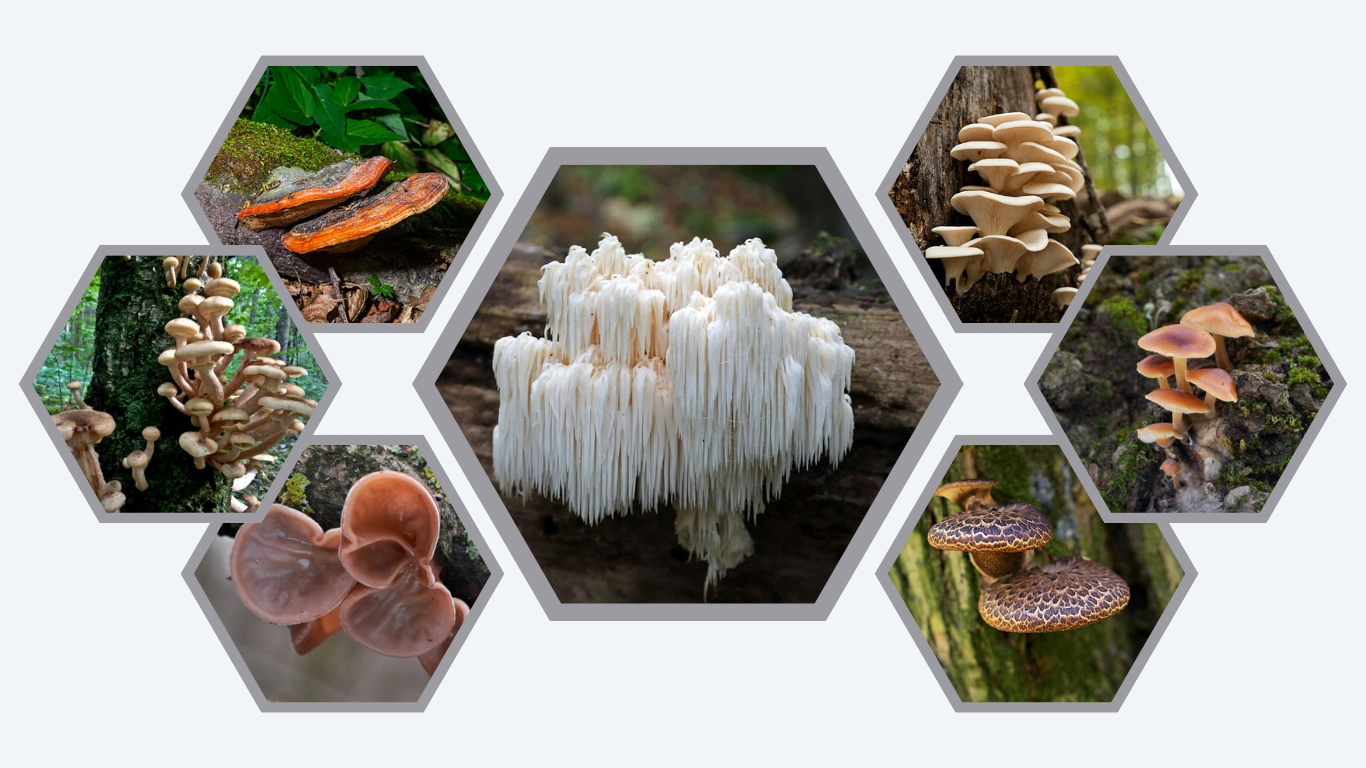
Tree-growing mushrooms are fascinating fungi that develop directly on living or dead wood rather than from soil. They appear on trunks, stumps, fallen logs, and even high branches, forming shelves, clusters, or jelly-like shapes. These mushrooms play a vital role in forest ecosystems by breaking down tough wood fibers and recycling nutrients back into the soil. From well-known edibles like oyster and shiitake to colorful brackets and medicinal fungi, tree mushrooms show remarkable diversity.
1. Turkey Tail Mushroom (Trametes versicolor)
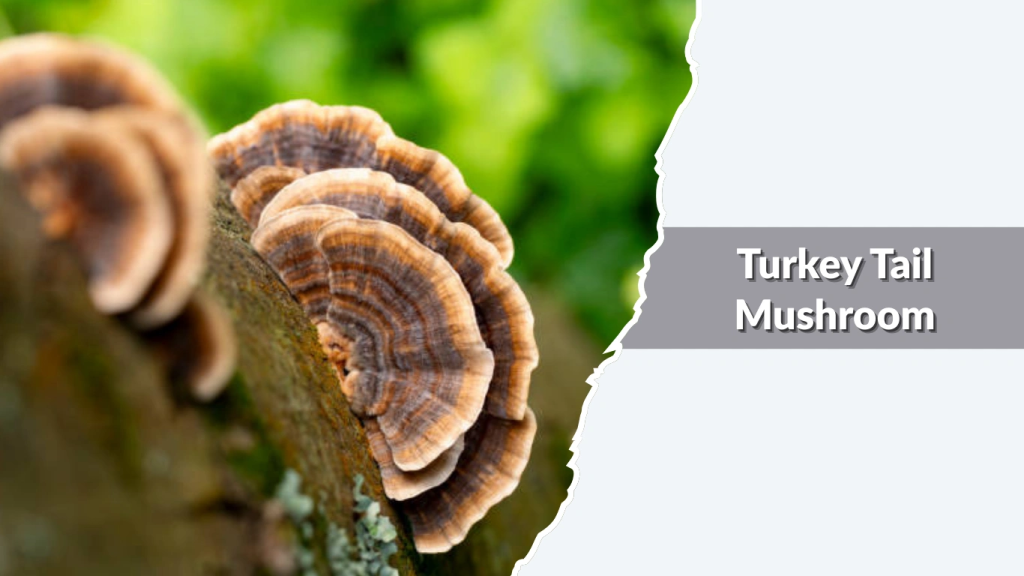
Turkey Tail is one of the most common and easily recognized tree-growing mushrooms in the world. It forms thin, fan-shaped shelves on dead or dying hardwood trees and is named for its colorful, banded rings that resemble a wild turkey’s tail. This mushroom is widely studied for its medicinal compounds and is found across forests in Asia, Europe, and North America.
Identification
- Thin, fan-shaped or semicircular brackets
- Concentric color bands (brown, gray, blue, orange, or cream)
- Velvety or fuzzy upper surface
- White to pale underside with very tiny pores
- Usually grows in overlapping clusters on wood
Habitat and Growth
Turkey Tail grows almost exclusively on dead logs, stumps, and decaying hardwood trees. It is a saprophytic fungus, meaning it feeds on dead wood and helps recycle nutrients back into the forest ecosystem. It can appear year-round but is most noticeable in moist, cool seasons.
Medicinal and Practical Uses
This mushroom is famous for its immune-supporting compounds, especially polysaccharopeptides (PSK and PSP). It is commonly used in teas, powders, and extracts. In some countries, Turkey Tail is researched and used alongside conventional treatments for immune health support.
Similar Tree-Growing Mushrooms
Turkey Tail is often confused with false turkey tail species, which may look similar but lack the tiny pores on the underside. True Turkey Tail always has a porous bottom surface rather than smooth or gilled tissue.
2. Oyster Mushroom (Pleurotus ostreatus)
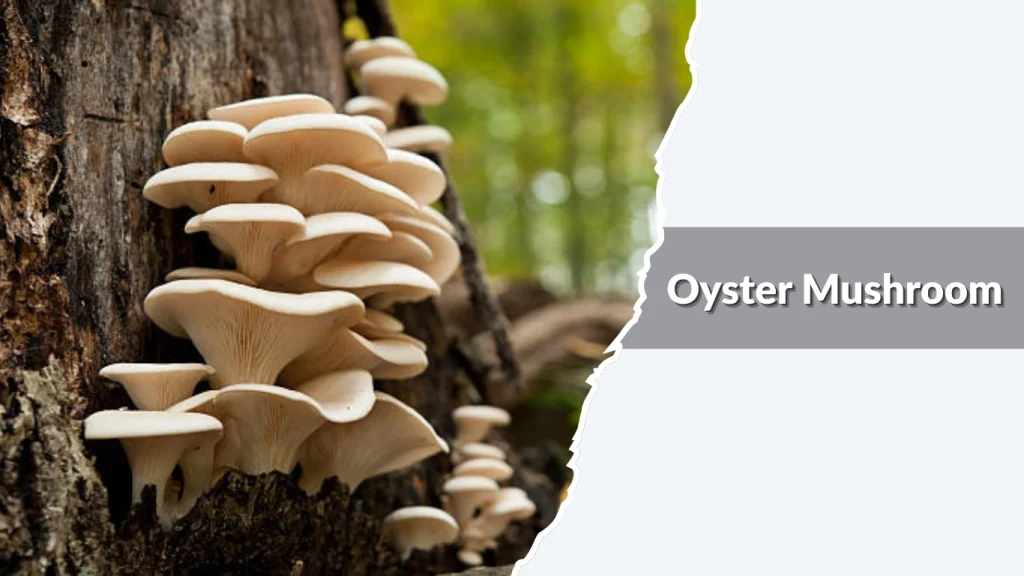
Oyster Mushroom is a popular tree-growing fungus known for its oyster-shaped caps and soft, edible flesh. It commonly forms layered clusters on dead or weakened hardwood trees. Besides being widely cultivated as a food mushroom, it also plays an important ecological role by breaking down wood and recycling nutrients in forest environments.
Identification
- Oyster- or fan-shaped caps
- Smooth surface, usually white, gray, or light brown
- Short or absent central stem
- Gills run downward along the stem
- Grows in shelf-like clusters on wood
Habitat and Growth
Oyster mushrooms grow on dead trunks, fallen logs, and stumps, especially beech, oak, and other hardwoods. They thrive in cool, damp conditions and often appear in large overlapping groups. In the wild, they are most common in autumn and spring but can grow year-round in suitable climates.
Edibility and Culinary Value
This is one of the most widely eaten wild mushrooms. It has a mild flavor and tender texture, making it popular in stir-fries, soups, and grilling. Oyster mushrooms are also valued for their protein content, fiber, and natural compounds that support general nutrition.
Ecological Importance
Oyster mushrooms are strong decomposers of wood. They help break down tough plant fibers like lignin and cellulose, speeding up the decay of dead trees. This process returns nutrients to the soil and supports the health of forest ecosystems.
3. Lion’s Mane Mushroom (Hericium erinaceus)
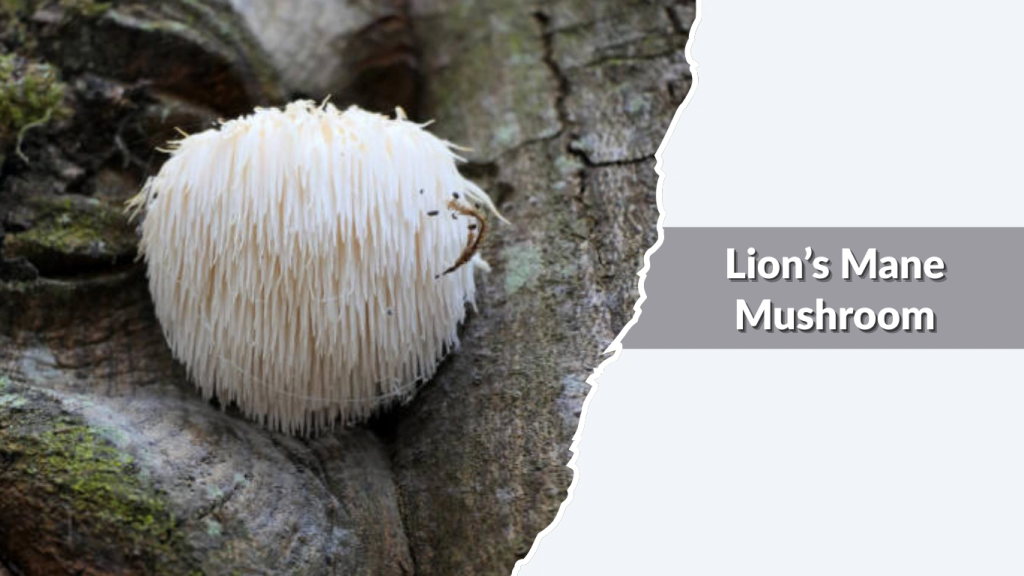
Lion’s Mane is a striking tree-growing mushroom recognized by its cascading white spines that resemble a lion’s mane or a frozen waterfall. Instead of caps and gills, it forms rounded clumps of dangling “teeth” on hardwood trees. It is well known both as an edible mushroom and for its growing popularity in traditional and modern wellness practices.
Identification
- Rounded or irregular white clumps
- Long, soft, dangling spines instead of gills
- Turns cream to yellowish with age
- Grows directly from wood with no true stem
- Soft, tender texture when fresh
Habitat and Growth
Lion’s Mane grows on dead or dying hardwoods such as oak, maple, and beech. It is most often found in late summer through autumn. The mushroom usually appears alone or in small groups, emerging from wounds or cracks in tree trunks.
Culinary and Traditional Uses
When cooked, Lion’s Mane has a mild flavor often compared to crab or lobster. It is used in sautés, soups, and plant-based seafood dishes. Traditionally, it has been valued in East Asian cultures and today is widely consumed as food and in powdered or extract forms.
Ecological Role
This mushroom is a weak parasite and later a decomposer, helping break down hardwood tissues. By colonizing aging trees, Lion’s Mane contributes to forest nutrient cycles and supports the gradual return of organic matter to the soil.
4. Chicken of the Woods (Laetiporus sulphureus)
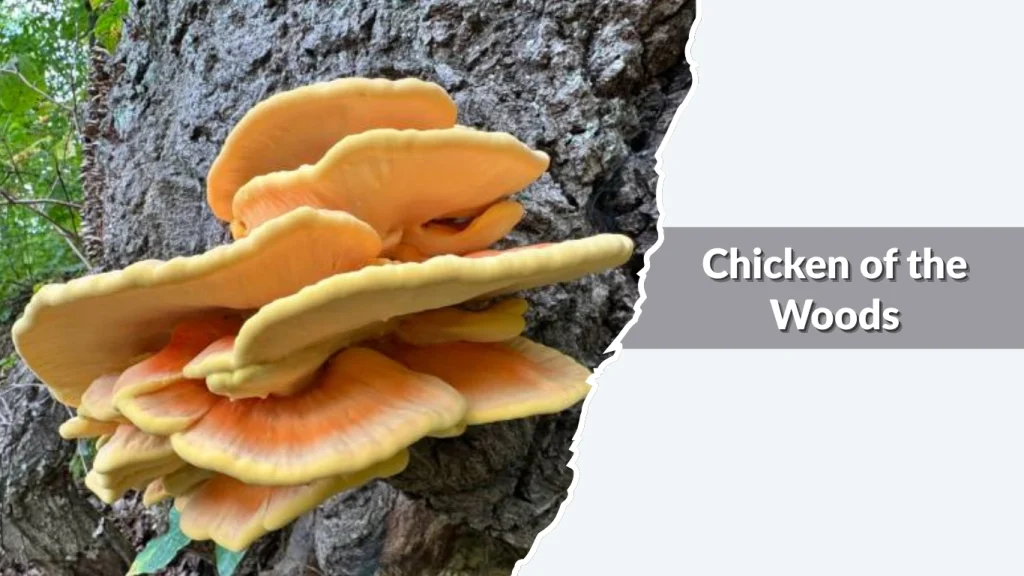
Chicken of the Woods is a bright, eye-catching shelf mushroom that grows in large clusters on tree trunks and stumps. Its vivid orange and yellow colors make it one of the easiest tree mushrooms to spot. The mushroom gets its name from its tender texture and mild flavor, often compared to cooked chicken.
Identification
- Large, overlapping shelf-like clusters
- Bright orange caps with yellow edges
- Soft, thick, and fleshy when young
- Underside covered with tiny yellow pores
- No true gills or central stem
Habitat and Growth
This mushroom grows on both living and dead hardwood trees, especially oak, cherry, and beech. It usually appears from late spring through autumn. Chicken of the Woods often forms massive clusters that can weigh several kilograms, emerging from trunks or large fallen logs.
Edibility and Safety Notes
It is widely considered an excellent edible mushroom when young and thoroughly cooked. However, some people may experience stomach upset, and specimens growing on conifers or eucalyptus can cause reactions. Proper identification and cooking are essential before consumption.
Role in Forest Ecosystems
Chicken of the Woods is a parasitic and later saprophytic fungus that causes brown rot in trees. While it weakens wood structure, it also plays a key role in breaking down dead timber and recycling nutrients back into the ecosystem.
5. Reishi Mushroom (Ganoderma lucidum)
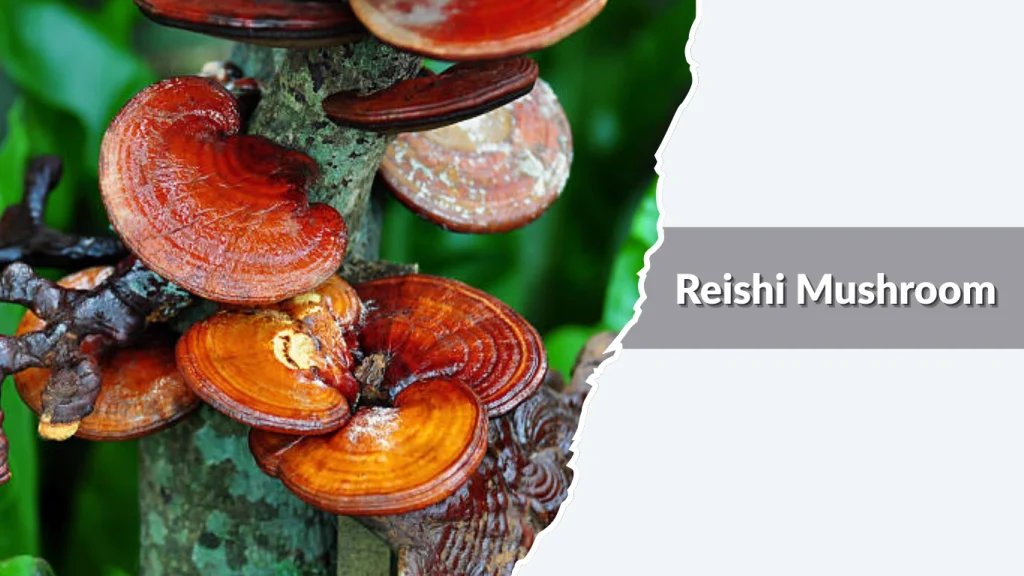
Reishi is a famous tree-growing bracket fungus known for its shiny, varnished appearance and long history of traditional use. It forms hard, kidney-shaped shelves on hardwood trees and is often called the “mushroom of immortality” in East Asian cultures. Unlike many tree mushrooms, Reishi is woody and not eaten as a regular food.
Identification
- Shiny, lacquered-looking red to dark brown cap
- Kidney- or fan-shaped bracket form
- White to yellow growing edge when fresh
- Underside with fine white pores
- Tough, woody texture
Habitat and Growth
Reishi grows on dead or dying hardwoods such as oak, maple, and elm. It usually appears in warm, humid seasons and may persist on trees for months. The mushroom often grows singly or in small groups near the base of trunks or on large roots.
Traditional and Modern Uses
Reishi has been used for centuries in traditional medicine systems, especially in teas, powders, and extracts. It is commonly associated with immune support and overall wellness practices rather than culinary use, due to its bitter taste and tough structure.
Ecological Importance
Reishi is a parasitic and saprophytic fungus that causes white rot in hardwoods. By breaking down lignin and cellulose, it plays an important role in decomposing wood and maintaining nutrient cycles within forest ecosystems.
6. Artist’s Conk (Ganoderma applanatum)
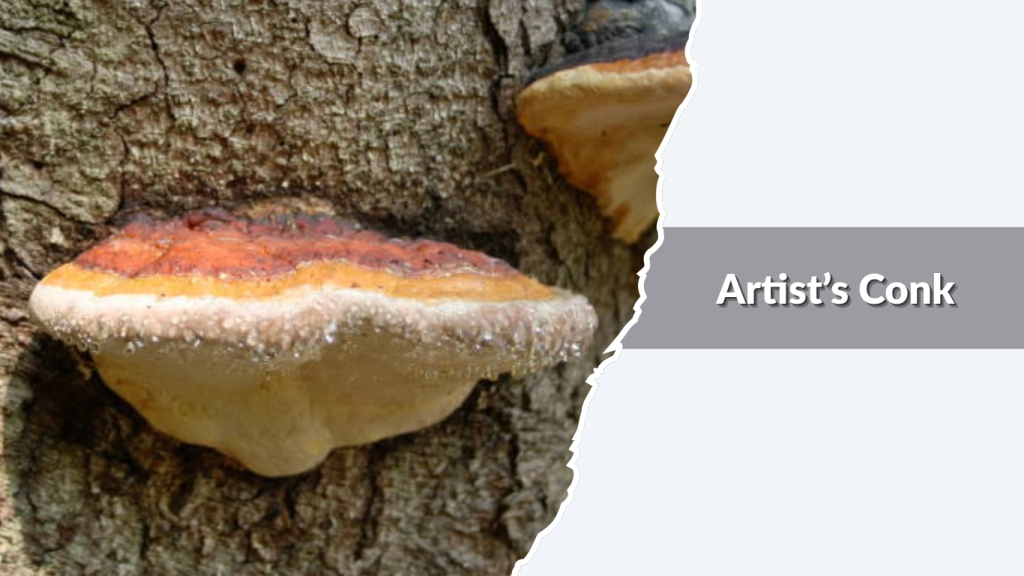
Artist’s Conk is a large, long-lasting bracket mushroom that grows on tree trunks and fallen logs. It gets its name from the white underside, which bruises brown when scratched, allowing people to “draw” pictures or designs on its surface. This tough, woody fungus can remain attached to trees for many years.
Identification
- Large, flat, hoof-shaped or shelf-like body
- Brown to gray upper surface with a dull, crusty texture
- White pore surface that turns dark when pressed or scratched
- Thick, woody flesh
- Grows directly from wood with no stem
Habitat and Growth
Artist’s Conk grows mainly on dead or dying hardwood trees, especially maple, beech, and birch. It can be found year-round because the fruiting bodies are perennial and survive through multiple seasons. It often appears singly or in stacked layers on trunks.
Uses and Cultural Interest
Although not edible, Artist’s Conk has been used for centuries as a natural canvas. Artists etch images into the pore surface, creating long-lasting natural artworks. Historically, it was also used as tinder and in some traditional preparations.
Ecological Role
This mushroom is a strong decomposer that causes white rot in hardwoods. By slowly breaking down tough wood fibers, Artist’s Conk helps recycle nutrients and contributes to the long-term decay process of forest trees.
7. Shiitake Mushroom (Lentinula edodes)
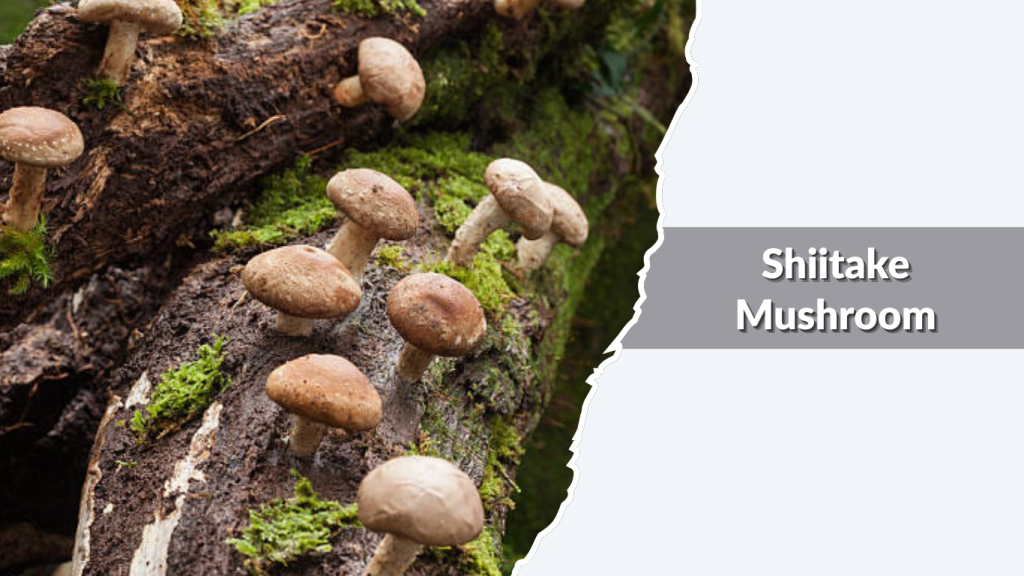
Shiitake is one of the most widely known tree-growing mushrooms, valued around the world for both its rich flavor and traditional uses. In nature, it grows on decaying hardwood logs, especially oak and chestnut. While commonly cultivated today, wild shiitake still occurs naturally in forest environments.
Identification
- Medium-sized brown caps with a slightly cracked or scaly surface
- Cream to white gills on the underside
- Firm, fibrous stem
- Umbrella-shaped cap that flattens with age
- Pleasant, earthy aroma
Habitat and Growth
Wild shiitake grows on dead hardwood trees, particularly oak, beech, and chestnut. It favors warm, moist conditions and typically appears from spring through autumn. The mushrooms often grow singly or in small clusters along logs and fallen trunks.
Culinary Importance
Shiitake is highly prized in cooking for its strong umami flavor and meaty texture. It is used in soups, stir-fries, sauces, and dried mushroom blends. Both fresh and dried forms are popular, with dried shiitake offering an even more concentrated taste.
Ecological Function
In forests, shiitake acts as a decomposer, breaking down hardwood and returning nutrients to the soil. Its activity helps soften dead logs, making them more accessible to insects and other organisms involved in the forest decay cycle.
8. Velvet Shank (Flammulina velutipes)
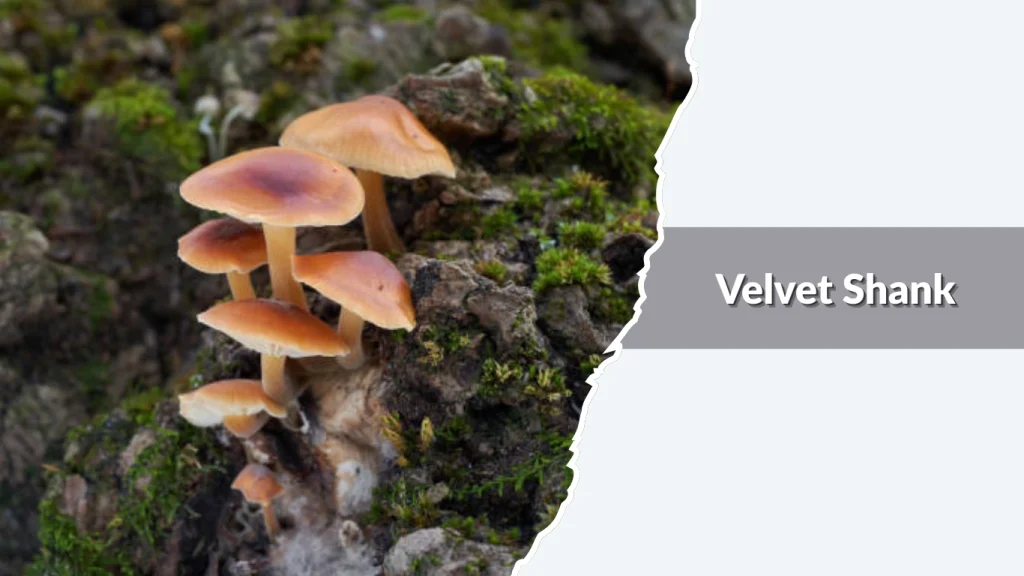
Velvet Shank is a small to medium-sized tree-growing mushroom best known for its ability to fruit in cold weather, sometimes even through snow. In the wild, it grows in clusters on hardwood stumps and trunks. Its cultivated form is widely known as enoki, but wild velvet shank looks darker and more robust.
Identification
- Smooth, sticky caps that are orange-brown to yellowish
- Slender stems with a dark, velvety base
- Pale cream gills
- Grows in dense clusters
- Shiny surface in moist conditions
Habitat and Growth
Velvet Shank commonly grows on dead or weakened hardwood trees such as elm, willow, and poplar. It is a true cold-season mushroom, often appearing from late autumn through winter when few other fungi are active.
Edibility and Use
This mushroom is edible when properly identified and cooked. Wild velvet shank has a stronger flavor than cultivated enoki. It is used in soups and sautés, though care is required because it has poisonous look-alikes, making expert identification important.
Ecological Importance
Velvet Shank is a saprophytic fungus that breaks down dead wood, especially during colder months. Its winter fruiting habit allows it to continue the decomposition process when many other organisms are inactive.
9. Birch Polypore (Fomitopsis betulina)
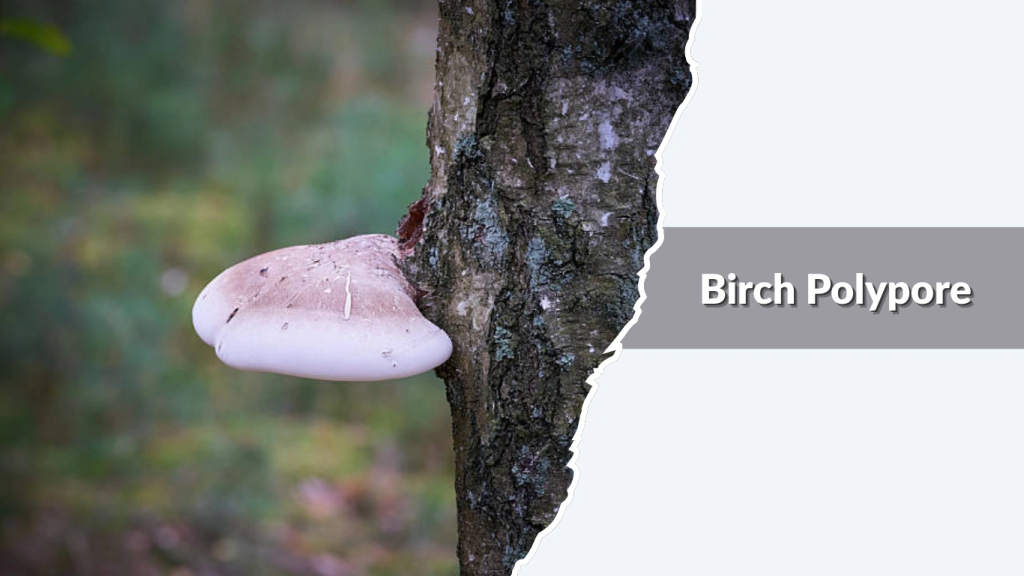
Birch Polypore is a distinctive tree mushroom that grows almost exclusively on birch trees. It forms pale, rounded brackets that stand out clearly against dark bark. This fungus has a long history of traditional use and is one of the most commonly encountered polypores in birch forests across Europe, Asia, and North America.
Identification
- Smooth, white to pale gray rounded brackets
- Soft and spongy when young, harder with age
- Fine white pores on the underside
- Usually attached directly to birch trunks
- Single or small grouped growth
Habitat and Growth
Birch Polypore grows on living, dying, or dead birch trees. It is most visible from summer through late autumn but can persist into winter. The mushroom often appears singly along trunks, sometimes high above the ground.
Traditional and Practical Uses
Historically, Birch Polypore has been used in teas and folk practices. It was also valued for practical purposes such as sharpening strops and carrying embers. The famous prehistoric “Ötzi the Iceman” was found carrying pieces of this mushroom.
Ecological Role
This fungus causes brown rot in birch wood, breaking down cellulose and weakening the tree’s structure. While harmful to infected trees, it plays an essential role in forest ecosystems by decomposing dead birch and recycling nutrients.
10. Tinder Fungus (Fomes fomentarius)
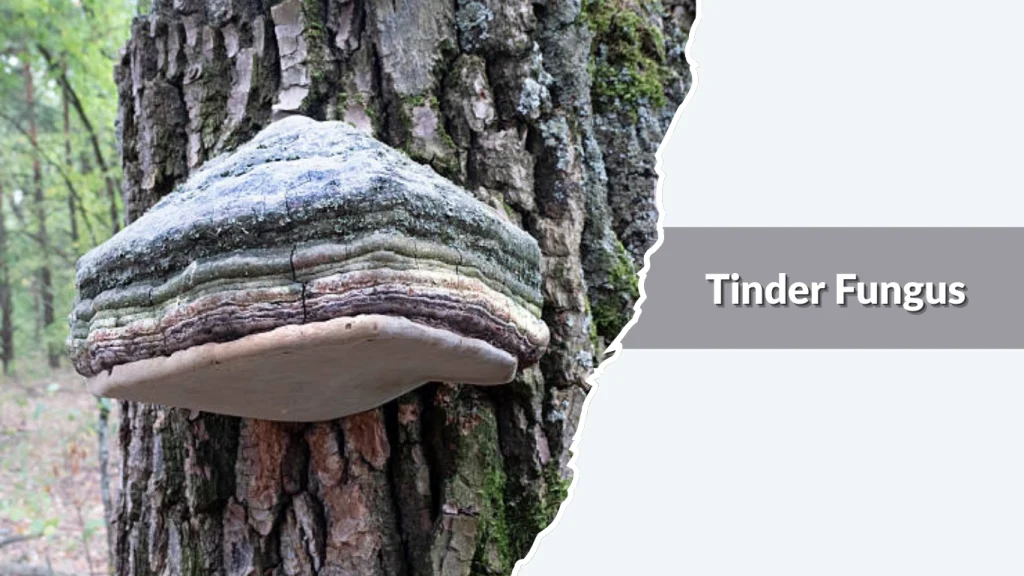
Tinder Fungus is a classic hoof-shaped tree mushroom that has been used by humans for thousands of years. It grows as a hard, gray to brown bracket on trunks and logs and is famous for its ability to catch and hold sparks, making it an important fire-starting material in ancient cultures.
Identification
- Hoof-shaped or rounded bracket form
- Hard, woody texture
- Gray, silver, or brown outer surface with faint zones
- Brown interior flesh
- White to pale underside with very fine pores
Habitat and Growth
Tinder Fungus grows on dead or weakened hardwood trees, especially birch, beech, and oak. It is perennial, meaning the same fruiting body can continue growing year after year. It can be found in forests throughout Europe, Asia, and North America.
Historical and Practical Uses
For centuries, this mushroom was processed into amadou, a soft material used to catch sparks and carry fire. It was also shaped into clothing items, pouches, and medicinal preparations in various traditional cultures.
Ecological Importance
Tinder Fungus causes white rot, breaking down lignin in hardwoods. By slowly decomposing trunks and large branches, it contributes to long-term wood decay and the recycling of forest nutrients.
11. Dryad’s Saddle (Cerioporus squamosus)
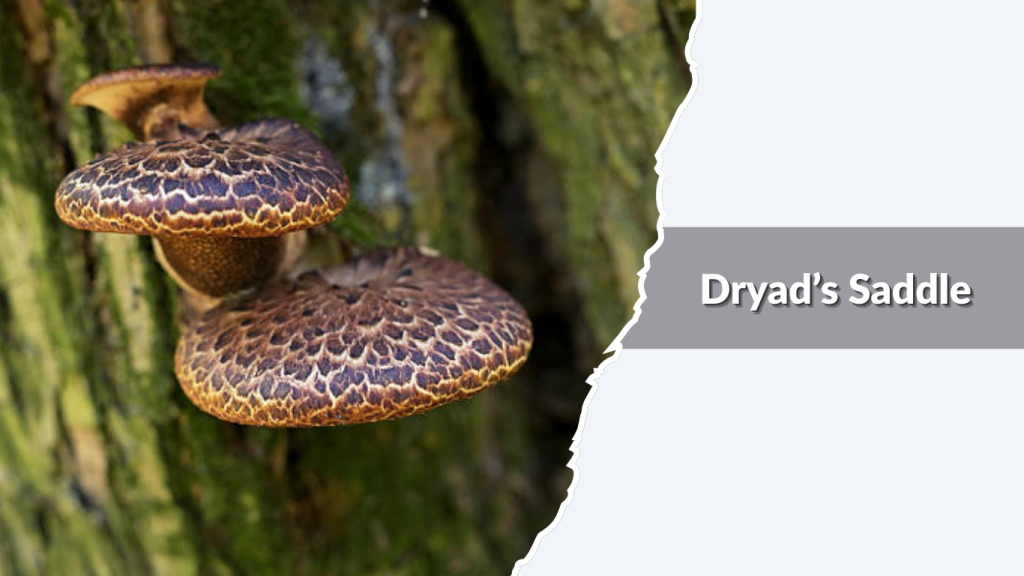
Dryad’s Saddle, also known as Pheasant Back, is a large, distinctive shelf mushroom that grows on hardwood trees. It is named for its scaly, patterned cap, which resembles the feathers of a pheasant. This mushroom is one of the first large tree fungi to appear in spring.
Identification
- Large, fan-shaped caps with dark brown scales
- Thick, short stem usually attached to wood
- White to cream pore surface underneath
- Strong, cucumber- or watermelon-rind scent when fresh
- Often grows in overlapping shelves
Habitat and Growth
Dryad’s Saddle grows on dead or dying hardwoods, especially elm, maple, ash, and box elder. It commonly appears in early spring through early summer. The mushrooms can grow very large and are often found in stacked clusters on logs and stumps.
Edibility and Culinary Notes
Young specimens are edible and valued for their mild taste and firm texture. As they age, they become tough and woody. When harvested young, they are used in sautés, broths, and sliced into strips for cooking.
Role in Nature
This fungus causes white rot and actively decomposes hardwood. By breaking down fallen trees and large branches, Dryad’s Saddle supports nutrient cycling and provides habitat for insects and microorganisms.
12. Split Gill (Schizophyllum commune)
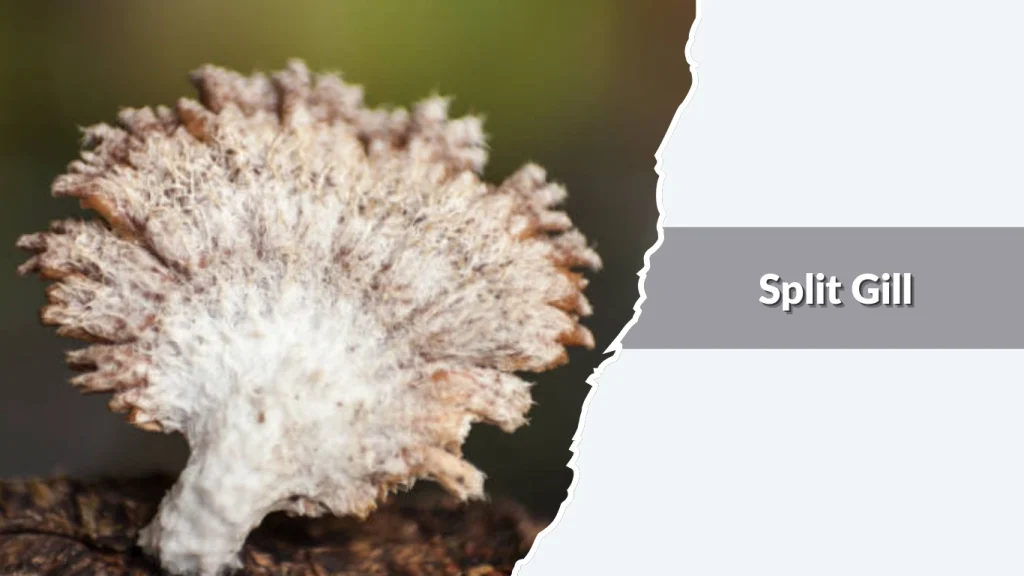
Split Gill is one of the most widespread tree-growing mushrooms in the world and can be found on every continent except Antarctica. It forms small, fan-shaped fruiting bodies with uniquely “split” gills that curl open when moist and close when dry. This ability helps it survive extreme heat and drought.
Identification
- Small, gray to white fan-shaped caps
- Fuzzy or hairy upper surface
- Distinctive split gills underneath
- Tough, leathery texture
- Grows in dense clusters on wood
Habitat and Growth
Split Gill grows on dead hardwood and sometimes conifer wood, including logs, branches, and stumps. It can appear year-round, especially after rain. Because it tolerates dryness extremely well, it is often seen in tropical, temperate, and even urban environments.
Human Uses and Interest
In some cultures, Split Gill is used in traditional dishes after thorough cooking, though it is generally tough. It is also widely studied in science because of its unique gill structure and exceptional ability to survive drying and rehydration.
Ecological Importance
This mushroom is a saprophytic decomposer that causes white rot. It efficiently breaks down wood fibers, helping recycle dead plant material and sustain forest soil health.
13. Enoki Mushroom (Flammulina filiformis)
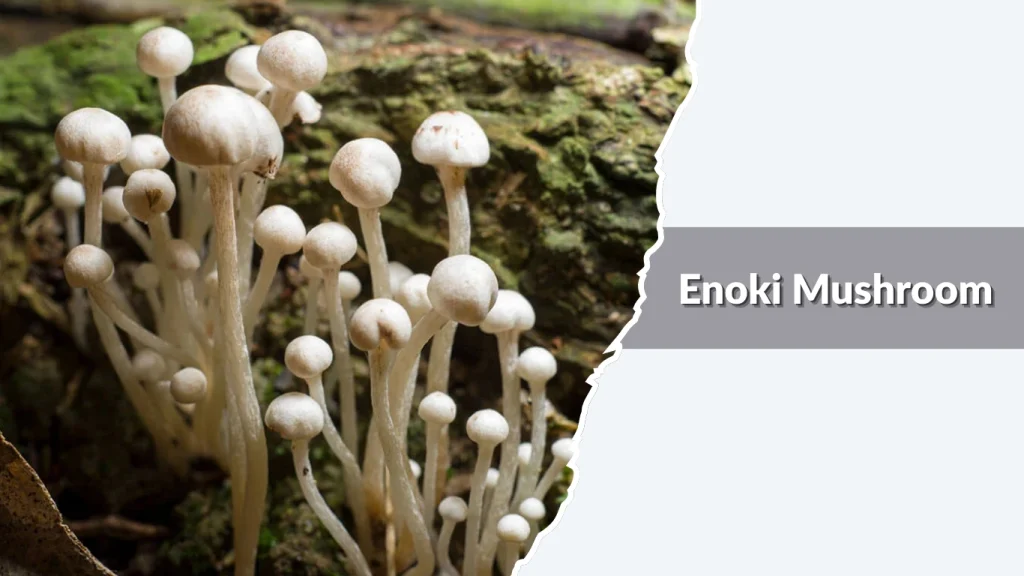
Enoki is a delicate tree-growing mushroom known for its long, thin stems and small caps. In the wild, it grows on hardwood stumps and trunks and looks darker and sturdier than the cultivated white enoki sold in markets. It is closely related to Velvet Shank and shares its ability to fruit in cold conditions.
Identification
- Small, convex caps that are yellowish to orange-brown
- Long, slender, flexible stems
- Pale to white gills
- Often grows in tight clusters
- Smooth, slightly sticky cap surface
Habitat and Growth
Wild enoki grows on dead hardwood trees such as elm, mulberry, and willow. It often fruits from late autumn through winter and early spring. Clusters usually emerge from the same point on a log or stump.
Culinary and Nutritional Value
Cultivated enoki is widely used in soups, salads, and stir-fries for its crisp texture and mild taste. Wild forms are edible when correctly identified and cooked. Enoki mushrooms are valued for being low in calories and rich in fiber and natural nutrients.
Ecological Role
Enoki is a saprophytic fungus that decomposes hardwood. By breaking down fallen trees in cold seasons, it continues the forest recycling process when many other fungi are inactive.
14. Hemlock Varnish Shelf (Ganoderma tsugae)
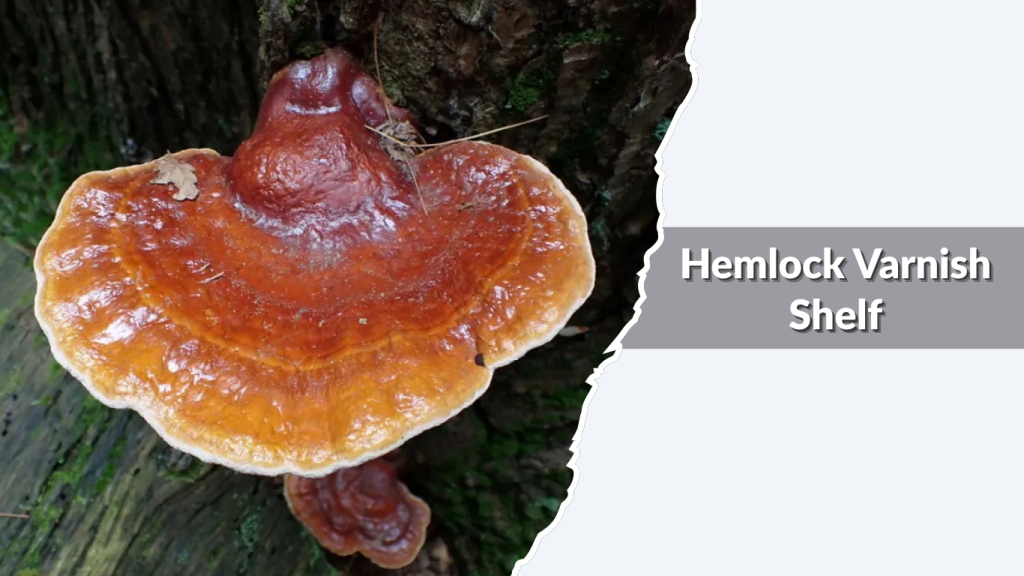
Hemlock Varnish Shelf is a close relative of Reishi and is easily recognized by its shiny, lacquered surface. It forms attractive, reddish-brown brackets on hemlock trees and is one of the most striking shelf fungi in North American forests. Its glossy appearance often looks as if it has been coated in varnish.
Identification
- Shiny, varnished-looking cap
- Reddish-brown to dark mahogany color
- White to pale growing margin when fresh
- White pore surface underneath
- Hard, woody texture
Habitat and Growth
This mushroom grows almost exclusively on eastern hemlock trees, usually on dead or dying trunks and stumps. It appears in summer and autumn and may persist on wood for long periods. Fruiting bodies are often found near the base of trees or on fallen logs.
Traditional and Practical Interest
Although too tough to eat, Hemlock Varnish Shelf is commonly used dried for teas, powders, and extracts. It has a long history of traditional use similar to Reishi and is valued more for wellness preparations than culinary purposes.
Ecological Role
Hemlock Varnish Shelf is a parasitic and later saprophytic fungus that causes white rot. It slowly breaks down lignin and cellulose in hemlock wood, contributing to decomposition and nutrient recycling in conifer forests.
15. Purple Tooth (Trichaptum biforme)
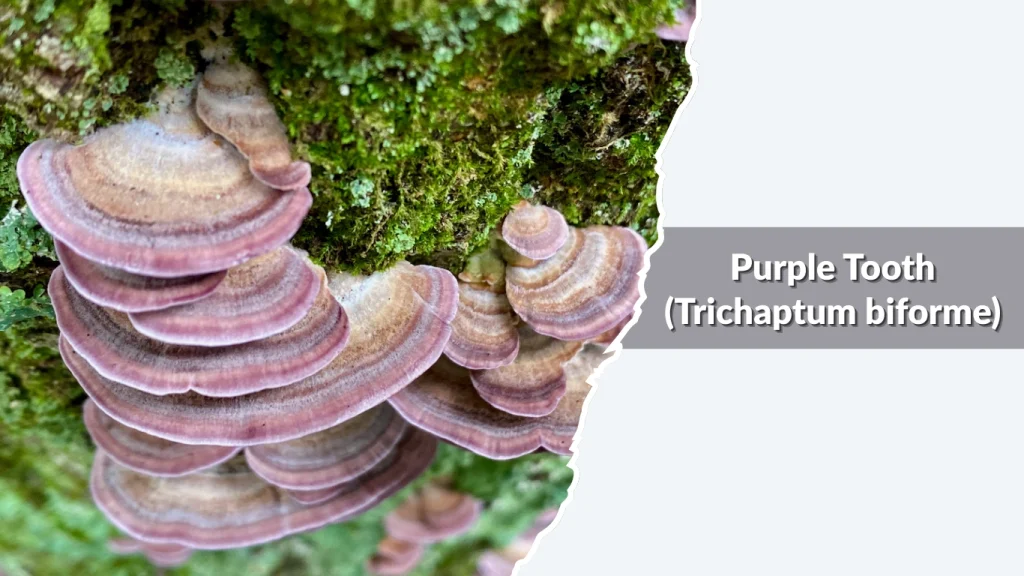
Purple Tooth is a small but colorful tree-growing mushroom known for its violet to purple margins and delicate, toothed pore surface. It commonly appears as thin, fan-shaped shelves on fallen logs and standing dead trees. Despite its modest size, its bright coloring makes it easy to recognize in the forest.
Identification
- Thin, fan-shaped or semicircular brackets
- Pale gray to brown upper surface
- Purple or violet edges and pore surface when fresh
- Tiny tooth-like or jagged pores underneath
- Tough, leathery texture
Habitat and Growth
Purple Tooth grows on dead hardwood, especially birch, maple, and beech. It is often found in overlapping rows on fallen logs. Fruiting bodies can appear from spring through autumn and may persist after drying.
Visual and Scientific Interest
Although not edible, this mushroom is admired for its attractive colors. It is commonly used in educational materials because of its distinctive purple margins and unusual toothed underside.
Ecological Importance
Purple Tooth is a white-rot fungus that decomposes hardwood. By breaking down lignin and other complex wood components, it helps recycle dead wood and supports forest nutrient cycles.
16. Crowded Parchment (Stereum complicatum)
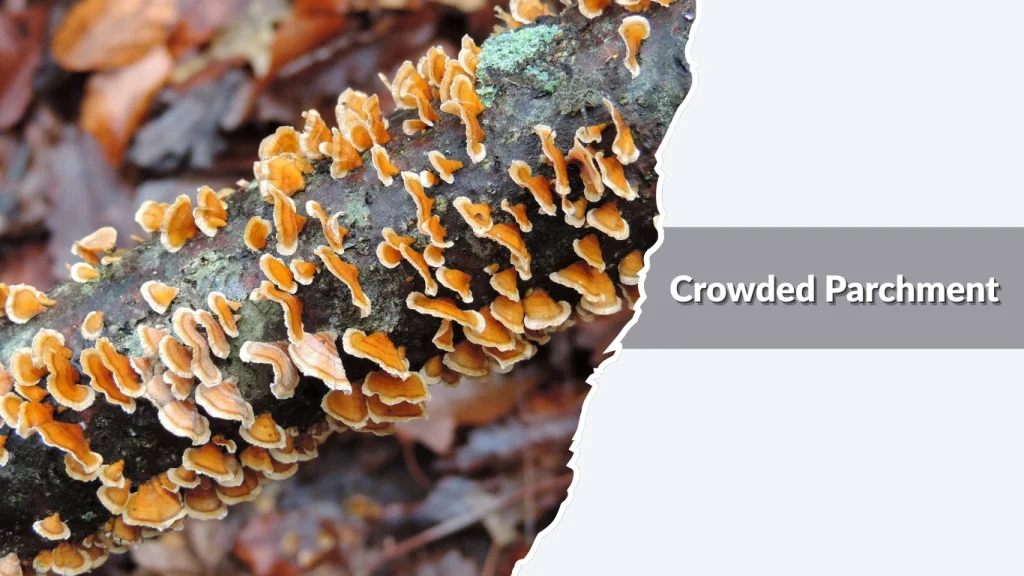
Crowded Parchment is a thin, leathery tree mushroom that forms tightly packed, wavy patches on dead wood. Instead of thick shelves, it spreads out in overlapping, paper-like layers that often curl at the edges. Its subtle colors and rippled surface make it distinctive when seen up close.
Identification
- Very thin, fan-shaped or crust-like growth
- Wavy, crowded, overlapping lobes
- Upper surface zoned in brown, tan, and gray
- Smooth to slightly velvety texture
- Underside smooth, without gills or pores
Habitat and Growth
Crowded Parchment grows on dead hardwood logs, branches, and stumps. It is commonly found on oak and other broadleaf trees. Fruiting bodies can appear year-round in moist conditions and often spread widely across the surface of fallen wood.
Appearance and Interest
This mushroom is not edible, but it is often noticed for the way it carpets wood in layered rosettes. When fresh and wet, its colors appear richer, while dry specimens become pale and papery.
Ecological Role
Crowded Parchment is a saprophytic fungus that helps decompose dead hardwood. By breaking down surface layers of wood, it contributes to the early stages of decay and nutrient recycling in forest ecosystems.
17. Wood Ear (Auricularia auricula-judae)
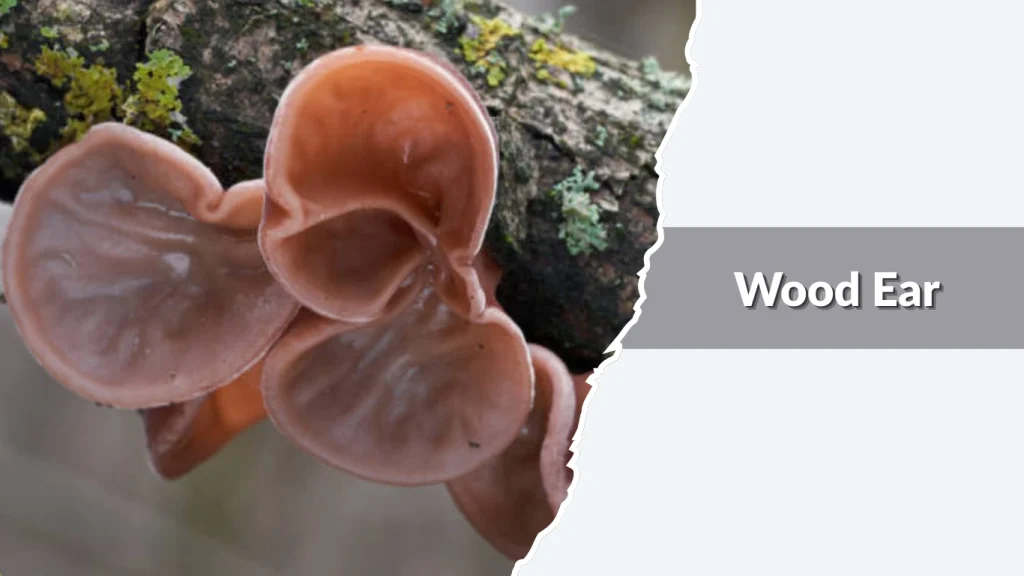
Wood Ear is a jelly-like tree mushroom famous for its ear-shaped, rubbery fruiting bodies. It commonly grows in clusters on elder and other hardwood trees. When fresh, it feels soft and gelatinous; when dry, it becomes hard and shriveled, but quickly returns to its original form after soaking in water.
Identification
- Ear-shaped, cup-like, or folded lobes
- Brown to dark reddish-brown color
- Smooth, slightly shiny inner surface
- Soft, jelly-like, and flexible texture
- Usually grows in small clusters on wood
Habitat and Growth
Wood Ear grows on dead or dying hardwood trees, especially elder, maple, and elm. It prefers moist, shaded environments and can appear from spring through autumn, and sometimes even in mild winters. After rain, dried specimens often rehydrate and expand again.
Culinary and Cultural Uses
This mushroom is widely used in Asian cuisine, valued more for its crunchy, elastic texture than its mild flavor. It is commonly added to soups, stir-fries, and salads. Wood Ear has been cultivated for centuries and is a familiar ingredient in many traditional dishes.
Ecological Importance
Wood Ear is a saprophytic decomposer that breaks down dead wood. By colonizing fallen branches and trunks, it supports nutrient recycling and helps return organic matter to forest soils.
18. Bear’s Head Tooth (Hericium americanum)
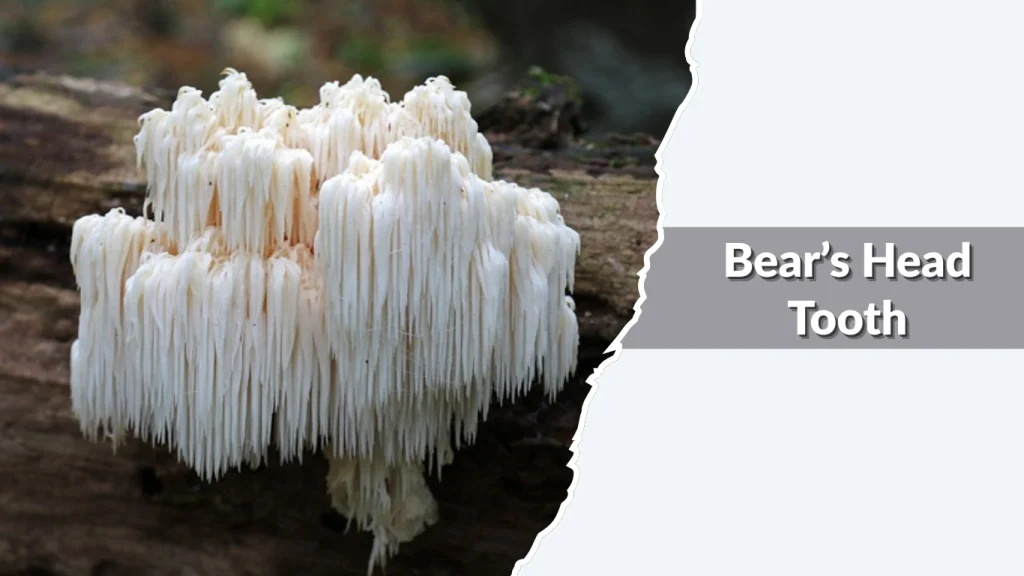
Bear’s Head Tooth is a dramatic tree-growing mushroom closely related to Lion’s Mane. It forms large, cascading clusters of long, white spines that hang like icicles from hardwood trees. Its striking appearance and tender flesh make it one of the most recognizable tooth fungi found on wood.
Identification
- Large, branched clumps with long dangling spines
- Pure white when fresh, yellowing with age
- Grows in cascading, coral-like masses
- No cap or gills, only soft “teeth”
- Fragile, tender texture
Habitat and Growth
This mushroom grows on dead or dying hardwoods such as oak, beech, and maple. It is most commonly found from late summer through autumn. Fruiting bodies usually appear singly and can reach impressive sizes on standing trunks or fallen logs.
Culinary and Practical Interest
Bear’s Head Tooth is edible and highly regarded for its mild, seafood-like taste and soft texture. It is used in sautés, soups, and meat alternatives. Because of its delicate structure, it is best cooked gently.
Ecological Role
Bear’s Head Tooth is a weak parasite and later a decomposer. It helps break down hardwood tissues, contributing to the natural aging process of trees and the recycling of nutrients in forest ecosystems.
19. Southern Bracket (Ganoderma australe)
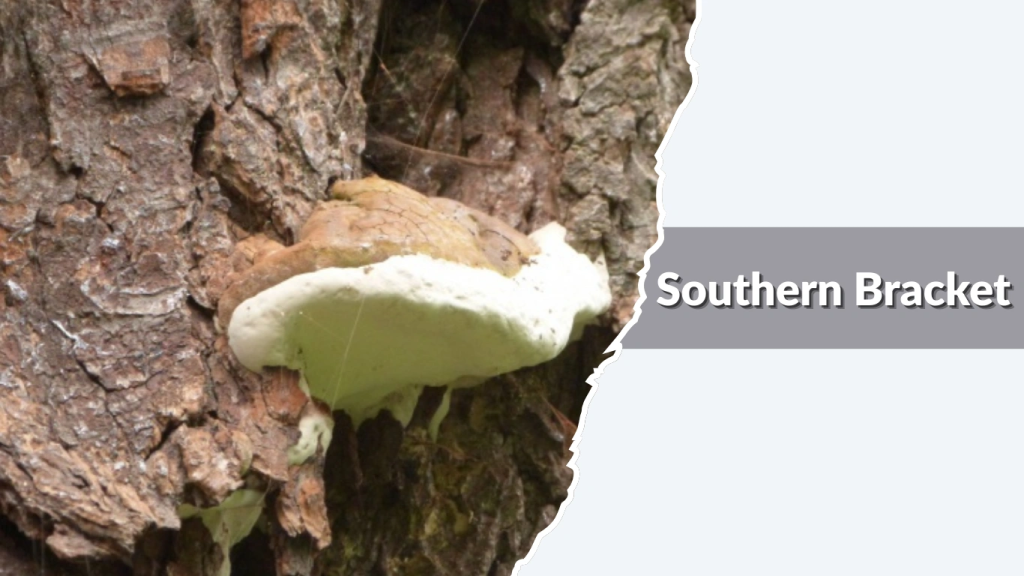
Southern Bracket is a large, long-lived tree mushroom that forms thick, woody shelves on hardwood trees. It is closely related to other Ganoderma species and is known for its dark, heavy fruiting bodies that can persist for many years. This fungus is common in warm and temperate regions.
Identification
- Very large, thick, shelf-like brackets
- Dark brown to almost black upper surface
- Dull, not shiny, crusty texture
- White pore surface when fresh, browning with age
- Extremely hard, woody flesh
Habitat and Growth
Southern Bracket grows on living and dead hardwood trees, often near the base of trunks. It is commonly found in subtropical and temperate forests and may remain attached to the same tree for multiple seasons.
Human Interest
Although not edible, Southern Bracket is sometimes used in traditional preparations similar to other Ganoderma species. It is also of interest to researchers studying wood decay and fungal lifecycles.
Ecological Importance
This mushroom causes white rot, breaking down lignin in hardwoods. By weakening and decomposing large trees, it plays a major role in forest nutrient cycling and the creation of habitats for insects and other organisms.
20. Honey Fungus (Armillaria mellea)
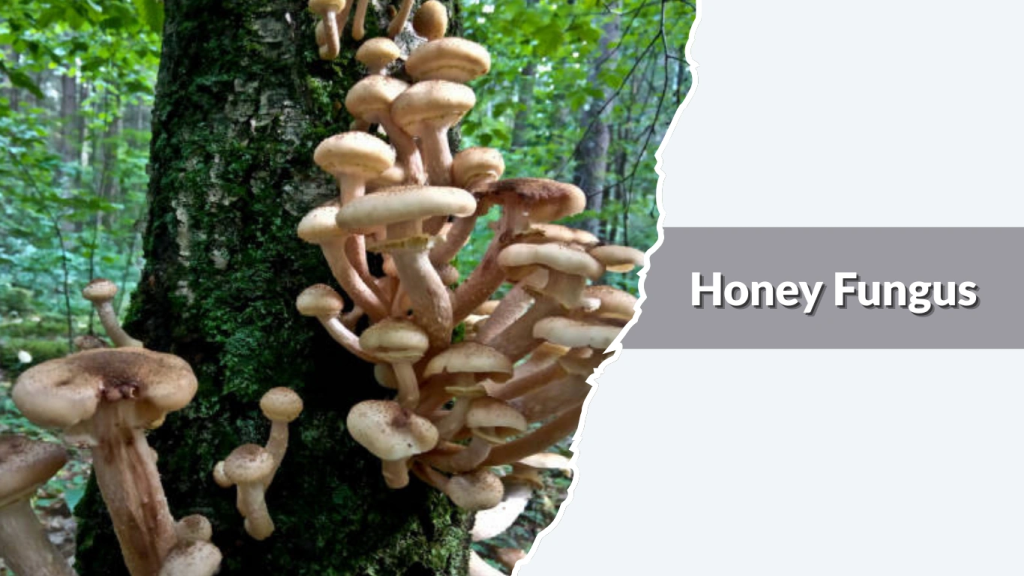
Honey Fungus is a well-known tree-growing mushroom that often appears in large clusters around the bases of trees and on buried roots. It is famous not only for its honey-colored caps but also for being one of the largest living organisms on Earth due to its massive underground networks.
Identification
- Honey-yellow to brown caps with small dark scales
- White to pale cream gills
- Central stems often fused at the base
- Grows in dense clusters
- White spore print
Habitat and Growth
Honey Fungus grows on living trees, dead wood, and underground roots. It commonly infects hardwoods and some conifers, appearing from late summer through autumn. Mushrooms often emerge in rings or dense clumps around stumps.
Edibility and Caution
Some species of honey fungus are edible when thoroughly cooked, but raw or undercooked specimens can cause illness. Correct identification is essential because of toxic look-alikes. It is not recommended for beginners to forage without expert guidance.
Ecological Role
Honey Fungus is both a parasite and decomposer. It causes root rot in trees, contributing to forest change, while also breaking down dead wood and recycling nutrients back into the soil.
21. Cinnamon Bracket (Hapalopilus rutilans)
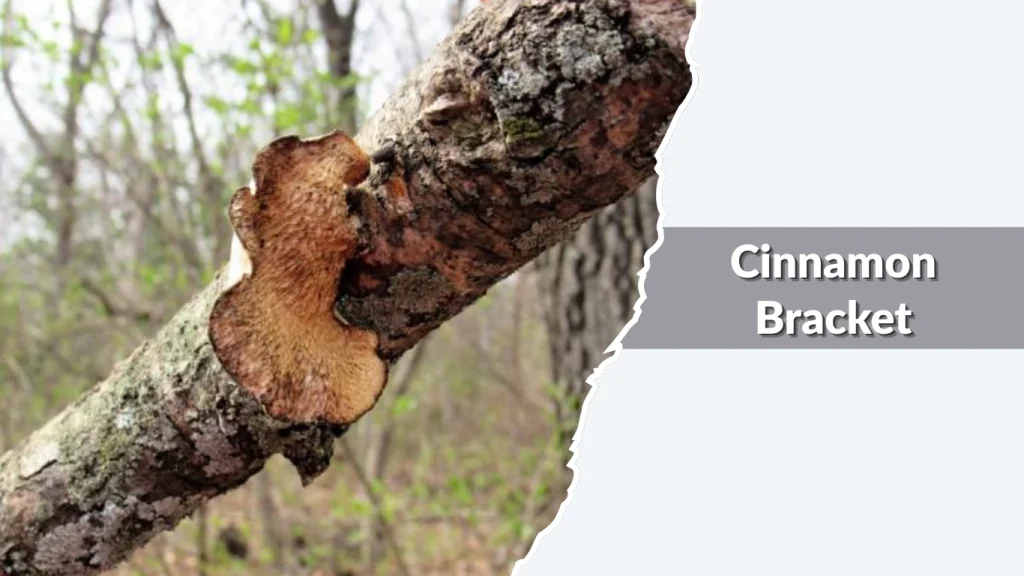
Cinnamon Bracket is a thin, brightly colored tree mushroom known for its orange-brown to cinnamon tones. It forms soft, velvety shelves on dead hardwood and is especially noticeable after rain, when its colors become deeper and richer. Despite its attractive look, it is not edible.
Identification
- Thin, soft, shelf-like brackets
- Cinnamon, orange, or rust-brown color
- Velvety to fuzzy upper surface
- Pale to cinnamon pore surface underneath
- Often grows in overlapping clusters
Habitat and Growth
Cinnamon Bracket grows on dead hardwood logs and stumps, especially beech and oak. It is most commonly found from summer through autumn. The fruiting bodies are annual and usually appear in layered rows along fallen trunks.
Toxicity and Interest
This mushroom contains toxic compounds and should never be eaten. It is sometimes studied because of its pigments and chemical makeup, and it is also used in natural dye experiments.
Ecological Role
Cinnamon Bracket is a white-rot fungus that breaks down lignin in hardwood. By decomposing dead wood, it contributes to nutrient recycling and helps open logs for insects and microorganisms.
22. Oak Bracket (Inonotus dryadeus)
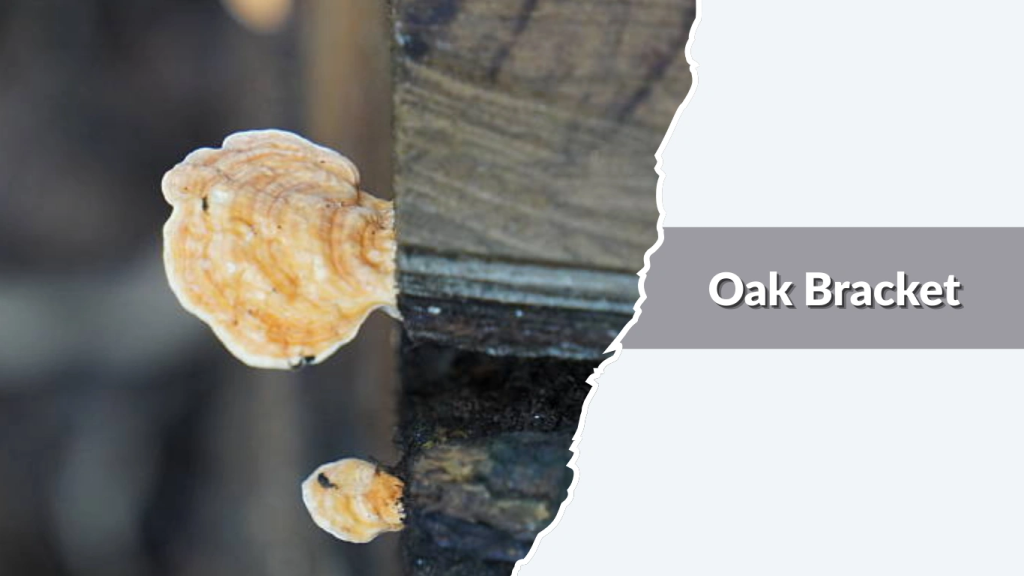
Oak Bracket is a massive, heavy tree mushroom that forms at the base of living oak trees. It is known for its thick, irregular shape and the amber droplets it often releases when actively growing. This striking fungus is a serious parasite of oaks but also an important decomposer.
Identification
- Very large, lumpy, cushion-like brackets
- Yellowish to brown surface, often cracked
- Amber or rust-colored droplets when fresh
- Pale pore surface underneath
- Soft when young, becoming very hard with age
Habitat and Growth
Oak Bracket grows mainly on living oak trees, usually at the trunk base or from large roots. It appears from late spring through autumn and can persist for long periods. Fruiting bodies may reappear on the same tree year after year.
Human Interest
This mushroom is not edible due to its tough texture and bitter compounds. It is often photographed because of its dramatic size and weeping appearance. Arborists also pay attention to it as a sign of internal decay in oak trees.
Ecological Importance
Oak Bracket causes white rot in oak roots and lower trunks. While it weakens and can eventually kill infected trees, it also plays a vital role in breaking down large hardwoods and returning nutrients to forest soils.
23. Red-Belted Conk (Fomitopsis pinicola)
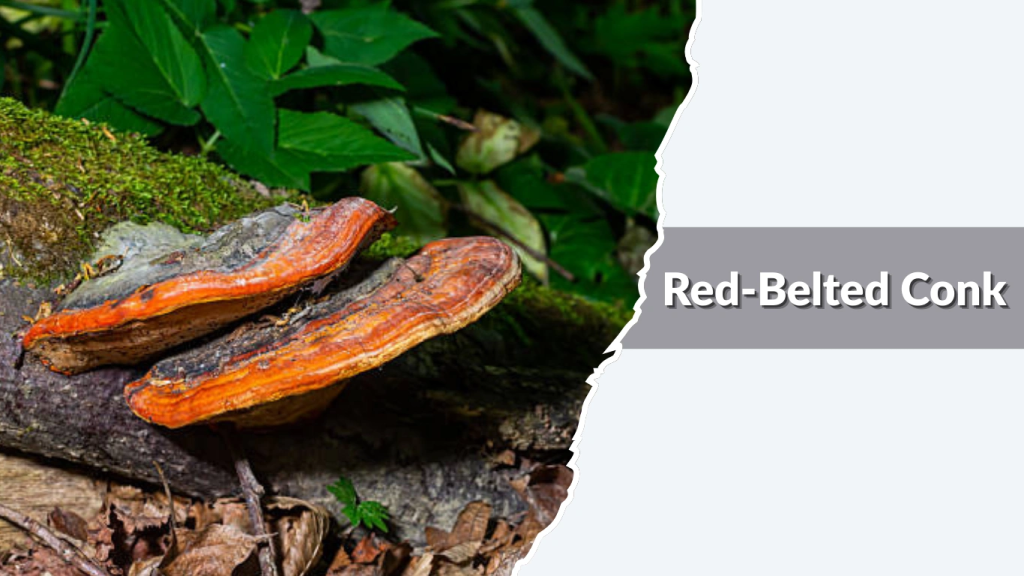
Red-Belted Conk is a bold, easily recognized tree mushroom named for the reddish or orange band that circles its thick, shelf-like body. It commonly grows on both hardwood and conifer trees and is one of the most widespread bracket fungi in the Northern Hemisphere.
Identification
- Thick, hoof-shaped or shelf-like brackets
- Distinct red, orange, or rust-colored band near the edge
- Dark brown to black upper surface toward the center
- White to pale yellow pore surface underneath
- Very hard, woody texture
Habitat and Growth
Red-Belted Conk grows on dead or dying trees, including pine, spruce, birch, and maple. It can appear year-round and often persists for several seasons. Fruiting bodies are commonly found on logs, stumps, and standing dead trunks.
Human Interest
This mushroom is not edible, but it is widely used for educational purposes because of its classic bracket-fungus shape and bright color zones. It has also been studied for natural compounds and has been used historically as tinder.
Ecological Role
Red-Belted Conk causes brown rot, breaking down cellulose in wood and leaving behind brittle, cubical fragments. This process speeds the decomposition of large logs and plays an important role in forest nutrient cycling.
24. Smoky Polypore (Bjerkandera adusta)
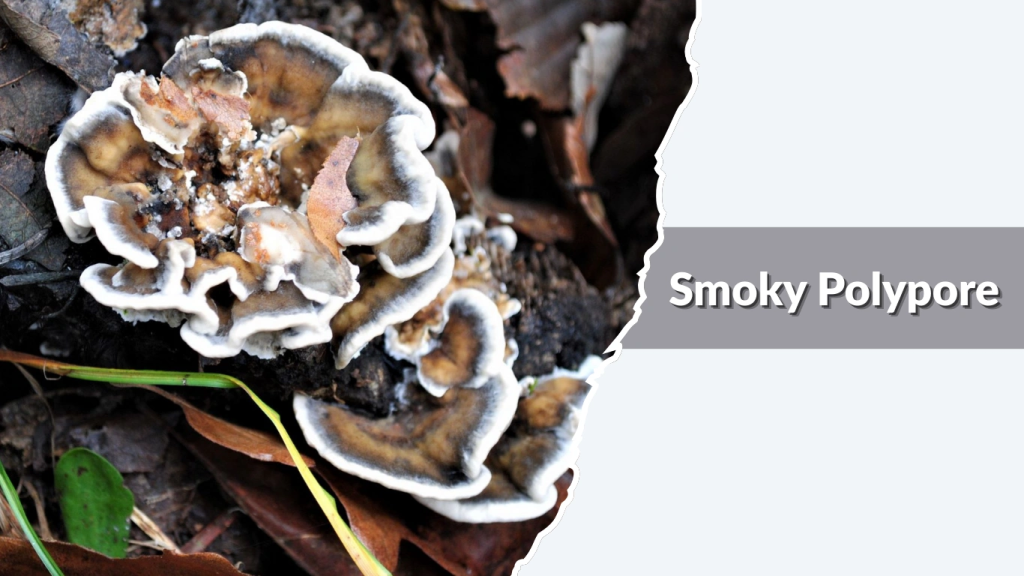
Smoky Polypore is a thin, grayish tree mushroom that forms soft, shelf-like growths on dead wood. Its name comes from the smoky gray to brown tones of its cap and pore surface. It is a common decomposer in hardwood forests and often appears in layered clusters.
Identification
- Thin, flexible, shelf-like brackets
- Gray, smoky brown, or pale buff coloration
- Darkening pore surface with age
- Soft when fresh, leathery when dry
- Often grows in overlapping rows
Habitat and Growth
Smoky Polypore grows mainly on dead hardwood logs and stumps, especially beech and oak. It can be found from spring through autumn and sometimes persists into winter in mild climates. Fruiting bodies often spread widely over fallen trunks.
Scientific and Practical Interest
Although not edible, this mushroom is studied for its strong wood-decomposing enzymes. These enzymes are of interest in environmental research, including natural breakdown of pollutants and wood waste.
Ecological Importance
Smoky Polypore is a white-rot fungus that breaks down lignin and cellulose. By decomposing fallen trees, it helps recycle forest nutrients and supports the complex web of life in decaying wood habitats.
25. Bleeding Tooth Fungus (Hydnellum peckii)
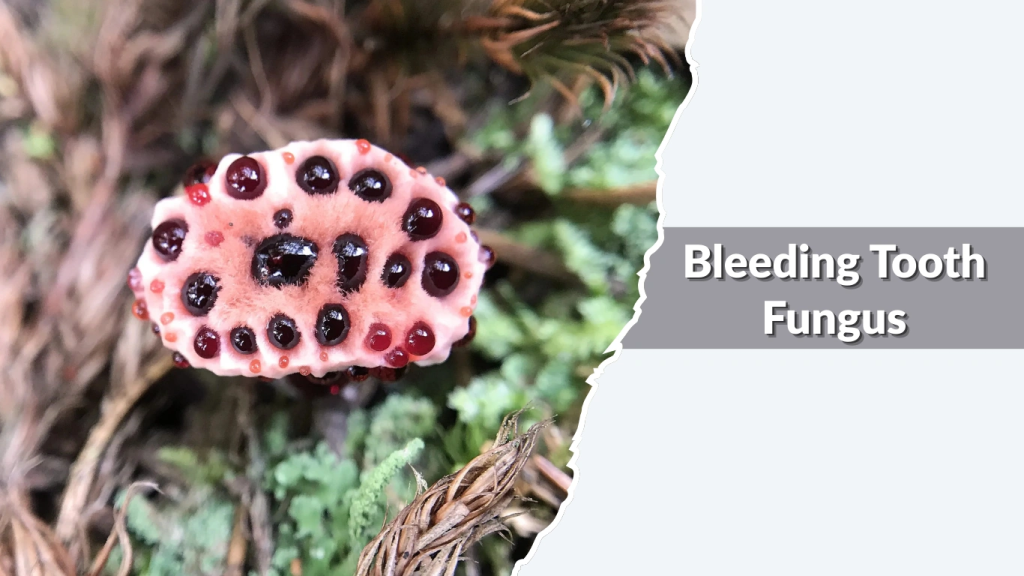
Bleeding Tooth Fungus is a striking tree-associated mushroom famous for the bright red droplets that ooze from its white surface when young. Although it grows from soil, it is closely linked to trees through mycorrhizal relationships, often appearing near the roots of conifers. Its dramatic look makes it one of the most photographed forest fungi.
Identification
- White to pale pink cap when young
- Bright red, blood-like droplets on the surface
- Irregular, lumpy or cushion-shaped body
- Underside covered with short tooth-like spines
- Bitter taste and firm texture
Habitat and Growth
Bleeding Tooth Fungus is usually found in conifer forests, especially near pine and spruce trees. It grows on the ground but is directly connected to tree roots, forming a symbiotic relationship. Fruiting bodies appear mainly from summer to autumn in cool, moist forests.
Human Interest and Toxicity
This mushroom is not edible due to its extremely bitter taste and chemical composition. It has attracted scientific attention for its pigments and natural compounds, some of which have been studied for potential medical and industrial uses.
Ecological Role
Bleeding Tooth Fungus is a mycorrhizal species, meaning it lives in partnership with trees. It helps trees absorb water and minerals from the soil, while the tree supplies sugars. This relationship supports forest health and soil stability.
FAQs
Are all mushrooms that grow on trees safe to eat?
No. Many tree-growing mushrooms are edible, but others are tough, bitter, or toxic. Some species also have dangerous look-alikes. Proper identification, local knowledge, and correct cooking methods are essential before consuming any wild mushroom found on trees.
Why do so many mushrooms grow on trees instead of soil?
Trees provide a rich source of cellulose and lignin, which many fungi specialize in breaking down. These mushrooms grow on living or dead wood to access nutrients, helping decompose trees and recycle organic matter back into forest ecosystems.
Can tree-growing mushrooms damage living trees?
Yes. Some species are parasitic and cause internal rot, weakening living trees and sometimes leading to death. While harmful to individual trees, this process is natural and helps create habitats and recycle nutrients within forest environments.
Do tree mushrooms grow all year round?
Some do. Certain tree mushrooms, such as bracket fungi and winter species, can grow or remain visible year-round. Others appear only in specific seasons, usually spring through autumn, depending on temperature and moisture conditions.
Are tree-growing mushrooms important for the environment?
Absolutely. Tree-growing mushrooms play a major role in breaking down dead wood, returning nutrients to the soil, supporting insect life, and maintaining healthy forest ecosystems. Without them, forests would accumulate dead trees and lose vital nutrient cycles.