
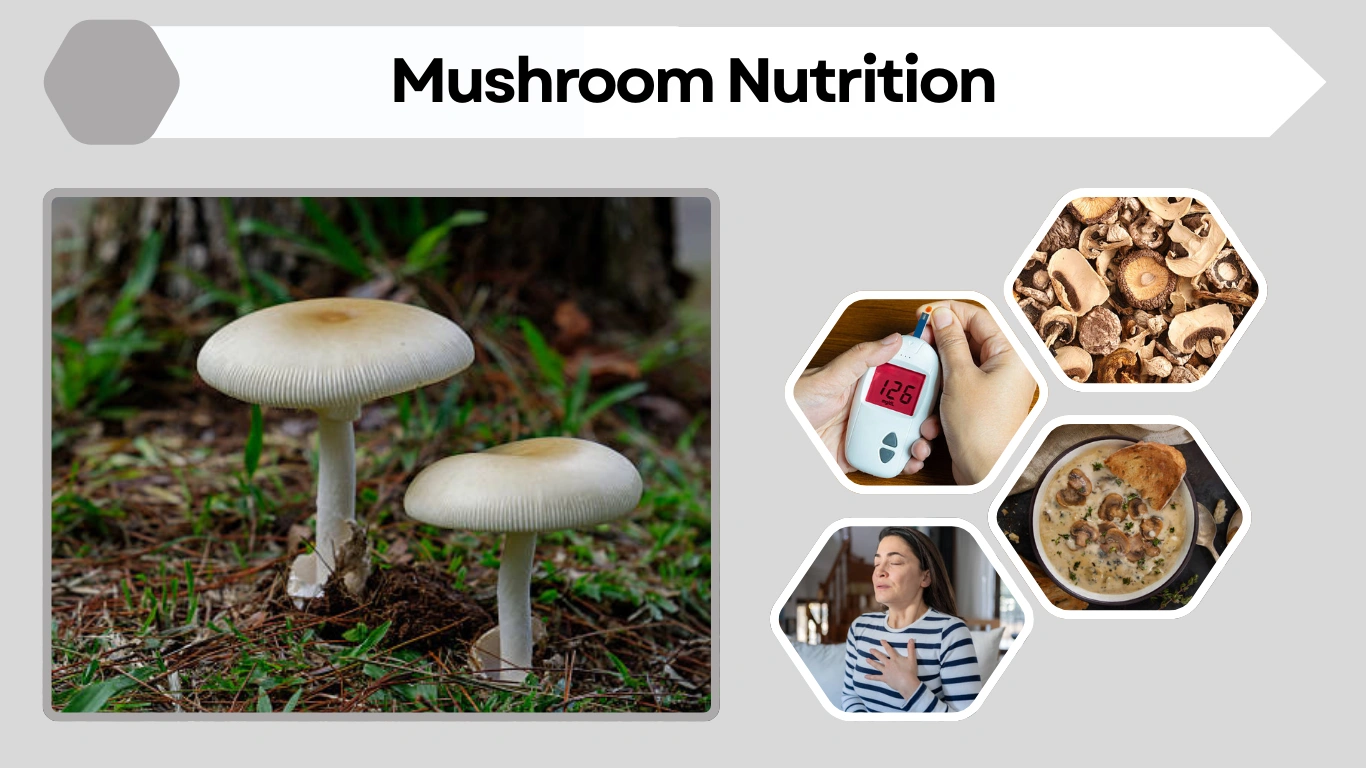
Mushrooms are often grouped with vegetables, but nutritionally, they stand apart as one of the most unique foods in the human diet. They are naturally low in calories, fat, and sugar, yet rich in essential vitamins, minerals, antioxidants, and bioactive compounds that support nearly every system of the body. For centuries, mushrooms have been valued in traditional diets and healing systems, and modern nutrition science now confirms their powerful role in immunity, metabolism, heart health, and cellular protection.
Nutritional Overview of Mushrooms
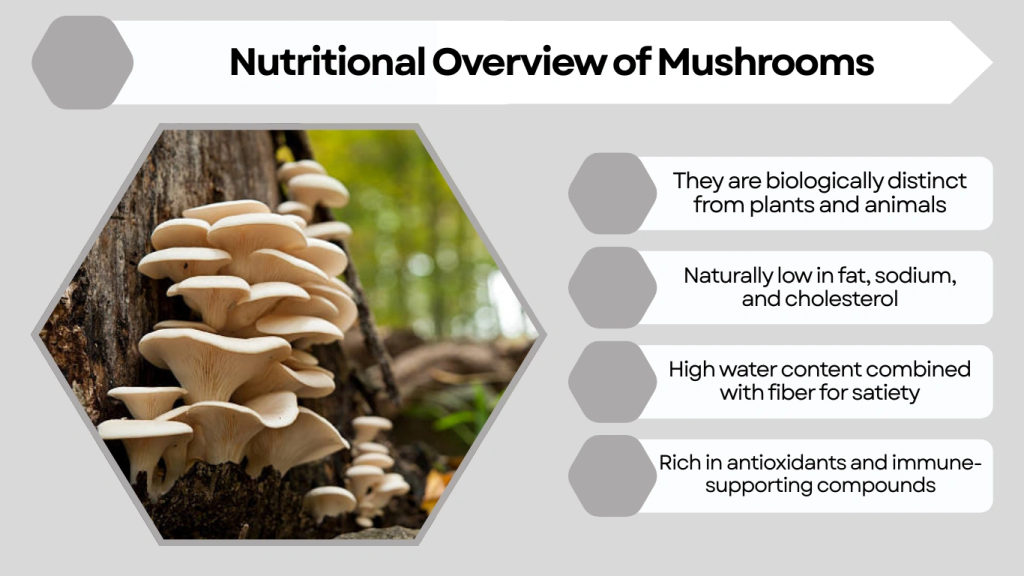
Mushrooms are considered nutrient-dense foods, meaning they deliver a high amount of nutrition relative to their calorie content. A typical serving of mushrooms provides very few calories while offering an impressive range of micronutrients that are often lacking in processed diets.
Why mushrooms are nutritionally unique
- They are biologically distinct from plants and animals, giving them a rare nutrient composition
- Naturally low in fat, sodium, and cholesterol
- High water content combined with fiber for satiety
- Rich in antioxidants and immune-supporting compounds
- Suitable for vegan, vegetarian, keto-friendly, and heart-healthy diets
This combination makes mushrooms ideal for people seeking balanced nutrition without excess energy intake.
Macronutrients in Mushrooms
Although mushrooms are not calorie-dense, they still provide meaningful macronutrients that support daily function, especially when eaten regularly.
Protein, carbohydrates, and fiber
Mushrooms supply moderate amounts of plant-based protein, containing essential amino acids that contribute to tissue repair and enzyme function. While they cannot replace legumes or animal proteins entirely, they enhance the protein quality of meals.
Their carbohydrates are mainly complex carbohydrates and natural sugars present in very small amounts, giving mushrooms a very low glycemic load. This means they have little impact on blood sugar levels.
Dietary fiber in mushrooms includes chitin and beta-glucans, which slow digestion, support gut health, and help regulate cholesterol. Combined with their high water content, these fibers promote fullness and digestive comfort.
Vitamins Found in Mushrooms
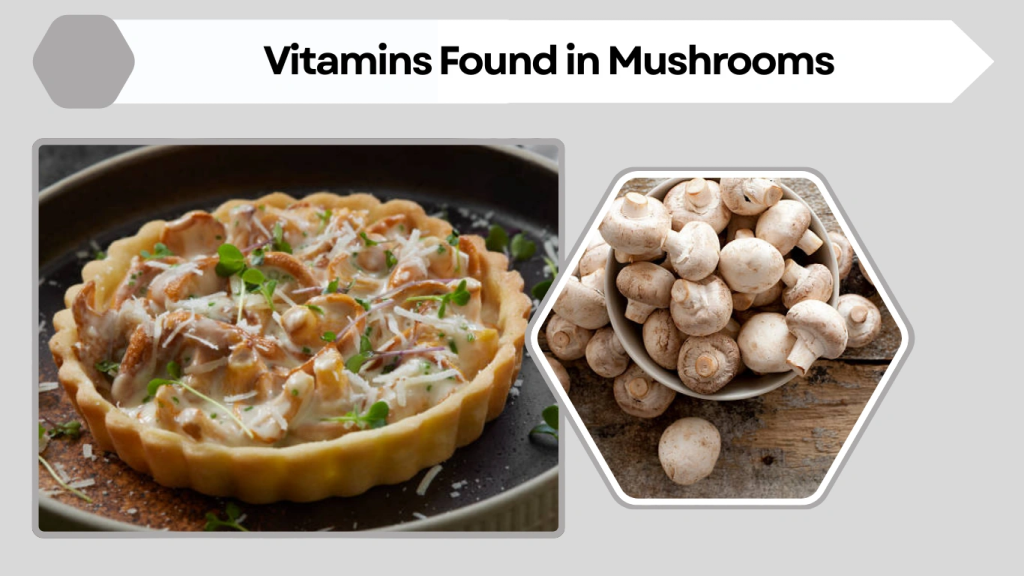
Mushrooms are one of the best natural food sources of several B-complex vitamins and are unique among non-animal foods for their ability to provide vitamin D when exposed to ultraviolet light.
Essential vitamins in mushrooms
Mushrooms are particularly rich in riboflavin (B2), niacin (B3), and pantothenic acid (B5). These vitamins play key roles in converting food into energy, supporting nervous system function, and maintaining healthy skin.
Folate found in mushrooms contributes to red blood cell formation and DNA synthesis. Choline, another important nutrient, supports memory, liver function, and muscle control.
When exposed to sunlight or UV light, mushrooms naturally convert ergosterol into vitamin D2. This makes them one of the few plant-based dietary sources of vitamin D, a nutrient essential for bone health, immune defense, and mood regulation.
Mineral Content of Mushrooms
Mushrooms contain a wide spectrum of minerals and trace elements that are vital for metabolic, cardiovascular, and immune function.
Important minerals and trace elements
Potassium is one of the most abundant minerals in mushrooms. It supports fluid balance, nerve transmission, and healthy blood pressure regulation. Selenium, another key mineral, acts as a powerful antioxidant and supports thyroid and immune health.
Mushrooms also provide copper, which is essential for iron metabolism, connective tissue formation, and energy production. Iron supports oxygen transport in the blood, while phosphorus and magnesium contribute to strong bones, teeth, and muscle function.
Although the mineral levels vary by species and growing conditions, most edible mushrooms contribute meaningfully to daily mineral requirements.
Antioxidants and Bioactive Compounds

Beyond standard vitamins and minerals, mushrooms are valued for their unique bioactive substances that are rarely found together in other foods.
Protective compounds in mushrooms
Mushrooms are one of the richest dietary sources of ergothioneine, a powerful antioxidant that accumulates in tissues prone to oxidative stress such as the brain, liver, eyes, and skin. They also contain glutathione, often called the “master antioxidant,” which protects cells from toxin and free radical damage.
In addition, mushrooms provide beta-glucans, polyphenols, and terpenoids that help regulate immune activity, reduce inflammation, and support cellular repair. These compounds explain why mushrooms are often classified as functional or medicinal foods.
Calories and Nutritional Density
Mushrooms are extremely low in calories, with most varieties providing fewer than 30 calories per cup. Despite this, they deliver a concentrated supply of nutrients, making them one of the most nutritionally efficient foods available.
Their high water content adds volume to meals without increasing calorie load, which supports weight management and metabolic health. Because they are filling but light, mushrooms are frequently used in therapeutic diets focused on heart health, diabetes control, and digestive wellness.
Nutritional Differences Among Mushroom Types
Not all mushrooms offer exactly the same nutritional profile. While most edible mushrooms share a low-calorie, high-micronutrient foundation, individual species vary in their vitamin, mineral, and bioactive compound content.
Common edible mushrooms vs medicinal mushrooms
Button, cremini, and portobello mushrooms are rich in B vitamins, potassium, selenium, and fiber, making them excellent everyday nutrition foods. Shiitake and oyster mushrooms provide additional beta-glucans and immune-supporting compounds. Maitake offers strong mineral density, while lion’s mane is known for nerve-supporting compounds. Medicinal mushrooms such as reishi, turkey tail, and cordyceps are particularly valued for their polysaccharides, antioxidants, and metabolic support properties.
Fresh vs Dried vs Cooked Mushrooms
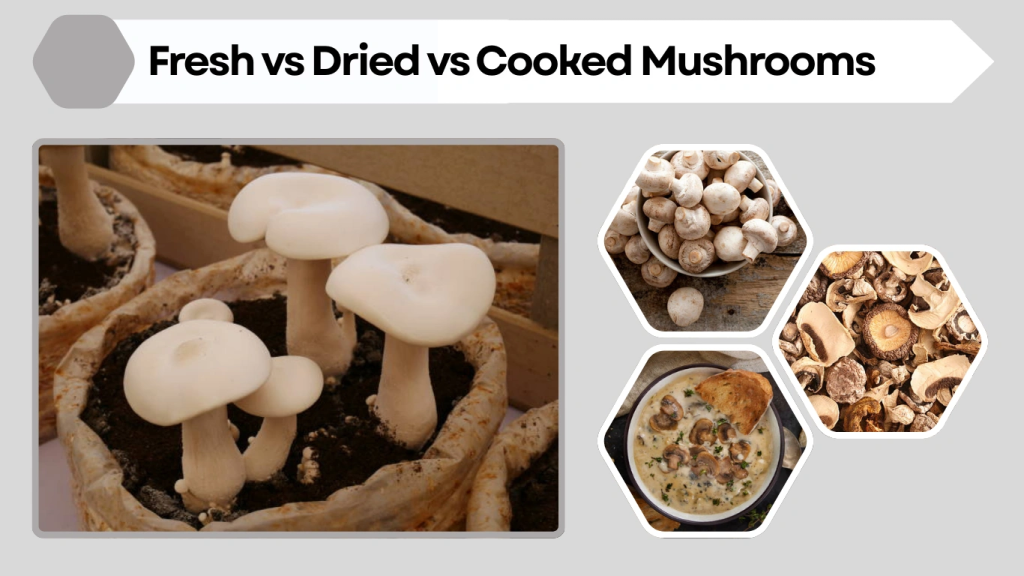
The way mushrooms are processed and prepared can influence their nutritional value, although most of their core benefits remain intact.
How processing affects nutrition
Fresh mushrooms provide the highest water content and delicate vitamin profile. Dried mushrooms are more concentrated in minerals and fiber but may lose some heat-sensitive vitamins. Cooking mushrooms improves digestibility, breaks down chitin in cell walls, and can increase the availability of antioxidants. Light sautéing, steaming, or roasting generally preserves nutrients better than deep frying.
Mushrooms in Special Diets
Mushrooms fit easily into almost every dietary pattern. Their low calorie and carbohydrate levels make them useful in weight-management and diabetic diets. Their potassium and fiber content supports heart-healthy and low-sodium eating plans.
For vegans and vegetarians, mushrooms provide umami flavor, B vitamins, trace minerals, and vitamin D when UV-exposed. In keto or low-carb diets, mushrooms add texture and nutrition without disrupting carbohydrate limits. They are also widely used in immune-supportive and anti-inflammatory nutritional protocols.
How to Maximize Mushroom Nutrition
Best ways to prepare and store mushrooms
To preserve nutrients, mushrooms should be stored in breathable containers in the refrigerator and used within several days. Gentle cleaning with a brush or damp cloth helps prevent nutrient loss.
Exposing mushrooms to sunlight for 15–30 minutes before cooking can significantly increase their vitamin D content. Cooking methods such as light sautéing, grilling, steaming, or adding mushrooms to soups helps release antioxidants and improves nutrient absorption. Pairing mushrooms with healthy fats and vitamin C–rich foods may further enhance mineral uptake.
Mushroom Nutrition Myths and Facts
A common myth is that mushrooms are nutritionally empty because they are mostly water. In reality, mushrooms are highly nutrient-dense, delivering a wide range of vitamins, minerals, and protective compounds per calorie.
Another misconception is that mushrooms offer no protein. While not high-protein foods, they contribute essential amino acids and enhance overall meal quality. Some also believe mushrooms lose all nutrition when cooked, but research shows that proper cooking often increases antioxidant availability and digestibility.
FAQs
Are mushrooms really nutritious foods?
Yes, mushrooms are highly nutritious despite being low in calories. They provide essential B vitamins, minerals such as selenium and potassium, antioxidants like ergothioneine, and unique bioactive compounds. Regular mushroom consumption supports immune function, metabolism, digestive health, and cellular protection.
Which mushrooms are the most nutritious?
Shiitake, oyster, maitake, lion’s mane, and cremini mushrooms are among the most nutritionally rich. They offer higher levels of beta-glucans, minerals, and antioxidants compared to some basic varieties. However, mixing different mushrooms provides the broadest nutritional coverage.
Do cooked mushrooms lose nutrients?
Some heat-sensitive vitamins may slightly decrease, but cooking mushrooms improves digestibility and often increases antioxidant availability. Light cooking methods such as sautéing, steaming, or roasting preserve most nutrients and can enhance overall nutritional benefits.
Are mushrooms good for daily consumption?
Mushrooms are safe and beneficial for regular or daily intake as part of a balanced diet. They are low in fat and calories while contributing important micronutrients, making them suitable for long-term nutritional support.
Can mushrooms replace vegetables nutritionally?
Mushrooms complement vegetables rather than replace them. They offer unique antioxidants, vitamin D, and bioactive compounds not commonly found in plants, but they work best as part of a diverse diet that includes a wide range of vegetables, fruits, and whole foods.