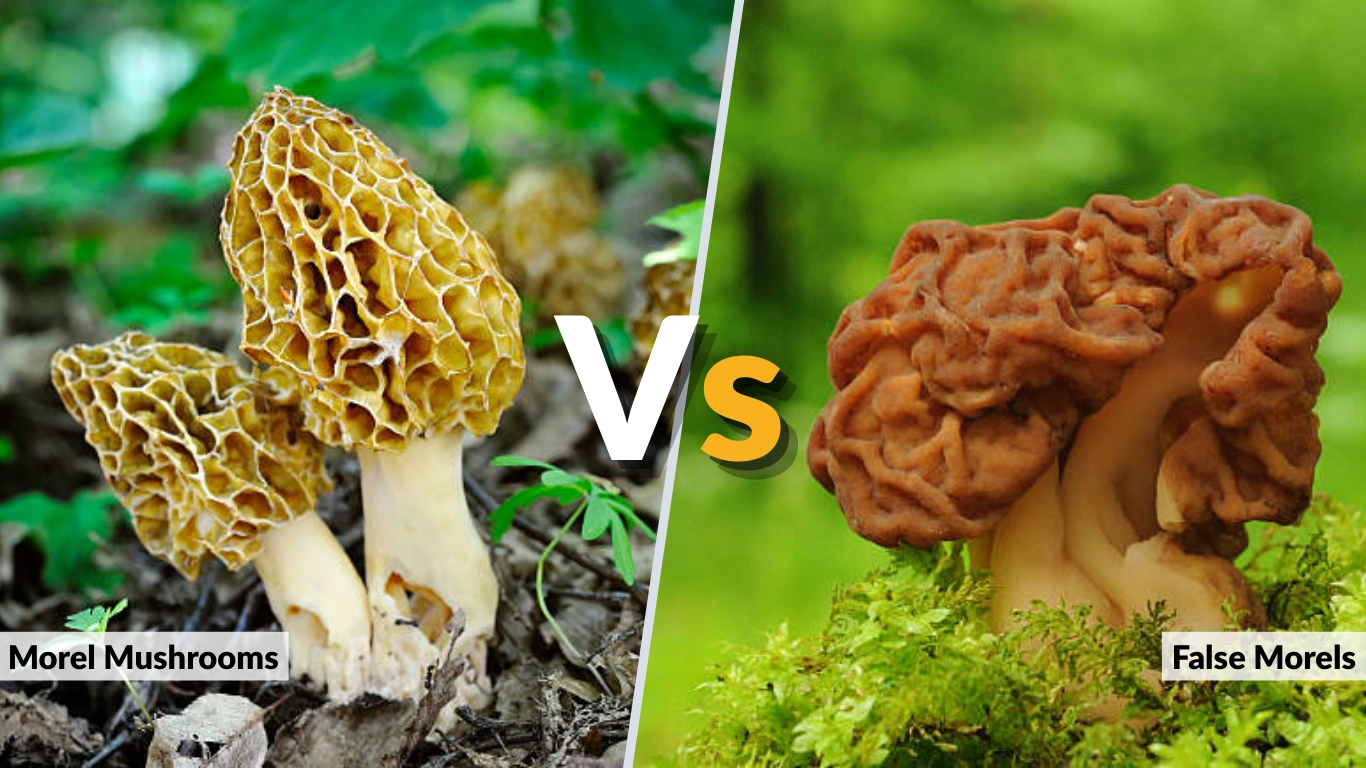
Morel mushrooms are among the most sought-after wild mushrooms in the world, prized for their rich flavor and short spring season. However, alongside true morels grow several mushrooms commonly known as false morels, which can look deceptively similar. For beginners, this similarity creates confusion—and in some cases, serious health risks. This article explains the key differences between morel mushrooms and false morels using clear, practical comparisons. By understanding their physical features, internal structure, and growth habits, you can confidently tell them apart and avoid dangerous mistakes while foraging.
What Are True Morel Mushrooms?
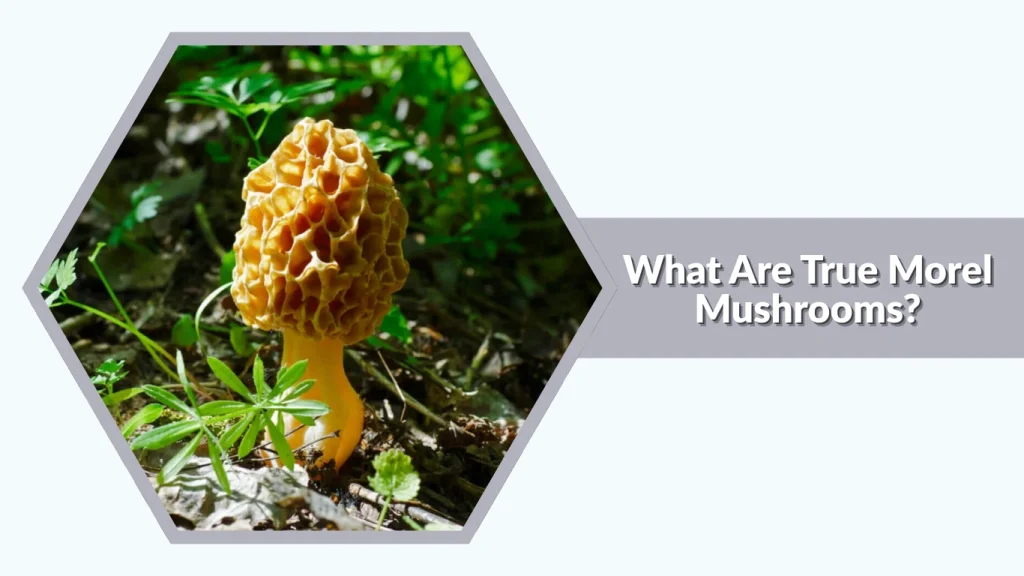
True morels belong to the Morchella genus and are considered edible when properly identified and thoroughly cooked. They grow wild in spring and are rarely cultivated successfully, which adds to their rarity and value. Despite differences in size, shape, and color, all true morels share a set of defining features that make reliable identification possible.
True morels have a distinctive appearance that sets them apart from most other mushrooms when examined closely. Their caps have a structured, honeycomb-like surface and sit directly on a pale stem. When cut open, the mushroom is hollow from top to bottom—one of the most important traits for confirmation.
Key Characteristics of True Morels
The cap of a true morel is covered in deep pits separated by raised ridges, creating a honeycomb pattern. These pits are not wrinkles or folds; they look more like small holes pressed into the surface. The cap is attached directly to the stem at its base, rather than hanging freely.
Internally, a true morel is completely hollow from the tip of the cap through the stem. There should be one continuous hollow chamber with no cottony tissue, partitions, or solid areas. This hollow interior is one of the most reliable ways to confirm a true morel.
Common Types of True Morels
True morels appear in several forms, often grouped by color. Yellow or blonde morels are common and have lighter caps and stems. Black morels tend to have darker ridges and a more conical shape. Gray morels appear somewhere in between. While these types look different, they all share the same core structural traits.
What Are False Morels?
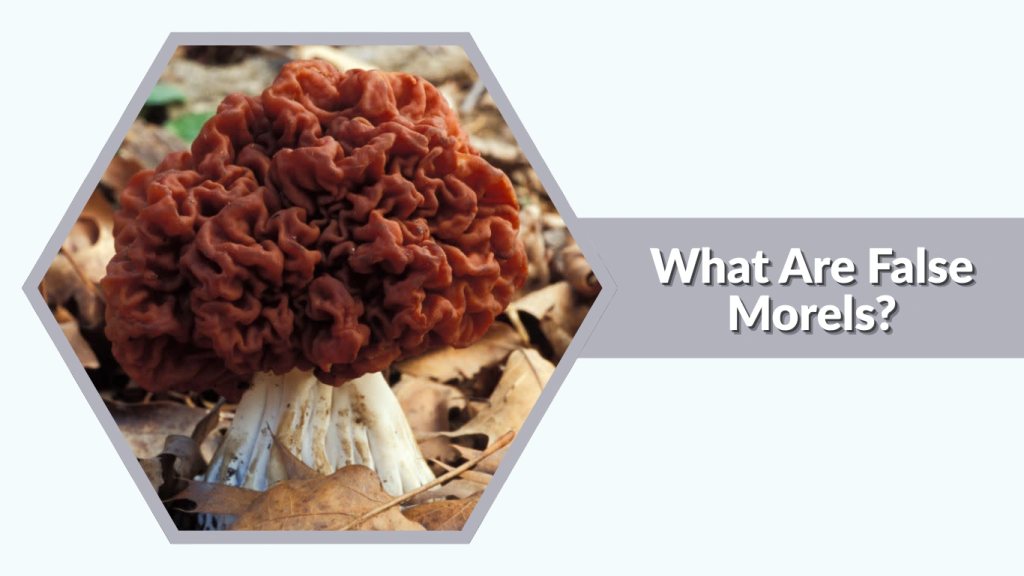
“False morel” is a general term used for several mushroom species that resemble true morels but do not belong to the Morchella genus. The most common false morels belong to the Gyromitra and Verpa genera. These mushrooms often appear in the same season and habitats as true morels, which increases the risk of confusion.
False morels are not just look-alikes—they can be dangerous. Some contain toxins that may cause severe illness or worse, and their effects can vary depending on preparation, quantity consumed, and individual sensitivity. Because of this unpredictability, false morels should be avoided entirely by casual foragers.
Why False Morels Are Risky
Unlike true morels, false morels do not have consistent, reliable identification features that indicate safety. Some species contain toxins that are not completely destroyed by cooking. Even when symptoms are mild at first, repeated exposure or larger amounts can be harmful. This is why many experts recommend treating all false morels as unsafe.
Morel Mushrooms vs False Morels (Key Differences)
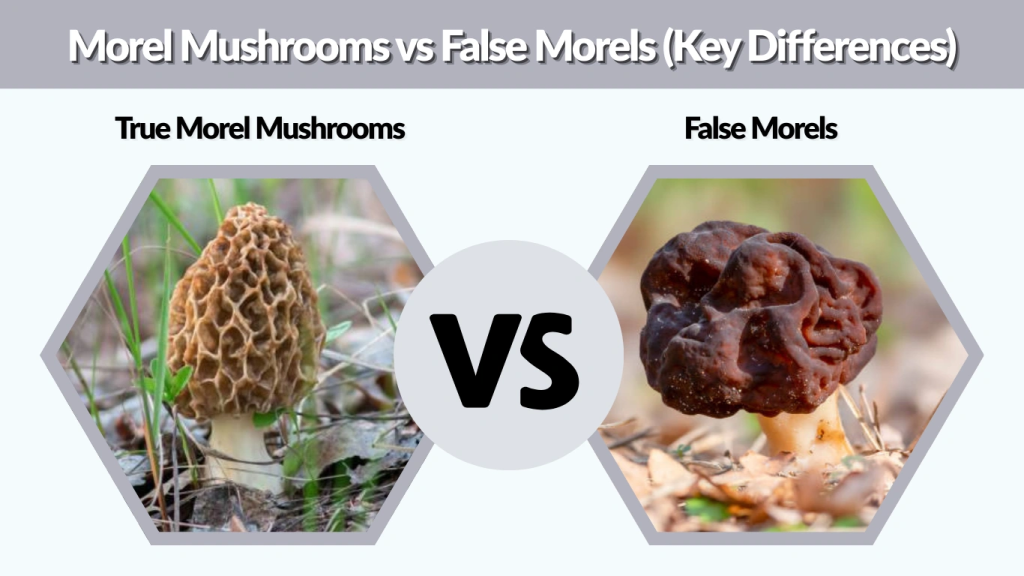
| Feature | True Morel Mushrooms (Morchella) | False Morels (Gyromitra, Verpa) |
| Cap Surface | Distinct honeycomb pattern with deep pits and raised ridges | Wrinkled, folded, or brain-like surface rather than true pits |
| Cap Shape | Cone-shaped or oval, well-structured | Irregular, lobed, or misshapen |
| Cap Attachment | Cap is fully attached to the stem at the base | Cap often hangs freely or is attached only at the top |
| Interior Structure | Completely hollow from cap tip through stem when cut lengthwise | Not fully hollow; may be chambered, cottony, or partially solid |
| Stem Appearance | Pale, smooth, and blends naturally with the cap | May be irregular, brittle, or disconnected from the cap |
| Color Range | Yellow, tan, gray, brown, or black | Brown, reddish-brown, gray, or dark tones (overlaps with true morels) |
| Texture | Firm but flexible | Often fragile or brittle |
| Edibility | Edible only when properly cooked | Many species are toxic or unsafe to eat |
| Toxicity Risk | Low when correctly identified and cooked | Can cause serious illness or worse, even after cooking |
| Beginner Safety | Safe with correct identification and preparation | Should be avoided, especially by beginners |
Common Types of False Morels
Not all false morels look exactly the same, which is why they cause so much confusion. Two groups account for most misidentifications: Gyromitra and Verpa. Knowing how they differ from true morels can prevent serious mistakes.
Gyromitra (False Morels)
Gyromitra species are often referred to as false morels because of their general shape and springtime appearance. However, their caps differ significantly from true morels. Instead of having neat pits and ridges, Gyromitra caps are wrinkled and folded, often resembling a brain.
When sliced open, Gyromitra mushrooms are not completely hollow. They typically contain cottony tissue or multiple internal chambers. Many species contain toxic compounds that can cause severe illness and, in rare cases, death. Because toxicity levels vary and cooking does not reliably neutralize the toxins, Gyromitra mushrooms should always be avoided.
Verpa (Thimblecaps or Early Morels)
Verpa mushrooms often appear earlier in the season and are another common source of confusion. Their caps may look similar to morels from a distance, but a closer look reveals an important difference: the cap hangs freely from the stem, attaching only at the top like a thimble.
When cut open, Verpa mushrooms may be partially hollow, but they do not have the single, clean hollow chamber seen in true morels. While some people consider certain Verpa species edible, they can still cause illness and should not be consumed by beginners.
Habitat and Growing Conditions
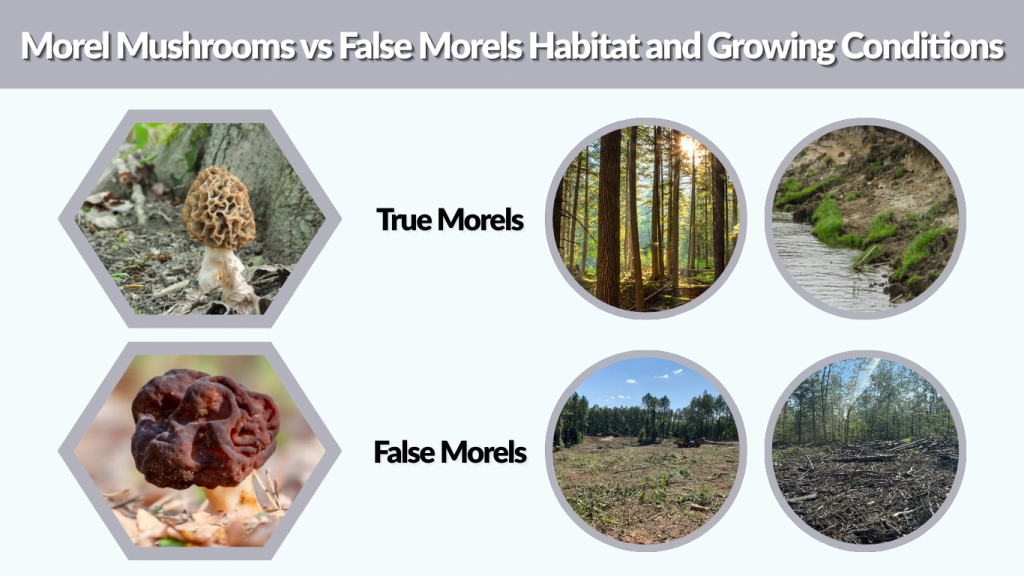
Where a mushroom grows can support an identification, but habitat alone is never proof. True morels and false morels often appear in similar environments, which is why physical features matter most.
Where True Morels Commonly Grow
True morels are typically found in hardwood forests, along riverbanks, on hillsides, and in old orchards. They are often associated with trees such as elm, ash, poplar, and apple. Morels may grow singly or in small groups and often blend in with leaf litter.
Where False Morels Are Often Found
False morels frequently grow in similar springtime habitats, including mixed forests and disturbed ground. Because their growing locations overlap with true morels, relying on habitat alone can lead to misidentification.
Safety Rules for Foraging Morels
Following a few basic safety rules can greatly reduce your risk when foraging.
Never Rely on a Single Feature
No single trait can confirm a true morel. Always check the cap texture, cap attachment, and interior structure together. Skipping one step increases the chance of a dangerous mistake.
Always Cut the Mushroom Lengthwise
The lengthwise cut is one of the most reliable identification methods. True morels are completely hollow, while false morels are not. If the interior is anything other than a single hollow space, discard the mushroom.
When to Walk Away
If a mushroom shows mixed traits, feels unfamiliar, or raises any doubt at all, do not eat it. Leaving a mushroom behind is always safer than guessing.
Cooking and Consumption Considerations
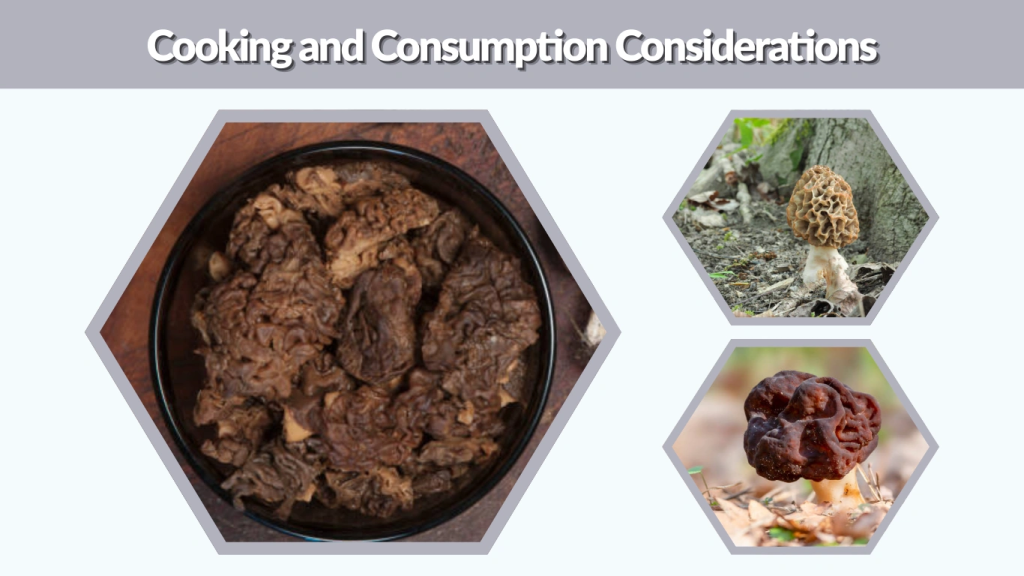
Correct identification is only part of the process. Preparation matters just as much.
Why True Morels Must Be Cooked
True morels contain compounds that can cause digestive upset if eaten raw. Cooking them thoroughly breaks down these compounds and makes them safe to eat. Raw morels should never be consumed.
Why False Morels Should Be Avoided Entirely
Some false morels contain toxins that are not consistently destroyed by cooking. Because toxicity varies by species and individual sensitivity, avoiding false morels altogether is the safest choice.
Common Myths About Morels and False Morels
One common myth is that false morels are safe if cooked properly. This is not reliably true. Another misconception is that color alone can identify a true morel, even though color varies widely in both groups. Some people also believe that if animals eat a mushroom, it must be safe for humans—this is not a reliable indicator.
Conclusion
The difference between morel mushrooms and false morels comes down to careful observation and multiple checks. True morels have a pitted honeycomb cap, a cap attached to the stem, and a completely hollow interior. False morels often show wrinkled caps, loose attachment, or solid or chambered interiors. By using these features together and following a safety-first approach, you can confidently tell them apart. When uncertainty remains, the safest decision is always to leave the mushroom untouched.
FAQs
What is the main difference between morel mushrooms and false morels?
The main difference lies in their structure. True morels have a honeycomb-style cap with pits and ridges, the cap is attached directly to the stem, and the mushroom is completely hollow inside when cut lengthwise. False morels usually have wrinkled or brain-like caps, loose cap attachment, and interiors that are chambered or partially solid.
Are false morels poisonous?
Many false morels are toxic and can cause serious illness. Some species contain toxins that may not be fully destroyed by cooking and can have unpredictable effects on the body. Because of this risk, false morels should be avoided entirely, especially by beginners.
Can false morels ever be completely hollow?
False morels may appear hollow in parts, but they are not completely hollow from top to bottom like true morels. They often contain cottony fibers, multiple chambers, or solid sections inside. A clean, single hollow chamber is a key feature of true morels only.
Do true morels and false morels grow in the same places?
Yes, true morels and false morels can grow in similar springtime habitats, including forests and disturbed ground. Because their environments often overlap, habitat alone cannot be used to identify a mushroom. Physical characteristics must always be checked.
What should I do if I’m not sure whether a mushroom is a true morel?
If you are not completely sure, do not eat the mushroom. Leave it where it is or discard it safely. When it comes to mushroom foraging, guessing is never worth the risk. Learning from experienced foragers or using multiple reliable field guides is strongly recommended.