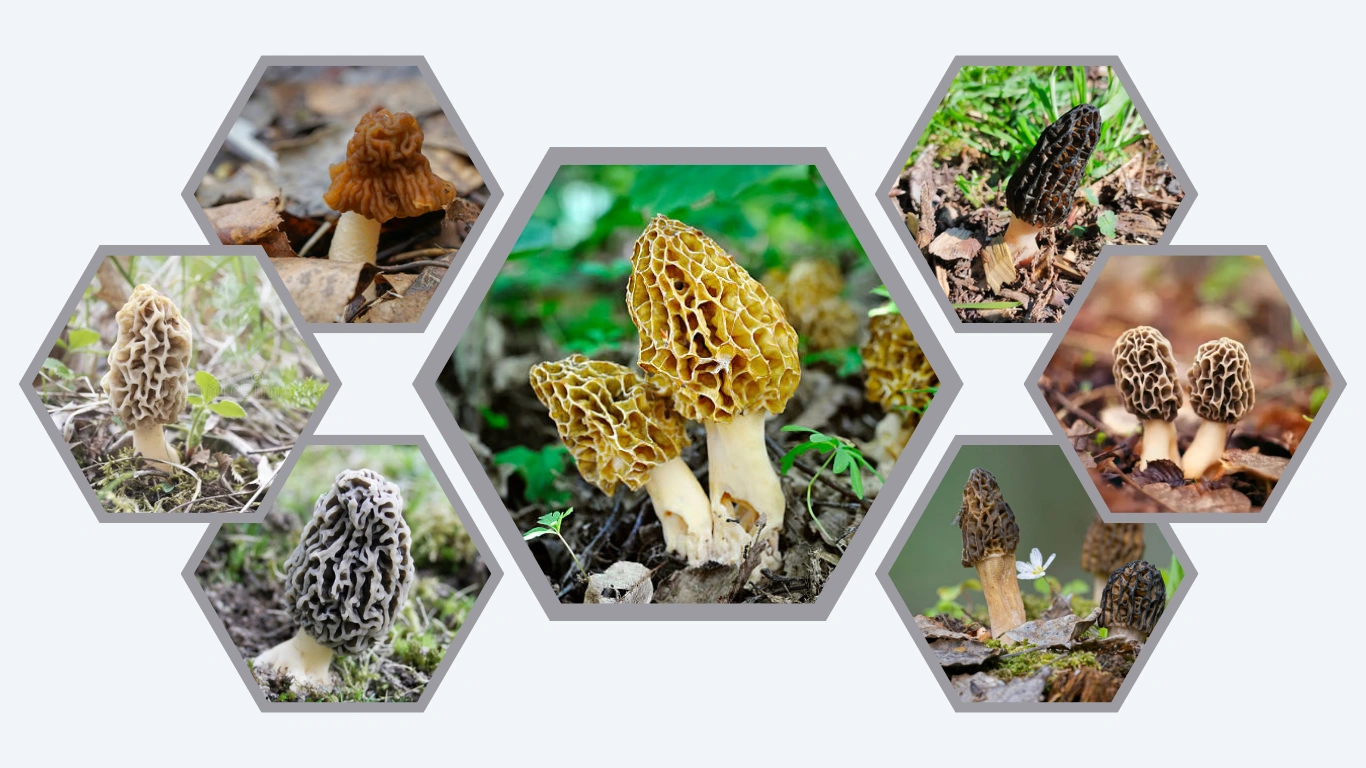
Morel mushrooms are among the most famous and highly prized wild mushrooms in the world, known for their unique honeycomb caps, rich earthy flavor, and short seasonal appearance. They grow naturally in forests, orchards, riverbanks, and even landscaped areas during spring. With dozens of recognized types and forms, morels attract foragers, chefs, and nature lovers alike. Each type varies in color, size, habitat, and growth behavior.
1. Black Morel Mushroom (Morchella elata)
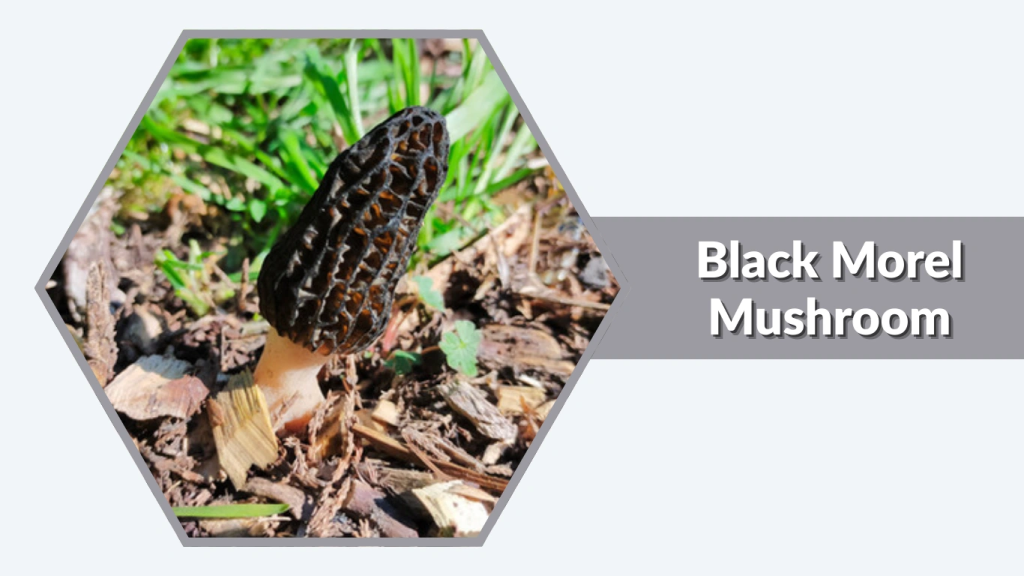
Black morels are one of the most famous and highly prized wild mushrooms in the world. They are best known for their dark, honeycomb-like caps and rich, nutty flavor. These mushrooms usually appear in early to mid-spring, especially in forests, burned areas, and near hardwood trees. Black morels are considered a true delicacy and are widely collected by foragers for cooking, drying, and gourmet dishes.
Identification
- Dark brown to nearly black cap with deep honeycomb-like pits
- Tall, conical or elongated cap shape
- Pale to whitish hollow stem
- Entire mushroom is hollow from tip to base
- Cap is fully attached to the stem
- Size usually ranges from 5–15 cm tall
Habitat
Black morels commonly grow in forests, recently burned areas, riverbanks, and mountainous regions. They are often found near dead or dying trees such as elm, ash, poplar, and pine. Burn sites are especially famous for producing large numbers of black morels the year after a wildfire.
Edibility & Flavor
Black morels are edible and considered among the best tasting wild mushrooms. When properly cooked, they develop a deep, earthy, and slightly smoky flavor. They are popular in soups, sauces, pasta, and meat dishes. They should never be eaten raw, as raw morels can cause stomach discomfort.
Season & Growth Pattern
Black morels usually fruit in early spring when soil temperatures begin to rise. They often appear after rain, growing singly or in small groups. In burn zones, they may grow in large flushes. Their hollow structure helps distinguish them from false morels, which are typically solid or chambered inside.
2. Yellow Morel Mushroom (Morchella esculenta)
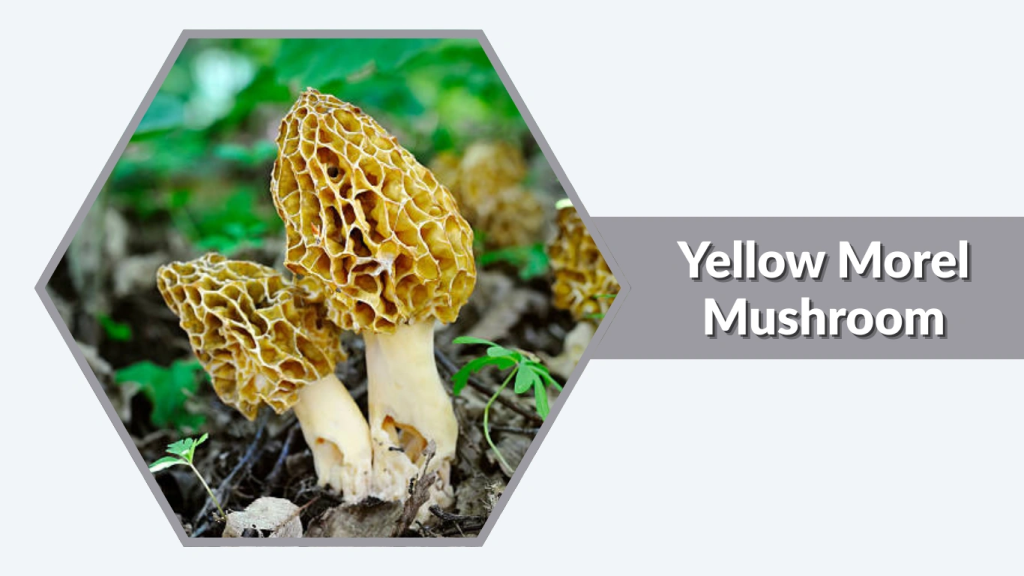
Yellow morels are among the most widely recognized and commonly found true morels. They are famous for their light yellow to golden-brown caps, rounded honeycomb pits, and rich, nutty aroma. This species is especially popular with beginners because it often grows in large numbers and is easier to spot than darker morels. Yellow morels are highly valued in cooking and are considered a springtime gourmet mushroom.
Identification
- Yellow to golden-brown cap with rounded honeycomb pits
- Cap shape is oval to egg-like rather than sharply conical
- Cream to pale white hollow stem
- Entire mushroom is hollow from top to bottom
- Cap is fully attached to the stem
- Usually 6–12 cm tall, sometimes larger
Habitat
Yellow morels commonly grow in deciduous forests, orchards, old gardens, and river valleys. They are often found near elm, ash, apple, tulip poplar, and sycamore trees. Unlike burn-site black morels, yellow morels prefer rich, undisturbed soils with plenty of organic matter and moisture.
Edibility & Flavor
Yellow morels are excellent edible mushrooms and are widely used in gourmet cooking. Their flavor is mildly nutty, earthy, and slightly sweet. They are perfect for frying, stuffing, creamy sauces, and drying for later use. Like all true morels, they must always be cooked before eating.
Season & Growth Pattern
Yellow morels usually appear from mid to late spring. They often grow scattered or in small groups, but in good conditions, large flushes can occur. Warm days, cool nights, and moist soil strongly increase their chances of fruiting.
3. White Morel Mushroom (Morchella deliciosa)
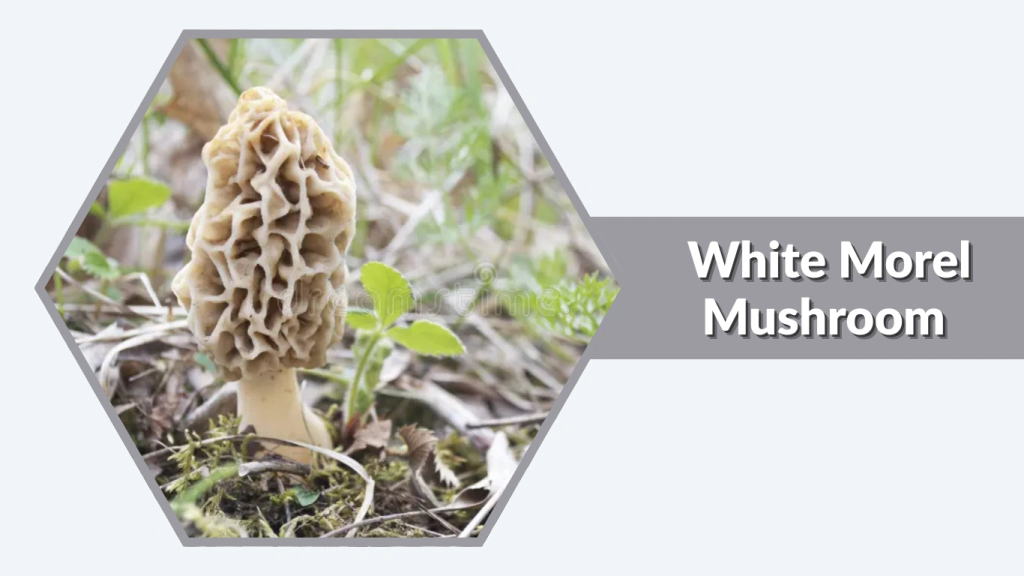
White morels are a lighter-colored variety of true morels, known for their pale caps, delicate structure, and mild aroma. They are less common than black or yellow morels but are still highly valued by mushroom hunters and chefs. Their subtle appearance allows them to blend easily into leaf litter, making them harder to spot in the wild. White morels are appreciated both for their flavor and their attractive look in culinary dishes.
Identification
- Pale cream to light yellow cap with shallow honeycomb pits
- Rounded to slightly oval cap shape
- White to off-white hollow stem
- Entire mushroom is hollow from cap tip to stem base
- Cap is fully attached to the stem
- Usually 5–10 cm tall
Habitat
White morels are usually found in mixed woodlands, moist forest floors, riverbanks, and old orchards. They often grow near hardwood trees such as elm, ash, poplar, and apple. They prefer rich, damp soil and are more likely to appear after steady spring rainfall.
Edibility & Flavor
White morels are edible and considered excellent table mushrooms. Their flavor is mild, nutty, and slightly earthy, making them ideal for light sautés, cream sauces, and egg dishes. They also dry well and retain their aroma when rehydrated. Always cook thoroughly before eating.
Season & Growth Pattern
White morels typically fruit from early to mid-spring. They often appear singly or in small clusters. Because of their pale color, they are easiest to find when the forest floor is still sparse before thick vegetation develops.
4. Half-Free Morel Mushroom (Morchella semilibera)
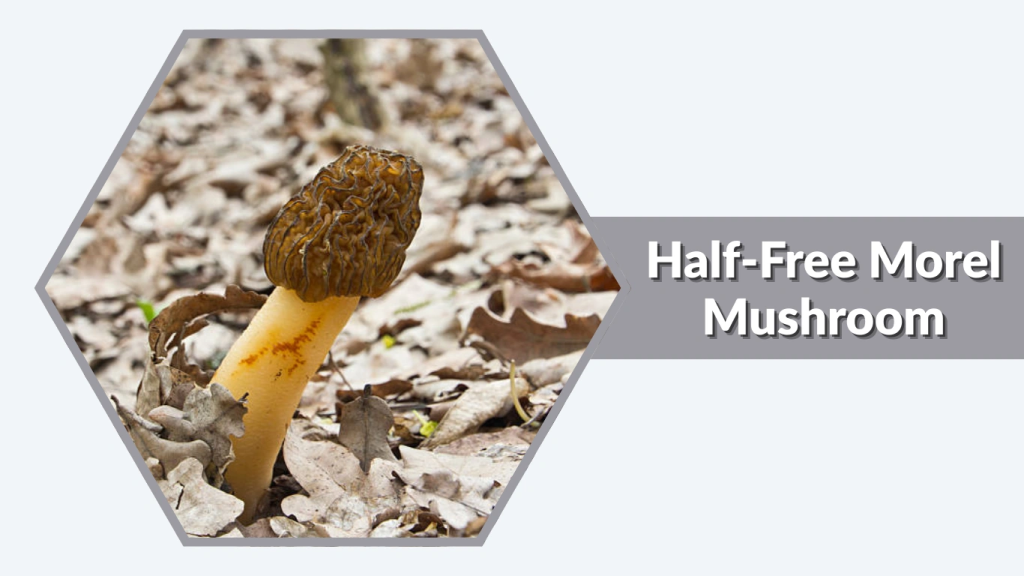
Half-free morels are unique among true morels because only the top half of the cap is attached to the stem, giving them a skirt-like appearance. This unusual structure makes them easy to recognize compared to other morel species. Although smaller and more delicate than black or yellow morels, they are still edible and valued by foragers. They often appear early in the morel season.
Identification
- Cap attached to the stem only at the top, lower half hangs free
- Elongated, conical cap with honeycomb-like pits
- Yellowish-brown to dark brown cap color
- White to pale hollow stem
- Entire stem is hollow
- Usually smaller than most true morels
Habitat
Half-free morels typically grow in hardwood forests, river bottoms, and moist woodland edges. They are often found near ash, elm, maple, and sycamore trees. They prefer damp soils with leaf litter and are commonly seen in undisturbed forest habitats.
Edibility & Flavor
Half-free morels are edible but generally considered less flavorful than black or yellow morels. Their taste is mild and earthy. They are best used mixed with other morels in sautés, soups, and sauces. As with all morels, they must be thoroughly cooked before consumption.
Season & Growth Pattern
Half-free morels usually appear in early spring, often before yellow morels. They grow singly or in small scattered groups. Their lighter weight and hollow structure make them fragile, so they should be handled carefully during harvesting.
5. Thick-Stem Morel Mushroom (Morchella crassipes)
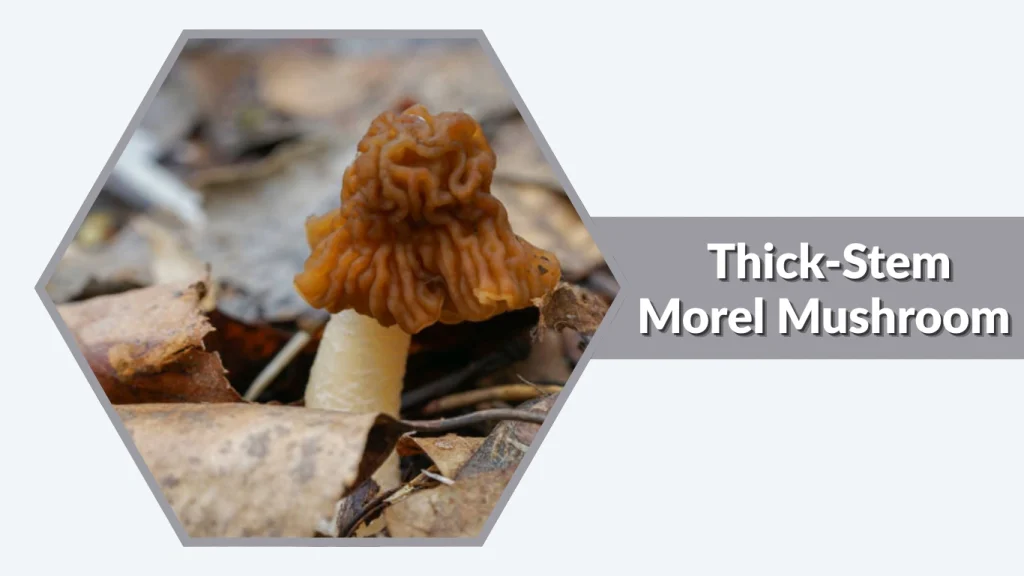
Thick-stem morels are known for their stout, swollen stems and relatively short caps. This heavy-bodied appearance makes them stand out from the more slender black and yellow morels. They are less commonly encountered, but when found, they are considered an exciting discovery for mushroom hunters. Thick-stem morels are true morels and are fully edible when properly cooked.
Identification
- Very thick, swollen white to cream-colored stem
- Short, rounded to slightly conical cap
- Cap surface with deep honeycomb-like pits
- Entire mushroom is hollow inside
- Cap fully attached to the stem
- Overall appearance is chunky and robust
Habitat
Thick-stem morels usually grow in rich forest soils, woodland edges, and floodplain forests. They are often associated with hardwood trees such as elm, ash, and poplar. They prefer moist ground and are most often found in areas with deep leaf litter and good organic content.
Edibility & Flavor
Thick-stem morels are excellent edible mushrooms with a mild, nutty, and earthy flavor. Because of their thick flesh, they are especially good for stuffing, grilling, or slicing into large pieces for sautés. As with all morels, they must be cooked before eating.
Season & Growth Pattern
Thick-stem morels typically appear in mid to late spring. They often grow singly rather than in large clusters. Their sturdy build makes them less fragile than many other morel types, which helps them withstand handling and transport.
6. Thin-Stem Morel Mushroom (Morchella angusticeps)
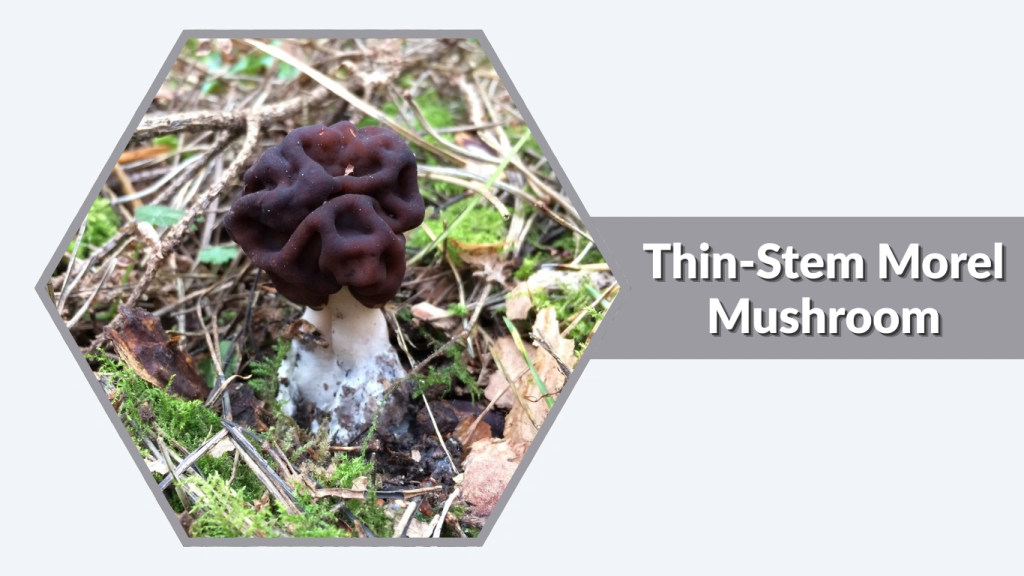
Thin-stem morels are a slender form of true morel, often grouped with black morels but recognized by their narrow stem and sharply conical cap. They are especially common in early spring and are among the first morels to appear in many regions. Their elegant shape and dark ridged caps make them a favorite among experienced foragers.
Identification
- Tall, narrow, hollow stem
- Dark brown to black conical cap
- Deep vertical pits with sharp ridges
- Cap fully attached to the stem
- Entire mushroom hollow from top to base
- Overall appearance slim and elongated
Habitat
Thin-stem morels are most often found in deciduous and mixed forests, particularly around ash, elm, tulip poplar, and hickory trees. They may also grow in recently disturbed soils and old burn areas. Moist ground, warming temperatures, and spring rainfall strongly support their growth.
Edibility & Flavor
Thin-stem morels are edible and highly regarded for their strong, nutty, and earthy flavor. Their thin flesh cooks quickly, making them excellent for light sautés, omelets, and sauces. As always, they must be thoroughly cooked before consumption.
Season & Growth Pattern
Thin-stem morels usually fruit in early to mid-spring. They often grow scattered or in small loose groups. Because of their narrow profile, they can be hidden easily among leaves and grass, requiring careful searching.
7. Gray Morel Mushroom (Morchella vulgaris)
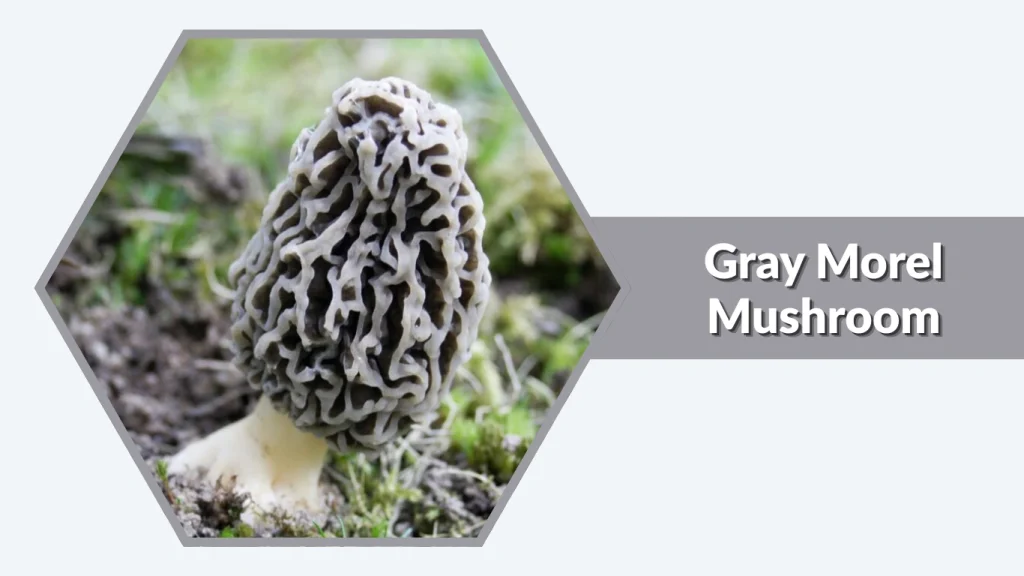
Gray morels are medium-sized true morels recognized by their smoky gray to gray-brown caps and well-defined honeycomb pits. They are often considered a transitional type between black and yellow morels, appearing as the season shifts. Gray morels are prized by foragers for both their distinctive color and their rich culinary value.
Identification
- Gray to gray-brown cap with honeycomb-like pits
- Rounded to slightly conical cap shape
- Pale, hollow stem
- Entire mushroom hollow from top to base
- Cap fully attached to the stem
- Medium size compared to other morels
Habitat
Gray morels commonly grow in mixed woodlands, riverbanks, and forest edges. They are frequently found near elm, ash, sycamore, and poplar trees. They prefer moist, well-drained soil and often appear after steady spring rains.
Edibility & Flavor
Gray morels are edible and considered excellent table mushrooms. Their flavor is rich, earthy, and nutty, falling between the boldness of black morels and the mildness of yellow morels. They work well in sautés, soups, risottos, and cream-based dishes.
Season & Growth Pattern
Gray morels typically appear in mid-spring. They grow singly or in small groups and may fruit in the same areas as black or yellow morels as the season progresses. Their muted color can make them harder to spot on forest floors.
8. Burn-Site Morel Mushroom (Morchella eximia)
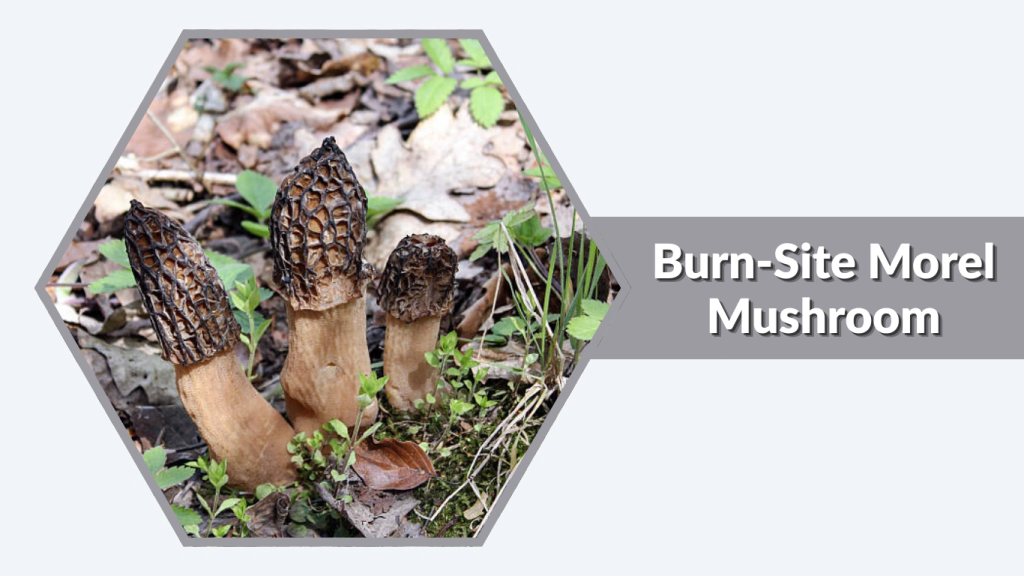
Burn-site morels are famous for appearing in large numbers after wildfires, making them one of the most sought-after morels by commercial and recreational foragers. They are a type of black morel adapted to disturbed, fire-affected environments. Their sudden mass fruiting in burned forests has made them an important seasonal mushroom in many regions.
Identification
- Dark brown to black, conical cap
- Deep, elongated honeycomb pits
- Pale to grayish hollow stem
- Entire mushroom hollow inside
- Cap fully attached to the stem
- Often grows in dense patches
Habitat
Burn-site morels grow primarily in recently burned forests, usually one year after a wildfire. They are commonly found in areas with burned conifers, ash-covered soil, and disturbed ground. They may appear by the thousands in fire zones, often covering hillsides and forest floors.
Edibility & Flavor
Burn-site morels are edible and highly valued. Their flavor is strong, earthy, and slightly smoky, especially when collected from charred landscapes. They are widely dried for storage and used in gourmet cooking, sauces, and soups. They must always be cooked before eating.
Season & Growth Pattern
Burn-site morels typically fruit in spring following a fire, though timing depends on local climate. They often grow in massive flushes rather than scattered individuals. These large outbreaks may last one to three years after a burn, then disappear as vegetation returns.
9. Landscape Morel Mushroom (Morchella importuna)
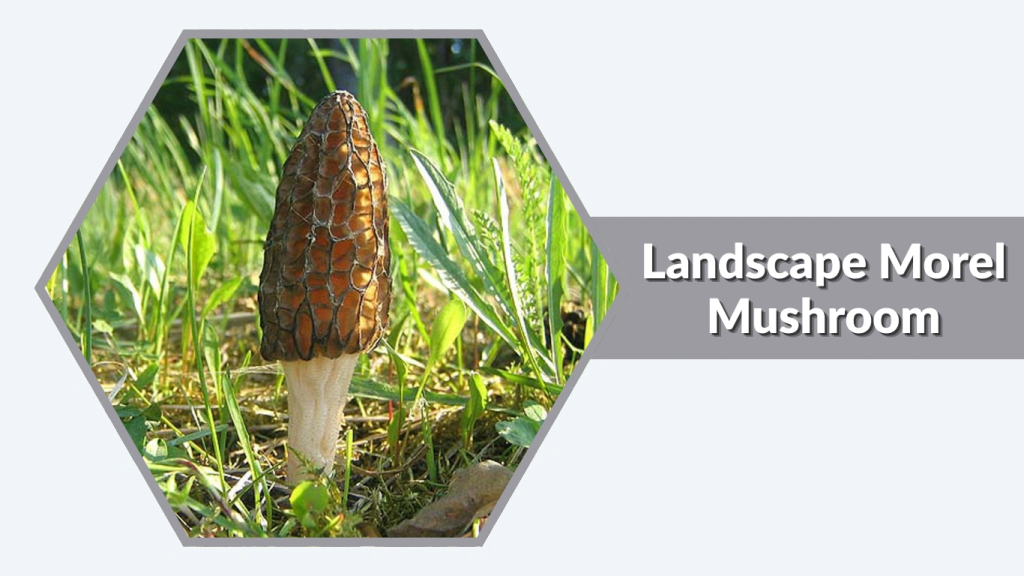
Landscape morels are increasingly common in urban and suburban areas, where they grow in gardens, parks, flower beds, and landscaped wood-chip zones. Unlike many forest morels, this species thrives in human-disturbed environments. They are a black morel type and have become well known because they often appear in large numbers around homes and public spaces.
Identification
- Dark brown to black conical cap
- Deep, vertically arranged honeycomb pits
- Thick, pale hollow stem
- Entire mushroom hollow from top to base
- Cap fully attached to the stem
- Often grows in clusters in wood-chip beds
Habitat
Landscape morels are most often found in landscaped areas such as mulched gardens, playgrounds, roadside plantings, and park flower beds. They are strongly associated with hardwood mulch, wood chips, and recently disturbed soils. They may appear even where no forests are nearby.
Edibility & Flavor
Landscape morels are edible and considered excellent. Their flavor is rich, earthy, and nutty, similar to other black morels. They are commonly sautéed, stuffed, or dried for later use. As with all true morels, they must always be cooked before eating.
Season & Growth Pattern
Landscape morels usually appear in spring, often after rain and warm daytime temperatures. They frequently grow in large, dense clusters rather than singly. Once a good landscaped spot is found, it may continue producing morels for many years.
10. Eastern Morel Mushroom (Morchella americana)
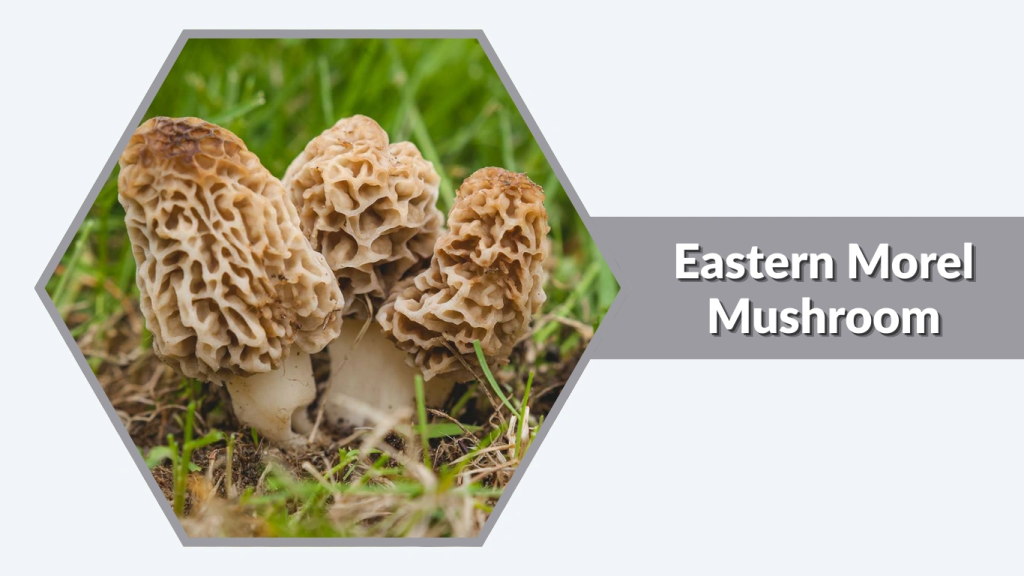
Eastern morels are one of the most widespread true morels in eastern North America. They are often grouped with yellow morels but can vary widely in color, size, and shape. Their adaptability to different forest types and soil conditions makes them one of the most commonly collected morels by spring foragers.
Identification
- Yellowish to yellow-brown honeycomb cap
- Rounded to slightly conical cap shape
- Pale, hollow stem
- Entire mushroom hollow from top to base
- Cap fully attached to the stem
- Medium to large size
Habitat
Eastern morels grow in deciduous forests, floodplains, old orchards, and woodland edges. They are frequently found near elm, ash, sycamore, apple, and tulip poplar trees. They prefer moist soil, warm days, and cool spring nights.
Edibility & Flavor
Eastern morels are excellent edible mushrooms with a mild, nutty, and slightly meaty flavor. They are commonly fried, added to soups, or cooked in cream sauces. Their pleasant taste and availability make them one of the most popular morels for home cooking.
Season & Growth Pattern
Eastern morels typically appear from mid to late spring. They grow singly or in scattered groups, sometimes forming large flushes after good rainfall. As the season progresses, their caps often darken and enlarge.
11. Western Morel Mushroom (Morchella snyderi)
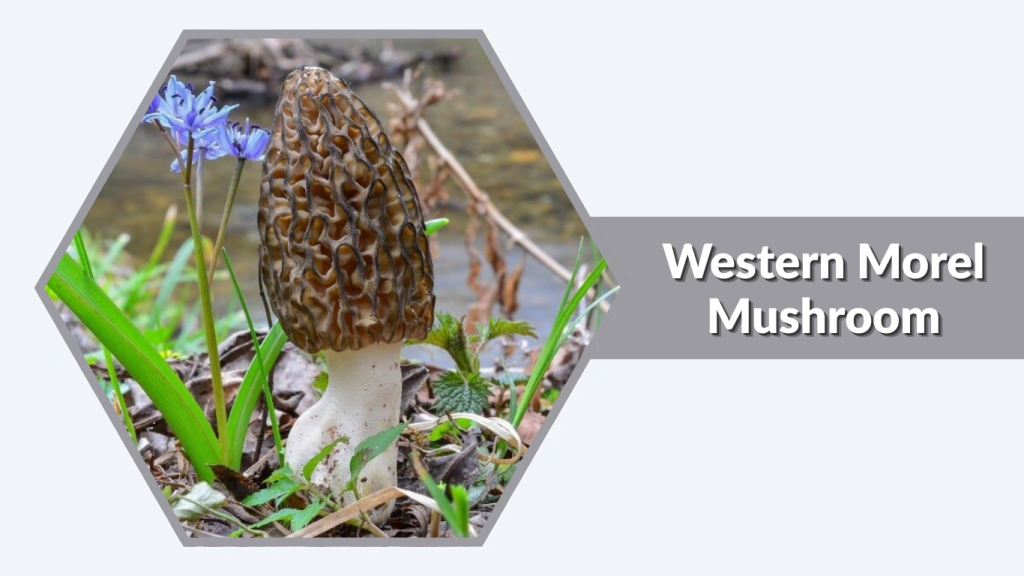
Western morels are a group of true morels commonly found across western North America. They include several closely related species that vary in color from dark gray to brown and sometimes yellowish tones. Western morels are especially famous for their strong association with forested mountains and post-fire environments, where they can appear in massive numbers.
Identification
- Gray-brown to dark brown honeycomb cap
- Conical to oval cap shape
- Pale to grayish hollow stem
- Entire mushroom hollow from cap tip to base
- Cap fully attached to the stem
- Medium to large size
Habitat
Western morels grow in coniferous and mixed forests, mountainous regions, and recently burned areas. They are often found near pine, fir, spruce, aspen, and cottonwood trees. Moist soils, melting snow, and spring warmth strongly influence their fruiting.
Edibility & Flavor
Western morels are edible and highly prized. Their flavor is rich, earthy, and nutty, often considered stronger than many eastern species. They are commonly dried in large quantities and used year-round in sauces, soups, and gourmet dishes.
Season & Growth Pattern
Western morels usually fruit from early to late spring, depending on elevation. They may appear first at lower elevations and later in high mountain zones. In burn areas, they often grow in dense carpets covering large forest sections.
12. Appalachian Morel Mushroom (Morchella angusticeps group)
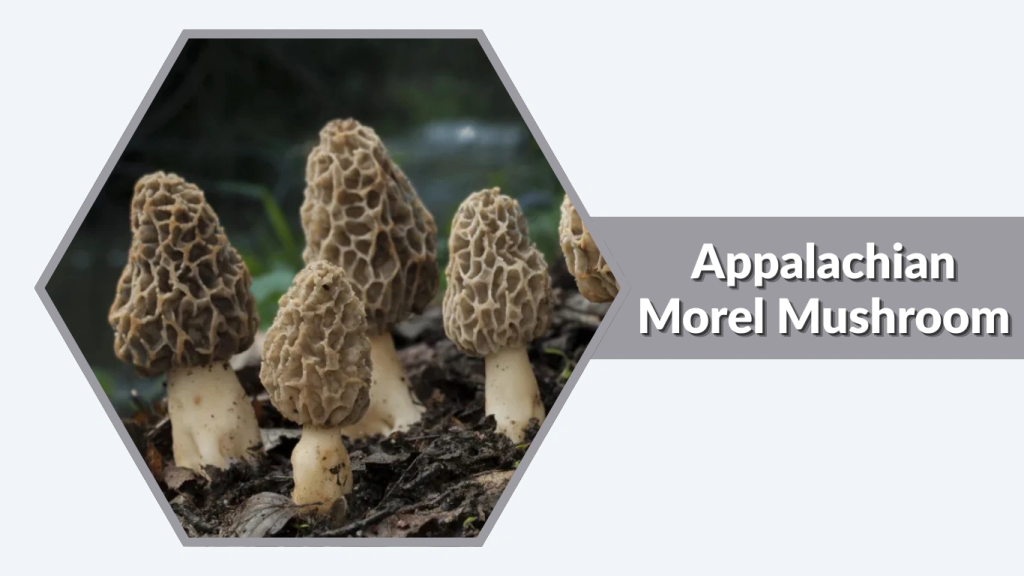
Appalachian morels are commonly found throughout the Appalachian mountain region and surrounding eastern forests. They are often considered part of the black morel complex, showing dark caps with sharp ridges and deep pits. These morels are highly valued by local foragers and are an important seasonal wild food in mountainous hardwood forests.
Identification
- Dark brown to nearly black conical cap
- Deep, narrow honeycomb pits with sharp ridges
- Slender, pale hollow stem
- Entire mushroom hollow inside
- Cap fully attached to the stem
- Generally medium-sized
Habitat
Appalachian morels grow mainly in hardwood forests and mountain woodlands. They are frequently found near tulip poplar, ash, elm, hickory, and oak trees. They prefer well-drained slopes, moist hollows, and forest edges with good sunlight.
Edibility & Flavor
Appalachian morels are edible and considered excellent. Their flavor is rich, nutty, and earthy, similar to other black morels. They are widely sautéed, dried, or added to stews and sauces. Proper cooking is always required.
Season & Growth Pattern
Appalachian morels usually appear in early to mid-spring. They often fruit shortly after the first warm days and good rainfall. They grow singly or in small clusters and may return to the same productive forest areas year after year.
13. Riverbank Morel Mushroom (Morchella species)
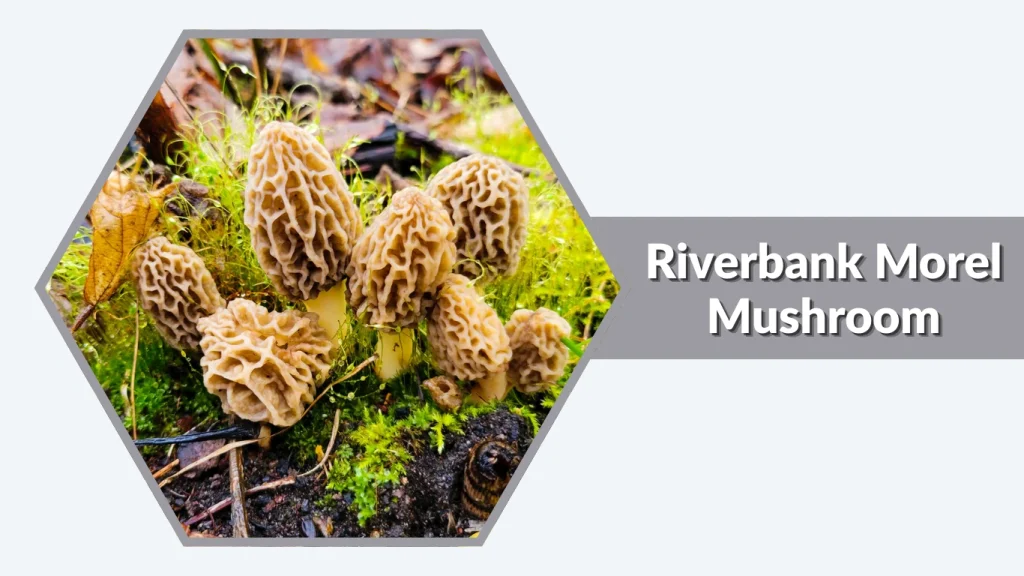
Riverbank morels are true morels that commonly grow along rivers, streams, and floodplains where soil stays moist and nutrient-rich. They are not a single species but a habitat-based group that includes both black and yellow morels. These mushrooms are often larger and more plentiful due to the rich organic matter deposited by seasonal flooding.
Identification
- Honeycomb cap ranging from yellow-brown to dark brown
- Conical to oval cap shape
- Pale, hollow stem
- Entire mushroom hollow inside
- Cap fully attached to the stem
- Often medium to large in size
Habitat
Riverbank morels thrive along river edges, creek beds, floodplains, and lowland forests. They are often found near cottonwood, sycamore, elm, poplar, and willow trees. Moist soil, decaying wood, and spring flooding greatly improve their growing conditions.
Edibility & Flavor
Riverbank morels are edible and excellent in the kitchen. Their flavor is rich, earthy, and sometimes slightly sweet. Because they often grow large and fleshy, they are well suited for stuffing, frying, and creamy dishes. They must always be thoroughly cooked before eating.
Season & Growth Pattern
Riverbank morels usually appear from mid to late spring. They may grow singly, scattered, or in loose clusters. Productive river systems can yield heavy morel harvests year after year when seasonal moisture levels are favorable.
14. Conical Morel Mushroom (Morchella conica)
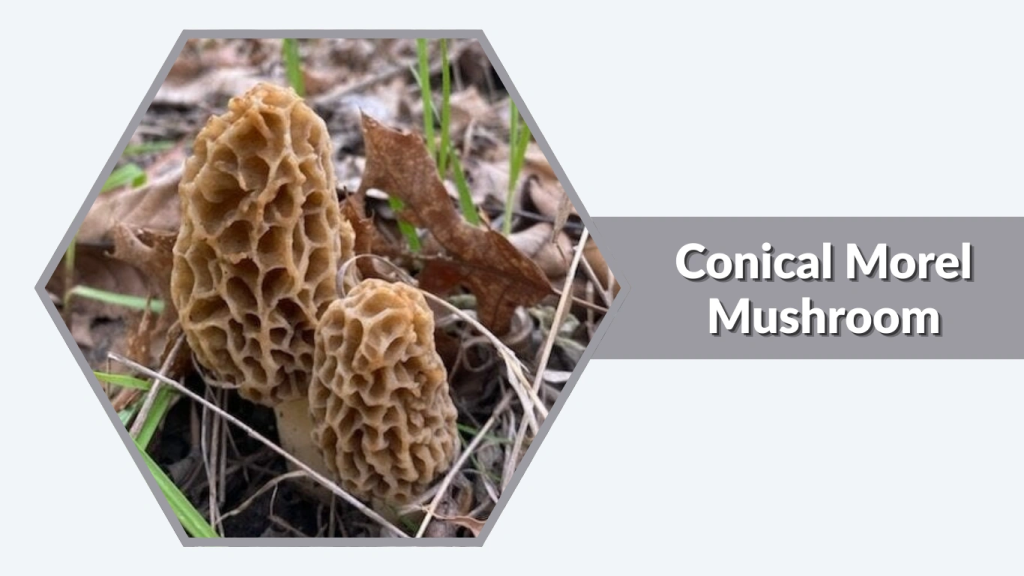
Conical morels are classic true morels known for their sharply pointed, cone-shaped caps and deep, vertical pits. They are often grouped with black morels and are considered one of the earliest morels to appear in spring. Their tall, narrow profile makes them distinctive, especially when growing among leaves and early grasses.
Identification
- Tall, sharply conical cap
- Dark brown to black honeycomb pits
- Pale, hollow stem
- Entire mushroom hollow inside
- Cap fully attached to the stem
- Slender and elongated appearance
Habitat
Conical morels grow in deciduous and mixed forests, burned areas, and forest edges. They are often found near ash, elm, tulip poplar, and conifer trees. They prefer well-drained soils and areas that warm quickly in spring.
Edibility & Flavor
Conical morels are edible and highly prized. Their flavor is strong, nutty, and earthy, typical of black morels. They are excellent sautéed, added to sauces, or dried for long-term storage. They must be cooked thoroughly before consumption.
Season & Growth Pattern
Conical morels usually fruit in early spring. They often appear before yellow morels and may grow singly or in small groups. Their early emergence makes them a favorite target for the first mushroom hunts of the season.
15. Round Morel Mushroom (Morchella rotunda)
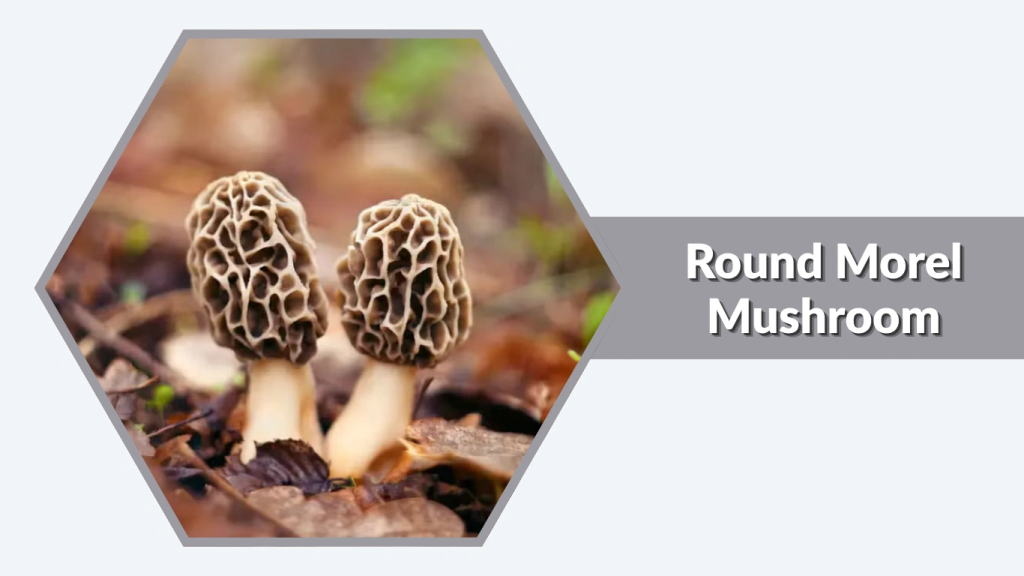
Round morels are a form of true morel recognized by their shorter, more rounded caps compared to the tall conical types. They are often grouped with yellow morels and are appreciated for their plump shape and thick flesh. Their appearance makes them especially attractive for culinary use and stuffing.
Identification
- Rounded to oval cap shape
- Yellow-brown to light brown honeycomb pits
- Thick, pale hollow stem
- Entire mushroom hollow inside
- Cap fully attached to the stem
- Shorter and broader than conical morels
Habitat
Round morels grow in deciduous forests, old orchards, river bottoms, and woodland clearings. They are often found near apple trees, elm, ash, sycamore, and poplar. They prefer rich, moist soil with good organic content.
Edibility & Flavor
Round morels are edible and excellent table mushrooms. Their flavor is mild, nutty, and earthy. Their thick flesh holds up well to frying, stuffing, and baking. As with all true morels, they should always be cooked before eating.
Season & Growth Pattern
Round morels typically appear in mid to late spring. They often grow singly or in scattered groups. Because of their lighter color, they are easier to spot once leaf litter begins to thin and grasses start to emerge.
16. Early Morel Mushroom (Morchella esculenta group)
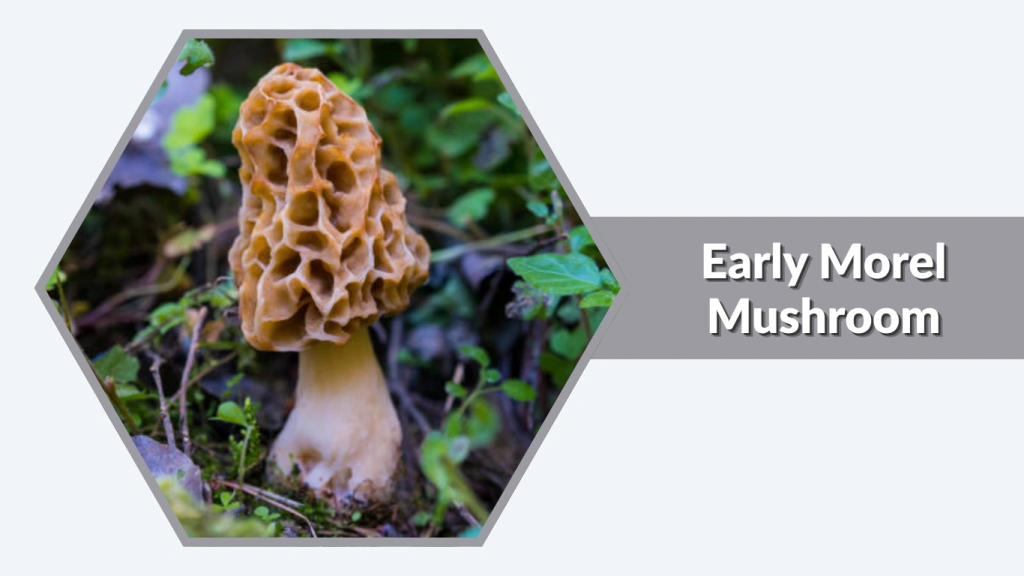
Early morels are among the first true morels to appear each year, marking the beginning of the spring mushroom season. They are usually darker in color and smaller in size compared to later-fruiting morels. Because they emerge when the forest floor is still sparse, early morels are highly prized by eager foragers.
Identification
- Small to medium-sized honeycomb cap
- Dark gray to brown coloration
- Conical to slightly rounded cap shape
- Pale, hollow stem
- Entire mushroom hollow from top to base
- Cap fully attached to the stem
Habitat
Early morels grow in warming woodlands, south-facing slopes, riverbanks, and forest edges. They are often found near elm, ash, cottonwood, and tulip poplar trees. Areas that warm quickly after winter are especially productive.
Edibility & Flavor
Early morels are edible and considered excellent. Their flavor is rich, earthy, and nutty, often more intense than later-season yellow morels. They are commonly sautéed, added to soups, or cooked with eggs. Thorough cooking is always required.
Season & Growth Pattern
Early morels usually fruit in early spring, sometimes as soon as soil temperatures begin to rise. They often grow singly or in small scattered groups. Their appearance often signals that peak morel season is approaching.
17. Late Morel Mushroom (Morchella esculenta group)
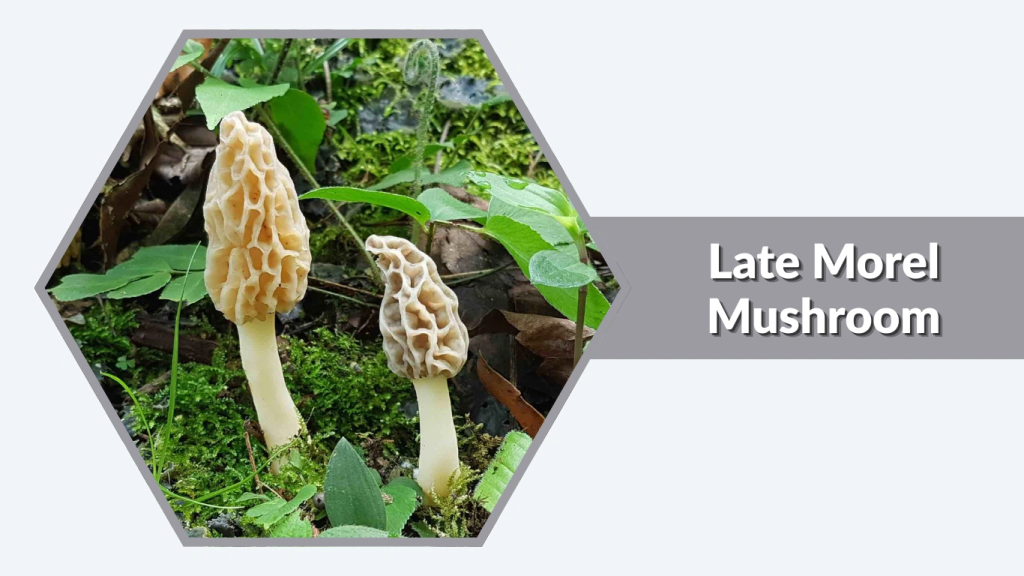
Late morels are true morels that appear toward the end of the morel season, often when spring is turning into early summer. They are usually larger, lighter in color, and fleshier than early morels. Because many foragers have already stopped searching by this time, late morels are sometimes overlooked despite their excellent quality.
Identification
- Medium to large honeycomb cap
- Yellow to light brown coloration
- Rounded to oval cap shape
- Thick, pale hollow stem
- Entire mushroom hollow inside
- Cap fully attached to the stem
Habitat
Late morels grow in higher elevations, cooler forests, and shaded woodland areas. They are often found near aspen, cottonwood, sycamore, and mixed hardwoods. Moist soils and lingering cool temperatures support their growth late into the season.
Edibility & Flavor
Late morels are edible and highly valued. Their flavor is mild, nutty, and meaty, making them excellent for frying, grilling, and creamy dishes. Their larger size makes them especially good for stuffing. They must always be cooked before eating.
Season & Growth Pattern
Late morels usually fruit from late spring into early summer, depending on elevation and climate. They often grow singly or in small groups and may appear in areas where earlier morels were not present.
18. Natural Morel Mushroom (Morchella species)
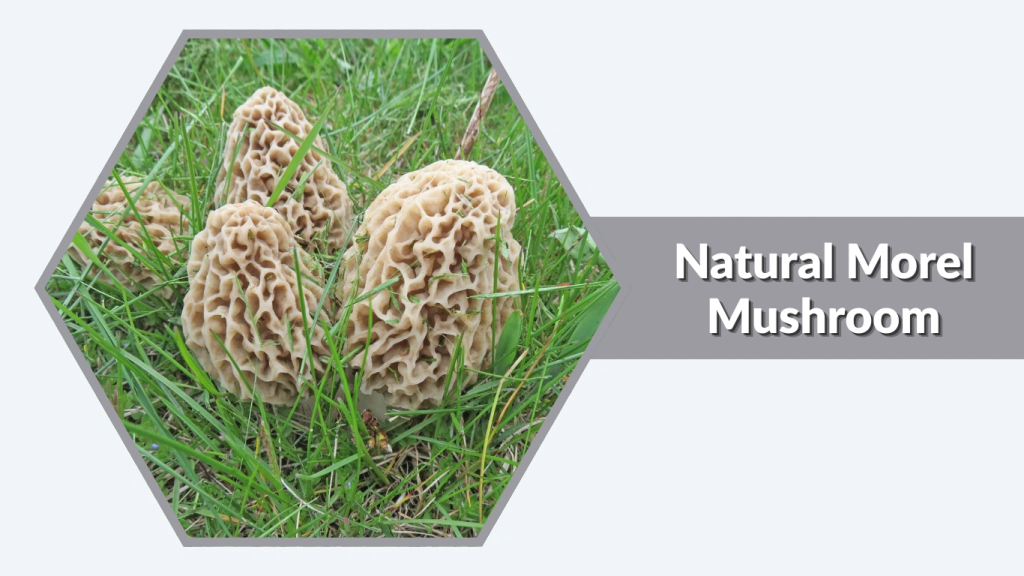
Natural morels refer to true morels that grow in undisturbed, wild forest ecosystems rather than landscaped or burn-site environments. They include both black and yellow types and are often considered the classic “wild” morels that mushroom hunters seek in traditional woodland settings. These mushrooms are valued for their natural growth conditions and consistent quality.
Identification
- Honeycomb cap ranging from yellow to dark brown
- Conical to rounded cap shape
- Pale, hollow stem
- Entire mushroom hollow inside
- Cap fully attached to the stem
- Size varies by species and environment
Habitat
Natural morels grow in deciduous and mixed forests, woodland edges, and old-growth ecosystems. They are commonly found near elm, ash, oak, poplar, and beech trees. Rich forest soil, leaf litter, and seasonal moisture create ideal growing conditions.
Edibility & Flavor
Natural morels are edible and prized worldwide. Their flavor is earthy, nutty, and aromatic, often reflecting the soil and tree associations where they grow. They are widely sautéed, dried, and used in gourmet cooking. Proper cooking is essential.
Season & Growth Pattern
Natural morels typically appear from early to late spring. They grow singly or scattered, sometimes forming productive patches that return annually. Good rainfall and warming temperatures strongly influence their fruiting success.
19. Garden Morel Mushroom (Morchella importuna)
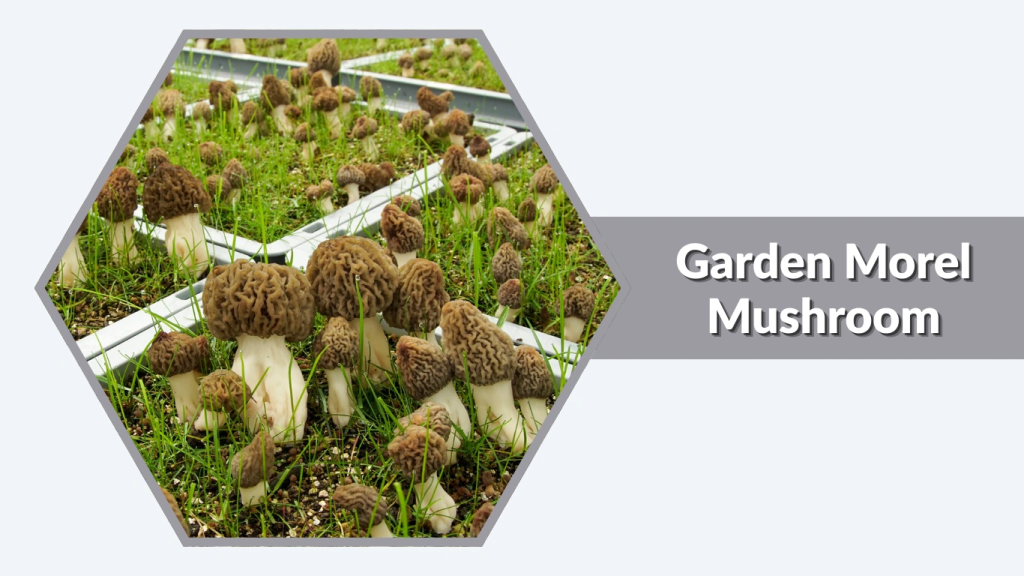
Garden morels are true morels that commonly appear in home gardens, raised beds, compost-rich soils, and landscaped yards. They are closely related to landscape morels and have adapted well to human-altered environments. Many people discover their first morels growing unexpectedly in their own backyards.
Identification
- Dark brown to black honeycomb cap
- Conical to oval cap shape
- Thick, pale hollow stem
- Entire mushroom hollow inside
- Cap fully attached to the stem
- Often grows in clusters
Habitat
Garden morels thrive in mulched gardens, compost areas, flower beds, and near ornamental trees. They are strongly associated with wood chips, bark mulch, and disturbed soil. They may grow near homes, parks, and urban green spaces.
Edibility & Flavor
Garden morels are edible and excellent in flavor. They have a rich, earthy, and nutty taste similar to black morels. They are well suited for frying, sauces, and drying. As with all morels, they must always be thoroughly cooked.
Season & Growth Pattern
Garden morels usually fruit in spring, especially after rain followed by warm days. They often appear in dense clusters and may return year after year in the same garden beds. Their sudden appearance in urban areas makes them especially surprising to find.
20. Mountain Morel Mushroom (Morchella species)
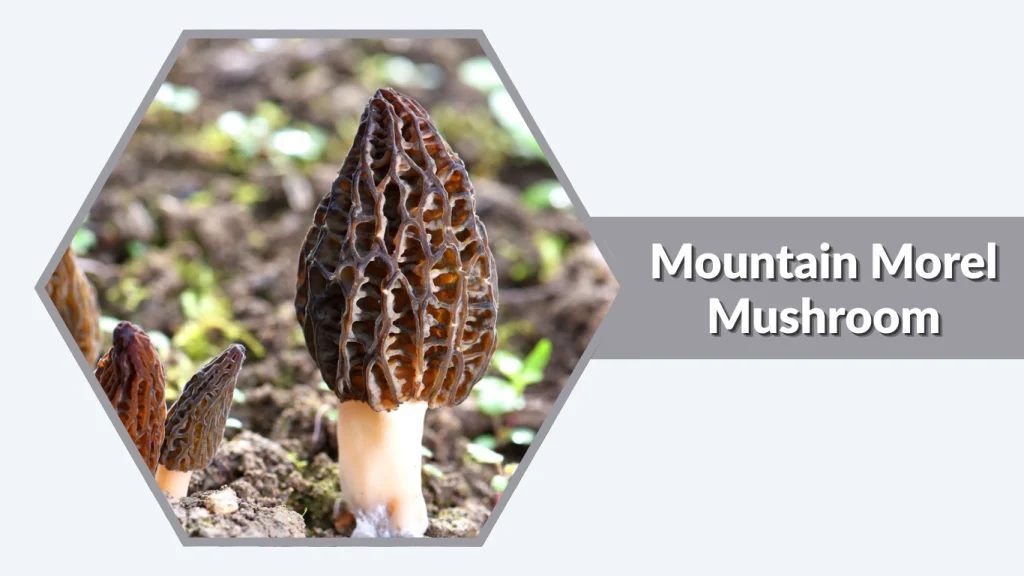
Mountain morels are true morels that grow in highland and mountainous regions, often at varying elevations. They include both black and yellow morel types adapted to cooler temperatures and changing snowmelt conditions. These morels are especially well known in mountainous areas of western North America and parts of Europe and Asia.
Identification
- Honeycomb cap ranging from gray-brown to yellow-brown
- Conical to oval cap shape
- Pale to grayish hollow stem
- Entire mushroom hollow inside
- Cap fully attached to the stem
- Medium to large size
Habitat
Mountain morels grow in mountain forests, alpine foothills, and high-elevation valleys. They are often found near pine, fir, spruce, aspen, and poplar trees. Snowmelt moisture and gradually warming soil strongly influence their fruiting.
Edibility & Flavor
Mountain morels are edible and highly prized. Their flavor is rich, earthy, and nutty, often described as very aromatic. They are widely harvested, dried, and used in gourmet cooking. They must always be cooked thoroughly before eating.
Season & Growth Pattern
Mountain morels usually appear from mid-spring into early summer, depending on elevation. They often fruit later at higher altitudes as snow recedes. They may grow scattered or, in favorable conditions, in large productive patches.
21. Valley Morel Mushroom (Morchella species)
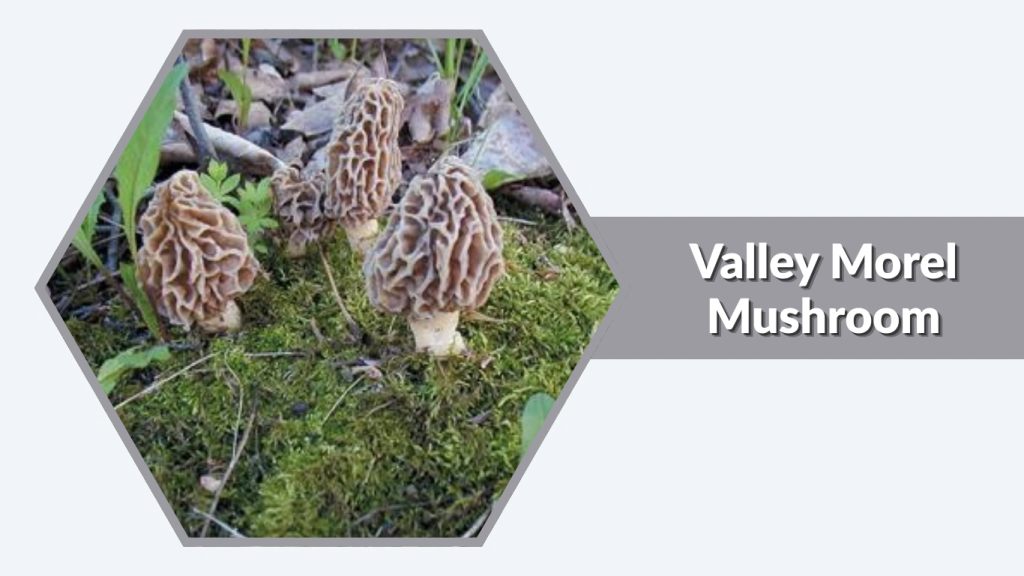
Valley morels are true morels that grow in lowland valleys, floodplains, and broad river basins where soils are deep and nutrient-rich. They often grow larger and fleshier than many upland morels due to the fertile ground. Valley morels are popular among foragers because productive valley floors can yield heavy seasonal harvests.
Identification
- Yellow-brown to dark brown honeycomb cap
- Rounded to conical cap shape
- Thick, pale hollow stem
- Entire mushroom hollow inside
- Cap fully attached to the stem
- Often larger and fleshier than hillside morels
Habitat
Valley morels thrive in river valleys, lowland forests, floodplains, and agricultural edges. They are commonly found near cottonwood, elm, sycamore, poplar, and apple trees. Moist, fertile soil and seasonal flooding create ideal growing conditions.
Edibility & Flavor
Valley morels are edible and excellent for cooking. Their flavor is mild, nutty, and earthy. Because they are often large and thick, they are especially good for stuffing, frying, and baking. Proper cooking is always required.
Season & Growth Pattern
Valley morels typically fruit from mid to late spring. They may grow singly, scattered, or in loose clusters. Some valley locations produce morels reliably each year when spring moisture is sufficient.
22. Meadow Morel Mushroom (Morchella species)
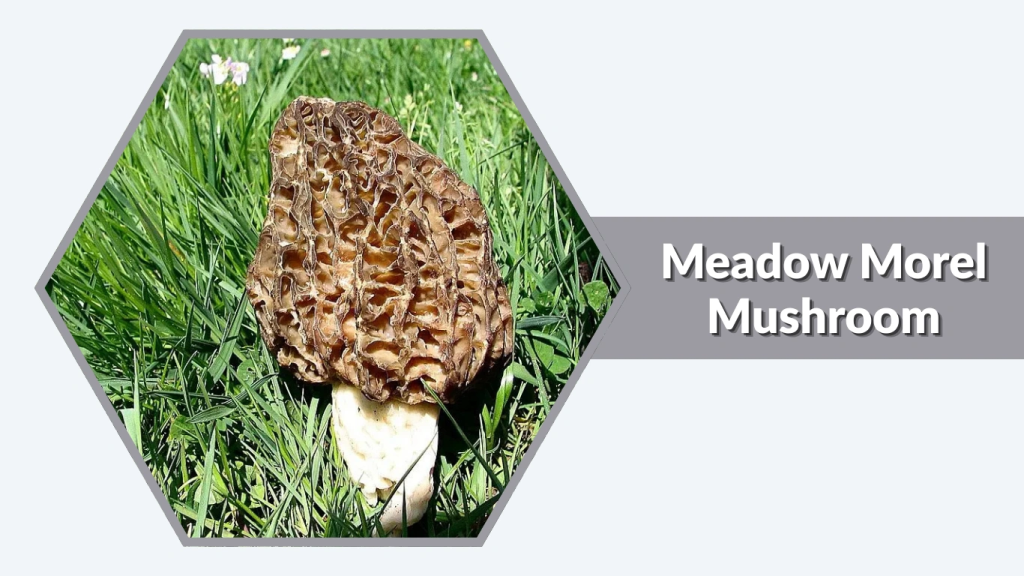
Meadow morels are true morels that appear in open grassy areas rather than deep forests. They are often found in meadows, pastures, open fields, and lightly wooded grasslands. Their lighter surroundings can make them easier to spot, and they are appreciated for their clean growth conditions and good flavor.
Identification
- Yellow to light brown honeycomb cap
- Rounded to slightly conical cap shape
- Pale, hollow stem
- Entire mushroom hollow inside
- Cap fully attached to the stem
- Medium size, often standing above grass
Habitat
Meadow morels grow in open meadows, pasturelands, grassy riverbanks, and lightly wooded fields. They are often found near scattered trees such as apple, elm, ash, and poplar. Well-drained but moist soil supports their development.
Edibility & Flavor
Meadow morels are edible and valued for their mild, nutty, and earthy flavor. They are excellent sautéed, fried, or added to soups. Because they often grow in cleaner, grassy areas, they may require less debris cleaning before cooking. Always cook before eating.
Season & Growth Pattern
Meadow morels usually appear in mid to late spring. They often grow singly or in small scattered groups. Warm days following rain strongly increase their chances of fruiting in open habitats.
23. Orchard Morel Mushroom (Morchella species)
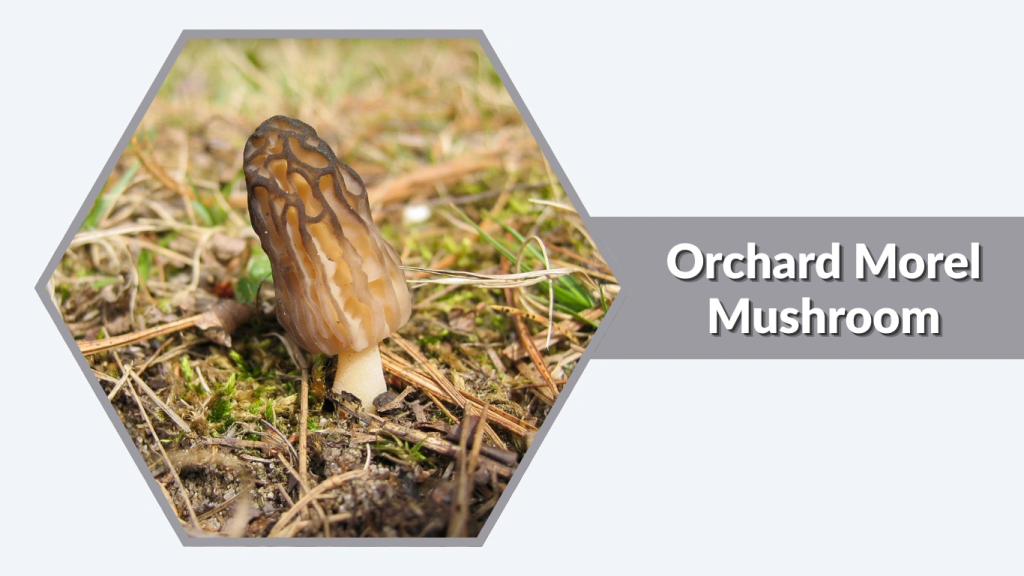
Orchard morels are true morels commonly found in old apple orchards, abandoned farms, and fruit tree groves. They are especially famous for growing around dying or long-neglected apple trees. Because of this strong association, many experienced foragers specifically search former orchards when hunting morels.
Identification
- Yellow to yellow-brown honeycomb cap
- Rounded to oval cap shape
- Pale to cream-colored hollow stem
- Entire mushroom hollow from top to base
- Cap fully attached to the stem
- Medium to large size
Habitat
Orchard morels thrive in old apple orchards, pear groves, abandoned farmland, and grassy areas with fruit trees. They are often found near apple, pear, cherry, and sometimes elm trees. Slightly acidic soil, decaying roots, and spring moisture create ideal conditions.
Edibility & Flavor
Orchard morels are edible and highly prized. Their flavor is mild, nutty, and slightly sweet, making them excellent for frying, cream sauces, and stuffing. Because orchard morels are often large and clean, they are favorites for gourmet cooking. Always cook thoroughly.
Season & Growth Pattern
Orchard morels usually fruit in mid to late spring. They often appear scattered across grassy orchard floors, sometimes in productive repeating spots year after year. Warm days after rainfall greatly increase their growth.
24. Forest Morel Mushroom (Morchella species)
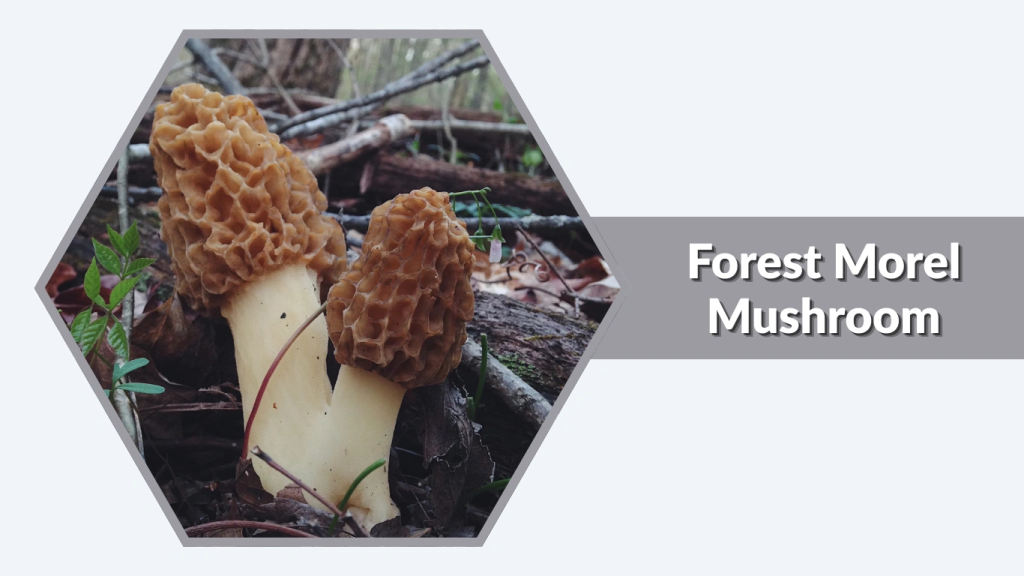
Forest morels are the classic wild morels found deep in natural woodlands. They include both black and yellow morel types and are most often what people imagine when thinking of traditional morel hunting. These mushrooms thrive in balanced forest ecosystems and are highly valued for their rich flavor and reliable seasonal appearance.
Identification
- Honeycomb cap ranging from yellow to dark brown
- Conical to rounded cap shape
- Pale, hollow stem
- Entire mushroom hollow inside
- Cap fully attached to the stem
- Size varies from small to large depending on conditions
Habitat
Forest morels grow in deciduous and mixed forests, wooded slopes, and mature woodland floors. They are commonly found near elm, ash, oak, beech, poplar, and hickory trees. Deep leaf litter, decaying wood, and moist spring soil provide ideal growing conditions.
Edibility & Flavor
Forest morels are edible and among the most flavorful true morels. Their taste is rich, earthy, nutty, and aromatic. They are excellent sautéed, added to soups, pasta, and sauces, or dried for later use. They must always be cooked before eating.
Season & Growth Pattern
Forest morels usually appear from early to late spring. They often grow singly or scattered, sometimes forming productive patches that return annually. Rainfall followed by warm days strongly influences their fruiting success.
25. Aspen Morel Mushroom (Morchella species)
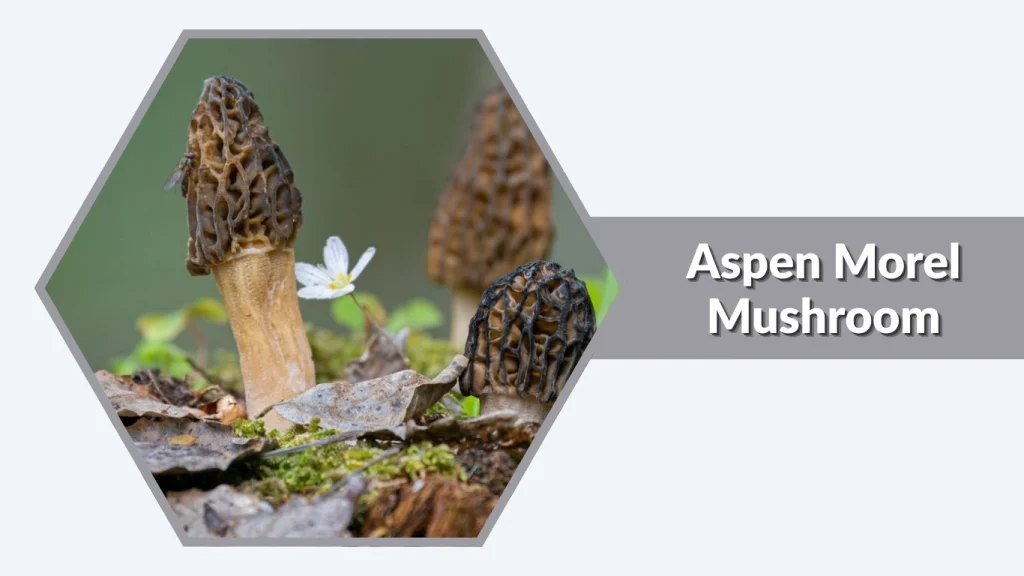
Aspen morels are true morels strongly associated with aspen and poplar trees. They are especially well known in northern forests and mountainous regions, where large aspen stands create excellent morel habitat. These mushrooms are highly sought after because productive aspen groves can produce heavy morel flushes year after year.
Identification
- Yellow-brown to gray-brown honeycomb cap
- Conical to oval cap shape
- Pale to off-white hollow stem
- Entire mushroom hollow inside
- Cap fully attached to the stem
- Medium to large size
Habitat
Aspen morels grow in aspen groves, poplar forests, mountain valleys, and mixed woodlands. They are commonly found near trembling aspen, bigtooth aspen, and cottonwood trees. Moist soils, decaying leaves, and cool spring temperatures favor their growth.
Edibility & Flavor
Aspen morels are edible and highly valued. Their flavor is rich, earthy, and nutty, often described as very aromatic. They are excellent sautéed, added to sauces, or dried for long-term storage. They must always be thoroughly cooked.
Season & Growth Pattern
Aspen morels usually appear in mid to late spring, often later at higher elevations. They may grow scattered or in large productive patches beneath aspen stands. Some aspen sites are famous for producing morels consistently each season.
26. Elm Morel Mushroom (Morchella species)
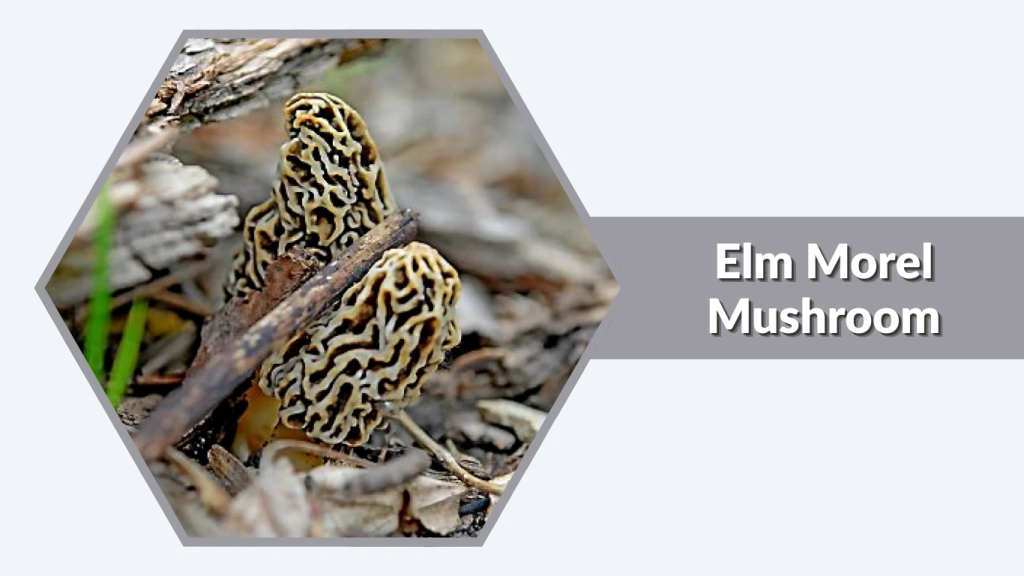
Elm morels are true morels closely associated with elm trees, especially dying or recently dead elms. They are among the most famous “indicator” morels because their presence often signals underground decay around elm roots. Foragers frequently search for sick or fallen elm trees when looking for early-season morels.
Identification
- Yellow-brown to light brown honeycomb cap
- Rounded to slightly conical cap shape
- Pale, hollow stem
- Entire mushroom hollow inside
- Cap fully attached to the stem
- Medium to large size
Habitat
Elm morels grow in deciduous forests, river bottoms, parks, and old woodlands where elm trees are present. They are often found near dying, dead, or recently fallen elms. Moist soil and decaying roots strongly encourage their growth.
Edibility & Flavor
Elm morels are edible and considered excellent. Their flavor is mild, nutty, and earthy, making them ideal for frying, soups, and creamy dishes. Because they often appear early and in large numbers, they are among the most collected morels. Always cook thoroughly.
Season & Growth Pattern
Elm morels usually fruit in early to mid-spring. They often appear in clusters around the base of elm trees. Once a productive elm site is found, it may continue producing morels for several years.
27. Apple Orchard Morel Mushroom (Morchella species)
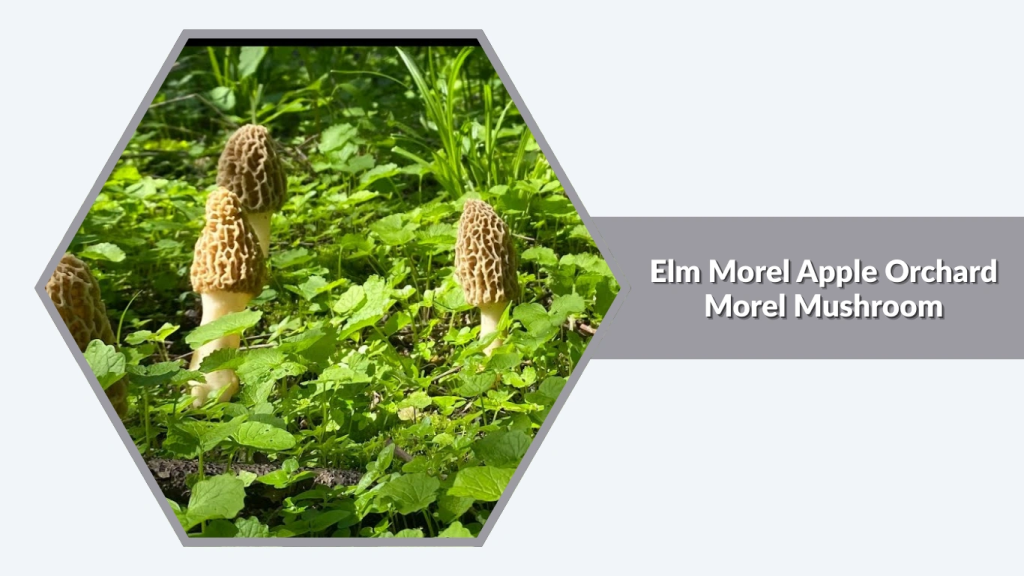
Apple orchard morels are true morels strongly linked to old or abandoned apple orchards. They are famous for appearing around aging apple trees, where underground root decay and rich soil create perfect growing conditions. Many experienced foragers consider old apple orchards some of the most reliable places to find large, high-quality morels.
Identification
- Yellow to yellow-brown honeycomb cap
- Rounded to oval cap shape
- Pale, hollow stem
- Entire mushroom hollow inside
- Cap fully attached to the stem
- Often medium to large and well-formed
Habitat
Apple orchard morels grow in old apple orchards, abandoned farmland, grassy fields with fruit trees, and rural homesteads. They are most often found near dying or long-neglected apple trees. Soft soil, decaying roots, and spring moisture strongly support their growth.
Edibility & Flavor
Apple orchard morels are edible and highly prized. Their flavor is mild, nutty, and slightly sweet, making them excellent for frying, stuffing, and creamy sauces. Because they are often large and clean, they are favorites among gourmet mushroom hunters. Always cook before eating.
Season & Growth Pattern
Apple orchard morels usually fruit in mid to late spring. They often grow scattered across orchard floors, sometimes returning to the same spots each year. Warm days after steady rain greatly increase their appearance.
28. Black Landscape Morel Mushroom (Morchella importuna)
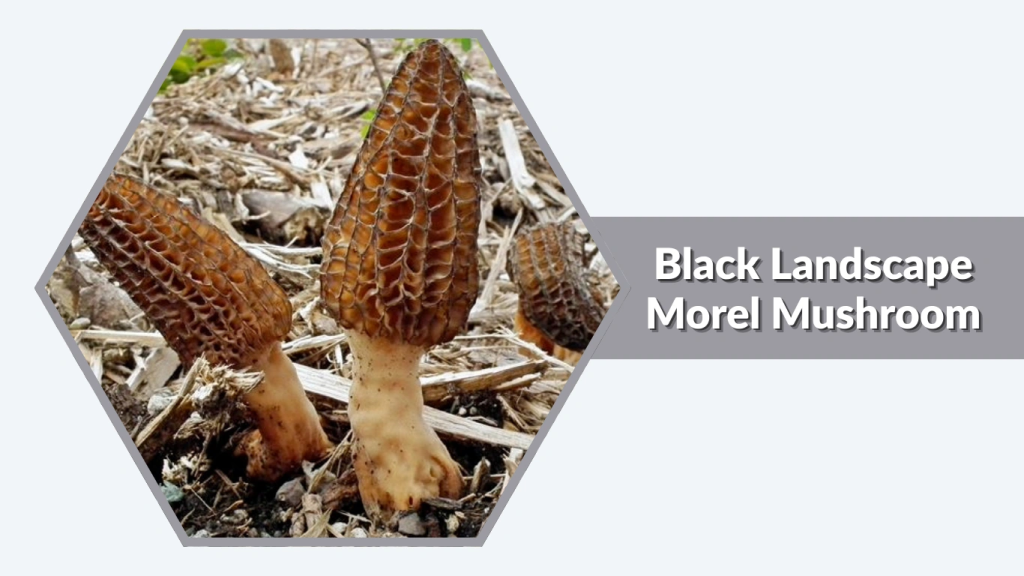
Black landscape morels are a dark-colored form of landscape morels that thrive in urban and suburban environments. They are commonly found in mulched gardens, decorative wood-chip beds, parks, and roadside plantings. Their sudden appearance in city environments has made them one of the most surprising and exciting morels for many people.
Identification
- Very dark brown to nearly black honeycomb cap
- Conical cap shape with deep pits
- Thick, pale hollow stem
- Entire mushroom hollow inside
- Cap fully attached to the stem
- Often grows in dense clusters
Habitat
Black landscape morels grow in landscaped areas such as flower beds, playgrounds, parks, and around newly planted trees. They are strongly associated with hardwood mulch and wood chips. Disturbed soils and added organic material encourage their growth.
Edibility & Flavor
Black landscape morels are edible and highly valued. Their flavor is rich, earthy, and nutty, similar to wild black morels. They are excellent sautéed, added to sauces, or dried. As with all true morels, they must always be cooked before eating.
Season & Growth Pattern
Black landscape morels usually appear in spring after rainfall and warming temperatures. They often fruit in large clusters and may return to the same landscaped areas for many consecutive years.
29. Burned Forest Morel Mushroom (Morchella species)
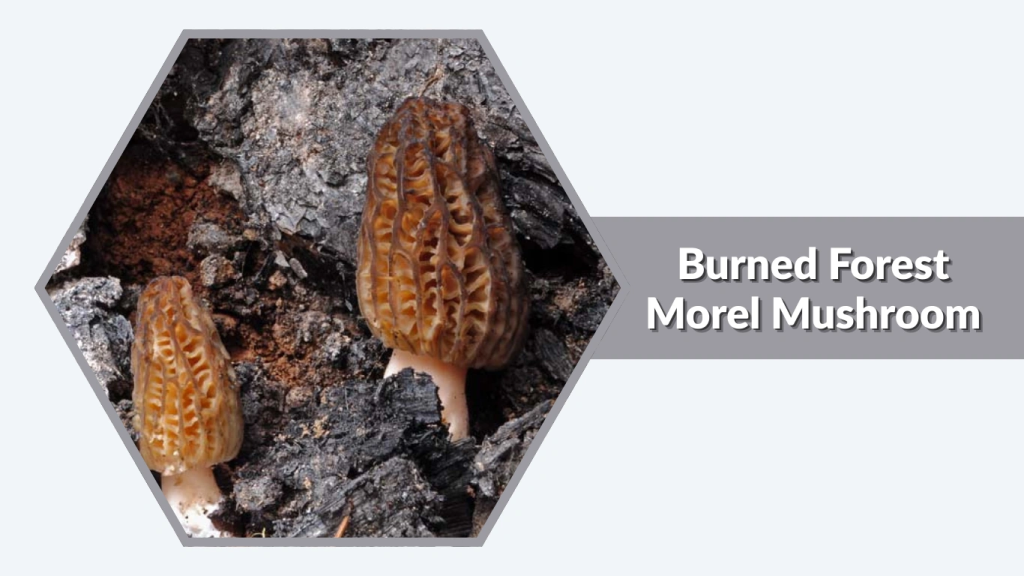
Burned forest morels are true morels that appear in natural forest areas after wildfires. They are closely related to burn-site morels and are famous for producing massive flushes in fire-damaged woodlands. These morels play an important ecological role by helping recycle nutrients in burned soils.
Identification
- Dark brown to black honeycomb cap
- Conical to elongated cap shape
- Pale to grayish hollow stem
- Entire mushroom hollow inside
- Cap fully attached to the stem
- Often grows in large numbers
Habitat
Burned forest morels grow in recently burned woodlands, especially where conifer trees once dominated. They are commonly found in pine, fir, spruce, and mixed forests after wildfires. Ash-rich soil, sunlight exposure, and reduced plant competition support their growth.
Edibility & Flavor
Burned forest morels are edible and highly prized. Their flavor is rich, earthy, and sometimes slightly smoky. They are widely harvested for drying and commercial sale and are excellent in soups, sauces, and sautéed dishes. They must always be cooked before eating.
Season & Growth Pattern
Burned forest morels usually fruit in spring following a wildfire and may continue appearing for one to three years. They often grow in dense carpets rather than isolated individuals, making burned areas some of the most productive morel sites.
30. Giant Morel Mushroom (Morchella species)
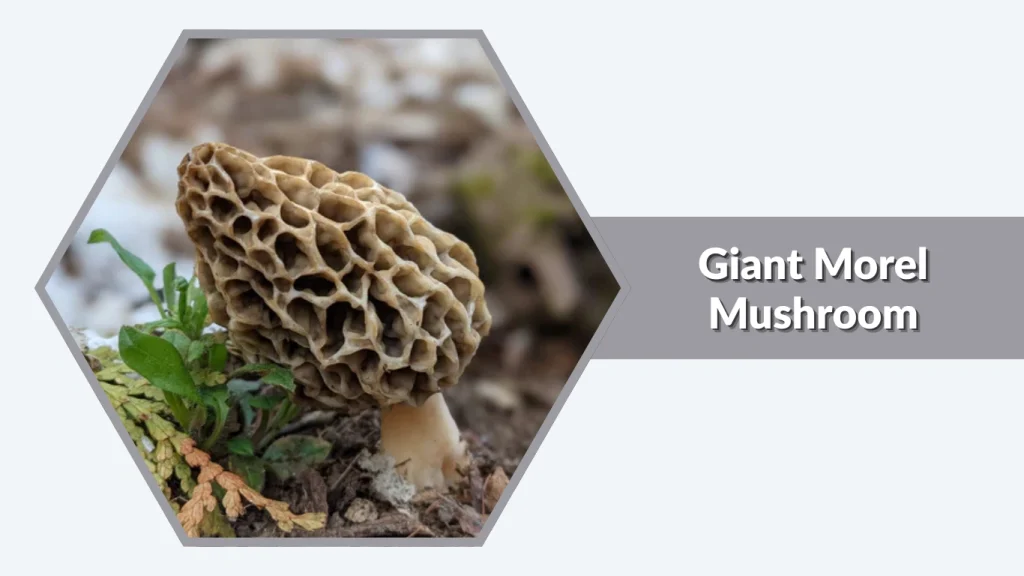
Giant morels are exceptionally large true morels that stand out because of their impressive size and thick, fleshy structure. They are not a single species but a name often given to unusually big morels found in ideal growing conditions. These mushrooms are especially exciting for foragers because a single specimen can weigh as much as several normal morels combined.
Identification
- Very large honeycomb cap
- Yellow-brown to dark brown coloration
- Thick, pale hollow stem
- Entire mushroom hollow inside
- Cap fully attached to the stem
- Much larger than typical morels
Habitat
Giant morels grow in rich forest soils, river valleys, floodplains, and old orchards where nutrients and moisture are abundant. They are often found near elm, sycamore, cottonwood, poplar, and apple trees. Deep soil and consistent spring moisture encourage oversized growth.
Edibility & Flavor
Giant morels are edible and highly prized. Their flavor is mild, nutty, and earthy, and their thick flesh makes them excellent for stuffing, grilling, and slicing into large pieces for cooking. As with all morels, they must always be cooked before eating.
Season & Growth Pattern
Giant morels usually appear in mid to late spring. They often grow singly rather than in clusters. When conditions are perfect, they can reach remarkable sizes, making them memorable finds for mushroom hunters.
31. Dwarf Morel Mushroom (Morchella species)
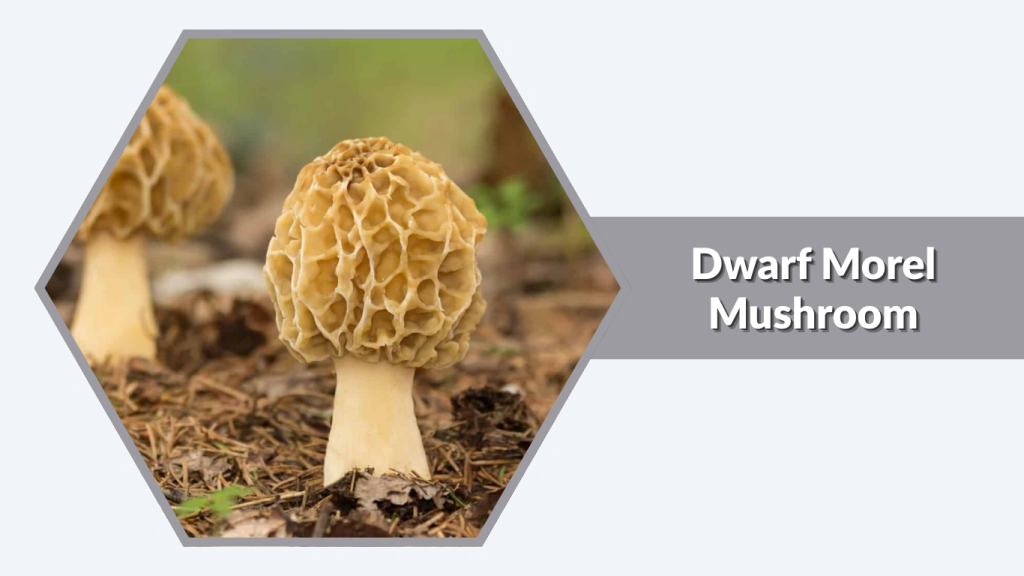
Dwarf morels are very small true morels that are easily overlooked because of their size. Despite being tiny, they have the same honeycomb structure and hollow interior as larger morels. They are often found early in the season or in less fertile soils, where growth is limited.
Identification
- Very small honeycomb cap
- Gray-brown to dark brown coloration
- Short, pale hollow stem
- Entire mushroom hollow inside
- Cap fully attached to the stem
- Much smaller than common morels
Habitat
Dwarf morels grow in woodlands, forest edges, grassy clearings, and disturbed soils. They are often found near young trees, sandy soils, or areas with limited nutrients. Moisture combined with cool spring temperatures supports their development.
Edibility & Flavor
Dwarf morels are edible and safe to eat when properly cooked. Their flavor is earthy and nutty but milder due to their small size. They are best collected in groups and used in soups, omelets, or mixed dishes rather than alone.
Season & Growth Pattern
Dwarf morels usually fruit in early to mid-spring. They often grow singly or in small scattered groups. Because of their size, careful searching is needed to spot them among leaves and grass.
32. Common Morel Mushroom (Morchella esculenta)
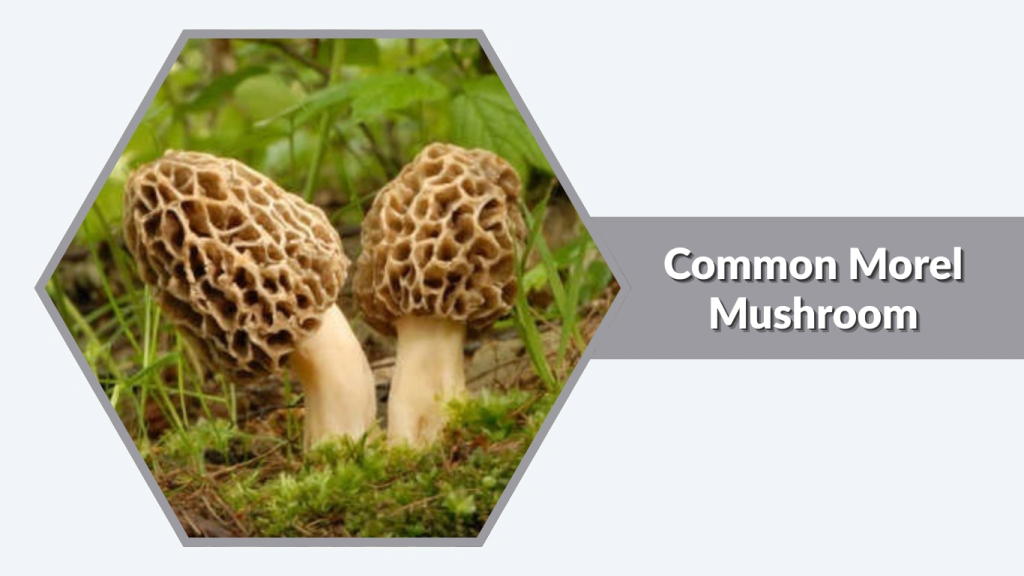
Common morels are the best-known and most widely distributed true morels in the world. They are often what people mean when they simply say “morel mushroom.” With their golden-brown honeycomb caps and rich aroma, common morels are among the most sought-after wild edible mushrooms and are highly prized in kitchens worldwide.
Identification
- Yellow to golden-brown honeycomb cap
- Rounded to oval cap shape
- Pale, hollow stem
- Entire mushroom hollow from top to base
- Cap fully attached to the stem
- Medium to large size
Habitat
Common morels grow in deciduous forests, old orchards, woodland edges, river bottoms, and parks. They are frequently found near elm, ash, apple, sycamore, and poplar trees. Moist, well-drained soil and spring warmth strongly encourage their growth.
Edibility & Flavor
Common morels are edible and considered a gourmet mushroom. Their flavor is nutty, earthy, and slightly meaty. They are excellent fried, sautéed, added to sauces, or dried for later use. They must always be thoroughly cooked before eating.
Season & Growth Pattern
Common morels usually appear from mid to late spring. They grow singly or in scattered groups and may return to the same productive locations year after year when conditions remain favorable.
FAQs
Are all morel mushrooms safe to eat?
True morels are edible, but they must always be cooked before eating. Raw or undercooked morels can cause stomach upset in some people. It’s also very important to correctly identify true morels, because false morels can be toxic and may cause serious health problems if consumed.
When is the best time to find morel mushrooms?
Morels usually appear in spring when daytime temperatures warm and the soil becomes moist. Early morels can show up in early spring, while yellow and larger morels are more common in mid to late spring. Timing varies by climate, elevation, and rainfall patterns.
Where do morel mushrooms commonly grow?
Morels grow in deciduous forests, old orchards, riverbanks, burned areas, and even landscaped gardens. They are often found near elm, ash, apple, poplar, and sycamore trees. Moist, well-drained soil and decaying organic matter create the best growing conditions.
How can you tell true morels from false morels?
True morels have a honeycomb cap with deep pits, and the entire mushroom is hollow from tip to base. False morels usually have wrinkled or lobed caps and are solid or chambered inside. Cutting the mushroom lengthwise is one of the safest identification methods.
Can morel mushrooms be grown at home?
Growing morels at home is difficult, but not impossible. Some people succeed using outdoor beds, wood chips, or specially designed kits. Results are unpredictable, and it may take months or even years. Most morels are still harvested from wild or semi-natural environments.