
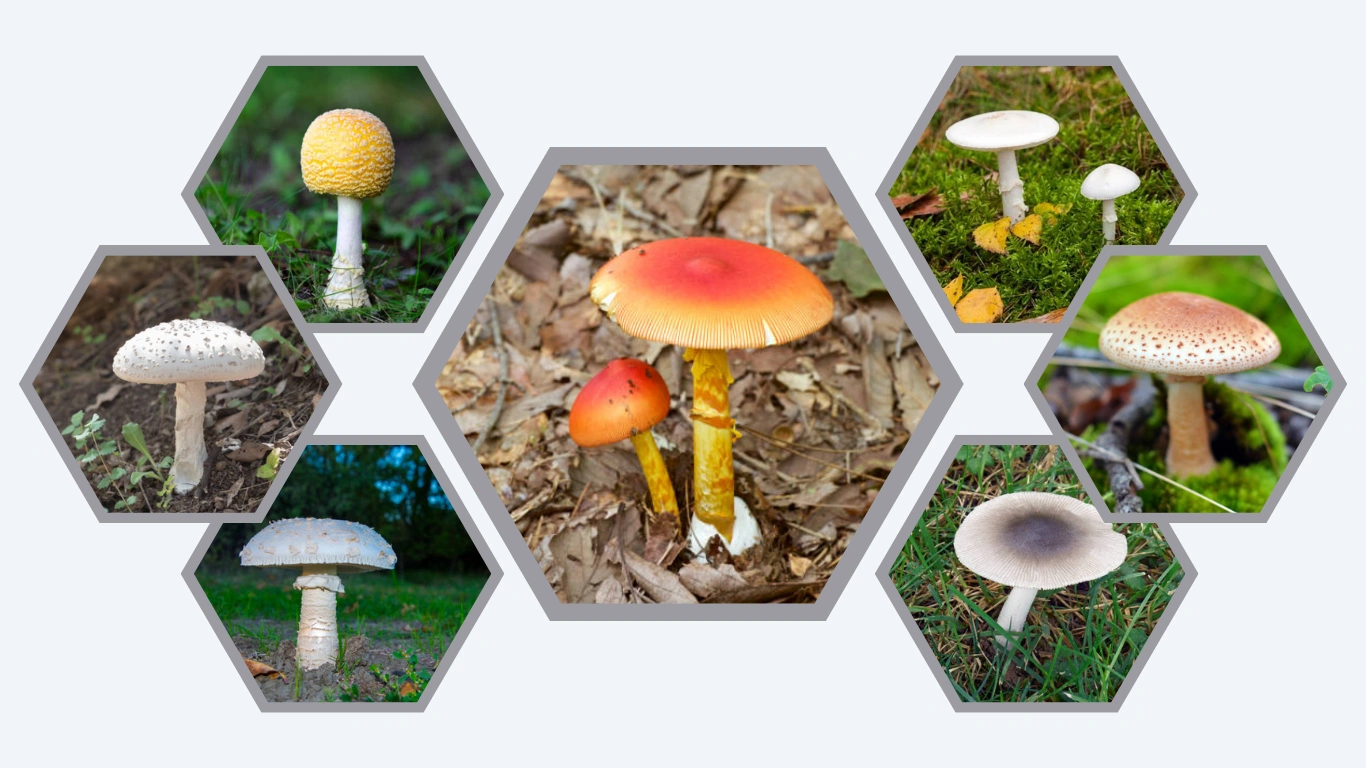
Amanita mushrooms are among the most famous and feared fungi in the world, known for their striking beauty and extreme toxicity. This large genus includes some of the deadliest mushrooms ever discovered, as well as a few rare edible species. Amanitas are commonly found in forests, where they form close relationships with trees and play an important ecological role. Because many species look similar, they are often misidentified, making them especially dangerous for inexperienced mushroom foragers.
1. Amanita muscaria (Fly Agaric)
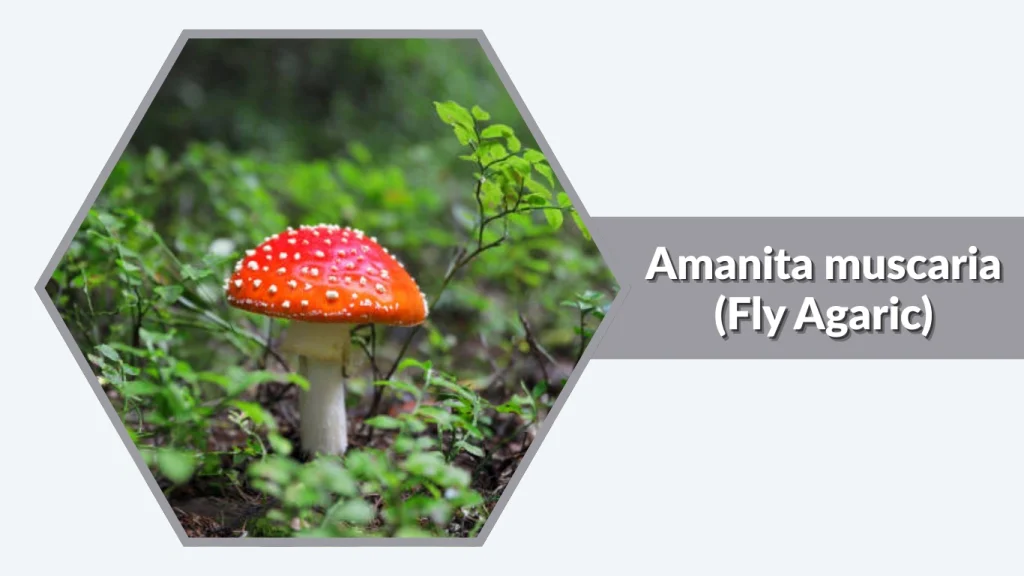
Amanita muscaria is one of the most famous and easily recognized mushrooms in the world. Known for its bright red cap with white spots, it appears widely in forests across the Northern Hemisphere and is often associated with fairy-tale imagery. Despite its attractive appearance, this mushroom is toxic and has a long history of cultural, religious, and folkloric significance.
Identification
- Bright red to orange-red cap covered with white warty spots
- Cap usually 8–20 cm wide, becoming flatter with age
- White, free gills under the cap
- White stalk with a noticeable ring
- Bulbous base with white volva remnants
- Flesh is white and does not change color when cut
Habitat
Amanita muscaria grows in association with trees, especially birch, pine, spruce, and fir. It is commonly found in temperate and boreal forests, appearing on the ground in scattered groups from late summer through autumn, particularly after rainfall.
Toxicity
This species contains psychoactive and toxic compounds such as muscimol and ibotenic acid. Consuming it can cause nausea, confusion, hallucinations, and muscle twitching. Severe poisoning is rare, but it is not considered safe to eat and should always be avoided.
Cultural significance
The fly agaric has been featured in folklore, art, and mythology for centuries. It is often depicted in fairy tales, video games, and illustrations of enchanted forests. Historically, some northern cultures reportedly used it in ritual practices due to its psychoactive effects.
2. Amanita phalloides (Death Cap)
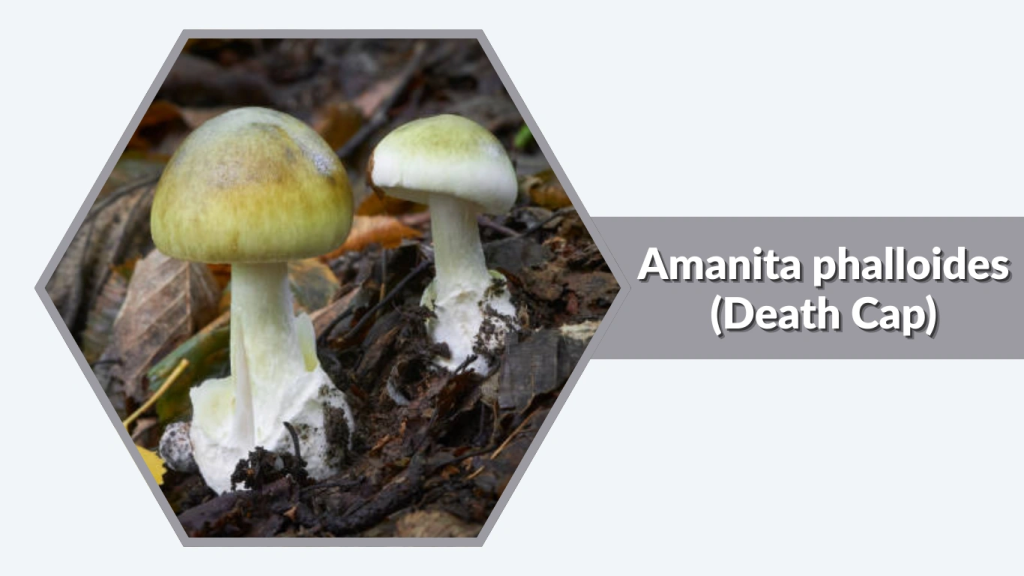
Amanita phalloides is considered the most deadly mushroom in the world and is responsible for the majority of fatal mushroom poisonings. It has a deceptively mild appearance, often resembling edible species, which makes it especially dangerous. Native to Europe, it has spread to many other parts of the world through introduced trees.
Identification
- Cap olive-green, yellow-green, or sometimes brownish, usually smooth and slightly sticky when wet
- Cap diameter typically 5–15 cm, becoming flatter with age
- White, crowded, free gills
- White stalk with a hanging ring
- Large white sac-like volva at the swollen base
- Flesh white and unchanged when cut
Habitat
Amanita phalloides grows in hardwood and mixed forests, especially with oak, chestnut, beech, and pine. It appears on soil from late summer to autumn and often grows singly or in small groups.
Toxicity
This mushroom contains amatoxins, which cause severe liver and kidney damage. Symptoms may be delayed for 6–24 hours and can include vomiting, diarrhea, dehydration, and organ failure. Without rapid medical treatment, poisoning is frequently fatal.
Look-alikes
The death cap is often confused with edible mushrooms such as puffballs when young or greenish Russula and Volvariella species. Its white gills and prominent volva are key warning features that help distinguish it from many edible look-alikes.
3. Amanita virosa (Destroying Angel)
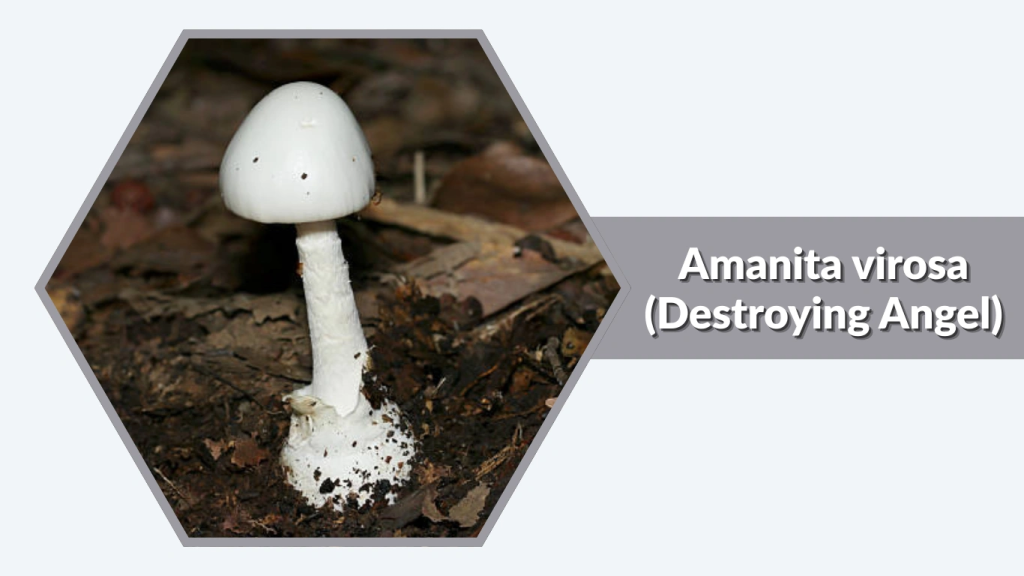
Amanita virosa is a highly poisonous white Amanita species commonly known as the destroying angel. Its pure white, elegant appearance hides extremely potent toxins that make it one of the most lethal mushrooms in the world. Even small amounts can cause severe, often fatal, organ damage if consumed.
Identification
- Pure white, smooth cap, often 5–12 cm wide
- Cap initially conical, later becoming convex to flat
- White, free gills that are densely packed
- Slender white stalk with a fragile ring
- Bulbous base enclosed in a white sac-like volva
- White flesh that does not change color when cut
Habitat
Amanita virosa grows in coniferous and mixed forests, especially with spruce and pine. It appears from summer to autumn, often growing alone or scattered on forest floors.
Toxicity
This species contains powerful amatoxins that destroy liver and kidney tissue. Early symptoms may be mild but are followed by severe gastrointestinal distress and organ failure. Immediate medical treatment is critical in suspected poisoning cases.
Distinguishing features
The destroying angel is often mistaken for edible white mushrooms. Its combination of white cap, white gills, ring on the stalk, and a clear volva at the base are essential features used to separate it from safe species.
4. Amanita bisporigera (Eastern Destroying Angel)
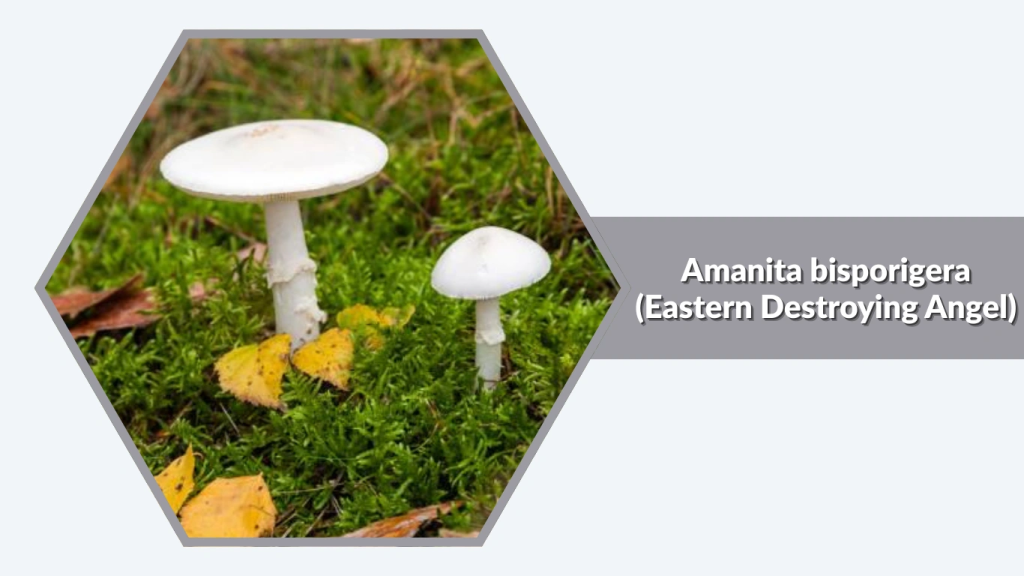
Amanita bisporigera is a deadly North American Amanita species closely related to the European destroying angels. It is responsible for numerous fatal poisonings due to its innocent, white appearance and resemblance to edible mushrooms. Despite its delicate look, it contains some of the most dangerous mushroom toxins known.
Identification
- White to slightly creamy cap, smooth, 5–10 cm wide
- Cap starts egg-shaped, later convex to nearly flat
- White, free gills that are closely spaced
- Slender white stalk with a thin, skirt-like ring
- Swollen base enclosed in a white cup-like volva
- Flesh white, unchanging when cut
Habitat
This species is most commonly found in eastern North America, growing in hardwood forests, especially with oak and beech. It fruits from early summer through fall, usually singly or in small scattered groups.
Toxicity
Amanita bisporigera contains amatoxins that cause delayed but severe liver and kidney failure. Symptoms often begin several hours after ingestion and can progress rapidly. Without urgent medical care, poisoning is frequently fatal.
Similar species
It is often confused with edible white Agaricus mushrooms and puffballs. Unlike Agaricus, it has white gills and a volva at the base, which are critical warning signs of a dangerous Amanita.
5. Amanita ocreata (Western Destroying Angel)
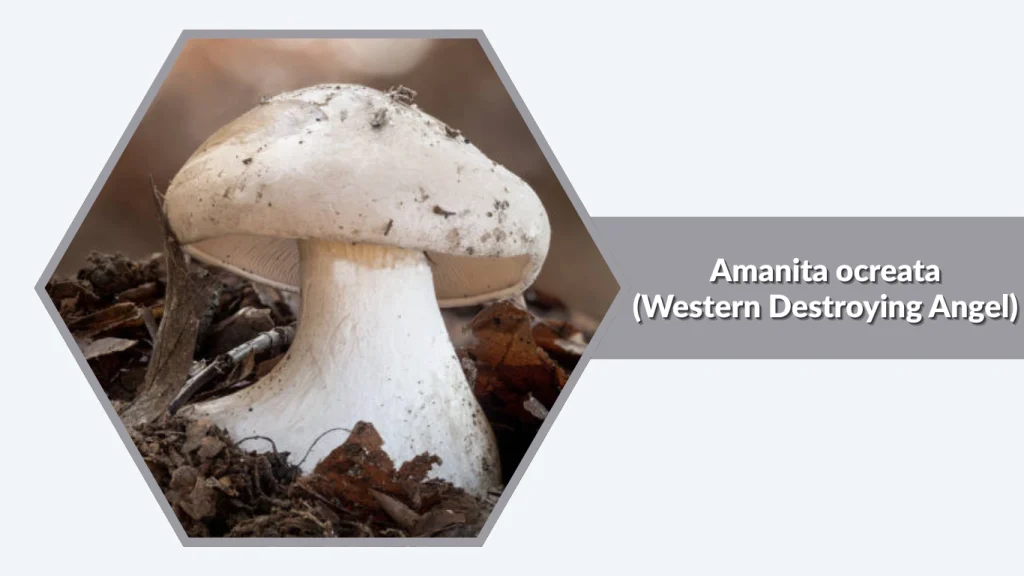
Amanita ocreata is a highly toxic mushroom native to western North America. Often called the western destroying angel, it is responsible for multiple fatal poisonings each year due to its clean white appearance and its tendency to grow near populated areas. Like other destroying angels, it contains extremely potent liver-damaging toxins.
Identification
- White to ivory cap, sometimes with a faint yellow or tan center
- Cap 6–12 cm wide, convex at first, flattening with age
- White, free gills packed closely together
- White stalk with a fragile ring
- Large, sac-like white volva at the swollen base
- Firm white flesh that does not bruise
Habitat
This species commonly grows in oak woodlands and mixed forests of California and the Pacific Coast. It fruits mainly in winter and spring, especially after seasonal rains, often appearing singly or in small groups.
Toxicity
Amanita ocreata contains amatoxins that attack the liver and kidneys. Symptoms may not appear for 6–24 hours, which delays treatment and increases danger. In severe cases, poisoning can result in organ failure and death.
Seasonal notes
Unlike many Amanita species that fruit in autumn, Amanita ocreata often appears in cooler months, making it particularly dangerous when few other mushrooms are present and foragers may be less cautious.
6. Amanita pantherina (Panther Cap)
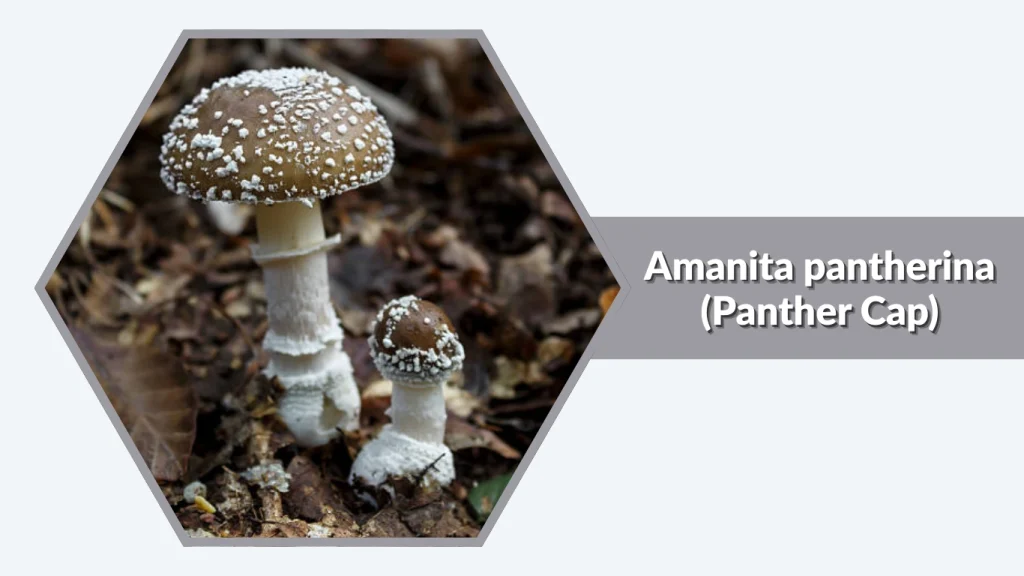
Amanita pantherina, commonly known as the panther cap, is a toxic Amanita species closely related to Amanita muscaria. It is considered even more dangerous due to its higher concentration of psychoactive compounds. The mushroom is native to Europe and parts of Asia but has also been introduced to other regions.
Identification
- Brown to dark brown cap with scattered white warts
- Cap usually 5–12 cm wide, convex to flat with age
- White, free gills under the cap
- White stalk with a distinct ring
- Bulbous base with clear white volva remnants
- White flesh that does not change color
Habitat
Amanita pantherina grows in deciduous and mixed forests, especially near oak, beech, pine, and spruce. It typically appears from summer to late autumn, growing singly or in small groups on forest floors.
Toxicity
This species contains muscimol and ibotenic acid, which affect the nervous system. Symptoms may include nausea, confusion, hallucinations, muscle spasms, and seizures. Although deaths are uncommon, poisoning can be severe and requires immediate medical attention.
Confusion with edible species
The panther cap is sometimes mistaken for edible brown mushrooms. Its white gills, ring, and bulbous base with volva are key features that distinguish it from many safe look-alikes.
7. Amanita caesarea (Caesar’s Mushroom)
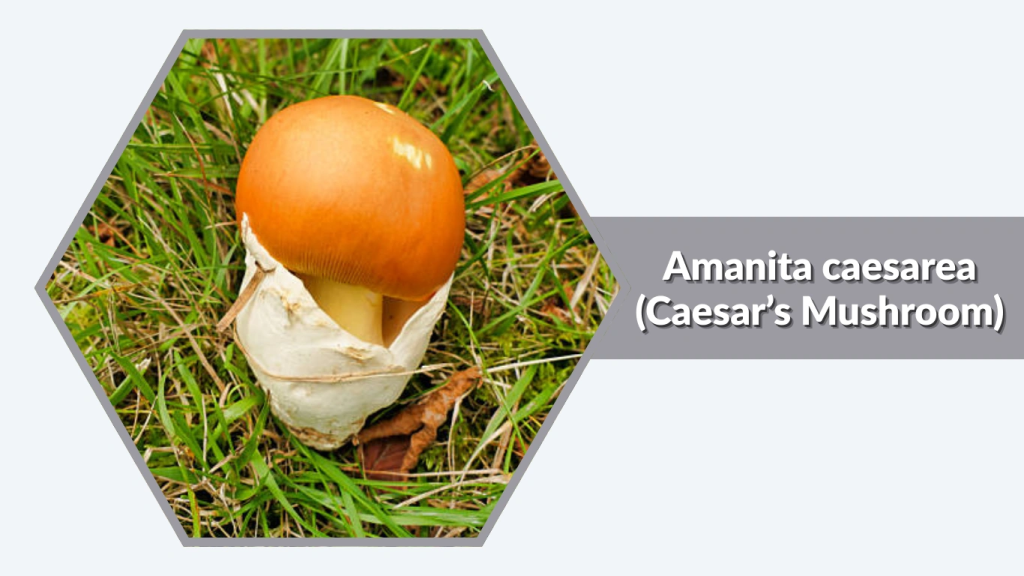
Amanita caesarea is a famous edible Amanita known since ancient Roman times, where it was considered a royal delicacy. Unlike many deadly members of the genus, this species is prized for its mild flavor and attractive appearance, featuring bright colors and a graceful structure.
Identification
- Bright orange to red-orange cap, smooth and glossy
- Cap 8–20 cm wide, convex at first, later flattening
- Yellow, free gills under the cap
- Yellow stalk with a soft, skirt-like ring
- Thick white volva forming a cup at the base
- Flesh yellowish, especially near the surface
Habitat
Caesar’s mushroom grows in warm deciduous forests, particularly with oak and chestnut. It is native to southern Europe but also occurs in parts of North Africa and Asia. Fruiting usually occurs from late spring through early autumn.
Edibility
This species is highly valued as an edible mushroom and is traditionally eaten cooked or raw in some cultures. However, extreme caution is required because it can be confused with deadly Amanita species when immature.
Historical importance
Amanita caesarea was reportedly favored by Roman emperors and nobility. Its long history of culinary use has made it one of the most celebrated edible mushrooms in the world.
8. Amanita rubescens (Blusher)
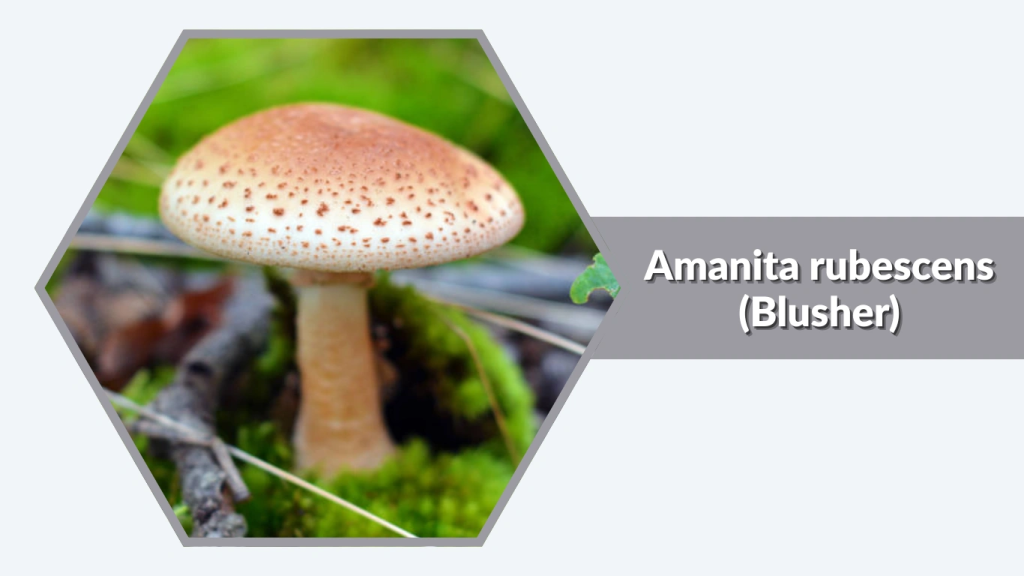
Amanita rubescens is a common woodland mushroom best known for the reddish or pinkish staining that appears when it is bruised or cut. This color change gives it the common name “blusher.” Unlike many toxic Amanitas, it is considered edible when thoroughly cooked, though it must never be eaten raw.
Identification
- Brownish to pinkish-brown cap with small grayish warts
- Cap 6–15 cm wide, convex to flat with age
- White gills that slowly bruise pink
- Pale stalk with a ring, often blushing when handled
- Bulbous base without a clear sac-like volva
- Flesh white, turning reddish when damaged
Habitat
This species grows in deciduous and coniferous forests, often with oak, beech, pine, and spruce. It appears from early summer through autumn and is usually found singly or in scattered groups.
Edibility
Amanita rubescens is edible only after proper cooking, which destroys heat-sensitive toxins. Raw specimens can cause stomach upset. Because it resembles dangerous species, it is not recommended for inexperienced foragers.
Key feature
The most reliable trait is its tendency to turn pink or reddish when cut or bruised, a feature uncommon among deadly white-fleshed Amanitas.
9. Amanita fulva (Tawny Grisette)
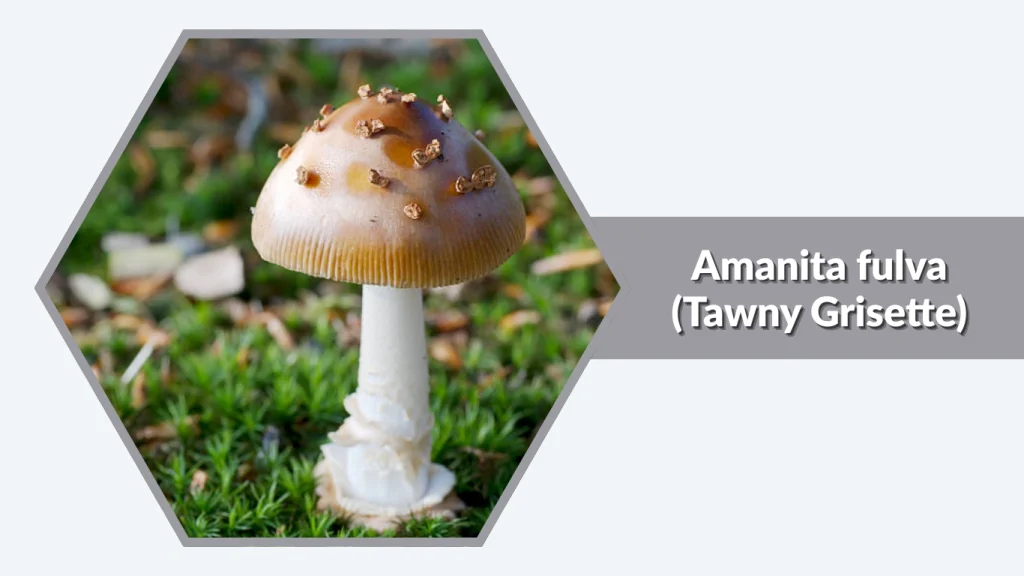
Amanita fulva, commonly called the tawny grisette, is a slender, elegant Amanita species known for its warm brown to orange-brown cap and strongly striated margins. It belongs to the ringless Amanitas, meaning it lacks the typical stem ring seen in many other species.
Identification
- Tawny, orange-brown, or cinnamon-brown cap with deep striations
- Cap 5–10 cm wide, bell-shaped at first, later flattening
- White to pale cream, free gills
- Slender stalk without a ring
- White sac-like volva at the swollen base
- Thin, fragile flesh
Habitat
Amanita fulva grows in moist deciduous and mixed forests, often with birch, oak, and pine. It fruits from late spring through autumn and is commonly found near woodland paths and damp ground.
Edibility
This species is sometimes considered edible by experienced foragers, but it is generally not recommended due to the risk of confusion with deadly ringless Amanitas. Careful identification is essential.
Notable trait
The deeply grooved, translucent cap margin combined with the absence of a ring helps separate Amanita fulva from many other Amanita species.
10. Amanita vaginata (Grisette)
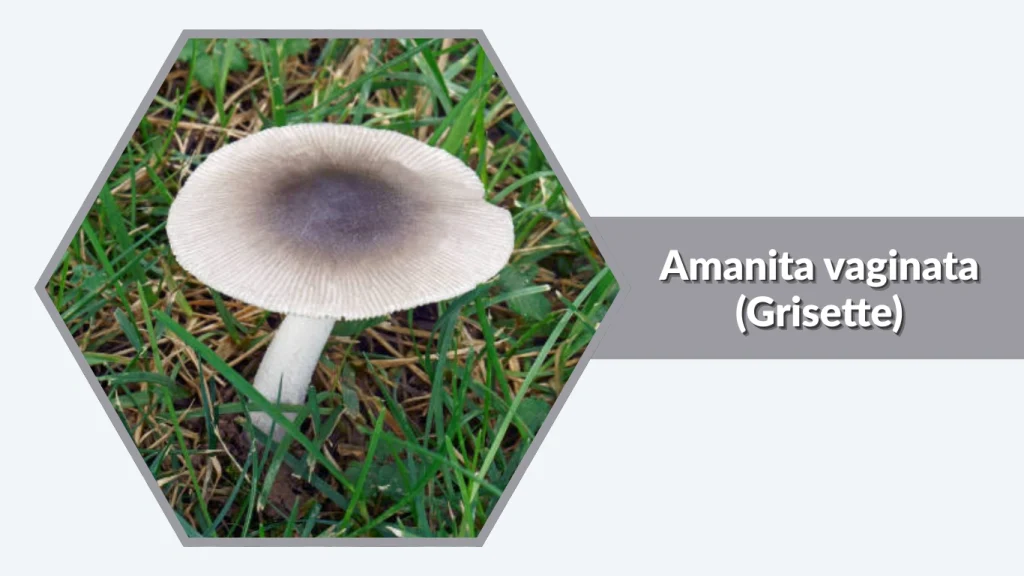
Amanita vaginata, known as the grisette, is a delicate, gray-capped Amanita species that lacks a ring on its stem. It is widely distributed and often admired for its graceful appearance. Although sometimes listed as edible, it is generally avoided because of the high risk of confusion with deadly Amanitas.
Identification
- Gray to silvery-gray cap with strongly striated margins
- Cap 5–12 cm wide, convex to flat with age
- White, free gills
- Slender stalk without a ring
- Large, white, sack-like volva at the base
- Thin, fragile flesh
Habitat
This species grows in deciduous and mixed woodlands, commonly with birch, oak, and beech. It appears from summer through autumn, usually singly or scattered on forest floors.
Edibility
Some field guides list Amanita vaginata as edible, but most experts advise against collecting it because it closely resembles highly toxic species. Extreme caution is necessary.
Group placement
Amanita vaginata belongs to the grisette group (section Vaginatae), which is characterized by ringless stems and prominently striated cap margins.
11. Amanita flavoconia (Yellow Patches Amanita)
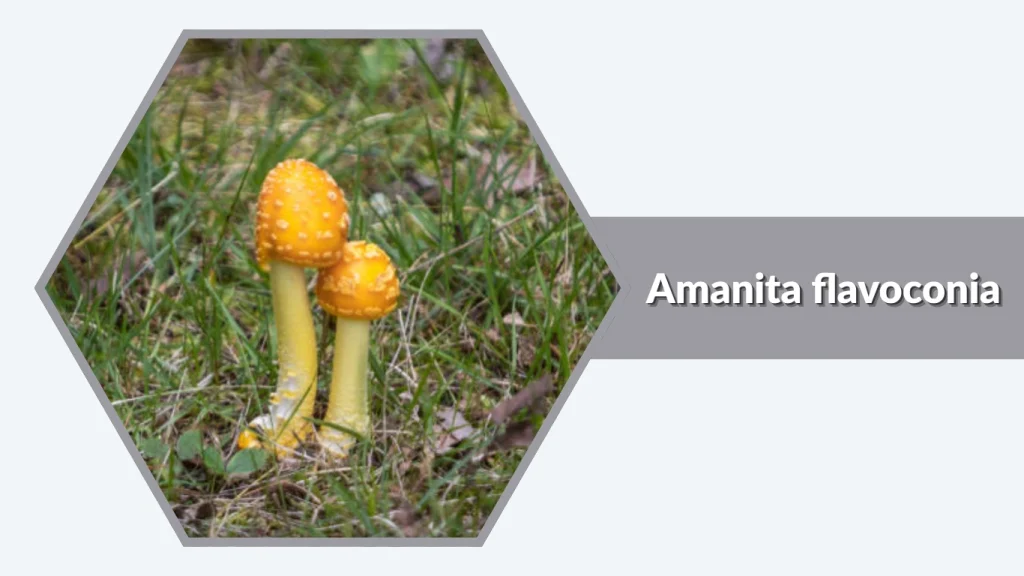
Amanita flavoconia is a brightly colored Amanita species recognized by its yellow to orange-yellow cap covered with vivid yellow patches. It is commonly found in eastern North America and stands out in forest environments because of its warm tones and decorative surface. This species is considered toxic and should not be eaten.
Identification
- Yellow to orange-yellow cap with scattered bright yellow warts
- Cap 4–10 cm wide, convex at first, later flattening
- White to pale yellow, free gills
- Yellowish stalk with a thin ring
- Bulbous base with yellowish volva remnants
- Flesh pale, not changing color when cut
Habitat
Amanita flavoconia grows in deciduous and mixed forests, especially with oak, beech, and pine. It fruits from summer through early autumn and usually appears singly or in small groups on woodland soil.
Toxicity
This mushroom is regarded as poisonous. While it is not as deadly as the destroying angels, ingestion can cause gastrointestinal upset and neurological symptoms. It should always be avoided as a food mushroom.
Visual 특징
The combination of a golden-yellow cap and vivid yellow patches is one of its most distinctive features, making it easier to recognize than many dull-colored Amanitas.
12. Amanita citrina (False Death Cap)
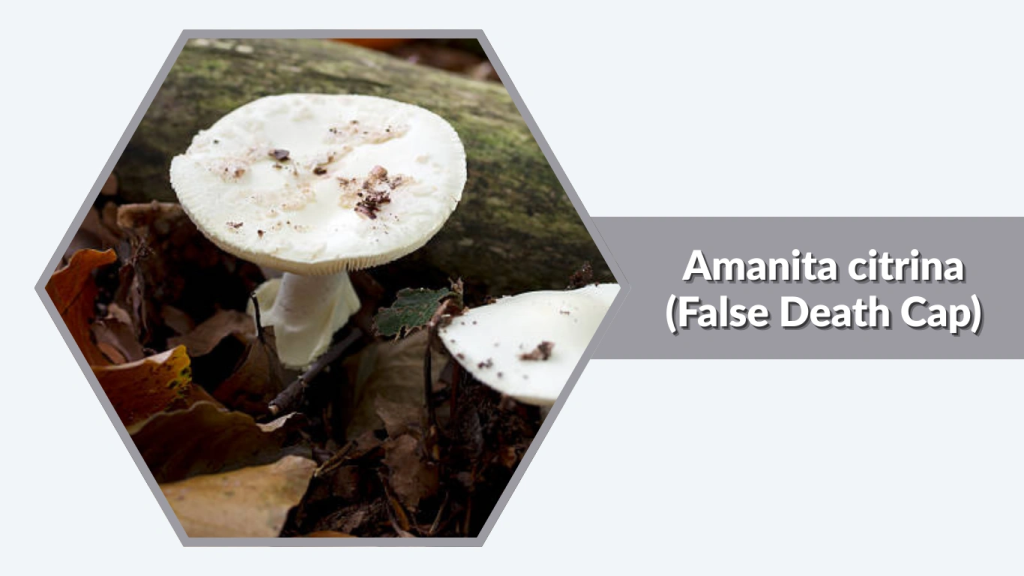
Amanita citrina is commonly known as the false death cap because it resembles the deadly Amanita phalloides but is far less toxic. It has a pale yellow to lemon-colored cap and a noticeable potato-like odor. Although not usually deadly, it is considered poisonous and unsuitable for eating.
Identification
- Pale yellow, lemon, or whitish cap, often with white patches
- Cap 5–12 cm wide, convex to flat with age
- White, free gills
- White stalk with a fragile ring
- Swollen base with a white volva
- Flesh white with a raw potato-like smell
Habitat
This species grows in deciduous and coniferous forests, especially with oak, birch, and pine. It fruits from late summer to autumn and is widespread across Europe and parts of Asia.
Toxicity
Amanita citrina contains toxins that can cause nausea, vomiting, and stomach discomfort. While not as dangerous as the true death cap, it should never be eaten.
Key distinction
Its lemon tint and distinctive potato-like odor help separate it from Amanita phalloides, though careful examination is still essential.
13. Amanita gemmata (Jewel Amanita)
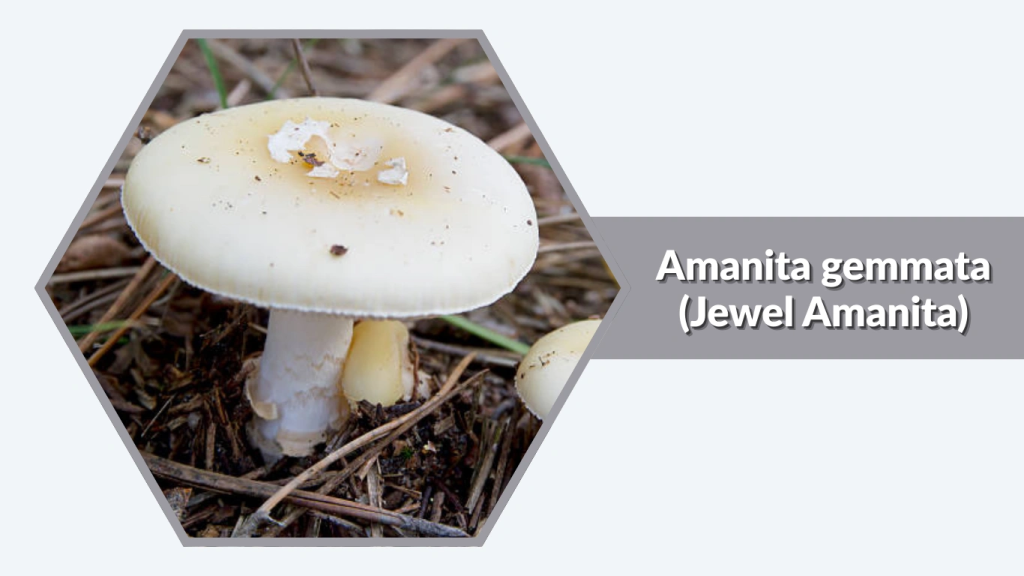
Amanita gemmata, often called the jewel amanita, is a small to medium-sized Amanita recognized by its bright yellow cap and scattered white veil remnants. It has a delicate appearance but contains psychoactive and toxic compounds, making it unsafe to eat.
Identification
- Bright yellow to golden-yellow cap with white warty patches
- Cap 4–10 cm wide, convex at first, later flattening
- White, free gills
- Pale yellow to white stalk with a thin ring
- Bulbous base with white volva remnants
- White flesh, not bruising when cut
Habitat
This species grows in deciduous and coniferous forests, often associated with oak, beech, pine, and spruce. It fruits from late spring through autumn and usually appears singly or scattered on forest soil.
Toxicity
Amanita gemmata contains muscimol and ibotenic acid, similar to Amanita muscaria. Ingestion may cause nausea, confusion, dizziness, and hallucinations. It should always be considered poisonous.
Recognition tip
Its vivid yellow cap combined with white patches and a fragile ring helps distinguish it from many duller Amanita species, though confusion with other toxic yellow Amanitas is possible.
14. Amanita jacksonii (American Caesar’s Mushroom)
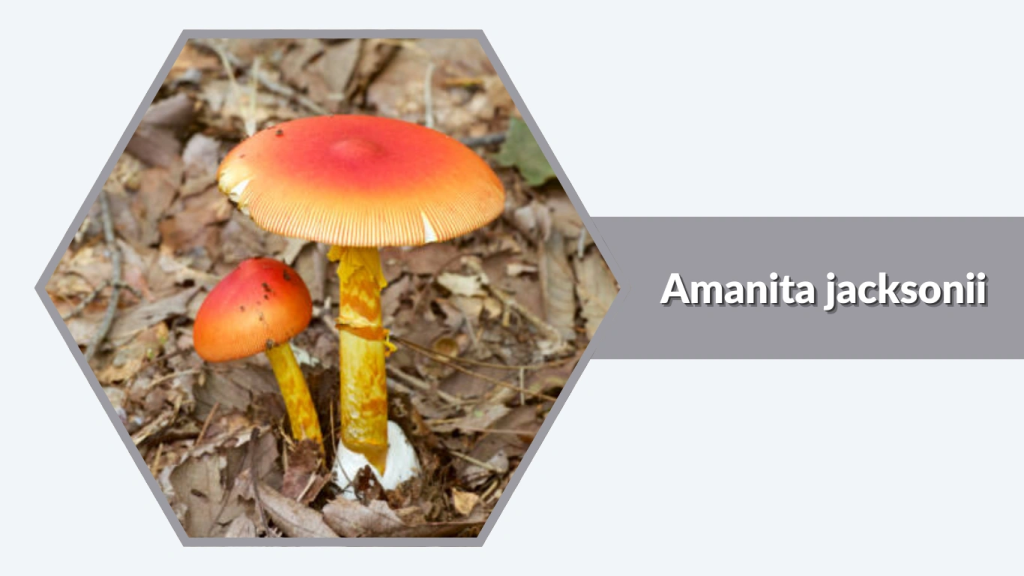
Amanita jacksonii is a striking North American Amanita often called the American Caesar’s mushroom because of its close resemblance to the famous European Amanita caesarea. It is admired for its bright red to orange cap and yellow gills, and it is considered edible by experienced foragers.
Identification
- Bright red to reddish-orange cap, smooth and glossy
- Cap 8–20 cm wide, convex to flat with age
- Yellow, free gills
- Yellow stalk with a soft, skirt-like ring
- Thick white volva forming a cup at the base
- Yellowish flesh, especially near the surface
Habitat
This species grows in eastern North American forests, especially with oak and pine. It appears from late spring through early autumn, often singly or in small groups.
Edibility
Amanita jacksonii is regarded as a good edible mushroom when properly identified. However, beginners are advised not to collect it because it can be confused with deadly red or orange Amanitas when immature.
Distinctive feature
The combination of a bright red cap, yellow gills, and a prominent white volva is a key set of traits separating it from most toxic Amanitas.
15. Amanita frostiana (Frost’s Amanita)
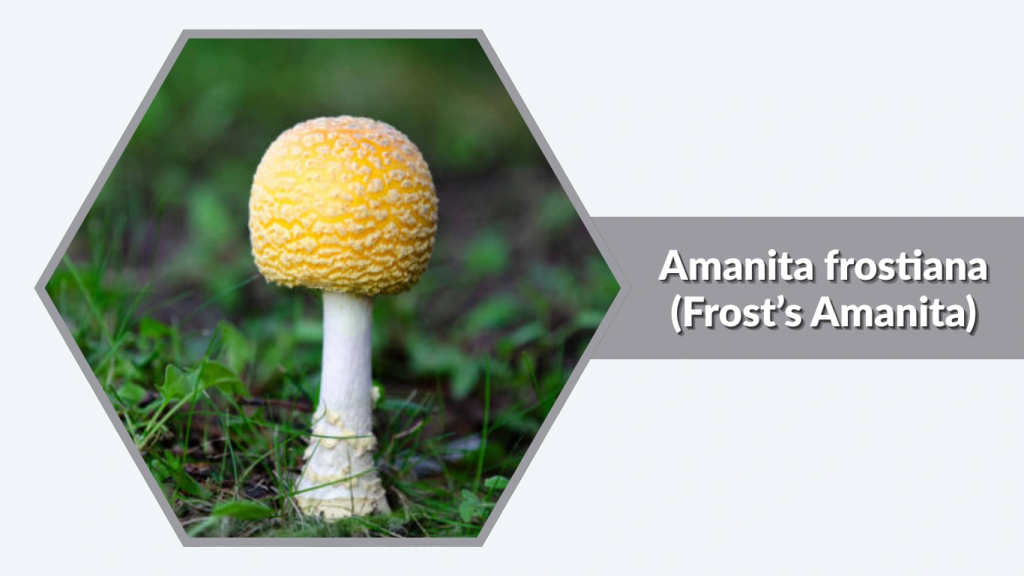
Amanita frostiana is a small but vividly colored Amanita species native to eastern North America. It is known for its bright orange to reddish-orange cap decorated with yellow warts, giving it a jewel-like appearance. Despite its beauty, it is considered toxic and should not be consumed.
Identification
- Bright orange to reddish-orange cap with yellow warty patches
- Cap 3–8 cm wide, convex to flat with age
- Yellowish to pale cream, free gills
- Yellow to orange stalk with a thin ring
- Bulbous base with yellow volva remnants
- Flesh pale, not changing color when cut
Habitat
This species grows in deciduous and mixed forests, often in association with oak and pine. It fruits from summer to early autumn and usually appears singly or scattered on forest floors.
Toxicity
Amanita frostiana is believed to contain toxic compounds similar to other brightly colored Amanitas. Consumption may lead to gastrointestinal and neurological symptoms, so it is best avoided.
Visual note
Its bright colors and yellow patches make it one of the most eye-catching Amanitas in eastern forests, but these same traits can lead to confusion with other toxic species.
16. Amanita cokeri (Coker’s Amanita)
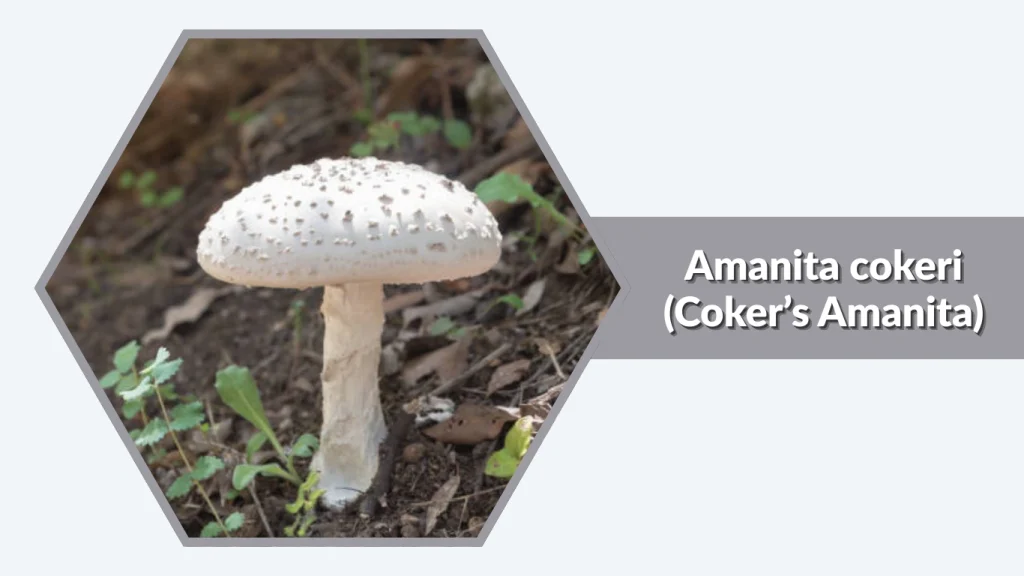
Amanita cokeri is a large, robust Amanita species notable for its thick white flesh and heavy covering of wart-like veil remnants. It has a solid, imposing appearance and is commonly encountered in parts of eastern North America. This mushroom is considered toxic and should never be eaten.
Identification
- White to creamy-white cap covered with coarse, conical warts
- Cap 8–22 cm wide, convex at first, later broadly flattened
- White, free, crowded gills
- Thick white stalk with a prominent ring
- Large, bulbous base with concentric volva remnants
- Firm white flesh that does not bruise
Habitat
Amanita cokeri grows in hardwood and mixed forests, especially with oak and beech. It fruits from summer through early autumn and is often found singly or in small scattered groups on rich woodland soil.
Toxicity
This species is regarded as poisonous. While not as notorious as death caps, it can cause gastrointestinal distress and other adverse reactions if consumed.
Distinguishing feature
Its unusually thick stem, large size, and rough, spiny cap warts make Amanita cokeri easier to recognize compared to many smoother-capped Amanitas.
17. Amanita brunnescens (Brown-staining Amanita)
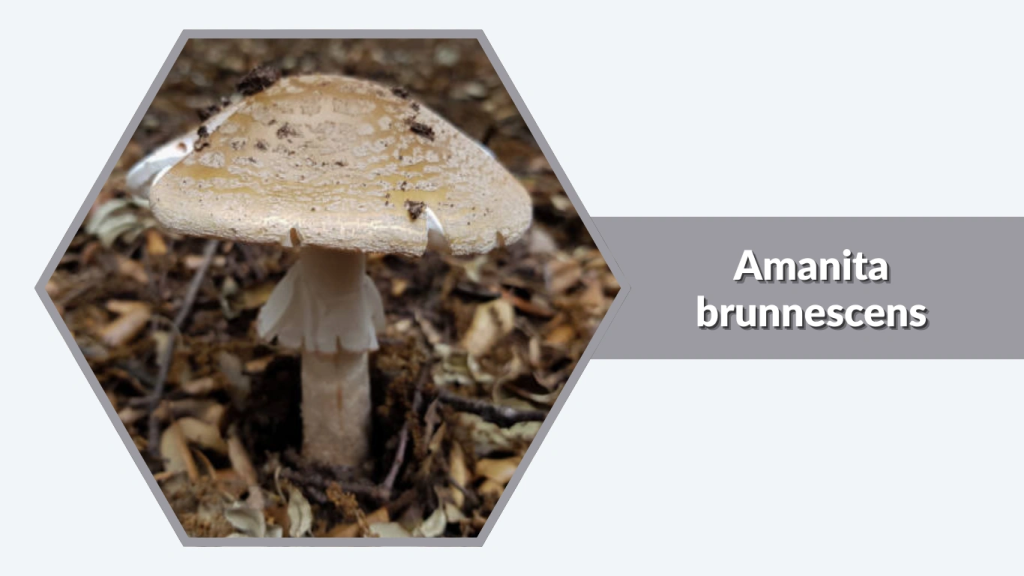
Amanita brunnescens is a medium-sized Amanita species named for the brown discoloration that develops when its flesh is bruised or cut. It has a subtle appearance compared to more colorful Amanitas, but it is still considered toxic and unsuitable for consumption.
Identification
- Whitish to pale brown cap, sometimes with faint patches
- Cap 5–12 cm wide, convex to nearly flat with age
- White, free gills
- White stalk with a fragile ring
- Swollen base with volva remnants
- Flesh slowly staining brown when damaged
Habitat
This species grows mainly in eastern North America in deciduous forests, particularly with oak and beech. It appears from summer through early autumn, usually singly or scattered on forest floors.
Toxicity
Amanita brunnescens is considered poisonous and may cause gastrointestinal upset if eaten. Because it resembles other dangerous white Amanitas, it should always be avoided.
Key feature
The slow brown staining of the flesh after bruising is one of the main characteristics used to distinguish this species from similar-looking Amanitas.
18. Amanita echinocephala (Hedgehog Amanita)
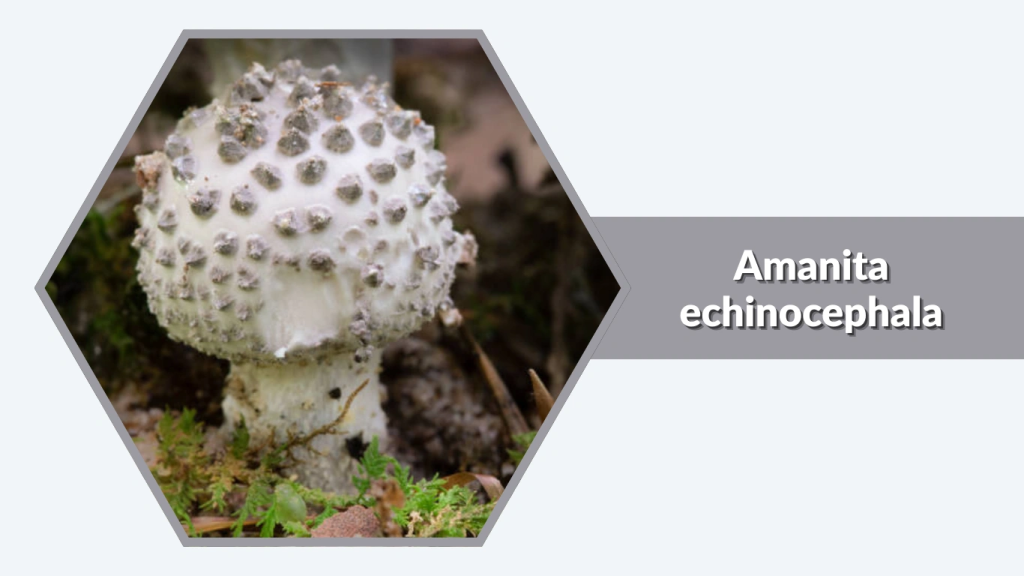
Amanita echinocephala is a striking Amanita species named for its spiny, hedgehog-like cap covering. Its pale coloration combined with sharp, pyramidal warts gives it a very distinctive look. This mushroom is considered toxic and should not be eaten.
Identification
- White to pale gray cap densely covered with pointed, conical warts
- Cap 6–15 cm wide, convex to broadly flattened
- White, free, crowded gills
- Thick white stalk with a persistent ring
- Bulbous base with broken volva remnants
- Firm white flesh, not staining when cut
Habitat
This species grows in calcareous soils of deciduous forests, often associated with oak and beech. It fruits from summer to autumn and is found scattered or singly on woodland ground.
Toxicity
Amanita echinocephala is regarded as poisonous and may cause gastrointestinal and possibly neurological symptoms if ingested.
Unique appearance
The sharply pointed warts across the cap surface are its most obvious feature and make it one of the easiest Amanitas to recognize in the field.
19. Amanita strobiliformis (Warted Amanita)
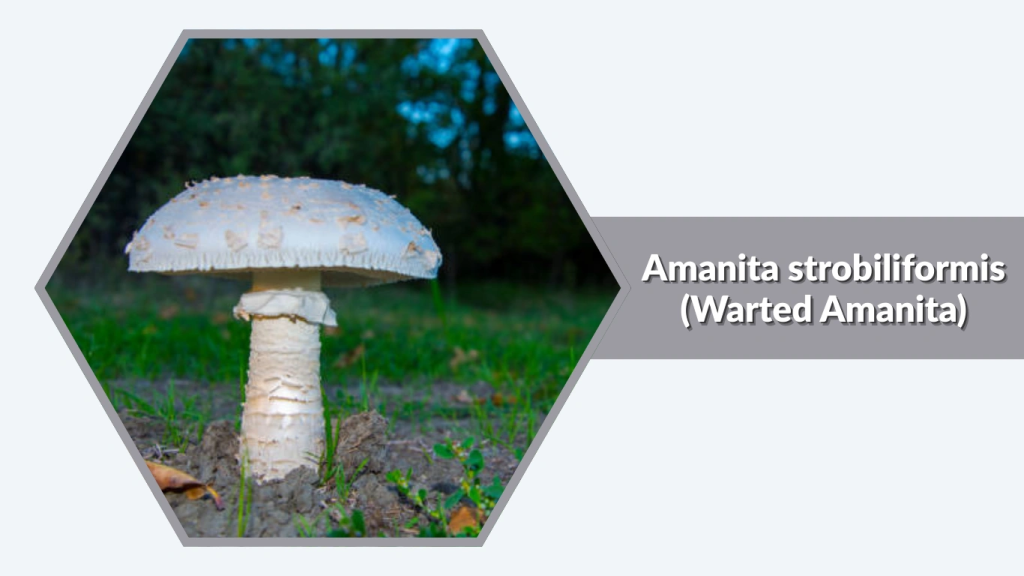
Amanita strobiliformis is a large, pale Amanita species recognized by its thick flesh and prominent, soft warts scattered across the cap. It has a stout, impressive form and is sometimes called the warted amanita. Although reported edible in some regions, it is generally treated with caution due to confusion with toxic relatives.
Identification
- White to creamy cap with large, soft, cottony warts
- Cap 10–25 cm wide, convex to flat with age
- White, free gills
- Thick white stalk with a ring
- Large, bulbous base with volva remnants
- Firm white flesh, unchanging when cut
Habitat
This species grows mainly in Europe and parts of western Asia, favoring calcareous soils in deciduous forests. It often associates with oak and beech and fruits from late spring through summer.
Edibility
Some guides list Amanita strobiliformis as edible after thorough cooking, but many foragers avoid it because of the high risk of misidentification with poisonous white Amanitas.
Notable trait
Its very large size and soft, floccose warts distinguish it from the sharper, spiny warts of Amanita echinocephala.
20. Amanita augusta (American Yellow Fly Agaric)
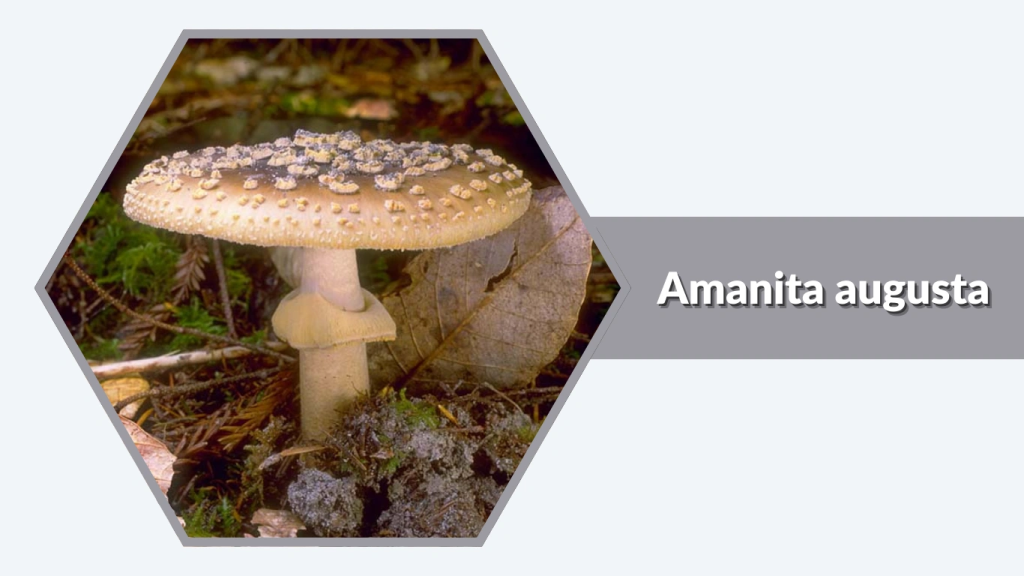
Amanita augusta is a yellow to orange Amanita species native to western North America. It is sometimes called the American yellow fly agaric because of its resemblance to Amanita muscaria, though it has warmer golden tones and finer surface patches. This species is considered toxic and should not be eaten.
Identification
- Yellow to orange-yellow cap with pale yellow to whitish patches
- Cap 6–14 cm wide, convex to flat with age
- White to pale yellow, free gills
- Yellowish stalk with a thin ring
- Bulbous base with yellowish volva remnants
- Flesh pale, not changing color when cut
Habitat
This species grows in mixed and coniferous forests of the Pacific Northwest and California, often with pine, fir, and spruce. It fruits from summer through autumn, appearing singly or in small groups.
Toxicity
Amanita augusta is believed to contain psychoactive and toxic compounds similar to Amanita muscaria. Ingestion may cause nausea, disorientation, and hallucinations.
Comparison
It differs from Amanita muscaria mainly in its yellow coloration and more delicate veil remnants, but both share similar toxic properties.
21. Amanita farinosa (Mealy Amanita)
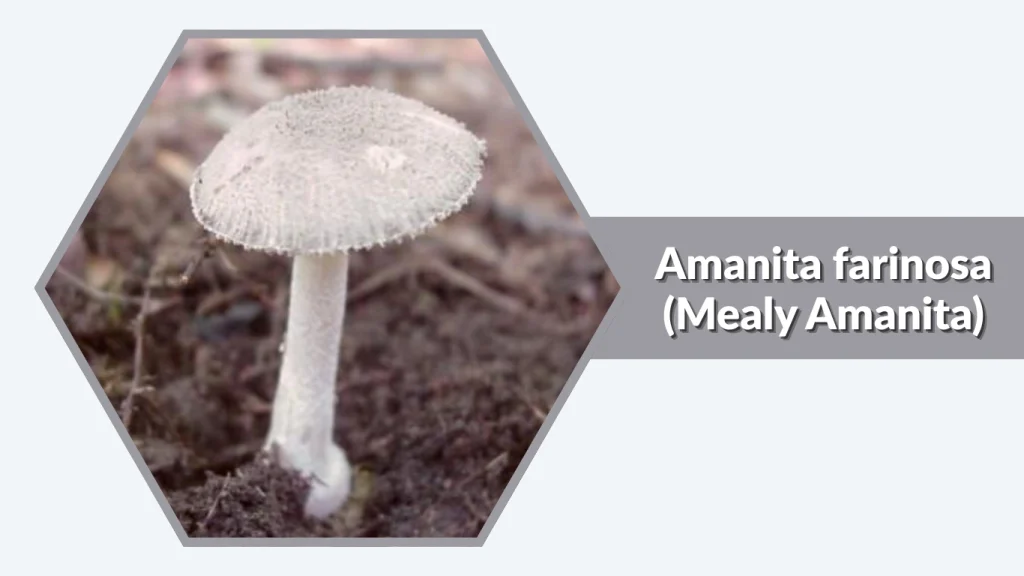
Amanita farinosa is a small, delicate Amanita species known for its powdery or mealy surface coating and often faint, unpleasant odor. It belongs to the grisette group and lacks a ring on the stalk. This mushroom is considered toxic and should not be consumed.
Identification
- Grayish to pale brown cap with a fine, powdery surface
- Cap 3–7 cm wide, bell-shaped at first, later flattening
- White, free gills
- Slender stalk without a ring, often dusted with fine granules
- Small white volva at the base
- Thin, fragile flesh
Habitat
This species grows in moist deciduous and mixed forests, often near birch and spruce. It fruits from summer through early autumn and is usually found singly or scattered on damp woodland soil.
Toxicity
Amanita farinosa is regarded as poisonous. Although not well studied, it may cause gastrointestinal symptoms and should always be avoided.
Key feature
Its powdery coating and lack of a stem ring help separate it from many other small Amanitas.
22. Amanita porphyria (Purple Gray Amanita)
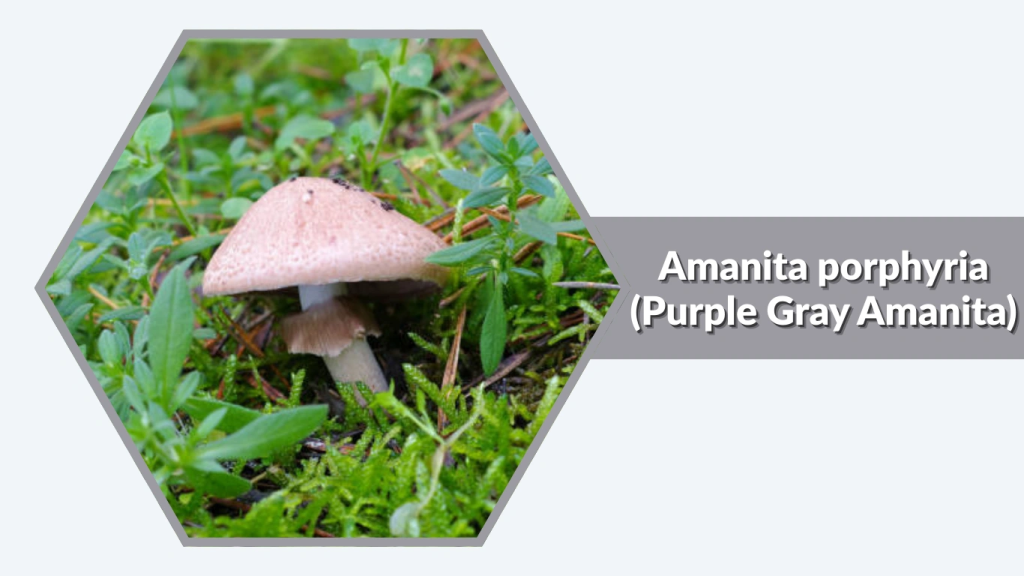
Amanita porphyria is a subtle but distinctive Amanita species known for its smoky purple-gray to brownish cap and its often radish-like odor. It is considered poisonous and is not suitable for consumption.
Identification
- Purple-gray, brownish, or smoky-lilac cap, smooth or slightly sticky
- Cap 4–9 cm wide, convex to flat with age
- White, free gills
- Pale stalk with a thin ring
- Bulbous base with white volva remnants
- White flesh with a radish-like smell
Habitat
This species grows in coniferous and mixed forests, especially with spruce and pine. It fruits from summer through autumn and usually appears singly or scattered on forest floors.
Toxicity
Amanita porphyria is considered poisonous and may cause gastrointestinal upset and other adverse reactions if eaten.
Distinguishing clue
The unusual purplish-gray cap tones combined with its characteristic odor help differentiate it from other dull-colored Amanitas.
23. Amanita verna (Fool’s Mushroom)
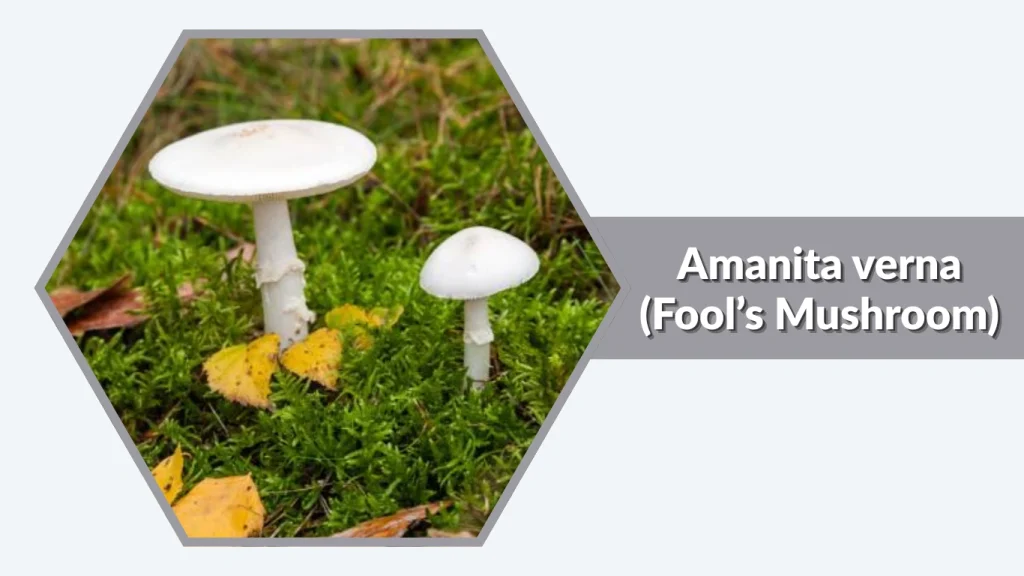
Amanita verna is a deadly white Amanita species closely related to the death cap and destroying angels. Because of its clean, harmless appearance, it has caused many serious poisonings. It fruits mainly in spring, which makes it especially dangerous when few other mushrooms are present.
Identification
- Pure white, smooth cap, sometimes slightly sticky
- Cap 5–10 cm wide, convex to flat with age
- White, free, crowded gills
- Slender white stalk with a thin ring
- Swollen base with a white, sac-like volva
- White flesh, not changing color when cut
Habitat
This species grows in deciduous forests, especially with oak and beech, across much of Europe and parts of western Asia. It appears from spring to early summer, often singly or in small groups.
Toxicity
Amanita verna contains powerful amatoxins that cause severe liver and kidney failure. Symptoms are often delayed, making early treatment difficult. Poisoning is frequently fatal without rapid medical care.
Seasonal note
Its spring fruiting period distinguishes it from many other deadly Amanitas that appear mainly in summer and autumn.
24. Amanita battarrae (Battarra’s Grisette)
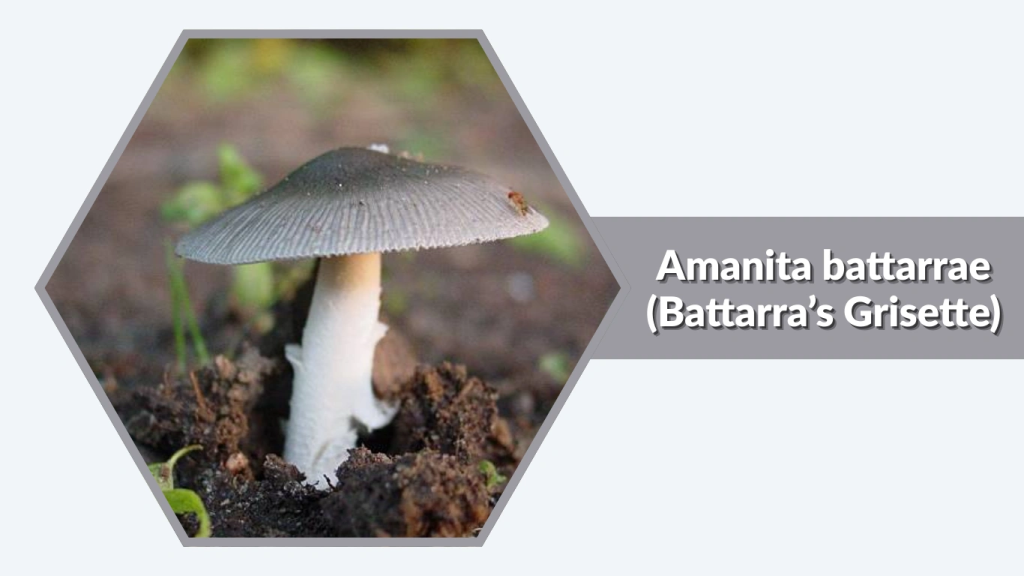
Amanita battarrae is a slender, elegant Amanita species belonging to the grisette group. It is recognized for its tall stature, ringless stem, and finely striated cap margin. Although sometimes listed as edible, it is generally avoided due to the high risk of confusion with toxic Amanitas.
Identification
- Brown to gray-brown cap with a strongly striated margin
- Cap 5–12 cm wide, bell-shaped to flat with age
- White to pale cream, free gills
- Tall, slender stalk without a ring
- Elongated, sack-like white volva at the base
- Thin, fragile flesh
Habitat
This species grows in deciduous and mixed forests, often with oak, beech, and pine. It prefers well-drained soils and fruits from summer through autumn, usually appearing singly.
Edibility
Some sources describe Amanita battarrae as edible, but most mycologists advise against collecting it because it closely resembles several deadly ringless Amanita species.
Growth form
Its unusually tall, graceful stem and deeply grooved cap margin give it a distinctive, delicate appearance compared to many stockier Amanitas.
25. Amanita calyptroderma (Coccora)
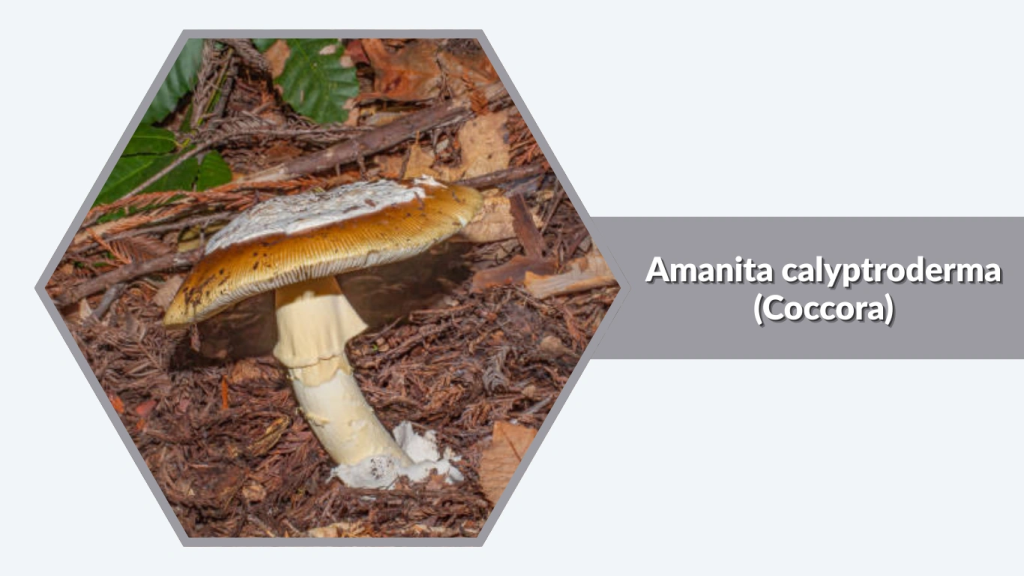
Amanita calyptroderma, commonly known as the coccora, is a large, robust Amanita species native to the west coast of North America. It is well known among experienced foragers as a choice edible mushroom, though it still demands careful identification due to its resemblance to toxic relatives.
Identification
- Brown to orange-brown cap, often smooth with pale patches
- Cap 10–25 cm wide, convex to flat with age
- White to pale cream, free gills
- Thick, sturdy stalk with a prominent ring
- Large white volva at the swollen base
- Firm white flesh, mild odor
Habitat
This species grows in coastal forests of California and the Pacific Northwest, especially with live oak, tanoak, and madrone. It fruits from late autumn through winter, often appearing singly or in small groups.
Edibility
Amanita calyptroderma is considered an excellent edible mushroom when properly identified and cooked. Beginners are strongly discouraged from collecting it because of the risk of fatal misidentification.
Regional importance
It is one of the most popular wild edible mushrooms on the U.S. West Coast and is commonly sold in local markets during its fruiting season.
26. Amanita persicina (Peach-colored Fly Agaric)
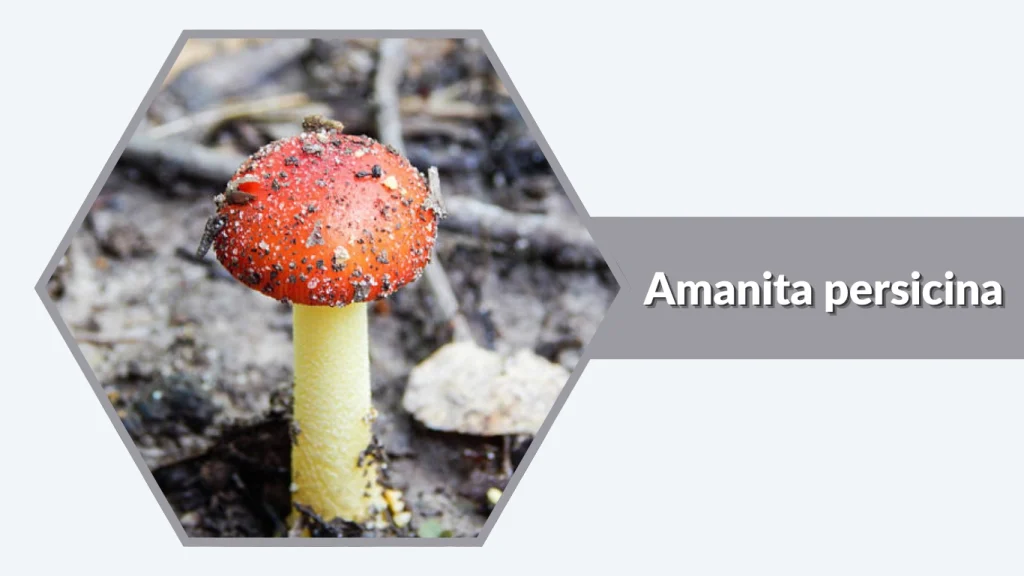
Amanita persicina is a colorful Amanita species once considered a form of Amanita muscaria. It is known for its peach to salmon-pink cap and scattered pale veil remnants. This mushroom is considered toxic and should not be eaten.
Identification
- Peach, salmon, or pinkish-orange cap with pale yellow to white patches
- Cap 6–14 cm wide, convex to flat with age
- White to pale yellow, free gills
- Pale stalk with a ring
- Bulbous base with pale volva remnants
- White flesh, not staining when cut
Habitat
This species grows in the southeastern United States, especially with pine and hardwoods. It fruits from summer through autumn, usually appearing singly or scattered.
Toxicity
Amanita persicina contains psychoactive and toxic compounds similar to Amanita muscaria. Ingestion may cause nausea, dizziness, confusion, and hallucinations.
Taxonomic note
It was long treated as Amanita muscaria var. persicina but is now widely recognized as a separate species.
27. Amanita subjunquillea (Eastern Death Cap)
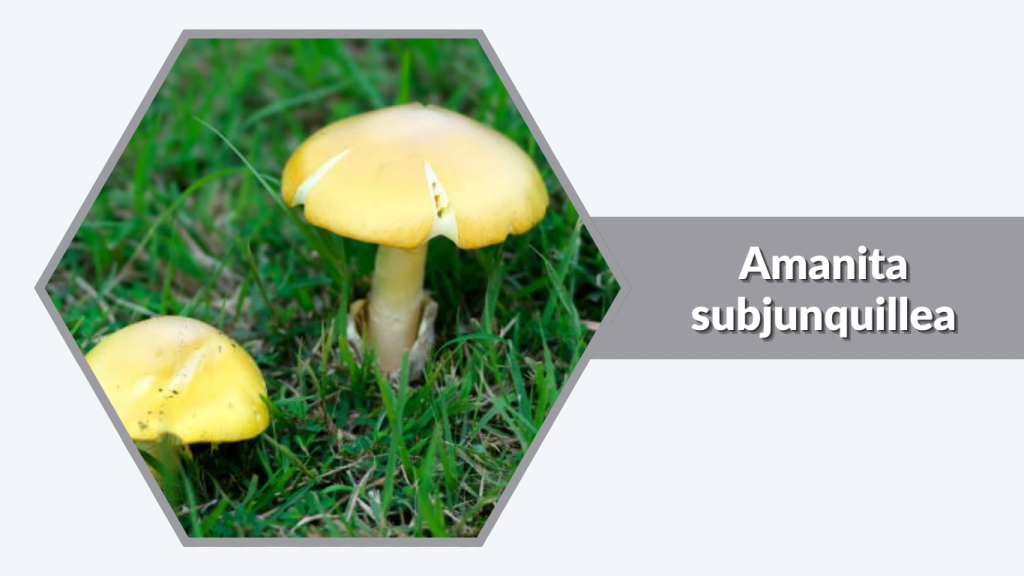
Amanita subjunquillea is a deadly Amanita species found mainly in East Asia. It closely resembles the European death cap and contains the same potent toxins. Because of its harmless appearance, it has been responsible for numerous severe poisonings.
Identification
- Yellowish to olive-yellow cap, smooth, sometimes slightly sticky
- Cap 5–12 cm wide, convex to flat with age
- White, free gills
- White stalk with a thin ring
- Bulbous base with a white, sac-like volva
- White flesh, not changing color when cut
Habitat
This species grows in deciduous and mixed forests, especially with oak and chestnut. It fruits from summer through autumn and is usually found singly or in small groups.
Toxicity
Amanita subjunquillea contains amatoxins that cause severe liver and kidney failure. Symptoms are often delayed, which increases the danger. Immediate medical attention is critical.
Important warning
Because it closely resembles edible mushrooms and other Amanitas, Amanita subjunquillea is considered one of the most dangerous mushrooms in East Asia.
FAQs
Are all Amanita mushrooms poisonous?
Not all Amanita mushrooms are poisonous, but many of the world’s deadliest mushrooms belong to this genus. While a few species are edible, several contain amatoxins or neurotoxins that can cause organ failure or severe neurological symptoms. Because of frequent misidentification, beginners are strongly advised to avoid all Amanitas.
What is the most dangerous Amanita species?
Amanita phalloides, known as the death cap, is considered the most dangerous Amanita species. It causes the majority of fatal mushroom poisonings worldwide. Its toxins destroy the liver and kidneys, and symptoms often appear too late for effective treatment, making it extremely lethal.
How can Amanita mushrooms be identified safely?
Amanita mushrooms are often identified by features such as white gills, a ring on the stem, and a volva or cup at the base. However, these traits also appear in deadly species. Because correct identification requires expert knowledge, Amanitas should never be eaten unless confirmed by a trained mycologist.
Are any Amanita mushrooms edible?
Yes, a few Amanita species such as Amanita caesarea and Amanita jacksonii are considered edible and even prized in some regions. However, they closely resemble deadly species when young. For this reason, most field guides recommend that non-experts completely avoid eating any Amanita mushrooms.
What should you do if someone eats a suspected Amanita mushroom?
If someone may have eaten an Amanita mushroom, seek emergency medical help immediately. Do not wait for symptoms, as serious poisoning can be delayed. Early treatment is critical to reduce the risk of liver and kidney failure and to improve the chances of survival.