
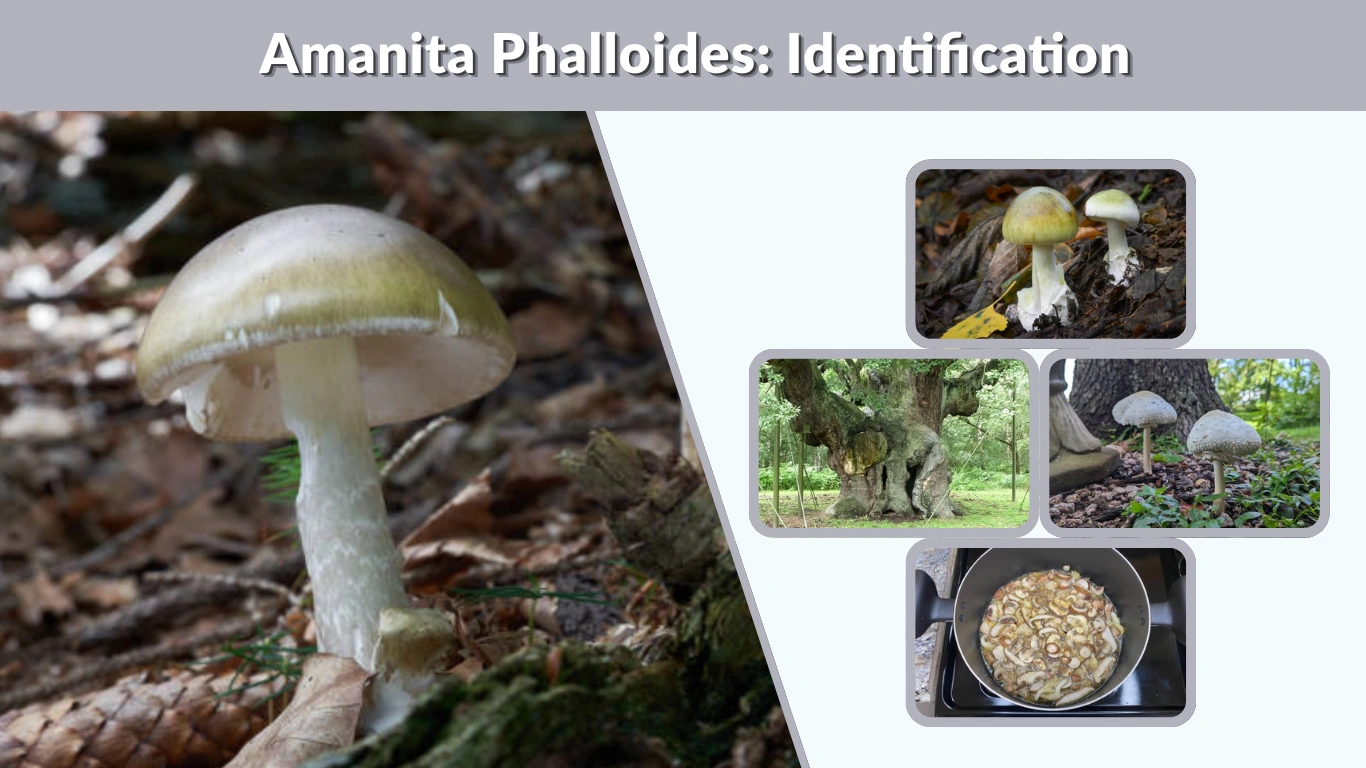
Amanita phalloides, commonly known as the Death Cap mushroom, is considered one of the most poisonous mushrooms in the world. Responsible for the majority of fatal mushroom poisonings globally, this species poses a serious risk to foragers, gardeners, and even pet owners. Proper Amanita phalloides identification is critical because it closely resembles several edible varieties. Understanding its physical features, habitat, and distinguishing characteristics can help prevent dangerous mistakes and potentially save lives.
What Are Amanita Phalloides?
Amanita phalloides is a highly toxic mushroom species belonging to the Amanita genus. It is infamous for causing severe liver and kidney failure after ingestion. Even small amounts can be fatal if not treated quickly.
Scientific Classification and Background
- Kingdom: Fungi
- Genus: Amanita
- Species: Amanita phalloides
This mushroom is native to Europe but has spread widely across other continents through the movement of trees and soil. It forms symbiotic relationships with tree roots, particularly hardwood species, which allows it to thrive in forests and landscaped environments.
Common Names
Amanita phalloides is known by several names, including:
- Death Cap
- Green Death Cap
- Death Cup
The name “Death Cap” reflects its reputation as a deadly poisonous mushroom.
Why It Is Considered the World’s Deadliest Mushroom
The primary danger of Amanita phalloides lies in its toxic compounds called amatoxins. These toxins interfere with RNA polymerase II, a critical enzyme for cell function. As a result, cells—especially in the liver—begin to die. Because symptoms are delayed, many victims do not seek treatment until serious organ damage has already occurred.
Amanita Phalloides Identification Guide
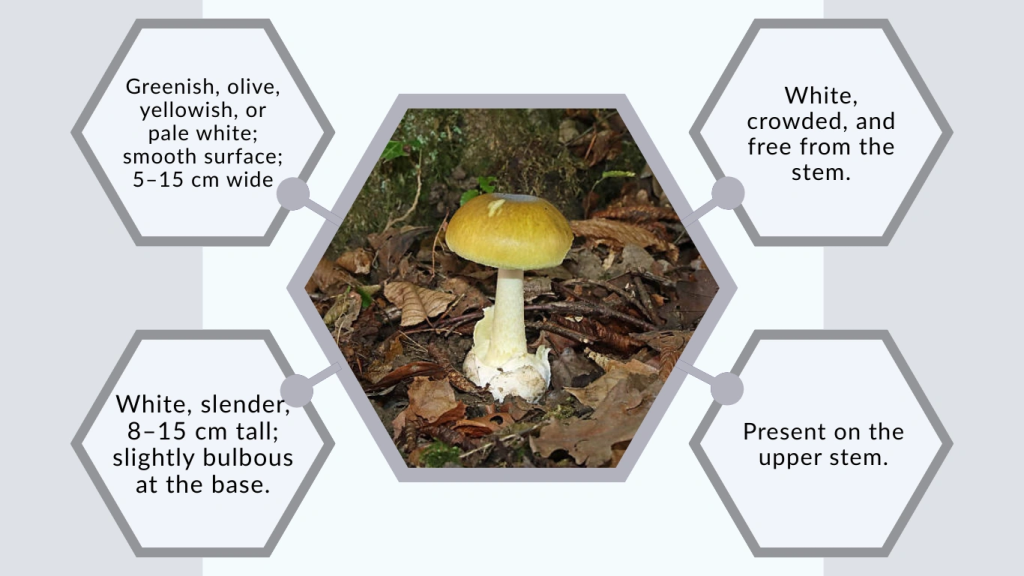
Accurate Amanita phalloides identification requires careful observation of multiple physical features. This mushroom can vary in color and appearance depending on age and environment, so no single trait should be used alone. Instead, examine the cap, gills, stem, base, and spore print together. The most critical step is inspecting the base of the mushroom, as the presence of a volva is a key warning sign.
Below is a quick overview of the main identifying features:
- Cap: Greenish, olive, yellowish, or pale white; smooth surface; 5–15 cm wide; starts egg-shaped and flattens with age.
- Gills: White, crowded, and free from the stem.
- Spore Print: White.
- Stem (Stipe): White, slender, 8–15 cm tall; slightly bulbous at the base.
- Ring (Annulus): Present on the upper stem.
- Volva: White, cup-like sac at the base (often partially buried).
- Flesh: White and does not change color when cut.
- Odor: Mild when young; may become slightly sweet or unpleasant in older specimens.
Where Does Amanita Phalloides Grow?
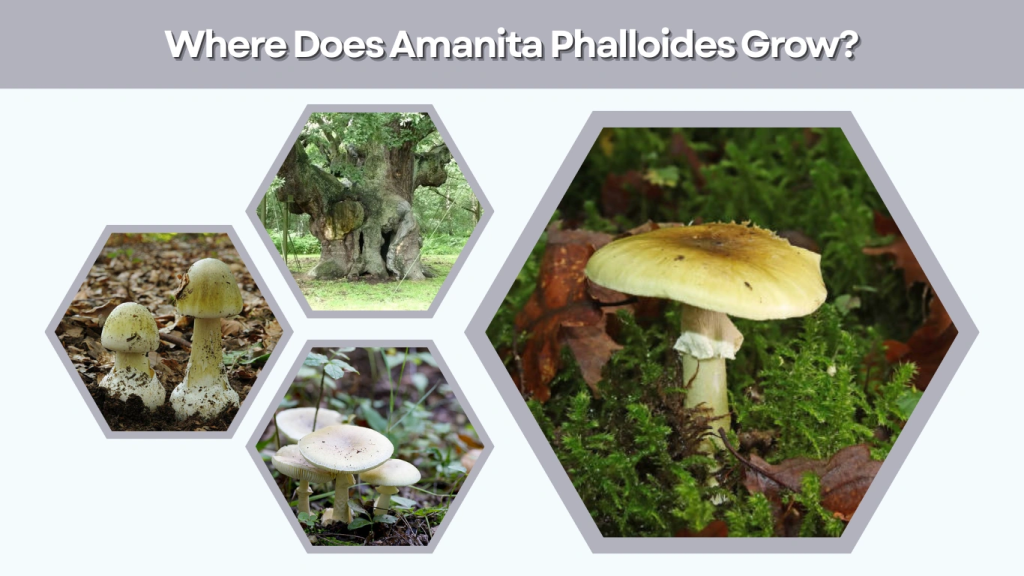
Understanding habitat plays an important role in identifying Amanita phalloides.
Native and Introduced Regions
Originally native to Europe, Amanita phalloides has spread to:
- North America
- Australia
- Parts of Asia
- South America
It was likely introduced through imported trees and landscaping materials. Today, it is well established in many urban and suburban environments.
Preferred Trees and Habitat
This mushroom forms mycorrhizal relationships with hardwood trees, meaning it exchanges nutrients with tree roots. It is commonly found near:
- Oak trees
- Beech trees
- Chestnut trees
It can grow in natural forests, city parks, gardens, and even residential lawns where suitable trees are present.
Growing Season
Amanita phalloides most commonly appears in late summer and fall. In warmer climates, it may emerge earlier or persist longer into the season. Fruiting often occurs after rainfall when soil moisture is high.
Amanita Phalloides vs. Look-Alike Mushrooms
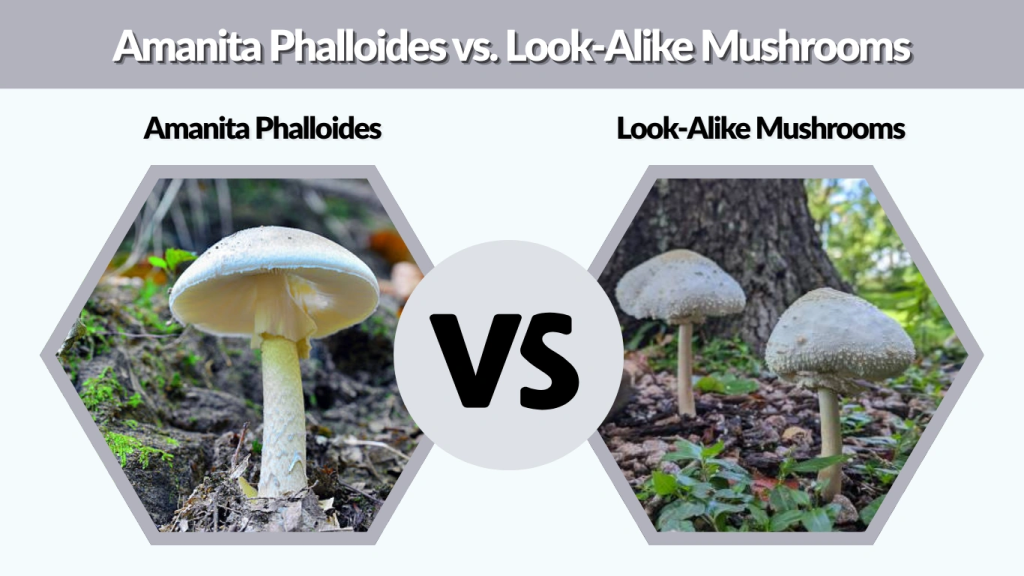
One of the greatest dangers of Amanita phalloides is how closely it resembles several edible mushrooms. Many poisoning cases occur because foragers mistake it for a safe species. Careful comparison is essential for accurate Amanita phalloides identification.
Edible Mushrooms It Is Mistaken For
Amanita phalloides is often confused with:
- Green russula (Russula species) – Some varieties have greenish caps and white gills.
- Straw mushroom (Volvariella volvacea) – Popular in Asian cuisine and sometimes visually similar in early stages.
- Puffballs (young stage) – Immature Death Caps can resemble small white puffballs before the cap expands.
These similarities can be misleading, especially when the mushroom is young and not fully developed.
Key Differences That Prevent Deadly Mistakes
There are several important distinctions to look for:
- Presence of a volva (cup-like sac at the base)
- White gills that remain white (never turning pink or brown)
- A ring (annulus) on the stem
- Bulbous, swollen base
For example, true puffballs are solid white inside when cut open, while a young Death Cap will show the outline of a developing cap and stem inside.
Why Visual Similarity Is Dangerous
Color alone is unreliable because Amanita phalloides vary from greenish to almost white. Lighting, age, and weather conditions can also change appearance. Even experienced foragers have made fatal mistakes. This is why experts recommend extreme caution when identifying any wild mushroom.
Symptoms of Amanita Phalloides Poisoning
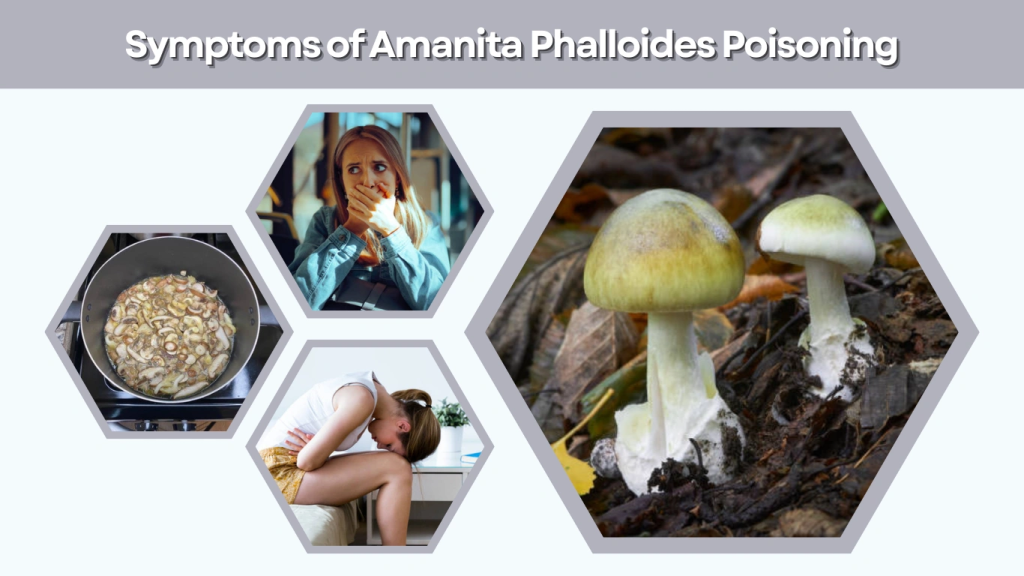
Amanita phalloides poisoning is particularly dangerous because symptoms are delayed. By the time a person feels seriously ill, internal organ damage may already be underway.
Stage 1: Delayed Onset (6–24 Hours)
Unlike many foodborne illnesses, symptoms do not appear immediately. After 6 to 24 hours, victims may experience:
- Severe vomiting
- Watery diarrhea
- Abdominal pain and cramping
- Dehydration
This phase can be intense and exhausting.
Stage 2: Temporary Improvement
After the initial gastrointestinal distress, symptoms may appear to improve. This false recovery phase can last a day or two. However, during this time, amatoxins continue damaging the liver and kidneys.
Stage 3: Liver and Kidney Failure
Without prompt medical treatment, the third stage may include:
- Jaundice (yellowing of the skin and eyes)
- Confusion or altered mental state
- Internal bleeding
- Liver and kidney failure
At this stage, the condition can become life-threatening.
Treatment and Survival Chances
Immediate medical attention is critical if Amanita phalloides ingestion is suspected. Do not wait for symptoms to worsen.
Emergency Medical Response
Doctors may administer:
- Activated charcoal to reduce toxin absorption
- Intravenous (IV) fluids to prevent dehydration
- Intensive monitoring of liver function
Early intervention significantly improves survival rates.
Advanced Treatment Options
In severe cases, additional treatments may include:
- Medications aimed at protecting liver cells
- Dialysis if kidney function declines
- Liver transplant when irreversible damage occurs
Modern medical care has improved outcomes, but fatalities still occur, particularly when treatment is delayed.
Importance of Early Intervention
Because symptoms are delayed, many victims underestimate the seriousness of the situation. Seeking immediate medical help—even before symptoms appear—can make the difference between recovery and fatal organ failure.
How to Safely Identify Wild Mushrooms
Preventing poisoning begins with responsible foraging practices. Accurate Amanita phalloides identification depends on careful examination and caution.
- Never rely on a single identifying feature.
- Always dig up the entire mushroom to inspect the base for a volva.
- Check the gills, stem ring, cap characteristics, and spore print together.
- Avoid consuming wild mushrooms unless identification is confirmed by an expert.
- Join local mycological groups to learn from experienced foragers.
A common safety rule is: “When in doubt, throw it out.” No wild mushroom is worth risking your life.
FAQs
How can you identify Amanita phalloides?
Amanita phalloides can be identified by its greenish to pale cap, white gills, white spore print, ring on the stem, and a cup-like volva at the base. Accurate identification requires examining all features together, especially digging up the entire base to check for the volva.
Is Amanita phalloides always green?
No, Amanita phalloides are not always green. While many specimens have olive or greenish caps, others may appear yellowish, pale brown, or almost white. Because color varies widely, identification should never rely solely on cap color.
Where are Amanita phalloides commonly found?
Amanita phalloides is commonly found in Europe, North America, Australia, and parts of Asia and South America. It grows near hardwood trees such as oak, beech, and chestnut, often appearing in forests, parks, and residential landscapes.
What makes Amanita phalloides so poisonous?
The mushroom contains amatoxins, which block essential cellular processes in the liver. These toxins prevent cells from producing vital proteins, leading to liver failure. Even small amounts can cause severe organ damage and potentially fatal poisoning.
Can you survive eating Amanita phalloides?
Yes, survival is possible with rapid medical treatment. Early hospitalization, toxin management, and supportive care greatly improve outcomes. However, delayed treatment can result in liver failure and may require a liver transplant, making it extremely dangerous.
Conclusion
Amanita phalloides is one of the most dangerous mushrooms in the world, responsible for numerous fatal poisonings each year. Proper Amanita phalloides identification requires careful examination of the cap, gills, stem, and especially the volva at the base. Because it closely resembles edible species, caution is essential when foraging. If ingestion is suspected, seek immediate medical attention. When it comes to wild mushrooms, careful identification—and sometimes avoidance—is the safest approach.