
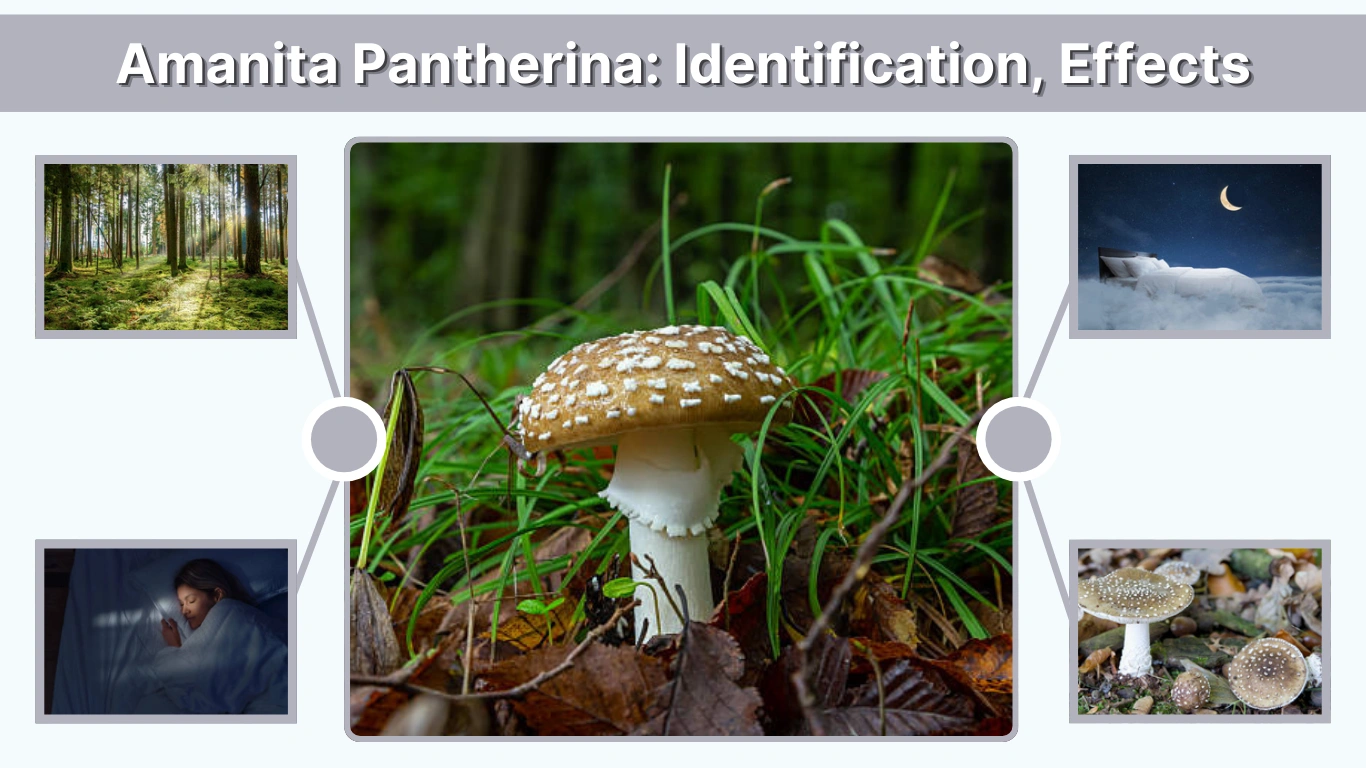
Amanita pantherina, commonly known as the Panther Cap, is a toxic and psychoactive mushroom found in temperate regions around the world. Although it is sometimes confused with other Amanita species, this mushroom contains powerful compounds that can cause serious neurological and physical symptoms. Proper Amanita pantherina identification is essential for foragers and outdoor enthusiasts, as misidentification can lead to poisoning. Understanding its appearance, habitat, and potential effects helps reduce risks and promotes safer mushroom awareness.
What Is Amanita Pantherina?
Amanita pantherina is a poisonous mushroom species belonging to the Amanita genus, a group that includes both deadly toxic and psychoactive varieties. It is widely recognized for its brown cap decorated with white wart-like patches and its distinctive bulbous base.
Scientific Classification
- Kingdom: Fungi
- Genus: Amanita
- Species: Amanita pantherina
Like other Amanita species, it forms symbiotic relationships with tree roots, allowing it to thrive in forest ecosystems.
Common Names
Amanita pantherina is known by several common names, including:
- Panther Cap
- False Blusher
The name “Panther Cap” refers to its dark brown cap, which resembles the coloring of a panther.
General Overview
This mushroom typically features a medium-sized brown cap with scattered white veil remnants. It is considered more potent than the well-known Amanita muscaria (Fly Agaric). While fatalities are rare, the mushroom can cause intense psychoactive and toxic reactions, making it unsafe for consumption.
Amanita Pantherina Identification Guide
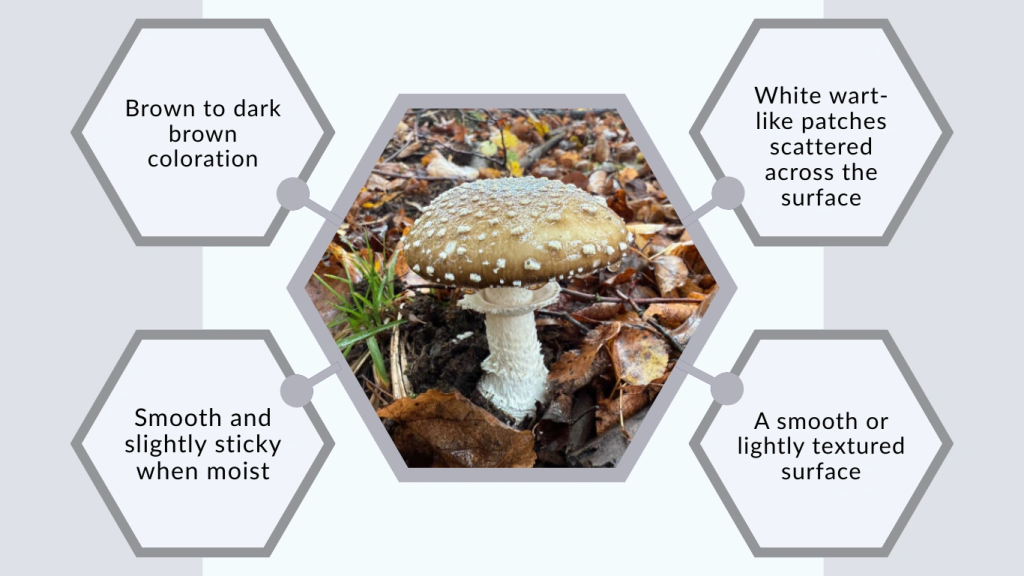
Correct Amanita pantherina identification requires examining multiple characteristics together. Color alone is not sufficient, as environmental conditions can affect appearance. Carefully inspect the cap, gills, stem, and especially the base.
Cap Characteristics
The cap of Amanita pantherina usually measures between 5 and 12 cm in diameter. When young, it is rounded or convex, gradually flattening as it matures.
Key features include:
- Brown to dark brown coloration
- White wart-like patches scattered across the surface
- Smooth and slightly sticky when moist
The white patches are remnants of the universal veil that once enclosed the mushroom during early development. Heavy rain can wash these warts away, making identification more difficult.
Gills and Spore Print
The gills are:
- White
- Crowded
- Free from the stem
Amanita pantherina produces a white spore print, a common characteristic of many Amanita species. While helpful, a white spore print alone does not confirm identity, as other species share this feature.
Stem (Stipe) Features
The stem is typically white and ranges from 6 to 12 cm tall. It is slender but sturdy and may have a slightly fibrous texture.
Important identifying traits include:
- A thin, often fragile ring (annulus) near the upper portion
- A smooth or lightly textured surface
The ring may sometimes disappear in older specimens, so it should not be the only identifying feature relied upon.
Basal Bulb and Volva
One of the most critical features in Amanita pantherina identification is the base of the stem.
Unlike Amanita phalloides, which has a sack-like volva, Amanita pantherina has a rounded bulb with distinct rim-like edges. These concentric ridges or collar-like structures around the bulb are important distinguishing characteristics.
Because the base is often partially buried, it is essential to gently dig up the entire mushroom when examining it. Cutting the stem at ground level can hide this vital identifying feature.
Flesh and Odor
The flesh of Amanita pantherina is white and does not significantly change color when cut. The odor is generally mild and not particularly distinctive. As with many mushrooms, smell should not be used as a primary identification tool.
Amanita Pantherina Habitat
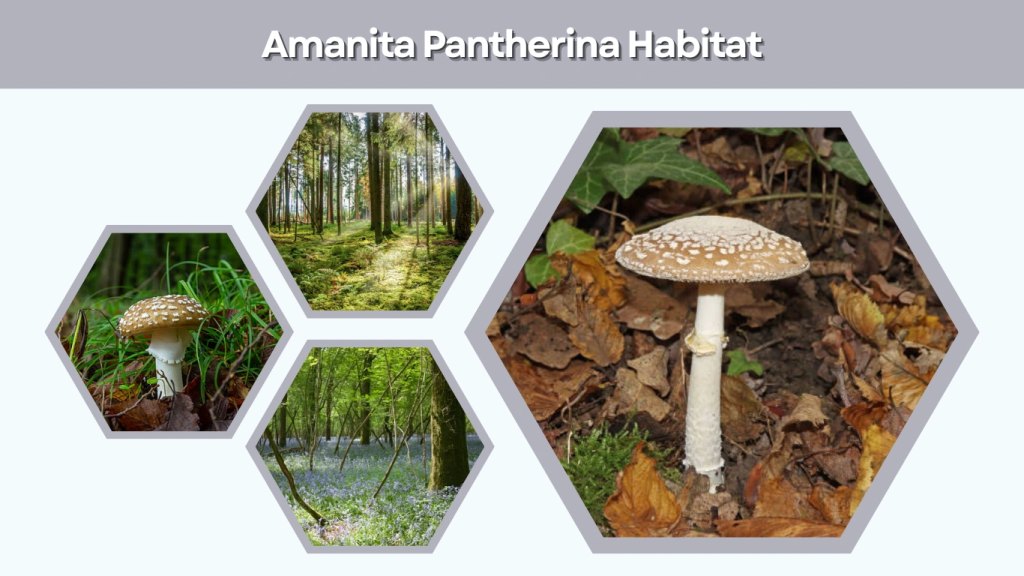
Understanding Amanita pantherina habitat is helpful for identification and awareness.
Geographic Distribution
Amanita pantherina is widely distributed in:
- Europe
- North America
- Parts of Asia
It is most common in temperate climates and is well established in forested regions.
Preferred Forest Types
This species commonly grows in:
- Coniferous forests
- Mixed woodlands
- Areas with pine, spruce, or fir trees
It can also occasionally be found near hardwood trees such as oak.
Mycorrhizal Relationship
Amanita pantherina forms a mycorrhizal relationship with trees. This means it exchanges nutrients with tree roots—providing minerals to the tree while receiving sugars in return. Because of this relationship, it does not grow in open fields without suitable host trees.
Growing Season
The mushroom typically appears in late summer and fall, especially after rainfall. Moist soil and moderate temperatures create ideal fruiting conditions.
Amanita Pantherina Effects
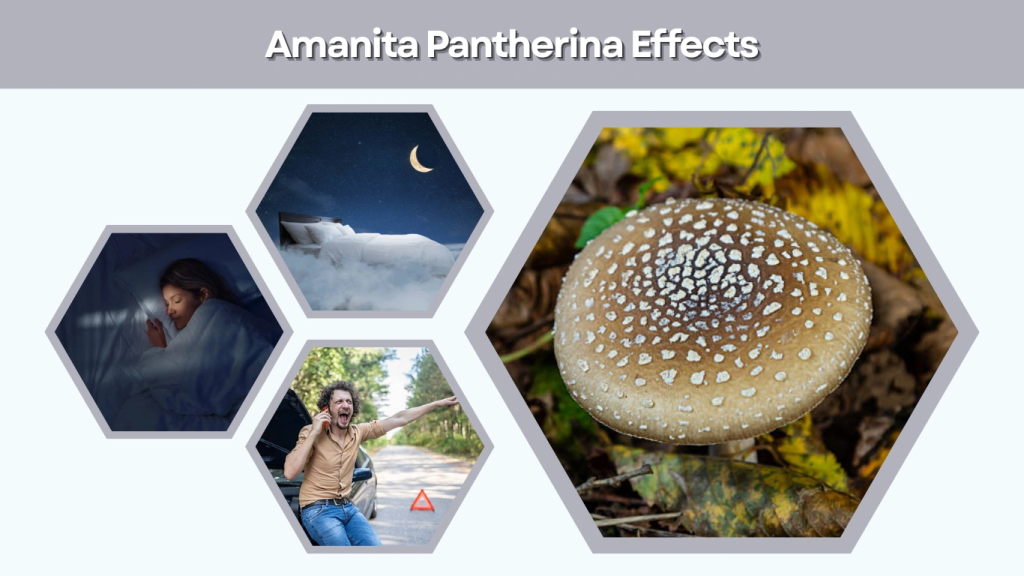
Understanding Amanita pantherina effects is essential because this mushroom contains potent psychoactive and toxic compounds. While it is not typically as deadly as some other Amanita species, it can cause severe and unpredictable reactions.
Active Compounds
Amanita pantherina contains two primary psychoactive substances:
- Ibotenic acid
- Muscimol
Ibotenic acid converts into muscimol when dried or metabolized. Muscimol acts on the central nervous system, affecting brain function and altering perception, coordination, and consciousness.
Neurological Effects
The neurological effects can vary depending on the amount consumed, the person’s body weight, and individual sensitivity. Common mental and neurological symptoms include:
- Confusion
- Hallucinations
- Delirium
- Disorientation
- Agitation or unusual behavior
- Drowsiness or deep sleep
Some individuals may experience vivid dreams or altered perception of time and space. In more severe cases, seizures or extreme confusion may occur.
Physical Symptoms
In addition to psychological effects, physical symptoms are common:
- Nausea
- Vomiting
- Sweating
- Dizziness
- Loss of coordination
- Muscle twitching
These symptoms can be distressing and may require medical supervision.
Onset and Duration
Symptoms usually begin within 30 minutes to 2 hours after ingestion. The effects can last anywhere from 6 to 12 hours, though lingering fatigue or confusion may persist longer.
Toxicity and Risk Level
Although fatalities are rare, Amanita pantherina is considered more potent than Amanita muscaria. High doses can lead to severe intoxication, dehydration from vomiting, and dangerous behavior due to confusion. Hospitalization is sometimes necessary, especially in children or vulnerable individuals.
Amanita Pantherina vs Similar Species
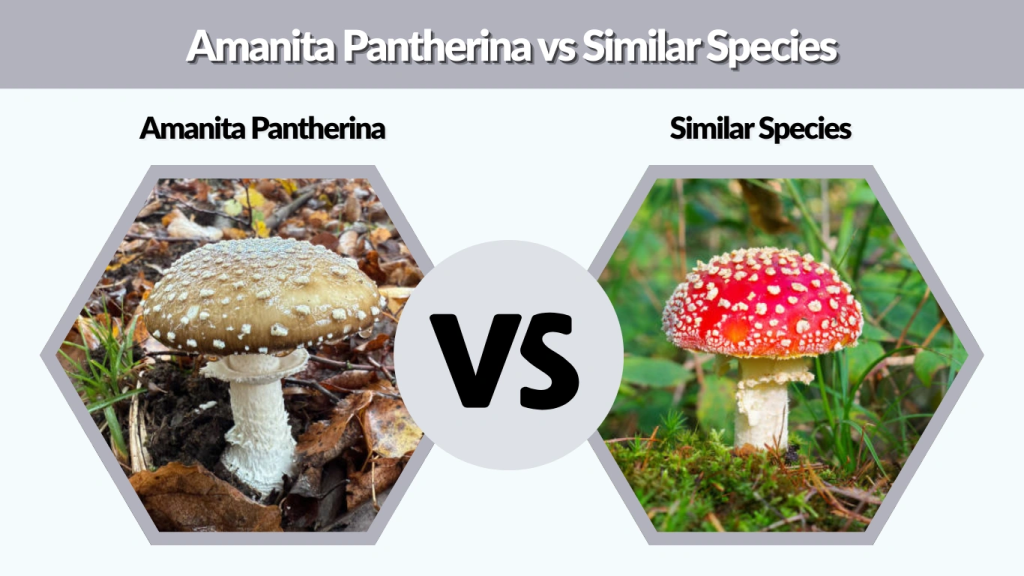
Amanita pantherina can resemble other mushroom species, increasing the risk of misidentification.
Comparison With Amanita Muscaria
Amanita muscaria (Fly Agaric) is perhaps the most recognizable Amanita species due to its red cap with white spots. However, color variations of A. muscaria can appear orange or yellow, which may cause confusion.
Key differences:
- A. pantherina typically has a brown cap rather than bright red.
- A. pantherina is generally considered more potent in its psychoactive effects.
- The basal bulb of A. pantherina has more pronounced rim-like ridges.
Comparison With Amanita Rubescens
Amanita rubescens (The Blusher) is sometimes considered edible when properly prepared, though caution is advised.
Distinguishing features:
- A. rubescens flesh turns reddish when cut or bruised.
- A. pantherina flesh remains white.
- Differences exist in the structure of the base and ring.
Why Confusion Happens
Confusion often occurs because:
- Cap warts may wash away in rain.
- Young specimens look different from mature ones.
- Several Amanita species share white gills and white spore prints.
What to Do in Case of Suspected Poisoning
If Amanita pantherina ingestion is suspected, immediate action is important.
Immediate Steps
- Seek medical attention immediately.
- Do not wait for symptoms to worsen.
- Avoid attempting home remedies.
- If possible, bring a sample of the mushroom for identification.
Medical Treatment
Treatment usually involves supportive care, including:
- Monitoring vital signs
- Managing nausea and vomiting
- Providing fluids to prevent dehydration
- Observation for neurological symptoms
Most patients recover fully with appropriate medical care.
Recovery Outlook
While symptoms can be intense and frightening, most cases are not fatal. Recovery typically occurs within 24 hours, though fatigue or mild confusion may persist briefly.
Safe Mushroom Foraging Practices
Preventing poisoning begins with responsible foraging habits.
- Avoid consuming any wild Amanita species.
- Learn to identify mushrooms using multiple reliable sources.
- Always examine the entire mushroom, including the base.
- Join local mushroom clubs or consult experienced mycologists.
- Never rely solely on online photos for identification.
When uncertain, it is safest not to consume the mushroom.
FAQs
Is Amanita pantherina poisonous?
Yes, Amanita pantherina is poisonous. It contains psychoactive compounds such as ibotenic acid and muscimol that affect the nervous system. While it is rarely fatal, it can cause severe neurological and physical symptoms that may require medical treatment.
What are the effects of Amanita pantherina?
The effects include confusion, hallucinations, dizziness, nausea, vomiting, muscle twitching, and drowsiness. Symptoms usually begin within two hours of ingestion and can last up to 12 hours. Severity varies depending on the amount consumed and individual sensitivity.
Where does Amanita pantherina grow?
Amanita pantherina grows in temperate regions across Europe, North America, and parts of Asia. It is commonly found in coniferous and mixed forests, forming mycorrhizal relationships with trees such as pine and spruce.
How can you identify Amanita pantherina?
Identification involves checking for a brown cap with white warts, white gills, a white spore print, a fragile ring on the stem, and a rounded bulb with rim-like edges at the base. Examining the entire mushroom is essential for accurate identification.
Is Amanita pantherina stronger than Amanita muscaria?
Yes, Amanita pantherina is generally considered more potent than Amanita muscaria. It contains similar active compounds but often in higher concentrations, leading to stronger psychoactive and toxic effects.
Conclusion
Amanita pantherina is a toxic and psychoactive mushroom that requires careful identification and caution. Recognizing its brown cap with white warts, white gills, and distinctive bulbous base is key to avoiding dangerous mistakes. Understanding Amanita pantherina effects and habitat further supports safe awareness. When foraging, responsible identification and expert consultation are essential. In the case of suspected ingestion, prompt medical care is the safest course of action.