
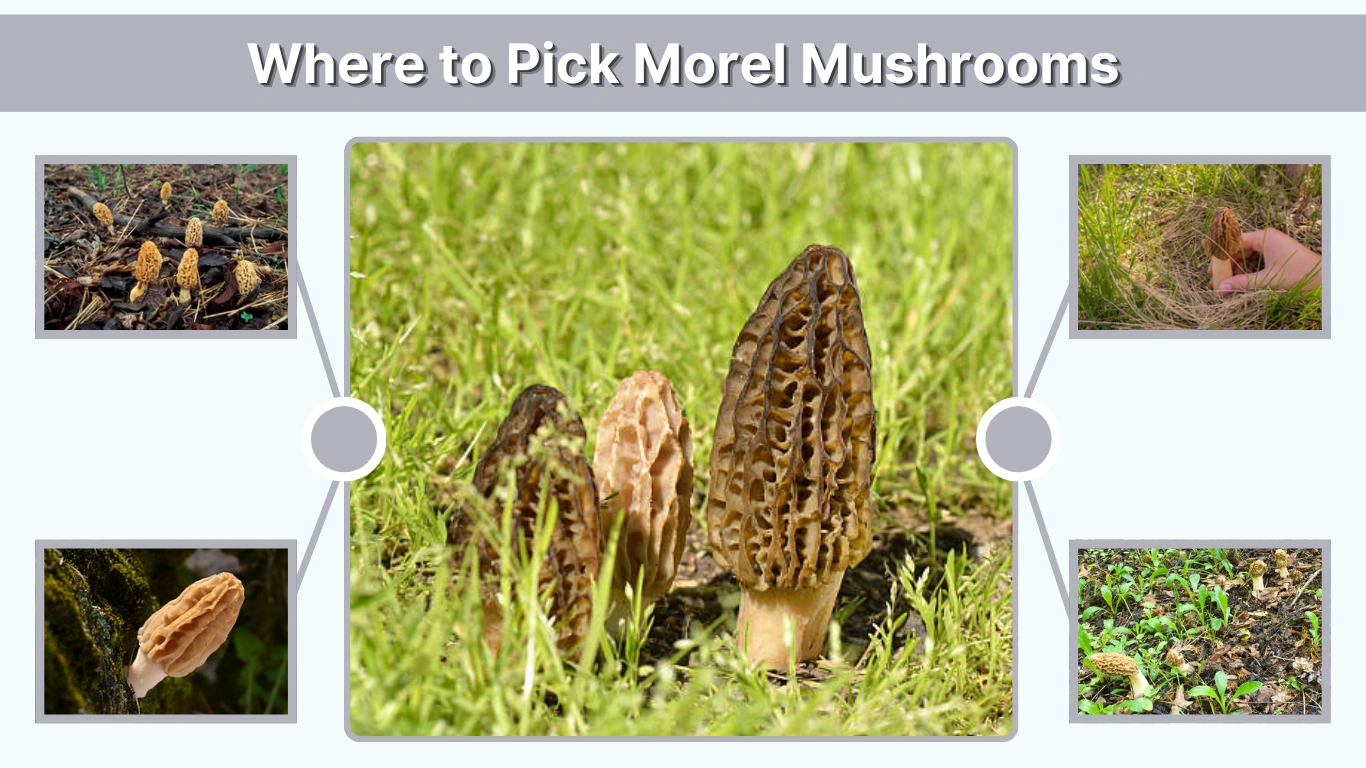
Morel mushrooms are one of the most sought-after wild mushrooms in the world, prized for their rich, earthy flavor and unmistakable honeycomb appearance. Unlike cultivated mushrooms, morels grow only in specific natural conditions, making them a seasonal treasure for foragers. Finding them isn’t just about being in the woods at the right time — it’s about understanding where they grow, what environments they prefer, and how nature signals their presence.
For beginners and experienced hunters alike, knowing where to pick morel mushrooms can dramatically improve success. This guide breaks down the habitats, forests, and regions where morels are most commonly found, helping you spend less time guessing and more time harvesting.
Where Do Morel Mushrooms Grow?

Morel mushrooms grow in very specific environments, and recognizing these patterns is the foundation of successful foraging. They thrive in natural ecosystems where moisture, soil composition, and tree life work together.
Natural Habitat of Morels
Morels are most often found in hardwood forests, especially areas with rich, well-drained soil and plenty of decaying organic matter. They prefer moist ground but do not grow well in standing water. Forest floors covered with leaf litter, fallen branches, and decomposing wood create ideal conditions for their growth.
South-facing slopes are particularly productive early in the season because they warm up faster. As the season progresses, north-facing slopes and shaded areas may begin producing morels as well.
Trees Commonly Associated With Morels
Certain trees are closely linked to morel growth. Dead or dying elm trees are among the most reliable indicators, especially in areas where elm disease has caused widespread decline. Ash trees are another strong sign, particularly in regions affected by emerald ash borer infestations.
Other tree species associated with morels include oak, sycamore, poplar, and cottonwood. While morels do not grow directly on trees, the root systems and decaying matter around these species often create the right underground conditions for morels to form.
Best Places to Pick Morel Mushrooms

Knowing the right type of place to search is just as important as knowing the right trees. Morels tend to appear in areas where the environment is slightly disturbed or transitioning.
Forest Areas That Produce Morels
Creek bottoms and riverbanks are excellent places to search because they retain moisture longer into the spring. Forest edges — where woods meet fields or clearings — are also productive zones, as they combine sunlight with organic matter.
Old orchards, especially abandoned apple orchards, are another classic morel hotspot. Even if the trees are long gone, the soil conditions they left behind can still support morel growth for decades.
Burn Sites and Disturbed Land
One of the most well-known morel environments is burn sites following forest fires. In the year after a wildfire, some areas experience massive morel flushes. The combination of ash-rich soil, reduced competition, and altered nutrients creates ideal conditions.
Logging areas, construction-disturbed land, and old homesteads can also produce morels. Any area where the soil has been disrupted but allowed to recover naturally is worth investigating.
Best States and Regions for Finding Morels
While morels can be found in many parts of the world, certain regions in the United States are especially famous for consistent and abundant harvests.
Midwest and Great Lakes Region
The Midwest is widely considered the heart of morel country. States like Michigan, Indiana, Illinois, Ohio, and Wisconsin offer ideal combinations of hardwood forests, fertile soil, and seasonal weather patterns. Spring rains followed by mild temperatures create perfect growing conditions, making this region a favorite among experienced foragers.
Other Productive Regions
The Appalachian Mountains, stretching from the southeastern U.S. into the Northeast, also produce excellent morel harvests thanks to diverse forests and varied elevation. Pennsylvania and New York are particularly known for reliable spring finds.
On the West Coast, the Pacific Northwest is famous for burn-site morels, especially in post-wildfire years. Elevation plays a major role here, with morels appearing later in the season at higher altitudes.
When and Where to Pick Morels

Timing is just as important as location when it comes to morel hunting. Morels are a spring mushroom, but their exact appearance depends on regional climate, elevation, and weather patterns.
Morel Season by Region
In the southern United States, morel season can begin as early as late February or March, especially in warmer lowland areas. As temperatures gradually rise, the season moves northward. The Midwest typically sees peak morel growth from mid-April through early May, while northern states and higher elevations may not produce morels until late May or even early June.
Elevation plays a key role as well. In mountainous regions, morels often appear in waves, starting in lower valleys and progressing uphill as the soil warms. Experienced foragers will follow this progression to extend their harvesting season.
Weather and Soil Conditions
Soil temperature is one of the most reliable indicators for morel growth. When the ground consistently reaches about 50 to 55°F (10 to 13°C), morels are likely to begin emerging. A period of spring rain followed by several warm days often triggers new growth.
Overly dry conditions can slow or stop morel production, while heavy flooding may wash away developing mushrooms. Paying attention to recent weather patterns can help determine when a promising area is worth revisiting.
How to Find Morel Mushrooms in the Wild

Even in the right place at the right time, morels can be surprisingly easy to miss. Their natural coloring allows them to blend into leaf litter and forest debris, requiring a trained eye and patience.
Visual and Search Techniques
Instead of staring directly at the ground, many successful foragers scan the forest floor from a distance, looking for the distinctive honeycomb shape rather than color alone. Morels often appear in small clusters, so spotting one usually means more are nearby.
Walking slowly is essential. Rushing through an area increases the chances of stepping past mushrooms that are partially hidden by leaves or grass. Changing your viewing angle and kneeling occasionally can reveal morels that were invisible from standing height.
Tips for Beginner Morel Hunters
Beginners should focus on learning tree identification before covering large areas. Understanding where elm, ash, and poplar trees grow can narrow the search significantly. Keeping a notebook or using a GPS app to mark successful spots can help build a reliable hunting map for future seasons.
Returning to the same locations year after year is often rewarding, as morels frequently reappear in similar areas under the right conditions.
Ethical and Legal Considerations
Responsible foraging ensures that morel populations remain healthy and accessible for future seasons. Always verify local regulations before harvesting, especially on public land. Some state parks and forests require permits or limit the number of mushrooms that can be collected.
When picking morels, cutting the stem at ground level rather than pulling the entire mushroom helps preserve the underground network. Avoid overharvesting, and leave smaller or immature mushrooms behind to continue their growth cycle.
Common Mistakes When Picking Morels
One of the most common mistakes is searching too early, before soil temperatures are warm enough. Another frequent error is ignoring tree species and randomly wandering through the woods, which often leads to frustration.
Misidentifying mushrooms is also a serious concern. False morels can resemble true morels but may be toxic. Learning proper identification is essential before consuming any wild mushroom.
Safety Tips for Morel Mushroom Foraging
Never eat raw morels, as they contain compounds that can cause digestive upset. Always cook them thoroughly before consumption. Avoid harvesting mushrooms near roadsides, industrial areas, or polluted soil, as morels can absorb harmful substances.
If you are unsure about identification, consult a local foraging group or expert before eating your harvest. Safety should always come before quantity.
Conclusion
Finding morel mushrooms is a rewarding blend of knowledge, patience, and observation. By understanding where morels grow, when they appear, and how to search effectively, you can greatly increase your chances of success. Each season offers new lessons, and over time, experience becomes your most valuable tool. With responsible harvesting and careful identification, morel hunting can become a fulfilling annual tradition that connects you closely with the natural world.