
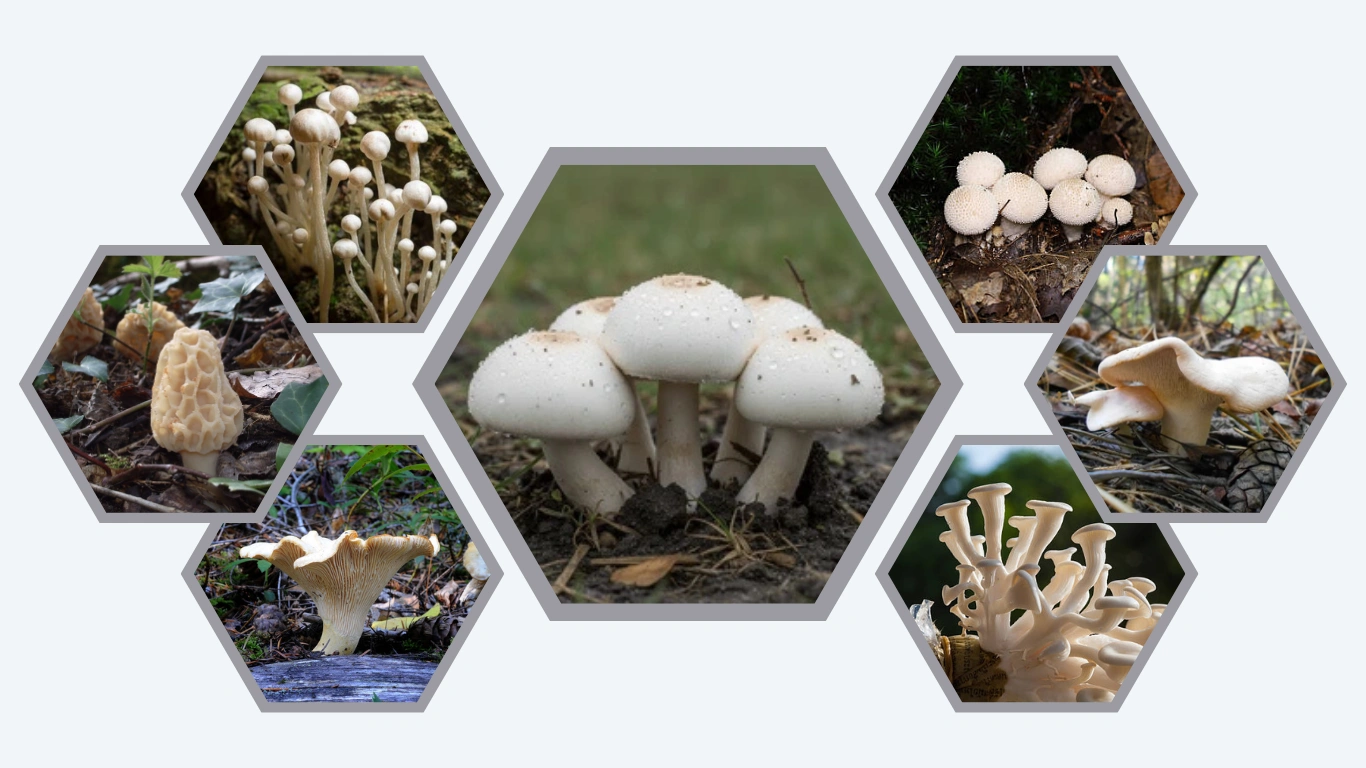
White mushrooms are not only attractive in appearance but also highly valued for their nutritional benefits and culinary versatility. From everyday kitchen staples like white button mushrooms to rare wellness varieties such as white albino reishi, these fungi offer a wide range of flavors, textures, and health-supporting compounds. They are naturally low in calories, rich in fiber, and packed with essential vitamins, minerals, and antioxidants. In this guide, you’ll explore some of the healthiest types of white mushrooms and what makes each one special.
1. White Button Mushroom (Agaricus bisporus)

The white button mushroom is the most widely consumed mushroom in the world and one of the healthiest white mushroom varieties. It has a mild flavor, soft texture, and high versatility in cooking. Commonly used in salads, soups, stir-fries, and sauces, it is low in calories yet rich in nutrients, making it a popular choice for everyday healthy meals.
Identification
- Smooth, round, white cap
- Cap size usually 2–5 cm wide
- Short, thick white stem
- Pink gills when young, turning dark brown with age
- Mild, slightly earthy aroma
- Soft, tender flesh
Habitat
White button mushrooms are cultivated worldwide and originally developed from wild field mushrooms. They grow best in controlled, indoor environments on composted organic matter. In nature, their ancestors were found in grasslands and meadows rich in decaying plant material.
Nutrition
These mushrooms are low in calories and fat but rich in important nutrients. They provide B-vitamins such as riboflavin, niacin, and pantothenic acid, along with selenium, potassium, phosphorus, and small amounts of vitamin D when exposed to light.
Health Benefits
White button mushrooms support immune function, help maintain healthy metabolism, and contribute to heart health. Their antioxidants assist in reducing oxidative stress, while their fiber content supports digestion and gut health. They are also beneficial for weight management.
Culinary Uses
White button mushrooms are extremely versatile in cooking. They can be eaten raw, sautéed, grilled, roasted, or added to soups, pasta, curries, and omelets. Their mild taste allows them to absorb flavors well, making them suitable for both Western and Asian dishes.
Storage and Handling
Fresh white button mushrooms should be stored in a paper bag in the refrigerator to prevent excess moisture buildup. They are best used within 5–7 days. Clean them gently with a damp cloth or quick rinse before cooking, and avoid soaking to preserve texture.
2. White Oyster Mushroom (Pleurotus ostreatus)

White oyster mushrooms are popular edible mushrooms known for their delicate, slightly sweet flavor and soft, velvety texture. They are widely valued for both nutrition and culinary versatility. Often used in stir-fries, soups, and grilled dishes, white oyster mushrooms are low in calories, high in protein compared to many vegetables, and rich in beneficial compounds.
Identification
- Fan- or oyster-shaped white caps
- Caps usually 5–15 cm wide
- Short or nearly absent stem
- Soft, white to cream-colored flesh
- Decurrent gills running down the stem
- Mild, slightly seafood-like aroma
Habitat
White oyster mushrooms naturally grow in clusters on dead or dying hardwood trees. They are also widely cultivated on straw, sawdust, and agricultural waste. In the wild, they are most commonly found in temperate and subtropical forests.
Nutrition
These mushrooms are a good source of protein, dietary fiber, B-vitamins, potassium, iron, and antioxidants. They also contain beta-glucans and small amounts of vitamin D, especially when grown with light exposure.
Health Benefits
White oyster mushrooms support immune health, help regulate cholesterol levels, and contribute to heart health. Their antioxidants assist in reducing inflammation, while their fiber promotes healthy digestion and blood sugar balance.
Culinary Uses
They are excellent for sautéing, roasting, grilling, and adding to soups, noodles, curries, and plant-based meat substitutes. Their tender texture and umami flavor make them a favorite in vegetarian and Asian cuisine.
Storage and Handling
Store white oyster mushrooms in a paper bag or breathable container in the refrigerator. They are best used within 4–6 days. Clean gently with a soft brush or damp cloth and trim the tough base before cooking.
3. Enoki Mushroom (Flammulina velutipes)

Enoki mushrooms are slender, white mushrooms known for their long stems, tiny caps, and crisp texture. They have a mild, slightly sweet flavor and are especially popular in East Asian cuisine. Often eaten in soups, hot pots, salads, and noodle dishes, enoki mushrooms are valued for being low in calories while offering a good range of nutrients.
Identification
- Very long, thin white stems
- Small, rounded white caps
- Grows in tight bundled clusters
- Smooth, glossy surface
- Crisp, crunchy texture
- Mild, slightly fruity aroma
Habitat
In the wild, enoki mushrooms grow on decaying hardwood trees, especially elm, mulberry, and beech. Cultivated enoki are grown indoors in dark, controlled conditions, which give them their characteristic long white stems and tiny caps.
Nutrition
Enoki mushrooms provide dietary fiber, protein, B-vitamins, potassium, copper, and antioxidants. They also contain polysaccharides and amino acids that support overall wellness.
Health Benefits
Enoki mushrooms help support immune function, promote gut health, and contribute to heart health. Their fiber aids digestion, while antioxidant compounds help protect cells from oxidative damage.
Culinary Uses
They are commonly added to soups, ramen, hot pots, stir-fries, and salads. Enoki mushrooms cook very quickly and are also enjoyed lightly blanched or wrapped in meats and vegetables.
Storage and Handling
Keep enoki mushrooms refrigerated in their original packaging or a paper bag. Use within 5–7 days for best freshness. Rinse briefly before use and trim off the dirty root base before cooking.
4. White Beech Mushroom (Shimeji) (Hypsizygus tessellatus)

White beech mushrooms, also called white shimeji, are small, clustered mushrooms with firm stems and rounded caps. They have a mild, nutty, slightly buttery flavor that becomes more pleasant when cooked. Popular in Asian cuisine, they are often used in stir-fries, soups, noodle dishes, and hot pots.
Identification
- Small, rounded white caps
- Thin, firm white stems
- Grow in tight clusters from a single base
- Smooth surface with a crisp texture
- Mild, nutty aroma
- Flesh remains firm after cooking
Habitat
White beech mushrooms naturally grow on dead beech and other hardwood trees. Commercially, they are cultivated indoors on hardwood-based growing media under controlled temperature and humidity.
Nutrition
These mushrooms provide dietary fiber, protein, B-vitamins, potassium, copper, and antioxidants. They are also known for containing compounds that support brain and immune health.
Health Benefits
White beech mushrooms may help support brain function, immune response, and overall vitality. Their antioxidants assist in protecting cells, while their fiber supports digestion and metabolic balance.
Culinary Uses
They are best cooked and commonly used in stir-fries, miso soup, ramen, hot pots, and rice dishes. Cooking removes their natural bitterness and enhances their pleasant, nutty flavor.
Storage and Handling
Store white beech mushrooms in the refrigerator in their original packaging or a paper bag. They stay fresh for about one week. Trim the cluster base and rinse quickly before cooking.
5. Snow Fungus (Tremella fuciformis)

Snow fungus, also known as white jelly mushroom or silver ear fungus, is a delicate, ruffled white mushroom prized for its gelatinous texture and mild taste. It has long been used in traditional Asian cuisine and herbal practices. Snow fungus is especially popular in soups, desserts, and health tonics because of its ability to absorb flavors and provide a smooth, slippery mouthfeel.
Identification
- Thin, frilly, brain-like white to translucent folds
- Soft, jelly-like, elastic texture
- Irregular, ruffled shape
- Becomes plump and slightly clear when soaked
- Very mild or neutral aroma
- Lightweight when dried, spongy when fresh
Habitat
Snow fungus naturally grows on dead or fallen hardwood branches, often in warm and humid forests. It is commonly cultivated on logs or controlled substrates, especially in China and Southeast Asia.
Nutrition
Snow fungus is low in calories and contains dietary fiber, polysaccharides, vitamin D (in small amounts), potassium, and antioxidants. It is especially known for its moisture-retaining compounds.
Health Benefits
Snow fungus is valued for supporting skin hydration, immune function, and overall vitality. Its polysaccharides may help improve digestion, support gut health, and assist the body in managing inflammation.
Culinary Uses
It is widely used in sweet soups, herbal desserts, and savory broths. Snow fungus must be soaked if dried, trimmed, and simmered to achieve its signature soft, jelly-like texture.
Storage and Handling
Dried snow fungus should be stored in a cool, dry place. Fresh snow fungus should be refrigerated and used within a few days. Soak dried pieces in water until fully expanded, then trim the hard base before cooking.
6. White Morel Mushroom (Morchella spp.)

White morel mushrooms are rare, highly prized edible fungi known for their honeycomb-like caps and rich, earthy flavor. Compared to darker morels, white morels are often milder and slightly nuttier. They are considered a gourmet mushroom and are commonly used in fine cooking, especially in sauces, risottos, and sautéed dishes.
Identification
- Cone-shaped cap with deep honeycomb pits
- Creamy white to pale beige color
- Hollow cap and stem
- Firm but delicate texture
- Distinct earthy, nutty aroma
- Cap attached directly to the stem
Habitat
White morels grow in the wild in forests, orchards, and areas disturbed by fire. They are often found near elm, ash, apple, and pine trees during spring. True morels are difficult to cultivate and are mostly wild-harvested.
Nutrition
White morels provide protein, dietary fiber, vitamin D, iron, copper, potassium, and B-vitamins. They are also rich in antioxidants and essential amino acids.
Health Benefits
These mushrooms support immune health, energy metabolism, and bone strength. Their antioxidants help protect cells, while their minerals support blood health and muscle function.
Culinary Uses
White morels must always be cooked before eating. They are excellent sautéed in butter, added to cream sauces, stuffed, or used in gourmet soups and rice dishes.
Storage and Handling
Fresh morels should be refrigerated and used within a few days. Dried morels can be stored long-term in airtight containers. Clean gently to remove debris, and always cook thoroughly before consumption.
7. White Portobello Mushroom (Agaricus bisporus, mature white form)

White portobello mushrooms are the fully mature form of white button mushrooms, featuring larger caps and a meatier texture. While classic portobellos are usually brown, the white variety offers a slightly milder flavor with the same dense, satisfying bite. They are popular as a healthy meat substitute in many dishes.
Identification
- Large, flat to slightly domed white caps
- Cap diameter often 10–15 cm or more
- Thick, short white stem
- Open gills, darker with age
- Firm, dense flesh
- Mild, earthy aroma
Habitat
Like white button mushrooms, white portobellos are cultivated worldwide on composted organic substrates in controlled indoor environments. Their wild ancestors grew naturally in grassy fields and rich soils.
Nutrition
White portobello mushrooms are low in calories and fat, while providing fiber, B-vitamins, potassium, phosphorus, selenium, and antioxidants. They also supply small amounts of vitamin D when exposed to light.
Health Benefits
These mushrooms support heart health, immune function, and muscle health. Their fiber aids digestion, while their minerals help maintain healthy blood pressure and metabolism.
Culinary Uses
They are excellent for grilling, roasting, stuffing, baking, and using as burger substitutes. Their large caps hold marinades well and develop a rich flavor when cooked.
Storage and Handling
Store in the refrigerator in a paper bag and use within 4–7 days. Wipe clean with a damp cloth and remove the stem if a softer texture is desired before cooking.
8. White Chanterelle (Cantharellus spp.)

White chanterelles are elegant, pale-colored mushrooms valued for their delicate fruity aroma and mildly peppery, nutty flavor. Compared to golden chanterelles, white varieties are subtler in taste but equally prized in gourmet cooking. They are usually foraged from the wild and featured in refined dishes.
Identification
- Pale white to ivory funnel-shaped cap
- Wavy, irregular cap edges
- Blunt, forked ridges instead of true gills
- Thick, solid white stem
- Smooth, matte surface
- Light fruity or apricot-like aroma
Habitat
White chanterelles grow in the wild in forests, forming symbiotic relationships with hardwood and conifer trees. They are commonly found on forest floors in mossy or leaf-littered soil during warm, wet seasons.
Nutrition
They provide dietary fiber, vitamin D, potassium, B-vitamins, and antioxidants. White chanterelles are also known to contain compounds that support immune and metabolic health.
Health Benefits
White chanterelles may support immune function, eye health, and digestion. Their antioxidants help protect cells, while their fiber contributes to gut health and overall wellness.
Culinary Uses
They are excellent sautéed, added to pasta, eggs, soups, risottos, and cream sauces. Their firm texture holds well during cooking and pairs nicely with herbs and mild spices.
Storage and Handling
Fresh chanterelles should be kept refrigerated in a paper bag and used within a few days. Clean gently with a brush to remove soil and avoid soaking, which can affect texture.
9. White Hedgehog Mushroom (Hydnum repandum, pale form)

White hedgehog mushrooms are distinctive edible fungi known for their soft, tooth-like spines instead of gills. The pale or white forms have a mild, slightly sweet and nutty flavor. They are appreciated by foragers and cooks because they are easy to identify and versatile in the kitchen.
Identification
- Creamy white to pale ivory cap
- Soft, hanging spines (“teeth”) under the cap
- Irregular, wavy cap shape
- Thick, solid white stem
- Firm, brittle flesh
- Mild, pleasant mushroom aroma
Habitat
White hedgehog mushrooms grow on forest floors in association with hardwoods and conifers. They appear in late summer through autumn, often scattered or in small groups among leaf litter and moss.
Nutrition
These mushrooms provide dietary fiber, protein, potassium, iron, B-vitamins, and antioxidants. They are low in fat and calories while contributing useful micronutrients.
Health Benefits
White hedgehog mushrooms may support immune health, digestion, and general vitality. Their antioxidant compounds help reduce oxidative stress, while their minerals support nerve and muscle function.
Culinary Uses
They are excellent sautéed, roasted, or added to soups, pasta, and rice dishes. Their firm texture holds well when cooked, and their mild flavor pairs nicely with butter, garlic, and herbs.
Storage and Handling
Store fresh hedgehog mushrooms in the refrigerator in a breathable container and use within 3–5 days. Brush off debris and trim the base before cooking. Avoid washing until just before use.
10. White Lion’s Mane Mushroom (Hericium erinaceus, pale form)

White lion’s mane mushrooms are striking, shaggy fungi known for their cascading white spines that resemble a lion’s mane. They have a tender, meaty texture and a mild flavor often compared to seafood, especially crab or lobster. Beyond culinary appeal, they are also widely valued for their wellness properties.
Identification
- Rounded, clumped body with long white spines
- Pure white when fresh
- Soft, cottony appearance
- No cap or gills
- Tender, fibrous flesh
- Mild, seafood-like aroma
Habitat
White lion’s mane mushrooms naturally grow on dead or dying hardwood trees, especially oak, beech, and maple. They are found in temperate forests and are also widely cultivated on hardwood logs and sawdust substrates.
Nutrition
They contain protein, dietary fiber, potassium, zinc, B-vitamins, and unique bioactive compounds such as hericenones and erinacines.
Health Benefits
White lion’s mane mushrooms are known for supporting brain and nerve health, memory, and focus. They may also help support immune function and digestive health.
Culinary Uses
They are delicious sautéed, roasted, or used in soups, plant-based “crab” cakes, and noodle dishes. When cooked, their texture becomes tender and slightly stringy, similar to shellfish.
Storage and Handling
Store in the refrigerator in a paper bag or breathable container and use within 3–5 days. Clean gently with a damp cloth and slice before cooking.
11. White Matsutake (Tricholoma matsutake, pale form)

White matsutake mushrooms are highly prized wild mushrooms known for their firm texture and distinctive spicy-sweet aroma. While classic matsutake are often light brown, pale and whitish forms are also found and valued. They are considered a luxury ingredient in East Asian cuisine.
Identification
- Thick, white to pale ivory cap
- Firm, dense white flesh
- Short, stout white stem
- Partially closed cap when young
- Cottony veil ring on the stem
- Strong, spicy, cinnamon-like aroma
Habitat
White matsutake grow in symbiosis with pine and other conifer trees. They are found in forest soils, often hidden under leaf litter or needles, in temperate regions of Asia, Europe, and North America.
Nutrition
They provide dietary fiber, protein, potassium, phosphorus, B-vitamins, and antioxidant compounds. They are low in fat and calories while being rich in aromatic and bioactive substances.
Health Benefits
White matsutake mushrooms may support immune health, metabolism, and cellular protection. Traditional use also links them to vitality support due to their antioxidant and antimicrobial properties.
Culinary Uses
They are commonly grilled, steamed, added to soups, rice dishes, and clear broths. Matsutake are often cooked simply to preserve their unique fragrance.
Storage and Handling
Fresh matsutake should be wrapped in paper and stored in the refrigerator, ideally used within a few days. Clean gently with a brush and avoid soaking to protect their aroma.
12. White Puffball Mushroom (Calvatia spp., Lycoperdon spp.)

White puffball mushrooms are round, ball-shaped fungi that are edible and delicious when young and completely white inside. They have a mild flavor and soft, bread-like texture, making them popular for slicing and cooking like cutlets. Only young, pure-white puffballs are safe to eat.
Identification
- Smooth, round to oval white body
- No visible cap or gills
- Soft, spongy outer surface
- Pure white interior when edible
- Releases brown spores when mature
- Mild, fresh mushroom aroma
Habitat
White puffballs grow on lawns, meadows, forest edges, and open woodlands. They appear after rainfall, often in late summer and autumn, sometimes in fairy rings or scattered groups.
Nutrition
They provide protein, dietary fiber, potassium, phosphorus, and antioxidant compounds. Puffballs are low in calories and contain beneficial amino acids.
Health Benefits
White puffball mushrooms may support immune health and digestion. Their antioxidants help protect cells from oxidative damage, while their light texture makes them easy to digest.
Culinary Uses
They are excellent sliced and sautéed, breaded and fried, grilled, or added to soups. Puffballs should always be cooked before eating and only used when the flesh is completely white.
Storage and Handling
Fresh puffballs should be kept refrigerated and used within a few days. Slice before cooking to ensure the inside is pure white, and clean gently with a damp cloth.
13. White Albino Reishi (Ganoderma lucidum, albino strain)

White albino reishi is a rare, pale form of the famous reishi mushroom, known more for wellness use than for everyday cooking. Unlike soft edible mushrooms, it has a woody texture and is traditionally prepared as tea, extract, or powder. It is widely valued in herbal systems for its potential health-supporting properties.
Identification
- White to creamy fan-shaped cap
- Smooth, sometimes slightly glossy surface
- Tough, woody texture
- Short or side-attached stem
- White pore surface underneath
- Mild to slightly bitter aroma
Habitat
White albino reishi is usually cultivated under controlled conditions, though reishi mushrooms naturally grow on decaying hardwood trees, especially oak and maple, in warm and temperate forests.
Nutrition
It contains polysaccharides, triterpenes, antioxidants, and trace minerals. Rather than being a food mushroom, it is primarily used as a functional or medicinal mushroom.
Health Benefits
White albino reishi is associated with immune system support, stress balance, and overall vitality. It is often used in wellness teas and supplements for long-term health support.
Culinary Uses
Because of its tough texture, it is not eaten like regular mushrooms. It is sliced and simmered to make herbal tea, broths, or processed into extracts and powders.
Storage and Handling
Dried white reishi should be stored in airtight containers in a cool, dry place. Fresh forms can be refrigerated short-term or sliced and dried for long-term storage.
FAQs
Are white mushrooms healthier than brown mushrooms?
White mushrooms and brown mushrooms are both highly nutritious, but they differ slightly in nutrient balance. White mushrooms are generally lower in calories and have a mild flavor, while brown mushrooms often contain slightly higher antioxidant levels. Both types provide fiber, B-vitamins, minerals, and beneficial compounds that support overall health.
Can white mushrooms be eaten raw?
Some white mushrooms, such as white button mushrooms, can be eaten raw in moderation, especially in salads. However, many white mushrooms are easier to digest and safer when cooked. Cooking also enhances flavor, improves texture, and helps release beneficial nutrients while reducing naturally occurring compounds that may cause stomach discomfort.
How can you tell if a white mushroom is safe to eat?
Edible white mushrooms should be firm, fresh-smelling, and free from dark spots or slime. Wild white mushrooms should never be eaten unless positively identified by an expert, as some toxic species look similar. Store-bought or cultivated white mushrooms are the safest choice for everyday consumption.
Do white mushrooms support the immune system?
Yes, many white mushrooms contain beta-glucans, polysaccharides, and antioxidants that help support immune function. These compounds assist the body in defending against oxidative stress, supporting healthy inflammatory response, and promoting overall wellness when white mushrooms are included regularly in a balanced diet.
What is the best way to store white mushrooms?
White mushrooms should be stored in the refrigerator in a paper bag or breathable container. This prevents moisture buildup, which can cause spoilage. Avoid sealing them in plastic. Most fresh white mushrooms stay in good condition for four to seven days when stored properly.